From Surf Wiki (app.surf) — the open knowledge base
Aliger gigas
Species of mollusc

Species of mollusc
|Strombus gigas Linnaeus, 1758 |Strombus lucifer Linnaeus, 1758 |Eustrombus gigas (Linnaeus, 1758) |Pyramea lucifer (Linnaeus, 1758) |Strombus samba Clench, 1937 |Strombus horridus Smith, 1940 |Strombus verrilli McGinty, 1946 |Strombus canaliculatus Burry, 1949
Strombus pahayokee Petuch, 1994}}
Aliger gigas, originally known as Strombus gigas or more recently as Lobatus gigas, commonly known as the queen conch, is a species of large sea snail, a marine gastropod mollusc in the family of true conches, the Strombidae. This species is one of the largest molluscs native to the Caribbean Sea, and tropical northwestern Atlantic, reaching up to 35.2 cm in shell length. A. gigas is closely related to the goliath conch, Titanostrombus goliath, a species endemic to Brazil, as well as the rooster conch, Aliger gallus.
The queen conch is herbivorous. It feeds by browsing for plant and algal material growing in the seagrass beds, and scavenging for decaying plant matter. These large sea snails typically reside in seagrass beds, which are sandy plains covered in swaying sea grass and associated with coral reefs, although the exact habitat of this species varies according to developmental age. The adult animal has a very large, solid and heavy shell, with knob-like spines on the shoulder, a flared, thick outer lip, and a characteristic pink or orange aperture (opening). The outside of the queen conch is sandy colored, helping them blend in with their surroundings. The flared lip is absent in juveniles; it develops once the snail reaches reproductive age. The thicker the shell's flared lip is, the older the conch is. The external anatomy of the soft parts of A. gigas is similar to that of other snails in the family Strombidae; it has a long snout, two eyestalks with well-developed eyes, additional sensory tentacles, a strong foot and a corneous, sickle-shaped operculum.
The shell and soft parts of living A. gigas serve as a home to several different kinds of commensal animals, including slipper snails, porcelain crabs and a specialized species of cardinalfish known as the conchfish Astrapogon stellatus. Its parasites include coccidians. The queen conch's natural predators include several species of large predatory sea snails, octopus, starfish, crustaceans and vertebrates (fish, sea turtles, nurse sharks). It is an especially important food source for large predators like sea turtles and nurse sharks. Human capture and consumption date back into prehistory.
Its shell is sold as a souvenir and used as a decorative object. Historically, Native Americans and indigenous Caribbean peoples used parts of the shell to create various tools.
International trade in the Caribbean queen conch is regulated under the Convention on International Trade in Endangered Species of Wild Fauna and Flora (CITES) agreement, in which it is listed as Strombus gigas. This species is not endangered in the Caribbean as a whole, but is commercially threatened in numerous areas, largely due to extreme overfishing.
Taxonomy and etymology
History
The queen conch was originally described from a shell in 1758 by Swedish naturalist and taxonomist Carl Linnaeus, who originated the system of binomial nomenclature. The specific name is the ancient Greek word gigas (γίγας), which means "giant", referring to the large size of this snail compared with almost all other gastropod molluscs. Strombus lucifer, which was considered to be a synonym much later, was also described by Linnaeus in Systema Naturae.
In the first half of the 20th century, the type material for the species was thought to have been lost; in other words, the shell on which Linnaeus based his original description and which would very likely have been in his own collection, was apparently missing, which created a problem for taxonomists. To remedy this, in 1941 a neotype of this species was designated by the American malacologists William J. Clench and R. Tucker Abbott. In this case, the neotype was not an actual shell or whole specimen, but a figure from a 1684 book Recreatio mentis, et occuli, published 23 years before Linnaeus was born by the Italian Jesuit scholar Filippo Buonanni (1638–1723). This was the first book that was solely about seashells.
Strombidae's taxonomy was extensively revised in the 2000s and a few subgenera, including Eustrombus, were elevated to genus level by some authors. and Petuch and Roberts recombined this species as Eustrombus gigas, and Landau and collaborators (2008) recombined it as Lobatus gigas. In 2020, it was recombined as Aliger gigas by Maxwell and colleagues, which is the current valid name according to the World Register of Marine Species.
Phylogeny
The phylogenetic relationships among the Strombidae were mainly studied by Simone (2005) and Latiolais (2006), using two distinct methods. Simone proposed a cladogram (a tree of descent) based on an extensive morpho-anatomical analysis of representatives of Aporrhaidae, Strombidae, Xenophoridae and Struthiolariidae, which included A. gigas (there referred to as Eustrombus gigas).
With the exception of Lambis and Terebellum, the remaining taxa were previously allocated in the genus Strombus, including A. gigas. However, according to Simone, only Strombus gracilior, Strombus alatus and Strombus pugilis, the type species, remained within Strombus, as they constituted a distinct group based on at least five synapomorphies (traits that are shared by two or more taxa and their most recent common ancestor). The remaining taxa were previously considered subgenera and were elevated to genus level by Simone. Genus Eustrombus (now considered a synonym of Lobatus), in this case, included Eustrombus gigas (now considered a synonym of Aliger gigas) and Eustrombus goliath (= Lobatus goliath), which were thus considered closely related.
In a different approach, Latiolais and colleagues (2006) proposed another cladogram that attempts to show the phylogenetic relationships of 34 species within the family Strombidae. The authors analysed 31 *Strombus * species, including Aliger gigas (there referred to as Strombus gigas), and three species in the allied genus Lambis. The cladogram was based on DNA sequences of both nuclear histone H3 and mitochondrial cytochrome-c oxidase I (COI) protein-coding gene regions. In this proposed phylogeny, Strombus gigas and Strombus gallus (= Lobatus gallus) are closely related and appear to share a common ancestor.
Common names
Common names include "queen conch" and "pink conch" in English, caracol rosa and caracol rosado in Mexico, caracol de pala, cobo, botuto and guarura in Venezuela, caracol reina, lambí in the Dominican Republic and Grenada, and carrucho in Puerto Rico. I is better known as lambi in the French speaking areas of the Caribbeans (most notably Haiti, Guadeloupe and Martinique).
Anatomy
Shell

.jpg)


The mature shell grows to 15 - in length in three to five years while the maximum reported size is 35.2 cm. However, even though they only grow to be this maximum length, the thickness of the shell is constantly increasing. The shell is very solid and heavy, with 9 to 11 whorls and a widely flaring and thickened outer lip. The thickness is highly important because the thicker the shell, the better protected it is. Additionally, instead of increasing in size once it reaches its maximum, the outside shell thickens as time goes on- an important indicator of how old the queen conch is. Although this notch is not as well developed as elsewhere in the family,
The spire is a protruding part of the shell that includes all of the whorls except the largest and final whorl (known as the body whorl). It is usually more elongated than in other strombid snails, such as the closely related and larger goliath conch, Lobatus goliath that is endemic to Brazil.
The overall shell morphology of A. gigas is not solely determined by the animal's genes; environmental conditions such as location, diet, temperature and depth, and biological interactions such as predation, can greatly affect it. Juvenile conches develop heavier shells when exposed to predators. Conches also develop wider and thicker shells with fewer but longer spines in deeper water.
The shells of juvenile queen conches are strikingly different in appearance from those of the adults. Noticeable is the complete absence of a flared outer lip; juvenile shells have a simple sharp lip, which gives the shell a conical or biconic outline. In Florida, juvenile queen conches are known as "rollers", because wave action very easily rolls their shells, whereas it is nearly impossible to roll an adult specimen, due to its shell's weight and asymmetric profile. Subadult shells have a thin flared lip that continues to increase in thickness until death.
Conch shells are about 95% calcium carbonate and 5% organic matter.
Historic illustrations
Index Testarum Conchyliorum (published in 1742 by the Italian physician and malacologist Niccolò Gualtieri) contains three illustrations of adult shells from different perspectives. The knobbed spire and the flaring outer lip, with its somewhat wing-like contour expanding out from the last whorl, is a striking feature of these images. The shells are shown as if balancing on the edge of the lip and/or the apex; this was presumably done for artistic reasons as these shells cannot balance like this.
One of the most prized shell publications of the 19th century, a series of books titled Illustrations conchyliologiques ou description et figures de toutes les coquilles connues, vivantes et fossiles (published by the French naturalist Jean-Charles Chenu from 1842 to 1853), contains illustrations of both adult and juvenile A. gigas shells and one uncoloured drawing depicting some of the animal's soft parts. Almost forty years later, a colored illustration from the Manual of Conchology (published in 1885 by the American malacologist George Washington Tryon) shows a dorsal view of a small juvenile shell with its typical brown and white patterning.
| [[File:Strombus-gigas-001.jpg | 150px | left | thumb | alt=Antique illustration of large sea snail shell with flaring lip, as viewed more or less from the apex | Adult shell, apical view, Gualtieri, 1742]] | [[File:Strombus-gigas-002.jpg | 146px | left | thumb | alt=Similar large shell viewed from the apertural side | Adult shell, ventral view, Gualtieri, 1742]] | [[File:Strombus-gigas-003.jpg | 140px | left | thumb | alt=Similar shell viewed from the side opposite the aperture | Adult shell, dorsal view, Gualtieri, 1742]] | [[File:Eustrombus gigas juvenile.jpg | 93px | left | thumb | upright=0.66 | alt=shell viewed from the apertural side | Juvenile shell, Tryon, 1885]] |
|---|
Soft parts
.jpg)
Many details about the anatomy of Aliger gigas were not well known until Colin Little's 1965 general study. In 2005, R. L. Simone gave a detailed anatomical description. A. gigas has a long extensible snout or proboscis with two eyestalks (also known as ommatophores) that originate from its base. The tip of each eyestalk contains a large, well-developed lensed eye, with a black pupil and a yellow iris and a small, slightly posterior sensory tentacle. Amputated eyes completely regenerate. Inside the mouth of the animal at the end of the proboscis is a radula (a tough ribbon covered in rows of microscopic teeth) of the taenioglossan type. Both the snout and the eyestalks show dark spotting in the exposed areas. The mantle is darkly coloured in the anterior region, fading to light gray at the posterior end, while the mantle collar is commonly orange. The siphon is also orange or yellow. When the soft parts of the animal are removed from the shell, several organs are distinguishable externally, including the kidney, the nephiridial gland, the pericardium, the genital glands, stomach, style sac and the digestive gland. In adult males, the penis is also visible.
Foot/locomotion
The species has a large and powerful foot with brown spots and markings towards the edge, but is white nearer to the visceral hump that stays inside the shell and accommodates internal organs. The base of the anterior end of the foot has a distinct groove, which contains the opening of the pedal gland. Attached to the posterior end of the foot for about one third of its length is the dark brown, corneous, sickle-shaped operculum, which is reinforced by a distinct central rib. The base of the posterior two-thirds of the animal's foot is rounded; only the anterior third touches the ground during locomotion. The columella, the central pillar within the shell, serves as the attachment point for the white columellar muscle. Contraction of this strong muscle allows the animal's soft parts to shelter in the shell in response to undesirable stimuli.
Aliger gigas has an unusual means of locomotion, first described in 1922 by George Howard Parker (1864–1955). The animal first fixes the posterior end of the foot by thrusting the point of the sickle-shaped operculum into the substrate, then it extends the foot in a forward direction, lifting and throwing the shell forward in a so-called leaping motion. This way of moving is considered to resemble that of pole vaulting, making A. gigas a good climber even of vertical concrete surfaces. This leaping locomotion may help prevent predators from following the snail's chemical traces, which would otherwise leave a continuous trail on the substrate.
Life cycle

Aliger gigas is gonochoristic, which means each individual snail is either distinctly male or distinctly female. Females are usually larger than males in natural populations, with both sexes existing in similar proportion. After internal fertilization, the females lay eggs in gelatinous strings, which can be as long as 75 ft. These are layered on patches of bare sand or seagrass. The sticky surface of these long egg strings allows them to coil and agglutinate, mixing with the surrounding sand to form compact egg masses, the shape of which is defined by the anterior portion of the outer lip of the female's shell while they are layered. Each one of the egg masses may have been fertilized by multiple males. The number of eggs per egg mass varies greatly depending on environmental conditions such as food availability and temperature. Commonly, females produce 8–9 egg masses per season, each containing 180,000–460,000 eggs, but numbers can be as high as 750,000 eggs. A. gigas females may spawn multiple times during the reproductive season, which lasts from March to October, with activity peaks occurring from July to September.
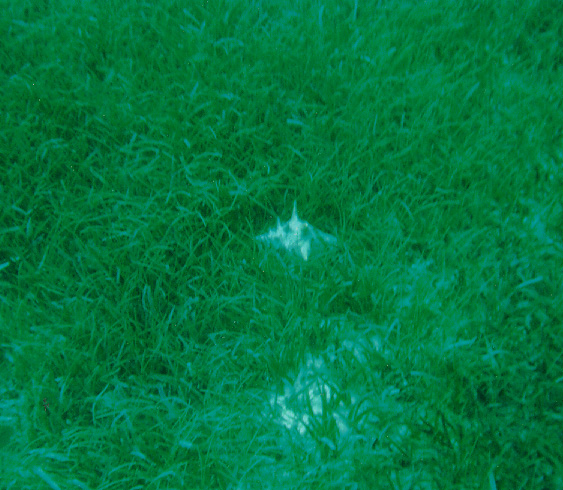
Queen conch embryos hatch 3–5 days after spawning. spend several days developing in the plankton, feeding primarily on phytoplankton. Metamorphosis occurs some 16–40 days from the hatching, when the fully grown protoconch is about 1.2 mm high. After the metamorphosis, A. gigas individuals spend the rest of their lives in the benthic zone (on or in the sediment surface), usually remaining buried during their first year of life. The queen conch reaches sexual maturity at approximately 3 to 4 years of age, reaching a shell length of nearly 180 mm and weighing up to 5 pounds. Individuals may usually live up to 7 years, though in deeper waters their lifespan may reach 20–30 years and maximum lifetime estimates reach 40 years. It is believed that the mortality rate tends to be lower in matured conchs due to their thickened shell, but it could be substantially higher for juveniles. Estimates have demonstrated that its mortality rate decreases as its size increases and can also vary due to habitat, season and other factors.
Ecology


Distribution
Aliger gigas is native to the tropical Western Atlantic coasts of North and Central America in the greater Caribbean tropical zone. Although the species undoubtedly occurs in other places, this species has been recorded within the scientific literature as occurring, in: Aruba (Netherlands Antilles); Barbados; the Bahamas; Belize; Bermuda; North and northeastern regions of Brazil (though this is contested); Old Providence Island in Colombia; Costa Rica; Haiti; the Dominican Republic; Panama; Swan Islands in Honduras; Jamaica; Martinique; Alacran Reef, Campeche, Cayos Arcas and Quintana Roo, in Mexico; Puerto Rico; Saint Barthélemy; Mustique and Grenada in the Grenadines; Pinar del Río, North Havana Province, North Matanzas, Villa Clara, Cienfuegos, Holguín, Santiago de Cuba and Guantánamo, in Cuba and in the Turks and Caicos Islands; South Carolina, Florida, with the Florida Keys and Flower Garden Banks National Marine Sanctuary, in the United States; Carabobo, Falcon, Gulf of Venezuela, Los Roques archipelago, Los Testigos Islands and Sucre in Venezuela; all islands of the United States Virgin Islands.
Habitat
Aliger gigas lives at depths from 0.3 to 18 m to 25–35 m. Its depth range is limited by the distribution of seagrass and algae cover. In heavily exploited areas, the queen conch is more abundant in the deepest range. usually in association with turtle grass (species of the genus Thalassia, specifically Thalassia testudinum and also Syringodium sp.) and manatee grass (Cymodocea sp.). Juveniles inhabit shallow, inshore seagrass meadows, while adults favor deeper algal plains and seagrass meadows. The critical nursery habitats for juvenile individuals are defined by a series of characteristics, including tidal circulation and macroalgal production, which together enable high rates of recruitment and survival. A. gigas is typically found in distinct aggregates that may contain several thousand individuals.
Diet
Strombid gastropods were widely accepted as carnivores by several authors in the 19th century, a concept that persisted until the first half of the 20th century. This erroneous idea originated in the writings of Jean-Baptiste Lamarck, who classified strombids with other supposedly carnivorous snails. This idea was subsequently repeated by other authors, but had not been supported by observation. Subsequent studies have refuted the concept, proving beyond doubt that strombid gastropods are herbivorous animals. In common with other Strombidae, Aliger gigas is a specialized herbivore, that feeds on macroalgae (including red algae, such as species of Gracilaria and Hypnea), seagrass and unicellular algae, intermittently also feeding on algal detritus. The green macroalgae Batophora oerstedii is one of its preferred foods.
Interactions
A few different animals establish commensal interactions with A. gigas, which means that both organisms maintain a relationship that benefits (the commensal) species but not the other (in this case, the queen conch). Commensals of this species include certain mollusks, mainly slipper shells (Crepidula spp.) The porcelain crab Porcellana sayana is also known to be a commensal and a small cardinalfish, known as the conch fish (Astrapogon stellatus), sometimes shelters in the conch's mantle for protection. A. gigas is very often parasitized by protists of the phylum Apicomplexa, which are common mollusk parasites. Those coccidian parasites, which are spore-forming, single-celled microorganisms, initially establish themselves in large vacuolated cells of the host's digestive gland, where they reproduce freely. The infestation may proceed to the secretory cells of the same organ. The entire life cycle of the parasite typically occurs within a single host and tissue.
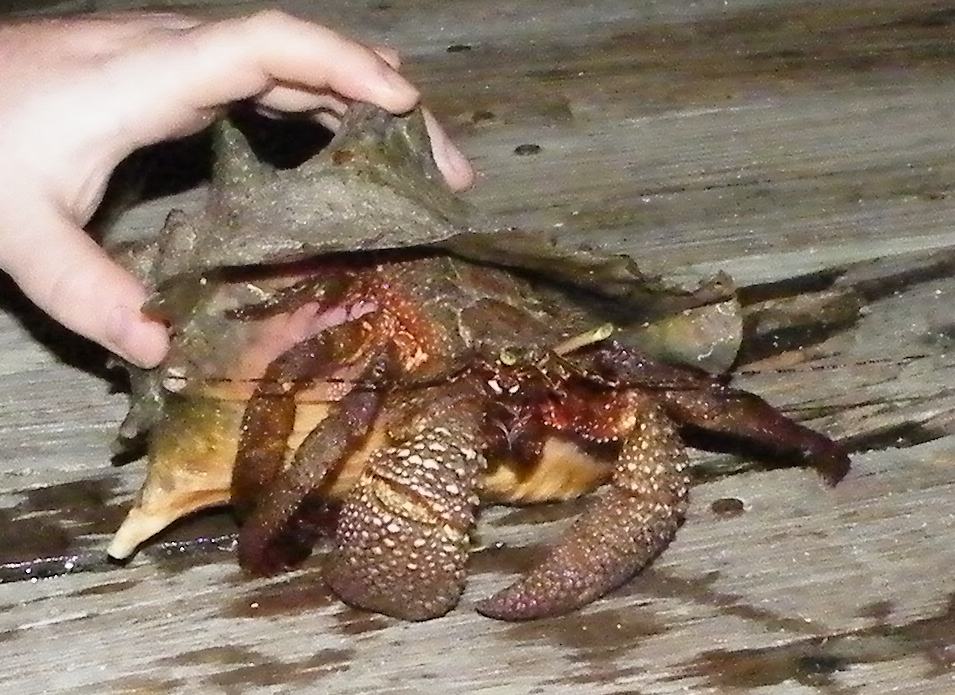
Aliger gigas is a prey species for several carnivorous gastropod mollusks, including the apple murex Phyllonotus pomum, the horse conch Triplofusus papillosus, the lamp shell Turbinella angulata, the moon snails Natica spp. and Polinices spp., the muricid snail Phyllonotus margaritensis, the trumpet triton Charonia variegata and the tulip snail Fasciolaria tulipa. Crustaceans are also conch predators, such as the blue crab Callinectes sapidus, the box crab Calappa gallus, the giant hermit crab Petrochirus diogenes, the spiny lobster Panulirus argus and others. Sea stars, vertebrates, horse conch, octopus, eagle ray, nurse shark, fish (such as the permit Trachinotus falcatus and the porcupine fish Diodon hystrix), loggerhead sea turtles (Caretta caretta) and humans also eat the queen conch.
Uses

Conch meat has been consumed for centuries and has traditionally been an important part of the diet in many islands in the West Indies and Southern Florida. It is consumed raw, marinated, minced or chopped in a wide variety of dishes, such as salads, chowder, fritters, soups, stew, pâtés and other local recipes. The total annual harvest of meat of A. gigas ranged from 6,519,711 kg to 7,369,314 kg between 1993 and 1998, later production declined to 3,131,599 kg in 2001. Data about US imports shows a total of 1,832,000 kg in 1998, as compared to 387,000 kg in 2009, a nearly 80% reduction twelve years later.

Queen conch shells were used by Native Americans and Caribbean Indians in a wide variety of ways. South Florida bands (such as the Tequesta), the Carib, the Arawak and Taíno used conch shells to fabricate tools (such as knives, axe heads and chisels), jewelry, cookware and used them as blowing horns. In Mesoamerican history, Aztecs used the shell as part of jewelry mosaics such as the double-headed serpent. The Aztecs also believed that the sound of trumpets made from queen conch shells represented divine manifestations, and used them in religious ceremonies. In central Mexico, during rain ceremonies dedicated to Tlaloc, the Maya used conch shells as hand protectors (in a manner similar to boxing gloves) during combat.

Brought by explorers, queen conch shells quickly became a popular asset in early modern Europe. In the late 17th century they were widely used as decoration over fireplace mantels and English gardens, among other places. and traditionally as doorstops or decorations by families of seafaring men. The shell continues to be popular as a decorative object, though its export is now regulated and restricted by the CITES agreement. In modern culture, queen conch shells are often represented in everyday objects such as coins and stamps.
Very rarely (about 1 in 10,000 conchs), a conch pearl may be found within the mantle. Though these pearls occur in a range of colors corresponding to the colors of the interior of the shell, pink specimens are the most valuable. These pearls are considered semi-precious,
Research into the conch shell's unique architecture is currently under way at MIT.
Status
Threats

Overfishing
Queen conch populations have been rapidly declining throughout the years and have been mostly depleted in some areas in the Caribbean because they are highly sought after for their meat and their value. Within the conch fisheries, one of the threats to sustainability stems from the fact that there is almost as much meat in large juveniles as there is in adults, but only adult conchs can reproduce, and thus sustain a population. In many places where adult conchs have become rare due to overfishing, larger juveniles and subadults are taken before they ever mate.
The abundance of Aliger gigas is declining throughout its range as a result of overfishing and poaching. Especially because of overfishing, many pockets of conch communities fall below the critical level needed for reproducing. A 2019 study predicted overfishing could lead to the extinction of queen conchs in as little as ten years. Additionally, if the conch fishery collapses, it could potentially leave over 9,000 Bahamian fishers out of work. Trade from many Caribbean countries, such as the Bahamas, Antigua and Barbuda, Honduras, Haiti and the Dominican Republic, is known or thought to be unsustainable. As of 2001, queen conch populations in at least 15 Caribbean countries and states were overfished or overexploited. Illegal harvest, including fishing in foreign waters and subsequent illegal international trade, is a common problem in the region. The Caribbean "International Queen Conch Initiative" is an international attempt at managing this species. On 13 January 2019, the Bahamas' Department of Marine Resources announced it would be making official recommendations to better protect the conch, including ending exports and increasing regulatory staff.
Ocean acidification
Presently, ocean acidification is another serious threat to the queen conch. Acidity levels are rising and adversely affecting shellfish larvae. Rising atmospheric CO2 levels result in rising levels of carbonic acid in seawater, which is particularly harmful to organisms with calcium carbonate shells and structures. Certain larval stages of shellfish are very sensitive to lower seawater pH.
Imposex

The disorder known as imposex, the development of nonfunctional male sexual organs in female individuals, has been observed in A. gigas. This condition is triggered by exposure to organic tin compounds such as tributyltin (TBT) and triphenyltin (TPT), is irreversible, and can have severe consequences for the species, ranging from individual sterilization to potential population collapse. Organotin compounds are commonly used as biocides and antifouling agents, added to marine paints to prevent organisms from growing on the hulls of boats and ships. As a result, high concentrations often accumulate in the waters around shipyards and docking areas, posing a serious threat to nearby marine life through prolonged exposure.
A study carried out in 2025 revealed that the queen conch is particularly sensitive to organotin compounds like TBT. The study, conducted in the coastal waters of the Caribbean, established a clear correlation between the prevalence and intensity of imposex in female conchs and proximity to marine traffic and harbor areas. In areas of high contamination, female conchs developed male reproductive organs, often leading to reproductive failure due to anatomical interference with egg laying. One of the key findings of the study was the utility of A. gigas as a bioindicator for TBT pollution. Unlike other gastropod species previously used in similar monitoring efforts (e.g., Nucella lapillus in temperate zones), the queen conch provides region-specific relevance for the tropical Caribbean, where it is both economically valuable and culturally significant. The study's data suggest that even low levels of TBT in the water column can induce measurable imposex. Younger female conchs appear to be more susceptible to imposex development, indicating a time-sensitive exposure window during which TBT is particularly detrimental. The severity of imposex is not only geographically variable but also influenced by depth and substrate type, suggesting complex interactions between environmental factors and contaminant exposure.
Conservation
The queen conch fishery is usually managed under the regulations of individual nations. In the United States all taking of queen conch is prohibited in Florida and in adjacent Federal waters. No international regional fishery management organization exists for the whole Caribbean area, but in places such as Puerto Rico and the Virgin Islands, queen conch is regulated under the auspices of the Caribbean Fishery Management Council (CFMC). In 2014, the Parties to the Convention for the Protection and Development of the Marine Environment of the Wider Caribbean Region (Cartagena Convention) included queen conch in Annex III of its Protocol Concerning Specially Protected Areas and Wildlife (SPAW Protocol). Species included in the Annex III require special measures to be taken to ensure their protection and recovery, and their use is authorised and regulated accordingly.
The species is listed in Appendix II of the Convention on International Trade in Endangered Species (CITES) meaning international trade (import/export) in the species and its parts and derivatives is regulated by the CITES permitting system. The listing was proposed by the United States making queen conch the first large-scale fisheries product to be regulated by CITES (as Strombus gigas). In 1995 CITES began reviewing the biological and trade status of the queen conch under its "Significant Trade Review" process. These reviews are undertaken to address concerns about trade levels in an Appendix II species. Based on the 2003 review, CITES recommended that all countries prohibit importation from Honduras, Haiti and the Dominican Republic, according to Standing Committee Recommendations. Queen conch meat continues to be available from other Caribbean countries, including Jamaica and Turks and Caicos, which operate well-managed queen conch fisheries. For conservation reasons, the Government of Colombia currently bans the commercialisation and consumption of the conch between the months of June and October. The Bahamas National Trust is building awareness by educating teachers and students through workshops and an awareness campaign which includes the song Conch Gone.
In parts of the world where queen conch fishing is legal, only adult conchs can be fished. The rule is to let each conch have ample time to reproduce before taken out of its habitat, potentially leading to a more stable population. However, this rule has not been followed by countless fishers. On many islands, subadults provide the majority of the harvest. In 2022, the US NOAA conducted a review of A. gigas populations throughout its range; the study places the species at a moderate risk of extinction over the next 30 years. The study also requested, and received comments from management agencies, nations and associations throughout the Caribbean regarding the status of the species, and implications of listing the species as Threatened under the US Endangered Species Act.
References
References
- "NatureServe Explorer 2.0".
- "Appendices {{!}} CITES".
- Rosenberg, G. (2009). [http://www.malacolog.org/search.php?nameid=2204 "''Eustrombus gigas'' (Linnaeus, 1758)"]. Malacolog Version 4.1.1: A Database of Western Atlantic Marine Mollusca. Retrieved 27 September 2009.
- [[Carl Linnaeus. Linnaeus, C.]] (1758).. ''[[Systema Naturae]]'', [[10th edition of Systema Naturae. 10th ed.]], vol. 1. 824 pp. Laurentii Salvii: Holmiae (Stockholm, Sweden). p. 745.
- Clench, W. J. (1937). "Descriptions of new land and marine shells from the Bahama Islands." ''Proceedings of the New England Zoölogical Club'' '''16''': 17–26, pl. 1. (Stated date: 5 February 1937.) On pages 18–21, plate 1 figure 1.
- Smith, M.. (1940). "World Wide Seashells: illustrations, geographical range and other data covering more than sixteen hundred species and sub-species of molluscs". Tropical Photographic Laboratory.
- McGinty, T. L. (1946). "A new Florida ''Strombus'',. ''S. gigas verrilli''". ''The Nautilus'' '''60''': 46–48, plates. 5–6: plate 5, figs. 2–3; plate 6, figs. 7–8.
- Burry, L. A.. (1949). "Shell Notes".
- Petuch, E. J. (1994). ''Atlas of Florida Fossil Shells''. Chicago Spectrum Press: Evanston, Illinois., xii + 394 pp., 100 pls. On page 82, plate 20: figure c.
- "Queen Conch".
- (2006). "Impending Trade Suspensions of Caribbean Queen Conch under CITES: A Case Study on Fishery Impacts and Potential for Stock Recovery". Fisheries.
- Allmon, W. D.. (2007). "The evolution of accuracy in natural history illustration: reversal of printed illustrations of snails and crabs in pre-Linnaean works suggests indifference to morphological detail". Archives of Natural History.
- Clench, W.J.. (1941). "The genus ''Strombus'' in the Western Atlantic". Johnsonia.
- (1977). "Composition of Scientific Words: A manual of methods and a lexicon of materials for the practice of logotechnics". Smithsonian Institutional Press.
- Robertson, R.. (2012). "Buonanni's Chiocciole (1681)". The Academy of Natural Sciences of Drexel University, Philadelphia, USA.
- Buonanni, F.. (1684). "Recreatio mentis, et oculi in observatione animalium testaceorum Italico sermone primum proposita ... nunc ... Latine oblata centum additis testaceorum iconibus". Romae, Ex typographia Varesii.
- Wallin, L.. (2001). "Catalogue of type specimens 4: Linnaean specimens". Uppsala University Museum of Evolution Zoology section (UUZM).
- Petuch, E.J.. (2004). "Cenozoic Seas: The view from Eastern North America". CRC Press.
- Petuch, E.J.. (2007). "The geology of the Everglades and adjacent areas". CRC Press, Taylor & Francis Group.
- Landau, B.M.. (2008). "A large new species of ''Lobatus'' (Gastropoda: Strombidae) from the neogene of the Dominican Republic, with notes on the genus". The Veliger.
- (2020). "Towards resolving the American and West African Strombidae (Mollusca: Gastropoda: Neostromboidae) using integrated taxonomy". The Festivus.
- "Aliger gigas (Linnaeus, 1758)".
- {{WRMS species. 531665. ''Lobatus'' Swainson, 1837. 5 December 2012
- Rodríguez, B.. (1994). "Queen conch biology, fisheries and mariculture". Fundación Cientifica Los Roques.
- Buitriago, J.. (1983). "Cria en cautiverio, del huevo al adulto, del botuto (''Strombus gigas''L)". Memoria Sociedad de Ciencias Naturales la Salle.
- Avalos, D. C.. (1988). "Crecimiento y mortalidad de juveniles de Caracol rosado ''Strombus gigas'' en Punta Gavilán, Q. Roo". Documentos de Trabajo.
- {{WRMS species. 419693. ''Eustrombus gigas'' (Linnaeus, 1758). 13 August 2010
- Posada, J.M.. (1999). "Occurrence, abundance, and length frequency distribution of queen conch, ''Strombus gigas'', (Gastropoda) in shallow waters of the Jaragua National Park, Dominican Republic". [[Caribbean Journal of Science]].
- Warmke, G.L.. (1975). "Caribbean Seashells". Dover Publications, Inc.
- Puglisi, M. P.. (2008). "''Strombus gigas''". [[Smithsonian Institution]].
- Tewfik, A. (1991)."An assessment of the biological characteristics, abundance, and potential yield of the queen conch (''Strombus gigas'' L.) fishery on the Pedro Bank off Jamaica". ''Thesis submitted in partial fulfilment of the requirements for the Degree of Masters of Science (Biology)''. Acadia University, Canada.
- "Conch shell gives nano insights into composite materials". ScienceDaily.
- "Chenu's Mollusks (1842–1853)". The Academy of Natural Sciences.
- Little, C.. (1965). "Notes on the anatomy of the queen conch, ''Strombus gigas''". Bulletin of Marine Science.
- Simone, L. R.L.. (2005). "Comparative morphological study of representatives of the three families of Stromboidea and the Xenophoroidea (Mollusca, Caenogastropoda), with an assessment of their phylogeny". Arquivos de Zoologia.
- Moscatelli, R.. (1987). "The superfamily Strombacea from Western Atlantic". Antonio A. Nanô & Filho Ltda.
- Hughes, H.P.I.. (1976). "Structure and regeneration of the eyes of strombid gastropods". Cell and Tissue Research.
- (21 February 2024). "Queen Conch".
- Coan, E.V.. (2010). "2,400 Years of Malacology". American Malacological Society.
- Parker, G. H.. (1922). "The leaping of the stromb (''Strombus gigas'' Linn.)". Journal of Experimental Zoology.
- Fish and Wildlife Research Institute. (2006). "Queen conch: Florida's spectacular sea snail". Florida Fish and Wildlife Conservation Commission.
- Hesse, K. O.. (1980). "Gliding and climbing behaviour of the queen conch, ''Strombus gigas''". [[Caribbean Journal of Science]].
- Berg, C.J.. (1975). "Behavior and ecology of conch (superfamily Strombacea) on a deep subtidal algal plain". Bulletin of Marine Science.
- Robertson, R.. (1959). "Observations on the spawn and veligers of conchs (''Strombus'') in the Bahamas". Proceedings of the Malacological Society of London.
- Davis, M.. (1987). "Commercial hatchery produced queen conch, ''Strombus gigas'', seed for the research and grow-out market". Proceedings of the Gulf and Caribbean Fisheries Institute.
- (1993). "A comparison of larval development, growth, and shell morphology in three Caribbean ''Strombus'' species". The Veliger.
- Brusca, R.C.. (2003). "Invertebrates". Sinauer Associates, Inc..
- NOAA.[http://www.nmfs.noaa.gov/pr/species/invertebrates/queenconch.htm "Queen Conch (''Strombus gigas'')"]. Retrieved 4 July 2009. {{PD-notice
- Medley, P.. (2008). "Monitoring and managing queen conch fisheries: A manual". Food and Agriculture Organization of the Uniteded Nations (FAO).
- Martin-Mora, E.. (1995). "Developmental plasticity in the shell of the queen conch ''Strombus gigas''". Ecology.
- "International Queen Conch Initiative". NOAA: Caribbean Fishery Management Council.
- Ehrhardt, N.M.. (2008). "Conch (''Strombus gigas'') Stock Assessment Manual". Caribbean Fishery Management Council.
- The queen conch lives in [[seagrass meadow]]s and on sandy substrate,Ulrich Wieneke (ed.) [http://www.stromboidea.de/?n=Species.LobatusGigas ''Lobatus gigas'']. In: Gastropoda Stromboidea. modified: 22 November 2008. Retrieved 23 June 2009.
- Davis, J.E. (2003). [http://www.statiapark.org/downloads/downloads/St%20Eustatius%20Conch%20Report%20-%202003%20-%20J%20Davis.pdf "Population assessment of queen conch, ''Strombus gigas'', in the St. Eustatius Marine Park, Netherlands Antilles"] {{Webarchive. link. (19 August 2008 . St. Eustatius Marine Park.)
- (1988). "Winter mass migration of juvenile queen conch ''Strombus gigas'' and their influence on the benthic environment". Marine Ecology Progress Series.
- Stoner, A. W.. (2003). "What constitutes essential nursery habitat for a marine species? A case study of habitat form and function for queen conch". Marine Ecology Progress Series.
- McCarthy, K. (2007). [http://www.sefsc.noaa.gov/sedar/download/SEDAR14-DW-4.pdf?id=DOCUMENT ''A review of queen conch (''Strombus gigas'') life-history'']. Sustainable Fisheries Division NOAA. ''SEDAR 14-DW-4''.
- Robertson, R.. (1961). "The feeding of ''Strombus'' and related herbivorous marine gastropods". Notulae Naturae of the Academy of Natural Sciences of Philadelphia.
- Latiolais, J.M.. (2006). "A molecular phylogenetic analysis of strombid gastropod morphological diversity". Molecular Phylogenetics and Evolution.
- [[George Washington Tryon. Tryon, G.W.]] (1885). ''[[Manual of Conchology]], structural and systematic, with illustrations of the species. [https://archive.org/details/manualconch07tryorich Volume 7]. Terebridae, Cancellariidae, Strombidae, Cypraeidae, Ovulidae, Cassididae, Doliidae.'' pp.[https://archive.org/stream/manualconch07tryorich#page/107/mode/1up 107];[https://archive.org/stream/manualconch07tryorich#page/348/mode/2up 348].
- Stoner, A.. (1996). "Queen conch, ''Strombus gigas'', in fished and unfished locations of the Bahamas: effects of a marine fishery reserve on adults, juveniles, and larval production". Fishery Bulletin.
- Cárdenas, E.B.. (2007). "Coccidian (Apicomplexa) parasite infecting ''Strombus gigas'' Linné, 1758 digestive gland". Journal of Shellfish Research.
- Gros, O.. (2009). "Structural analysis of the digestive gland of the queen conch ''Strombus gigas'' Linnaeus, 1758 and its intracellular parasites". [[Journal of Molluscan Studies]].
- Jory, D.E.. (2006). "An incident of predation on queen conch, ''Strombus gigas'' L. (Mollusca, Strombidae), by Atlantic permit, ''Trachinotus falcatus'' L. (Pisces, Carangidae)". Journal of Fish Biology.
- es. link. (7 July 2009 . Nineteenth meeting of the Animals Committee, [[Geneva]] (Switzerland), 18–21.)
- NOAA (2009). National Marine Fisheries Service Fisheries Statistics and Economics Division. [http://www.st.nmfs.noaa.gov/pls/webpls/trade_alldstrct_byproduct.results?qtype=IMP&qyearfrom=1992&qyearto=2009&qsort=DISTRICT&qoutput=PRINTER&qproduct=CONCH]. Retrieved 4 July 2009.
- Squires, K.. (1941). "Pre-Columbian Man in Southern Florida". Tequesta.
- (2006). "Turquoise Mosaics from Mexico". Duke University Press.
- (2011). "Conch shells on coins". American Conchologist.
- (2011). "Cracking a queen conch (''Strombus gigas''), vanishing uses, and rare abnormalities". American Conchologist.
- Toller, W.. (2003). "Queen Conch ''Strombus gigas''". U.S.V.I. Department of Planning and Natural Resources Division of Fish and Wildlife.
- "Country: North America, Grenada".
- (1992). "Seashells on Stamps, Vol. II". Antonio A. Nano & Filho Ltd..
- Abbott, R.T.. (2002). "Seashells of The World". St. Martin's Press.
- Fritsch, E.. (1987). "The History and Gemology of Queen Conch "Pearls"". Gems & Gemology.
- "Conch shells spill the secret to their toughness". MIT News.
- (16 January 2019). "The Bahamas' iconic conch could soon disappear".
- (23 January 2013). "Virgin Islands Vacation Guide & Community".
- (2019). "Relationships between Fishing Pressure and Stock Structure in Queen Conch (''Lobatus gigas'') Populations: Synthesis of Long-Term Surveys and Evidence for Overfishing in The Bahamas". Reviews in Fisheries Science & Aquaculture.
- "Ocean Acidification's impact on oysters and other shellfish".
- (2025). "Revisiting the imposex queen conch ''Aliger gigas'' near Port Everglades, Florida: demographics, histopathology, and sediment contamination". Endangered Species Research.
- (2025). "First record of imposex in the horse conch, ''Triplofusus giganteus'' (Mollusca: Gastropoda: Fasciolariidae)". Bulletin of Marine Science.
- (1998). "Tributyltin and imposex: no uncertainty shown". Marine Ecology Progress Series.
- Horiguchi, T.. (1995). "Imposex in Japanese gastropods (Neogastropoda and Mesogastropoda): effects of tributyltin and triphenyltin from anti-fouling paints". Oxford.
- Castro, Í. B.. (2008). "Imposex in endemic volutid from Northeast Brazil (Mollusca: Gastropoda)". Brazilian Archives of Biology and Technology.
- (1997). "Sublethal effects of tributyltin oxide on the dogwhelk ''Nucella lapillus''". Marine Ecology Progress Series.
- "International Affairs-Queen Conch". [[United States Fish and Wildlife Service]].
- "Annexes of the SPAW Protocol". National Park of Guadeloupe - SPAW/RAC.
- "SPAW Protocol Annex III". National Park of Guadeloupe - SPAW/RAC.
- [http://www.cites.org/eng/app/appendices.php ''Appendices I, II and III'']. cites.org website. Retrieved 4 July 2009.
- [[NOAA]] Fisheries Office of International Affairs website: [http://www.nmfs.noaa.gov/ia/intlagree/cites.htm CITES]. Retrieved 4 July 2009.
- (2003). "Standing Committee Recommendations". CITES Official Documents No 2003/057.
- "Vedas Vigentes en el Territorio Colombiano". Ministerio de Agricultura y Desarrollo Rural, Colombia.
- "Conchservation - Bahamas National Trust".
- Theile, S.. (2001). "Queen conch fisheries and their management in the Caribbean". Traffic Europe.
- Oxenford, H.A.. (2007). "Fishing and marketing of queen conch (''Strombus gigas'') in Barbados". Centre for Resource Management and Environmental Studies.
- (2022). "Endangered Species Act Status Review Report: Queen Conch (Aliger gigas)". NOAA Technical Memorandum.
- Stokstad, Eric. (2022-12-23). "U.S. mulls stronger protections for iconic Caribbean conch, raising concern among fishers". American Association for the Advancement of Science (AAAS).

This article was imported from Wikipedia and is available under the Creative Commons Attribution-ShareAlike 4.0 License. Content has been adapted to SurfDoc format. Original contributors can be found on the article history page.
Ask Mako anything about Aliger gigas — get instant answers, deeper analysis, and related topics.
Research with MakoFree with your Surf account
Create a free account to save articles, ask Mako questions, and organize your research.
Sign up freeThis content may have been generated or modified by AI. CloudSurf Software LLC is not responsible for the accuracy, completeness, or reliability of AI-generated content. Always verify important information from primary sources.
Report