From Surf Wiki (app.surf) — the open knowledge base
Alexander Ramsey
American politician (1815–1903)
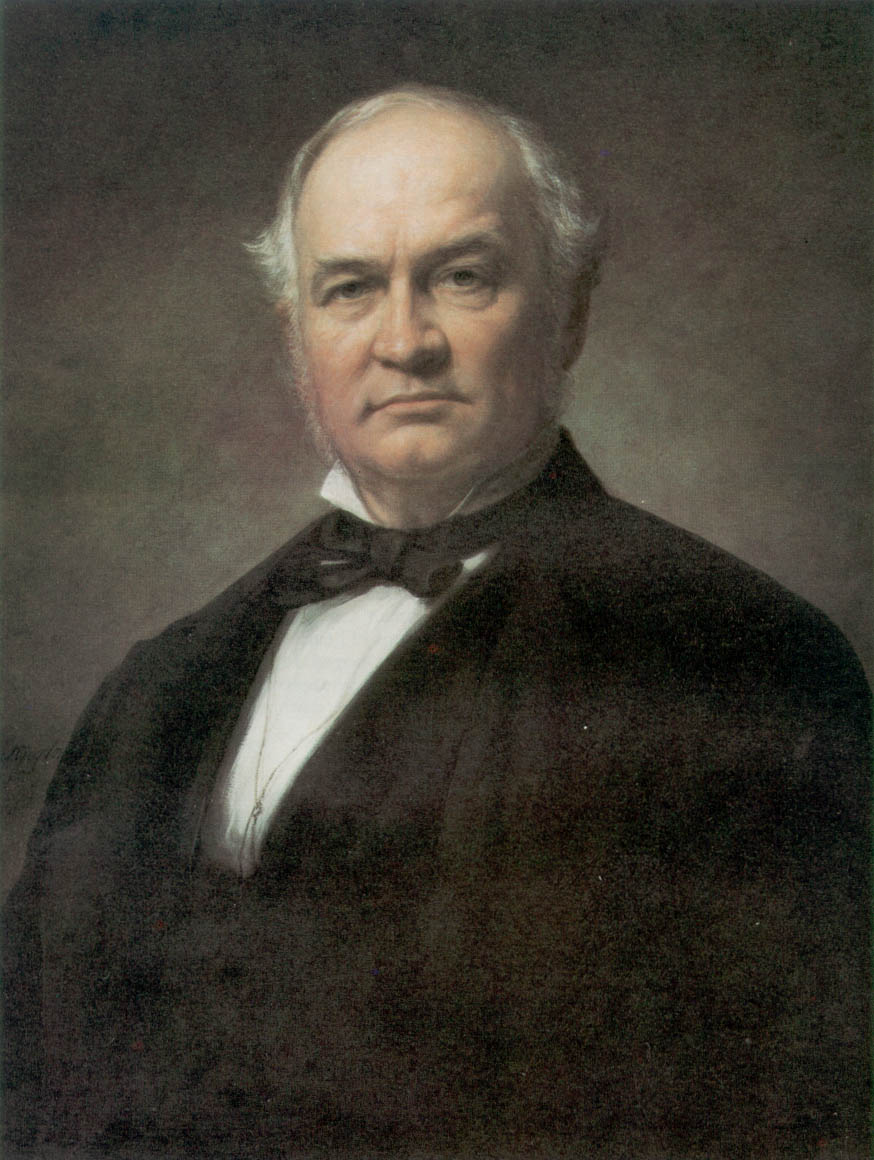
American politician (1815–1903)
| Field | Value |
|---|---|
| name | Alexander Ramsey |
| image | Alexander Ramsey - Brady-Handy.jpg |
| caption | Ramsey, 1855–1865 |
| office1 | 34th United States Secretary of War |
| president1 | Rutherford B. Hayes |
| term_start1 | December 10, 1879 |
| term_end1 | March 5, 1881 |
| predecessor1 | George W. McCrary |
| successor1 | Robert Lincoln |
| jr/sr2 | United States Senator |
| state2 | Minnesota |
| term_start2 | March 4, 1863 |
| term_end2 | March 3, 1875 |
| predecessor2 | Henry Rice |
| successor2 | Samuel J. R. McMillan |
| order3 | 2nd Governor of Minnesota |
| term_start3 | January 2, 1860 |
| term_end3 | July 10, 1863 |
| predecessor3 | Henry Sibley |
| successor3 | Henry Swift |
| office4 | 5th Mayor of Saint Paul |
| term_start4 | 1855 |
| term_end4 | 1856 |
| predecessor4 | David Olmsted |
| successor4 | George Becker |
| office5 | 1st Governor of Minnesota Territory |
| appointer5 | Zachary Taylor |
| term_start5 | June 1, 1849 |
| term_end5 | May 15, 1853 |
| successor5 | Willis A. Gorman |
| state6 | Pennsylvania |
| district6 | |
| term_start6 | March 4, 1843 |
| term_end6 | March 3, 1847 |
| predecessor6 | James Irvin |
| successor6 | George Eckert |
| birth_date | |
| birth_place | Hummelstown, Pennsylvania, U.S. |
| death_date | |
| death_place | Saint Paul, Minnesota, U.S. |
| party | Whig (before 1857) |
| Republican (1857—1903) | |
| spouse | |
| children | 3 |
| education | Lafayette College |
| Dickinson School of Law | |
| signature | Signature of Alexander Ramsey (1815–1903).png |
| jr/sr2 = United States Senator Republican (1857—1903) Dickinson School of Law Alexander Ramsey (September 8, 1815 April 22, 1903) was an American politician, who became the first Minnesota Territorial Governor and later became a U.S. Senator. He served as a Whig and Republican over a variety of offices between the 1840s and the 1880s.
Early years and family
Born in Hummelstown, Pennsylvania, on September 8, 1815,. His father was a blacksmith who committed suicide at age 42 when he went bankrupt in 1826, after signing for a note of a friend. His brother Justus Cornelius Ramsey served in the Minnesota Territorial Legislature.
Ramsey first studied carpentry at Lafayette College but left during his third year. He read law with Hamilton Alricks, and attended Judge John Reed's law school in Carlisle (now Penn State-Dickinson Law) in 1839. He was admitted to the Pennsylvania bar in 1839.
In 1844 Ramsey married Anna Earl Jenks, daughter of Michael Hutchinson Jenks, and they had three children. Only one daughter, Marion, survived past childhood.
Career
Alexander Ramsey was elected from Pennsylvania as a Whig to the U.S. House of Representatives and served in the 28th and 29th congresses from March 4, 1843, to March 3, 1847. He served as the first Territorial Governor of Minnesota from June 1, 1849, to May 15, 1853, as a member of the Whig Party. Upon his term's completion, he stated he would not run for any public office again. In 1855, he became the mayor of St. Paul, Minnesota as an exception to his swearing off of public service. He served in that position for a one-year term.
In 1857, he joined the newly formed Republican party. Upon the Republican State Convention nominated him unanimously for Governor of Minnesota on September 10, 1857, he was convinced to leave retirement and accepted the nomination. He would lose the election to Henry Hastings Sibley by only 240 votes.
Governor of Minnesota
Ramsey became second governor of Minnesota after statehood in 1860, after defeating George Loomis Becker in the 1859 Governor's election. He served from January 2, 1860, to July 10, 1863. Ramsey is credited with being the first Union governor to commit troops during the American Civil War. He happened to be in Washington, D.C., when fighting broke out. When he heard about the firing on Fort Sumter he went straight to the White House and offered Minnesota's services to Abraham Lincoln.

Ramsey called for the killing or removal of the Mdewakanton and Wahpekute Dakota from the state of Minnesota during the Dakota War of 1862. After pressing the Dakota to sell their land, he and other officials stole from the Dakota's annuities. In response, some of the Dakota attacked American settlements, resulting in the death of at least 800 civilian men, women and children, and the displacement of thousands more. When the Fond du Lac band of Chippewa learned of the uprising they sent a letter to Ramsey to forward to President Lincoln offering to fight the Sioux dated September 6, 1862. A few days later on September 9 Ramsey addressed the state legislature proclaiming: "The Sioux Indians of Minnesota must be exterminated or driven forever beyond the borders of the State," which he justified by citing various outrages against the settlers and violations of their treaties. In the north the Chippewa/Ojibwa were having problems with their Indian agent stealing from them. Gov. Ramsey lead a legislative commission to the Crow Wing agency to address their issues. There 10 chiefs of the Leech Lake and Mississippi bands laid out their concerns and offered to fight the Sioux for the government. The commission liked their offer and Gov. Ramsey invited the leaders of 22 bands of Ojibwa to St. Paul. They came on September 23 waving the America flag thinking their offers had been accepted. Ramsey had to instruct them that Major General Pope would not accept their service on the grounds that it would not be good public policy. However, they would be contacted if they were needed. In 1863, in response to continued raids on settlers, he authorized a bounty for the scalps of Dakota males.
In January of 1863, Ramsey was elected as senator. He remained as governor until it was announced that Republican Stephen Miller had won the 1863 Minnesota gubernatorial election. He resigned the following day to leave for the senate, leaving Lieutenant Governor Henry Adoniram Swift as Governor until Miller's inauguration.
Senator
He resigned the governorship to become a U.S. Senator, having been elected to that post in 1863 as a Republican. He was re-elected in 1869 and held the office until March 3, 1875, serving in the 38th, 39th, 40th, 41st, 42nd, and 43rd congresses. He supported the Radical Republicans, who called for vigorous prosecution of the Civil War, and a military reconstruction of the South.
On April 15, 1865, President Abraham Lincoln was assassinated. There were very few senior officials in D.C. that morning. Ramsey was and took part in initiating the transfer of the Presidency to Vice President Johnson.President Johnson Swears In, Evening Star, March 03, 1885, p.2, Chronicling America, Library of Congress, 2023 https://chroniclingamerica.loc.gov/lccn/sn83045462/1885-03-03/ed-1/seq-2/#date1=1885&index=8&rows=20&words=Ramsey+Secretary+War&searchType=basic&sequence=0&state=&date2=1886&proxtext=Secretary+of+War+Ramsey+&y=14&x=18&dateFilterType=yearRange&page=1 He voted for the Impeachment of Andrew Johnson.
Later Career

Ramsey served as Secretary of War from 1879 to 1881, under President Rutherford B. Hayes. He was one of the commissioners to govern Utah from 1882 to 1886 under the Edmunds Act. The act made it illegal for polygamists to vote or hold office. Ramsey and four others were defendants in the Supreme Court case Murphy v. Ramsey, 114 U.S. 15 (1885). The Supreme Court upheld the federal law that denied polygamists the right to vote.
Late in the fall of 1885 ex-governor Ramsey escorted the son of Chippewa Chief Hole in the Day to Washington D.C. as Minnesota's candidate to West Point. he died in Saint Paul in 1903 at 87.
Legacy
The Minnesota Historical Society preserves his home, the Alexander Ramsey House as a museum. It was added to the National Register of Historic Places in 1969.

Counties, towns, parks, and schools are named after Ramsey, including:
- Ramsey County, Minnesota,
- Ramsey County, North Dakota
- The city of Ramsey, Minnesota
- The city of Ramsey, Illinois,
- Alexander Ramsey Park in Redwood Falls, Minnesota, formerly a state park, it is the largest municipal park in Minnesota.
- Ramsey Park in Stillwater, Minnesota
- Hidden River Middle School in Saint Paul, Minnesota was formerly named after him. During the 2021–2022 school year, the school was renamed after approval from the St Paul School Board; staff and students had previously called for a name change in the spring of 2021.
- Alexander Ramsey Elementary School in Montevideo, Minnesota.
- Justice Page Middle School in Minneapolis, Minnesota was formerly named after him when it was first founded in 1932 (Ramsey International Fine Arts Center and formerly Alexander Ramsey Junior High School). In the 2016–17 school year, a student-initiated effort to rename Ramsey Middle School resulted in renaming the school after Alan Page, the first African-American Minnesota Supreme Court justice.
He was the namesake of the Liberty Ship SS Alexander Ramsey launched in 1942.
References
Retrieved on 2009-03-22
References
- Alexander was the eldest of five children born to Thomas Ramsey and Elizabeth Kelker (also Kölliker or Köllker). Ramsey was of Scottish and German ancestry.Minnesota Historical Society collections, Volume 13 By Minnesota Historical Society, p. 5
- Steiner, Andy. (February 12, 2016). "Out of the shadows: Mental Health Resources meets $1 million fundraising goal". MinnPost.
- "Thomas Ramsey: 1784–1826". Ancestry.com.
- Helen McCann White. (1974). "Guide to a Microfilm Edition of: The Alexander Ramsey Papers and Records". Minnesota Historical Society.
- Butler, William E.. (February 2000). "Alexander Ramsey". American National Biography Online.
- "Ramsey, Justus Cornelius "J.C." - Legislator Record - Minnesota Legislators Past & Present".
- (May 12, 1929). "HIDDEN RAMSEY DIARY TELLS OF DEFEAT BY SIBLEY".
- Anderson, Gary Clayton. (2019). "Massacre in Minnesota: The Dakota War of 1862, the Most Violent Ethnic Conflict in American History". University of Oklahoma Press.
- "Second Annual Message | The American Presidency Project".
- The Weekly Pioneer and Democrat, 19 Sept 1862, p.3, 2023, Minnesota Digital Newspaper Hub, 2023, MNHS, 345 Kellogg Blvd, St. Paul, MN [https://newspapers.mnhs.org/jsp/PsImageViewer.jsp?doc_id=743969f0-a2e4-4040-b787-2822eb24bcea%2Fmnhi0031%2F1DFC4V56%2F62091901]
- Ramsey, Alexander (1862). "Message of Governor Ramsey to the Legislature of Minnesota, delivered September 9, 1862." In ''Executive Documents of the State of Minnesota, for the year 1862.'' Wm. R. Marshall: 1863.
- Letter of Commissioner Dole, 11 Sept, 1862, The Goodhue Volunteer Vol. VII, No.8, September 17, 1862, Minnesota Digital Newspaper Hub, 2023, Minnesota Historical Society, 345 Kellogg Blvd, St. Paul, Mn [https://newspapers.mnhs.org/jsp/PsImageViewer.jsp?doc_id=b99c121a-6285-4180-b361-d84a5d586505%2Fmnhi0031%2F1H0YNM56%2F62091701]
- Appendix, Journal of the House of Representatives, State of Minnesota 1862, Wm R. Marshall, Press Printing Company, St Paul, pp.135-8 [https://books.google.com/books?id=gclKAQAAMAAJ&dq=Chief+kaw+nun+dah+wa+we+zo&pg=PA138]
- The Chippewa Embassy, The Weekly Pioneer and Democrat Vol. XIV, No.14, Sept. 19, 1862, p.5, Chronicling America, Library of Congress, 2023 [https://chroniclingamerica.loc.gov/lccn/sn83016751/1862-09-19/ed-1/seq-5/#date1=1862&index=3&rows=20&words=Chippewas+Pillager&searchType=basic&sequence=0&state=&date2=1862&proxtext=Pillager+Chippewa&y=0&x=0&dateFilterType=yearRange&page=1]
- The Indian War in Minnesota, Memphis Daily Appeal, Oct. 2, 1862, p.2, Chronicling America, Library of Congress, 2023 [https://chroniclingamerica.loc.gov/lccn/sn83045160/1862-10-02/ed-1/seq-2/#date1=1862&index=14&rows=20&words=braves+Chippewa&searchType=basic&sequence=0&state=&date2=1866&proxtext=Chippewa+brave&y=0&x=0&dateFilterType=yearRange&page=1]
- Chippewa Visitors, St Paul Daily Press, 24 Sept, 1862, No. 149, p.1, 2023, Minnesota Digital Newspaper hub, 2023, MNHS 345 Kellogg Blvd, St Paul, MN [https://newspapers.mnhs.org/jsp/PsImageViewer.jsp?doc_id=4b5b0c73-7db2-4ae6-a84d-85330b7d222b%2Fmnhi0007%2F1DFC4T56%2F62092401]
- (2010). "North country : the making of Minnesota". University of Minnesota Press.
- (1984). "Biographical Directory of American Territorial Governors". Meckler.
- (2015). "American Civil War: A State-by-State Encyclopedia [2 volumes]: A State-by-State Encyclopedia". ABC-CLIO.
- (1899). "The Men Who Impeached Andrew Johnson". J.B. Lippincott and Company.
- The Press and Daily Dakotan, Nov. 5, 1885, Chronicling America, Library of Congress, 2023 [https://chroniclingamerica.loc.gov/lccn/sn91099608/1885-11-05/ed-1/seq-1/#date1=1862&index=0&rows=20&words=Chippewa+Gov+Ramsey&searchType=basic&sequence=0&state=&date2=1886&proxtext=Gov+Ramsey+Chippewa&y=11&x=16&dateFilterType=yearRange&page=1]
- Upham, Warren. (1920). "Minnesota Geographic Names: Their Origin and Historic Significance". Minnesota Historical Society.
- Allan H. Keith, [https://archive.org/details/bub_gb_1gJ_RVeb5JYC/page/n2 ''Historical Stories: About Greenville and Bond County, IL'']. Consulted on August 15, 2007.
- (June 22, 2022). "Ramsey Middle School changes name to Hidden River Middle School". CBS Minnesota.
- Golden, Eric. (March 23, 2021). "St. Paul will consider renaming Ramsey Middle School". Star Tribune.
- Verges, Josh. (April 13, 2021). "Students, staff urge St. Paul school board to rename Ramsey Middle School". Pioneer Press.
- "History - MPS_CMF".
- "MPS_CMF".
This article was imported from Wikipedia and is available under the Creative Commons Attribution-ShareAlike 4.0 License. Content has been adapted to SurfDoc format. Original contributors can be found on the article history page.
Ask Mako anything about Alexander Ramsey — get instant answers, deeper analysis, and related topics.
Research with MakoFree with your Surf account
Create a free account to save articles, ask Mako questions, and organize your research.
Sign up freeThis content may have been generated or modified by AI. CloudSurf Software LLC is not responsible for the accuracy, completeness, or reliability of AI-generated content. Always verify important information from primary sources.
Report