From Surf Wiki (app.surf) — the open knowledge base
Alevism
Sufi tradition
.jpg)
Sufi tradition
| Field | Value |
|---|---|
| image | Semah and saz.jpg |
| caption | Women partaking in Semah ritual |
| name | Alevism |
| native_name | Alevilik |
| founder | Haji Bektash Veli |
| founded_date | 13th-century |
| founded_place | Sulucakarahöyük |
| scripture | Quran, Nahj al-Balagha, Makalat and Buyruks |
| leader_name1 | Dede |
| area | Turkey & Balkans |
| language | Turkish, Albanian, Kurdish, and Zazaki |
| headquarters | Haji Bektash Veli Complex, Nevşehir, Turkey |
| liturgy | Cem, Semah |
| native_name_lang | tr |
Alevism (; ; ), also known as Qizilbashism, is a syncretic and mystic tradition, formulated by Haji Bektash Veli. It is generally agreed that it is akin to a Sufi rendition of Twelver Shi'ism that integrates Central Asian shamanic elements, though some dissenting voices base the Alevi belief squarely in a non-denominational, heterodox Anatolian Islam instead. They acknowledge the six articles of faith of Islam, but may differ regarding their interpretation. Lack of gender segregation in ritual contexts and clergy is one of the key features that sets Alevism apart from Muslim orthodoxy.
Although the main order amongst Alevis, the Bektashi order, were appointed as the military chaplains until the Auspicious Incident; historical Qizilbash affiliation created political rifts which caused them to be persecuted both in Ottoman and modern Turkish regimes, being described as heterodox to contrast them with the "orthodox" Sunni majority.
Adherents of Alevism are found primarily in Turkey and estimates of the percentage of Turkey's population that are Alevi include between 4% and 15%. The term “Alevi-Bektashi” is currently a widely and frequently used expression in the religious discourse of Turkey as an umbrella term for the culture of Alevism and the order of Bektashi. Alevism is officially recognized through Ministry of Culture and Tourism under the 'Presidency of Alevi/Bektashi Culture'.
Beliefs
Main article: Faith, Iman (concept)
According to scholar Soner Çağaptay, Alevism is a "relatively unstructured interpretation of Islam with traditional elements". Journalist Patrick Kingsley states that for some self-described Alevi, their religion is "simply a cultural identity, rather than a form of worship". It has also been put forward that Alevism can be identified as an ethnoreligion in some instances, such as in the cases of the Tahtacıs and Abdals.
Alevis put the doctrine of İnsan-ı Kâmil in the center of their beliefs. The "three sunnahs and seven fards" constitute the fundamental ethical and initiatory framework of the Alevi path, mandating the murids mastery over their actions, speech, and desires (controlling the hand, tongue, and loins) alongside strict adherence to esoteric duties such as absolute submission to spiritual authority, the maintenance of müsahiplik, and the preservation of communal secrets. The Alevi beliefs among the Turkish and Kurdish diverge as Kurdish Alevism put more emphasis on Pir Sultan Abdal than Haji Bektash Veli, and it is rooted more in nature veneration.
The vast majority of Alevis adhere to the Bektashi order whilst some follow other heterodox Sufi orders such as the Kalenderi order.
God
Main article: Allah, Haqq–Muhammad–Ali
In Alevi cosmology, God is also called Hak (the Truth) or referred to as Allah. God created life, so the created world can reflect his Being. Alevis believe in the unity of Allah, Muhammad, and Ali, but this is not a trinity composed of God and the historical figures of Muhammad and Ali. Rather, Muhammad and Ali are representations of Allah's light (and not of Allah himself), being neither independent from God nor separate characteristics of him.
In Alevi writings are many references to the unity of Muhammad and Ali, such as:
Wahdat al-wujud and panentheism
The plurality in nature is attributed to the infinite potential energy of Nefs-i Kul when it takes corporeal form as it descends into being from the god. The Alevi concept of God is derived from the philosophy of Ibn Arabi and involves a chain of emanation from God, to spiritual man, earthly man, animals, plants, and minerals. In keeping with the central belief of Wahdat al-mawjud and Wahdat al-wujud, the Alevis base their practices and rituals on their mystical interpretation and perennial philosophy.
Spirits and afterlife
Alevis believe in the immortality of the soul, the literal existence of supernatural beings, including good angels (melekler) and bad angels (şeytanlar), as encouragers of humans' evil desires (nefs), jinn (cinler), and the evil eye.
Angels feature in Alevi cosmogony. Although there is no fixed creation narrative among Alevis, it is generally accepted that God created five archangels, who have been invited to the chamber of God. Inside, they found a light representing the light of Muhammad and Ali. In an account parallel to that in the Quran, one of the archangels refuses to prostrate before the light, arguing that the light is a created body just like him and therefore an inappropriate object of worship. He remains at God's service, but rejects the final test and turns back to darkness. From this primordial decline, the devil's enmity towards Adam emerged. The archangels consist of the same four archangels as in orthodox Islam. The fifth archangel, namely Azâzîl, fell from grace, thus not included among the canonical archangels apart from this story.
Another story features the archangel Gabriel (Cebrail), who is asked by God who they are. Gabriel answers: "I am I and you are you". Gabriel gets punished for his haughty answer and is sent away, until Ali reveals a secret to him. When God asks him again, he answers: "You are the creator and I am your creation". Afterwards, Gabriel was accepted and introduced to Muhammad and Ali.
Scriptures and main figures

Alevis acknowledge the four revealed scriptures also recognised in Islam: the Tawrat (Torah), the Zabur (Psalms), the Injil (Gospel), and the Quran. Additionally, Alevis are not opposed to looking to other religious books outside the four major ones as sources for their beliefs, including Hadiths, Nahjul Balagha, and Buyruks. Alevism also acknowledges the Islamic prophet Mohammed. Alevis do not regard interpretations of the Qur'an today as binding or infallible, since the true meaning of the Quran is considered to be taken as a secret by Ali and must be taught by a teacher, who transmits the teachings of Ali (Buyruk) to his disciple.
The Twelve Imams are part of another common Alevi belief. Each Imam represents a different aspect of the world. They are realized as twelve services or On İki Hizmet performed by members of the Alevi community. Each Imam is believed to be a reflection of Ali ibn Abu Talib, the first Imam of the Shi'ites. There are references to the "First Ali" (Birinci Ali), Imam Hasan the "Second 'Ali" (İkinci Ali), and so on up to the "Twelfth 'Ali" (Onikinci Ali), Imam Mehdi. The Twelfth Imam is hidden and represents the Messianic Age.
The Seven Great Poets are poets and poets who explained the initial Alevi belief to the people with the sayings they say and convey messages through written and oral literature from the period they lived in to the present, one of whom is a ruler and the others are from the people. Some additional main figures from the genesis era include; Ahmad Yasawi, Sarı Saltık, Ahi Evran and Abdal Musa.
The saints are called Erenler (lit. 'Englightened Ones') who usually have türbes (shrine) and are venerated in certain days. They mostly have the honorifics of 'Abdal' (eg. Kaygusuz Abdal), 'Baba' (eg. Otman Baba), 'Kalender' (eg. Kalender Çelebi) or 'Veli' (eg. Hacı Bayram Veli). In modern times, people who are influential take the honorifics of either 'Pir' (male) or 'Ana' (female), depending on their genders. Some famous examples of saints include; Yunus Emre, Sheikh Bedreddin, Balım Sultan and Gül Baba.
Jurisprudence
.jpg)
Sources differ on how important formal doctrine is among contemporary Alevi. According to scholar Russell Powell, there is a tradition of informal "Dede" courts within the Alevi society, but regarding Islamic jurisprudence or fiqh there has been "little scholarship on Alevi influences" in it. Alevism has a unique belief system tracing back to Kaysanites and Khurramites.
Other elements
It is widely agreed upon that Shamanism has been a shaping factor in Alevism, especially in clerical and ritual practices. Some other concepts such as the nature worship and certain social values are also thought to be an outcome of Central Asian imprint. There are some other practices and ceremonies that share similarity with other faiths, such as a Eucharist-like ritual meal (muhabbet) and yearly confession of sins to a baba.
There is some tension between folk tradition/Anatolian Aleviness and the Bektashi Order, whereas Alevis put emphasis on folk elements whilst the order is more liturgy oriented. In certain Turkish communities other Sufi orders (the Halveti-Jerrahi and some of the Rifaʽi) have incorporated significant Alevi influence.
Ishikism (Işıkçılık), is a new syncretic religious movement among Alevis who have developed an alternative understanding of Alevism and its history. These alternative interpretations and beliefs were inspired by Turkish writer Erdoğan Çınar. The Ishik movement claim that the term "Alevi" is derived from the old Anatolian Luvians, claiming that the word "Luvi" means "People of Light" in the Hittite language. Some Ottoman documents from the 16th century refer to the ancestors of today's Alevis as "Işık Taifesi", meaning "People of Light". This is, according to Ishikīs, a proof of the connection between the Luvians and Alevis. These theories, while central to Ishikism, have widely been considered pseudo-history.
In the diaspora, a secularised redefinition of Alevi identity has emerged and become widespread in recent decades, often described as Ali’siz Alevilik (‘Alevism without Ali’), This formulation distanced Alevism from Islamic elements, aligning it more closely with a Marxist-humanist worldview that foregrounded ethics, social justice and resistance.
Practices
Main article: Four Doors
The Alevi spiritual path (yol) is commonly understood to take place through four major life-stages, or "gates". These may be further subdivided into "four gates, forty levels" (Dört Kapı Kırk Makam). The first gate (religious law) is considered elementary (and this may be perceived as subtle criticism of other Muslim traditions).
Krisztina Kehl-Bodrogi reports that the Tahtacı identify müsahiplik with the first gate şeriat ("the way"), since they regard it as a precondition for the second tarikat ("the order"). Those who attain to the third gate marifat, ("gnosis") must have been in a müsahiplik relationship for at least twelve years. Entry into the third gate dissolves the müsahiplik relationship (which otherwise persists unto death), in a ceremony called Öz Verme Âyini ("ceremony of relinqushing the self"). The value corresponding to the second gate (and necessary to enter the third) is âşinalık ("intimacy"). Its counterpart for the third gate is called peşinelik; for the fourth gate hâkikat (the truth). Most Alevi activity takes place in the context of the second gate (spiritual brotherhood), during which one submits to a living spiritual guide (dede, pir, mürşid). The existence of the third and fourth gates is mostly theoretical, though some older Alevis have apparently received initiation into the third.
There are major crimes that cause an Alevi to be declared düşkün (shunned).
Hierarchy
Main article: Dedes, Murshid, Dervish
The clergy is totally different from mainstream Islam and takes its roots from Sufism and Tengrism. Bektashism is initiatic and members must traverse various levels or ranks as they progress along the spiritual path to the Reality. First level members are called aşıks (lit. bards). They are those who, while not having taken initiation into the order, are nevertheless drawn to it. Following initiation (called nasip) one becomes a mühip (lit. lover). After some time as a mühip, one can take further vows and become a dervish.
The next level above dervish is that of baba. The baba (lit. father) is considered to be the head of a tekke and qualified to give spiritual guidance (irşad). Above the baba is the rank of dede (lit. grandfather). Teachings are passed on by a dede, instead of an imam. Traditionally there were twelve of these, the most senior being the "dedebaba" (great-grandfather).
The dedebaba was considered to be the highest-ranking authority in the Bektashi Order. Traditionally the residence of the dedebaba was the Pir Evi (The Saint's Home) which was located in the shrine of Haji Bektash Veli in the central Anatolian town of Hacıbektaş (Solucakarahüyük) and currently in Bektashi World Center in Albania.
Cem and Cemevi
Main article: Cem (Alevism), Cemevi

Alevi religious, cultural and other social activities take place in the cemevi "assembly house". The ceremony's prototype is the Muhammad's nocturnal ascent into heaven, where he beheld a gathering of forty saints (Kırklar Meclisi), and the ultimate reality made manifest in their leader, Ali.
The Cem is the gathering for ritualistic reasons which features music, singing, and dancing in which both women and men participate. Rituals are performed in Turkish, Zazaki, Kurmanji and other local languages.
During the Cem, the Aşık plays the bağlama whilst singing spiritual songs, some of which are centuries old and well known amongst Alevis. Every song, called a nefes, has spiritual meaning and aims to teach the participants essential lessons.
Twelve services
There are twelve services () performed by the twelve ministers of the cem.
- Dede: This is the leader of the Cem who represents Muhammad and Ali. The Dede receives confession from the attendees at the beginning of the ceremony. He also leads funerals, Müsahiplik, marriage ceremonies and circumcisions. The status of Dede is hereditary and he must be a descendant of Ali and Fatima.
- Rehber: This position represents Husayn. The Rehber is a guide to the faithful and works closely with the Dede in the community.
- Gözcü: This position represents Abu Dharr al-Ghifari. S/he is the assistant to the Rehber. S/he is the Cem keeper responsible for keeping the faithful calm.
- Çerağcı: This position represents Jabir ibn Abd-Allah and s/he is the light-keeper responsible for maintaining the light traditionally given by a lamp or candles.
- Zakir: This position represents Bilal ibn al-Harith. S/he plays the bağlama and recites songs and prayers.
- Süpürgeci: This position represents Salman the Persian. S/he is responsible for cleaning the Cemevi hall and symbolically sweeping the carpets during the Cem.
- Meydancı: This position represents Hudhayfah ibn al-Yaman.
- Niyazcı: this position represents Muhammad ibn Maslamah. S/he is responsible for distributing the sacred meal.
- İbrikçi: this position represents Kamber. S/he is responsible for washing the hands of the attendees.
- Kapıcı: this position represents Ghulam Kaysan. S/he is responsible for calling the faithful to the Cem.
- Peyikçi: this position represents Amri Ayyari.
- Sakacı: represents Ammar ibn Yasir. Responsible for the distribution of water, sherbet (sharbat), milk etc..
Rituals
Main article: Sama
Alevis use Turkish rather than Arabic for their religious ceremonies and literature. A family of ritual dances characterized by turning and swirling is inseparable from the cem. The Semah is performed by men and women together to accompany the bağlama. The dances symbolize (for example) the revolution of the planets around the Sun by people turning in circles, and the putting off of the self and uniting with God.
The Rite of Admission (ikrar cemi) is the initiation ritual when somebody born or converts into Alevism.
The Rite of Integration (görgü cemi) is a complex ritual occasion in which a variety of tasks are allotted to incumbents bound together by extrafamilial brotherhood (müsahiplik). These incumbents undertake a dramatisation of unity and integration under the direction of the dede.
The love of the creator for the created and vice versa is symbolised in the Cem by the use of fruit juice and/or red wine. Dem represents the intoxication of the lover in the beloved. During the ceremony Dem is one of the twelve duties of the participants.
At the closing of the cem ceremony, the dede who leads the ceremony engages the participants in a discussion called a sohbet.
Festivals
Main article: Ashura

Alevis celebrate and commemorate Ali's birth, his wedding with Fatima, the rescue of Yusuf from the well, and the creation of the world on this day. Various cems and special programs are held.
Muharram
Main article: Mourning of Muharram
The Muslim month of Muharram begins 20 days after Eid ul-Adha (Kurban Bayramı). Alevis observe a fast for the first twelve days, known as the Mourning of Muharram (, Yâs-ı Muharrem, or Mâtem Orucu; or Rojîya Miherremê). This culminates in the festival of Ashura (Aşure), which commemorates the martyrdom of Husayn at Karbala. The fast is broken with a special dish called aşure from a variety (often twelve) of fruits, nuts, and grains. Many events are associated with this celebration, including the salvation of Husayn's son Ali al-Sajjad from the massacre at Karbala, thus allowing the bloodline of the family of Muhammad to continue.
Hıdırellez
Main article: Hıdırellez, Khidr, Elijah
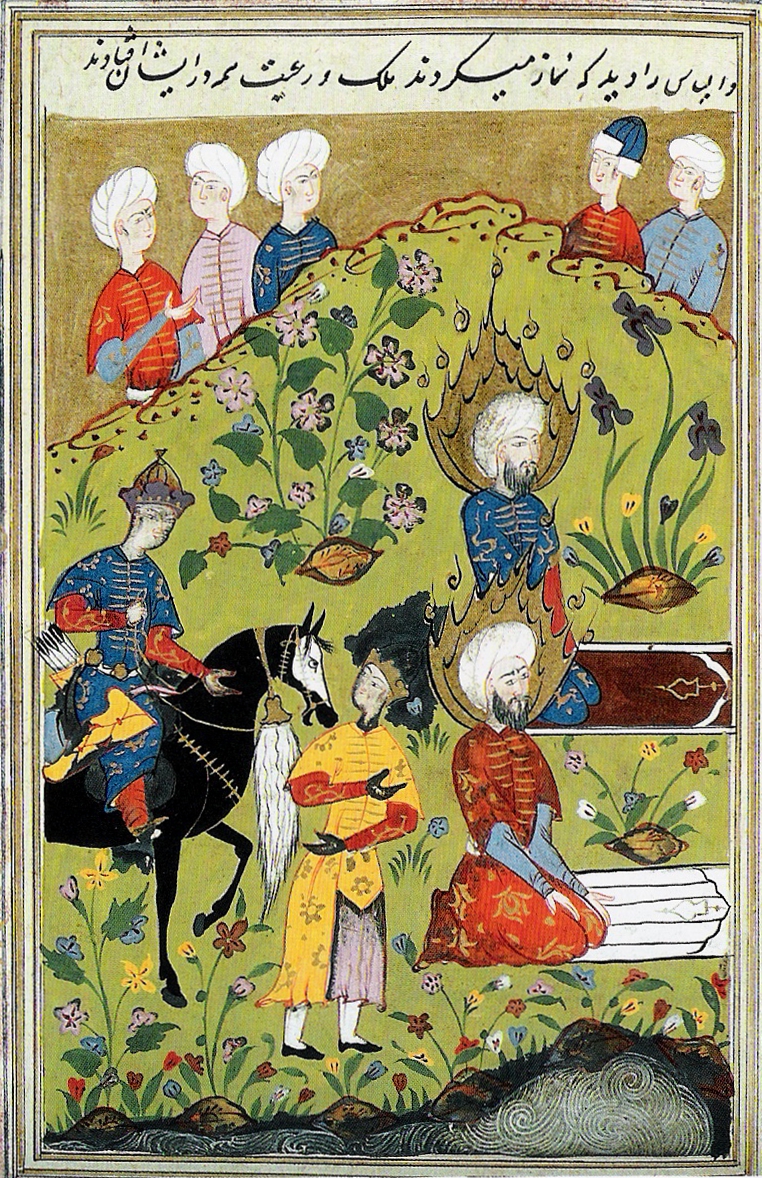
Hıdırellez honors the mysterious figure Khidr () who is sometimes identified with Saint George, and is said to have drunk of the water of life. Some hold that Khidr comes to the rescue of those in distress on land, while Elijah (Ilyas) helps those at sea; and that they meet at a rose tree in the evening of every 6 May. The festival is also celebrated in parts of the Balkans by the name of "Erdelez," where it falls on the same day as George's Day in Spring or Saint George's Day.
Khidr is also honored with a three-day fast in mid-February called Hızır Orucu. In addition to avoiding any sort of comfort or enjoyment, Alevis also abstain from food and water for the entire day, though they do drink liquids other than water during the evening.
Note that the dates of the Khidr holidays can differ among Alevis, most of whom use a lunar calendar, but some a solar calendar.
Müsahiplik
Main article: Müsahiplik
Müsahiplik (roughly, "Companionship") is a covenant relationship between two men of the same age, preferably along with their wives. In a ceremony in the presence of a dede the partners make a lifelong commitment to care for the spiritual, emotional, and physical needs of each other and their children. The ties between couples who have made this commitment is at least as strong as it is for blood relatives, so much so that müsahiplik is often called spiritual brotherhood (manevi kardeşlik). The children of covenanted couples may not marry.
Folk practices
Many folk practices may be identified, though few of them are specific to the Alevis. In this connection, scholar Martin van Bruinessen notes a sign from Turkey's Ministry of Religion, attached to Istanbul's shrine of Eyüp Sultan, which presents:...a long list of 'superstitious' practices that are emphatically declared to be non-Islamic and objectionable, such as lighting candles or placing 'wishing stones' on the tomb, tying pieces of cloth to the shrine or to the trees in front of it, throwing money on the tomb, asking the dead directly for help, circling seven times around the trees in the courtyard or pressing one's face against the walls of the türbe in the hope of a supernatural cure, tying beads to the shrine and expecting supernatural support from them, sacrificing roosters or turkeys as a vow to the shrine. The list is probably an inventory of common local practices the authorities wish to prevent from re-emerging.Other, similar practices include kissing door frames of holy rooms; not stepping on the threshold of holy buildings; seeking prayers from reputed healers; and making lokma and sharing it with others. Also, Ashure is made and shared with friends and family during the month of Muharram in which the Day of Ashure takes place.
Visitations
Main article: Hacıbektaş, Karacaahmet, Şahkulu
Performing ziyarat and du'a at the tombs of Alevi-Bektashi saints or pirs is quite common. Some of the most frequently visited sites are the shrines of Şahkulu and Karacaahmet (both in Istanbul), Abdal Musa (Antalya), Seyyid Battal Gazi Complex (Eskişehir), Hamza Baba (İzmir), Hasandede (Kırıkkale).
In contrast with the traditional secrecy of the Cem ceremony ritual, the events at these cultural centers and sites are open to the public. In the case of the Hacibektaş celebration, since 1990 the activities there have been taken over by Turkey's Ministry of Culture in the interest of promoting tourism and Turkish patriotism rather than Alevi spirituality. The annual celebrations held at Hacıbektaş (16 August) and Sivas (the Pir Sultan Abdal Kültür Etkinlikleri, 23–24 June).
Some Alevis make pilgrimages to mountains and other natural sites believed to be imbued with holiness.
Almsgiving
Main article: zakat
Alevis are expected to give zakat, but there is no set formula or prescribed amount for annual charitable donation as there is in other forms of Islam (2.5% of possessions above a certain minimum). Rather, they are expected to give the "excess" according to Qur'an 2:219. A common method of Alevi almsgiving is through donating food (especially sacrificial animals) to be shared with worshippers and guests. Alevis also donate money to be used to help the poor, to support the religious, educational and cultural activities of Alevi centers and organizations (dargahs, awqaf, and meetings), and to provide scholarships for students.
Infant initiation
There is an initiation called kırklama, which takes place 40-days after the birth. In Alevism khitan or circumcision is considered important with it being a important ritual conducted in the Cemevis. Many other branches of Islam view circumcision as beneficial or even mandatory outside of rare circumstances. The Dede is responsible for leading the spiritual kinship practice of kirvelik which can include but does not require circumcision.
History
Main article: Alevi history

Seljuk period
During the great Turkish expansion from Central Asia into Iran and Anatolia in the Seljuk period (11–12th centuries), Turkmen tribes accepted a Sufi and pro-Alid form of Islam that co-existed with some of their pre-Islamic customs. Their conversion to Islam in this period was mainly achieved through the efforts not of textual scholars (ulama) expounding the finer points of tafsir and sharia, but by charismatic dervishes, a belief whose cult of Muslim saint worship, mystical divination and millenarianism spoke more directly to the steppe mindset. These tribes dominated Anatolia for centuries with their religious warriors (ghazi) spearheading the drive against Byzantines and Crusades.
Ottoman period
As in Khorasan and West Asia before, the Turkmens who spearheaded the Ottomans' drive into the Balkans and West Asia were more inspired by a vaguely Shiite folk Islam than by formal religion. Many times, Ottoman campaigns were accompanied or guided by Bektaşi dervishes as they were the military chaplains, spiritual heirs of the 13th century Sufi saint Haji Bektash Veli, himself a native of Khorasan. After the conquest of Constantinople in 1453, the Ottoman state became increasingly determined to assert its fiscal but also its juridical and political control over the farthest reaches of the Empire.
The resulting Qizilbash revolts, a series of millenarian anti-state uprisings by the non-Sunni Turkmen population of Anatolia that culminated in the establishment of a militantly Shiite rival state in neighbouring Iran. The Ottoman Empire later proclaimed themselves its defenders against the Safavid Shia state and related sects. This created a gap between the Sunni Ottoman ruling elite and the Alevi Anatolian population. Anatolia became a battlefield between Safavids and Ottomans, each determined to include it in their empire.
During the same era, orders that the Alevis followed were positioned differently. The Bektashiyya became the official army order whilst other orders like the Qalandariyya, Saʿdiyya and Safaviyya were seen as public adversaries.
Republic of Turkey
According to Eren Sarı, Alevi saw Kemal Atatürk as a Mahdi "savior sent to save them from the Sunni Ottoman yoke". However, pogroms against Alevi did not cease after the establishment of the Turkish Republic. In attacks against leftists in the 1970s, ultranationalists and reactionaries killed many Alevis. Malatya in 1978, Maraş in 1979, and Çorum in 1980 witnessed the murder of hundreds of Alevis, the torching of hundreds of homes, and lootings.
In 2022, the Turkish state has officially recognized Alevism as a 'cultural group'. As of 2025, Alevism is recognized by the governments of the main Turkish diaspora destinations throughout the world.
References
- Karakaya-Stump, Ayfer. (2019). "The Kizilbash-Alevis in Ottoman Anatolia: Sufism, Politics and Community". Edinburgh University Press.
- (2010). "Documents and "Buyruk" Manuscripts in the Private Archives of Alevi Dede Families: An Overview". British Journal of Middle Eastern Studies.
- (2021). "Education Materialised".
- (19 June 2015). "Alevis". [[Minority Rights Group]].
- "Banga Pîrên Elewiyên Dêrsimê; 'Li zimanê xwe xwedî derbikevin'".
- (2005). "Syncrétismes et hérésies dans l'Orient seljoukide et ottoman (XIVe-XVIIIe siècles): actes du colloque du collège de France, octobre 2001". Peeters.
- (11 February 2024). "The formation of Alevi syncretism". Bilkent University.
- Mete, Levent. (2019). "Buyruk und al Jafr Das Esoterische Wissen Alis". Alevilik-Bektaşilik Araştırmaları Dergisi: Forschungszeitschrift über das Alevitentum und das Bektaschitentum.
- (December 2011). "Comparison Between Bektasi Mistisism And Greek Orthodox Monasticism". Journal of Alevism-Bektashism Studies.
- "Alevilik". Ministry of Culture and Tourism.
- "Religious Politics in Turkey". Cambridge.
- "The Alevis". Oxford Research Encyclopedias.
- (2010). "Alevis and Alevism".
- (2017). "Markus Dressler, Writing Religion: The Making of Turkish Alevi Islam". Journal of Alevism-Bektashism Studies.
- "Kaygusuz abdal: a Medieval TurKish sainT and The ForMaTion oF vernacular islaM in anaTolia".
- "Sufism and Gender in Contemporary Societies". University of Venice.
- (2010). "Islam and secularism in Turkey: Kemalism, religion and the nation state". I.B. Tauris.
- (2024). "The role of religion in female labor supply: evidence from two Muslim denominations". Journal of Demographic Economics.
- Karolewski, Janina. (2008). "What is Heterodox About Alevism? The Development of Anti-Alevi Discrimination and Resentment". Die Welt des Islams.
- "The Alevis in Turkey The Emergence of a Secular Islamic Tradition". Taylor & Francis.
- "TR100".
- Kızıl, Nurbanu. (2021-12-31). "Govt signals action for Turkey's Alevi community amid obstacles".
- (12 May 2022). "The Amalgamation of Two Religious Cultures: The Conceptual and Social History of Alevi-Bektashism".
- (2006). "Speaking for Islam: religious authorities in Muslim societies". Brill.
- "ALEVİ - BEKTAŞİ KÜLTÜR VE CEMEVİ BAŞKANLIĞI".
- Cagaptay, Soner. (17 April 2012). "Are Syrian Alawites and Turkish Alevis the same?".
- (22 July 2017). "Turkey's Alevis, a Muslim Minority, Fear a Policy of Denying Their Existence". The New York Times.
- (2010). "Ethno-Religious Communities: To the Problem of Identity Markers". JSTOR.
- (2020). "Alevism as an ethno-religious identity: contested boundaries". Routledge.
- (December 2016). "Kentsel Alevilik ve Alevi Gençlerin Kimlik Arayışları". PODEM.
- "Üç Sünnet Yedi Farz". ISAD.
- Wakamatsu, Hiroki. (2013). "Veneration of the Sacred or Regeneration of the Religious: An Analysis of Saints and the Popular Beliefs of Kurdish Alevis". [[Sophia University]].
- Dressler, Markus. (2008). "Alevīs".
- (30 December 2021). ""Melamet Hırkası Giyenler": The Naming of the Heterodox Turkish Dervish Communities Before the 17th Century and Their Relations with Alevism". Journal of Alevism-Bektashism Studies.
- Hande Sözer ''Managing Invisibility: Dissimulation and Identity Maintenance among Alevi Bulgarian Turks'' BRILL 2014 {{ISBN. 978-9-004-27919-3 page 114
- Tord Olsson, Elisabeth Ozdalga, Catharina Raudvere ''Alevi Identity: Cultural, Religious and Social Perspectives'' Tord Olsson, Elisabeth Ozdalga, Catharina Raudvere {{ISBN. 978-1-135-79725-6 page 25
- John Shindeldecker. (1998). "Turkish Alevis Today". Sahkulu Sultan Külliyesi Vakfı.
- Suavi Aydın. (23 October 2019). "Alevism as an Ethno-Religious Identity". Taylor & Francis.
- (6 July 2021). "Soul/Spirit Concept in Yunus Emre's Poems". Journal of Alevism-Bektashism Studies.
- (10 May 2022). "'Vahdeti Vücut, Hakk ile olan birliğin oluşumudur, Aleviliğin temel öğretisidir'-VİDEO".
- Özbakir, Akin. Malatya Kale yöresi Alevi-Bektaşi inançlarının tespit ve değerlendirilmesi. MS thesis. Sosyal Bilimler Enstitüsü, 2010.
- "Differences & Similarities Between Anatolian Alevis & Arab Alawites: Comparative Study on Beliefs and Practices".
- Alevi Hafızasını Tanımlamak: Geçmiş ve Tarih Arasında. (2016). (n.p.): İletişim Yayınları.
- Handan Aksünger Jenseits des Schweigegebots: Alevitische Migrantenselbstorganisationen und zivilgesellschaftliche Integration in Deutschland und den Niederlanden Waxmann Verlag 2013 {{ISBN. 978-3-830-97883-1 page 83-84 (German)
- Procházka-Eisl, Gisela. (5 April 2016). "The Alevis".
- "Alevism-Bektashism From Seljuks to Ottomans and Safavids; A Historical Study".
- Yildirim, Riza. (2019). "The Safavid-Qizilbash Ecumene and the Formation of the Qizilbash-Alevi Community in the Ottoman Empire, c. 1500–c. 1700". Iranian Studies.
- "Pirler / Analar – Alevi Ansiklopedisi".
- "The Gül Baba's türbe in Buda, Hungary".
- Darke, Diana. (2022). "The Ottomans: A Cultural Legacy". Thames & Hudson.
- (2016). "Shariʿa in the Secular State: Evolving Meanings of Islamic Jurisprudence in ..". Routledge.
- Roger M. Savory (ref. Abdülbaki Gölpinarli), [[Encyclopaedia of Islam]], "Kizil-Bash", Online Edition 2005
- (2010). "Early and Recent Formulations of Theories for a Formative Christian Heterodox Impact on Alevism". JSTOR.
- (2020). "The Kizilbash-Alevis in Ottoman Anatolia: Sufism, politics and community". Edinburgh University Press.
- (30 December 2022). "Is Alevism the solution?". Meer.
- Ataseven, I: "The Alevi-Bektasi Legacy: Problems of Acquisition and Explanation", page 1. Coronet Books Inc, 1997
- (2004). "Aleviliğin Gizli Tarihi". Chiviyazıları.
- Harmancı, Hamza. (2010). "Alevi Tarih Yazımında Skandal". Yurt Kitap Yayın.
- (1998). "Aliʾsiz Alevilik". Berfin Yayınları.
- "Field of Research: Anatolian Alevis in London".
- See again "The significance of ''[[müsahiplik]]'' among the Alevis" in ''Synchronistic Religious Communities in the Near East'' (co-edited by her, with B. Kellner-Heinkele & A. Otter-Beaujean), Brill 1997, p. 131 ff.
- Kristina Kehl-Bordrogi reports this among the {{lang. tr. Tahtacı. See her article "The significance of ''[[müsahiplik]]'' among the Alevis" in ''Synchronistic Religious Communities in the Near East'' (co-edited by her, with B. Kellner-Heinkele & A. Otter-Beaujean), Brill 1997, p. 131 ff.
- "Düşkünlük".
- Tee, Caroline. (2013-01-29). "The Sufi Mystical Idiom in Alevi Aşık Poetry: Flexibility, Adaptation and Meaning". European Journal of Turkish Studies. Social Sciences on Contemporary Turkey.
- "Bektashi".
- Medyaradar. (2025-02-11). "Hızır orucu nedir, ne zaman, kaç gün tutulur, kimler tutar? Hızır orucu nasıl ve neden tutulur?". Medyaradar.
- Krisztina Kehl-Bodrogi. 1988. Die Kizilbash/Aleviten, pp. 182–204.
- ''Religious practices in the Turco-Iranian World'', 2005.
- Fieldhouse, P.. (2017). "Food, Feasts, and Faith: An Encyclopedia of Food Culture in World Religions [2 volumes]". ABC-CLIO.
- "ALEVİ & BEKTAŞİLERİN KUTSAL YERLERİ-TÜRBELER haberleri".
- (2021). "Alevî Geleneğinde Doğum Ritüelleri". İnsan ve Toplum Bilimleri Araştırmaları Dergisi.
- "Circumcision".
- https://files01.core.ac.uk/download/620042278.pdf.
- https://dergipark.org.tr/tr/download/article-file/2270118#:~:text=S%C3%B6z%20konusu%20bu%20uygulamalar%20bazen,ve%20ya%C5%9Fam%20bi%C3%A7iminin%20etkisinde%20%C5%9Fekillendirmi%C5%9Flerdir.
- (11 August 2019). "Ali Yıldırım: Kurban ve sünnet Tevrat kaynaklıdır ve Alevilerle ilgisi yoktur".
- Issa, Tözün. (2016). "Alevis in Europe". Taylor & Francis Group.
- "The Shiites of Lebanon under Ottoman Rule, 1516-1788".
- [https://ebookshia.com/upload/bookFiles/656/شيعه_لبنان_زير_سلطه_عثماني.PDF شيعه_لبنان_زير_سلطه_عثماني] {{Webarchive. link. (8 July 2022 ebookshia.com (in Arabic))
- Zeidan, David. The Alevi of Anatloia: The Islamic Mystical Brotherhoods in Turkey Today. Islamic Culture, vol. 73, no. 3, 1999, pp. 104-121
- (2017). "The Alevi Of Anatolia: During the great Turkish expansion from Central Asia .". noktaekitap.
- "Pir Sultan Abdal Monument and Festival".
- "ALEVIS AND THE TURKISH STATE".
- "Cumhurbaşkanlığı Kararnamesi ile Alevi-Bektaşi Kültür ve Cemevi Başkanlığı kuruldu".
- (26 April 2022). "Avusturya'da nasıl bir Alevilik tanındı? Tüm merak edilenleri Özgür Turak PİRHA'ya anlattı".
- (28 October 2012). "Aleviler İsviçre'de resmen tanındı - Evrensel".
- Önal, Barış. (11 December 2020). "Alevilik Almanya'da 'En üst seviyede inanç grubu' olarak tanındı".
- See Martin Stokes' study.
- Flows, Capital. "Religious Diversity And The Alevi Struggle For Equality In Turkey".
- (October 2009). "Mapping the Global Muslim Population: A Report on the Size and Distribution of the World's Muslim Population, Pew Research Center".
- Nasr, V: "The Shia Revival," page 1. Norton, W. W. & Company, Inc, 2006
- Karin Vorhoff. 1995. Zwischen Glaube, Nation und neuer Gemeinschaft: Alevitische Identitat in der Türkei der Gegenwart, pp. 95–96.
- (14 September 2007). "Turkey: International Religious Freedom Report 2007". State.gov.
- Daan Bauwens. (18 February 2010). "Turkey's Alevi strive for recognition". Asia Times Online.
- (2012-10-12). "The Alevis in Turkey and Europe: Identity and Managing Territorial Diversity". Routledge.
- "Religion, England and Wales".
- "The Alevi of Anatolia".
- Gezik, Erdal. (2021). "The Cambridge History of the Kurds". [[Cambridge University Press]].
- (2009). "Aleviler: Türkiye, İran, İrak, Suriye, Bulgaristan : araştırma-inceleme". Yurt Kitap-Yayın.
- "Hamza Aksüt ile Alevi Ocakları Üzerine - Aleviliğin Kökleri".
- (31 December 2021). "Govt signals action for Turkey's Alevi community amid obstacles".
- (14 December 2012). "Sabahat Akkiraz'dan Alevi raporu".
- ''Structure and Function in Turkish Society.'' Isis Press, 2006, p. 81.
- Μποζανίνου Τάνια. (23 January 2011). "ΤΟ ΒΗΜΑ – Αλεβίτες, οι άγνωστοι "συγγενείς" μας – κόσμος". Tovima.gr.
- Louie, Kam. (2008). "The Cambridge Companion to Modern Chinese Culture". [[Cambridge University Press]].
- Starr, S. Frederick. (2004). "Xinjiang: China's Muslim Borderland: China's Muslim Borderland". [[Routledge]].
- (9 May 2012). "Mummy dearest : questions of identity in modern and ancient Xinjiang Uyghur Autonomous Region". Alyssa Christine Bader [[Whitman College]] p31.
- Minahan, James B.. (2014). "Ethnic Groups of North, East, and Central Asia: An Encyclopedia". ABC-CLIO.
- "Alevitische Gemeinde".
- (16 September 2021). "Aleviten in Deutschland".
- (2016). "Creating cohesion from diversity through mobilization: Locating the place of Alevi federations in Alevi collective identity in Europe". Ankara Hacı Bayram Veli University.
- Koşulu, Deniz. (2013). "Muslim Political Participation in Europe". Edinburgh University Press.
- "The Function of Alevi-Bektashi Theology in Modern Turkey". Swedish Research Institute.
This article was imported from Wikipedia and is available under the Creative Commons Attribution-ShareAlike 4.0 License. Content has been adapted to SurfDoc format. Original contributors can be found on the article history page.
Ask Mako anything about Alevism — get instant answers, deeper analysis, and related topics.
Research with MakoFree with your Surf account
Create a free account to save articles, ask Mako questions, and organize your research.
Sign up freeThis content may have been generated or modified by AI. CloudSurf Software LLC is not responsible for the accuracy, completeness, or reliability of AI-generated content. Always verify important information from primary sources.
Report