From Surf Wiki (app.surf) — the open knowledge base
Aldershot Garrison
Military installation in Hampshire, England

Military installation in Hampshire, England
| Field | Value |
|---|---|
| country | England |
| official_name | Aldershot Garrison |
| static_image | Aldershot Soldiers Receive Operational Medals.jpg |
| static_image_width | 270px |
| static_image_caption | Maj Gen Rupert Jones awarding operational medals at New Normandy Barracks, Aldershot Garrison |
| label_position | top |
| coordinates | |
| population | 10,500 |
| shire_district | Rushmoor |
| shire_county | Hampshire |
| region | South East England |
| constituency_westminster | Aldershot |
| post_town | ALDERSHOT |
| postcode_district | GU11 and GU12 |
| postcode_area | GU |
| dial_code | 01252 |
Aldershot Garrison is a major garrison in South East England, between Aldershot and Farnborough in Hampshire. The garrison was established when the War Department bought a large area of land near the village of Aldershot, with the objective of establishing a permanent training camp for the Army. Over time, this camp grew into a military town and continues to be used by the Army to the present day. It is home to the headquarters of the Army's Regional Command and Home Command, and it is also the headquarters for the Army Special Operations Brigade. The garrison plays host to around 70 military units and organisations.
In 1972, the garrison was the site of one of the worst UK mainland IRA attacks of the time when a car bomb was detonated outside the headquarters mess of 16 Parachute Brigade, killing seven and injuring nineteen. The Official IRA claimed responsibility, stating that the attack was in revenge for the shootings in Derry that came to be known as Bloody Sunday. Following the attack the Army took steps to secure the garrison by erecting security fences around most of the barracks and lines, as well as introducing armed security patrols.
The garrison area covers approximately 200 ha and its population is about 10,500. Adjacent to the military town is some 2700 ha of open military training area.
History
Established in 1854, Aldershot has long been seen as the home of the British Army. The garrison was established when the War Department bought a large area of land near to the village of Aldershot, with the objective of establishing a permanent training camp for the British Army. Over time, this camp grew into a military town and continues to be used by the Army to the present day.
Beginnings
Before the establishment of the 'Camp at Aldershot', the British Army did not have any single permanent camp for training troops on a large scale. Historically, troops had been stationed in long established garrisons, many of which could trace their histories back as mediaeval, or earlier, defensive positions. In 1852, following the death of The Iron Duke, a group of reformers, which included Prince Albert, forged an alliance that would seek to improve the training of the Army. In 1853, a summer camp was established at Chobham Common and two divisional size military exercises were conducted. Following the success of these manoeuvres, it was decided that a permanent camp was needed where such exercises could be regularly conducted. Initially, Reigate was selected as a location that was strategically sound, and close enough to London, to defend against invasion from across the English Channel. Despite its obvious advantages, Reigate was situated in prime agricultural land that would prove too expensive to purchase. Lord Hardinge suggested Aldershot Heath as the location for the new training area, as land was less expensive, but still close enough to the South Coast to defend London. In January 1854, the British Government's War Department purchased areas of heathland around the small village of Aldershot at £12 an acre. By 1861, around 8,000 acres had been purchased.
It was originally only envisaged to set up a tented camp for summer use; however, following the outbreak of the Crimean War, it was necessary to accommodate a large number of troops, over a longer period of time and so two hutted camps, one north and one south of the Basingstoke Canal, were constructed. Between 1854 and 1859, around 1,200 wooden huts were constructed by a local civilian contractor, at a cost of £100,263.

Queen Victoria and Prince Albert showed a keen interest in the establishment and the development of Aldershot as a garrison town. In 1855, they had a wooden Royal Pavilion built, in which they would often stay when attending reviews of the Army.{{cite book |last=Cole |first=Howard N. |year=1980 |title=The Story of Aldershot
After the Crimean War, a division of regular troops was permanently based at Aldershot, and 'the Division at Aldershot' (including artillery at Christchurch, Hampshire, and cavalry at Hounslow, Middlesex) became one of the most important home commands of the British Army. In January 1876 a Mobilization Scheme for the forces in Great Britain and Ireland was published, with the Active Army divided into eight army corps based on the major Commands and Districts. The 2nd Corps was headquartered at Aldershot. This scheme disappeared in 1881, when the districts were retitled 'District Commands', with Aldershot usually listed as IX or X. In 1898, (when Queen Victoria's son, the Duke of Connaught, was General Officer Commanding) Aldershot Command was ranked I on the list. From 1901 to 1908 Aldershot Command was given the additional title of I Army Corps.
The garrison subsequently became seen as home to the British Army. This status has been reflected in the use of Aldershot as a headquarters for a variety of regional commands over the last 100 years. HQ Aldershot Command continued in existence until c. February 1941, when it was replaced by HQ Aldershot Area.
Later 19th century

In the late 1870s, it was decided that the original hutted camp needed to be replaced with some more permanent structures. When the wooden huts had been built in the 1850s, the contractor had guaranteed the huts for 13 years; in practice, many of those huts were still serving their purpose some 30 years later. In November 1881, the first steps were taken to convert the hutted camp into permanent barracks. At this time, the first two brick buildings were constructed in North Camp; this was quickly followed by the construction of a number of larger brick-built bungalows to replace the previous wooden designs.{{cite book |last=Cole |first=Howard N. |year=1980 |title=The Story of Aldershot
In the 20th century
Smith-Dorrien House, the local social facility for soldiers, was completed in 1909. The garrison used to be the corps headquarters for the Royal Corps of Transport and the Army Catering Corps; when these were merged into the Royal Logistic Corps in 1993, the corps headquarters moved to Deepcut Barracks. Today, the garrison is home to the headquarters of the Regional Command of the British Army, and is also the administrative base for 101st Operational Sustainment Brigade. The garrison plays host to around 70 military units and organisations.
1972 IRA bombing
Main article: 1972 Aldershot Bombing
On 22 February 1972, Aldershot experienced one of the worst UK mainland IRA attacks of the time. Seven people, all civilian support staff, including cooks, cleaners, and a Catholic priest, were killed and 19 people were injured, in a car bomb attack on the 16th Parachute Brigade headquarters mess at Aldershot garrison. This blast was later claimed, by the Official IRA, as revenge for the shootings in Derry that came to be known as Bloody Sunday. Until then, the military town had been open-plan, but the attack led to immediate action to secure military property. A memorial stone was placed on the site of the bombing.
Barracks, buildings and geography
Historical military town
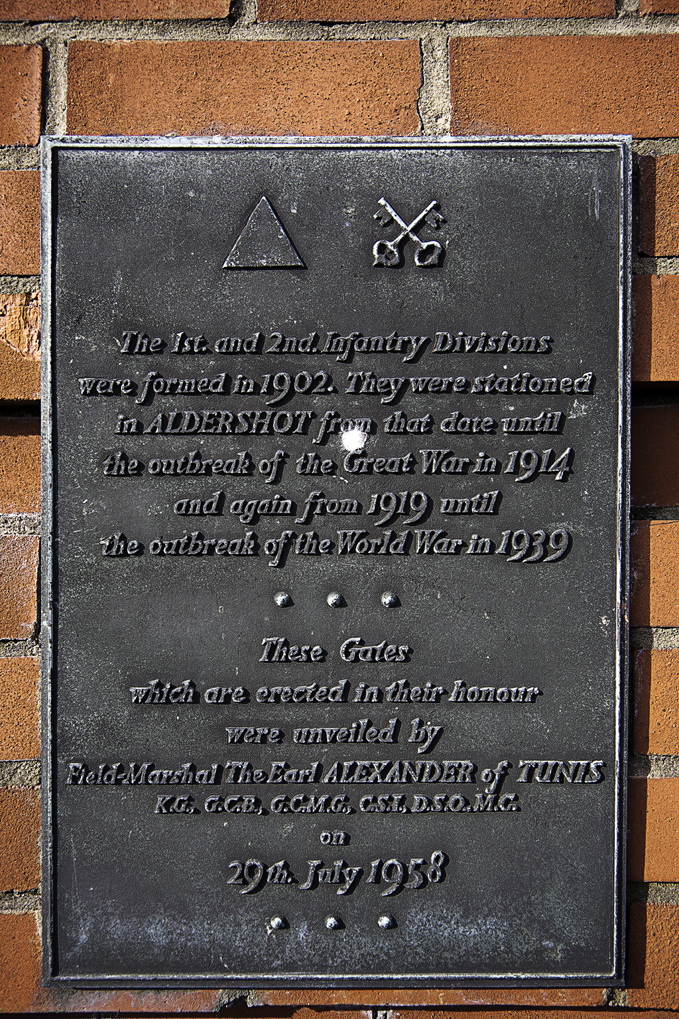
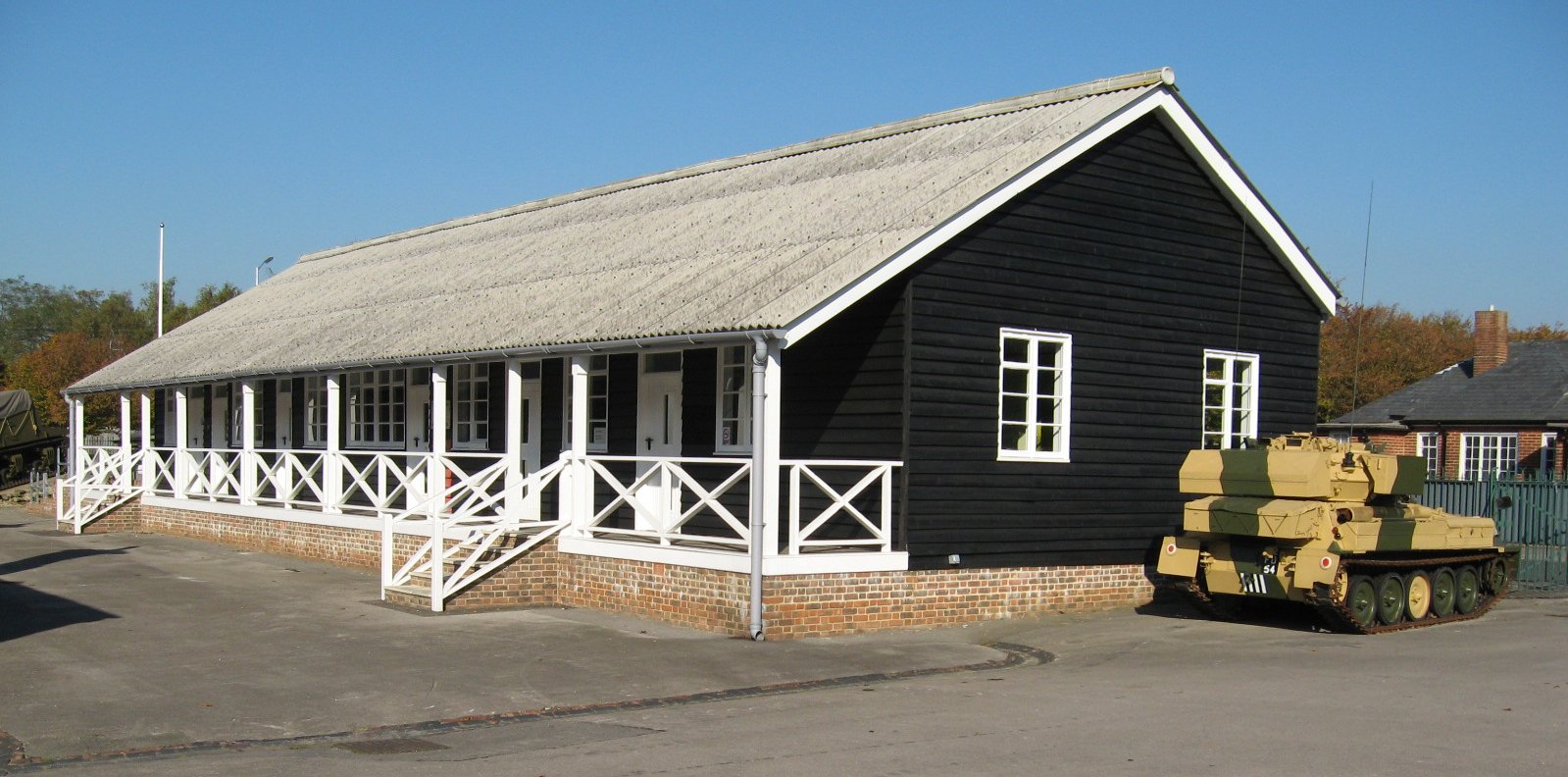
Following Aldershot's establishment as a large permanent training camp in the 1850s, the military presence continued to grow. The garrison was divided into the North Camp and the South Camp, either side of the Basingstoke Canal. As more soldiers arrived, they were first housed in bell tents due to a shortage of permanent accommodation. Later, wooden huts were built, which were in turn replaced by brick built barracks in the 1890s. Much of the Victorian camp was demolished in the 1960s.
North Camp
Prior to 1890, Aldershot garrison lacked permanent accommodation to house the growing military presence. Following the Barracks Act of 1890, North Camp was rebuilt with brick barracks named: Blenheim, Lille, Malplaquet, Oudenarde, Ramillies and Tournay. The new barracks were built by Henry Wells, a locally based building contractor. This group of barracks then became known as the Marlborough Lines. Today, the only surviving barracks of the Marlborough Lines group is Lille barracks. The Victorian buildings were largely demolished in 1958, and then rebuilt with more modern facilities, although the original officers' mess survives. North Camp station is the garrison's original railway station.
South Camp

The area known as South Camp was rebuilt at much the same time as North Camp. Construction was completed by the same local company responsible for Marlborough Lines. This phase of construction saw nine barracks built, namely: Albuhera, Barossa, Corunna, Gibraltar, Maida, Buller, Mandora and McGrigor barracks. This group of barracks became known as Stanhope Lines. Many of these brick-build Victorian barracks were demolished in the late 1960s, to make way for what is now Montgomery Lines. One of the Victorian barracks did survive. Montgomery Lines was completed in the 1970s and was built on the site of several barracks that formerly made up Stanhope Lines. Much of South Camp has now been redeveloped as part of the Aldershot Urban Extension.
Modern military town

Today, the military town has a population of around 10,500. This consists of around 3,900 resident soldiers, some 1,000 transient military personnel on courses or sport, 770 MoD Civil Servants and some 5,000 service dependents. The garrison contains 2,145 Service Family Accommodation quarters. The rest of the garrison comprises barracks, the Aldershot Military Stadium, Queen's Parade playing fields, Garrison Sports Centre and the Aldershot Centre For Health, which is a joint MoD and local authority venture. The garrison is mostly centred around the crossroads that join Queen's Avenue and Alison's Road. The military town includes local landmarks such as the Aldershot Observatory, Wellington Statue, the RAMC Memorial, Aldershot Military Cemetery, the Royal Garrison Church and other churches. Adjacent to the military town is some 2,700 hectares of open military training area, which is open to the public when not in use for military purposes.
Barracks
Current barracks which encompass the garrison include:
- Roebuck House
- Headquarters, 11th Brigade
- Headquarters South East
- Montgomery House
- Headquarters, Home Command
- Headquarters, Regional Command
- Wellington House
- Headquarters, Aldershot Garrison
- Headquarters, 101st Operational Sustainment Brigade
- Saint Omer Barracks
- Headquarters, Army Special Operations Brigade
- Duchess of Kent Barracks
- 251 Signal Squadron, 10th Signal Regiment, Royal Corps of Signals
- Travers Barracks
- 27 Regiment, Royal Logistic Corps
- Gale Barracks
- 10 Queen's Own Gurkha Logistic Regiment, Royal Logistic Corps
- G Troop, 562 Transport Squadron, 151 (Greater London) Regiment, Royal Logistic Corps
- Lille Barracks
- 1st Battalion, Grenadier Guards
- Mons Barracks
- 1st Battalion, Irish Guards
- New Normandy Barracks
- 4th Battalion, Ranger Regiment
- Provost Barracks
- 160 Provost Company, 3 Regiment, Royal Military Police
- Puckridge Barracks
- Detachment, 101 Military Working Dog Squadron, 1st Military Working Dog Regiment
- Dog Section, Aldershot Ministry of Defence Guard Service
- Aldershot Veterinary Troop, Royal Army Veterinary Corps
- Ordnance Barracks
- Headquarters, Soldier Magazine
- Aldershot Defence Mail Centre
- Seely House
- Communication Information Systems (CIS) Troop, 8th Engineer Brigade
- Headquarters, South East Reserve Forces and Cadets Association
- 2 (Farnborough) Platoon, Hampshire & Isle of Wight Army Cadet Force{{cite web|url=https://armycadets.com/county/hampshire-and-isle-of-wight-acf/|title= Hampshire And Isle Of Wight Army Cadets|accessdate=15 April 2021}}
- Thornhill Barracks
- Aldershot Resettlement Training Centre
- 413 (Aldershot) Squadron, Hampshire & Isle of Wight Wing, Air Training Corps
- 1 (Aldershot) Platoon, Hampshire & Isle of Wight Army Cadet Force
- Browning Barracks
- Military Preparation College for Training
- Fox Lines
- Regimental Headquarters, Royal Army Physical Training Corps
- Army School of Physical Training
- Headquarters, Army Sports Control Board
- Wavell Barracks
The following units are also based within the garrison, at an unknown location:
- Combat Service Support Trials and Development Unit (CCS TDU)
- 3rd Battalion, Royal Gurkha Rifles
In literature
The Aldershot Garrison is referenced in the first paragraph of Rudyard Kipling's poem Gunga Din.
References
References
- "Timeline History of Aldershot, Hampshire".
- Vickers, Paul H.. (2011). "''Aldershot Military Town—a brief history''". Friends of the Aldershot Military Museum.
- Cole, Howard N.. (1980). "''The Story of Aldershot''". Southern Books.
- Vickers, Paul H.. (2011). "''Aldershot Military Town—a brief history''". Friends of the Aldershot Military Museum.
- {{NHLE
- ''Hart's Army List'' from 1857
- Col John K. Dunlop, ''The Development of the British Army 1899–1914'', London: Methuen, 1938.
- "British Military History: Aldershot Command".
- "Government House Mess, Farnborough". British listed buildings.
- Cole, Howard N.. (1980). "''The Story of Aldershot''". Southern Books.
- {{NHLE
- {{NHLE
- "Aldershot Garrison, Introduction".
- [https://news.bbc.co.uk/onthisday/hi/dates/stories/february/22/newsid_2519000/2519029.stm "IRA bomb kills six at Aldershot barracks"], bbc.co.uk. Retrieved 1 March 2011.
- (22 February 2019). "IRA Bombing Victims Remembered In Aldershot 47 Years Later". Forces.net.
- "Guide to the barracks of Aldershot".
- "History of Lille Barracks".
- "North Camp". Great Western Railway.
- "Detailed Heritage Area Studies".
- "11th Infantry Brigade & HQ South East".
- "Regular Army Basing Matrix by Formation and Unit".
- "Home Command".
- "Regional Command".
- (27 May 2021). "Today the Bde HQ said goodbye to Brig Prosser as he handed over Command of 101 Logistic Brigade to Brig Reehal. Farewell to Brig Prosser".
- "101 Logistic Brigade".
- "6th (United Kingdom) Division".
- "British Army units from 1945 on - 250 to 253 Squadrons".
- "27 Regiment RLC".
- "Order of Battle, Manpower, and Basing Locations".
- "Gurkhas face 'Doko' Challenge".
- (6 July 2020). "Army 2020 Refine Reserves".
- "Army Reserve Units".
- "151 Regiment RLC".
- (25 November 2021). "Future Soldier Guide".
- "160 PROVOST COY ROYAL MILITARY POLICE, Provost Barracks, Maida Road, ALDERSHOT, GU11 2DN".
- "Military Working Dogs Unit".
- (15 May 2020). "PoW Camp 676 Puckridge Camp".
- "Contact Us – Soldier Magazine".
- "Army Reserve Centre – Aldershot".
- "Aldershot Resettlement Training Centre".
- "413 (Aldershot) - RAF Air Cadets".
- (2018-01-03). "Aldershot".
- "Royal Army Physical Training Corps".
- (11 June 2020). "Question for Ministry of Defence: every bases operated by the Ministry of Defence".
- "ascb sport facilities in Aldershot".
- (3 August 2020). "Final new Aldershot Garrison homes completed three months early". InYourArea.
- (17 March 2020). "MOD selects autonomous ground vehicles for resupply". The Engineer.
This article was imported from Wikipedia and is available under the Creative Commons Attribution-ShareAlike 4.0 License. Content has been adapted to SurfDoc format. Original contributors can be found on the article history page.
Ask Mako anything about Aldershot Garrison — get instant answers, deeper analysis, and related topics.
Research with MakoFree with your Surf account
Create a free account to save articles, ask Mako questions, and organize your research.
Sign up freeThis content may have been generated or modified by AI. CloudSurf Software LLC is not responsible for the accuracy, completeness, or reliability of AI-generated content. Always verify important information from primary sources.
Report