From Surf Wiki (app.surf) — the open knowledge base
Alcohol detoxification
Abrupt cessation of alcohol intake
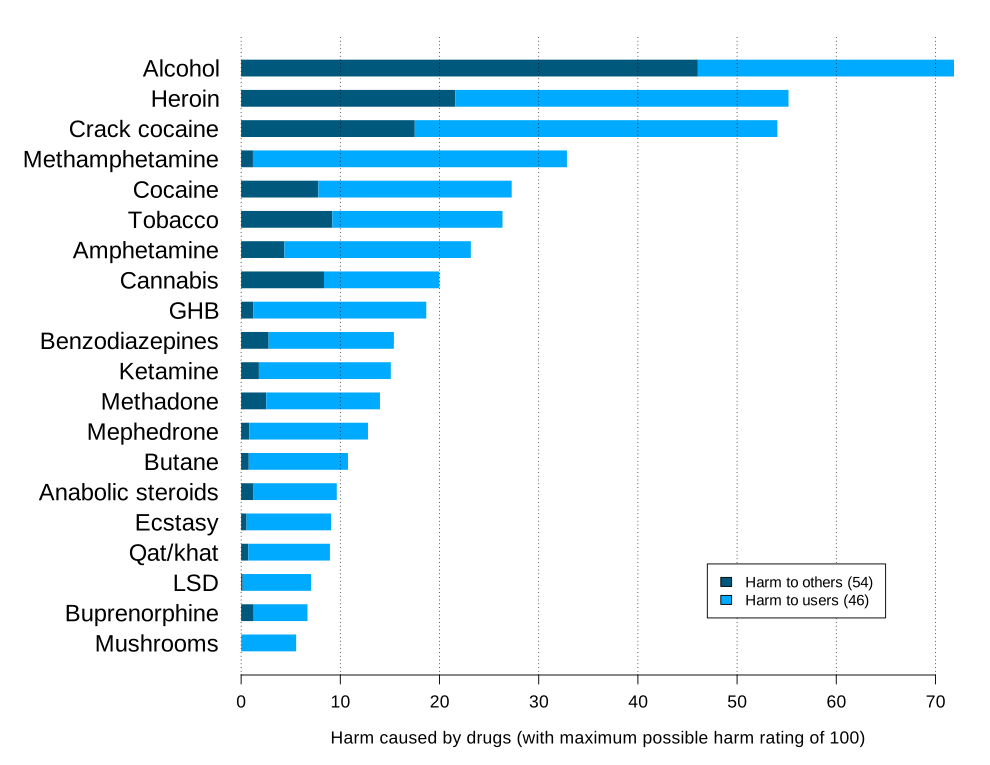
Abrupt cessation of alcohol intake
Alcohol detoxification (also known as detox) is the abrupt cessation of alcohol intake in individuals that have alcohol use disorder. This process is often coupled with substitution of drugs that have effects similar to the effects of alcohol in order to lessen the symptoms of alcohol withdrawal. When withdrawal does occur, it results in symptoms of varying severity.
As such, the term "detoxification" may be somewhat of a misnomer since the process need not refer exclusively to the removal of toxic substances from the body. Detoxification may or may not be indicated depending upon an individual's age, medical status, and history of alcohol intake. For example, a young man who binge drinks and seeks treatment one week after his last use of alcohol may not require detoxification before beginning treatment for alcohol use disorder.
Some addiction medicine practitioners use the term "withdrawal management" instead of "detoxification".{{cite web
Withdrawal symptoms
Main article: Alcohol withdrawal syndrome
The symptoms of alcohol withdrawal can range from mild to severe depending on the level of alcohol dependence a person has experienced. Symptoms can be behavioural (anxiety, agitation, irritability), neurological (tremor, hallucinations, increased risk of seizures), and physical (changes in heart rate, body temperature, blood pressure, nausea). Symptoms typically occur between 6 and 24 hours since cessation of drinking. In severe cases delirium tremens may occur, which is a medical emergency and could result in death.
Management
Benzodiazepines are the most common family of drugs used for alcohol detoxification, followed by barbiturates.
Benzodiazepines
Benzodiazepines such as chlordiazepoxide (Librium), diazepam (Valium), lorazepam (Ativan) or oxazepam (Serax) are the most commonly used drugs used to reduce alcohol withdrawal symptoms. There are several treatment patterns in which it is used:
- The first option takes into consideration the varying degrees of tolerance. In it, a standard dose of the benzodiazepine is given every half-hour until light sedation is reached. Once a baseline dose is determined, the medication is tapered over the ensuing 3 to 10 days.
- Another option is to give a standard dose of benzodiazepine based on history and adjust based on withdrawal phenomenon.
- A third option is to defer treatment until symptoms occur. This method should not be used in patients with prior, alcohol-related seizures. This has been effective in randomized controlled trials. A non-randomized, before and after, observational study found that symptom-triggered therapy was advantageous.
Dosing of the benzodiazepines can be guided by the CIWA scale. The scale is available online.
Regarding the choice of benzodiazepine:
- Chlordiazepoxide (Librium) is the benzodiazepine of choice in uncomplicated alcohol withdrawal due to its long half-life.{{cite web |name-list-style =amp |access-date =2011-11-29 |archive-url =https://web.archive.org/web/20111203115017/http://www.nta.nhs.uk/uploads/nta_review_of_the_effectiveness_of_treatment_for_alcohol_problems_fullreport_2006_alcohol2.pdf |archive-date =2011-12-03
- Lorazepam or diazepam is available as an injection for patients who cannot safely take medications by mouth.
- Lorazepam and oxazepam are indicated in patients with impaired liver function because they are metabolised outside of the liver.
Nitrous oxide
Nitrous oxide has been shown to be an effective and safe treatment for alcohol withdrawal. Over 20,000 cases of the alcoholic withdrawal state have been successfully treated with psychotropic analgesic nitrous oxide (PAN) in South Africa and Finland. In 1992 it was officially approved for the treatment of addictive withdrawal states by the medical authorities in South Africa. Consequently, patients receiving it can claim a refund from their medical insurance. The gas therapy reduces the use of highly addictive sedative medications (like benzodiazepines and barbiturates) by over 90%. The technique thus reduces the danger of secondary addiction to benzodiazepines, which can be a real problem amongst alcoholics who have been treated with these agents.
Other
Benzodiazepines remain first-line therapy for alcohol-withdrawal syndrome (AWS). Several non-benzodiazepine options may be used as adjuncts or, in selected cases, alternatives, but none replace benzodiazepines for preventing seizures or delirium unless otherwise specified.
Adjuncts for autonomic hyperactivity (α2-agonists and β-blockers)
Alpha-2 adrenergic agonists (e.g., clonidine; in intensive-care settings, dexmedetomidine) and β-blockers (e.g., atenolol, metoprolol) can be used as adjuncts to control tachycardia and hypertension when these persist despite adequate benzodiazepines. They should not be used as monotherapy for AWS and do not prevent withdrawal-related seizures or delirium. Contemporary reviews similarly describe dexmedetomidine only as an adjunct in severe or benzodiazepine-resistant cases.
Anticonvulsants (carbamazepine, gabapentin, valproate)
Non-benzodiazepine anticonvulsants have a limited but useful role. Carbamazepine or gabapentin may be used for mild–moderate AWS (including ambulatory care) or as adjuncts when benzodiazepines are contraindicated or insufficient; they can also serve as a bridge into longer-term AUD treatment in some patients. A Cochrane review found no clear overall advantage of anticonvulsants over benzodiazepines, though carbamazepine may improve some symptom scores; overall data quality is mixed and further trials are needed. Valproate should not be used as monotherapy for AWS and is generally avoided in pregnancy and significant liver disease.
Phenobarbital
In monitored settings and when used by clinicians experienced with its dosing, phenobarbital can be an alternative to benzodiazepines (including monotherapy in selected settings) or an adjunct for severe/complicated or benzodiazepine-resistant withdrawal. Recent reviews support its usefulness within protocolized care, while emphasizing the need for close monitoring given its narrow therapeutic window.[[File:Alcover 17,5 - Gamma-Hydroxybutyric acid.JPG|thumb|GHB sold in Italy for therapeutic use]]
Sodium oxybate (gamma-hydroxybutyric acid)
Sodium oxybate is approved in Italy and Austria for managing AWS and for relapse prevention in alcohol dependence. Randomized and observational studies suggest efficacy for AWS and maintenance of abstinence; however, concerns about misuse/abuse potential and regulatory variability limit its use outside specialized programs. In 2025, the European Medicines Agency began a safety and efficacy review of sodium-oxybate–containing products used for alcohol dependence, reflecting ongoing benefit–risk assessment.
References
References
- (November 2010). "Drug harms in the UK: a multicriteria decision analysis". Lancet.
- "Adult Substance Use Withdrawal Management Services | Texas Health and Human Services".
- (2004). "Alcohol Withdrawal Syndrome". American Family Physician.
- (January 2026). "Pharmacological management of alcohol withdrawal. A meta-analysis and evidence-based practice guideline. American Society of Addiction Medicine Working Group on Pharmacological Management of Alcohol Withdrawal". JAMA.
- (2018). "Novel pharmacotherapeutic approaches in treatment of alcohol addiction". Current Drug Targets.
- (1994). "Individualized treatment for alcohol withdrawal. A randomized double-blind controlled trial". JAMA.
- (2002). "Symptom-triggered vs fixed-schedule doses of benzodiazepine for alcohol withdrawal: a randomized treatment trial". Arch. Intern. Med..
- (2001). "Symptom-triggered therapy for alcohol withdrawal syndrome in medical inpatients". Mayo Clin. Proc..
- (1989). "Assessment of alcohol withdrawal: the revised clinical institute withdrawal assessment for alcohol scale (CIWA-Ar)". British Journal of Addiction.
- (1999). "Diagnosis and management of acute alcohol withdrawal". Canadian Medical Association Journal.
- Gillman M.A, Lichtigfeld, F.J. 2004 Enlarged double-blind randomised trial of benzodiazepines against psychotropic analgesic nitrous oxide for alcohol withdrawal, ''Addictive Behaviors'', Volume 29, Issue 6, Pages 1183–1187
- "South African Brain Institute (SABRI) - profile".
- (2020). "The ASAM Clinical Practice Guideline on Alcohol Withdrawal Management". Journal of Addiction Medicine.
- (September 2021). "Alcohol Withdrawal Syndrome: Outpatient Management". American Family Physician.
- Gottlieb, Michael. (2024). "Managing Alcohol Withdrawal Syndrome". Annals of Emergency Medicine.
- (2022-04-01). "Anticonvulsants for alcohol withdrawal syndrome". Cochrane Database of Systematic Reviews.
- (2023). "Phenobarbital and Alcohol Withdrawal Syndrome: A Systematic Review and Meta-Analysis". Cureus.
- Nimmerrichter, A. A.. (2002). "Double-Blind Controlled Trial of γ-Hydroxybutyrate in Alcohol Withdrawal". Alcohol and Alcoholism.
- (2017-10-12). "Alcover – Assessment Report (Article 29(4) referral)".
- (2025-06-23). "EU reviews risk of abuse in some treatments for alcohol dependency". Reuters.
This article was imported from Wikipedia and is available under the Creative Commons Attribution-ShareAlike 4.0 License. Content has been adapted to SurfDoc format. Original contributors can be found on the article history page.
Ask Mako anything about Alcohol detoxification — get instant answers, deeper analysis, and related topics.
Research with MakoFree with your Surf account
Create a free account to save articles, ask Mako questions, and organize your research.
Sign up freeThis content may have been generated or modified by AI. CloudSurf Software LLC is not responsible for the accuracy, completeness, or reliability of AI-generated content. Always verify important information from primary sources.
Report