From Surf Wiki (app.surf) — the open knowledge base
Alcohol and sex
None
None
Alcohol and sex deals with the effects of the consumption of alcohol on sexual behavior.{{Cite book|author=World Health Organization, Mental Health Evidence and Research Team|year=2005|title=Alcohol Use and Sexual Risk Behaviour|url=https://books.google.com/books?id=fZ1eBPIIr48C|publisher=World Health Organization
Alcohol is a depressant. After consumption, alcohol causes the body's systems to slow down. Often, feelings of drunkenness are associated with elation and happiness but other feelings of anger or depression can arise. Balance, judgment, and coordination are also negatively affected. One of the most significant short term side effects of alcohol is reduced inhibition. Reduced inhibitions can lead to an increase in sexual behavior.
In men
Low to moderate alcohol consumption is shown to have a protective effect for men's erectile function. Several reviews and meta-analyses of existing literature show that low to moderate alcohol consumption significantly decreases erectile dysfunction risk.{{cite journal |url-access=subscription |doi-access= |url-access=subscription |doi-access=free
Men's sexual behaviors can be affected dramatically by high alcohol consumption. Both chronic and acute alcohol consumption have been shown in most studies{{cite journal |doi-access=free |editor1-last=Zakhari |editor1-first=S
As testosterone is critical for libido and physical arousal, alcohol tends to have deleterious effects on male sexual performance. Studies have been conducted that indicate increasing levels of alcohol intoxication produce a significant degradation in male masturbatory effectiveness (MME). This degradation was measured by measuring blood alcohol concentration (BAC) and ejaculation latency.
In women
In women, the effects of alcohol on libido in the literature are mixed. Some women report that alcohol increases sexual arousal and desire, however, some studies show alcohol lowers the physiological signs of arousal. A 2016 study found that alcohol negatively affected how positive the sexual experience was in both men and women. Studies have shown that acute alcohol consumption tends to cause increased levels of testosterone and estradiol. Since testosterone controls in part the strength of libido in women, this could be a physiological cause for an increased interest in sex. Also, because women have a higher percentage of body fat and less water in their bodies, alcohol can have a quicker, more severe impact. Women's bodies take longer to process alcohol; more precisely, a woman's body often takes one-third longer to eliminate the substance.
Sexual behavior in women under the influence of alcohol is also different from men. Studies have shown that increased BAC is associated with longer orgasmic latencies and decreased intensity of orgasm. Some women report a greater sexual arousal with increased alcohol consumption as well as increased sensations of pleasure during orgasm. Because ejaculatory response is visual and can more easily be measured in males, orgasmic response must be measured more intimately. In studies of the female orgasm under the influence of alcohol, orgasmic latencies were measured using a vaginal photoplethysmograph, which essentially measures vaginal blood volume.
Psychologically, alcohol has also played a role in sexual behavior. It has been reported that women who were intoxicated believed they were more sexually aroused than before consumption of alcohol. This psychological effect contrasts with the physiological effects measured, but refers back to the loss of inhibitions because of alcohol. Often, alcohol can influence the capacity for a woman to feel more relaxed and in turn, be more sexual. Alcohol may be considered by some women to be a sexual disinhibitor.
Risky sexual behavior
Some studies have made a connection between hookup culture and substance use. Most students said that their hookups occurred after drinking alcohol.{{Cite journal
Studies suggest that the degree of alcoholic intoxication in young people directly correlates with the level of risky behavior, such as engaging in multiple sex partners.
In 2018, the first study of its kind, found that alcohol and caffeinated energy drinks is linked with casual, risky sex among college-age adults.
Sexually transmitted infections and unintended pregnancy
_Pregnancy.jpg)
Alcohol intoxication is associated with an increased risk that people will become involved in risky sexual behaviors, such as unprotected sex. Both men, and women, reported higher intentions to avoid using a condom when they were intoxicated by alcohol.
Coitus interruptus, also known as withdrawal, pulling out or the pull-out method, is a method of birth control during penetrative sexual intercourse, whereby the penis is withdrawn from a vagina or anus prior to ejaculation so that the ejaculate (semen) may be directed away in an effort to avoid insemination., which cites:
:Population Action International (1991). "A Guide to Methods of Birth Control". Briefing Paper No. 25, Washington, D. C. Coitus interruptus carries a risk of STIs and unintended pregnancy. This risk is especially high during alcohol intoxication because lowered sexual inhibition can make it difficult to withdraw in time.
Women with unintended pregnancies are more likely to smoke tobacco, drink alcohol during pregnancy, and binge drink during pregnancy, which results in poorer health outcomes. (See also: fetal alcohol spectrum disorder)
Sexual assaults
Main article: Beer goggles
Rape is any sexual activity that occurs without the freely given consent of all of the parties involved. This includes alcohol-facilitated sexual assault which is considered rape in most if not all jurisdictions, or non-consensual condom removal which is criminalized in some countries (see the map below).
A 2008 study found that rapists typically consumed relatively high amounts of alcohol and infrequently used condoms during assaults, which was linked to a significant increase in STI transmission. This also increases the risk of pregnancy from rape for female victims. Some people turn to drugs or alcohol to cope with emotional trauma after a rape; use of these during pregnancy can harm the fetus.
Alcohol-facilitated sexual assault

One of the most common date rape drugs is alcohol, administered either surreptitiously or consumed voluntarily, Many perpetrators use alcohol because their victims often drink it willingly, and can be encouraged to drink enough to lose inhibitions or consciousness. However, sex with an unconscious victim is considered rape in most if not all jurisdictions, and some assailants have committed "rapes of convenience" whereby they have assaulted a victim after he or she had become unconscious from drinking too much. The risk of individuals either experiencing or perpetrating sexual violence and risky sexual behavior increases with alcohol abuse, and by the consumption of caffeinated alcoholic drinks.
Non-consensual condom removal

]]
Non-consensual condom removal, or "stealthing", is the practice of a person removing a condom during sexual intercourse without consent, when their sex partner has only consented to condom-protected sex. Purposefully damaging a condom before or during intercourse may also be referred to as stealthing, regardless of who damaged the condom.
Consuming alcohol can be risky in sexual situations. It can impair judgment and make it difficult for both people to give or receive informed sexual consent. However, a history of sexual aggression and alcohol intoxication are factors associated with an increased risk of men employing non-consensual condom removal and engaging in sexually aggressive behavior with female partners.
Wartime sexual violence
The use of alcohol is a documented factor in wartime sexual violence.
For example, rape during the liberation of Serbia was committed by Soviet Red Army soldiers against women during their advance to Berlin in late 1944 and early 1945 during World War II. Serbian journalist Vuk Perišić said about the rapes: "The rapes were extremely brutal, under the influence of alcohol and usually by a group of soldiers. The Soviet soldiers did not pay attention to the fact that Serbia was their ally, and there is no doubt that the Soviet high command tacitly approved the rape."
While there wasn't a codified international law specifically prohibiting rape during World War II, customary international law principles already existed that condemned violence against civilians. These principles formed the basis for the development of more explicit laws after the war, including the Nuremberg Principles established in 1950.
"Beer goggles"
Main article: Beer goggles
A study published in 2003 supported the beer goggles hypothesis; however, it also found that another explanation is that regular drinkers tend to have personality traits that mean they find people more attractive, whether or not they are under the influence of alcohol at the time. |doi-access=free
A 2021 study found that bar patrons rated themselves as more attractive towards the end of the night, regardless of their level of intoxication, and that this effect had more to do with motivations to attract a mate. The "closing time effect" was tested in Danish bars, with researchers separating responses based on whether bar patrons had filled out their survey in the afternoon, evening, or night, and finding that people attending the bar at night rated themselves as more attractive than earlier visitors.
References
Footnotes
Sources
- {{cite book
- {{cite book |access-date=15 February 2013
References
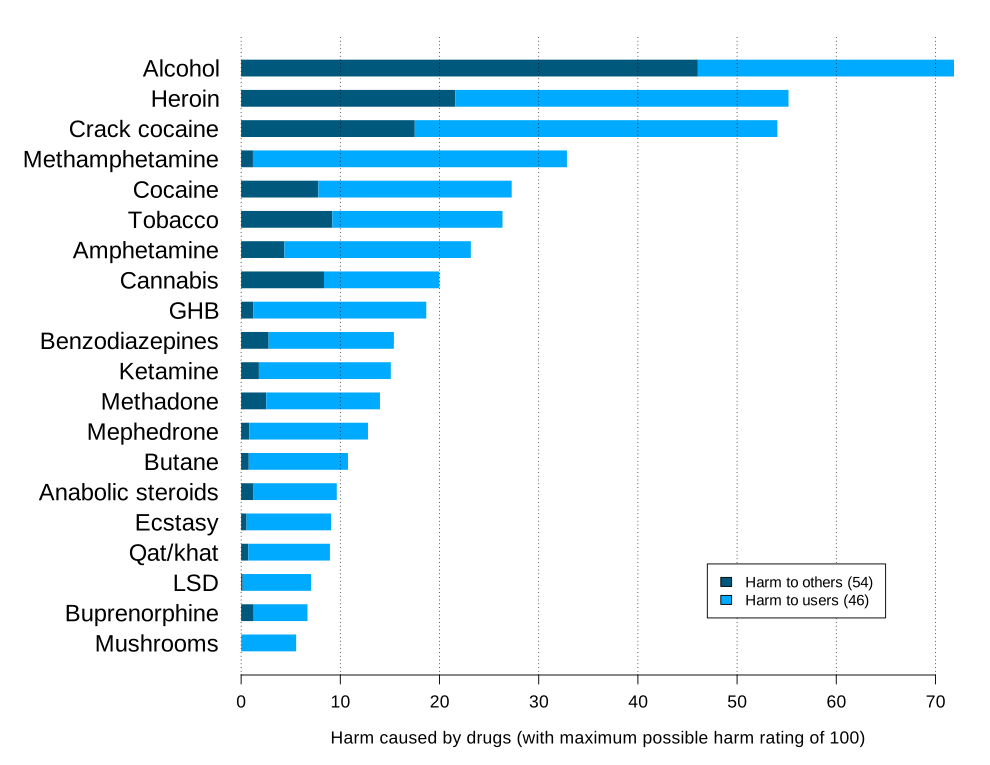
- (November 2010). "Drug harms in the UK: a multicriteria decision analysis". Lancet.
- (1989). "Alcohol and human sexuality: Review and integration". [[Psychological Bulletin]].
- (18 August 2001). "Alcohol and Sexual Assault". Alcohol Research & Health.
- (1995). "Women, alcohol, and sexuality". [[Recent Developments in Alcoholism]].
- (16 July 2015). "Does Drinking Improve the Quality of Sexual Experience?: Sex-Specific Alcohol Expectancies and Subjective Experience on Drinking Versus Sober Sexual Occasions". AIDS and Behavior.
- (2000). "Acute Effect of Alcohol on Androgens in Premenopausal Women". [[Alcohol and Alcoholism]].
- (1987). "Acute effects of ethanol on sex hormones in non-alcoholic men and women". [[Alcohol and Alcoholism Supplement]].
- (February 2013). "Sexual Hook-up Culture". American Psychological Association.
- (2010). "Predictors and Consequences of Sexual "Hookups" Among College Students: A Short-Term Prospective Study". [[Archives of Sexual Behavior]].
- (2000). "'Hookups': Characteristics and Correlates of College Students' Spontaneous and Anonymous Sexual Experiences". [[Journal of Sex Research]].
- (November 1998). "Multiple sexual partners among U.S. adolescents and young adults.". Family Planning Perspectives.
- (April 2021). "Alcohol Mixed With Energy Drinks and Sexually Related Causes of Conflict in the Barroom.". Journal of Interpersonal Violence.
- (March 2024). "Alcohol intoxication, condom use rationale, and men's coercive condom use resistance: The role of past unintended partner pregnancy.". Psychology of Addictive Behaviors.
- (January 2014). "Alcohol intoxication and condom use self-efficacy effects on women's condom use intentions.". Addictive Behaviors.
- (20 March 2024). "Coitus interruptus".
- (April 1999). "Effects of smoking during pregnancy. Five meta-analyses". American Journal of Preventive Medicine.
- (1995). "The best intentions: unintended pregnancy and the well-being of children and families". National Academy Press.
- (24 July 2012). "Intended and Unintended Births in the United States: 1982–2010".
- (September 2008). "The use of alcohol and condoms during sexual assault". American Journal of Men's Health.
- (2007). "Mental Health in Pregnancy and Childbirth". Elsevier Health Sciences.
- (1999). "Prevalence of drugs used in cases of alleged sexual assault". Journal of Analytical Toxicology.
- "Alcohol Is Most Common 'Date Rape' Drug". Medicalnewstoday.com..
- (June 2000). "Drug-facilitated sexual assault ('date rape')". Southern Medical Journal.
- (25 October 2010). "Criminal poisoning: clinical and forensic perspectives". Jones and Bartlett Publishers.
- (2006). "Practical drug enforcement". CRC.
- (January 2021). "Beyond roofies: Drug- and alcohol-facilitated sexual assault". JAAPA.
- (July 2008). "Drug facilitated sexual assault—a review". Journal of Forensic and Legal Medicine.
- (July 2008). "The involvement of drugs and alcohol in drug-facilitated sexual assault: a systematic review of the evidence". Trauma, Violence & Abuse.
- [http://survive.org.uk/date-rape.html Date Rape]. Survive.org.uk (20 March 2000). Retrieved on 1 June 2011.
- (20 March 2000). "Date Rape". Survive.org.uk.
- (January 2010). "Causal links between binge drinking patterns, unsafe sex and HIV in South Africa: its time to intervene". International Journal of STD & AIDS.
- "Consumption of alcohol/energy drink mixes linked with casual, risky sex".
- (April 2021). "Alcohol Mixed With Energy Drinks and Sexually Related Causes of Conflict in the Barroom". Journal of Interpersonal Violence.
- (21 April 2017). "Inside The Online Community Of Men Who Preach Removing Condoms Without Consent". Huffington Post.
- (22 May 2019). "Stealthing: a criminal offence?". [[Sydney Law School]].
- (2017). "'Rape-Adjacent': Imagining Legal Responses to Nonconsensual Condom Removal". Columbia Journal of Gender and Law.
- (27 April 2017). "Some call it 'stealthing,' others call it sexual assault". CNN.
- (January 2016). "Distal and Proximal Influences on Men's Intentions to Resist Condoms: Alcohol, Sexual Aggression History, Impulsivity, and Social-Cognitive Factors". AIDS and Behavior.
- (October 2010). "The influence of alcohol expectancies and intoxication on men's aggressive unprotected sexual intentions". Experimental and Clinical Psychopharmacology.
- Hoffman, Sarah. (3 February 2015). "'Njemačke žene nisu silovali samo sovjetski vojnici'".
- "Rule 93. Rape and Other forms of Sexual Violence".
- (2021). "Beauty is in the eye of the beer holder but rarely because of the beer". Personality and Individual Differences.
This article was imported from Wikipedia and is available under the Creative Commons Attribution-ShareAlike 4.0 License. Content has been adapted to SurfDoc format. Original contributors can be found on the article history page.
Ask Mako anything about Alcohol and sex — get instant answers, deeper analysis, and related topics.
Research with MakoFree with your Surf account
Create a free account to save articles, ask Mako questions, and organize your research.
Sign up freeThis content may have been generated or modified by AI. CloudSurf Software LLC is not responsible for the accuracy, completeness, or reliability of AI-generated content. Always verify important information from primary sources.
Report