From Surf Wiki (app.surf) — the open knowledge base
Albany, Western Australia
| Field | Value |
|---|---|
| type | city |
| name | |
| native_name | (Noongar) |
| native_name_lang | nys |
| state | WA |
| image | York Street Albany.jpg |
| caption | York Street in Albany |
| coordinates | |
| pushpin_label_position | top |
| pop | 35,053 |
| pop_year | 2021 |
| pop_footnotes | |
| poprank | 44th |
| postcode | 6330 |
| elevation | 26 |
| area | 297.2 |
| area_footnotes | (2011 urban) |
| timezone | AWST |
| utc | +8 |
| dist1 | 408 |
| location1 | Perth |
| dist2 | 482 |
| location2 | Esperance |
| dist3 | 330 |
| location3 | Bunbury |
| lga | City of Albany |
| stategov | Albany |
| fedgov | O'Connor |
| maxtemp | 19.5 |
| mintemp | 11.7 |
| rainfall | 929.6 |
| est | 26 December 1826 |
the city of Albany
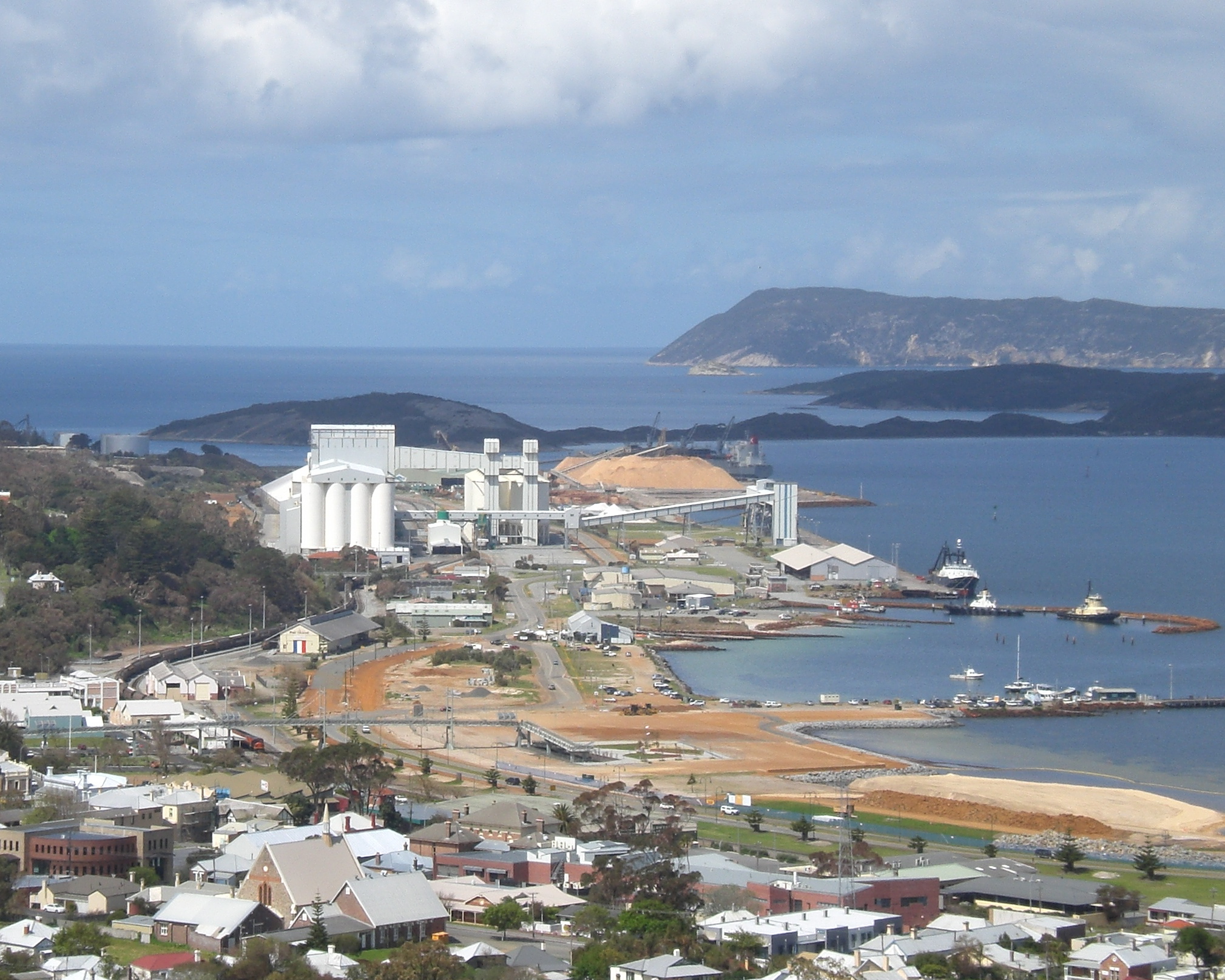


Albany ( ; ) is a port city in the Great Southern region in the Australian state of Western Australia, 418 km southeast of Perth, the state capital. The city centre is at the northern edge of Princess Royal Harbour, which is a part of King George Sound. The central business district is bounded by Mount Clarence to the east and Mount Melville to the west. The city is in the local government area of the City of Albany. While it is the oldest colonial, although not European, settlement in Western Australiapredating Perth and Fremantle by over two yearsit was a semi-exclave of the Colony of New South Wales for over four years until it was made part of the Swan River Colony.
The settlement was founded on 26 December 1826 as a military outpost of New South Wales for the purpose of forestalling French ambitions in the region. To that end, on 21 January 1827, the commander of the outpost, Major Edmund Lockyer, formally took possession for the British Crown of the portion of New Holland not yet claimed by the Crown; that is, the portion west of the 129th meridian east, with the portion east already being claimed collectively by the Crown as New South Wales and Van Diemen's Land. During the last decade of the 19th century, the town served as a gateway to the Eastern Goldfields. For many years, it was the colony's only deep-water port, having a place of eminence on shipping services between Britain and its Australian colonies. The opening of the Fremantle Inner Harbour in 1897, however, saw its importance as a port decline, after which the town's industries turned primarily to agriculture, timber and later, whaling.
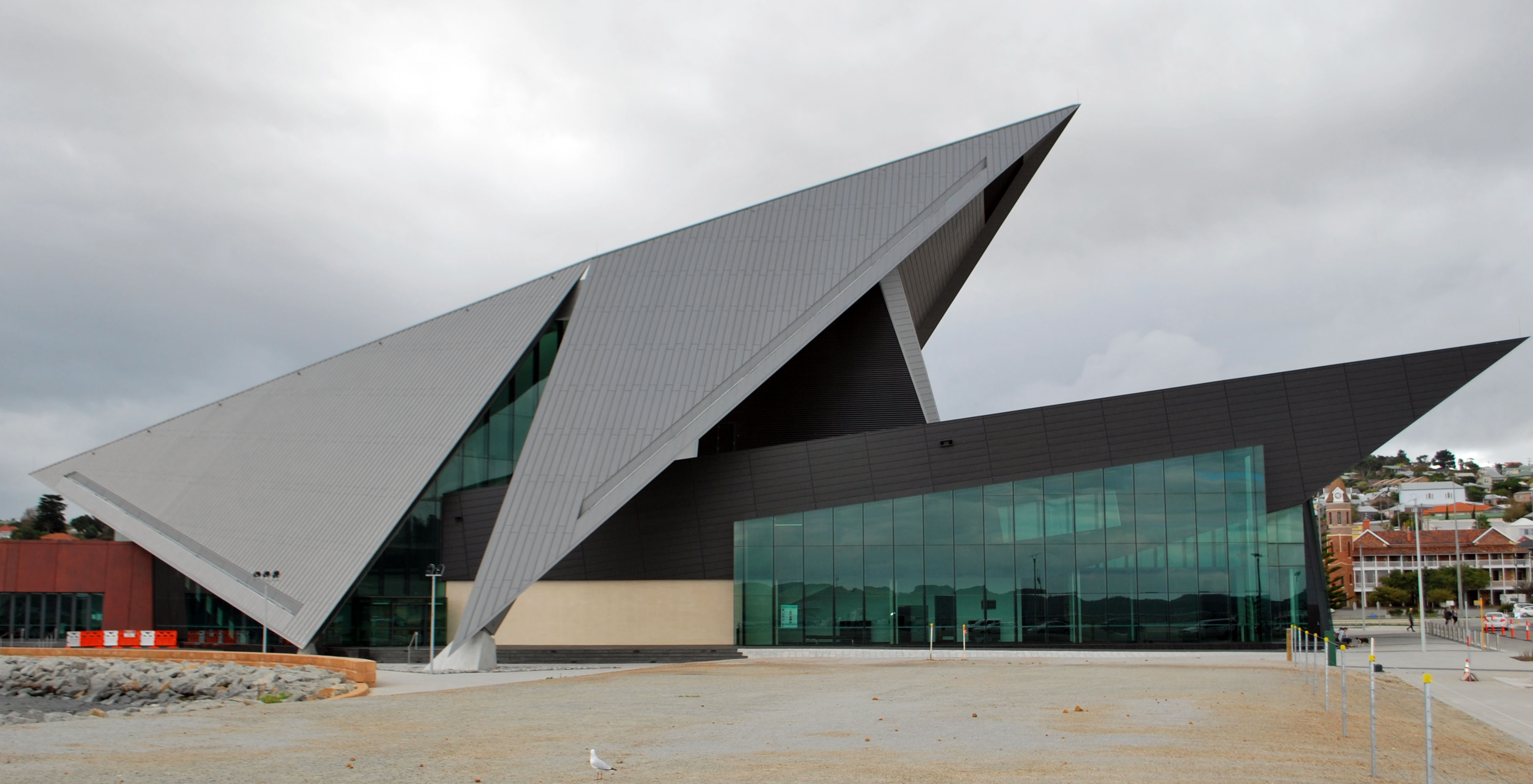
Contemporary Albany is the southern terminus for tourism in the region, and the state's south west, which is known for its natural environment and preservation of its heritage. The town has a role in the ANZAC legend, being the last port of call for troopships departing Australia in the First World War. On 1 November 2014, the Australian and New Zealand Prime Ministers opened the National Anzac Centre in Mount Clarence, Albany, to commemorate 100 years since the first ANZAC troops departed from King George Sound. Approximately 40,000 people attended the commemoration events held between 30 October and 2 November 2014.
An auxiliary submarine base for the US Navy's 7th Fleet was developed during the Second World War in the event the submarine base at Fremantle was lost. Also in the harbour was a Royal Australian Navy naval installation which provided for refuelling from four 5000 LT fuel tanks.
Toponymy
Upon its establishment in 1826, the settlement was named Frederick Town in honour of Prince Frederick, Duke of York and Albany. In 1831, the settlement was transferred to the control of the Swan River Colony and renamed Albany by Lieutenant-Governor James Stirling.
The name of the area in the Noongar language of the local Menang people is Kinjarling, which has been said to mean "place of plenty" and "place of rain". In 2020, the City of Albany began, as part of an official dual-naming project, to give prominence to Kinjarling as the city's Aboriginal name.
Early history
Main article: History of Albany, Western Australia
Kinjarling was home to Menang Noongar tribes during the summer season. Early British explorers recorded evidence of fish traps located on Emu Point and on the French, now the Kalgan, River. Vancouver made attempts to find the inhabitants of the area but only found bark dwellings that were unoccupied. Later explorers made contact and were told to leave, but were accepted when they did not. Most of the British exploration was undertaken to survey the land and sea to assess the profitability of resources. The explorers occasionally noted encounters with Noongars. Native treatment laws and programs have affected the tribes since settlement.
Heritage buildings
There are a number of heritage buildings in Albany; see List of heritage places in the City of Albany and :Category:Heritage places in Albany, Western Australia. These include:
- The Old Farm, Strawberry Hill was established in 1827 as a government farm to feed the colonial soldiers stationed around King George's Sound. It is the oldest farm in Western Australia. The homestead, which became the home of the Government Resident in 1833, is an example of a colonial gentleman's residence. After a chequered history, the property was vested in the National Trust WA in 1964 and is now a house museum.
- Patrick Taylor Cottage (1832), Western Australia's oldest surviving dwelling, built in 1832 by the Morley Brothers. It is now maintained by the Albany Historical Society.
- St John's Church (1841–1848) is a stone building with shingled roofs in the Old Colonial Gothick Picturesque style. Set among trees, it was designed to be part of an overall contrived picturesque scene in the manner of an English garden landscape.
- Scots Uniting Church (1892) was designed in the Victorian Academic Gothic style by Melbourne architect Evander McIver and built with local granite stonework.
- The complex now known as The Residency Museum was established in 1850 as a depot for the Convict Establishment in Albany. It is an L-shaped, single-storied, masonry building with a timber framed, timber shingled roof. In 1873 it was converted into the Resident Magistrate's home. It now serves as a museum.
- The Victorian Free Classical Revival style Town Hall (1888) is a two-storey stone building with a prominent clock tower, which dominates York Street, the main street of Albany. It has been put to many uses apart from council meetings, including public entertainment and public meetings of all kinds and even as the venue for the first regional meeting of the State Parliament.
- The Old Post Office was built in two stages, the first was designed in 1869 by J Manning, the second, including a prominent tower, was designed in 1896 by George Temple-Poole. It now houses the Albany campus of the University of Western Australia.
- The Court House, constructed of Albany brick and granite with a tiled roof, was designed in the Federation Romanesque style by the Public Works Department under the supervision of George Temple-Poole and Hillson Beasley in 1897.
- Another example of the work of George Temple Poole is the limestone and shingle Federation Arts and Crafts style Cottage Hospital, designed in 1886 and completed in 1897. It is one of the oldest hospitals in the state and served as such until 1962. It is now occupied by the Vancouver Arts Centre (named after the explorer George Vancouver).
|File:Old Farm, Strawberry Hill.jpg |Old Farm, Strawberry Hill
|File:Old Farm, drawing room.jpg |Old Farm, drawing room
|File:St.John's Church.jpg |St. John's Church
|File:St.John's Church tower.jpg |St.John's Church tower
|File:Albany Court House.jpg |Albany Courthouse
|File:Old Post Office, north front.jpg |Old Post Office, north front
|File:Old Post Office, south front.jpg |Old Post Office, south front
|File:Scots Uniting Church.jpg |Scots Uniting Church
|File:Vancouver House, formerly the Cottage Hospital.jpg |Vancouver House, formerly the Cottage Hospital
|File:Town Hall, Albany.jpg |Town Hall, Albany
|File:Patrick Taylor cottage museum.JPG |Patrick Taylor Cottage, Duke Street Some of the above information is derived from the State Heritage Register where these places are registered. The assessment criteria contain more details.
Population
As of the , the urban population of Albany was 35,053
- Aboriginal and Torres Strait Islander people made up 4.1% of the population.
- 75.5% of people were born in Australia. The next most common countries of birth were England 7.2%, New Zealand 1.7%, Philippines 1.7%, South Africa 1.2% and Scotland 0.7%.
- 87.7% of people only spoke English at home. Other languages spoken at home included Filipino 0.6%, Tagalog 0.6%, Afrikaans 0.6%, Karen 0.5% and Italian 0.5%.
- The most common religious denominations were Anglican 11.9% and Catholic 10.7%. 49.9% had no religion and 7.5% did not respond.
Geography

The city centre of Albany is located between the hills of Mount Melville and Mount Clarence, which look down into Princess Royal Harbour. Many beaches surround Albany, with Middleton Beach being the closest to the town centre. Other popular beaches include Frenchman Bay and Muttonbird Island.
Albany is 418. km SSE of the state capital, Perth, to which it is linked by Albany Highway.
Wine region
Albany is a sub-region of the Great Southern region of Western Australia.
Coastline
_Westall.jpg)

.jpg)
The Albany coastline is notorious for deaths due to king waves washing people off rocks. The Torndirrup National Park features some of the more rugged coastline in the area. However, there are many beaches that are safe and usable.
Betty's Beach was named after Betty Jones, who used to go camping there with her family, and was initially called Betty's Bay.
Frenchman Bay Beach is adjacent to the Torndirrup National Park, and was originally called Quarantine Bay, owing to the quarantine station set up by the British in 1826 on Mistaken Island at the northern end of Goode Beach.

Misery Beach, located 20 km south of Albany, was so named owing to the location of the whaling station at Albany that operated until 1978, causing offal to be washed ashore at Misery Beach and its sand and waters to be stained red. However, the beach was named Tourism Australia Best Beach 2022 by Tourism Australia, described a "[ticking] all the boxes of what the typical beachgoer is looking for — uncrowded, crystal-white sand, turquoise waters and a very dramatic granite backdrop".
Other beaches include:
- Emu Point
- Gull Rock Beach, also known as Boiler Beach
- Middleton Beach
- Nanarup Beach
- Muttonbird Beach
- Cosy Corner
- Two Peoples Bay, including Little Beach and Waterfall Beach
Climate
Albany has a warm-summer Mediterranean climate (Köppen Csb) with dry, warm summers, mild, wet winters, and pleasant springs and autumns. Summers have short spells of very hot weather, but cool ocean breeze brings relief, especially during evenings and nights. The city is situated on what is promoted as the "Rainbow Coast", an appropriate title given the frequency of days with both sun and drizzle or showers. Albany has 44.8 clear days annually, just slightly lower than Melbourne's 48.6 days.
July is the wettest month, with a long-term average of 144 mm. Rain in excess of 0.2 mm occurs on two days out of every three during an average winter. The driest month is February with a mean of 22.9 mm.
Albany received a record amount of rain on 20 November 2008 when violent storms swept across the Great Southern region. The town was flooded after 113.8 mm of rain fell in a 24-hour period, the highest amount recorded since rainfall records began in 1877. The wettest month on record was June 1920 when 292.8 mm fell, while February 1877 and February 1879 remain the only rainless months.
|Jan record high C = 41.7 |Feb record high C = 44.8 |Mar record high C = 40.8 |Apr record high C = 37.7 |May record high C = 35.2 |Jun record high C = 24.6 |Jul record high C = 23.3 |Aug record high C = 27.3 |Sep record high C = 30.6 |Oct record high C = 36.2 |Nov record high C = 41.1 |Dec record high C = 42.2 |year record high C = 44.8 | Jan record low C =7.8 | Feb record low C =7.2 | Mar record low C =6.1 | Apr record low C =4.8 | May record low C =2.4 | Jun record low C =1.7 | Jul record low C =0.1 | Aug record low C =1.6 | Sep record low C =2.0 | Oct record low C =3.4 | Nov record low C =5.6 | Dec record low C =6.7 | year record low C =0.1
|Jan record high C = 45.6 |Feb record high C = 44.0 |Mar record high C = 41.2 |Apr record high C = 38.8 |May record high C = 32.6 |Jun record high C = 24.8 |Jul record high C = 22.5 |Aug record high C = 26.2 |Sep record high C = 27.9 |Oct record high C = 33.6 |Nov record high C = 39.2 |Dec record high C = 42.8 |year record high C = 45.6 |Jan record low C = 4.8 |Feb record low C = 5.1 |Mar record low C = 4.3 |Apr record low C = 3.2 |May record low C = 1.9 |Jun record low C = 0.0 |Jul record low C = -0.2 |Aug record low C = 0.8 |Sep record low C = 0.7 |Oct record low C = 1.0 |Nov record low C = 2.7 |Dec record low C = 3.6 |year record low C = -0.2 | Jan dew point C =12.4 | Feb dew point C =12.9 | Mar dew point C =12.5 | Apr dew point C =11.6 | May dew point C =10.3 | Jun dew point C =9.2 | Jul dew point C =8.3 | Aug dew point C =8.0 | Sep dew point C =8.8 | Oct dew point C =9.9 | Nov dew point C =11.1 | Dec dew point C =11.7 |access-date = 23 April 2016}}
Industry


Albany's main industries are tourism, fishing, timber (wood chips) and agriculture. From 1952 to 1978 whaling was a major source of income and employment for the local population.
The Whaling Station, which closed operations in 1978 following a major conservation campaign, has been converted to a museum of whaling and features one of the 'Cheynes' whale chasers that were used for whaling in Albany. The station was the last operating land based whaling station in the southern hemisphere and the English-speaking world at the time of closure.
The Western Power Wind Farm is located at Sand Patch, to the west of Albany. The wind farm, originally commissioned in 2001 with 12 turbines, now has 18 turbines, driven by strong southerly winds, and can generate up to 80% of the city's electricity usage.
Albany has a number of historical sites including the Museum, Albany Convict Gaol, The Princess Royal Fortress (commonly known as The Forts) and Patrick Taylor Cottage, one of the oldest dwellings in Western Australia, . Albany has a great deal of historical significance to Western Australia.
Natural sights along the rugged coastline include the 'Natural Bridge' and the 'Gap'. The beaches have pristine white sand. The destroyer was sunk in King George Sound in 2001 as a dive wreck. Albany is also close to two low mountain ranges, the Porongurups and Stirling Ranges.
Albany is the southern terminus of the Bibbulmun Track walking trail.
Albany is the southern terminus of the Munda Biddi Trail off-road cycling trail.{{cite web |access-date=10 October 2018
Albany is home to HMAS Albany (based in Darwin) and the adopted home port of the Royal Australian Navy frigate . Albany is frequently visited by other warships.
Transport
Albany has a city bus service run by Swan Transit under the TransAlbany brand with five town routes. Albany is connected to Perth with road-coach services via Walpole and Bunbury; via Katanning and Northam; via Kojonup and Williams. Transwa coaches also serve Jerramungup, Ravensthorpe and Hopetoun.
Rex Airlines, a national independent regional airline, provides 23 services a week between Perth and Albany Airport using 34-passenger turboprop Saab 340 aircraft.
Albany was served by the Albany Progress passenger train from Perth until 1978. The railway station reopened as a tourist information centre in 1994.
Media
Albany radio stations include locally owned broadcaster GOLD MX as well as national broadcasters 783 Triple M (formerly 6VA and RadioWest), Vision FM, HitFM (formerly HOT FM), ABC Great Southern, ABC News, ABC Radio National, ABC Classic FM, Triple J, & Great Southern FM.
Below is a table showing the broadcast frequencies on which these services can be received.
| Service | Broadcast frequency |
|---|---|
| ABC Local Radio | 630 kHz AM |
| 783 Triple M | 783 kHz AM |
| GOLD MX | 1611 kHz AM |
| Vision FM (Local) | 87.6 MHz FM |
| ABC News | 92.1 MHz FM |
| Triple J | 92.9 MHz FM |
| Vision FM | 93.7 MHz FM |
| ABC Classic FM | 94.5 MHz FM |
| HitFM | 95.3 MHz FM |
| ABC Radio National | 96.9 MHz FM |
| Great Southern FM | 100.9 MHz FM |
| HitFM (Local) | 106.5 MHz FM |
Localised television stations available in Albany include GWN7 (now Seven Regional), WIN Television Western Australia, West Digital Television, SBS Television and ABC Television Western Australia. Seven (formerly GWN7) broadcasts a half-hour local news program for regional WA, Seven News Regional WA (formerly GWN7 News) at 5:30pm on weeknights with a district newsroom covering Albany and surrounding areas based in the city.
Below is a table showing the full suite of digital television services available in Albany. These services are broadcast from Mount Clarence and cover the majority of the geographic area with some areas requiring a signal to be received from the Southern Agricultural site at Mount Barker. Both these transmission sites employ vertical polarity. Furthermore, a number of residents rely on receiving these services via satellite using the Viewer Access Satellite Television system.
| LCN | Channel Name | Broadcast Ch. No. | Broadcast frequency |
|---|---|---|---|
| 2 | ABC TV | UHF 43 | 634.5 MHz |
| 3 | SBS | UHF 41 | 620.5 MHz |
| 5 | 10 HD | UHF 44 | 641.5 MHz |
| 6 | 7HD Regional WA | UHF 45 | 648.5 MHz |
| 8 | 9HD | UHF 42 | 627.5 MHz |
| 20 | ABC HD | UHF 43 | 634.5 MHz |
| 21 | ABC TV | UHF 43 | 634.5 MHz |
| 22 | ABC Family/KIDS | UHF 43 | 634.5 MHz |
| 23 | ABC Entertains | UHF 43 | 634.5 MHz |
| 24 | ABC NEWS | UHF 43 | 634.5 MHz |
| 30 | SBS HD | UHF 41 | 620.5 MHz |
| 31 | SBS VICELAND | UHF 41 | 620.5 MHz |
| 32 | SBS WORLD MOVIES | UHF 41 | 620.5 MHz |
| 33 | SBS FOOD | UHF 41 | 620.5 MHz |
| 34 | NITV HD | UHF 41 | 620.5 MHz |
| 35 | SBS WORLD WATCH | UHF 41 | 620.5 MHz |
| 36 | NITV | UHF 41 | 620.5 MHz |
| 50 | 10 Drama | UHF 44 | 641.5 MHz |
| 55 | 10 Comedy | UHF 44 | 641.5 MHz |
| 62 | 7two Regional WA | UHF 45 | 648.5 MHz |
| 64 | 7mateHD Regional WA | UHF 45 | 648.5 MHz |
| 67 | TVSN | UHF 45 | 648.5 MHz |
| 68 | RACING.COM | UHF 45 | 648.5 MHz |
| 80 | 9HD | UHF 42 | 627.5 MHz |
| 81 | 9Gem | UHF 42 | 627.5 MHz |
| 82 | 9Go! | UHF 42 | 627.5 MHz |
| 84 | New Channel coming soon | UHF 42 | 627.5 MHz |
| 85 | 9Life | UHF 42 | 627.5 MHz |
Local newspapers are the Albany Advertiser (established 1888) and The Extra (owned by Seven West Media Limited, publishers of The West Australian). Local radio station GOLD MX is owned by local independent broadcaster Barricades Media.
Sport

Two of Albany's major sports facilities are Collingwood Park Stadium in Collingwood Park and Centennial Oval in Centennial Park. Collingwood Park is home to North Albany Football Club while Centennial Oval is home to Royals Football Club.
Albany Leisure and Aquatic Centre is the home of Albany Basketball Association. The Rainbow Coast Raiders of the State Basketball League played at the Albany Sports Centre (33 Barker Road) between 1989 and 1999. 33 Barker Road later became the home of Albany Indoor Beach Volleyball.
Albany Leisure and Aquatic Centre hosted the Australian Boomers in a game against China in June 2012.
Albany Sea Dragons are the regions only rugby league club who partake in inter-regional WA competitions run by the NRL WA.
Education
There are currently several primary schools, eight high schools and one university campus in the Albany area.


Primary schools
- Albany Primary School
- Flinders Park Primary
- Mount Lockyer Primary
- Parklands School
- Spencer Park Primary
- Yakamia Primary
- Woodbury Boston Primary School
- OneSchool Global (Albany)
- Little Grove Primary School
- St Joseph's College
- Great Southern Grammar
- Bethel Christian School
- Australian Christian College Southlands
- John Calvin School
High schools
- Albany Senior High School 7–12
- Albany Secondary Education Support Centre 7–13
- Australian Christian College – Southlands K–12
- North Albany Senior High School 7–12
- Great Southern Grammar K–12
- St Joseph's College K–12
- Bethel Christian School K–12
- John Calvin School K–10
- OneSchool Global – Albany 3–12
Universities
- A campus of the University of Western Australia
- Some courses delivered by Curtin University
TAFE
- South Regional TAFE
Localities
Main article: List of Albany suburbs
Notable residents
Main article: Category:People from Albany, Western Australia
Notes
References
Bibliography
References
- {{Census 2021 AUS
- "2011 Census Community Profiles: Albany". [[Australian Bureau of Statistics]].
- (29 March 2023). "Eight Australian places we keep pronouncing incorrectly".
- {{cite Q. Q126159134. Battye. James Sykes
- "King George's Sound Settlement". [[State Records Authority of New South Wales]].
- Hutchison, David. (2006). "Fremantle Walks". Fremantle Arts Centre Press.
- "Destination Albany".
- "Anzac Albany {{!}} National Anzac Centre".
- Commander Seventh Fleet. (1944-09-15). "Base Facilities Report". United States Navy.
- Nind, Isaac Scott. (7 February 1828). "View of Frederick Town, King Georges Sound, at the expiration of the first year of its settlement". [[State Library of New South Wales]].
- Nind, Isaac Scott. (1832). "Description of the Natives of King George's Sound (Swan River Colony) and Adjoining Country". The Journal of the Royal Geographical Society of London.
- (1835). "Narrative of a Voyage Round the World". Sherwood Gilbert & Piper.
- West, Dunstan Arthur Percival. (2004). "The Settlement on the Sound – Discovery and settlement of the Albany Region 1791–1831". Western Australian Museum.
- (3 July 2020). "Albany, WA's oldest colonial settlement, to officially adopt joint Noongar names". [[ABC Local Radio.
- (2013). "Council Report 'Kinjarling' The Place of Rain:The City of Albany & Department of Indigenous Affairs Aboriginal Heritage Survey". City of Albany.
- "History of Albany » First Nations".
- "Albany History Gallery: Albany History Gallery & Meaning of Town Names ending in UP".
- (1798). "A Voyage of Discovery to the North Pacific Ocean, and Round the World". G.G. & J. Robinson.
- (16 October 1939). "The Old Farm". National Library of Australia.
- David Whitley. "Australia's heritage buildings". [[ninemsn]].
- "Strawberry Hill". Australian Council of National Trusts.
- "State Heritage Register". Heritage Council, State Heritage Office.
- (2016-02-04). "About Albany". City of Albany.
- James Halliday. (2009). "The Australian Wine Encyclopedia". Hardie Grant Books.
- "Bettys beach secluded & fun near Albany.".
- "Albany, Western Australia".
- Edwards, Tom. (29 January 2022). "Misery Beach, on Western Australia's south coast, named Tourism Australia Best Beach 2022". [[Australian Broadcasting Corporation]].
- Garden, Donald S.. (1977). "Albany: a panorama of the Sound from 1827". Thomas Nelson (Australia).
- (20 November 2008). "PerthNow - Storm dumps record rainfall on Albany".
- "Monthly climate statistics Period 1991-2020 - Albany". Bureau of Meteorology.
- "Monthly climate statistics All years of record - Albany". Bureau of Meteorology.
- Commons Librarian. (2023-12-22). "Campaigns that Changed Western Australia".
- "Whaling".
- (2013). "Albany Wind Farm". [[Verve Energy]].
- [http://www.sustainability.dpc.wa.gov.au/CaseStudies/windenergy/windenergy.htm Wind Energy in Western Australia] {{webarchive. link. (9 March 2008 Jade Carlton, www.sustainability.dpc.wa.gov.au. Retrieved 3 August 2007.)
- (30 June 2009). "Assessment Documentation - Patrick Taylor Cottage". [[Heritage Council of Western Australia]].
- link. (18 June 2013 www.albany.wa.gov.au. Retrieved 3 August 2007.)
- "Albany Bibbulmun Track". Bibbulmun Track Foundation.
- [https://www.transwa.wa.gov.au/Bookings/Timetables Timetable Files] {{Webarchive. link. (2 September 2016 [[Transwa]])
- (22 February 2016). "REX airline to fly to Albany and Esperance". [[The West Australian]].
- [https://www.mediastatements.wa.gov.au/Pages/Barnett/2016/02/Start-of-Rex-flights-welcomed.aspx Start of Rex flights welcomed] {{Webarchive. link. (12 March 2016 Minister for Agriculture & Food Transport 27 February 2016)
- "Visitor Centre".
- (18 January 2017). "Major boost to an Albany sports facility". triplem.com.au.
- "History". Royals Football Club.
- Newbold, Cameron. (14 March 2017). "Raiders claim successful under-16 girls tournament". albanyadvertiser.com.au.
- "Rainbow Coast Raiders". SBL.asn.au.
- "Albany Indoor Beach Volleyball". localgymsandfitness.com.
- (11 June 2012). "Hope for basketball clash to boost Albany appeal". ABC News.
- (26 April 2019). "Albany Sea Dragons and NRL WA unite ahead of regional trip".
- "Mr W. B. Hardwick Dead – Former Principal Architect". The West Australian.
- {{cite Q. Q110529184
This article was imported from Wikipedia and is available under the Creative Commons Attribution-ShareAlike 4.0 License. Content has been adapted to SurfDoc format. Original contributors can be found on the article history page.
Ask Mako anything about Albany, Western Australia — get instant answers, deeper analysis, and related topics.
Research with MakoFree with your Surf account
Create a free account to save articles, ask Mako questions, and organize your research.
Sign up freeThis content may have been generated or modified by AI. CloudSurf Software LLC is not responsible for the accuracy, completeness, or reliability of AI-generated content. Always verify important information from primary sources.
Report