From Surf Wiki (app.surf) — the open knowledge base
Albanians in Serbia
Ethnic group
Ethnic group
| Field | Value |
|---|---|
| group | Albanians in Serbia |
| native_name | Албанци у Србији |
| Shqiptarët në Serbi | |
| population | 61,687 (2022) |
| region1 | Flamuri i Preshevës.png Preševo |
| pop1 | 31,340 |
| ref1 | |
| region2 | COA Bujanovac.svg Bujanovac |
| pop2 | 25,465 |
| ref2 | |
| langs | Albanian and Serbian |
| rels | Islam |
Shqiptarët në Serbi Albanians are a recognized ethnic minority in Serbia. According to data from the 2022 census, the population of ethnic Albanians in Serbia is 61,687, constituting 0.9% of the total population. The vast majority of them live in the Preševo Valley, the southernmost part of the country bordering Kosovo and North Macedonia.
History
Late antiquity
In late antiquity, the contact zone between Late Proto-Albanian and Balkan Latin was located in eastern and southeastern Serbia. This area included Niš, a city in southeastern Serbia. The toponym Niš in Slavic evolved from a toponym attested in Ancient Greek as ΝΑΙΣΣΟΣ (Naissos), which achieved its present form via phonetic changes in Proto-Albanian and thereafter entered Slavic. This indicates that Proto-Albanians lived in the region in pre-Slavic times. When this settlement happened is a matter of debate, as Proto-Albanians might have moved relatively late in antiquity in the area which might have been an eastern expansion of Proto-Albanian settlement as no other toponyms known in antiquity in the immediate area presuppose an Albanian development.
The development of Niš
Middle Ages
Toponyms such as Arbanaška, Arbanaška river, Arbanaška Mountain, Arbanaška Hill and Đjake shows an Albanian presence in the Toplica and Southern Morava regions (located north-east of contemporary Kosovo) since the Late Middle Ages.
By 1477, part of the Albanian Mataruge tribe lived in the kaza of Prijepolje, where they formed their own distinct community (nahiye) with 10 villages (katund). In Ottoman records on the regions of Toplica, Kruševac, and Leskovac that date between 1444 and 1446, a village by the name of Tanuš (derived from the Albanian anthroponym Tanush) appears. In the region of Toplica specifically, several settlements of Albanian toponomy were recorded during the first half of the 15th century, such as Gonzi, Castrat, Spanzi, Zur, Katun and Kriva Feja. All of these settlements are indeed older than and predate the time of their recording during the first half of the 15th century.
Ottoman era
In 1700, after the Great Serb Migration, the Kelmendi and Kuçi and other tribes like the Shkreli of Rugova established themselves in the region of Rožaje and the neighboring town of Tutin, Serbia. The Shala, Krasniqi, and Gashi also moved in the region. Starting in the 18th century many people originating from the Hoti tribe have migrated to and live in Sandžak, mainly in the Tutin area, but also in Sjenica.
In the era of trade development in the Ottoman Balkans, Albanian merchants from Shkodra, Pristina, and Prizren had settled in the sanjak of Smederevo (Belgrade Pashalik). Groups of Albanians from Kosovo settled in the areas of Kraljevo and Ćuprija. Albanians were the most significant non-Slavic group of the Smederevo region, the second biggest Muslim group of the pashalik and part of its Muslim population with Muslim Serbs, Bosniaks and smaller communities. In urban areas, Albanians lived in the towns of Paraćin, Ćuprija, Aleksinac, Kruševac, and Karanovac. Austrian sources that in Karanovac there were 89 Turkish and Albanian and 11 Serb households. The biggest concentration of Albanians was in Ćuprija, where contemporary Serb author Joakim Vujić recorded more "Turkish Arnauts than Serbs" in 1826. Albanian villages of Smederevo were concentrated in the south and east of the region.
19th century
In the first decades of the Principality of Serbia, which included modern-day central and eastern Serbia, the population was about 85% Serb and 15% non-Serb. Of those, most were Vlachs, and there were some Albanians, which were the overwhelming majority of the Muslims that lived in Smederevo, Kladovo, and Ćuprija. The new state aimed to homogenize its population: as a result, from 1830 to the Serbian–Ottoman Wars of the 1870s, it has been estimated that up to 150,000 Albanians that lived in the territories of the Principality of Serbia had been expelled. Prince Miloš Obrenović asked his official Milosav Zdravković to buy the houses of Albanians at a higher price than the market one and ordered the expulsion of Muslims - most of whom were Albanians from western Serbia. The residences of these population were burnt and they were moved to Ottoman lands.
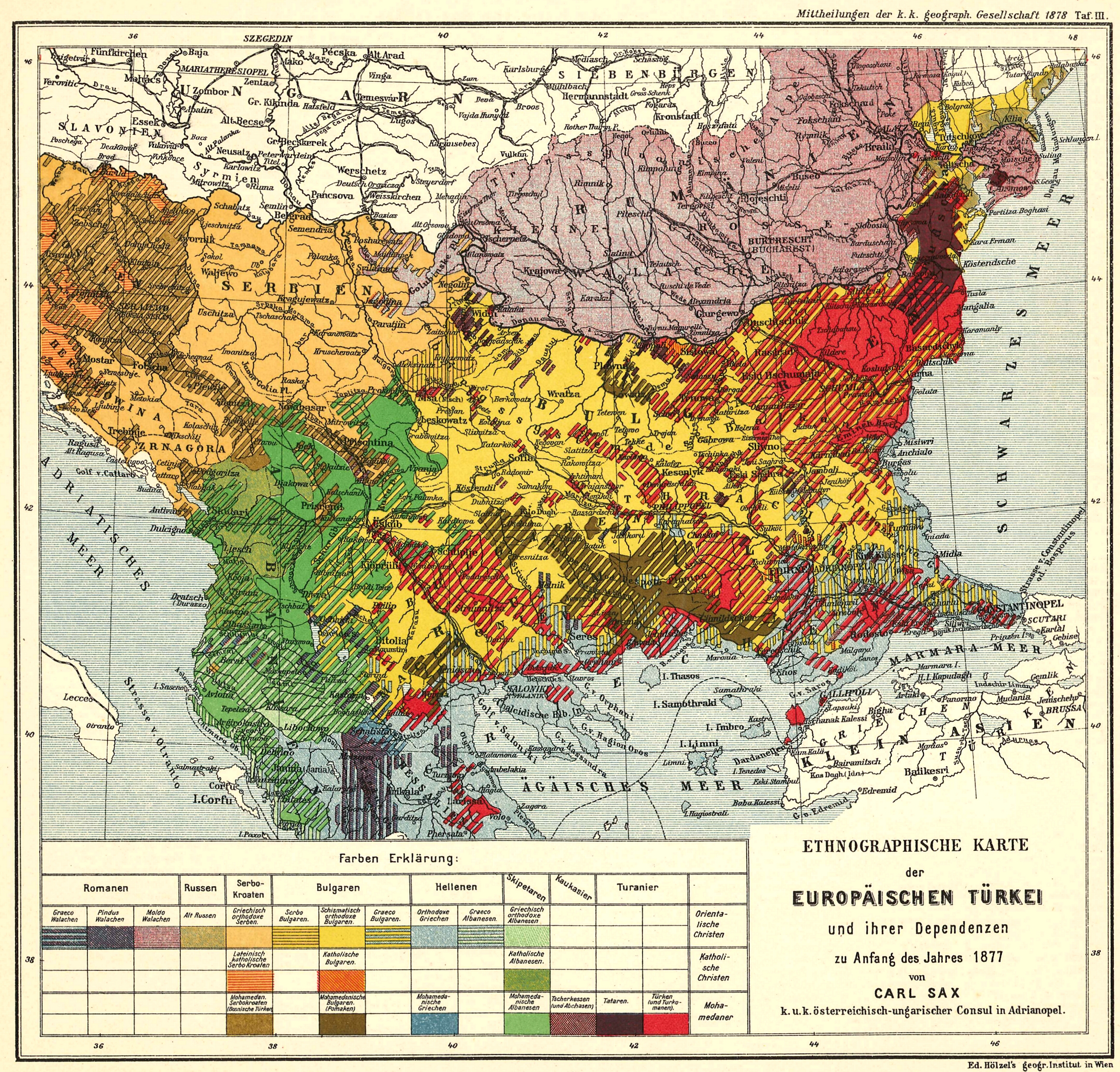
Albanians in the territories which were included in the Kingdom of Serbia after 1912 were concentrated in three regions: Kosovo, Sanjak of Novi Pazar, and the Sanjak of Niš. Albanians were the majority of the population of Toplica (including Kuršumlija and Prokuplje), a significant part of the population of Leskovac and Vranje, and a part of the Muslim community in Niš. In the towns, a part of the Muslim population which were identified as Turks were in fact Albanians who had adopted an Ottoman urban culture. A part of the areas where Albanians lived, was administered under the Pashalik of Vranje. In 1843–1844, the pashalik was engulfed by the uprising of Dervish Cara against Huseyin Pasha of Vranje.
After the Tanzimat reforms, the local authorities exploited the situation in order to impose heavier taxation and abuse their authority even more against the majority of the population, which were peasant farmers. One particular event which aggravated even more the relations between the locals and Huseyin-Pasha is the ban on opening Albanian language schools in the district of Vranje even though the Tanzimat constitution allowed the opening of schools in the mother tongue of every ethnic community in the Ottoman Empire. In April 1844, rebels from the Preševo valley, Gjilan, Leskovac, Tetovo, Gostivar, Kumanovo defeated Huseyin-Pasha and took Vranje. The Ottoman army sent more than 10,000 troops with artillery support to suppress the rebellion. Local Albanians were led by Sulejman Tola of Veliki Trnovac, Selman Rogaçica, Ymer Aga of Preševo and Dervish Cara. The decisive battle which the Ottomans won and ended the rebellion took place on the Somolica Hill between Preševo and Bujanovac.
The Sanjak of Niš became the subject of territorial dispute in Serbian-Ottoman War (1876–1878). Albanians from Kuršumlja, Prokuplje, and Leskovac formed units which operated independently from the Ottoman army for the self-defense of villages against the Serbian troops. Albanian units joined the Ottoman frontline defense from Kosovo and Macedonia. The war caused the displacement of tens of thousands of civilians. More than 35,000 displaced Albanian civilians died just in the winter of 1876–1877. In the first stages of the war the Ottoman army won and enacted harsh repressive measures in Serbia. The entry of Russia in the war changed the situation and the Ottomans shifted their forces towards the eastern front. The Ottoman defeat in the Siege of Plevna secured Russian victory in the war and the Ottoman army retreated on all fronts. Ottoman forces surrendered Niš on 10 January 1878 and Serbian army continued its southwest advance entering the valleys of Kosanica, Pusta Reka, and Jablanica. Serbian army in the Morava Valley continued its advance to Vranje, with the intention of then turning west and entering Kosovo proper. The Serbian advance in the southwest was slow, due to the hilly terrain and much resistance by local Albanians who were defending their villages and also sheltering in the nearby Radan and Majdan mountains. Serbian forces took these villages one by one and most remained vacant. Albanian refugees continued to retreat toward Kosovo and their march was halted at the Goljak Mountains when an armistice was declared.
The Serbian army operating in the Morava Valley continued south toward two canyons: Grdelica (between Vranje and Leskovac) and Veternica (southwest of Grdelica). After Grdelica was taken, Serbian forces took Vranje. Local Albanians had left with their belongings prior to Serbian forces reaching the town, and other countryside Albanians experienced tensions with Serbian neighbors who fought against and eventually evicted them from the area. Albanian refugees defended the Veternica canyon, before retreating toward the Goljak Mountains. Albanians who lived nearby in the Masurica region did not resist Serbian forces and General Jovan Belimarković refused to carry out orders from Belgrade to deport them, but they were deported with other Albanians after Belimarković moved out of Masurica.
As a result of the territorial expansion of the Principality of Serbia in 1877–78, massive and violent expulsion of Albanians occurred from the newly occupied regions in the sanjak of Niš. In the new areas (present-day Jablanica, Toplica, and parts of Nišava District) an estimated 50,000–60,000 Albanians were expelled and settled mainly in Kosovo. Between the Ottoman-Serbian armistice and the final act of the Congress of Berlin, some Albanian groups had returned to their homes. After the treaty of Berlin was signed, they were expelled to Turkey. In total, around 600 Albanian villages were ethnically cleansed. Albanians who settled in Kosovo and other regions became known as muhaxhirs (refugees). The events of 1877-78 marked the beginning of the modern Serbian-Albanian conflict.
The expulsion and ethnic cleansing of Albanians from southern Serbia was the result of a policy of ethnic homogenization of the Serbian state and reflected Serbia's strategic goal of expanding southwards to Macedonia and Old Serbia. In Serbian geopolitical strategy, Albanians were seen as an "undesirable and unreliable population" which had to be replaced with a "reliable" population. Orthodox Serbs from Montenegro and Herzegovina were invited to settle in the depopulated areas. A part of the Serb settlers came from nearby eastern Kosovo that had been driven out in interethnic violence by the muhaxhirs who had settled just across the new border. The large depopulation and economic devaluation of the new territories couldn't be balanced by any means so the Serbian government attempted to attract some of the Albanians who had been expelled to settle again in Serbia. King Milan I struck a deal directly with Shahid Pasha, a local Albanian military officer from Jablanica. Under the agreement, some Muslim Albanians returned to Gornja Jablanica (Medveđa).
20th century
Some historians suggest that Austro-Hungarian emissaries were active in areas where Serbs and Albanians coexisted, deliberately stirring conflicts and divisions between the two nations to advance their state's political interests and influence.
During the Balkan Wars, the Kosovo Vilayet and Sandžak became part of Serbia. Tens of thousands of Albanian civilians were massacred and expelled from the newly conquered territories. In Novi Pazar, General Petar Živković targeted the Albanians of the region. Many journalists who including Leon Trotsky, Leo Freundlich observed and recorded the events. Danish journalist Fritz Magnussen recorded the slaughter of 5,000 Albanians near Pristina.
In the Kingdom of Yugoslavia, Albanians were divided in three banovinas (counties): Vardar Banovina, Zeta Banovina, and Morava Banovina since 1929. The Albanians of modern-day southern Serbia were within Vardar Macedonia. In the socialist Yugoslavia, the Preševo Valley didn't become part of the Autonomous Province of Kosovo but part of the Serbia proper. This decision was influenced by the location of transport infrastructure near Preševo. In Albanian politics, Preševo continues to be called "eastern Kosovo".
In 1992, the Albanian representatives in the municipalities Preševo, Bujanovac, and Medveđa, organized a referendum in which they voted for the joining of these municipalities to the self-declared assembly of the Republic of Kosova. However, no major events happened until the end of the 1990s.
Following the establishment of the Republic of Kosovo, ethnic Albanians from Kosovo created the Kosovo Liberation Army which since 1995 had been attacking Serbian police forces and security service officials which abused Albanian civilians. From 1998 onwards, the group was involved in open conflict with an increasing number of Serbian security forces, and the escalating tensions eventually led to the Kosovo War.
Following the end of the Kosovo War, a 5-kilometre-wide Ground Safety Zone was created, serving as a buffer zone between the Yugoslav Army and the Kosovo Force. In June 1999, a new Albanian militant insurgent group - the Liberation Army of Preševo, Medveđa and Bujanovac (UÇPMB) - was formed and began training.
Unlike in the case of the KLA in Kosovo, western countries condemned the attacks of the UÇPMB and described them as examples of "extremism" and the use of "illegal terrorist actions" by the group.
Contemporary period
Since the early 2000s, the Albanian Coalition of Preševo Valley has gained representation in the National Assembly of Serbia where it holds, depending on the elction results, from one to two seats.
In 2009, a Military Base "South" was opened, some 5 kilometers south of Bujanovac, being the largest military facility built in Serbia since the breakup of Yugoslavia.
In 2017, the president of Albania, Bujar Nishani, made a historical visit to the municipalities of Preševo and Bujanovac, in which Albanians form the ethnic majority. Later that year, the newly-elected president of Albania, Ilir Meta, made a historical visit to Medveđa, municipality with Albanian ethnic minority. In the aftermath of the 2019 Albania earthquake, Albanians of the Preševo Valley donated aid and sent it through several convoys to the victims of an earthquake.
In 2021 the Helsinki Committee for Human Rights in Serbia released a report which stated that the Serbian state was undertaking a "passivation of residence of Albanians" resulting in Albanians living in the Preševo Valley losing the right to vote, their property, health insurance, pension, and employment. According to the report, this measure amounted to "ethnic cleansing through administrative means".
Demographics
According to data from the 2022 census, in the municipalities of Preševo and Bujanovac Albanians form the majority of population (93.7% in Preševo and 62% in Bujanovac, respectively), while in the municipality of Medveđa Albanians are second largest ethnic group (after Serbs) and their share is 14.2%. The region of Bujanovac and Preševo is known as the Preševo Valley (Serbian: Прешевска Долина, Albanian: Lugina e Preshevës).
Belgrade, capital of Serbia, has a small Albanian community; according to data from the 2022 census, 932 Albanians were registered.
Albanians in Sandžak made up a considerable portion of the population of the region but today only a few villages identify as Albanian, mainly as the result of cultural assimilation and immigration. The Bulgarian foreign ministry compiled a report about the region in 1901–02. The kaza of Sjenica was inhabited mainly by Orthodox Serbs (69 villages with 624 households) and Bosnian Muslims (46 villages with 655 households), while Albanians (505 households) lived exclusively in the town of Sjenica. The kaza of Novi Pazar had 1,749 households in 244 Serb villages and 896 households in 81 Albanian villages. Nine villages inhabited by both Serbs and Albanians had 173 households. The town of Novi Pazar had a total of 1,749 Serb and Albanian households with 8,745 inhabitants. The kaza of Novi Varoš, according the Bulgarian report, was mostly Serbian with the exception of one Muslim Bosnian village and Albanian households in the town of Novi Varoš. The last official registration of the population of the Sanjak of Novi Pazar before the Balkan Wars was conducted in 1910: according to data, there were 52,833 Muslims (65% of total population) and 27,814 Orthodox Serbs (35%); the majority of the Muslim population were Albanians. In the 21st century, there still is a small community which identifies as Albanian in the Pešter area, living in villages such as Boroštica, Doliće, and Ugao. For the past two generations these villages have opted to declare themselves "Bosniak" in the national census. This partial bosniakicisation and abandonment of the self-designation Albanian has been attributed to a strategy by the villagers to avoid ethnic violence by Serbian para-military groups in the Yugoslavs wars and partially due to intermarriage with the surrounding Bosniak population. As such and also due to the Yugoslav Wars and thereafter, they have opted to declare themselves in censuses as "Muslims" and "Bosniaks" instead of as Albanians to avoid problems. Elders in these villages are still fluent in Albanian. Catholic Albanian groups which settled in the early 18th century were converted to Islam in that period. Their descendants make up the large majority of the population of Tutin and Pešter.
The main religion of Albanians in the Preševo Valley is Islam. Prior to the Ottoman period, the population of the region was mostly Roman Catholic. According to data from the 2011 census, 71.1% of all Albanians are Muslim, followed by Catholics (16.8%) and Orthodox Christians (2.6%). The remainder did not declare their religion or belong to smaller religious groups (9.5%).
Culture
Education

The first Albanian language elementary school in the Preševo Valley was opened in Preševo in 1945. The first Albanian language secondary school was opened in 1948.
Media
Before the 2001 rebellion, no Albanian-language media were allowed in the Preševo Valley. The first Albanian-language channel was allowed after the 2001 Končulj Agreement. In 2003, the public TV channel began to broadcast in Albanian in Preševo. Another public channel in Bujanovac broadcasts daily 8 hours (out of a total 16) in Albanian. "Radio Presheva" broadcasts 10 hours in Albanian daily. A similar station exists in Bujanovac. In Medveđa, the local state channel broadcasts 5 minutes in Albanian daily and one weekly 60-minute show in Albanian.
Notable people
Main article: List of Albanians in Serbia
Notes
| b. | During the 2011 census, in the municipalities of Bujanovac and Preševo there was undercoverage of the census units owing to the boycott by most of the members of the Albanian ethnic community. |
|---|
References
Sources
References
- (2023-07-14). "Final results - Ethnicity".
- "Population by ethnicity, by areas".
- "Регистар националних савета националних мањина".
- (1991). "The Early Medieval Balkans: A Critical Survey from the Sixth to the Late Twelfth Century". University of Michigan Press.
- {{harvnb. Prendergast. 2017
- Uka, Sabit (2004). ''Jeta dhe veprimtaria e sqiptarëve të Sanxhakut të Nishit deri më 1912 [Life and activity of Albanians in the Sanjak of Nish up to 1912]''. Verana. pp. 244–245. "Eshtë, po ashtu, me peshë historike një shënim i M. Gj Miliçeviqit, i cili bën fjalë përkitazi me Ivan Begun. ''Ivan Begu'', sipas tij ishte pjesëmarrës në Luftën e Kosovës 1389. Në mbështetje të vendbanimit të tij, ''Ivan'' Kullës, fshati emërtohet ''Ivan Kulla'' (Kulla e Ivanit), që gjendet në mes të Kurshumlisë dhe Prokuplës. M. Gj. Miliçeviqi thotë: "Shqiptarët e ruajten fshatin Ivan Kullë (1877–1878) dhe nuk lejuan që të shkatërrohet ajo". Ata, shqiptaret e Ivan Kullës (1877–1878) i thanë M. Gj. Miliçeviqit se janë aty që nga para Luftës se Kosovës (1389). [12] Dhe treguan që trupat e arrave, që ndodhen aty, ata i pat mbjellë Ivan beu. Atypari, në malin Gjakë, nodhet kështjella që i shërbeu Ivanit (Gjonit) dhe shqiptarëve për t’u mbrojtur. Aty ka pasur gjurma jo vetëm nga shekulli XIII dhe XIV, por edhe të shekullit XV ku vërehen gjurmat mjaft të shumta toponimike si fshati ''Arbanashka'', lumi ''Arbanashka'', mali ''Arbanashka'', fshati ''Gjakë'', mali ''Gjakë'' e tjerë. [13] Në shekullin XVI përmendet lagja shqiptare Pllanë jo larg Prokuplës. [14] Ne këtë shekull përmenden edhe shqiptarët katolike në qytetin Prokuplë, në Nish, në Prishtinë dhe në Bulgari.[15].... [12] M. Đj. Miličević. ''Kralevina Srbije, Novi Krajevi''. Beograd, 1884: 354. "Kur flet mbi fshatin Ivankullë cekë se banorët shqiptarë ndodheshin aty prej Betejës së Kosovës 1389. Banorët e Ivankullës në krye me Ivan Begun jetojnë aty prej shek. XIV dhe janë me origjinë shqiptare. Shqiptarët u takojnë të tri konfesioneve, por shumica e tyre i takojnë atij musliman, mandej ortodoks dhe një pakicë i përket konfesionit katolik." [13] ''Oblast Brankovića, Opširni katastarski popis iz 1455 godine'', përgatitur nga M. Handžic, H. Hadžibegić i E. Kovačević, Sarajevo, 1972: 216. [14] Skënder Rizaj, T,K "Perparimi" i vitit XIX, Prishtinë 1973: 57.[15] Jovan M. Tomić, ''O Arnautima u Srbiji, Beograd'', 1913: 13.
- Geniş. Maynard. 2009
- "SHTRIRJA DHE SLLAVIZIMI I VLLAZËRIVE ALBANE MESJETARE, BURMAZI DHE MATARUGA NË AREALIN E TREKËNDËSHIT TË KUFIJVE TË BOSNJËS E HERCEGOVINËS, MALIT TË ZI DHE SERBISË (SIPAS DY DEFTERËVE TË SANXHAKUT TË HERCEGOVINËS TË SHEK. XV) [Geography and Slavicization of the Albanian brotherhoods of Burmazi and Mataruga in the border area between Montenegro, Bosnia & Herzegovina and Serbia according to two defters of the 15th century]".
- (2014). "Emrat e shqiptarëve në shek. XIII-XV në dritën e burimeve kishtare serbe". TENDA.
- Mušović, Ejup. (1985). "Tutin i okolina". Serbian Academy of Science and Arts.
- (24 April 2015). "The Tribes of Albania,: History, Culture and Society". Robert Elsie.
- (1992). "Hirten, Kämpfer, Stammeshelden: Ursprünge und Gegenwart des balkanischen Patriarchats". Böhlau Verlag Wien.
- "HISTORIJAT RODOVA NA PODRUČJU BJELIMIĆA". Fondacija "Lijepa riječ".
- {{harvnb. Ceribašić-Begovac. 2017
- {{harvnb. Jagodić. 1998
- {{harvnb. Geniş. Maynard. 2009
- {{harvnb. Daskalovski. 2003
- (19 March 2010). "Historical Dictionary of Albania". Scarecrow Press.
- {{harvnb. Stefanović. 2005
- "1912 Leo Trotsky: Behind the Curtains of the Balkan Wars".
- Stojančević, Vladimir. (1998). "Srpski narod u Staroj Srbiji u Velikoj istočnoj krizi 1876-1878". Balkanološki institut SANU, Službeni list SRJ.
- [http://pashtriku.beepworld.de/kosovalindore.htm organized a referendum in which they voted that Preševo, Medveđa and Bujanovac should join Kosovo]
- (15 February 2013). "Mediation and Liberal Peacebuilding: Peace from the Ashes of War?". Routledge.
- Perret 2008, p. 63
- Independent International Commission on Kosovo. (2000). "The Kosovo Report". Oxford University Press.
- Quackenbush, Stephen L.. (2015). "International Conflict: Logic and Evidence". Sage.
- (June 1999). "Roots of the Insurgency in Kosovo".
- (2001-06-01). "Ground Safety Zone (GSZ): Time out for rebel strong hold - Serbia {{!}} ReliefWeb".
- (2016-08-23). "Supervision of Kosovo's borders and military-technical agreement".
- (15 August 2015). "NATO: From Regional to Global Security Provider". Lexington Books.
- (2002). "Spaces of unintended consequences: The Ground Safety Zone in Kosovo". Springer.
- European Centre for Minority Issues Staf. (1 January 2003). "European Yearbook of Minority Issues: 2001/2". Martinus Nijhoff Publishers.
- (23 November 2009). "Otvorena baza na jugu Srbije". b92.net.
- (3 March 2017). "Musliu: Albanski predsednik Bujar Nišani posetiće 7. marta Bujanovac i Preševo". blic.rs.
- (26 November 2017). "Ilir Meta u Medveđi: Posetom šalje poruku o saradnji". novosti.rs.
- (27 November 2019). "Lugina e Preshevës në këmbë për Shqipërinë, gati maunia e dytë me ndihma".
- (2021). "Albanian Minority on Hold: Preševo, Bujanovac and Medveđa as hostages of the Serbia and Kosovo relations". Helsinki Committee for Human Rights in Serbia.
- "Ethnicity - Data by municipalities and cities".
- {{harvnb. Bartl. 1968
- {{harvnb. Bartl. 1968
- Andrea Pieroni, Maria Elena Giusti, & Cassandra L. Quave (2011). "Cross-cultural ethnobiology in the Western Balkans: medical ethnobotany and ethnozoology among Albanians and Serbs in the Pešter Plateau, Sandžak, South-Western Serbia." ''Human Ecology''. '''39'''.(3): 335. "The current population of the Albanian villages is partly “bosniakicised”, since in the last two generations a number of Albanian males began to intermarry with (Muslim) Bosniak women of Pešter. This is one of the reasons why locals in Ugao were declared to be “Bosniaks” in the last census of 2002, or, in Boroštica, to be simply “Muslims”, and in both cases abandoning the previous ethnic label of “Albanians”, which these villages used in the census conducted during “Yugoslavian” times. A number of our informants confirmed that the self-attribution “Albanian” was purposely abandoned in order to avoid problems following the Yugoslav Wars and associated violent incursions of Serbian para-military forces in the area. The oldest generation of the villagers however are still fluent in a dialect of Ghegh Albanian, which appears to have been neglected by European linguists thus far. Additionally, the presence of an Albanian minority in this area has never been brought to the attention of international stakeholders by either the former Yugoslav or the current Serbian authorities."
- "Population by national affiliation and religion, Census 2011".
- (2021). "76 vjet nga shkolla e parë shqipe në Preshevë [76 years from the first Albanian school in Preshva]". presheva.al.
This article was imported from Wikipedia and is available under the Creative Commons Attribution-ShareAlike 4.0 License. Content has been adapted to SurfDoc format. Original contributors can be found on the article history page.
Ask Mako anything about Albanians in Serbia — get instant answers, deeper analysis, and related topics.
Research with MakoFree with your Surf account
Create a free account to save articles, ask Mako questions, and organize your research.
Sign up freeThis content may have been generated or modified by AI. CloudSurf Software LLC is not responsible for the accuracy, completeness, or reliability of AI-generated content. Always verify important information from primary sources.
Report