From Surf Wiki (app.surf) — the open knowledge base
Al-Zabadani
,_Syria-LCCN2001699274.jpg)
| Field | Value |
|---|---|
| official_name | Al-Zabadani |
| native_name | الزبداني |
| other_name | Az-Zabadani |
| settlement_type | City |
| image_skyline | Alzabadani.JPG |
| imagesize | 250px |
| image_caption | Al-Zabadani |
| pushpin_map | Syria |
| pushpin_label_position | right |
| pushpin_mapsize | 250 |
| pushpin_relief | 1 |
| pushpin_map_caption | Location in Syria |
| coordinates | |
| subdivision_type | Country |
| subdivision_name | Flag of the Syrian revolution.svg Syria |
| subdivision_type1 | Governorate |
| subdivision_name1 | Rif Dimashq |
| subdivision_type2 | District |
| subdivision_name2 | al-Zabadani |
| subdivision_type3 | Subdistrict |
| subdivision_name3 | al-Zabadani |
| established_title | |
| parts_type | Occupation |
| parts_style | para |
| unit_pref | Metric |
| area_land_km2 | |
| elevation_footnotes | tags-- |
| elevation_m | 1100 |
| population_footnotes | |
| population_total | 26285 |
| population_as_of | 2004 census |
| population_density_km2 | auto |
| postal_code_type | |
| area_code | 13 |
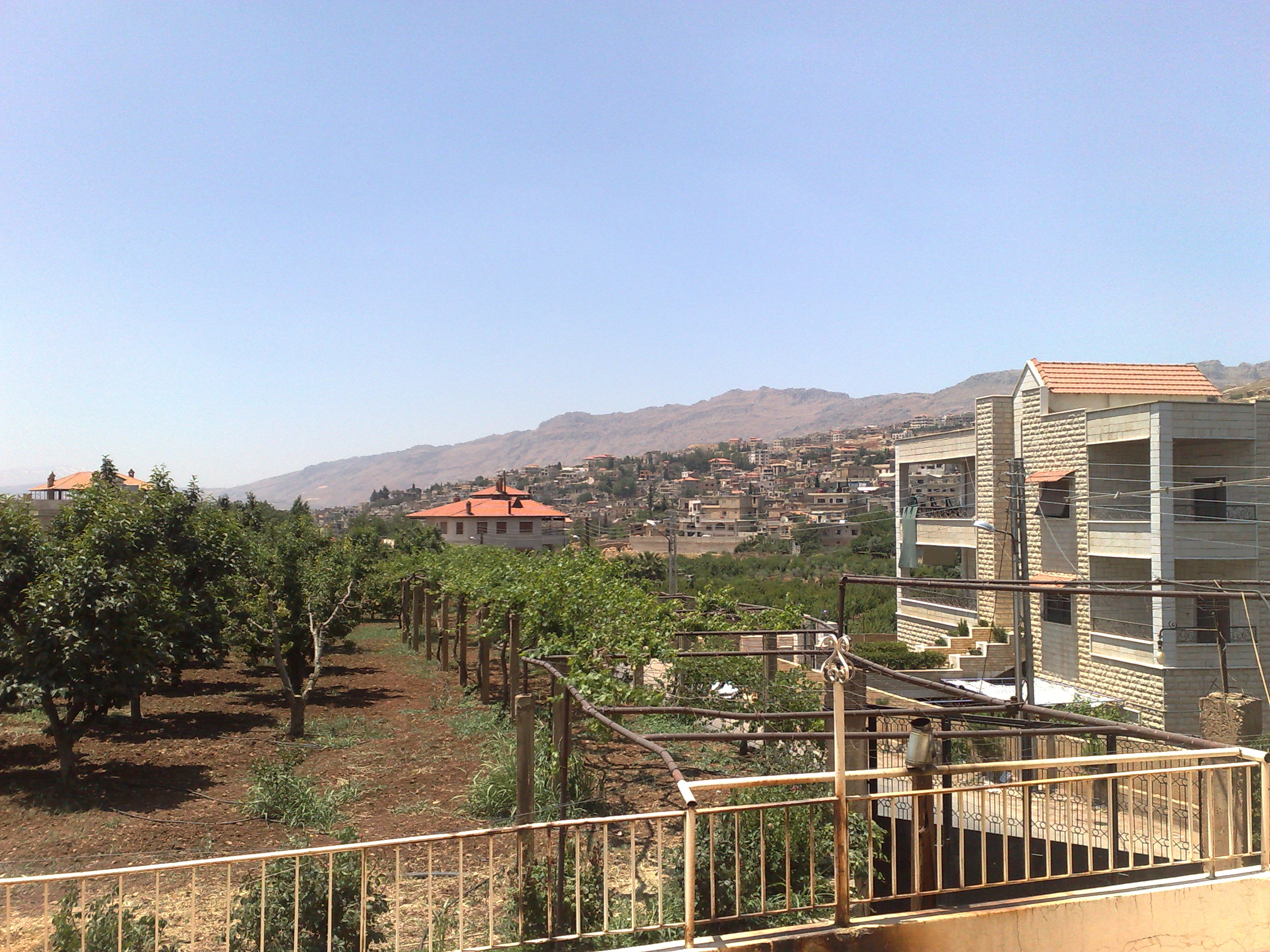
Al-Zabadani or Az-Zabadani () is a city in southwestern Syria in the Rif Dimashq Governorate, close to the border with Lebanon. It is located in the center of a green valley surrounded by high mountains at an elevation of around 1,100 m.
It is located to the right of the international road linking Damascus to Beirut, in the middle of the distance between Damascus and Baalbek, in a mountain valley in the Syrian mountain range, where it rises between 1,150 and 1,250 meters above sea level. Zabadani is located in the semi-arid to semi-humid region, with an average rainfall of 500 mm per year. It is bordered by two mountain ranges, Mount Senir to the west and Jabal Al Shaqif to the east, and in the middle of it is a green carpet that forms the Zabadani Plain.
According to the Syria Central Bureau of Statistics (CBS), in the 2004 census Al-Zabadani had a population of 26,285.
Etymology
Zabadani's name likely derives from Aramaic.
Overview
Compared to Damascus, the weather in Al-Zabadani tends to be milder in summer, about 5–8 degrees lower, but from December to the end of February it is colder with a lot of snow, and the temperature drops to −10 degrees.
The mild summer weather, along with scenic views, led the French colonial rulers to develop the city as a traditional summer resort and hill station, and has made the town a popular resort, both for tourists and for visitors from Syrian cities on the plains, especially nearby Damascus, and for tens of thousands of visitors from the Arabian peninsula. A more elevated region than Al-Zabadani is its neighbour Bloudan, also a resort for thousands of tourists. Bloudan is about 1,500 metres above sea level.
Al-Zabadani is predominantly Sunni, with a substantial Christian population, who have their own church and monastery. Before the Syrian Civil War, Al-Zabadani was rapidly growing and was well connected to Damascus. The war led to substantial destruction and damage of infrastructure and property. As a result, town's population has seen no substantial growth in the past two decades, currently standing (as of January 2025) at about 25,000 (of whom 2,000 are recently returned displaced persons).
Climate
Al-Zabadani has a hot-summer Mediterranean climate (Köppen climate classification: Csa). In winter there is more rainfall than in summer. The average annual temperature in Al-Zabadani is 14.1 °C. About 510 mm of precipitation falls annually.
| access-date = 20 December 2024}}
History
In 1838, the population was noted as being Sunni Muslims and Antiochian Greek Christians.
In 1909, J. E. Hanauer mentioned being informed about a large stone revered by Muslim peasants at Neby 'Abdan, a holy site near Zabadani.
Syrian Civil War
Main article: Battle of Zabadani (2012), Battle of Zabadani (2015), Syrian Civil War
Al-Zabadani is vitally important to the Syrian government being located along the Lebanon border. It is also strategically important to Iran because, since at least as late as June 2011, it served as the Islamic Revolutionary Guard Corps's logistical hub for supplying Hezbollah.
On 18 January 2012, Zabadani became the first city to fall to the Free Syrian Army (FSA), following a bloody battle that lasted 11 days. The Syrian Army regained control of the city by 11 February.
By late July 2012, Zabadani had become a base of operations for Hezbollah and the Iranian Guards. In August, local Syrian opposition fighters retook 70% of Zabadani with only a few isolated army checkpoints remaining. On 28 February 2014, a truce was reached between government and the rebels. Later it was reported that the truce broke down and that rebels attacked government checkpoints, with the government besieging and shelling the town. On 26 April 2014, the rebels surrendered after intense fighting with government troops, losing their last stronghold along Lebanon's border, only to regain control of the city months later. Following an extended siege by the Syrian Army and Hezbollah, a U.N.-brokered agreement was finally signed in September 2015, under which the city was successively evacuated by the rebels and control ceded back to the Syrian government on 19 April 2017.
City twinning
- GER Neunkirchen, Saarland, Germany
References
Bibliography
References
- [http://www.cbssyr.org/new%20web%20site/General_census/census_2004/NH/TAB03-26-2004.htm General Census of Population and Housing 2004] {{Webarchive. link. (2013-01-13 . [[Central Bureau of Statistics (Syria)). Syria Central Bureau of Statistics]] (CBS). Rif Dimashq Governorate. {{in lang. ar
- "تاجيبيديا - الموسوعة الإلكترونية العربية | الزبداني".
- Al-Tamimi, Aymenn Jawad. "al-Zabadani After the Revolution".
- Robinson and Smith, 1841, vol 3, 2nd appendix, p. [https://archive.org/stream/biblicalresearch03robiuoft#page/146/mode/1up 146]
- Hanauer, J. E.. (1909). "Notes from Damascus and the Anti-Libanus". Palestine Exploration Quarterly.
- Holliday, Joseph. (March 2012). "Syria's Armed Opposition". Institute for the Study of War.
- Fahim, Kareem. (January 21, 2012). "In Syrian city, a calm that few expect to last". [[The New York Times]].
- (29 July 2012). "Iran's Hizbullah sends more troops to help Assad storm Aleppo, fight Sunnis". World Tribune.
- (2012-08-13). "On the ground in Zabadani, a Syrian town in revolt". The Nation.
- "هدوء حذر تشهده الزبداني وأنباء عن هدنة بين الحر وقوات النظام".
- Blanford, Nicholas. "Town by town, Assad regime retakes southwestern Syria". [[Yahoo!]].
- "Syria rebels surrender in border town". Al Jazeera.
- (19 April 2017). "Zabadani: The Last Rebels Leave". Euronews.
- "اتفاق توءمة بين مدينة نوين كيرشين الألمانية والزبداني Twinning agreement between the city of Nguyen Kirchen German and Zabadani". The New Alphabet/SANA.
This article was imported from Wikipedia and is available under the Creative Commons Attribution-ShareAlike 4.0 License. Content has been adapted to SurfDoc format. Original contributors can be found on the article history page.
Ask Mako anything about Al-Zabadani — get instant answers, deeper analysis, and related topics.
Research with MakoFree with your Surf account
Create a free account to save articles, ask Mako questions, and organize your research.
Sign up freeThis content may have been generated or modified by AI. CloudSurf Software LLC is not responsible for the accuracy, completeness, or reliability of AI-generated content. Always verify important information from primary sources.
Report