From Surf Wiki (app.surf) — the open knowledge base
Akai
Japanese electronics manufacturer

Japanese electronics manufacturer
| Field | Value |
|---|---|
| name | Akai Electric Company Ltd |
| logo | Akai_brand_logo.svg |
| logo_size | 200px |
| type | Subsidiary |
| foundation | , in Tokyo, Japan |
| founder | Masukichi Akai |
| defunct | |
| parent | Mitsubishi Electric (c. 1987–1994) |
| International Semi-Tech Microsystems (c. 1994–1999) | |
| Grande Holdings (1999–present; brand name) | |
| industry | Electronics |
| products | Hi-fi equipment |
International Semi-Tech Microsystems (c. 1994–1999) Grande Holdings (1999–present; brand name)
Akai (, ) was a Japanese electronics manufacturer, established as Akai Electric Company Ltd in Tokyo in 1929. It was best known outside Japan for its tape recorders during the 1960s and 1970s. The company became bankrupt in 2000 and since then third-party products have been marketed under the Akai brand name, which has since been owned by Grande Holdings of Hong Kong.
In its earlier history, Akai had made many innovations in the development of magnetic tape-based audio technology. Around 1980, the music division Akai Professional was founded, offering production and stage equipment for modern music. After the controversial collapse of the business in 2000, the Akai brand came under the ownership of Hong Kong based Grande Holdings. The company now distributes a range of electronic products, including LED TVs, washing machines, clothes dryers, air conditioners, and smartphones. These products are developed through collaborations with other electronics companies with relevant expertise.
The Akai Professional electronic instrument division had already been spun off as a separate business in 1999 and today operates under the unrelated ownership of inMusic Brands.
Corporate history
Akai was founded by Masukichi Akai and his son, Saburo Akai (who died in 1973), as Akai Electric Company Ltd., a Japanese manufacturer, in 1929.{{cite web | access-date = 2013-07-02 | access-date = 2013-07-02 | access-date = 2013-07-02 | archive-url = https://web.archive.org/web/20130810022721/http://adt-digital.com/index.php?option=com_content&view=article&id=3&Itemid=2 | archive-date = 10 August 2013 | url-status = usurped Although reliable sources are not yet found, according to several sources (kotobank.jp, :ja:Akai Professional), Masukichi Akai established Akai Press Industry in 1923, and his son, Saburo Akai, founded Akai Electric Company Ltd. in 1946, with Masukichi serving as the president of both.
The company's business eventually became disorganized, and it exited the audio industry in 1991. At its peak in the late 1990s, Akai Holdings employed 100,000 workers and had annual sales of HK$40 billion (US$5.2 billion). The company filed for insolvency in November 2000, owing creditors US$1.1 billion. It emerged that ownership of Akai Holdings had passed to Grande Holdings in 1999, a company founded by Akai's chairman James Ting. The liquidators claimed that Ting had stolen over US$800 million from the company with the assistance of accountants Ernst & Young, who had tampered with audit documents dating back to 1994. Ting was imprisoned for false accounting in 2005, In a separate lawsuit, a former E&Y partner, Christopher Ho, made a "substantial payment" to Akai creditors in his role as chairman of Grande Holdings.
The "Akai Professional" division, specializing in electronic instruments, became a separate business in 1999. and is no longer associated with the main "Akai" brand.
History
Historical products
Akai's products included reel-to-reel audiotape recorders (such as the GX series), tuners (top-level AT, mid-level TR and TT series), audio cassette decks (top-level GX and TFL, mid-level TC, HX, and CS series), amplifiers (AM and TA series), microphones, receivers, turntables, video recorders, and loudspeakers.

Many Akai products were sold under the name Roberts in the U.S., as well as A&D in Japan (from 1987, following a partnership with Mitsubishi Electric), Tensai, and Transonic Strato in Western Europe. During the late 1960s, Akai adopted Tandberg's cross-field recording technologies (using an extra tape head) to enhance high-frequency recording and later switched to the increasingly reliable Glass and Crystal (X'tal) (GX) ferrite heads. The company's most popular products included the GX-630D, GX-635D, GX-747/GX-747DBX, and GX-77 open-reel recorders (the latter featuring an auto-loading function), the three-head, closed-loop GX-F95, GX-90, GX-F91, GX-R99 cassette decks, and the AM-U61, AM-U7, and AM-93 stereo amplifiers.
Akai manufactured and badged most of its imported hi-fi products under the Tensai brand (named after the Swiss audio and electronics distributor Tensai International). Tensai International served as Akai's exclusive distributor for the Swiss and Western European markets until 1988.
Akai limited its consumer hi-fi product line in the United States and Europe toward the end of the 20th century.
Introduction of the on-screen display
Akai produced consumer video cassette recorders (VCRs) during the mid-1980s. The Akai VS-2 was the first VCR to feature an on-screen display,
Akai Professional
In 1984, a new division of the company was formed to focus on the manufacture and sale of electronic instruments, and was called Akai Professional.

The first product released by the new subsidiary was the MG1212, a 12-channel, 12-track recorder. | url-status = dead | archive-url = https://web.archive.org/web/20120130202811/http://www.hollowsun.com/gagnon/about/prod_hist.html | archive-date = 30 January 2012
AX series analog synthesizers


Main article: Akai AX80, Akai AX60
Other early products included the Akai AX80 8-voice analog synthesizer in 1984, followed by the AX60 and AX73 6-voice analog synthesizers around 1986. | archive-url = https://archive.today/20130728105502/http://www.hollowsun.com/gagnon/products/archive/ax73/index.html | url-status = dead | archive-date = 2013-07-28 “The AX73 was a simple analogue synthesiser based around the Curtis CEM 3394 chips ... Internally, the AX60 had the same voice architecture as the AX73 and VX90 ... Common to all models in the range, however, was a proprietary 13-pin DIN socket that allowed you to connect an S900 for processing through the synths' analogue filters. ...”
Digital Samplers (S, X, Z series)
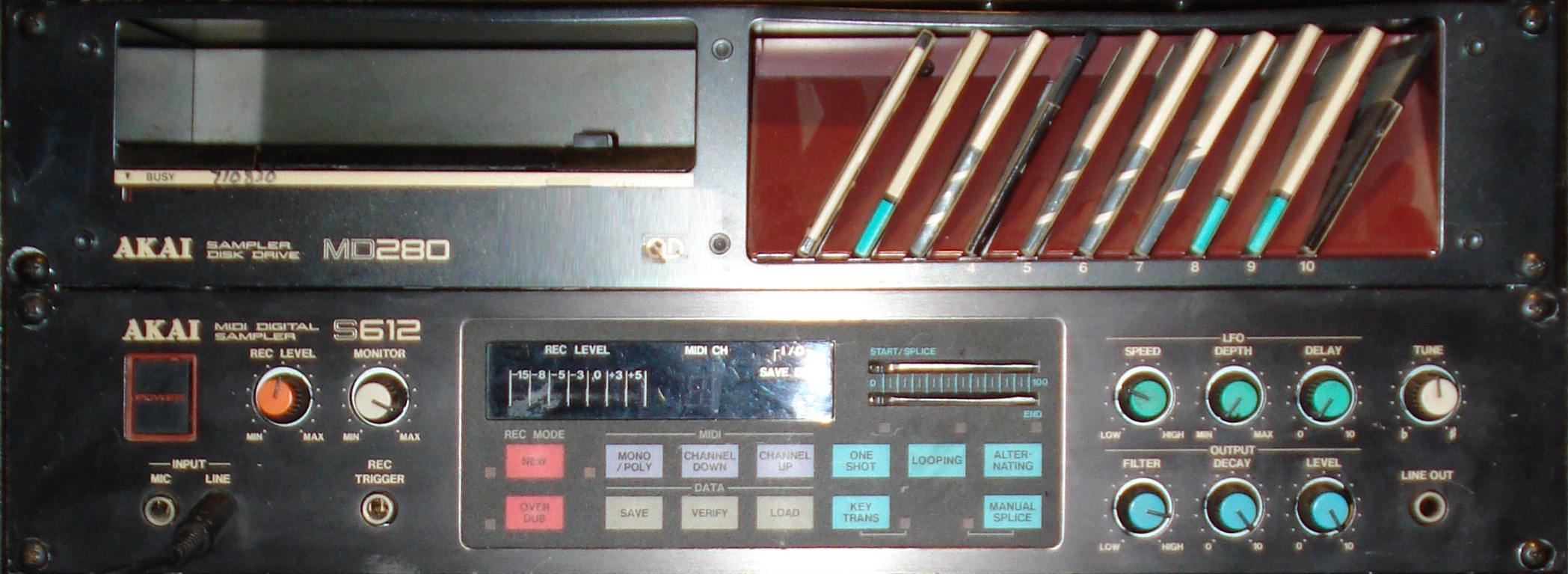
The S612 12-bit digital sampler released in 1985 was the first in a series of relatively affordable samplers, designed in a 19-inch studio-rack format and finished in black. It could hold only a single sample at a time, which was loaded into memory via a separate disk drive utilizing 2.8-inch Quick Disk floppy disks. The maximum sample time at the highest quality sampling rate (32 kHz) was one second.

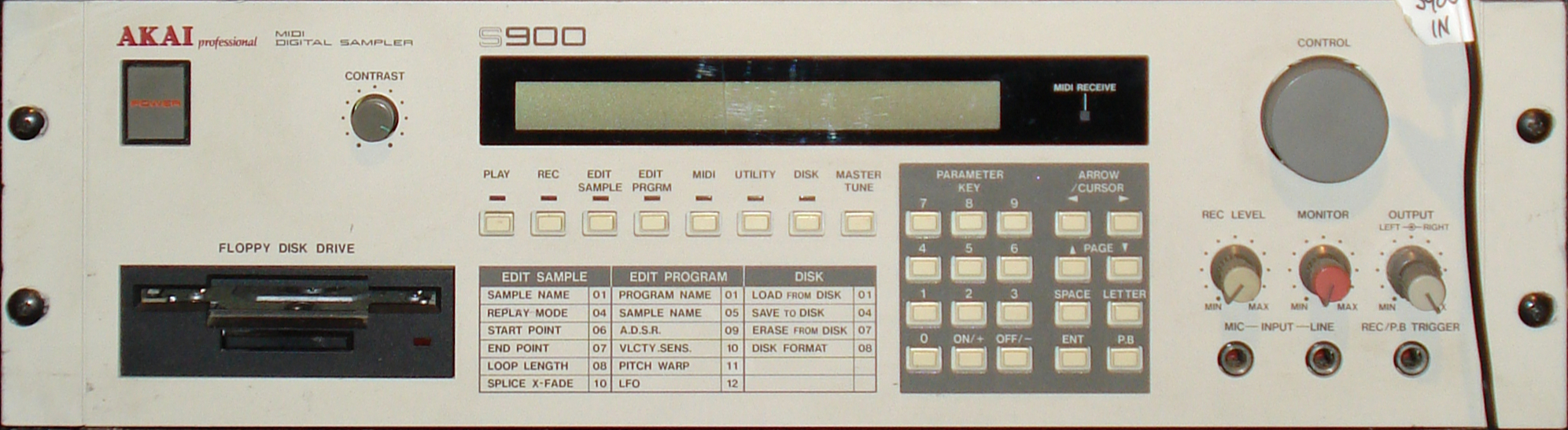

The introduction of a "professional" range of digital samplers began with the 12-bit S900 in 1986, followed by the X7000 keyboard sampler in 1986,
The 16-bit Akai S1000 series followed in 1988, introducing the ability to read CD-ROMs and write to hard disks via SCSI. This range was eventually superseded by the S3000 series in 1993, which offered an optional built-in CD-ROM drive, followed by the S5000 and S6000 models. Additional notable releases included the Z4 and Z8 24-bit 96 kHz samplers.
MPC
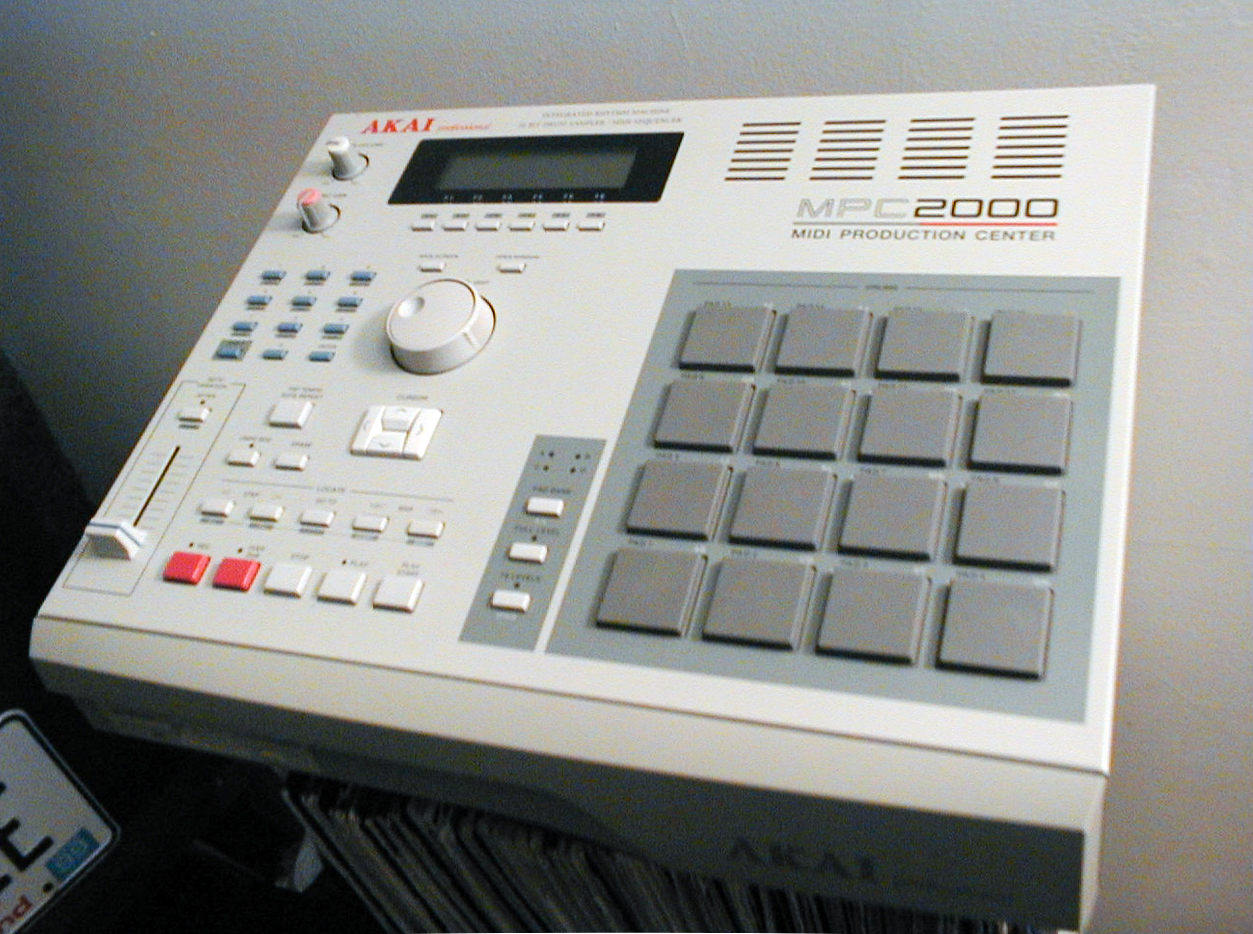
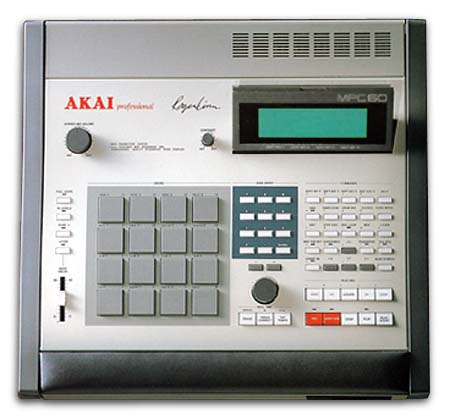
Main article: Akai MPC
Akai also produced several Digital MIDI sequencers and digital synthesizers such as the MPC range, a line of integrated drum machines, MIDI sequencers, samplers and direct-to-disk recorders.
New ownership of Akai Professional
In December 1999, one year before the application of the to Akai Electric Company Ltd., the brand of its musical instrument division, Akai Professional, was acquired by a company based in the United States. The new company was named "Akai Professional Musical Instrument Corporation". |url-status = dead |archive-url = https://web.archive.org/web/20130503082508/http://www.hollowsun.com/gagnon/about/index.html |archive-date = 3 May 2013 |script-title = ja:アカイプロフェッショナルエムアイが破産手続き開始 |trans-title = Akai Professional M.I. entered bankruptcy proceedings. |archive-url = https://web.archive.org/web/20060112023246/http://www.kanalog.jp/news/local/entry_16076.html |archive-date = 12 January 2006 |url-status = dead}} Abstract: according to the private credit research company, [Teikoku Databank Yokohama branch, by the 7th (December 2005), Akai Professional M.I. received a bankruptcy proceedings decision by the Tokyo District Court. ... Akai Professional M.I. was established in December 1999 to focus on the manufacture and sale of electronic musical instruments, by a company of the United States who acquired the brand(s) of the musical instrument division of Akai Electric Company Ltd.]
In 2004, following a US distribution deal, the Akai Professional Musical Instrument division was acquired by Jack O'Donnell, owner of Numark Industries and Alesis. In 2012, inMusic Brands was formed as the parent company for O'Donnell's companies, including Akai Professional.
Current Akai products
In early 2003, Grande Holdings began reintroducing Akai's brands by marketing various audio-visual products manufactured by Samsung. In the same year, Grande started distributing Akai home appliances, including air conditioners, vacuum cleaners, and refrigerators. In the 2010s, it began distributing Akai smartphones in collaboration with Chinese smartphone manufacturers such as Gionee, in India and other countries.
Video
- AV receivers
- Portable DVD players
- DVD players
- DVD recorders
- Home theatre systems
- Home theatre speakers
- VCD players
- VCRs
Mobile sound
- Amplifiers
- Cassette receivers
- CD changers
- CD receivers
- DVD changers
- DVD receivers
- Car audio – DVD players
- Car audio – speakers
- Car audio – TFT monitors
Home appliances
- Air conditioners
- Air coolers
- Air purifiers
- Chest freezers
- Dishwashers
- Heaters
- Ice makers
- Microwave ovens
- Refrigerators
- Showcases
- Vacuum cleaners
- Washing machines
- Water dispensers
- Wine cellars
Audio
- Stereo rack systems
- Mini systems
- Micro music
- Retro radios
- Sound boxes
- Portable music players
- Tape decks
- Portable DAT recorder/player (Blue colored body, Webshop DirectOrder only, OEM from JVC/Victor)
- Portable MD recorder/player (Blue color body, Webshop DirectOrder only, OEM from JVC/Victor)
Digital
- Wireless surround sound systems
- Bluetooth
- MP3 player
- Mobile phones
- Smart phones
Television
- CRT color television sets
- LCD televisions
- Plasma television
- Set-top boxes
Akai Professional products

Synthesizers
- AX60 (1986) – discontinued
- AX73 (1986) – discontinued
- AX80 (1984) – discontinued
- VX90 (1986) – rack-mount version of AX73, discontinued
- VX600 (1988) – 3-octave keyboard synthesizer with EWI connection jack, discontinued
- Akai SG01v (1995) – desktop sound module, discontinued
- MINIAK – discontinued
Samplers
- S612 (1985) – discontinued
- S900 (1986) – discontinued
- X3700 (1986) – discontinued
- X7000 (1986) – discontinued
- S700 (1987) – discontinued
- S950 (1988) – discontinued
- S1000 (1988) – discontinued
- S1100 (1990) – discontinued
- S01 (1992) – discontinued
- S2800 (1992) – discontinued
- S3000 (1993) – discontinued
- S3200 (1993) – discontinued
- CD3000 (1993) – discontinued
- REMIX16 (1995) – table-top phrase sampler, discontinued
- S2000 (1995) – discontinued
- S3000XL (1995) – discontinued
- S3200XL (1995) – discontinued
- S20 (c.1997) – discontinued
- CD3000XL (c.1996/1997) – discontinued
- S5000 (1999) – discontinued
- S6000 (1999) | access-date = 16 May 2011 | archive-url = https://web.archive.org/web/20060523091422/http://www.soundonsound.com/sos/jan99/articles/akais5000.325.htm | archive-date= 23 May 2006
- Z4 (2002) – discontinued
- Z8 (2002) – discontinued
- MPX8
- MPX16
Music Production Center
Main article: Akai MPC
- MPC60 (1987) – MIDI Production Centre, discontinued
- MPC60II – (1991) – discontinued
- MPC3000 (1993) – discontinued
- MPC3000LE (1999) – discontinued
- MPC2000 (1997) – discontinued
- MPC2000XL (1999) – discontinued
- MPC4000 (2002) – discontinued
- MPC1000 (2003) – discontinued
- MPC500 (2006) – discontinued
- MPC2500 (2005) – discontinued
- MPC5000 (2008) – discontinued
- MPC Renaissance (2012) – discontinued
- MPC Studio (2012) – Discontinued
- MPC Element (2013) – Discontinued
- MPC Touch (2015)
- MPC Studio Black (2016)
- MPC Live (2017)
- MPC X (2017)
- MPC Force (2019)
- MPC One (2020)
- MPC Live ll (2020)
- MPC Studio II (2021)
- MPC Key 61 (2022)
- MPC One+ (2023)
- MPC Live III (2025)
Computer audio interfaces
- EIE (2011)
- EIE PRO (2011)
Drum machines
- MR16 (1985)
- XE-8 1U rack mounted, Acoustic drum sound from S-1000 library, discontinued
- XR10, discontinued Table Top Playback Sampler incl XE-8 Sound with Dance Sample Sounds 16-bit, discontinued
- XR20 (2008) Made by Alesis
- Rhythm Wolf (2015) Tabletop analogue drum machine with bass synth
- Tom Cat
Electronic wind instruments
- EVI1000 (1987) – Electronic Valve Instruments, discontinued
- EWI1000 (1987) – Electronic Wind Instrument, discontinued
- EWV2000 – Electronic Wind Instrument sound module, discontinued
- EWI4000S (2005)
- EWI-USB (2008)
- EWI5000 (2014)
- EWI SOLO (2020)
Effects units / Utilities
- EX90R – Reverb, discontinued
- ME10D – MIDI digital delay, discontinued
- ME15F – MIDI dynamic controller, discontinued
- ME20A – MIDI sequencer arpeggiator, discontinued
- ME25S – MIDI note separator, discontinued
- ME30P – MIDI 4×8 patchbay, discontinued
- ME35T – Audio/MIDI trigger, discontinued
- ME80P – MIDI 8×10 patchbay, discontinued
- MB76 – Programmable mix bay, discontinued
- PEQ6 – Programmable equaliser, discontinued
- DP88 (1993) – digital audio patchbay, discontinued
- AR900 (1986–89) – 16-bit MIDI Digital Reverb, discontinued
- MFC42 (2001) – filter bank, discontinued
- HV10 Harmony generator (2002)
- VST Plug-ins (2002)
Guitar pedals
- Analog Delay
- Blues Overdrive
- Chorus
- Compressor
- Deep Impact Synth
- Deluxe Distortion
- Drive3 Distortion
- Drive3 Fuzz
- Drive3 Overdrive
- E2 Head Rush
- Flanger
- Phase Shifter
- Akai Shred-o-Matic D1tube driven distortion pedal
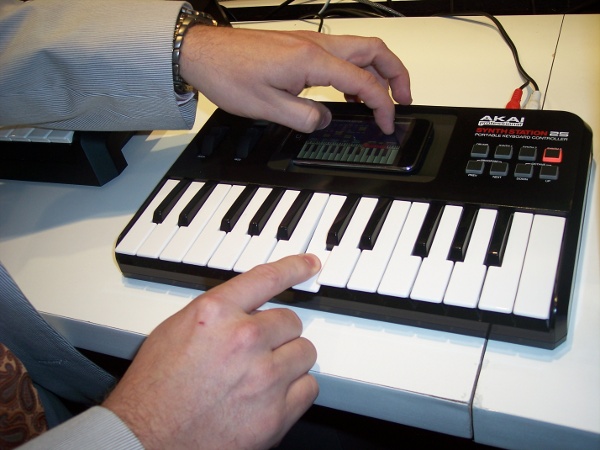
iPod/iPad Keyboard Controllers
- SynthStation25
- SynthStation49
- AkaiMPC Fly (2012)
MIDI Sequencers
- MS08 (c.1985) – discontinued
- ASQ10 (c.1986/7) – discontinued
Standalone Multi-track Audio Recorders
- MG614 (1983?) – discontinued
- MG1212 (1984) – discontinued
- MG1214 (1985) – discontinued
- DR1200/DL1200 (1988) – discontinued
- DD1000 (1990) – discontinued
- DD/DL1500 (1994) – 16-track DAW, discontinued
- DD8 (1996) – discontinued
- DD8plus (1998) – discontinued
- DR4D (1993) – discontinued
- DR8 (1994) – discontinued
- DR16 (1995) – discontinued
- DPS12 (1997) – discontinued
- DPS16 (1999) – discontinued
- DPS24 (2002) – discontinued
- DPS24MKII – discontinued
- RE32 (1999) – controller for DD/DR series, discontinued
Studio Monitor Speakers
- RPM3
- RPM8 – discontinued
- 50x
MIDI Controllers
- APC20
- APC40
- APC40 MkII
- EWI-USB
- LPD8 (2009)
- LPK25 (2009)
- MPD16 (2002) – discontinued
- MPD18 – discontinued
- MPD24 (2006) – discontinued
- MPD26 (2010)
- MPD32 (2008)
- MPK25 (2009)
- MPK49 (2007)
- MPK49 V2 (2007)
- MPK61 (2009)
- MPK88 (2009)
- MPK Mini
- MPK Mini MK II (2014)
- MPK Mini MK III (2020)
- MPK225 (2014)
- MPK249 (2014)
- MPK261 (2014)
- MAX25 (2014)
- MAX49 (2014)
- MX73 MIDI Master Keyboard – discontinued
- MX76 MIDI Master Keyboard (1987) – discontinued
Notes
References
References
- (5 October 2009). "Akai Liquidator to Receive Payment in Settlement With Grande". Bloomberg.
- (30 September 2009). "Raids, arrest as fraud police probe Akai files". South China Morning Post.
- Rovnick, Naomi. (27 January 2010). "Ernst & Young pays up to settle negligence claim". South China Morning Post.
- "About inMusic and Jack O'Donnell".
- Tape dec
- (February 1996). "Akai SG01v". Sound On Sound.
- (May 2010). "Akai Miniak". Sound On Sound.
- (December 1985). "Sampling The Japanese Way".
- (October 1987). "Akai S900 – Revisited".
- (January 1987). "Akai X7000 Sampling Keyboard".
- (March 2001). "Akai S700". Sound on Sound.
- (January 1989). "Akai S950 Digital Sampler".
- (November 1988). "Akai S1000".
- (December 1990). "Akai S1100".
- (November 1992). "Akai S01 Sampler".
- (March 1993). "Akai S3000 and S2800 Samplers".
- (September 1993). "Akai CD3000".
- (November 1995). "Akai S2000". Sound on Sound.
- (July 1997). "Akai S20". Sound on Sound.
- (January 1997). "Akai CD3000XL". Sound on Sound.
- (July 2002). "Akai Z-Series". Sound on Sound.
- (May 2015). "Akai MPX16". Sound on Sound.
- (April 1988). "Akai MPC60".
- (April 1997). "Akai MPC2000". Sound on Sound.
- (September 2002). "Akai MPC 4000". Sound on Sound.
- (May 2007). "Akai MPC500". Sound on Sound.
- (January 2007). "Akai MPC2500". Sound on Sound.
- "Akai MPC5000". Future Publishing.
- (December 2008). "Akai MPC5000". Sound on Sound.
- (February 2013). "Akai MPC Renaissance". Sound on Sound.
- (June 2013). "Akai MPC Studio". Sound on Sound.
- (September 2016). "Akai MPC Touch". Sound on Sound.
- (April 2017). "Akai MPC Live". Sound on Sound.
- (September 2017). "Akai MPCX". Sound on Sound.
- (May 2012). "Akai EIE Pro". Sound on Sound.
- (December 1988). "Akai XE8 Drum Box".
- (April 1989). "Akai XE8".
- (June 1990). "Akai XR10".
- (July 2008). "Akai XR20". Sound on Sound.
- (March 2015). "Akai Rhythm Wolf". Sound on Sound.
- (April 1988). "Akai EWI-2000 & EWV-2000".
- (March 1988). "Akai EX90R".
- (February 1986). "Akai MIDI Effects".
- (September 1986). "Taking Notes".
- (July 1986). "Patching Up".
- (March 1988). "Effective Automators".
- (May 1988). "Akai ASQ 10 Sequencer".
- (March 1998). "Akai DPS12". Sound on Sound.
- (May 2002). "Akai DPS24". Sound on Sound.
- (August 2010). "Akai APC20". Sound on Sound.
- (September 2009). "Akai APC40". Sound on Sound.
- (April 2015). "Akai APC40 MkII". Sound on Sound.
- (March 2010). "Akai LPD8 & LPK25". Sound on Sound.
- (September 2007). "Akai MPD24". Sound on Sound.
- (October 2009). "Akai MPK25". Sound on Sound.
- (February 2008). "Akai MPK49". Sound on Sound.
- (March 2011). "Akai MPK Mini". Sound on Sound.
- [https://www.akaipro.com/mpk-mini-play-mpkminiplay MPK Mini Play]
- (July 2013). "Akai Max49". Sound on Sound.
- (December 1986). "Akai MX73".
- (May 1989). "Akai MX76".
This article was imported from Wikipedia and is available under the Creative Commons Attribution-ShareAlike 4.0 License. Content has been adapted to SurfDoc format. Original contributors can be found on the article history page.
Ask Mako anything about Akai — get instant answers, deeper analysis, and related topics.
Research with MakoFree with your Surf account
Create a free account to save articles, ask Mako questions, and organize your research.
Sign up freeThis content may have been generated or modified by AI. CloudSurf Software LLC is not responsible for the accuracy, completeness, or reliability of AI-generated content. Always verify important information from primary sources.
Report