From Surf Wiki (app.surf) — the open knowledge base
Airservices Australia
Australian air navigation service provider

Australian air navigation service provider
| Field | Value |
|---|---|
| agency_name | Airservices Australia |
| logo | Image:Airservices Australia 2023 logo.svg |
| logo_width | 250px |
| formed | 6 July 1995 |
| preceding1 | Civil Aviation Authority (CAA) |
| jurisdiction | Civil Aviation Act 1988, Air Services Act 1995, Airspace Act 2007 |
| headquarters | Alan Woods Building, 25 Constitution Avenue, Canberra, ACT, Australia |
| employees | 3423 (June 2024) |
| budget | $1,053 million (income, FY2024) |
| minister1_name | Catherine King |
| minister1_pfo | Minister for Infrastructure and Transport |
| chief1_name | Anne T. Brown |
| chief1_position | Chairperson |
| chief2_name | Rob Sharp |
| chief2_position | Chief Executive Officer |
| website | www.airservicesaustralia.com |
Airservices Australia is an Australian Government–owned corporation, responsible for providing services to the aviation industry within the Australian Flight Information Region (FIR). Some of Airservices Australia’s responsibilities include air traffic control, airway navigation, communication facilities, publishing aeronautical data, airport rescue, and fire-fighting services. Airservices Australia has international partnerships with ICAO, CANSO and IATA.
Responsibilities
Airservices Australia manages air traffic within Australian airspace. This includes the airspace over continental Australia, territorial waters and also international airspace boundaries over the Pacific and Indian Oceans. Airservices Australia also manages upper-level airspace (above 24,500 ft) under contract to the neighbouring Pacific Island Flight Information Regions of the Solomon Islands and Nauru.
Airservices Australia publishes aeronautical data, maintains telecommunications infrastructure, radio navigation aids, updates flight procedures and provides emergency services, including the Aviation Rescue Fire Fighting services at 26 of Australia's busiest airports.
The agency is fully funded by direct charges to the aviation industry and controlled by a board of directors, accountable to the Australian Parliament through the Minister for Infrastructure and Transport. The Chair of Airservices Australia Board is John Weber. The Chief Executive Officer is Rob Sharp, who was appointed on a four-year term in January 2025, replacing Jason Harfield. The agency maintains more than 4,000 skilled aviation professionals, including air traffic controllers, engineering specialists, technicians and support staff working from two major control centres, 29 air traffic control towers and firefighting stations at 26 of Australia's busiest airports.
Image:Airservices Australia Fire Appliance.jpg|An Airservices Australia fire appliance travelling beside the runway at Sydney Airport on 5 January 2008 File:Airservices Australia Routes Man and Mat Depot.jpg|Airservices Australia Technical Services Maintenance Depot at Wagga Wagga Airport.
Air traffic control operations

Airservices Australia has 29 air traffic control towers and two air traffic control centres based in Brisbane and Melbourne. Australia has two Flight Information Regions which are managed by these centres. All airspace to the north of the dividing boundary (YBBB) is controlled by Brisbane Centre and all airspace to the south of the boundary (YMMM) is controlled by Melbourne Centre. These centres cover the whole of Australia with the exception of Perth and Sydney Terminal Control Units as well as the towers at major airports. In addition, Melbourne Centre is responsible for managing traffic handovers from South Africa, Mauritius, Sri Lanka, Maldives, Indonesia and New Zealand. Brisbane Centre manages traffic handovers from neighbouring flight information regions including East Timor, Papua New Guinea, Fiji and the United States.
En-route controllers (also referred to as Area/Centre Controllers) located in Brisbane and Melbourne are responsible for all aircraft flying at upper levels above 25000 ft. These controllers are responsible for the majority of air traffic over the Australian mainland and on oceanic routes within Australia's flight information region.
In 1999, the agency commenced using The Australian Advanced Air Traffic System (TAAATS), a computerised air traffic control system covering all sectors of Australian air space.
In 2013, Airservices was ranked among the world's best as part of an international safety benchmarking study undertaken by the Civil Air Navigation Services Organisation (CANSO). The study placed Airservices in second place for air navigation service providers (ANSP) in relation to the maturity of the organisation's Safety Management System, with a score of more than 90% effectiveness.
History
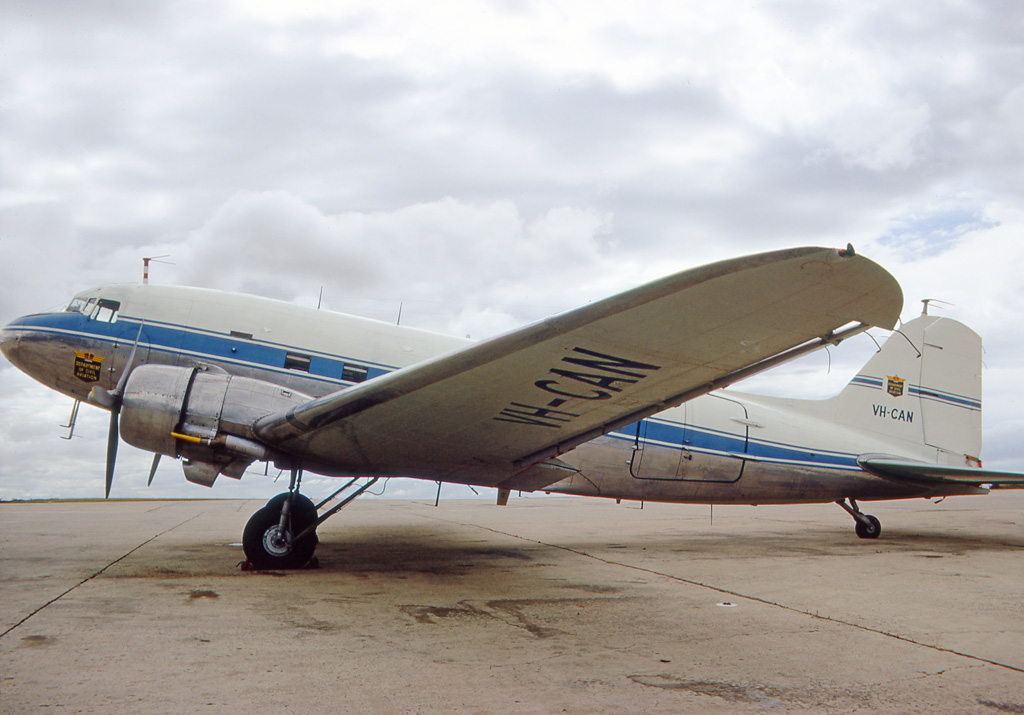
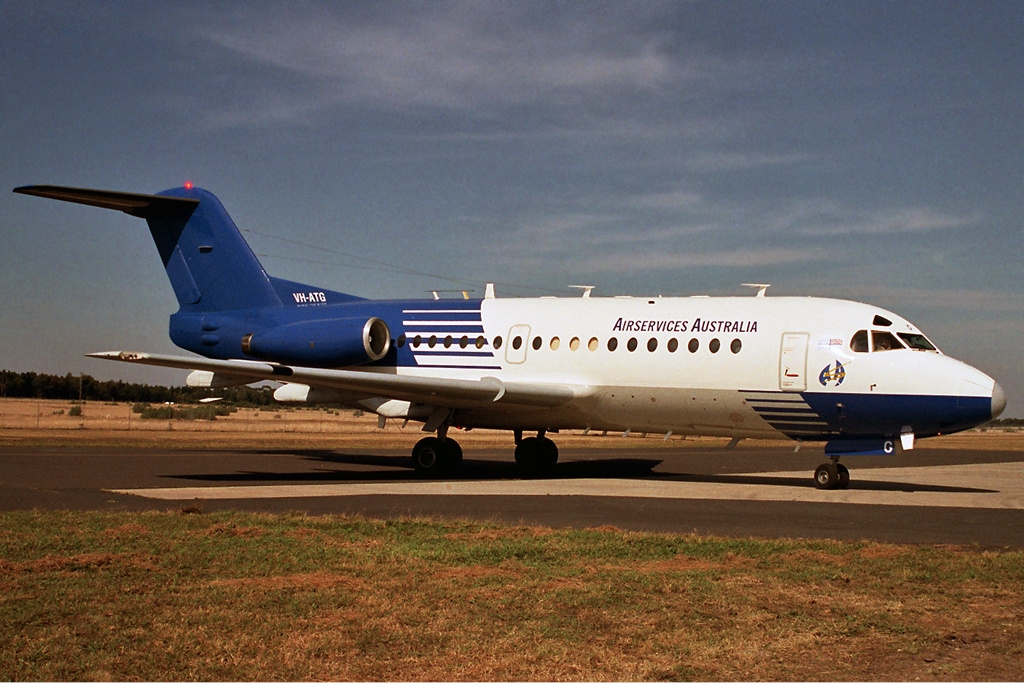
The Civil Aviation Branch of the Department of Defence was established on 28 March 1921, after Parliament passed the Air Navigation Act 1920 in December 1920. The organisation was reformed as a separate Government Department, the Department of Civil Aviation (DCA), on 14 November 1938 after the enquiry into the crash of the DC-2 aircraft Kyeemah in 1938. Arthur Corbett was appointed director-general of Civil Aviation in April 1939, serving until his retirement in August 1944. From June 1946 to December 1955 the director-general was Richard Williams, formerly RAAF Chief of the Air Staff. Donald Anderson held the position of director-general from January 1956 until September 1973.
On 30 November 1973 the DCA merged with the Department of Shipping and Transport and became the Department of Transport, Air Transport Group. This group was again reformed as its own Department on 7 May 1982, the Department of Aviation (DOA). Another merger took place on 24 July 1987 when the DOA was absorbed by the Department of Transport and Communications. On 1 July 1988 the Civil Aviation Authority (CAA) was formed to control aviation safety regulation and provide air traffic services.
1995 split
The CAA was split into two separate government organisations in July 1995: Airservices Australia and the Civil Aviation Safety Authority (CASA). Airservices Australia took responsibility for airspace management, aeronautical information, communications, radio navigation aids, airport rescue firefighting services, and aviation search and rescue, while CASA assumed control of safety regulations, licensing of pilots and aviation engineers, and certification of aircraft and operators. The role of aviation search and rescue was transferred from Airservices Australia to the Australian Maritime Safety Authority in 1997.
OneSky
Since 2015, Thales Australia has been contracted to provide a replacement for TAAATS. The program will be a joint civil-military air traffic management system, called OneSKY, based on the Thales TopSky system.
Industrial and legal actions
2009 ATC industrial dispute
Airservices Australia entered negotiations with the Air Traffic Control union Civil Air in early 2008 to form a new collective agreement. As negotiations continued, ATC staff shortages were said to contribute to what was the worst year on record for flight delays and cancellations, but had been earlier defended by Airservices CEO Greg Russell as having been caused by a group of "renegade air traffic controllers" who had been responsible for airspace closures in a form of covert industrial action.
Despite claims by the union that the problem was caused by a shortage of controllers, the figures provided by Airservices show the average number of controllers has not changed significantly over the previous three years.
Complaints by airline Virgin Blue culminated in a demand for $500,000 compensation in October 2008. An attempt by Airservices to define obligatory reasonable overtime for its controllers failed in the AIRC in late December 2008.
Remaining differences in position regarding wages and sick leave resulted in threatened industrial action by late January 2009. High-level intervention of CEO Greg Russell and ACTU President Sharan Burrow in the negotiations produced an offer which averted industrial action and was endorsed almost unanimously by the Air Traffic Controllers.
The collective agreement negotiation saw 83% of staff register their vote, with 95 per cent voting for the agreement. The new agreement led to a pay increase of 4.3% per annum over 3.5 years with changes to sick leave and rostering arrangements.
As of September 2009, Air Traffic Control staffing problems continued to disrupt the ability of Airservices Australia to provide its core function, precipitating an unprecedented cancellation of leave for the entire Sydney approach control unit for three months.
In its 2010–13 Workforce Plan, Airservices claimed that as of December 2009 the required number of operational ATC staff were available, reflecting the impact of a significant increase in recruitment and training throughout 2008–09. Airservices further plans to recruit close to 100 ATC trainees annually to 2013 to offset the impact of retirements and resignations.
In 2013, an independent review of air traffic controller numbers at Airservices by air navigation services provider, NAV CANADA, confirmed that the organisation had the appropriate number of operational air traffic controllers to meet its requirements.
2010 alleged sexual harassment and bullying court action
On 28 July 2010 a Federal Court action was brought against Airservices Australia by two air traffic controllers employed by the agency for alleged bullying and sexual harassment within the workplace.
2019 culture review by Elizabeth Broderick
In August 2019 following media publicity over complaints of ongoing sexual harassment, Airservices engaged Elizabeth Broderick and Co. to conduct a culture review.
References
References
- (13 July 2016). "Aviation rescue fire fighting | Airservices".
- "Our Board {{!".
- (8 May 2013). "Airservices among world's best – CANSO benchmarking study". Australian Aviation.
- "Key moments of CASA's history". [[Civil Aviation Safety Authority]].
- Prentice, S.A.. (1993). "Arthur Brownlow Corbett (1877–1970)".
- Garrisson, A.D.. (1990). "Sir Richard Williams (1890–1980)".
- Gunn, John. (1993). "Sir Donald George (Don) Anderson (1917–1975)".
- "History: Australian Search and Rescue (AusSAR)". [[Australian Maritime Safety Authority]].
- (27 February 2015). "Work on Onesky to begin as Airservices signs "forward services contract" with Thales".
- (18 January 2009). "2008 worst year for cancelled or late flights". The Age.
- (26 July 2008). "Renegade controllers leave pilots flying blind". The Age.
- (31 July 2008). "Shortage of air traffic controllers spells more drama for Qantas". Australian Broadcasting Corporation.
- (7 October 2008). "Virgin Blue demands $500,000 for delays". The Sydney Morning Herald.
- "AIRC Determination: Alleged dispute concerning hours of work". Airc.gov.au.
- (22 January 2009). "Air traffic controllers flag industrial action". Australian Broadcasting Corporation.
- Stewart, Cameron. (17 February 2012). "Strike on way after air traffic talks fail". [[The Australian]].
- Creedy, Steve. (17 February 2012). "Air traffic controllers' pay row threatens havoc for flights". [[The Australian]].
- (4 May 2009). "Air traffic controllers agree to deal". The Age.
- "Media Release – Air traffic controllers collective agreement ballot successful". Newsroom.airservicesaustralia.com.
- (13 September 2009). "Flights delayed or cancelled in Sydney". Brisbane Times.
- (14 September 2009). "Sydney's flight schedule 'to return to normal'". Australian Broadcasting Corporation.
- Creedy, Steve. (17 February 2012). "Airservices, staff on collision course". [[The Australian]].
- "Airservices 2010–13 Workforce Plan".
- (29 July 2010). "Air controllers claim bullying, discrimination". The Age.
- (15 October 2019). "Air traffic control boss 'Mr Mintie' stalked trainee, asked for kisses".
- "Statement regarding claims about workplace culture".
This article was imported from Wikipedia and is available under the Creative Commons Attribution-ShareAlike 4.0 License. Content has been adapted to SurfDoc format. Original contributors can be found on the article history page.
Ask Mako anything about Airservices Australia — get instant answers, deeper analysis, and related topics.
Research with MakoFree with your Surf account
Create a free account to save articles, ask Mako questions, and organize your research.
Sign up freeThis content may have been generated or modified by AI. CloudSurf Software LLC is not responsible for the accuracy, completeness, or reliability of AI-generated content. Always verify important information from primary sources.
Report