From Surf Wiki (app.surf) — the open knowledge base
Airbus A321neo
2010s narrow-body airliner by Airbus
.jpg)
2010s narrow-body airliner by Airbus
| Field | Value |
|---|---|
| name | Airbus A321neo |
| image | HA-LVA@PEK (20200403093313).jpg |
| caption | An Airbus A321neo of Wizz Air, the largest operator of the type |
| logo | Airbus A321neo typeface.svgclass=skin-invert |
| type | Single-aisle airliner |
| national_origin | Multi-national |
| manufacturer | Airbus |
| first_flight | 9 February 2016 |
| introduction | 31 May 2017, with Virgin America |
| status | In service |
| produced | 2014–present |
| primary_user | Wizz Air |
| more_users | IndiGo |
| American Airlines | |
| China Southern Airlines | |
| number_built | 1,752 |
| developed_from | Airbus A321 |
| Airbus A320neo family |
American Airlines China Southern Airlines Airbus A320neo family The Airbus A321neo is a single-aisle airliner created by Airbus. The A321neo (neo being an acronym for "new engine option") is developed from the Airbus A321 and Airbus A320neo family. It is the longest stretched fuselage of Airbus's A320 series, and the newest version of the A321, with the original A321ceo entering service in 1994 with Lufthansa. It typically seats 180 to 220 passengers in a two-class configuration, with up to 244 passengers in a high-density arrangement.
The A321neo was announced by Airbus in December 2010, as an improvement and replacement to the A321ceo. Fitted with new engines and sharklets as standard, the A321neo has the longest fuselage of any Airbus narrow-body airliner of commercial use. Fitted with CFM International LEAP-1A or Pratt & Whitney PW1100G-JM engines, Airbus advertises a 20% increase in fuel efficiency per passenger, with 500 nmi more range, or 2 tonnes more of payload. Boeing introduced a new generation of their competing narrowbody family 737 MAX nine days before the introduction of the A321neo.
The A321neo began production in 2016, with final assembly taking place in Hamburg, Germany. It entered service with Virgin America on 31 May 2017, taking its first commercial flight. , a total of 7,064 A321neo aircraft had been ordered by 88 disclosed customers, of which 1,752 aircraft had been delivered.
Development
The A321neo's development was announced by Airbus in 2010, 16 years after the introduction of the original A321ceo. The A321neo is the second generation of Airbus's A321 family. The time from development to first flight was six years, relatively short due to its nature as an improvement, as opposed to a clean-sheet designed aircraft.
The maiden flight of the Airbus A321neo took place in Hamburg, with the aircraft registering in German identification. The prototype was equipped with CFM International LEAP 1A engines, the aircraft, registered D-AVXB, was flown by test pilots Martin Scheuermann and Bernardo Saez Benito Hernandez. The flight lasted 29 minutes, and performed various tests during that time. AerCap was the first customer to order the aircraft on 27 April 2011, with IndiGo being the first commercial airline customer to order the aircraft, on 22 June 2011, ordering 304 A321neo. The first A321neo entered commercial service with Virgin America in May 2017, who merged with Alaska Airlines in 2018; the latter also acquired all of Virgin's aircraft.
Like the A321ceo, the final production of the aircraft takes place in Hamburg, Germany. With Airbus being a multinational company, parts of the aircraft came from different countries throughout Europe and United States. One of the most notable is the A321neo's engine, with options for either CFM International's LEAP 1A, which is a joint venture between GE Aerospace and Safran Aircraft Engines, or Pratt & Whitney PurePower PW1100G-JM. The A321neo has the same overall length as the A321ceo, with an increased fuel efficiency and performance rating. The A321neo has a range of 3995 nmi, with an MTOW (maximum take-off weight) of 97 t, and its engine has 24500 to of thrust.
It received its type certification with Pratt & Whitney engines on 15 December 2016, and simultaneous certification from the European Union Aviation Safety Agency (EASA) and Federal Aviation Administration (FAA) for the CFM LEAP-powered variant on 1 March 2017. The first A321neo, leased by GECAS, was delivered in Hamburg to Virgin America, configured with 185 seats and LEAP engines, and entered service on 31 May 2017.
Delivery delays
_N202HA_at_New_York-JFK_Airport.jpg)
As Pratt & Whitney encountered early reliability issues with the PW1100G, retrofitting fixes affected the deliveries. Cebu Pacific was due to add its first three A321neos to its 40 A320ceos by the end of 2017 but agreed to postpone them; it was to receive seven A321ceos in 2018, starting in March, to upgauge A320 routes from slot-constrained Manila Airport and redeploy some of its international A330s to shorter-haul routes. Air New Zealand has at least seven A321neos in its 13 A320-family orders, increasing seating capacity by 27% over A320ceos currently used on short-haul international routes, mainly to Australia; the neos were delayed until July 2018 for the A320neos and September 2018 for the A321neos with a new, higher density and some A320ceo leases to be extended for the interim.
Hawaiian's first two A321neos were to have been delivered in 2017 before its upcoming winter peak season but were postponed to early 2018, a "frustrating" and "irritating" delay, with another nine in 2018, mostly in the first half.
Well suited for 2,100 - routes to the US west coast, Hawaiian's 189-seat A321neos are more efficient than the competing narrow-body aircraft and even have slightly lower per-seat costs than its 294-seat A330-200s.
Design
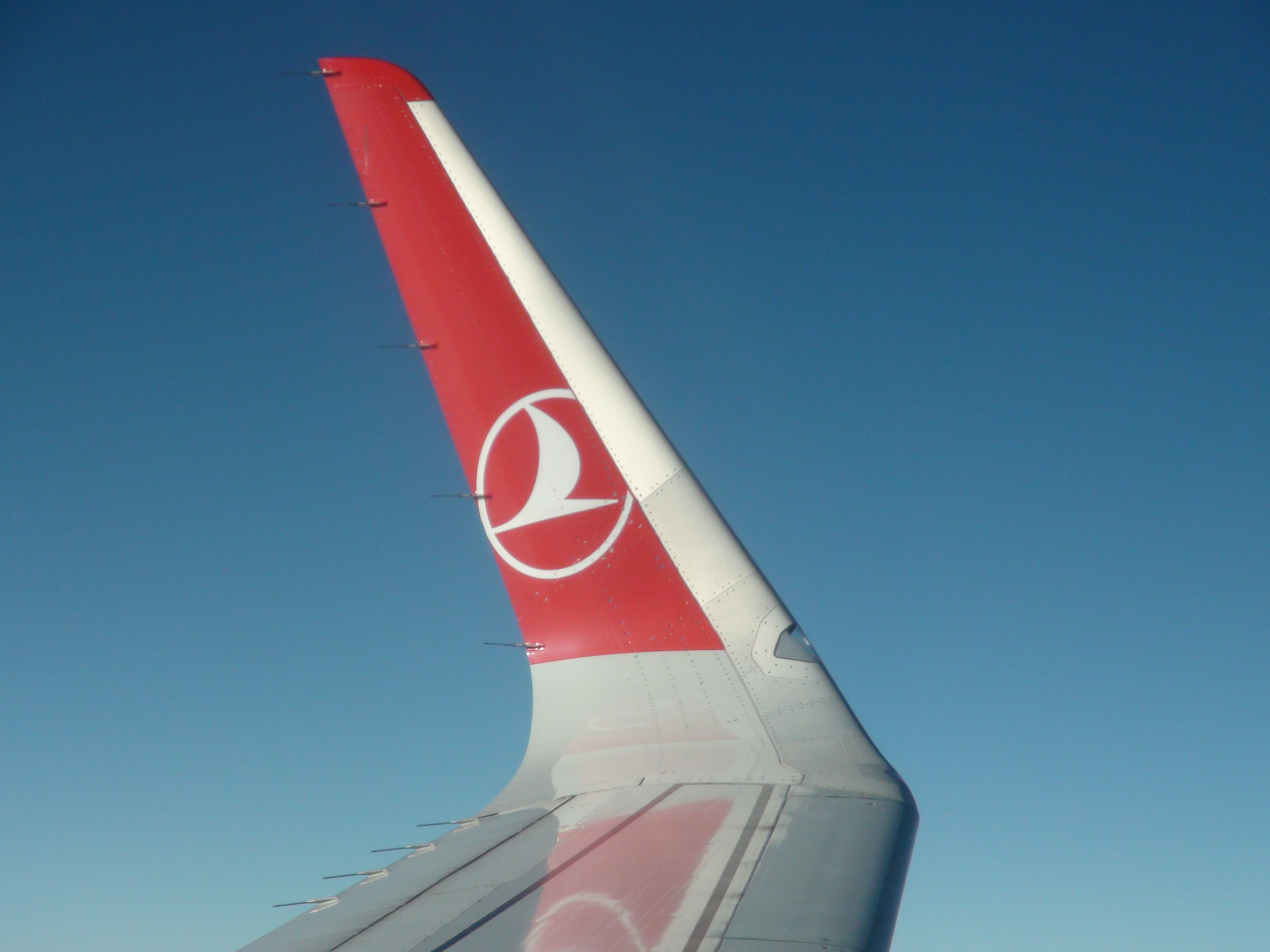
The A321neo is a narrow-body (single aisle) aircraft with a retractable tricycle landing gear, powered by two wing pylon-mounted turbofan engines. It is a low-wing cantilever monoplane with a conventional tail unit having a single vertical stabiliser and rudder. Changes from the A321ceo includes a new engine and extended fuselage fuel tanks. Improvements from the A320neo included increased wing loading and structural strengthening, most notably of all a stretched fuselage.
Airbus Cabin Flex (ACF)
| MPSC | Min. CC | L/R1 | L/R2 | O1 | O2 | L/R3 | L/R4 |
|---|---|---|---|---|---|---|---|
| STD | 200 | 4 | C | I | — | — | I |
| 200 | 4 | C | C | — | — | C | C |
| 220 | 5 | C | C | — | — | C | C |
| 230 | 5 | C* | C | — | — | C | C* |
| ACF | 149 | 3 | C | — | III | 0 | 0 |
| 149 | 3 | C | — | 0 | III | 0 | C |
| 169 | 4 | C* | — | III | 0 | 0 | C* |
| 169 | 4 | C* | — | 0 | III | 0 | C* |
| 180 | 4 | C | — | III | III | 0 | C |
| 200 | 4 | C* | — | III | III | 0 | C* |
| 200 | 4 | C | — | III | 0 | C | C |
| 200 | 4 | C | — | 0 | III | C | C |
| 204 | 5 | C | — | III | 0 | C | C |
| 204 | 5 | C | — | 0 | III | C | C |
| 224 | 5 | C* | — | III | 0 | C | C* |
| 224 | 5 | C* | — | 0 | III | C | C* |
| 235 | 5 | C | — | III | III | C | C |
| 244 | 5 | C* | — | III | III | C | C* |
By permanently replacing the second door pair in front of the wing (R2/L2) with a new second pair of overwing exits, the capacity of the A321neo is increased from 220 seats to 240 seats and fuel efficiency per seat is increased by 6%, exceeding 20% together with the new engines and the sharklets. The modifications should weigh 100 kg more. Initial A321neos have the A321ceo exit door configuration with four exit door pairs until the Airbus Cabin-Flex (ACF) layout can be selected.
The third door pair (R3/L3), aft of the wings, is moved aft four frames back and could be plugged for 200 seats or less, and one overwing exit can be plugged for 165 seats or less. In October 2017, the first A321neo ACF was in final assembly in Hamburg. It was rolled out on 5 January 2018, and will be ground tested before first flight in the following weeks.-- It was to be delivered in mid-2018 and the optional layout will become the A321neo default from 2020. It made its first flight on 31 January 2018.
The ACF exit limit is 250 passengers, but the aircraft is available for up to 240 passengers; it could be offered for 244 or potentially beyond by integrating flight attendant seats in the lavatories outside wall to allow additional passenger seats. The EASA allows 244 passengers with "overperforming" Type C exits at both ends, two Type III overwing exits, a Type C mid-cabin exit and a separate approval for individual customised cabin layouts.-- The FAA would limit it to 200 as the mid-cabin exit would be derated to a Type III exit: 65 each for Type C doors at the ends plus 70 for all the Type III exits; Airbus seeks an exemption to increase it to 105 for 235 passengers for the aircraft. Four different door-arrangement configurations are noted below.
File:F-HBUZ ORY (48666458428).jpg|This La Compagnie A321neo has both 2 of the 4 overwing exits and doors R3/L3 plugged (seating: 76, maximum: 169). File:STARLUX Airlines Airbus A321-252NX B-58201 (49058096997).jpg|This Starlux Airlines A321neo has doors R3/L3 plugged and replaced with windows (seating: 188, maximum: 200). (The interior panel is windowless.) Delta and United also carry the same door-arrangement configuration for their A321neo fleets. File:British Airways, G-NEOU, Airbus A321-251NX (49585196283).jpg|This British Airways A321neo has doors R3/L3 enabled, but 2 of the 4 overwing exits plugged (seating: 220, maximum: 224). File:JetBlue Airways Airbus A321-271NX N2016J at JFK Airport.jpg|This JetBlue A321neo has all 10 available exits in Cabin Flex enabled (seating: 200, maximum: 244). EasyJet and Wizz Air also carry the same door-arrangement configuration for their A321neo fleets.
Variants
The variants of A321neo family aircraft are mainly defined by its cabin layout and fuel configuration.
Airbus offers customers four different fuel configuration options with the standard A321neo: customers can select an optional auxiliary centre tank (ACT) in the front cargo hold and up to two ACTs in the aft cargo hold. The A321neo-ACF with three ACTs is exclusively branded as A321LR (Long Range).
Airbus offers customers two different fuel configuration options with the A321XLR: customers can select an optional ACT in the front cargo hold, in addition to the rear centre tank (RCT).
| Marketing name | Cabin | Fuel config | Fuel capacity | Cargo | Front | Aft |
|---|---|---|---|---|---|---|
| A321neo | STD | — | — | 18440 kg | 10 x LD3-45 | |
| 1ACT | 20890 kg | 9 x LD3-45 | ||||
| 2ACT | 23340 kg | 8 x LD3-45 | ||||
| A321neo ACF | ACF | — | — | 18510 kg | 10 x LD3-45 | |
| — | 1ACT | 20960 kg | 9 x LD3-45 | |||
| — | 2ACT | 23410 kg | 8 x LD3-45 | |||
| A321LR | 1ACT | 2ACT | 25860 kg | 7 x LD3-45 | ||
| A321XLR | — | 1RCT | 28753 kg | 8 x LD3-45 | ||
| 1ACT | 1RCT | 31202 kg | 7 x LD3-45 |
A321neo
The A321neo has the same length as the original A321ceo but includes structural strengthening in the landing gear and wing, increased wing loading and other minor modifications in order to increase Maximum Takeoff Weight (MTOW). Its first customer was ILFC.
The Airbus A321neo prototype, D-AVXB, first flew on 9 February 2016. It suffered a tailstrike three days later and was flown to Toulouse for repairs, delaying the certification programme for several weeks.

The A321neo received its type certification with Pratt & Whitney engines on 15 December 2016, and simultaneous EASA and FAA certification for the CFM LEAP-powered variant on 1 March 2017. The first A321neo, leased by GECAS, was delivered in Hamburg to Virgin America, configured with 184 seats and LEAP engines, and entered service in May 2017.
The neo empty weight is 1.8 t greater than the ceo, due to its new engines and associated airframe modifications: engine pylons, wing structure and bleed and oil systems were adapted. At the same maximum weight, it reaches FL310 30 nmi and 4 minutes earlier than the ceo.
At FL330 (33000 ft), ISA -2 C and 67 t, it burns 2,200 kg/h at 0.76 Mach long-range cruise or 2,440 kg/h at 0.80 Mach high-speed cruise.
By January 2018, the A321neo had received 1,920 orders, exceeding orders for the A321ceo.
In 2018, the A321neo list price was US$129.5 million.
A321LR

In October 2014, Airbus started marketing a 164-seat, 97 t MTOW variant with three auxiliary fuel tanks called the A321neoLR (Long Range) with 100 nmi more operational range than a Boeing 757-200 configured with 169 seats, 27% lower trip costs and 24% lower per seat costs; it was scheduled for introduction in the second half of 2018, two years after the A321neo.
Airbus launched the A321LR on 13 January 2015 with Air Lease Corporation as the launch customer, hoping to sell 1,000 examples of the variant. The initial layout of 164 seats (20 in business, 30 in premium economy and 114 in economy) was replaced by a two-class 206-seat configuration (16 in business and 190 in economy). Range is 4000 nmi, 500 nmi greater than the regular 93.5t MTOW A321neo, The A321LR has the Cabin Flex layout and was to be first delivered in Q4 2018.
.jpg)
Certification was aimed for the second quarter of 2018, with a programme including tests with one, two, three, or no additional centre tanks and a transatlantic flight on 13 February. Test flights included a LEAP-powered, long range 4100 nmi flight by great circle distance, flown in near 11 hours and the equivalent of 162 passengers over 4,700 nmi including headwinds, with 5 crew and 11 technicians. Airbus announced its joint FAA/EASA certification on 2 October 2018, including ETOPS up to 180 minutes, allowing any transatlantic route.
As original launch operator Primera Air ceased operations, the first was delivered to Israeli carrier Arkia, while 120 orders have been secured from about 12 operators: Norwegian, TAP Air Portugal, Air Transat, Aer Lingus, Air Astana, Air Arabia and Azores Airlines will receive theirs from 2019, and Jetstar and Peach in 2020.
On 13 November 2018, Arkia received the first A321LR, featuring 220 seats in a single-class and to be deployed to London, Paris, Barcelona for up to 5-hour sectors, or to Zanzibar and the Seychelles, saying it is the first narrow-body more efficient than the 757-300 it operates.
In April 2019, JetBlue announced its intention to use the A321LR on routes to London from Boston and New York-JFK; the airline has converted 13 of its orders for the A321neo to the A321LR to serve these routes. The airline started its service from JFK to London Heathrow on 11 August 2021, and to Gatwick on 29 September.
On 13 April 2019, the UAE branch of Air Arabia received its first of the six A321LRs (WV072) with 97 t MTOW, these aircraft are expected to be used on long-haul routes departing from Sharjah to Nairobi, Bangkok, Phuket, Milan Bergamo and Kuala Lumpur, the longest being SHJ-KUL with over 7 hours of air time when returning to the UAE.
On 24 October 2022, Sichuan Airlines received its first A321LR, a total of six have been ordered, they are mainly designated to operate the nonstop Chengdu Tianfu — Malé and Chengdu Tianfu — Tokyo Narita route, which can take over 6 hours on some segments during the winter season, it is the first Chinese airline to receive this type.
A321XLR
.jpg)
In January 2018, Airbus stated that it was studying an A321LR variant with a further increased MTOW, requiring strengthened landing gear.
In October 2018, the A321XLR was proposed to Air Transat and AerCap: Air Transat could reach Southern European destinations such as Split, Croatia from Montreal and Toronto. In November, Airbus indicated that, compared to the A321LR, the A321XLR would have an increase to 100 t in MTOW and an increase of 700 nmi in range, with the same wing and engines, increased fuel capacity and strengthened landing gear. In January 2019, Air Canada expressed interest in using narrow-body aircraft for transatlantic routes and said it was considering options including the A321XLR and the Boeing 737 MAX.
Potential stretch
In 2018, analysts reported that competing with the Boeing NMA concept airliner (a moot point, as Boeingin light of its failures that led to the Boeing 737 MAX groundingsrestarted the NMA project in 2020, mused about going with a smaller designin light of the success of the Airbus A321XLRin 2021, and set aside the entire NMA project in 2022) could require stretching the A321neo by one or two rows: its take-off weight could be increased to 100 t by tweaking its wing and strengthening its landing gear, requiring more engine thrust; or it could receive a lighter and larger new wing, more costly to develop but with the same thrust. A stretch would probably involve fore and aft plugs to keep its centre of gravity, but tailstrike clearance could constrain field speed and performance, while further cabin crew would be needed over 250 seats.
Commercial launch

The A321XLR was officially launched at the Paris Air Show on 17 June 2019, with deliveries at that time expected from 2023. Its design offers 4700 nmi of range and features a new permanent rear centre tank (RCT) for more fuel, strengthened landing gear for a 101 t MTOW, and an optimised wing trailing-edge flap to preserve take-off performance. The RCT will hold 12,900 L of fuel, the equivalent of four 3,121 L current Additional Centre Tanks (ACTs), yet has a weight equivalent to a single ACT and takes up the cargo hold space of two; a forward ACT can also be fitted if necessary. As the sharklets lowered take-off and landing speeds, the switch from a double-slotted to single-slotted inboard flap will reduce complexity, weight and drag. The FMS can set intermediate flap positions. The revised design could be applied to other A321neo variants.
Orders from several lessors and airlines were announced at the show, starting with Middle East Airlines, which ordered four A321XLRs, making it the launch airline customer. Air Lease Corporation ordered 27 A321XLRs alongside 23 other A321neos and 50 A220-300s. IAG quoted a $142 million list price as it committed to 28 aircraft, including 8 for Iberia, 6 for Aer Lingus, plus 14 options. Qantas Group placed an order for 36 XLRs, to be operated on routes between Australia and Asia, and is also set to be one of the launch customers. American Airlines converted 30 A321neo orders to XLRs and ordered an additional 20 XLRs. Indigo Partners also placed an order for 50 XLRs for its airline divisions and Frontier Airlines ordered 18, bringing the total number of commitments announced at the show to 243.
Some are cautious about the potential market: Lufthansa sees the variant as a "niche aircraft" less comfortable than widebodies, and a large lessor is hesitant as it expects a 400–500 aircraft market. Airbus argues that the minimal changes mean it can be used as a regular A321neo and ALC forecast potential for 50 operators in the next five years. The market could prefer shorter turnaround times to more range.
On 29 October 2019, IndiGo placed a firm order for 300 A320neo family aircraft, including 69 A321XLR. On 3 December 2019, United Airlines announced an order to purchase 50 new Airbus A321XLR aircraft, with deliveries beginning in 2024, to replace their Boeing 757–200 fleet. Valued at $7.1 billion before discounts ($M each), United plans to use these aircraft for additional destinations in Europe from its East Coast hubs in Washington, DC and Newark. In April 2020, 450 orders for the XLR had been received from 24 customers. In July 2023, Icelandair ordered 13 XLR.
Iberia announced on 19 May 2024 that the company will be "the first airline in the world to add the new Airbus A321XLR to its fleet".
In July 2024, the Airbus A321XLR powered by CFMI LEAP engines received EASA certification and conducted a demonstration flight at the Farnborough Airshow. The Pratt & Whitney PW1100G-powered variant subsequently received type certification from both the FAA and EASA in February 2025.
Manufacturing

The XLR needs 10–15% more work than an ACF, itself requiring 30% more work than a standard A321neo. Engines used for now generate 33,000 lb(f) of thrust and could be sufficient, and no more than the 35,000 lb(f) already certified are needed for the XLR. The XLR is a low-risk, high-commonality variant but more substantial upgrades could include a composite wing or a stretch.
By April 2020, Airbus had cut the first metal for the centre wingbox, while Safran had begun undercarriage forging production. Premium Aerotec will manufacture the specific aft centre fuel tank primary structure, Spirit AeroSystems will build the inboard single-slotted flap, FACC AG will produce a modified belly fairing, while Collins Aerospace and Parker Aerospace are developing the fuel systems. By August 2020, Premium Aerotec had started producing the rear centre tank for the first A321XLR in Augsburg, to be transferred to Airbus's Hamburg plant in early 2021.
By April 2021, a standard A321LR fuselage section had been withdrawn from the Hamburg production line for use as a "pre-industrial system accelerator" to test the integration of XLR-specific systems; at Saint-Nazaire, a nose section was serving as an integration test bed for a new instrument panel assembly, before being used to analyse structural reinforcements needed for the XLR. By then, Airbus had completed the first centre wing box 16 months after the first metal cuts, with 200 modifications from the standard design, delivered from Nantes to Hamburg for structural assembly. The fuselage sections, wings, landing gear and tailplanes of the first test aircraft were delivered to the Hamburg Final Assembly Line in November, and its structure was completed by early December, among three planned development aircraft, and before entry into service in 2023.
The first A321XLR prototype was rolled out in May 2022, equipped with CFM LEAP engines. The first flight took place on 15 June 2022 from Hamburg. However, entry into service was pushed back to 2024 from the initial 2023 date to address fuel tank issues raised by regulators. A revised design with special conditions was approved by the United States Federal Aviation Administration in December 2022.
Entry into service
The A321XLR received its type certificate from EASA on 19 July 2024 and from the FAA on 2 October 2024. The first A321XLR was delivered to Iberia on 30 October 2024 and conducted its first revenue flight on 6 November 2024. The first long-haul flight with passengers was on 14 November 2024, from Madrid to Boston.
A321MPA
In November 2024, Airbus announced a maritime patrol variant, based on the A321XLR. The variant's initial customer is the French Navy to replace its Bréguet 1150 Atlantic II maritime patrol aircraft, where it competed with a Dassault proposal based on the Falcon 10X business jet, and will subsequently be proposed for export, competing with the Boeing P-8 Poseidon. The A321MPA would notably feature observation windows beneath the cockpit and a weapons bay in a "ventral gondola" behind the wing.
Operators
Main article: List of Airbus A320 family operators
There are 1,752 A321neo aircraft in service with 88 operators as of June 2025. The five largest operators are Wizz Air (156), IndiGo (143), American Airlines (84), China Southern Airlines (84), and Delta Air Lines (76).
| Deliveries | – | – | – | – | – | – | 20 | 102 | 168 | 178 | 199 | 264 | 317 | 361 | 143 | 1,752 |
|---|
Specifications
| Variant | date=July 2017 | title=Airbus Family figures | url=http://www.airbus.com/content/dam/corporate-topics/publications/backgrounders/Airbus-Family-Figures-booklet.pdf | url-status=live | archive-url=https://web.archive.org/web/20180218232456/http://www.airbus.com/content/dam/corporate-topics/publications/backgrounders/Airbus-Family-Figures-booklet.pdf | archive-date=18 February 2018 | access-date=27 March 2019 | publisher=Airbus}} | A321LR | A321XLR | Cockpit crew | 2-class seats | 1-class max. | Cargo capacity | Length | Wingspan | Wing | Height | Fuselage | Max. takeoff weight | Max. payload | Op. empty weight | Fuel capacity | Engines (×2) | date=22 February 2019 | title=Type Certificate Data Sheet | url=https://www.easa.europa.eu/sites/default/files/dfu/TCDS_EASA%20A%20064_%20Airbus_%20A318_A319_A320_A321_Iss_38.pdf | url-status=dead | archive-url=https://web.archive.org/web/20190306043250/https://www.easa.europa.eu/sites/default/files/dfu/TCDS_EASA%20A%20064_%20Airbus_%20A318_A319_A320_A321_Iss_38.pdf | archive-date=6 March 2019 | access-date=27 March 2019 | publisher=EASA}} | Speed | Ceiling | Typical range |
|---|---|---|---|---|---|---|---|---|---|---|---|---|---|---|---|---|---|---|---|---|---|---|---|---|---|---|---|---|---|---|---|---|---|---|---|
| Two | |||||||||||||||||||||||||||||||||||
| 206 (16J @ 36 in + 190Y @ 30 in) | |||||||||||||||||||||||||||||||||||
| 244 @ 28 in | |||||||||||||||||||||||||||||||||||
| 51.70 m3 / 10×LD3-45s | |||||||||||||||||||||||||||||||||||
| 44.51 m | |||||||||||||||||||||||||||||||||||
| 35.80 m | |||||||||||||||||||||||||||||||||||
| 122.4 m2 area, 25° sweep | |||||||||||||||||||||||||||||||||||
| 11.76 m | |||||||||||||||||||||||||||||||||||
| 3.95 by 4.14 m width × height, 3.70 m wide cabin | |||||||||||||||||||||||||||||||||||
| 93.5 t | 97 t | 97-101 t | |||||||||||||||||||||||||||||||||
| 25.5 t | |||||||||||||||||||||||||||||||||||
| {{#expr:75.6-25.5}} t | |||||||||||||||||||||||||||||||||||
| 23490 L | 32853 L | 36,390 L (9,613 US gal) 39,511 L (10,437 US gal) | |||||||||||||||||||||||||||||||||
| CFM LEAP-1A, 78 in fan | |||||||||||||||||||||||||||||||||||
| Pratt & Whitney PW1100G-JM, 81 in fan | |||||||||||||||||||||||||||||||||||
| 143.05 - | |||||||||||||||||||||||||||||||||||
| Cruise: 0.78 Mach | |||||||||||||||||||||||||||||||||||
| Max.: 0.82 Mach | |||||||||||||||||||||||||||||||||||
| 39100 - | |||||||||||||||||||||||||||||||||||
| 3,500 nmi | 4,000 nmi | 4,700 nmi |
Engines
Suffix "N" (e.g., A321-271N) indicates the original A321 airframes with a standard (STD) cabin door layout, "NX" (e.g., A321-272NX) indicates airframes with Cabin Flex (ACF) configuration (including all A321LR), while "NY" (e.g., A321-271NY) indicates A321XLR models. There is theoretically no indication for so-called A321LR airframes and all of them are designated as an "NX" or ACF-build.
Of the model numbers, number "5" (e.g., A321-251N) designates aircraft powered by CFM International LEAP-1A, while number "7" (e.g., A321-271N) designates aircraft powered by Pratt & Whitney PW1100G. Last digit being "1" (e.g., A321-251NX) indicates the "baseline", "standard-thrust" engine options, last digit being "2" (e.g., A321-252NX) indicates the "derated" engine options, which is engines are configured operating at a slightly lower thrust than the standard options, and last digit being "3" (e.g., A321-253NX) indicates the "uprated" engine options, which the engines are configured to operate at a higher thrust than the baseline counterparts.
| Aircraft model | Certification date | Engines | Take-Off Thrust | Max. Continuous |
|---|---|---|---|---|
| A321-271N | 15 December 2016 | PW PW1133G-JM | 147.28 kN | 145.81 kN |
| A321-251N | 1 March 2017 | CFM LEAP-1A32 | 143.05 kN | 140.96 kN |
| A321-253N | 3 March 2017 | CFM LEAP-1A33 | 143.05 kN | 140.96 kN |
| A321-272N | 23 May 2017 | PW PW1130G-JM | 147.28 kN | 145.81 kN |
| A321-252N | 18 December 2017 | CFM LEAP-1A30 | 143.05 kN | 140.96 kN |
| A321-251NX | 22 March 2018 | CFM LEAP-1A32 | 143.05 kN | 140.96 kN |
| A321-252NX | 22 March 2018 | CFM LEAP-1A30 | 143.05 kN | 140.96 kN |
| A321-253NX | 22 March 2018 | CFM LEAP-1A33 | 143.05 kN | 140.96 kN |
| A321-271NX | 22 March 2018 | PW PW1133G-JM | 147.28 kN | 145.81 kN |
| A321-272NX | 22 March 2018 | PW PW1130G-JM | 147.28 kN | 145.81 kN |
| A321-253NY | 18 July 2024 | CFM LEAP-1A33X | 143.05 kN | 110.54 kN |
| A321-271NY | 7 February 2025 | PW PW1133GR-JM | 147.28 kN | 103.42 kN |
Notes
References
References
- (30 June 2025). "Airbus O&D". [[Airbus.
- (21 September 2023). "So wurde Norddeutschland mit dem Airbus A321 zur Boomregion des Flugzeugbaus".
- (7 October 2021). "A321neo {{!}} A320 {{!}} Aircraft {{!}} Airbus Aircraft".
- (19 September 2019). "A321 The New Long Ranger".
- "Boeing Introduces 737 MAX With Launch of New Aircraft Family".
- "Airbus A321neo Flies for the First Time".
- (28 October 2021). "Airbus delivers first ever A321neo to Virgin America".
- "Information on the Airbus A321".
- "AerCap finances 35 American Airlines aircraft".
- (20 April 2017). "Virgin America takes delivery of first LEAP-1A-Powered A321NEO". GE Aerospace.
- (9 August 2017). "Airbus A321neo Delays Complicate Airline Fleet Strategies". Aviation Week & Space Technology.
- (30 January 2018). "Hawaiian predicts big unit cost advantage from A321neos". Flightglobal.
- (12 June 2014). "Airbus Sees A321neo Exceeding 20% Fuel Burn Improvement". AviationWeek.
- (13 January 2015). "Airbus Launches Long-Range A321neo Version". [[Aviation Week]].
- (18 January 2015). "A321neo configurations and A320 production". Leeham News.
- (18 August 2016). "Airbus explains how Cabin-Flex enables dense A321neo layouts". Runway Girl Network.
- (24 October 2017). "First A321neo with revised door layout assembled". Flightglobal.
- (5 January 2018). "Airbus rolls out first A321neo ACF". Airbus.
- (31 January 2018). "A321LR departs on maiden flight". Flightglobal.
- Flottau, Jens. (31 January 2018). "Airbus Studying Higher-Capacity A321neo". Aviation Week Network.
- (10 May 2018). "A321neo seeks US rule relief as seat-count lifts to 244". Flightglobal.
- "Our Fleet - STARLUX Airlines".
- "AIRCRAFT CHARACTERISTICS AIRPORT AND MAINTENANCE PLANNING".
- (8 March 2011). "ILFC selects 100 A320neo Family aircraft". Airbus.
- (9 February 2016). "Airbus A321neo completes first flight after engine switch.". Reuters.
- (12 February 2016). "Accident: Airbus A321 at Perpignan on Feb 12th 2016, tail strike on landing". The Aviation Herald.
- (15 December 2015). "Airbus A321neo with P&W engines receives Type Certification". Airbus.
- (1 March 2017). "A321neo powered by CFM LEAP-1A engines receives type certification". Airbus.
- (20 April 2017). "Virgin America receives first A321neo as Alaska mulls future fleet". Aviation Week.
- (26 May 2017). "Flying The A321neo: Technology Upgrades Under The Skin". Aviation Week & Space Technology.
- (October 2023}} To offer similar takeoff performance, pitch response to stick input is a rate-command to hit the 3° per second rotation rate to capture the right pitch attitude and there is an "electronic tail bumper" preventing a tailstrike if the stick is less than three-quarters of the way aft; additional thrust, slower rotation and lift-off speeds require more rudder authority and its maximum deflection went from 25° to 30°.{{cite news). "Flight test: A321neo stretches its legs". Flight Global.
- Airbus Orders & Deliveries]. [[Airbus S.A.S.]] 31 July 2022. Retrieved 9 August 2022.
- "AIRBUS AIRCRAFT 2018 AVERAGE LIST PRICES* (USD millions)". Airbus.
- (21 October 2014). "Exclusive: Airbus launches "A321neoLR" long range to replace 757-200W". Leeham News.
- (13 January 2015). "Airbus Launches Long-Range A321neo". Aviation International News.
- (20 February 2017). "Boeing Considers Next Midmarket Moves As Airbus Watches". Aviation Week & Space Technology.
- (10 November 2017). "Quick News – Dubai Airshow November Edition". Airbus.
- (12 February 2018). "A321LR prepares for Paris-New York test flight". Flightglobal.
- (30 March 2018). "A321LR conducts longest flight on route from Seychelles". Flightglobal.
- (2 October 2018). "EASA and FAA certify long-range capability for A321neo". Airbus.
- (5 October 2018). "Arkia to replace Primera as A321LR launch operator". Flightglobal.
- (13 November 2018). "Arkia chief: A321LR first single-aisle to beat 757-300 economics". Flightglobal.
- (16 April 2019). "UAE's Air Arabia takes delivery of first A321neo(LR)". ch-aviation.
- (12 September 2023). "China's Sichuan Airlines' A321neo(LR)s get ETOPS clearance". ch-aviation.
- (12 October 2018). "Air Transat considers Airbus A321XLR for longer routes". [[Airlinerwatch]].
- (13 November 2018). "Airbus indicates A321XLR would have over 100t MTOW". FlightGlobal.
- Hepher, Tim. (14 January 2019). "Air Canada would study Airbus, Boeing for transatlantic narrowbody needs". Reuters.
- Hemmerdinger, Jon. (2020-01-22). "Boeing to take another 'clean sheet' to NMA with focus on pilots". [[FlightGlobal]].
- Norris, Guy. (2021-02-04). "Boeing Moves Forward With Airbus A321XLR-Competitor Plan".
- Johnsson, Julie. (2022-06-03). "Boeing CEO sees at least 2-year wait on designing new jetliner". [[The Seattle Times]].
- (31 January 2018). "Airbus A321LR long-range jet completes maiden flight". Reuters.
- (17 June 2019). "Airbus launches longest range single-aisle airliner: the A321XLR". Airbus.
- (2024-10-30). "Airbus delivers first extra-long-range Airbus A321 as smaller jets fly farther".
- (17 June 2019). "PARIS: Airbus details design changes of A321XLR". FlightGlobal.
- (19 June 2019). "How Airbus is redesigning the A321XLR high-lift system". Flightglobal.
- (17 June 2019). "Middle East Airlines orders four Airbus A321XLRs". Airbus.
- (17 June 2019). "Air Lease Corporation to order 100 aircraft, including the new A321XLR". Airbus.
- Kaminski-Morrow, David. (18 June 2019). "Iberia and Aer Lingus opt for A321XLRs". FlightGlobal.
- (19 June 2019). "Qantas adds Airbus A321XLR to its fleet".
- (19 June 2019). "American Airlines confirms order for 50 Airbus A321XLR planes".
- (21 June 2019). "Airbus ends show with over 240 A321XLR commitments". FlightGlobal.
- (28 August 2019). "Airbus Wants to Change the Way We Fly Long Haul".
- "Lessors cautiously optimistic on A321XLR".
- "ANALYSIS: Airbus set for smooth transition to A320neo".
- "India's IndiGo eyes Amsterdam with A321neo(XLR)s".
- (3 December 2023). "United Airlines orders 50 Airbus A321XLRs for transatlantic route expansion".
- (3 December 2019). "United Places $7 Billion Order for Longest-Range Airbus A321 Jet".
- "Airbus warns of A321neo(XLR) delivery delays – report".
- (6 July 2023). "Icelandair orders 13 Airbus A321XLR, becoming a new Airbus customer".
- ""Iberia Will Be the First Airline in the World to Add the New Airbus A321XLR to its Fleet"".
- (19 July 2024). "EASA Certifies Leap-Powered Airbus A321XLR {{!}} Aviation Week Network". aviationweek.com.
- (2025-02-21). "Airbus obtains EASA certification of P&W-powered A321XLR following engine approval".
- (27 June 2019). "Boeing May Reset NMA Sequence As Airbus Launches A321XLR". Aviation Week & Space Technology.
- (21 April 2020). "A321XLR metal-cut commences as structures supplier list firms up". Flightglobal.
- (4 August 2020). "Production under way on A321XLR's vital rear centre tank". Flightglobal.
- (3 April 2021). "Airbus shapes A321XLR systems layout with low-tech and hi-tech mock-ups".
- (6 December 2021). "First A321XLR development aircraft undergoes final assembly". Airbus.
- "Airbus rolls out initial A321XLR in livery highlighting twinjet's range".
- (15 June 2022). "Airbus embarks on A321XLR flight-test campaign with maiden sortie". FlightGlobal.
- (4 May 2022). "Airbus pushes back A321XLR service entry to 2024". Flightglobal.
- (8 December 2022). "U.S. approves conditions for Airbus A321XLR to address fire risks". Reuters.
- (19 July 2024). "Airbus wins European certification for A321XLR jetliner".
- (19 July 2024). "Airbus A321XLR receives EASA type certification".
- (9 December 2024). "FAA grants Airbus certification of A321XLR, P&W EASA approval slips into 2025".
- (2024-10-30). "Airbus delivers first A321XLR in new front against Boeing".
- (6 November 2024). "Iberia completes first A321XLR commercial flight".
- "Iberia Launches the New A321XLR Worldwide".
- "Iberia launches world's first A321XLR".
- . (2025-02-04). ["Airbus signs new study contract to define France's future maritime patrol aircraft"](https://www.airbus.com/en/newsroom/press-releases/2025-02-airbus-signs-new-study-contract-to-define-frances-future-maritime). *Airbus Defence*.
- Newdick, Thomas. (2025-02-05). "Airbus A321 Airliners To Be Modified Into “Flying Frigate” Patrol Jets By France". The War Zone.
- Lake, Jon. (7 November 2024). "Airbus Defense and Space unveils new A321XLR-based maritime patrol aircraft". AGN.
- (July 2017). "Airbus Family figures". Airbus.
- (13 January 2015). "Airbus Launches Long-Range A321neo Version". [[Aviation Week]].
- (7 October 2021). "A321neo {{!}} A320 {{!}} Aircraft {{!}} Airbus Aircraft".
- Machado, João. (9 May 2022). "Opinion: 244 seats in an A321 is a good thing, actually".
- (July 1999). "Airbus Aircraft Data File". Elsevier.
- (19 July 2024). "EASA.A.064 - Airbus A318, A319, A320, A321 Single Aisle".
- (Dec 2021). "A321 aircraft characteristics – airport and maintenance planning". Airbus.
- (22 February 2019). "Type Certificate Data Sheet". EASA.
- "Airbus A320neo Technology". [[Airbus]].
- (12 May 2022). "Airbus A321XLR". Airbus.
This article was imported from Wikipedia and is available under the Creative Commons Attribution-ShareAlike 4.0 License. Content has been adapted to SurfDoc format. Original contributors can be found on the article history page.
Ask Mako anything about Airbus A321neo — get instant answers, deeper analysis, and related topics.
Research with MakoFree with your Surf account
Create a free account to save articles, ask Mako questions, and organize your research.
Sign up freeThis content may have been generated or modified by AI. CloudSurf Software LLC is not responsible for the accuracy, completeness, or reliability of AI-generated content. Always verify important information from primary sources.
Report