From Surf Wiki (app.surf) — the open knowledge base
Ahmad Sirhindi
Indian Naqshbandi Sufi (1564–1624)
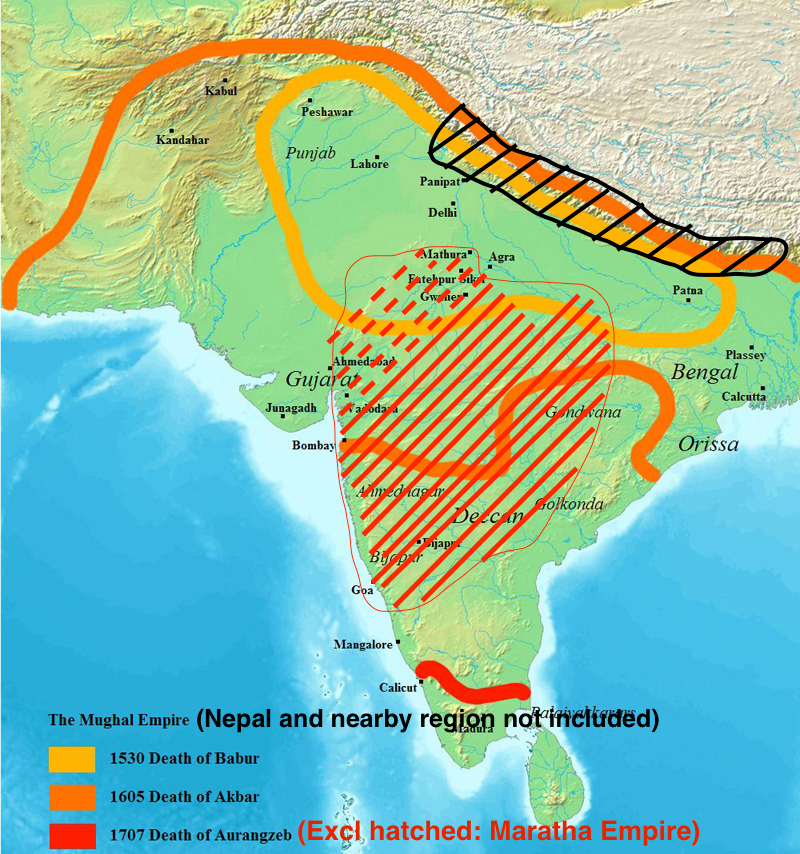
Indian Naqshbandi Sufi (1564–1624)
| Field | Value | |
|---|---|---|
| honorific_prefix | ||
| honorific suffix | ||
| era | Mughal India | |
| caption | Painting of Shaykh Ahmad al-Sirhindi 16th-17th Century | |
| name | Ahmad ibn 'Abd al-Ahad | |
| native_name | أحمد بن عبد الأحد | |
| native_name_lang | ar | |
| birth_date | 26 May 1564/1563 | |
| birth_place | Sirhind, Lahore Subah, Mughal Empire | |
| (modern-day Punjab, India) | ||
| death_date | ||
| death_place | Sirhind, Lahore Subah, Mughal Empire | |
| main_interests | Islamic Law, Islamic philosophy | |
| notable_ideas | Evolution of Islamic philosophy Application of Islamic law | |
| religion | Islam | |
| denomination | Sunni | |
| jurisprudence | Hanafi | |
| creed | Maturidi | |
| Sufi_order | Naqshbandi-Mujaddidi | |
| predecessor | Khwaja Baqi Billah | |
| successor | Khawaja Muhammad Masum | |
| influenced | Jahangir | |
| Aurangzeb | ||
| Shah Waliullah | ||
| Shah Abdul Aziz | ||
| Imam Ahmad Raza Khan | ||
| title | Mūjaddīd al-Alf al-Thanī (Reviver of the Second Millennium). | |
| background | green | |
| image | Ahmad Sirhindi.jpg | |
| module | {{Infobox Arabic name | embed=yes |
| ism | Ahmad | |
| أحمد | ||
| nasab | Abd al-Ahad | |
| عبد الأحد | ||
| laqab | Imām Rabbānī | |
| الإمام رباني | ||
| nisba | al-Fārūqī al-Sirhindī | |
| الفاروقي السرهندي |
(modern-day Punjab, India) Aurangzeb Shah Waliullah Shah Abdul Aziz Imam Ahmad Raza Khan أحمد عبد الأحد الإمام رباني الفاروقي السرهندي Imām Rabbānī Shāykh Aḥmad ibn 'Abd al-Ahad al-Fārūqī al-Sirhindī Mūjaddīd al-Alf al-Thanī or simply known as Ahmad Sirhindi (1564 – 1624/1625) was an Indian Islamic scholar, Hanafi jurist, and member of the Naqshbandī Sufi order who lived during the era of Mughal Empire.
Ahmad Sirhindi opposed heterodox movements within the Mughal court such as Din-i Ilahi, in support of more orthodox forms of Islamic Law. His act of preserving and urging the practice of Islamic orthodoxy and challenging Akbar and later Jahangir by rejecting Din-i Ilahi has cemented his reputation among Sub-continent Muslims as a Mujaddid, or a "reviver".
While early and modern South Asian scholarship credited him for contributing to conservative trends in Indian Islam, more recent works, such as Abul Hasan Ali Hasani Nadwi and commentaries from western scholars such as Ter Haar, Friedman, and Buehler, have pointed to Sirhindi's significant contributions to Sufi epistemology and practices.
Biography
Sirhindi was born on 26 May 1564 in the village of Sirhind, Punjab to a Punjabi Muslim family. A descendant of 13th-century Sufi saint and poet Baba Farid, he claimed ancestry from the second Rashidun caliph, Umar (634–644). Sirhindi received most of his early education from his father, 'Abd al-Ahad, his brother, Muhammad Sadiq and from a Lahore-based scholar Muhammad Tahir al-Lahuri. He also memorised the Qur'an. He then studied in Sialkot, which had become an intellectual centre under the scholar Kamaluddin Kashmiri. Qazi Bahlol Badakhshani taught him jurisprudence, Seerah and history. He eventually joined the Naqshbandī order through the Sufi missionary Khwaja Baqi Billah when he was 36 years old, and became a leading master of the order. His deputies traversed the Mughal Empire in order to popularize the order and eventually won favour with the Mughal court. Sirhindi underwent his first Hajj pilgrimage in 1598, after the death of his father.
During the reign of emperor Akbar, Ahmad Sirhindi wrote hundreds of letters which were aimed towards his disciples, Mughal nobles, and even the emperor himself, to denounce the participations of Hindu figures in the government. Annemarie Schimmel recorded about 534 letters has been wrote by Ahmad Sirhindi regarding the subject of Syncretism. His efforts influenced Abul Fazl, the protegee of emperor Akbar, to support Ahmad Sirhindi in an effort to convince Jahangir, the successor of Akbar, to reverse the policies of Akbar of tolerating Hindus in Mughal court. According to the modern Syrian salafi jurist Ali al-Tantawi, Ahmad Sirhindi never aspired to depose the emperor despite his fierce criticism; instead, he wanted to reform the religious policies of the late emperor so he sent letters inflamed with religious fervor and faith towards young commanders and courtiers and to gather them into his cause to reverse the emperor's religious policy to persuade the emperor.
Ahmad Sirhindi's letters contain heavy tone of support towards this spirit of religious reform by restoring Sharia and departure from Akbar's policy under the rule of Jahangir, as shown of the letter has stated: 'Today there is a revolution/transformation in the state (':wa lamma vaqa'a al-anabal-inqilabu fi al-duwali')'.
According to jesuit missionary Pierre de Jarric, Ahmad Sirhindi also sent letters to his disciple, Shaikh Farid Bukhari, a Mir Bakshi official who had been appointed as representative of the muslim orthodox faction of Mughal court, to support the future emperor Jahangir. The orthodox faction extracted promise from Jahangir that he would support the cause of orthodox faction's cause if he succeeded his father. In the process, it is recorded from these correspondence which compiled in 1617, that Farid Murtaza Khan took Ahmad Sirhindi advices regarding this matter.
At some point during the reign of Jahangir, Ahmad Sirhimdi sent many pupils for academic missionaries into various places, such as:
- 70 individuals which led by his pupil named Muhammad Qasim to Turkestan.
- 40 individuals under another pupil named Faruh Hussain into Arabian Peninsula, Yemen, Syria, and Anatolia.
- 10 individuals under another pupil named Muhammad Sadiq into Kashgar.
- 30 individuals under another pupil named Shaykh Ahmad Bakri into the outskirt of Turkestan, Badakhshan, and Khurasan.
Later, Ahmad Sirhindi was imprisoned by the emperor. This happened in 1618, Emperor Jahangir, who distanced himself from the Islam orthodoxy and admired Vaishnavite ascetic, Chitrarup. But later the emperor rectified his order and freed Ahmad Sirhindi. However, Ahmad Sirhindi was imprisoned once again in 1622, suggested to be due to the jealousy of several nobles for his popularity, before being released again after spending one year in Gwalior prison and another three years in a prison within emperor Jahangir army entourage.
After his release and restoration of favor and honor, Ahmad Sirhindi accompanied emperor Jahangir in his entourage into Deccan Plateau. Modern Indian historian Irfan Habib considers the efforts of Ahmad Sirhindi to bear success as emperor Jahangir started changing the policies which were criticized by Ahmad Sirhindi. Ahmad Sirhindi likely stayed to accompany the emperor for three years before his death. He continued to exercise influence over the Mughal court along with his son, Shaikh Masum, who tutored the young prince Aurangzeb. Ahmad Sirhindi died in the morning of 10 December 1624.
Another son of Ahmad Sirhindi, Khawaja Muhammad Masum, supported Aurangzeb during the Mughal succession conflict, by sending his two sons, Muhammad Al-Ashraf, and Khwaja Saifuddin, to support Aurangzeb in war. Aurangzeb himself provided Khwaja Muhammad and his youngest son, Muhammad Ubaidullah, with fifteen ships to seek refugee during the conflict to embark for Hajj pilgrimage, and Khwaja Muhammad returned to India after Aurangzeb won the conflict two years later.
Personal views
Modern writer Zahid Yahya al-Zariqi has likened Ahmad Sirhindi personal view with Muhammad ibn Ali al-Sanusi, Ibn Taymiyya, Muhammad ibn Abd al-Wahhab, Ibn Qayyim al-Jawziyya, Abd al-Razzaq al-San'ani, and Al-Shawkani, due to his orthodox stance, and his opposition to emperor Akbar in term of religious practice. Similar to Aḥmad ʻArafāt Qāḍi from Cairo University, who also likened the thoughts of Ahmad Sirhindi with he view of Ibn Taymiyya. Those assessments are also similar with the assessment of , an Egyptian writer, about the ideas of Sirhindi were similar with the Wahhabism movements which would rise two century after death of Ahmad Sirhindi, for resurrecting and revival of religious discourses, which also influence in Shsh Waliullah Dehlawi.
Ahmad Sirhindi repeatedly stated his proud ancestry to Rashidun caliph Umar ibn al-Khattab to show he was similarly in favour of orthodoxy. Abul Hasan Ali Hasani Nadwi, Islamic scholar, thinker, writer, preacher, reformer and a Muslim public intellectual of 20th century India, wrote the biography of Ahmad Sirhindi in his book, Rijal al-Fikr wa l-Da'wah fi al-Islam, which covers mostly the thought of Ahmad Sirhindi's efforts in revival of Islam and opposition of Bid'ah (heresy). While on another occasion, in a letter to Lãlã Beg (a Subahdar of Bihar), he regards Akbar's prohibition of cow-slaughter as interference against the religious freedom of Muslims.
In particular, Ahmad Sirhindi viewed that every ritualistic practices which are not documented in Sunnah, such as the annual prophet anniversary as forbidden in Islam. Other than that, he also criticized practices of Sufi whirling (Raqs), tradition of Sujud or prostrating towards the ruler, and other rituals which he deemed unislamic.
The societal reforms of Mughal empire by Ahmad Sirhindi methodology has several targets which he aimed to convey. He viewed that to reform the society, one must convey his thoughts to the six types of people from various societal positions accordingly:
- Non-governmental influential class
- Members of the imperial courts
- King
- Scholars
- Heretics and ignorant Sufis
- Liberal scholars
Meanwhile, Ahmad Sirhindi personally accepted the use of Ijtihad and Qiyas in Fiqh and defended the use of both. Ahmad Sirhindi argued that Qiyas and Itjihad are not included on Bidʻah.
Regarding the Hindu practice, Ahmad Sirhindi condemns the thought from some Hindu thinkers, such as Hardai Ram, that Bhakti movement was identical with the Islamic mysticism.
Philosophy
Ahmad Sirhindi's opposition to emperor Akbar regarding Din-i Ilahi's syncretic belief were recorded in fourth volume of Tarikh-e-Dawat-o-Azeemat. Ahmad Sirhindi also rejected the ideas of philosophy, particularly those rooted from Greek philosophy. Furthermore, Sirhindi criticize the method of interpretating the meaning of Quran with philosophy.
Ahmad Sirhindi view regarding some of teachings found in Ibn Arabi's teaching in Waḥdat al-Wujūd. He argued that the doctrine of Ibn Arabi is incompatible with Islam. In his book, Ahmad Sirhindi criticized the doctrine of Waḥdat al-Wujūd, by saying in his book, *Al-Muntakhabaat Min Al-Maktubaat, *that God is never united with anything, and nothing can be united with God. Ahmad Sirhindi argued that forms of pantheism were components of Hinduism. He rejected the core idea of Ibn Arabi that the creation could unite with the Creator, i.e., God.
Despite this, Sirhindi still used Ibn al-'Arabi's vocabulary without hesitation. William C. Chittick, an expert of Ibn 'Arabi biography, argued that Ahmad Sirhindi seems oblivious of Ibn 'Arabi doctrines, as the Imam insisted that Wahdat al-Wujud were "inadequate expression" which should be supplanted by his concept of Wahdat ash-Shuhud which Chittick claimed is just similar in essence. Ahmad Sirhindi advanced the notion of Wahdat ash-Shuhūd (oneness of appearance). According to this doctrine, the experience of unity between God and creation is purely subjective and occurs only in the mind of the Sufi who has reached the state of fana' fi Allah (to forget about everything except Almighty Allah). Sirhindi considered Wahdat ash-Shuhūd to be superior to Wahdat al-Wujūd (oneness of being), which he understood to be a preliminary step on the way to the Absolute Truth.
Aside from the doctrine of pantheism of Ibn 'Arabi, Ahmad Sirhindi also expressed his opposition towards the idea of Metempsychosis or the migration of soul from one body to another.
Shia
Sirhindi also wrote a treatise under the title "Radd-e-Rawafiz" to justify the execution of Shia nobles by Abdullah Khan Uzbek in Mashhad. Ahmad Sirhindi argues that since the Shiite were cursing the first three Rashidun caliphs; Abu Bakr, Umar, and Uthman, and also chastising the Wives of Muhammad, he advocated for the oppression towards Shiite and supported the destruction of their buildings and confiscating their properties. Ahmad Sirhindi also expressed his hate towards Shias in his letters, where according to him, the worst distorters of faith "are those who bear malice against the companions of Prophet Muhammad. God has called them Kafirs in the Quran." In a letter to his discple Sheikh Farid, the Mir Bakhshi of the Mughal Empire, he said that showing respect to the distorters of faith (Ahl-e-Bidʻah) amounted to destruction of Islam. Ahmad Sirhindi believed the Shia, Mahdawi, and the mystics were responsible for the decline of Sunni Muslim unity in India.
Sikh
Ahmad Sirhindi recorded his hostility towards the Sikhs. In his Makutbat letter 193, he is said to have stated [sic]:{{Blockquote|text="The execution of the accused Kafir of Goindwal at this time is a very good achievement indeed and has become the cause of a great defeat of hateful Hindus. With whatever intention they are killed and with whatever objective they are destroyed it is a meritorious act for the Muslims. Before this Kafir was killed, I have seen a dream that Emperor of the day had destroyed the crown of the head of Shirk or infidelity. It is true that this infidel was the chief of the infidels and a leader of the Kafirs. The object of levying Jazia on them is to humiliate and insult the Kafirs and Jehad against them and hostility towards them are the necessities of the Muhammedan faith."|author=Ahmad Sirhindi|title=No. 193 in Part III of Vol. I of Muktubat-i-Imam Rubbani Hazrat Mujaddid-i-Alf-i-Sani}}
As a hard-line supporter of Islamic orthodoxy and a highly influential religious revivalist, Ahmad Sirhindi had opposed Akbar's policy of religious tolerance. He had concerns about the spread of Sikhism in Punjab. So, he cheered on the murder of the Guru, thus giving it a religious rather than political colour.
Sufi
One of the biggest criticism of Ahmad Sirhindi towards the ritual and practice of his contemporary Sufi community was their neglection of Sharia, since he viewed those who followed Sufi Tariqa viewed that Sharia is not enough for pursuing Ma'rifa. Ahmad Sirhindi even goes so far that in his book he branded such kind of Sufi who abandon Sharia as apostates.
Ahmad Sirhindi's teaching emphasized the inter-dependence of both the Sufi path and Sharia, stating that "what is outside the path shown by the prophet is forbidden." In his criticism of the superficial jurists, he states: "For a worm hidden under a rock, the sky is the bottom of the rock." Meanwhile, Muhammad ibn Ahmad Hamid ad-Din al Farghani ad-Dimasyqi al-Hanafi, a Hanafite scholar who lived during 9th AH, recorded in his book, Jihad Ulama al-Hanafiyat fi 'Ibthal 'Aqaa'id al-Quburiyya, that Ahmad Sirhindi were one of Hanafite Imam who opposed the practice of Quburiyyun among Sufist.
According to Simon Digby, "modern hagiographical literature emphasizing Ahmad Sirhindi effort for strict Islamic orthodoxy, Sharia and religious observance." modern scholar Yohanan Friedmann also noted about the commitment of Ahmad Sirhindi in exhotation about Sharia or practical observance Islam remains extreme, despite his huge focus on the discourse about Sufi experience. However, Friedman in his other works claims Ahmad Sirhindi was primarily focusing on towards discourse of Sufism in mysticism instead.
Ahmad Sirhindi had originally declared the "reality of the Quran" (haqiqat-i quran) and "the reality of the Kaaba" (haqiqat-i ka'ba-yi rabbani) to be above the reality of Muhammad (haqiqat-i Muhammadi). This notion were deemed controversial by his contemporary, as it caused furor and opposition among certain Sufi followers and Ulama in Hejaz. Sirhindi responded to their criticism by stating that while the reality of Muhammad is superior to any creature, he is not meant to be worshipped through Sujud or prostrations, in contrast with Kaaba, which God commanded to be the direction of prostration or Qibla.
Legacy
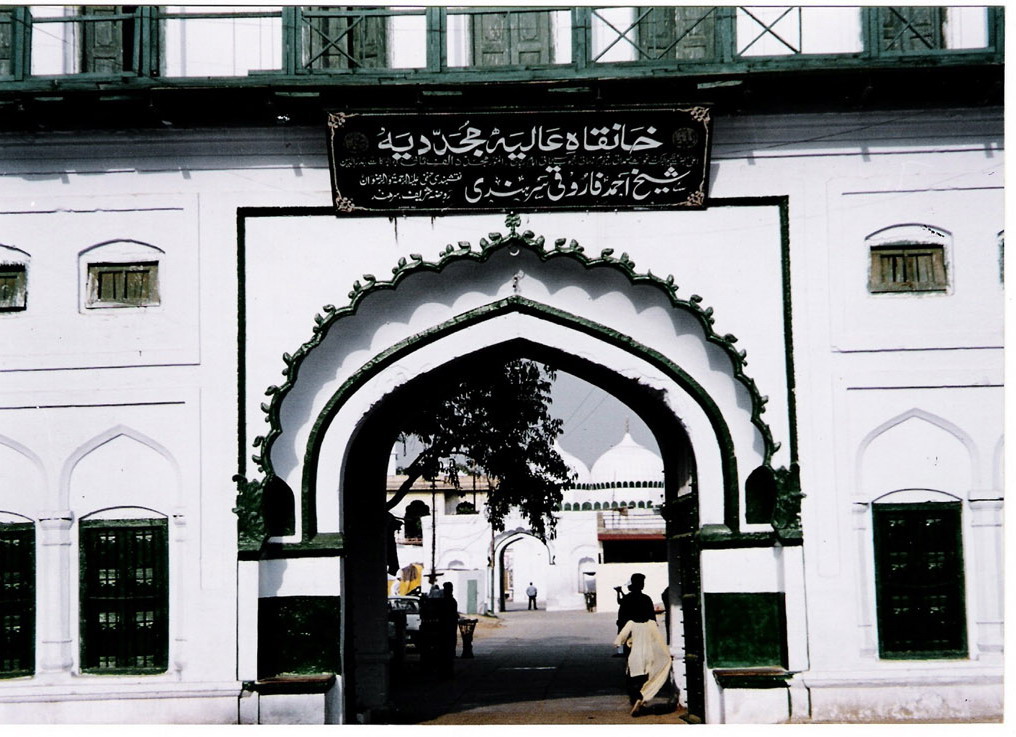
The shrine of Ahmad Sirhindi, known as Rauza Sharif, is located in Sirhind, Punjab, India.
Ahmet Özel from Atatürk University has reported in his work on Diyanet İslâm Ansiklopedisi, el-Alemgiriyye, that some of Ahmad Sirhindi works were compiled in Fatawa 'Alamgiri.
Islamic orthodoxy
There are at least 60 kind of Maktubat (letters) recorded from Ahmad Sirhindi which he delivered to various notables, officials, and shaykhs during his life.
Due to his fervent orthodoxy, Ahmad Sirhindi's followers bestowed him the title of Mujaddid. For his role to the medieval southeast Asia Islamic community, the Islamic politician Muhammad Iqbal called Ahmad Sirhindi as "the Guardian of the wherewithal the Community". During 16th century, a Pantheism religious movements of Wahdat al wajood that are championed by Dara Shikoh, Sarmad Kashani, and Bawa Lal Dayal. However, these movement were opposed by Ahmad Sirhindi, Khwaja Muhammad Masum and Ghulam Yahya. Ahmad Sirhindi was noted as being influential here as his release of strong criticism of Ibn Arabi pantheism caused the movement received significant setbacks.

According to Mohammad Yasin in his work, A Social History of Islamic India, the impact of Ahmad Sirhindi in Muslim community in 17th century for reversing the spread of heterodox thinking was seen as huge success. Yohanan Friedmann has noted that according to many modern historians and thinkers, the puritanical thought of Ahmad Sirhindi has inspired the religious orthodoxy of emperor Aurangzeb. This was noted by how Ahmad Sirhindi managed to influence the successor of emperor Akbar, starting from Jahangir, into reversing Akbar's policies, such as lifting marriage age limits, mosque abolishments, and Hijra methodology revival which was abandoned by his father. It is noted by historians that this influence has been significantly recorded during the conquest of Kangra under Jahangir, that at the presence of Ahmad Sirhindi who observed the campaign, the Mughal forces had the Idols broken, a cow slaughtered, Khutbah sermon read, and other Islamic rituals performed. Further mark of Jahangir's departure from Akbar's secular policy was recorded by Terry, a traveller, who came and observed the Indian region between 1616 and 1619, where he found the mosques full of worshippers, the exaltation of Quran and Hadith practical teaching, and the complete observance of Fasting during Ramadan and Eid al-Fitr celebrations.
Gerardus Willebrordus Joannes Drewes argues that the influences of Ahmad Sirhindi idea of Islamic reformation and anti Ibn Arabi's pantheism has spread as far as Aceh, with the indication of how Aceh Sultanate scholar Nuruddin ar-Raniri seems held the similar view with Ahmad Sirhindi regarding he rejection against Ibn Arabi.
His letters (Maktubat) also circulated and was translated into Turkish by a historian and dervish named Müstakimzade Sa'deddin Efendi (d. 1788). His influence was also noted to have reached the Naqshbandis of the Ottoman Empire, as the order, adhering the view of Ahmad Sirhindi, completely reject Ibn Arabi's Wahdat al-Wujd doctrine in the early 18th century.
Abul A'la Maududi, modern Hanafite thinker and political activist, were recorded to quote Ahmad Sirhindi role in opposing the "religious impurities" which were introduced by Akbar earlier:
| Abul A'la Maududi |
|---|
According to Chanfi Ahmed, many historians regards Ahmad Sirhindi as the pioneer of Islamic reformism of Salafism in seventeenth century India. Although Chanfi Ahmed regards the movement were marked by Shah Waliullah Dehlawi instead. Gamal al-Banna instead opined that Ahmad Sirhindi was influencing Shah Waliullah Dehlawi in reviving the science of Hadith in northern India.
In field of Hadith scholarships, Ahmad Sirhindi also wrote commentary or sharh of Sahih al-Tirmidhi.
Naqshbandi sufism
By the latter part of the nineteenth century, the consensus of the Naqshbandi community had placed the prophetic realities closer to God than the divine realities. The rationale for this development may have been to neutralize unnecessary discord with the large Muslim community whose emotional attachment to Muhammad was greater than any understanding of philosophical fine points.
Ahmad Sirhindi criticize the practice of Khalwa or ascetism by calling it as heresy, due to no arguments that showed that the early generations of Muslims practiced it.
Naqshbandi Sufis claim that Ahmad Sirhindi is descended from a long line of "spiritual masters" which were claimed by the order:
- Muhammad, d. 11 AH, buried in Medina, Saudi Arabia (570/571–632 CE)
- Abu Bakar Siddique, d. 13 AH, buried in Medina, Saudi Arabia
- Salman al-Farsi, d. 35 AH, buried in Madaa'in, Saudi Arabia
- Qasim ibn Muhammad ibn Abi Bakr, d. 107 AH, buried in Medina, Saudi Arabia.
- Jafar Sadiq, d. 148 AH, buried in Medina, Saudi Arabia.
- Bayazid Bastami, d. 261 AH, buried in Bastaam, Iran (804 - 874 CE).
- Abu al-Hassan al-Kharaqani, d. 425 AH, buried Kharqaan, Iran.
- Abul Qasim Gurgani, d. 450 AH, buried in Gurgan, Iran.
- Abu ali Farmadi, d. 477 AH, buried in Tous, Khorasan, Iran.
- Abu Yaqub Yusuf Hamadani, d. 535 AH, buried in Maru, Khorosan, Iran.
- Abdul Khaliq Ghujdawani, d. 575 AH, buried in Ghajdawan, Bukhara, Uzbekistan.
- Arif Riwgari, d. 616 AH, buried in Reogar, Bukhara, Uzbekistan.
- Mahmood Anjir-Faghnawi, d. 715 AH, buried in Waabakni, Mawarannahr, Uzbekistan.
- Azizan Ali Ramitani, d. 715 AH, buried in Khwarezm, Bukhara, Uzbekistan.
- Mohammad Baba As-Samasi, d. 755 AH, buried in Samaas, Bukhara, Uzbekistan.
- Amir Kulal, d. 772 AH, buried in Saukhaar, Bukhara, Uzbekistan.
- Baha-ud-Din Naqshband Bukhari, d. 791 AH, buried in Qasr-e-Aarifan, Bukhara, Uzbekistan (1318–1389 CE).
- Sayyid Alauddin Atar Bukhari, buried in Jafaaniyan, Mawranahar, Uzbekistan.
- Yaqub al-Charkhi, d. 851 AH, buried in Tajikistan
- Khwaja Ahrar, d. 895 AH, buried in Samarkand, Uzbekistan.
- Muhammad Zahid Wakhshi, d. 936 AH, buried in Wakhsh, Malk Hasaar, Tajikistan
- Darwish Muhammad, d. 970 AH, buried in Samarkand, Uzbekistan
- Muhammad Amkanagi, d. 1008 AH, buried in Akang, Bukhara, Uzbekistan
- Khwaja Baqi Billah, d. 1012 AH, buried in Delhi, India
- Ahmad al-Farūqī al-Sirhindī (Ahmad Sirhindi, subject of this article)
Works
| Title | Original language | English title | Brief description |
|---|---|---|---|
| Maktubat-e-Imam Rabbani (مکتوبات امام ربانی) | Persian | Letters of Imam Rabbani | A collection of letters addressing theology, Sufism, religious reform, and adherence to Sunni orthodoxy; regarded as his principal work. |
| Ithbat al-Nubuwwa (اثبات النبوت) | Affirmation of Prophethood | A theological treatise defending the necessity and finality of prophethood against philosophical and mystical interpretations. | |
| Asrar al-Tashahhud (اسرار التشہد) | Arabic | The Mysteries of the Tashahhud | A short work interpreting the spiritual meanings of the tashahhud prayer formula. |
Footnotes
References
Bibliography
- Dr. Burhan Ahmad Faruqi, Mujaddid's Conception of Tawhid, 1940
- Shari'at and Ulama in Ahmad Sirhindi's Collected Letters by Arthur F. Buehler.
References
- "Biography of Ahmad Sirhindi in Urdu Language".
- (June 2003). "Biography of Ahmad Sirhindi (Mujaddid Alf Sani)".
- Annemarie Schimmel. "Islam in the Indian Subcontinent".
- (2020). "Salafī Challenge and Māturīdī Response: Contemporary Disputes over the Legitimacy of Māturīdī kalām". Die Welt des Islams.
- "مقالات الإسلاميين في شهر رمضان الكريم". IslamKotob.
- Algar, Hamid. (2000). "Imâm-i Rabbânî". Turkish Diyanet Foundation.
- (2002). "معجم الأدباء من العصر الجاهلي حتى سنة 2002 - ج 6 - محمد علي جهاد - و". IslamKotob.
- {{britannica. 10170. Shaykh Ahmad Sirhindi. "Shaykh Aḥmad Sirhindī, (born 1564?, Sirhind, Patiāla, India—died 1624, Sirhind), Indian mystic and theologian who was largely responsible for the reassertion and revival in India of orthodox Sunnite Islam as a reaction against the syncretistic religious tendencies prevalent during the reign of the Mughal emperor Akbar."
- Josef W. Meri, Medieval Islamic Civilization: An Encyclopedia, (Routledge 1 Dec 2005), p 678. {{ISBN. 0-415-96690-6
- Glasse, Cyril. (1997). "[[The New Encyclopedia of Islam]]". [[AltaMira Press]].
- {{harvtxt. Annemarie Schimmel. 2004
- (May 2004). "Fundamentalisms Comprehended". University of Chicago Press.
- (2000). "Biographical Encyclopaedia of Sufis South Asia". Prabhat Kumar Sharma, for] Sarup & Sons.
- (1965). "Muslim Revivalist Movements in Northern India in the Sixteenth and Seventeenth Centuries". Agra University.
- Itzchak Weismann, ''The Naqshbandiyya: Orthodoxy and Activism in a Worldwide Sufi Tradition'', [[Routledge]] (2007), p. 62
- S.Z.H. Jafri, ''Recording the Progress of Indian History: Symposia Papers of the Indian History Congress, 1992-2010'', Primus Books (2012), p. 156
- Khwaja Jamil Ahmad, ''One Hundred greater Muslims'', Ferozsons (1984), p. 292
- Sufism and Shari'ah: A study of Shaykh Ahmad Sirhindi's effort to reform Sufism, Muhammad Abdul Haq Ansari, The Islamic Foundation, 1997, p. 11.
- (June 2003). "Mujaddid Alf e Sani The first of the great reformers, Sheikh Ahmad Sarhindi al-Farooqi an-Naqshbandi".
- ''Medieval Islamic Civilization: An Encyclopedia'', Routledge, 2006, p. 755.
- (1993). "The Mughal Empire Part 1, Volume 5". Cambridge University Press.
- (1998). "رجال من التاريخ". Dar Al-Manara - Jeddah.
- (2015). "Guarding Traditions and Laws—Disciplining Bodies and Souls: Tradition, science, and religion in the age of Ottoman reform". Modern Asian Studies.
- Ellison Banks Findly. (1993). "Nur Jahan, Empress of Mughal India". Oxford University Press.
- (1946). "7. Letters of Sheikh Ahmad. (A New Source of Historical Study) [1563—1624 A. D.]". Proceedings of the Indian History Congress.
- "الإمام الرباني أحمد الفاروقي السرهندي رحمه الله (4651-4261م)".
- (October 15, 2019). "Hitam Putih Wajah Ulama dan Penguasa". Penerbit Darul Falah.
- (1992). "History of Civilizations of Central Asia: Development in contrast: from the sixteenth to the mid-nineteenth century". UNESCO.
- (2010). "الدين والدولة في تركيا المعاصرة". Al Manhal.
- (2009). "تاريخ الحركة المجدّدية دراسة تاريخية تحليلية لحياة الامام المجدد احمد بن عبد الاحد السرهندي المعروف بمجدد الالف الثاني: وعمله الاصلاحي التجديدي الذي قام به في شبه القارة مع ترجمة لبعض رسائل وكتابه المختارة". دار الكتب العلمية،.
- (1990). "بين السلفية والصوفية الاعتقاد الصحيح والسلوك السليم". the University of California.
- (1996). "الفكر التربوي عند المتكلمين المسلمين ودوره في بناء الفرد والمجتمع". الهيئة المصرية العامة للكتاب،.
- (2022). "الطائفية والتقسيم.. أخطار الصراع الطائفي بمصر والعالم العربي (طبعة منقحة ومزيدة)". وكالة الصحافة العربية.
- (2005). "نبذة عن الإمام أحمد الفاروقي". Abdullaah Al-Faqeeh.
- (2002). "Mughal Governors of Bihar Under Akbar and Jahangir". Proceedings of the Indian History Congress.
- {{harvtxt. Babar Sultan Asadullah Ph.D. Taswar Hussain Ph.D. Uzma Akhlaq Assistant professor. 2021
- {{harvtxt. Babar Sultan Asadullah Ph.D. Taswar Hussain Ph.D. Uzma Akhlaq Assistant professor. 2021
- {{harvtxt. Babar Sultan Asadullah Ph.D. Taswar Hussain Ph.D. Uzma Akhlaq Assistant professor. 2021
- (2022). "فقه البدعة في الشريعة الإسلامية - دراسة مقارنة لمفهومها وأحكامها وتصفية الاختلافات". Dar Al Kotob Al Ilmiyah دار الكتب العلمية.
- (October 12, 2017). "The Oxford Handbook of Indian Philosophy 2017". Oxford University Press.
- (March 10, 2019). "Islamic Historiography Nature and Development". Educreation Publishing.
- "Maktubat Imam Rabbani (Shaykh Ahmed Sirhindi)".
- "Maktubat Imam Rabbani (Shaykh Ahmed Sirhindi)".
- (February 26, 2015). "In Light of India". February 26, 2015.
- (1973). "The Gazetteer of India: History and culture". Government of India Press.
- (2022). "The Muslim Reawakening in the 19th Century Pak-Hind Sub-Continent: An Overview". Hamdard Islamicus.
- (March 11, 2016). "Al-muntakhabaat Min Al-maktubaat". CreateSpace Independent Publishing Platform.
- (April 28, 2020). "Translating Wisdom Hindu-Muslim Intellectual Interactions in Early Modern South Asia". University of California Press.
- (May 7, 2015). "The Muslim Diaspora (Volume 2, 1500-1799) A Comprehensive Chronology of the Spread of Islam in Asia, Africa, Europe and the Americas". McFarland, Incorporated, Publishers.
- {{harvtxt. Abdul Haq Ansari. 2001
- (2012). "Wahdat al-Wujud in India". Ishraq: Islamic Philosophy Yearbook 3.
- "Shaykh Aḥmad Sirhindī".
- Annemarie Schimmel, Islam in the Indian Subcontinent, p. 94. {{ISBN. 90-04-06117-7
- "Maktubat Imam Rabbani (Shaykh Ahmed Sirhindi)".
- Yohanan Friedmann, "Shaykh Ahmad Sirhindi: An Outline of His Thought and a Study of His Image in the Eyes of Posterity", Chapter 5, Section 3, Oxford University Press (2001).
- Tarana Singha. (1981). "Sikh Gurus and the Indian Spiritual Thought". University of California.
- Syed Athar Abbas Rizvi, "Muslim Revivalist Movements in Northern India", p. 250, Agra University Press, Agra, (1965).
- Gandhi, Surjit Singh. (2007). "History of Sikh gurus retold". Atlantic Publishers & Distributors.
- Singh, Rishi. (2015). "State Formation and the Establishment of Non-Muslim Hegemony: Post-Mughal 19th-century Punjab.". SAGE Publications.
- Gaur, I. D.. (2008). "Martyr as bridegroom: a folk representation of Bhagat Singh". Anthem Press.
- https://punjab.global.ucsb.edu/sites/default/files/sitefiles/journals/volume12/no1/3_singh.pdf page 6.
- (17 November 2017). "When Emperors turned on Gurus".
- "The Martyrdom Of Guru Arjan Dev Ji".
- {{harvtxt. Abdul Haq Ansari. 2001
- (2014). "Revealed Grace: The Juristic Sufism of Ahmad Sirhindi (1564-1624)". Fons Vitae.
- (1996). "Efforts of Hanafi scholars to invalidate the doctrines of Grave worshippers". دار الصميعي.
- (1975). "Reviewed work: Shaykh Aḥmad Sirhindī: An Outline of His Thought and a Study of His Image in the Eyes of Posterity, Yohanan Friedmann". Bulletin of the School of Oriental and African Studies, University of London.
- ''Shaykh Ahmad Sirhindi: an outline of his thought and a study of his image in the eyes of posterity'', McGill-Queen's University Press, 1971, p.xiv Bulletin of the School of Oriental and African Studies, University of London, Vol. 38, No. 1 (1975), pp. 177-179
- Sirhindi, Ahmad. (1984). "Mabda'a wa-ma'ad". Ahmad Brothers.
- Ahmad, Nur. (1972). "Maktubat-i Imam Rabbani 3 vols. Ed.". Education Press.
- (2020). "Handbook of Hinduism in Europe (2 Vols)". Brill.
- "Maktubat Imam-e-Rabbani". Madina Publishing Company.
- (1960). "The Political Role of Shaikh Ahmad Sirhindi and Shah Waliullah". Proceedings of the Indian History Congress.
- (2020). "Translating Wisdom Hindu-Muslim Intellectual Interactions in Early Modern South Asia". University of California Press.
- (2013). "The Princeton Encyclopedia of Islamic Political Thought". Princeton University Press.
- Evliya Çelebi. (1988). "Evliya Çelebi in Diyarbekir: The Relevant Section of The Seyahatname". E.J. Brill.
- (2007). "Madrasas in South Asia Teaching Terror?". Taylor & Francis.
- (10 March 2015). "West African ʿulamāʾ and Salafism in Mecca and Medina Jawāb Al-Ifrῑqῑ - The Response of the African". Brill.
- (2006). "رِسَالَــة إِلَى الدَّعَوَاتِ الإِسْلامِيَّة من دعوة العمل الإسلامي". كتب عربية.
- (1990). "Tuḥfat al-aḥwadhī bi-sharḥ Jāmiʻ al-Tirmidhī Volume 11". al-Maktabah al-Ashrafīyah.
- Buehler, Arthur. (1998). "Sufi Heirs of the Prophet: the Indian Naqshbandiyya and the rise of the mediating sufi shaykh". University of South Carolina Press.
- (2019). "Kampung Babussalam: A Model of Spiritual Citizenship Development Based on Tareqah Naqsyabandiyah Tradition". 14th ISDEV International Islamic Development Management Conference (IDMAC2019).
- (August 2009). "Spiritual Lineage of Ahmad Sirhindi".
- Sufism. (2025-03-08). "Shajra-e-Mubarak of Naqshbandiyya Mujaddidiyya Tariqa".
This article was imported from Wikipedia and is available under the Creative Commons Attribution-ShareAlike 4.0 License. Content has been adapted to SurfDoc format. Original contributors can be found on the article history page.
Ask Mako anything about Ahmad Sirhindi — get instant answers, deeper analysis, and related topics.
Research with MakoFree with your Surf account
Create a free account to save articles, ask Mako questions, and organize your research.
Sign up freeThis content may have been generated or modified by AI. CloudSurf Software LLC is not responsible for the accuracy, completeness, or reliability of AI-generated content. Always verify important information from primary sources.
Report