From Surf Wiki (app.surf) — the open knowledge base
AgustaWestland AW159 Wildcat
Improved series of the Westland Super Lynx military helicopter
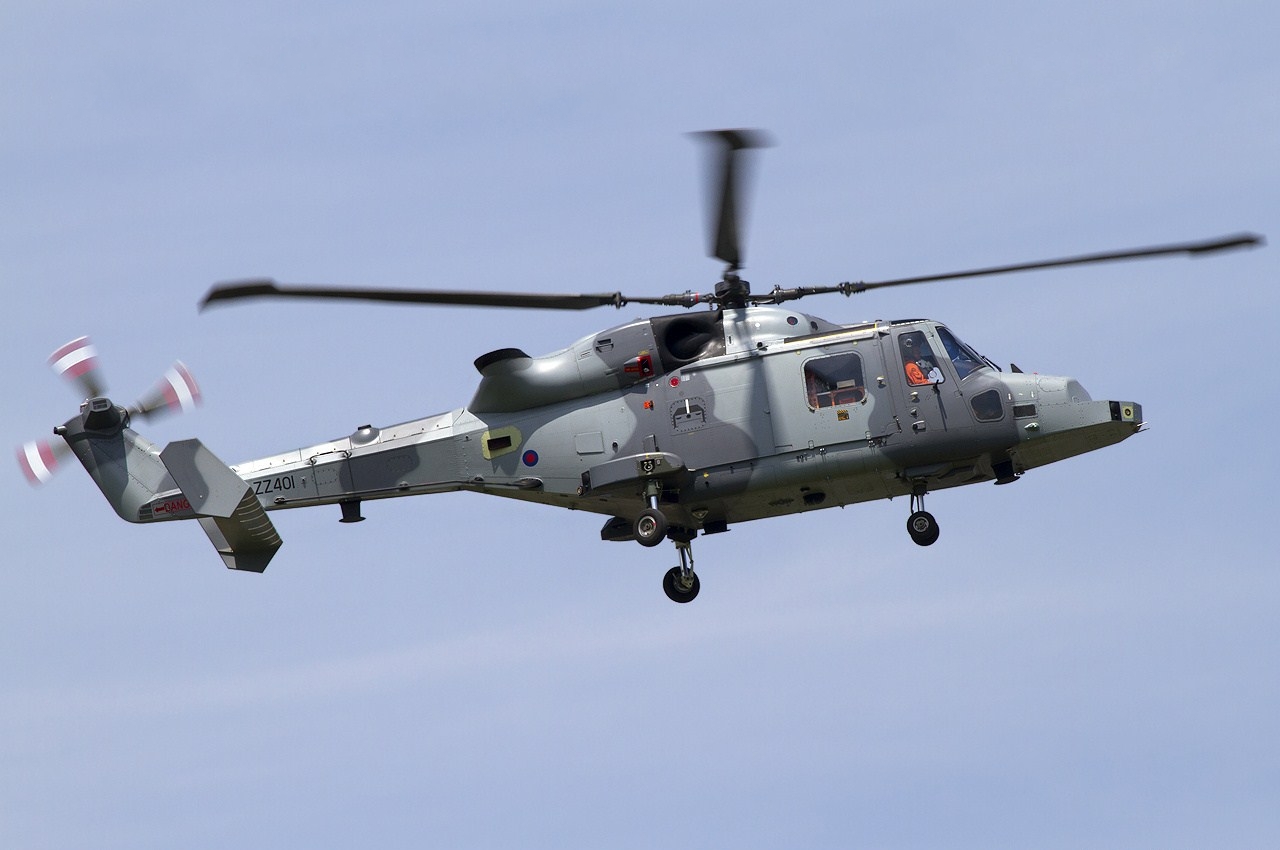
Improved series of the Westland Super Lynx military helicopter
| Field | Value |
|---|---|
| name | AW159 Wildcat |
| image | File:Royal Navy Wildcat Helicopter MOD 45158434.jpg |
| caption | Wildcat HMA2 naval variant in 2013 |
| aircraft_type | Utility, SAR and ASuW helicopter |
| national_origin | United Kingdom, Italy |
| manufacturer | |
| status | In service |
| primary_user | British Army |
| more_users | |
| construction_date | 2009–present |
| introduction | 29 August 2014 (AH1) |
| first_flight | 12 November 2009 |
| developed_from | Westland Super Lynx |
The AgustaWestland AW159 Wildcat (previously called the Future Lynx and Lynx Wildcat) is a military helicopter, developed by the British-Italian helicopter manufacturer AgustaWestland, and later marketed by the Italian aerospace company Leonardo. It is an improved version of the Westland Super Lynx designed to serve in the battlefield utility, search and rescue, aerial reconnaissance, anti-submarine warfare (ASW), anti-surface warfare (ASuW), utility, command and control, and troop transport duties.
Development commenced during the early 2000s under the name Future Lynx to replace the existing Lynx helicopters then operated by both the Royal Navy and British Army. Refurbishment and upgrading of the existing first generation Lynx airframes was evaluated but found to be uneconomical in comparison to producing a new generation airframe. Various new electronics and avionics systems were incorporated, including a glass cockpit, onboard integrated digital open systems architecture, Bowman communications system, and various mission systems. The Wildcat also features numerous airframe improvements, such as the redesigned tail rotor and nose, greater structural strength, and a longer lifespan of 12,000 flight hours. New munitions, such as the Martlet air-to-surface missile and the Sea Venom anti-ship missile, were also integrated.
The Wildcat performed its maiden flight on 12 November 2009. On 29 August 2014, the Wildcat AH1 formally entered service with the Army Air Corps; in early 2015, the Fleet Air Arm's first Wildcat HMA2 commenced its initial operational deployment at sea. Within five years, both services had withdrawn the last Lynx helicopters in favour of the Wildcat. The rotorcraft is also marketed towards export customers; overseas operators include the Republic of Korea Navy and the Philippine Navy.
Development
Background
In 1995, the British Government announced that the Royal Navy's existing Westland Lynx helicopters were to be replaced; at that point, the service was intended to operate an all-Merlin fleet. Despite this stated intent, Westland Helicopters continued to hold talks with the Ministry of Defence (MOD) to find a future role for the type during the late 1990s; the firm issued multiple proposals to either extend the life of the existing Super Lynx through upgrade programmes or more ambitious remanufacturing programmes incorporating varying degrees of new components. In 2002, the Future Lynx project originated in two studies to determine the suitability of a derivative of the Super Lynx 300 to replace the existing Lynx helicopters of the Royal Navy and British Army. These requirements were known as the Surface Combatant Maritime Rotorcraft (SCMR) and Battlefield Light Utility Helicopter (BLUH) programmes, respectively.
In July 2002, AgustaWestland received a contract to conduct a formal assessment phase of the Future Lynx. On 22 July 2002, a collaboration agreement was signed between AgustaWestland and Thales Group, under which Thales was assigned development responsibility for the programme's core avionics, including communications, navigation, and flight management electronics; that same day, additional MOD funding for the fledgling Future Lynx programme was announced as having been allocated. By April 2003, the in-service dates for the BLUH and SCMR programmes were reported as being April 2007 and April 2008 respectively. Early on, AgustaWestland elected to adopt a glass cockpit incorporating electronics upgrades from the AgustaWestland AW101 along with various airframe improvements, such as a redesigned tail rotor and nose along with increased use of machined components over fabricated counterparts. By July 2004, the option of upgrading and remanufacturing the first generation Lynx had reportedly been judged to be uneconomical, and the BLUH programme of building a new generation airframe had been given prominence instead.
Restructure
In late 2004, the National Audit Office (NAO) criticised the UK's existing helicopter fleet as being insufficient; concurrently, a major reorganisation of the MOD's procurement process subjected ongoing helicopter programmes to major restructuring. The BLUH was reportedly deemed unaffordable, and it was speculated that a more modest sensor fit could be used, as well as the procurement of alternative platforms such as the NHIndustries NH90, Eurocopter EC120, or Eurocopter EC635 instead of the Future Lynx. Ultimately, the utility transport aspect of the BLUH requirement was de-emphasised and the programme renamed Battlefield Reconnaissance Helicopter (BRH).
In early 2005, the MOD was reportedly deliberating on whether to launch an open competition for other companies to bid to meet the BRH requirement, or to sole-source the contract from AgustaWestland to proceed with the Future Lynx. In late March 2005, the MOD confirmed the Future Lynx as being its preferred option for its rotorcraft renewal programme, and was expected to place a non-competitive contract with AgustaWestland later that year. The signing of the contract was delayed to the following year, this was reportedly in part due to preparation and release of the 2005 Defence Industrial Strategy, which supported the selection of the Future Lynx.
On 22 June 2006, the MOD awarded AgustaWestland a £1 billion contract for 70 Future Lynx helicopters as a commitment under the Strategic Partnering Arrangement with AgustaWestland. The programme envisaged providing the British Army with 40 aircraft and Royal Navy with 30, with an option for a further 10, split equally between Army and Navy. By late 2007, the Future Lynx was scheduled to enter service with the British Army and Royal Navy in 2014 and 2015 respectively. In 2008, the cancellation of the Future Lynx programme has reportedly been under consideration. In December 2008, the MOD announced that the main contract would be proceeding, only incurring a minor cut in numbers set to be procured, for a total of 62 rotorcraft.
Into production
In October 2007, following the passing of an interim critical design review, the Future Lynx programme proceeded to the manufacturing phase; the first metal was cut on the initial flight-test rotorcraft that same month. In September 2008, the powerplant selected for the Future Lynx, the LHTEC CTS800-4N, received European Aviation Safety Agency (EASA) type certification, enabling production deliveries to commence. In November 2008, GKN delivered the first complete airframe to AgustaWestland; the new airframe reportedly had an 80 per cent lower part count than the earlier generation Lynx, which was achieved via the use of monolithic machine components.
On 24 April 2009, it was announced that the Future Lynx had been designated AW159 by AgustaWestland, and would be known in British military service as the Wildcat. On 12 November 2009, the first Lynx Wildcat conducted the type's maiden flight from AgustaWestland's facility in Yeovil, Somerset. On 14 October 2010, the second AW159 performed its first flight; on 19 November 2010, a third Wildcat joined the flight test programme.
In July 2009, it was announced that the cost of the Wildcat programme had increased to £1.7 billion. In December 2011, it was reported that four additional Wildcats had been ordered for use by British special forces. These are to be joined by four from the current fleet on order, for a total of eight aircraft to operate as Wildcat Light Assault Helicopters. Further orders for the Wildcat have since been placed by export customers, including the Republic of Korea Navy and the Philippine Navy. The Philippines Department of National Defense secretary disclosed during the 2026 budget hearings that the government is negotiating with Leonardo for the purchase of six (6) new Wildcats at the cost of $745 million in a government-to-government arrangement.
Design
.jpg)
The AW159 Wildcat is a further development of the Westland Lynx. While the AW159 shares broad similarities in appearance to the Lynx, it has significant design differences and is heavily modernised and adapted to gain new attributes and functionality. The AW159 comprises 95% new components; the remaining 5%, consisting of such items as the fuel system and main rotor gearbox, are interchangeable with the Lynx AH7 and HMA8 variants. During development, the Army and Navy variants of the Wildcat reportedly maintained 98 per cent commonality with one another. The AW159 is the first helicopter by AgustaWestland to be designed inside an entirely digital environment. Among other changes, certain external elements of the Wildcat, such as the tail rotor, have been redesigned for greater durability and stealth qualities.
Both Army and Navy variants have a common airframe, which is manufactured by GKN Aerostructures; the airframe has undergone marinisation for operations in the naval environment and providing for a greater airframe lifespan of 12,000 flight hours. The wheeled undercarriage is also strengthened for naval landings on both variants. The AW159 is powered by two 1362 hp LHTEC CTS800 turboshaft engines, driving the rotorcraft's BERP IV rotor blades via a new transmission, increasing the maximum take-off weight by more than 1 ton over the legacy Super Lynx. It is equipped with a new composite tailboom, tailplane, tail rotor, nose structure and avionics suite. The naval version is also equipped with a Selex Galileo Seaspray 7000E active electronically scanned array (AESA) radar and L-3 Wescam MX-15HDi electro-optical/infrared nose turret. A glass cockpit comprises the primary human-machine interface, using four 255 x 200mm multifunction displays to provide information to the aircrew and interact with the avionics systems on board.

The Wildcat features an increased payload and range over the preceding Super Lynx; it is operationally required to carry up to 8 Future Anti-Surface Guided Weapons up to 185 kilometers from a host ship and remain on station for up to an hour. The type can perform aerial reconnaissance, anti-submarine warfare (ASW), anti-surface warfare (ASuW), utility, fire control, command and control, and troop transport duties. In June 2014, the Royal Navy awarded Thales Group a £48 million contract to deliver the Martlet missile for the Wildcat under the Future Anti-Surface Guided Weapons Light (FASGW (L)) programme for targets such as small boats and fast attack craft. A Wildcat can carry four launchers, each with five Martlets. Both missiles are being integrated by AgustaWestland in a single £90m programme by 2018, with IOC for both planned by October 2020. However, the entry into service of both Martlet and Sea Venom was subsequently delayed, with Martlet now expected to enter full service in 2025 and Sea Venom's full operational capability expected in 2026. Martlet reached initial operating capability in 2021, while Sea Venom achieved "initial operating capability" in October 2025.
Many elements of the AW159's avionics are provided by Thales Group. The type is reported to possess significant ISTAR capabilities and improved situational awareness, achieved through its onboard integrated digital open systems architecture; it has been equipped with the Bowman communications system, allowing for data such as targeting and voice communications to be securely and seamlessly transmitted to friendly forces. Some AW159 models have been fitted with various General Dynamics-built mission systems, these include secured data recorders and tactical processing systems which integrate sensor data and application information for displaying within the cockpit as well as for retention within encrypted data storage. Other mission systems used on the Wildcat have been produced by BAE Systems. All variants of the Wildcat share the same defensive aids arrangement, which shares some commonality with the AgustaWestland Apache; features include missile warning sensors, countermeasures dispensers, and infrared exhaust suppressors.
Operational history
United Kingdom

The UK has ordered 34 Wildcats for the British Army and 28 for the Royal Navy. in 2009. Both units are located at RNAS Yeovilton. In February 2012, a prototype Wildcat (ZZ402) conducted 20 days of trials aboard off the coasts of England and Scotland; the tests involved operating under challenging weather conditions to define ship-helicopter operating limits for when the type would enter service in 2015. During the trials, a total of 390 deck landings were completed, including 148 night landings, 76 of which being conducted by pilots using night vision goggles.
The first production Wildcat was received in May 2012 by the WFT (Army); ZZ406. The Royal Navy received their first airframe at the end of 2013. Further trials of the type were conducted, such as deck landings aboard . In July 2012, the Wildcat conducted its first public display at the Farnborough International Airshow. At the event, Defence Secretary Philip Hammond stated that the "Wildcat represents a considerable advance over the current Lynx helicopters, bringing greatly improved performance and capability."
On 29 August 2014, the Wildcat AH1 formally entered service with the Army Air Corps. On 23 March 2015, the Royal Navy's first Wildcat HMA2 began its initial operational deployment at sea on board . By 2024, all 62 Wildcats had been delivered to the British Army and Royal Navy; in excess of 10,000 flight hours had been logged between the services along with a 100 percent availability rate achieved at sea and over 1,200 deck landings performed. In September 2015, a Wildcat HMA.2 of 825 Naval Air Squadron was deployed aboard in the Persian Gulf to perform extreme high temperature trials.
On 4 July 2019, Royal Marines from 42 Commando unit used a Wildcat to board and detain the Grace 1 oil tanker off Gibraltar.
South Korea
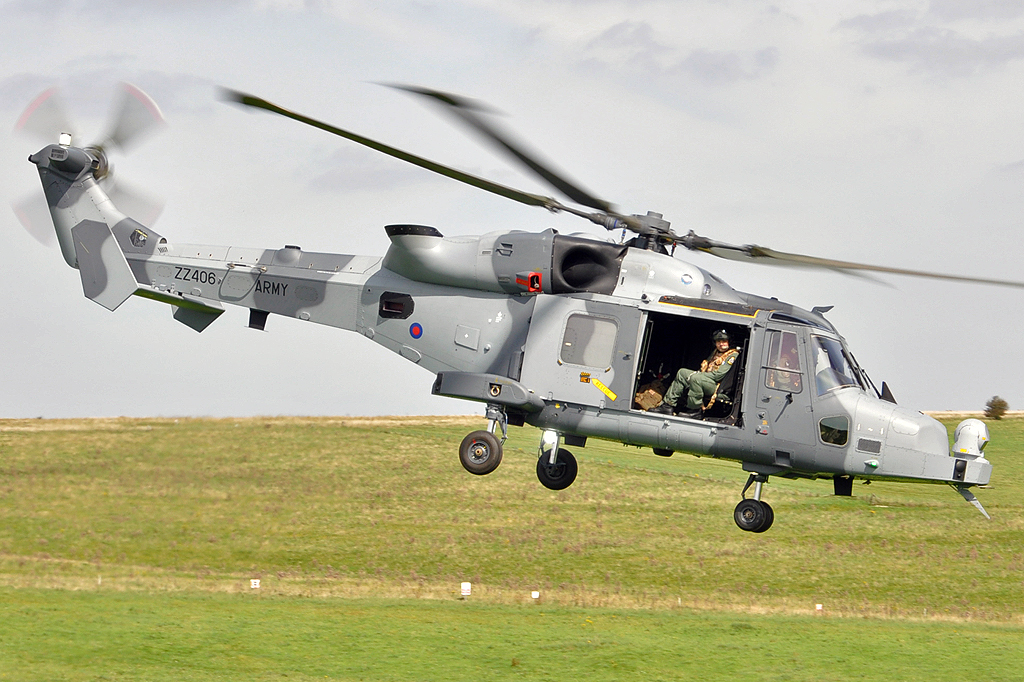
On 15 January 2013, South Korea's Defense Acquisition Program Administration announced the selection of the AW159 to fulfill a requirement of the Republic of Korea Navy for a maritime helicopter, winning against the MH-60R Seahawk. The batch of eight aircraft were chosen to perform search-and-rescue missions, anti-submarine warfare and surveillance. In January 2014, DAPA announced it will equip its Wildcat helicopters with Spike NLOS missiles to provide a stand-off attack capability for engaging targets such as ground artillery and small vessels. In April 2015, the South Korean government was considering ordering a further 12 Wildcats to further strengthen the Navy's anti-submarine capabilities; alternative options include the MH-60 Seahawk and the domestically produced KAI KUH-1 Surion helicopter. On 13 June 2016, the Republic of Korea Navy took delivery of four Wildcats. The helicopters operate from the Navy's Incheon-class guided missile/coastal defense frigates. The remaining four were delivered in late November 2016. ROK Navy Wildcats are fitted with a Seaspray 7400E radar offering 360-degree coverage.
The first four AW159s were operational by February 2017. Its AESA radar and electro-optic thermal sensor are capable of detecting surface contacts out to 360 km. For anti-submarine duties, the helicopter can operate for over three hours when equipped with the Thales FLASH dipping sonar, two hours with the sonar and one Blue Shark torpedo, and an hour or more with the sonar and two torpedoes; it can also drop sonobuoys.
Philippines
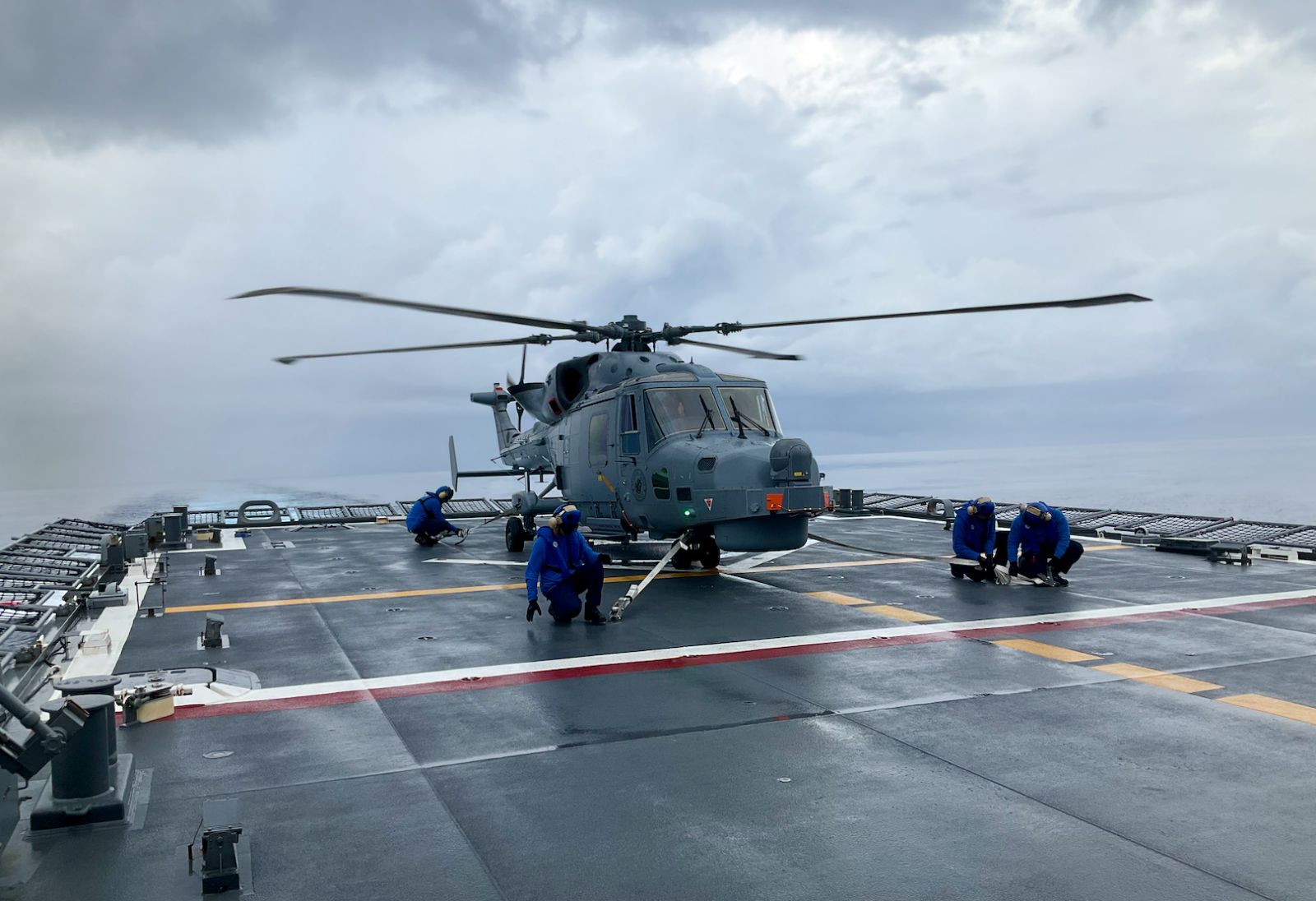
In 2014, it was reported that the AW159 was being considered by the Philippine Navy. In March 2016, AgustaWestland signed a €100 million contract with the Department of National Defense for two helicopters along with training and support. The project aims to provide anti-submarine warfare (ASW) and anti-surface capabilities to the Navy. Prior to the introduction of the Wildcat, the Philippines lacked any ASW capabilities in a region where the number of submarines being operated by other nations was reportedly set to grow.
On 7 May 2019, the two AW159 anti-submarine helicopters arrived in the Philippines. The helicopters are purchased as units assigned onboard the Jose Rizal-class Frigates.
Others
In 2016, Malaysia reportedly considering increasing the number of helicopters operated by the Royal Malaysian Navy by procuring either the AW159, Sikorsky MH-60R Seahawk or the Airbus Helicopters H225M. On 20 April 2016, Finmeccanica (now Leonardo) signed a teaming agreement with Global Komited, a Malaysian defence company, to jointly promote and distribute the AW159 Wildcat to the Malaysian government.
In 2024 Leonardo signed a MoU with the NZDF around the potential supply of AW159 helicopters to the RNZN/AF. The NZDF aims to replace its eight remaining Super Seasprite helicopters with ASW & ASuW capable helicopters in the late 2020s.
Variants

;Wildcat AH1 :Initial battlefield reconnaissance model, total of 34 ordered for the Army Air Corps. ;Wildcat HMA2 :Initial maritime model, total of 28 ordered for the Royal Navy.
Operators
Current operators
;
- Philippine Navy: 2 AW159s in service with 6 more on order.
- 42nd Anti Submarine Helicopter Squadron ;
- Republic of Korea Navy: 8 AW159s in service
- 62nd Maritime Helicopter Group
- 622 Flight Squadron
- 627 Flight Squadron ;
- 62nd Maritime Helicopter Group
- Army Air Corps: 34 AH1 in service
- 1 Regiment
- 652 Squadron
- 659 Squadron
- 661 Squadron
- 1 Regiment
- Royal Navy: 28 HMA2 in service
Future operators
;
- Algerian Navy (3 on order)
Specifications (AW159)


|prime units? =met General characteristics
|max takeoff weight kg= 6,000 Powerplant
Performance
Armament
- Pintle-mounted machine gun, e.g. FN MAG (Army) or Browning M3M (Navy). Air-to-surface missile systems and ASW weapons (Naval HMA2 variant):
- up to 20× or
- up to 4× or
- Sting Ray torpedo and Mk.11 depth charges. (sub-surface targetting for U.K. HMA2 variant provided by other platforms) South Korean and Philippine naval loadout
- K745 Blue Shark torpedoes
- Spike NLOS ATGM-based antiship missiles
- Thales Underwater Systems Compact FLASH dipping sonar array (not deployed on U.K. HMA2 variant)
- Seaspray 7400E AESA X band air-to-surface multifunction radar
- Wescam MX-15Di EOIR cameras
- Sonobuoys (not deployed on U.K. HMA2 variant)
- TDL-16 (?)
References
References
- [https://www.flightglobal.com/news/articles/royal-navy-lynx-hma8-fleet-bows-out-of-service-435293/ "Royal Navy Lynx HMA8 fleet bows out of service"] {{Webarchive. link. (17 March 2017. Flight Global)
- Rankin, Mel. (24 June 2016). "Lynx helicopter departs RNAS Yeovilton for its final flight".
- Ripley, Tim. (12 September 2017). "UK reorganises special forces aviation".
- Cobbold, Richard. (April 1994). "The Maritime helicopter". Chief of the Defence Staff.
- Derby, Paul. [https://www.flightglobal.com/news/articles/gkn-westland-offers-uk-ministry-of-defence-upgrade-f-62265/ "GKN Westland offers UK Ministry of Defence upgrade for Lynx."] {{Webarchive. link. (1 July 2016 ''Flight International'', 22 February 2000.)
- (22 July 2002). "Navy may get new version of battle-proven Lynx helicopter". [[The National Archives (United Kingdom).
- Penney, Stewart. [https://www.flightglobal.com/news/articles/westland-unveils-cockpit-concept-for-lynx-rebuild-164299/ "Westland unveils cockpit concept for Lynx rebuild."] {{Webarchive. link. (1 July 2016 ''Flight International'', 15 April 2003.)
- [https://www.flightglobal.com/news/articles/thales-joins-future-lynx-programme-151858/ "Thales joins Future Lynx programme."] {{Webarchive. link. (2 July 2016 ''Flight International'', 22 July 2002.)
- [https://www.flightglobal.com/news/articles/agustawestland-sets-its-sights-on-lynx-deals-151855/ "AgustaWestland sets its sights on Lynx deals."] {{Webarchive. link. (1 July 2016 ''Flight International'', 22 July 2002.)
- [https://www.flightglobal.com/news/articles/military-pounces-as-westland-plans-upgrade-to-super-186265/ "Military pounces as Westland plans upgrade to Super Lynx."] {{Webarchive. link. (3 August 2016 ''Flight International'', 19 July 2004.)
- [https://www.flightglobal.com/news/articles/uk-revamps-helicopter-strategy-188632/ "UK revamps helicopter strategy."] {{Webarchive. link. (1 July 2016 ''Flight International'', 12 October 2004.)
- Hoyle, Craig. [https://www.flightglobal.com/news/articles/eads-offers-to-solve-uk-helicopter-crisis-190728/ "EADS offers to solve UK helicopter crisis."] {{Webarchive. link. (1 July 2016 ''Flight International'', 30 November 2004.)
- "AW159 Lynx Wildcat Battlefield Reconnaissance Helicopter, United Kingdom". Net Resources International.
- Hoyle, Craig. [https://www.flightglobal.com/news/articles/uk-to-decide-on-future-helicopters-195213/ "UK to decide on future helicopters."] {{Webarchive. link. (1 July 2016 ''Flight International'', 15 March 2005.)
- [https://www.flightglobal.com/news/articles/uk-commits-to-future-lynx-helicopter-195919/ "UK commits to Future Lynx helicopter."] {{Webarchive. link. (1 July 2016 ''Flight International'', 29 March 2005.)
- Trimble, Stephen. [https://www.flightglobal.com/news/articles/rivals-stay-quiet-over-uk-future-lynx-award-for-no-196136/ "Rivals stay quiet over UK Future Lynx award – for now."] {{Webarchive. link. (1 July 2016 ''Flight International'', 5 April 2005.)
- [https://www.flightglobal.com/news/articles/uk-close-to-forging-future-lynx-deal-204287/ "UK close to forging Future Lynx deal."] {{Webarchive. link. (1 July 2016 ''Flight International'', 24 January 2006.)
- [http://www.agustawestland.com/node/3338 "AgustaWestland Awarded Future Lynx Contract"] {{Webarchive. link. (7 July 2011 . AgustaWestland, 22 June 2006.)
- Morrison, Murdo. [https://www.flightglobal.com/news/articles/pictures-agustawestland-to-supply-70-future-lynx-he-207357/ "Pictures: AgustaWestland to supply 70 Future Lynx helicopters to UK."] {{Webarchive. link. (3 August 2016 ''Flight International'', 22 June 2006.)
- Hoyle, Craig. [https://www.flightglobal.com/news/articles/agustawestland-seeks-export-buyers-for-aw159-lynx-w-325871/ "AgustaWestland seeks export buyers for AW159 'Lynx Wildcat'."] {{Webarchive. link. (1 July 2016 ''Flight International'', 30 April 2009.)
- Hoyle, Craig. [http://www.flightglobal.com/articles/2008/12/12/320049/uk-cuts-future-lynx-deal-delays-new-carriers.html "UK cuts Future Lynx deal, delays new carriers"] {{Webarchive. link. (19 December 2008 . ''Flight International'', 12 December 2008.)
- Hoyle, Craig. [https://www.flightglobal.com/news/articles/pictures-uks-future-lynx-programme-moves-into-manu-218000/ "Pictures: UK's Future Lynx programme moves into manufacturing phase"] {{Webarchive. link. (1 July 2016 . ''Flight International'', 9 October 2007.)
- Hoyle, Craig. [https://www.flightglobal.com/news/articles/future-lynx-engine-gets-easa-certification-316107/ "Future Lynx engine gets EASA certification."] {{Webarchive. link. (1 July 2016 ''Flight International'', 19 September 2008.)
- O'Keeffe, Niall. [https://www.flightglobal.com/news/articles/gkn-delivers-first-future-lynx-airframe-318878/ "GKN delivers first Future Lynx airframe."] {{Webarchive. link. (1 July 2016 ''Flight International'', 17 November 2008.)
- [http://www.agustawestland.com/node/3556 "Future Lynx Is Now The AW159!"] {{Webarchive. link. (8 July 2010 . AgustaWestland, 24 April 2009.)
- [http://www.mod.uk/DefenceInternet/DefenceNews/EquipmentAndLogistics/NewWildcatHelicopterUnveiled.htm "New Wildcat helicopter unveiled"] {{Webarchive. link. (18 July 2012 . MOD, 11 July 2012.)
- "Second AW159 Lynx Wildcat Makes Its First Flight".
- Hoyle, Craig. [http://www.flightglobal.com/articles/2010/11/23/350070/picture-third-lynx-wildcat-joins-flight-test-fleet.html "Third Lynx Wildcat joins flight test fleet"] {{Webarchive. link. (27 November 2010 . ''Flight International'', 23 November 2010.)
- [https://archive.today/20130121081306/http://www.defencemanagement.com/news_story.asp?id=10178 "Wildcat helicopter row turns hostile."] ''defencemanagement.com'', 21 July 2009.
- Chunter, Andrew. [https://archive.today/20120724121817/http://www.defensenews.com/article/20111221/DEFSECT01/112210306/ "UK Special Forces To Use Wildcat Variant".] ''Defense News'', 21 December 2011.
- [https://www.navalnews.com/naval-news/2025/10/leonardo-nears-deal-to-supply-more-aw159-wildcat-helicopters-to-the-philippines/ "Leonardo nears deal to supply more AW159 Wildcat Helicopters to the Philippines"] ''navalnews.com'', 10 March 2025.
- Drwiega, Andrew. [http://www.aviationtoday.com/rw/military/attack/Is-AW159-Lynx-Wildcat-Wild-Enough_76117.html#.UWt9dYlwZMO "Is the AW159 Lynx Wildcat Wild Enough?."] {{Webarchive. link. (8 April 2014 ''Aviation Today'', 1 April 2012.)
- Hoyle, Craig. (9 October 2007). "PICTURES: UK's Future Lynx programme moves into manufacturing phase". [[Flight International]].
- In March 2014, a contract was awarded to [[MBDA]] for the [[Sea Venom (missile). Sea Venom]] (FASGW Heavy) missile for use against vessels and land targets, replacing the [[Sea Skua]].[http://www.flightglobal.com/news/articles/uk-orders-lightweight-missiles-for-naval-wildcat-400496/ UK orders lightweight missiles for naval Wildcat] {{Webarchive. link. (14 July 2014 - Flightglobal.com, 17 June 2014)
- Scott, Richard. (21 July 2014). "AgustaWestland funded for FASGW integration on Wildcat". IHS Jane's Navy International.
- Allison, George. (23 July 2023). "Martlet achieves progress in operating capabilities".
- (21 June 2023). "Royal Navy's Sea Venom light anti-ship missile full operating capability delayed until 2026".
- (2 October 2025). "Initial Operating Capability declared for Royal Navy Sea Venom anti-ship missile".
- (29 January 2014). "General Dynamics UK supplies tactical systems for AW159s". adsadvance.co.uk.
- (8 December 2014). "General Dynamics UK Awarded Contract To Provide Mission System Equipment For UK AW101 Merlin Mk4/4a Helicopter". gdmissionsystems.com.
- [http://www.shephardmedia.com/news/rotorhub/bae-cage-uk-aw159-wildcats/ "BAE Systems' CAGE for UK AW159 Wildcats."] {{Webarchive. link. (14 July 2015 ''Sheppard Media'', 17 February 2015.)
- The Army Air Corps formed the Wildcat Fielding Team (Army), which later became [[No. 652 Squadron AAC. 652 (Operational Conversion) Squadron]], for trials and operational conversion of [[Joint Helicopter Command]], now [[Joint Aviation Command]], aircrew and ground crew to the type. The Royal Navy also commissioned a Wildcat Fielding Squadron, [[700 Naval Air Squadron. 700W Naval Air Squadron]] (700W NAS)[http://www.shephard.co.uk/news/2802/ "Fleet Air Arm forms Lynx Wildcat training squadron"] {{Webarchive. link. (17 July 2011 . shephard.co.uk, 26 May 2009.)
- [http://navynews.co.uk/archive/news/item/3691 "Wildcat impresses during its first trials aboard a warship."] {{Webarchive. link. (3 March 2012 ''Navy News'', 17 January 2012.)
- [http://www.fleetairarmoa.org/news/wildcat-crews-begin-training "Wildcat crews begin training."] {{Webarchive. link. (21 October 2013 ''Fleet Air Arm Officers Association'', 22 July 2013.)
- Gardener, Claire. [http://www.scotsman.com/news/anti-pirate-wildcat-helicopter-unveiled-by-royal-navy-1-2762200 "Anti-pirate Wildcat helicopter unveiled by Royal Navy."] {{Webarchive. link. (31 January 2013 ''The Scotsman'', 29 January 2013.)
- (October 2014). "Army Wildcat continues on track". Desider.
- (23 March 2015). "HMS Lancaster leaves Portsmouth on deployment of 'firsts'".
- administrator. "Wildcat Mk1 and Wildcat Mk2 helicopter".
- [https://www.flightglobal.com/news/articles/dsei-aw159-south-korea-delivery-due-this-year-416840/ "AW159 South Korea delivery due this year."] {{Webarchive. link. (30 September 2015 Flightglobal.com, 17 September 2015.)
- "Wildcat shows its teeth during Gulf heat trials". Royal Navy.
- (5 July 2019). "Iran fury as Royal Marines seize tanker suspected of carrying oil to Syria". Guardian.
- [http://www.flightglobal.com/news/articles/south-korea-picks-aw159-for-maritime-helicopter-deal-381045/ "South Korea picks AW159 for maritime helicopter deal"] {{Webarchive. link. (20 January 2013 . ''Flight International'', 15 January 2013.)
- [http://defense-update.com/20140106_seoul-equip-new-maritime-helicopters-israeli-spike-missiles.html#.U3y0WsJOUdV "Seoul to Equip its New Maritime Helicopters with Israeli SPIKE Missiles."] {{Webarchive. link. (1 July 2014 Defense-Update.com, 6 January 2014.)
- [http://www.defensenews.com/story/defense/show-daily/sea-air-space/2015/04/12/korea-south-north-navy-modernize-coastal-scandal-sub-helicopter-frigate/25512681/ "South Korea Focuses on Underwater Protection."] ''DefenseNews'', 12 April 2015.
- link. (10 August 2016 ''IHS Jane's 360'', 14 June 2016.)
- [http://navyrecognition.com/index.php/news/defence-news/2016/december-2016-navy-naval-forces-defense-industry-technology-maritime-security-global-news/4725-final-batch-of-aw159-wildcat-maritime-helicopters-delivered-to-rok-navy.html Final Batch of AW159 Wildcat Maritime Helicopters Delivered to ROK Navy] {{Webarchive. link. (28 December 2016 - Navyrecognition.com, 26 December 2016)
- [http://www.navyrecognition.com/index.php/news/defence-news/2017/february-2017-navy-naval-forces-defense-industry-technology-maritime-security-global-news/4864-pictures-rok-navy-first-four-aw-159-wildcat-naval-helicopters-now-operational.html Pictures: ROK Navy First Four AW-159 Wildcat Naval Helicopters Now Operational] {{Webarchive. link. (5 August 2017 - Navyrecognition.com, 2 February 2017)
- (18 March 2014). "Philippines to acquire two new ASW helicopters for PHP5.4 billion". IHS Jane's.
- "Anti-Submarine Helicopter Acquisition Project of the Philippine Navy".
- Gain, Nathan. (June 24, 2019). "Philippine Navy Inducts Two AW159 Wildcat Helicopters".
- Orpiano, Pitz. (June 2, 2019). "Knowing the Philippine Navy AW-159 Antisubmarine Helicopter".
- (August 12, 2022). "Philippine Navy's frigate Jose Rizal completes DLQ test with AW-159".
- (23 February 2016). "AW-159 – Asian Navies Evaluate Acquisition of ASW Helicopters". Defense Update.
- Jon Grevatt. (20 April 2016). "DSA 2016: Finmeccanica and Weststar to offer AW159 to Malaysian navy". IHS Jane’s 360.
- Supriya Surendran. (20 April 2016). "Weststar Defence unit teams up with Finmeccanica to sell naval helicopters to M'sian govt". The Edge Markets.
- "Leonardo and New Zealand industry sign MoU for nation's Maritime Helicopter Replacement programme".
- Patrick, Allen. [http://www.janes.com/article/47948/ihs-jane-s-speaks-to-the-army-air-corps-on-the-introduction-into-service-of-the-new-wildcat-ah-1-helicopter "IHS Jane's speaks to the Army Air Corps on the introduction into service of the new Wildcat AH.1 helicopter."] {{Webarchive. link. (29 September 2015 ''IHS Janes'', 15 January 2015.)
- Jennings, Gareth. [http://www.janes.com/article/49687/royal-navy-graduates-first-operational-wildcat-crews "Royal Navy graduates first operational Wildcat crews."] {{Webarchive. link. (4 March 2015 ''IHS Janes'', 2 March 2015.)
- (19 May 2019). "Philippine Navy commissions first AW159 ASW helicopters".
- Brahy, Jérôme. "Philippine Navy to increase anti-submarine patrols with six more AW159 Wildcat helicopters".
- (15 January 2013). "Republic of Korea Selects The AgustaWestland AW159: First Export Success For New Generation Helicopter".
- (2018). "World Air Forces 2018". Flightglobal Insight.
- (2025). "Algeria purchases three AW159 Wildcat helicopters to expand the anti-submarine capabilities of Adhafer-class corvettes.". Army Recognition.
- [http://www.agustawestland.com/system/files/brochures_new_product/LX090415_AW159_LoRes.pdf AW Future Lynx] {{Webarchive. link. (7 July 2011 . AgustaWestland, May 2009. Retrieved: 8 September 2011.)
- [http://www.agustawestland.com/product/aw159-0 AW159 page (see Technical Data tab)] {{Webarchive. link. (29 March 2013 . AgustaWestland. Retrieved: 20 January 2014.)
- (21 June 2023). "Royal Navy's Sea Venom light anti-ship missile full operating capability delayed until 2026".
- Hoyle, Craig. [http://defense-update.com/products/f/fasgw.html#more "Future Air-to-Surface Guided Weapon (FASGW)]. ''defense-update.com'', 20 February 2012. {{webarchive. link. (12 December 2011)
- "Navy News - Reporting from the Fleet". navynews.co.uk.
- (23 October 2012). "Wildcat Helicopters".
- (4 February 2019). "In focus: the Wildcat multi role helicopter in service with the Royal Navy". Navy Lookout.
- (13 November 2009). "Lynx Wildcat makes first flight, with AW149 also poised for debut". [[Flight International]].
This article was imported from Wikipedia and is available under the Creative Commons Attribution-ShareAlike 4.0 License. Content has been adapted to SurfDoc format. Original contributors can be found on the article history page.
Ask Mako anything about AgustaWestland AW159 Wildcat — get instant answers, deeper analysis, and related topics.
Research with MakoFree with your Surf account
Create a free account to save articles, ask Mako questions, and organize your research.
Sign up freeThis content may have been generated or modified by AI. CloudSurf Software LLC is not responsible for the accuracy, completeness, or reliability of AI-generated content. Always verify important information from primary sources.
Report