From Surf Wiki (app.surf) — the open knowledge base
Agrochemical
Any chemical used in agriculture
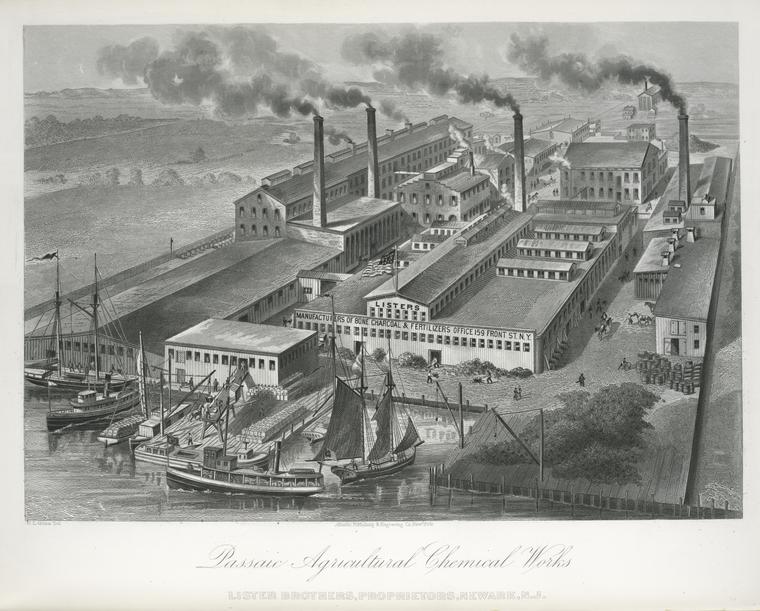
Any chemical used in agriculture
An agrochemical or agrichemical, a contraction of agricultural chemical, is a chemical product used in conventional or industrial agriculture. Agrochemical typically refers to pesticides and synthetic fertilizers. The term agrochemical is sometimes used informally synonymously with pesticides, sometimes also informally to mean pesticides and fertilizers, and sometimes more correctly to include all chemicals used in agriculture. Other chemicals used in agriculture are plant hormones and plant growth regulators (PGRs), insect attractants, insect repellents, plant defense inducers, herbicide safeners, adjuvents and co-formulants, soil conditioners and soil amendments, liming and acidifying agents. For livestock feed additives, animal growth regulators, anthelmintics and other antiparasitics are used.
Manufacture
Pesticides and fertilizers are manufactured differently. Nitrogen fertilizers are made from ammonia (NH3) produced by the Haber–Bosch process. Potassium and phosphate fertilizers are made from minerals. Most pesticides are made indirectly from petrochemicals, some are made biologically.
Market and amounts used
Total pesticides use in agriculture in 2021 was 3.54 million tonnes of active ingredients.user. In 2018 world pesticide sales were estimated to be $65 billion, of which 88% was used for agriculture. ChemChina (with subsidiaries Syngenta and Adama), Bayer Crop Science, BASF and Corteva Agriscience together represented about 60 per cent of the agricultural pesticide market in 2018.
In 2018 120 million tons (Mt) of nitrogen (elemental), 44 Mt of phosphorus (P2O5), and 45 Mt of potassium (K2O) fertilizers were used. Global sales revenues for inorganic fertilizers in 2018 were reported to be about USD 151 billion. In the case of nitrogen and phosphorus, China, the United States, India, and Russia dominate production capacity. Canada is by far the biggest producer of potassium. In each country only a few manufacturers dominate the market, and they are different in each county, and different to the pesticide companies.
Other agrochemicals have smaller sales figures.
History
Compost and manure were used historically as fertilizer. Manufacture of inorganic fertilizers started in the early 20th century, with a huge increase in production over the second half of the 20th century.
Inorganic pesticides were used thousands of years ago in Sumeria and China. The manufacture of organic chemical pesticides started in the middle of the 20th century. The majority of pesticides were developed in the late 20th century, and their use expanded greatly during the Green Revolution.
Application process
Main article: Pesticide application
Agrochemicals can be applied in several ways. Conventional application methods include foliar sprays, and root drenches, broadcasting of granules, and seed coating.
Ecological toxicity
Main article: Agricultural pollution, Environmental impact of pesticides
Agrochemicals, especially when improperly used or released in local environments, have led to a number of public health and environmental issues. Agrochemicals and their production can be significant environmental pollution. Agrochemicals are responsible for significant damage to waterways through runoff, and inproperly stored agrochemicals and agrochemical wastes are responsible for spills, especially during extreme weather events. Following the publication of Rachel Carson's Silent Spring, increased global attention has been paid to these ecological impacts of certain classes of chemicals, both in terms of effects on ecosystems and biodiversity loss.
Many agrochemicals are toxic, and agrochemicals in bulk storage may pose significant environmental and/or health risks, particularly in the event of accidental spills. In many countries, use of agrochemicals is highly regulated. Government-issued permits for purchase and use of approved agrochemicals may be required. Significant penalties can result from misuse, including improper storage resulting in spillage. On farms, proper storage facilities and labeling, emergency clean-up equipment and procedures, and safety equipment and procedures for handling, application and disposal are often subject to mandatory standards and regulations. Usually, the regulations are carried out through the registration process.
For instance, bovine somatotropin, though widely used in the United States, is not approved in Canada and some other jurisdictions as there are concerns for the health of cows using it.
Alternatives
Several systems of farming use reduced amounts or no agrochemicals. They include sustainable agriculture, organic farming, biodynamic farming, agroecology, vertical farming , tillage, polyculture, permaculture, intercropping, regenerative agriculture, organopónicos, hydroponics, nutrient cycling, shifting cultivation, crop rotation, soil steaming, biofumigation, precision agriculture, companion planting, mixed cropping, composting, biological pest control, integrated farming, integrated pest management, mulching, biointensive agriculture, natural farming, plant breeding, genetically modified crops, precision agriculture.
References
References
- (2022-01-01). "Chapter 1 - Conventional agrochemicals: Pros and cons". Academic Press.
- Curley, Robert. "agrochemical, agricultural technology".
- "Agrochemical".
- (2019). "Modern Crop Protection Compounds". Wiley.
- (2018-01-07). "Advances in Attract-and-Kill for Agricultural Pests: Beyond Pheromones". Annual Review of Entomology.
- (2019). "Modern Crop Protection Compounds". Wiley.
- (2019). "Modern Crop Protection Compounds". Wiley.
- (2019). "Role of pesticide formulations for sustainable crop protection and environment management: A review". Journal of Pharmacognosy and Phytochemistry.
- Uzupis, Denise. "Soil & Plant Amendments".
- (2023). "Sustainable Use of Feed Additives in Livestock". Springer.
- Smith, Zachary K.. (September 2024). "Overview of Growth Promotants and Production Enhancers in Animals".
- Claerebout, Edwin. (April 2025). "Anthelmintic Drugs for Animals".
- Smil, Vaclav. (2004). "Enriching the Earth". [[Massachusetts Institute of Technology]].
- Vasant Gowariker, V. N. Krishnamurthy, Sudha Gowariker, Manik Dhanorkar, Kalyani Paranjape "The Fertilizer Encyclopedia" 2009, John Wiley & Sons. {{ISBN. 978-0-470-41034-9. Online {{ISBN. 978-0-470-43177-1. {{doi. 10.1002/9780470431771
- (2009). "The story of phosphorus: Global food security and food for thought". Global Environmental Change.
- (2019). "Modern Crop Protection Compounds". Wiley.
- Sparks, Thomas C.. (2023). "Natural Product-Based Crop Protection Compounds─Origins and Future Prospects". Journal of Agricultural and Food Chemistry.
- (2023). "Pesticides use and trade 1990–2021".
- (2022). "Environmental and Health Impacts of Pesticides and Fertilizers and Ways of Minimizing Them. Envisioning A Chemical-Safe World". United Nations Environment Programme [UNEP].
- (2022). "Environmental and Health Impacts of Pesticides and Fertilizers and Ways of Minimizing Them. Envisioning A Chemical-Safe World". United Nations Environment Programme [UNEP].
- Smil, Vaclav. (2004). "Enriching the Earth: Fritz Haber, Carl Bosch, and the Transformation of World Food Production". MIT Press.
- Unsworth, John. (10 May 2010). "History of Pesticide Use".
- Carvalho, Fernando P.. (2006). "Agriculture, pesticides, food security and food safety". Elsevier BV.
- (2022-10-17). "Agrochemicals, Environment, and Human Health". Annual Review of Environment and Resources.
- (2014). "Pesticide Application Methods 4th Edition". Wiley Blackwell.
- Bessin, Ric. (2016). "Pesticide Application Equipment and Methods".
- (May 2019). "Extreme Weather, Chemical Facilities, and Vulnerable Communities in the U.S. Gulf Coast: A Disastrous Combination". GeoHealth.
- (2021-01-01). "Chapter 2 - Impact of agrochemical application in sustainable agriculture". Elsevier.
- Marks, Paul. (15 January 2014). "Vertical farms sprouting all over the world". New Scientist.
This article was imported from Wikipedia and is available under the Creative Commons Attribution-ShareAlike 4.0 License. Content has been adapted to SurfDoc format. Original contributors can be found on the article history page.
Ask Mako anything about Agrochemical — get instant answers, deeper analysis, and related topics.
Research with MakoFree with your Surf account
Create a free account to save articles, ask Mako questions, and organize your research.
Sign up freeThis content may have been generated or modified by AI. CloudSurf Software LLC is not responsible for the accuracy, completeness, or reliability of AI-generated content. Always verify important information from primary sources.
Report