From Surf Wiki (app.surf) — the open knowledge base
Agrahari
Family name
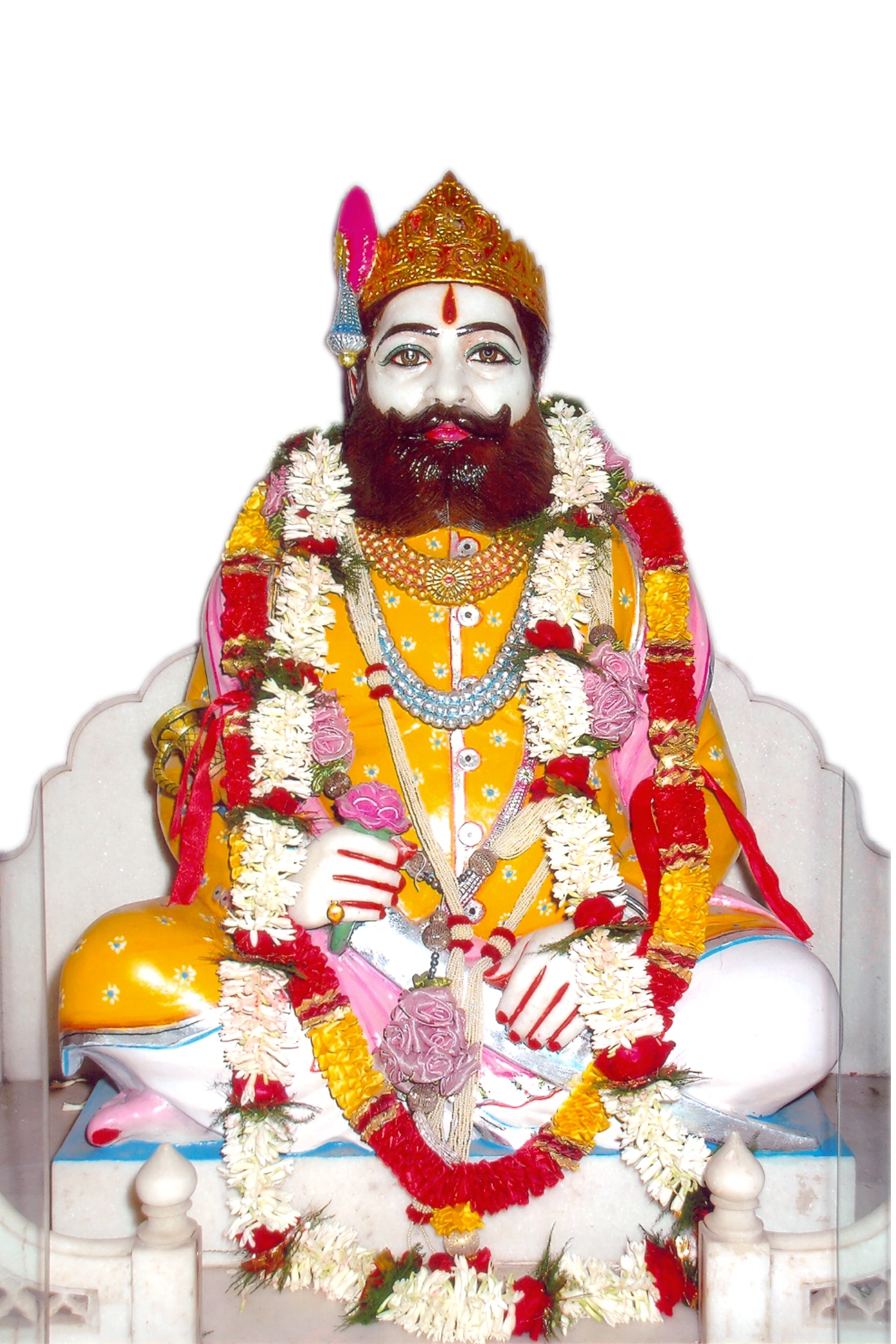
Family name
Agrahari, Agraharee or Agarhari is an Indian Vaishya community. They are the descendants of legendary king Agrasena. Predominantly, they are found in the Indian states of Uttar Pradesh, Madhya Pradesh, Jharkhand, Chhattisgarh and Terai region of Nepal.
History
In 1916, Robert Vane Russell, an ethnologist of the British Raj period wrote, Agrahari, found chiefly Jubbulpore district and Raigarh State. Their name connected with the cities with Agra and Agroha.
William Crooke states that Agrahari claim partly a Brahmin and partly a Brāhmanical descent, and wear the sacred thread. Like that of the Agarwāla their name has been connected with the cities of Agra and Agroha. There is no doubt that they are closely connected with the Agarwālas.
In Chhattisgarh, Central Provinces of British India, some of few Agrahari were Malgujars/Zamindars. The ruler of Raigarh awarded the title Shaw to Agraharis. The title still continues.
Agrahari Sikhs
Main article: Agrahari Sikh
Most of the Agraharis follow Hinduism, although some are Sikhs. The majority of Agrahari Sikhs are found in the Eastern Indian States of Bihar Jharkhand and West Bengal. Author Himadri Banerjee wrote in his book "The Other Sikhs: A View from Eastern India", that Agraharis converted to Sikhism during Mughal period by Guru Tegh Bahadur Ji, 9th Guru of the Sikhs. Mughal rulers were enforcing Hindus to convert to Islam, but Agraharis refused to convert to Islam and they accepted Khalsa Panth, led by Guru Tegh Bahadur Ji for protecting their life and religion. Other legend says that Agrahari Sikhs are a community of Ahom converts to Sikhism from the time of 9th Guru Tegh Bahadur Ji’s travel to Assam. They are also known as "Bihari Sikhs" having lived for centuries in Bihar. They are running several separate Gurudwaras in Bihar and West Bengal. The majority of these Sikhs are found in Sasaram, Gaya and Kolkata of Bihar and West Bengal. In Jharkhand they are found in Dumari Kalan and Kedli Chatti. They are also found in the Indian State of Uttar Pradesh. Agrahari Sikhs are of the non-Punjabi background.
Surname, Gotra & title
Agrahari often use their community name as surname. However, many people use Gupta, Bania or Baniya, Thagunna, Patwari or Vanik or Banik, Shaw and Vaishya or Vaishy or Vaish or Baishya or Baish as their surname. They have a common gotra, the Kashyap.
Reservation
The Mandal Commission designated the Agrahari's of Uttar Pradesh and other states as General, but Agrahari in Bihar and Jharkhand are designated as Other Backwards Class in the Indian caste system of positive discrimination.
References
References
- (22 September 2017). "People still carry out Maharaja Agrasen's ideals". [[The Pioneer (India).
- Kumar Suresh Singh. (2005). "People of India: Uttar Pradesh, Volume 42, Part". Anthropological Survey of India.
- Lalit Mohan Sankhdher. (1974). "Caste Interaction in Village Tribe: An anthropological Case Study of the Tribes in Dhanaura Village in Mirzapur District of Uttar Pradesh". K. P. Publications.
- (2002). "Encyclopaedia of Indian surnames". B.R..
- (1916). "The Tribes and Castes of the Central Provinces of India, Volume 1".
- (1916). "The Tribes and Castes of the Central Provinces of India (Volume II)".
- Richard Gabriel Fox. (1969). "From Zamidar to ballot box: community change in a north Indian market town". Cornell University Press.
- Richard Gabriel Fox. (1969). "From Zamidar to ballot box: community change in a north Indian market town". Cornell University Press.
- Richard Gabriel Fox. (1969). "From Zamidar to ballot box: community change in a north Indian market town". Cornell University Press.
- (24 August 2003). "The identity of North-East Sikhs". Himadri Banerjee.
- (18 October 2011). "Away from Punjab – the south Indian Sikhs". [[Zee News]].
- Kumar Suresh Singh. (1996). "Identity, Ecology, Social Organization, Linkages and Development Process: a Quantitative Profile". [[Anthropological Survey of India]].
- (2008). "People of India, Volume 16, Part 1". [[Anthropological Survey of India]].
- Sharma, Shish Ram. (2002). "Protective Discrimination: General category in India, Raj Publications". Raj Publications.
- Refer List of OBC in India by National Commission for Backward Class (NCBC). [http://www.ncbc.nic.in/user_panel/centralliststateview.aspx NCBC List of OBC]
- Ghosh, Subir Kumar. (1996). "Reservation in services: a manual for government and public sector". Akshar Publication.
- Sharma, Shish Ram. (2002). "Protective Discrimination: Other Backward Classes in India, Raj Publications". Raj Publications.
- Sharma, Shish Ram. (2002). "Protective Discrimination: Other Backward Classes in India, Raj Publications". Raj Publications.
This article was imported from Wikipedia and is available under the Creative Commons Attribution-ShareAlike 4.0 License. Content has been adapted to SurfDoc format. Original contributors can be found on the article history page.
Ask Mako anything about Agrahari — get instant answers, deeper analysis, and related topics.
Research with MakoFree with your Surf account
Create a free account to save articles, ask Mako questions, and organize your research.
Sign up freeThis content may have been generated or modified by AI. CloudSurf Software LLC is not responsible for the accuracy, completeness, or reliability of AI-generated content. Always verify important information from primary sources.
Report