From Surf Wiki (app.surf) — the open knowledge base
Aether (mythology)
Personification of the upper sky in Greek mythology
Personification of the upper sky in Greek mythology
| Field | Value |
|---|---|
| type | Greek |
| name | Aether |
| member_of | the Primordial Gods |
| image | Aether in battle with a lion-headed Giant.jpg |
| caption | Aether in battle with a lion-headed Giant, detail of the Gigantomachy frieze, Pergamon Altar, 2nd century BC |
| god_of | Primordial god and personification of the Upper Sky |
| parents | Erebus and Nyx (Hesiod) |
| Chronos (Orphic) | |
| siblings | Hemera (Hesiod) |
| Chaos and Erebus (Orphic) |
Chronos (Orphic) Chaos and Erebus (Orphic)
In Greek mythology, Aether, Æther, Aither, or Ether (; (Brightness) ) is the personification of the bright upper sky. According to Hesiod, he was the son of Erebus (Darkness) and Nyx (Night), and the brother of Hemera (Day). In Orphic cosmogony, Aether was the offspring of Chronos (Time) and the brother of Chaos and Erebus.
Genealogy
According to Hesiod's Theogony, which contained the "standard" Greek genealogy of the gods, Aether was the offspring of Erebus and Nyx, and the brother of Hemera. However, other early sources give other genealogies. According to one, the union of Erebus and Nyx resulted in Aether, Eros, and Metis (rather than Aether and Hemera), while according to another, Aether and Nyx were the parents of Eros (in Hesiod, the fourth god to come into existence after Chaos, Gaia (Earth), and Tartarus). Others tell us that Uranus (Sky) (in Hesiod, the son of Gaia) was Aether's son, and that "everything came from" Aether.
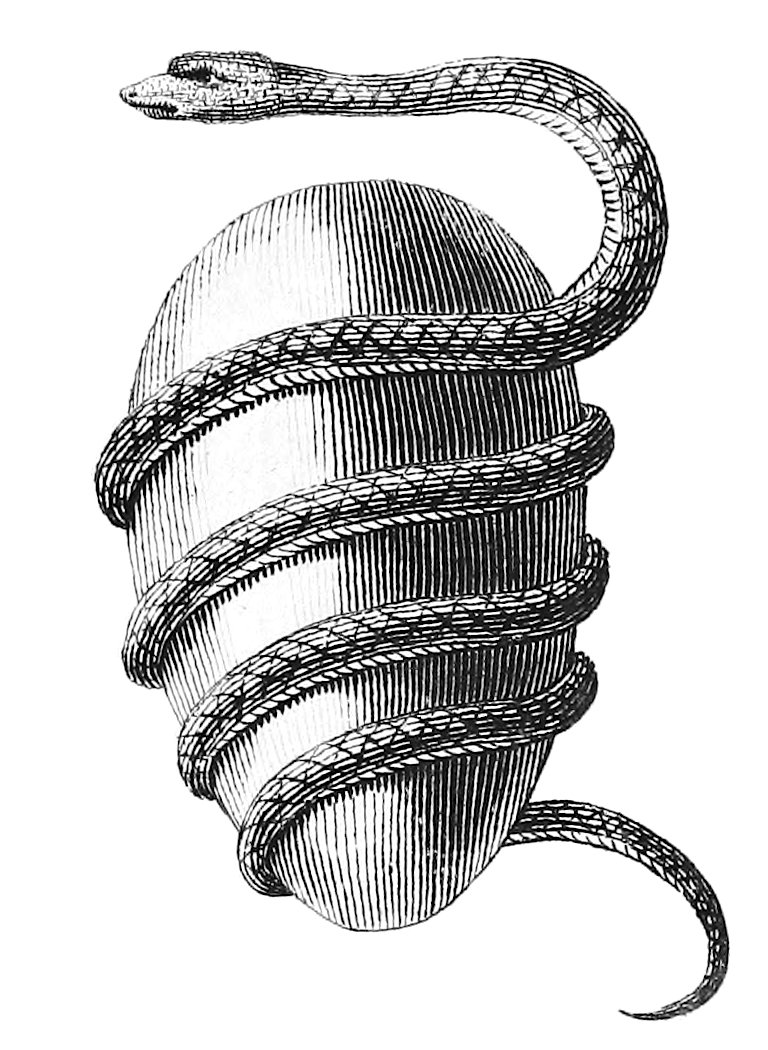
In Orphic cosmogony Aether was the offspring of Chronus (Time), the first primordial deity, and the brother of Chaos and Erebus. And made from (or placed in) Aether was the cosmic egg, from which hatched Phanes/Protogonus, so Aether was sometimes said to be his father. The Orphic Argonautica gives a theogony that begins with Chaos and Chronus, and has Chronus producing Aether and Eros.
Aether also played a role in Roman genealogies of the gods. Cicero says that Aether and Dies (Day) were the parents of Caelus (Sky), and reports that according to the "so called theologians" Aether was the father of one of the "three Jupiters". According to Hyginus's (possibly confused) genealogy, Nox (Night), Dies, Erebus, and Aether were the offspring of Chaos and Caligo (Mist), and Aether and Dies were the parents of Terra (Earth), Caelus (Sky) and Mare (Sea), and Aether and Terra were the parents of:
Sources
Early
For the ancient Greeks, the word aether (unpersonified), referred to the upper atmosphere, a material element of the cosmos. For example, Homer has Sleep climb: However, Aether (personified) figured prominently in early Greek cosmogony. In Hesiod's Theogony, Chaos was the first being after which came Gaia (Earth), Tartarus, and Eros, then from Chaos came Erebus (Darkness) and Nyx (Night), and from Erebus and Nyx came Aether and Hemera (Day):
According to a fragment of Hesiod, by his sister Hemera he is the father of a figure named Brotus. Aether perhaps also figured in the lost epic poem the Titanomachy (late seventh century BC?). Two ancient sources report statements about Aether, which they attribute to the "author of the Titanomachy". The Homeric Parsings (from Methodius), reports that Uranus was Aether's son, while Philodemus, in his De Pietate (On Piety), reports that "everything came from Aither".
Aether also appears in genealogies attributed to the sixth-century BC logographer and mythographer Acusilaus. According to the Neoplatonist Damascius (c. early sixth century), Acusilaus said that Aether was, along with Eros and Metis, the offspring Erebus and Nyx. However, a scholion to Theocritus reports that, according to Acusilaus, Aether and Nyx were the parents of Eros.
Orphic
Aether played a significant role in Orphic cosmogony. There are a large number of ancient texts which have been called "Orphic", a few are extant, such as the Orphic Hymns, but most are not. Several important Orphic texts, which exist now only in fragments, have been called theogonies, since they contained material, similar to Hesiod's Theogony, which described the origin of the gods. At least three of these, the so-called "Derveni Theogony", the "Hieronyman Theogony", and the "Rhapsodic Theogony" or Rhapsodies, contained references to Aether the personification as well as aether the material element.
Derveni Theogony
The oldest of these theogonies, the Derveni Theogony, is a text which is extensively quoted in the Derveni papyrus (fourth century BC). One of these quotes contains a reference to aether the material element:
he swallowed the revered one [or phallus], who [or which] sprang forth first into the aither [or who first ejaculated aither].}}
Also possibly from the Derveni Theogony is the idea, from a fragment of Chrysippus (preserved in Philodemus, De Pietate (On Piety)), that "everywhere is aither, which itself is both father and son".
Hieronyman Theogony
The early 6th-century Neoplatonist Damascius, in his De principiis (On First Principles) comments on an Orphic text, which he describes as "under the names of Hieronymus and Hellanicus, if indeed this is not the same". This text is called the "Hieronyman Theogony" (second century BC). Damascius says that the Hieronyman Theogony had "serpent Time" as the father of three offspring, "moist Aether", "limitless Chaos" and "misty Erebos".
Rhapsodic Theogony
Also in his De principiis, Damascius briefly summarizes the "standard Orphic theology" as found in another text, which he refers to as "these Orphic Rhapsodies currently circulating". According to Damascius, the Rhapsodies (first century BC/AD?), began with Chronus from which came two offspring, Aether and Chaos:
The 5th-century Greek Neoplatonist Proclus, in his Commentary on Plato's Republic, quotes the following verses from the Rhapsodies:
Aither and a great Chasm, vast this way and that, no limit below it, no base, no place to settle.}} Here Chasm is another name for Chaos. In another passage from the De principiis, Damascius quotes other verses from the Rhapsodies:
:a bright white egg.}} While Proclus, in his Commentary on Plato's Timaeus, describes the Orphic cosmic egg as "born from Aither and Chaos", and calls Phanes the "son of Aither". Proclus also says that, when Phanes hatched from the cosmic egg, Aether and Chasm were split.
Aether, the material element is also mentioned twice in a thirty-two line hymn-like passage to Zeus which was apparently part of the Rhapsodies in which various parts of the physical cosmos are associated with parts of Zeus' body. Line 8 lists things contained in Zeus' body:
while line 17 says:
Also possibly drawn from the Rhapsodies is an account of the creation of the world attributed to "Orpheus" by the sixth century AD chronographer John Malalas:
Another Orphic verse fragment, also possibly from the Rhapsodies, is quoted in the *Etymologicum Magnum'''s entry on the name Phanes: and Protogonus because he became the first one visible (φαντός) in Aither.}}
''Hymn to Aether''
The Orphic Hymns (2nd or 3rd centuries AD?) are a collection of eighty-seven poems addressed to various deities or abstractions. The fifth Orphic Hymn, which prescribes an offering of saffron, addresses Aether as follows:
of the stars, of the sun, and of the moon you claim a share. O tamer of all, O fire-breather, O life's spark for every creature, sublime Ether, best cosmic element, radiant, luminous, starlit offspring, I call upon you and I beseech you to be temperate and clear.}}
Notes
References
- Aeschylus, Fragments, edited and translated by Alan H. Sommerstein, Loeb Classical Library No. 505. Cambridge, Massachusetts: Harvard University Press, 2009. . Online version at Harvard University Press.
- Athanassakis, Apostolos N., and Benjamin M. Wolkow, The Orphic Hymns, Johns Hopkins University Press, 2013) . Google Books.
- Bremmer, Jan N., Greek Religion and Culture, the Bible and the Ancient Near East, Jerusalem Studies in Religion and Culture, Brill, 2008. . .
- Brill's New Pauly: Encyclopaedia of the Ancient World. Antiquity, Volume 1, A – Ari, edited by Hubert Cancik and Helmuth Schneider, Brill, 2002. .
- Callimachus, Musaeus, Aetia, Iambi, Hecale and Other Fragments, Hero and Leander, edited and translated by C. A. Trypanis, T. Gelzer, Cedric H. Whitman, Loeb Classical Library No. 421, Cambridge, Massachusetts, Harvard University Press, 1973. . Online version at Harvard University Press.
- Cicero, Marcus Tullius, De Natura Deorum in Cicero: On the Nature of the Gods. Academics, translated by H. Rackham, Loeb Classical Library No. 268, Cambridge, Massachusetts, Harvard University Press, first published 1933, revised 1951. . Online version at Harvard University Press. Internet Archive.
- Fowler, R. L. (2000), Early Greek Mythography: Volume 1: Text and Introduction, Oxford University Press, 2000. .
- Fowler, R. L. (2013), Early Greek Mythography: Volume 2: Commentary, Oxford University Press, 2013. .
- Gantz, Timothy, Early Greek Myth: A Guide to Literary and Artistic Sources, Johns Hopkins University Press, 1996, Two volumes: (Vol. 1), (Vol. 2).
- Grimal, Pierre, The Dictionary of Classical Mythology, Wiley-Blackwell, 1996, .
- Hard, Robin, The Routledge Handbook of Greek Mythology: Based on H.J. Rose's "Handbook of Greek Mythology", Psychology Press, 2004, . Google Books.
- Hesiod, Theogony, in Hesiod, Theogony, Works and Days, Testimonia, Edited and translated by Glenn W. Most. Loeb Classical Library No. 57. Cambridge, Massachusetts, Harvard University Press, 2018. . Online version at Harvard University Press.
- Homer, The Iliad with an English Translation by A.T. Murray, Ph.D. in two volumes. Cambridge, Massachusetts, Harvard University Press; London, William Heinemann, Ltd. 1924. Online version at the Perseus Digital Library.
- Honan, Mary McMahon, Guide to the Pergamon Museum, De Gruyter, 1904. . .
- Hyginus, Gaius Julius, Fabulae in Apollodorus' Library and Hyginus' Fabulae: Two Handbooks of Greek Mythology, Translated, with Introductions by R. Scott Smith and Stephen M. Trzaskoma, Hackett Publishing Company, 2007. .
- Hyginus, Fabulae from The Myths of Hyginus translated and edited by Mary Grant. University of Kansas Publications in Humanistic Studies. Online version at the Topos Text Project.
- Kern, Otto. Orphicorum Fragmenta, Berlin, 1922. Internet Archive.
- Malalas, John, The Chronicle of John Malalas: A Translation, trans. Elizabeth Jefferys, Michael Jefferys and Roger Scott, Australian Association for Byzantine Studies, Melbourne, 1986. .
- Malamis, Daniel, The Orphic Hymns: Poetry and Genre, with a Critical Text and Translation, Leiden and Boston, Brill, 2024. . Online version at Brill.
- Meisner, Dwayne A., Orphic Tradition and the Birth of the Gods, Oxford University Press, 2018. . Google Books.
- Orphic Argonautica in Argonautica, Hymni Libellus de lapidibus et fragmenta cum notis, Johann Matthias Gesner, Leipzig: Sumtibus Caspari Fritsch, 1764. Internet Archive.
- The Oxford Classical Dictionary, second edition, Hammond, N.G.L. and Howard Hayes Scullard (editors), Oxford University Press, 1992. .
- Smith, William; Dictionary of Greek and Roman Biography and Mythology, London (1873). "Aether"
- Tripp, Edward, Crowell's Handbook of Classical Mythology, Thomas Y. Crowell Co; First edition (June 1970). .
- West, M. L. (1983), The Orphic Poems, Clarendon Press Oxford, 1983. .
- West, M. L. (2002), "'Eumelos': A Corinthian Epic Cycle?" in The Journal of Hellenic Studies, vol. 122, pp. 109–133. .
- West, M. L. (2003), Greek Epic Fragments: From the Seventh to the Fifth Centuries BC, edited and translated by Martin L. West, Loeb Classical Library No. 497, Cambridge, Massachusetts, Harvard University Press, 2003. . Online version at Harvard University Press.
- White, Stephen, "Hieronymus of Rhodes: The Sources, Text and Translation" in Lyco of Troas and Hieronymus of Rhodes: Text, Translation, and Discussion, Volume XII, editors: William Wall Fortenbaugh, Stephen Augustus White, Transaction Publishers, 2004. .
References
- Honan, p. 21.
- Gantz, p. 4.
- Hard, [https://books.google.com/books?id=r1Y3xZWVlnIC&pg=PA24 p. 24]; Grimal s.v. Aether; Tripp, s.v. Aether; ''The Oxford Classical Dictionary'', s.v. Aither; Gantz, p. 4.
- Athanassakis and Wolkow, p. 80.
- Hard, [https://books.google.com/books?id=r1Y3xZWVlnIC&pg=PA21 p. 21]; Fowler 2013, [https://books.google.com/books?id=scd8AQAAQBAJ&pg=PA5 p. 5].
- Fowler 2013, [https://books.google.com/books?id=scd8AQAAQBAJ&pg=PA5 p. 5]; Hard, [https://books.google.com/books?id=r1Y3xZWVlnIC&pg=PA23 pp. 23–24]; [[Hesiod]], ''[[Theogony]]'' [https://www.loebclassics.com/view/hesiod-theogony/2018/pb_LCL057.13.xml 124–125].
- Fowler 2013, [https://books.google.com/books?id=scd8AQAAQBAJ&pg=PA5 pp. 5–6]; Hard, [https://books.google.com/books?id=r1Y3xZWVlnIC&pg=PA23 p. 23]; [[Acusilaus|Acusilas]] [https://books.google.com/books?id=j0nRE4C2WBgC&pg=PA5 fr. 6 Fowler (pp. 5–7)]; [[Hesiod]], ''[[Theogony]]'' [https://www.loebclassics.com/view/hesiod-theogony/2018/pb_LCL057.13.xml 116–122].
- Eumelus fr. 1 (West 2003, [https://www.loebclassics.com/view/eumelus-epic_testimonia_fragments/2003/pb_LCL497.223.xml pp. 222–225]); compare [[Callimachus]], [https://www.loebclassics.com/view/callimachus-fragments_uncertain_location/1973/pb_LCL421.257.xml fr. 498].
- Athanassakis and Wolkow, p. 80; West 1983, p. 70; Meisner, p. 187; Hard, [https://books.google.com/books?id=r1Y3xZWVlnIC&pg=PA25 p. 25].
- Meisner, p. 172; ''[[Orphic Argonautica]]'' [https://archive.org/details/argonauticahymn00unkngoog/page/n39/mode/2up 12–14]; Orphic [https://archive.org/details/orphicorumfragme00orphuoft/page/64/mode/2up?view=theater test. 224 Kern].
- [[Cicero]], ''[[De Natura Deorum]]'' [https://archive.org/stream/denaturadeorumac00ciceuoft#page/328/mode/2up 3.44].
- [[Cicero]], ''[[De Natura Deorum]]'' [https://archive.org/stream/denaturadeorumac00ciceuoft#page/336/mode/2up 3.53].
- Bremmer, [https://books.google.com/books?id=YTfxZH4QnqgC&pg=PA5 p. 5], calls the beginning of Hyginus' genealogy "a strange hodgepodge of Greek and Roman cosmogonies and early genealogies".
- [[Hyginus (Fabulae). Hyginus]], ''[[Fabulae]]'' Theogony 1–2 (Smith and Trzaskoma, p. 95).
- [[Hyginus (Fabulae). Hyginus]], ''[[Fabulae]]'' Theogony 3 (Smith and Trzaskoma, p. 95). Hyginus's genealogy is very different from that given in Hesiod's ''Theogony'', where Tartarus is the third primal deity after Chaos and Gaia ([https://www.loebclassics.com/view/hesiod-theogony/2018/pb_LCL057.13.xml 116–122]); [[Uranus (mythology). Uranus]] (Sky) and [[Pontus (mythology). Pontus]] (Sea) were the offspring of Gaia (Earth) alone ([https://www.loebclassics.com/view/hesiod-theogony/2018/pb_LCL057.13.xml 126–132]); Ocean ([[Oceanus]]), Themis, Hyperion, Saturn ([[Cronus]]), and Ops ([[Rhea (mythology). Rhea]]) are five of the twelve [[Titans]], Briareus and Gyges are two of the three [[Hundred-Handers]], and Steropes was one of the three [[Cyclopes]], who were all the offspring of Gaia and Uranus ([https://www.loebclassics.com/view/hesiod-theogony/2018/pb_LCL057.13.xml 132–153]); Atlas was the offspring of the [[Titans]] [[Iapetus]] and [[Clymene (mythology). Clymene]] ([https://www.loebclassics.com/view/hesiod-theogony/2018/pb_LCL057.43.xml 507–509]); the Furies ([[Erinyes]]) are the offspring of Gaia and Uranus' blood ([https://www.loebclassics.com/view/hesiod-theogony/2018/pb_LCL057.17.xml 185]). In addition the abstract personifications Pain, Deception, Anger, Mourning, Lying, Oath, Vengeance, Self-indulgence, Quarreling, Forgetfullness, Sloth, Fear, Arrogance, Incest, and Fighting, are similar to the personifications, in the ''Theogony'', who are the children of Nyx ([https://www.loebclassics.com/view/hesiod-theogony/2018/pb_LCL057.21.xml 211–225], e.g. [[Oizys]] (Distress), and [[Apate (deity). Apate]] (Deceit)) or [[Eris (mythology). Eris]] ([https://www.loebclassics.com/view/hesiod-theogony/2018/pb_LCL057.21.xml 226–232], e.g. [[Algos. Algea]] (Pains), Pseudea (Lies), [[Horkos]] (Oath), [[Neikea]] (Disputes), [[Lethe]] (Forgetfulness), [[Hysminai]] (Combats), and [[Makhai]] (Battles)).
- Athanassakis and Wolkow, p. 80.
- [[Homer]], ''[[Iliad]]'' [http://www.perseus.tufts.edu/hopper/text?doc=Perseus%3Atext%3A1999.01.0134%3Abook%3D14%3Acard%3D270 14.286–288].
- Fowler 2013, [https://books.google.com/books?id=scd8AQAAQBAJ&pg=PA6 p. 6].
- Gantz, p. 4; [[Hesiod]], ''[[Theogony]]'' [https://www.loebclassics.com/view/hesiod-theogony/2018/pb_LCL057.13.xml 123–125].
- [http://data.perseus.org/citations/urn:cts:greekLit:tlg0020.tlg001.perseus-eng1:104-138 Evelyn-White translation].
- ''[[Brill's New Pauly]]'', [https://referenceworks-brill-com.wikipedialibrary.idm.oclc.org/display/entries/NPOE/e111080.xml s.v. Aether].
- West 2002, p. 109 says that the ''Titanomachy'' was "composed in the late seventh century at the earliest".
- Gantz, p. 12; Grimal, s.v. Uranus; Eumelus fr. 1 (West 2003, [https://www.loebclassics.com/view/eumelus-epic_testimonia_fragments/2003/pb_LCL497.223.xml pp. 222–225]); compare [[Callimachus]], [https://www.loebclassics.com/view/callimachus-fragments_uncertain_location/1973/pb_LCL421.257.xml fr. 498]. According to Grimal the mother was "doubtless" Hemera, compare with [[Cicero]], ''[[De Natura Deorum]]'' [https://archive.org/stream/denaturadeorumac00ciceuoft#page/328/mode/2up 3.44], which has Aether and Dies as the parents of [[Caelus]] (Sky).
- Eumelus fr. 1 (West 2003, [https://www.loebclassics.com/view/eumelus-epic_testimonia_fragments/2003/pb_LCL497.223.xml pp. 222–225]).
- Fowler 2013, [https://books.google.com/books?id=scd8AQAAQBAJ&pg=PA6 p. 6]; [[Acusilaus|Acusilas]] [https://books.google.com/books?id=j0nRE4C2WBgC&pg=PA5 fr. 6 Fowler (pp. 5–7)].
- Fowler 2013, [https://books.google.com/books?id=scd8AQAAQBAJ&pg=PA6 p. 6].
- Fowler 2013, [https://books.google.com/books?id=scd8AQAAQBAJ&pg=PA6 p. 6]; Gantz, p. 3.
- West 1983, pp. 70, 198–200; Meisner (throughout, see index); Athanassakis and Wolkow, pp. 5, 80 (citing Orphic frr. 78, 111 Bernabé); Orphic frr. [https://archive.org/details/orphicorumfragme00orphuoft/page/100/mode/2up?view=theater 30] [= [[Chrysippus]], apud [[Philodemus]], ''De Pietate'' (''On Piety'') pp. 80–81 Gomperz], [https://archive.org/details/orphicorumfragme00orphuoft/page/130/mode/2up?view=theater 54] [= [[Damascius]], ''De principiis'' 123.31–80], [https://archive.org/details/orphicorumfragme00orphuoft/page/142/mode/2up?view=theater 60] [= [[Damascius]], ''De principiis'' 123.8–30], [https://archive.org/details/orphicorumfragme00orphuoft/page/146/mode/2up?view=theater 65] [= [[John Malalas]], ''[[Chronographia (Malalas)|Chronographia]]'' 4.9 p. 74 Dindorf], [https://archive.org/details/orphicorumfragme00orphuoft/page/146/mode/2up?view=theater 66] [= [[Proclus]], ''Commentary on Plato's Republic'' 2.138.8 Kroll], [https://archive.org/details/orphicorumfragme00orphuoft/page/148/mode/2up?view=theater 70] [= [[Damascius]], ''De principiis'' 55], [https://archive.org/details/orphicorumfragme00orphuoft/page/150/mode/2up?view=theater 72] [= [[Proclus]], ''Commentary on Plato's Republic'' 2.138.18 Kroll], [https://archive.org/details/orphicorumfragme00orphuoft/page/150/mode/2up?view=theater 73] [= [[Lactantius]], ''[[The Divine Institutes|Divine Institutes]]'' I, 5, 4–6 p. 13, 13 Brandt.], [https://archive.org/details/orphicorumfragme00orphuoft/page/150/mode/2up?view=theater 74] [= [[Proclus]], ''Commentary on Plato's Timaeus'' 31 a (I 433, 31 Diehl)], [https://archive.org/details/orphicorumfragme00orphuoft/page/152/mode/2up?view=theater 75] [= ''[[Etymologicum Magnum]]'' [https://www.digitale-sammlungen.de/en/view/bsb10209806?page=1149 p. 787.29], [https://archive.org/details/orphicorumfragme00orphuoft/page/152/mode/2up?view=theater 76] [= [[Hermias of Atarneus|Hermias]], ''Commentary on Plato's Phaedrus'' 246e], [https://archive.org/details/orphicorumfragme00orphuoft/page/152/mode/2up?view=theater 79] [= [[Proclus]], ''Commentary on Plato's Timaeus'' 30 c, d (I 427, 20 Diehl)], [https://archive.org/details/orphicorumfragme00orphuoft/page/200/mode/2up?view=theater 168] Kern; Orphic [https://archive.org/details/orphicorumfragme00orphuoft/page/64/mode/2up?view=theater test. 224 Kern] [= ''[[Orphic Argonautica]]'' [https://archive.org/details/argonauticahymn00unkngoog/page/n39/mode/2up 7–46].
- West 1983, pp. 1–3; Meisner, [https://books.google.com/books?id=ethjDwAAQBAJ&pg=PA4 pp. 4–5]; Athanassakis and Wolkow, p. xi.
- West 1983, pp. 68–69; Meisner, [https://books.google.com/books?id=ethjDwAAQBAJ&pg=PA1 p. 1]; Athanassakis and Wolkow, pp. xi–xii.
- West 1983, pp. 75–77; Meisner, [https://books.google.com/books?id=ethjDwAAQBAJ&pg=PA1 p. 1]; Athanassakis and Wolkow, p. xi. For discussions of the Derveni papyrus and theogony see West 1983, Chapter 3: "The Protogonos and Derveni Theogonies" (pp. 68–115); Meisner, Chapter 2: "The Derveni Papyrus" (pp. 51–85)
- Meisner, pp. 31–32, 69, 80–81.
- Meisner, p. 69.
- Meisner, [https://books.google.com/books?id=wgJfDwAAQBAJ&pg=PA103 p. 103]; Orphic [https://archive.org/details/orphicorumfragme00orphuoft/page/100/mode/2up?view=theater fr. 30 Kern] [= [[Chrysippus]], apud [[Philodemus]], ''De Pietate'' (''On Piety'') pp. 80–81 Gomperz]. Meisner, [https://books.google.com/books?id=wgJfDwAAQBAJ&pg=PA103 p. 103 n. 77] says that Bernabé "relates this fragment to the Derveni poem."
- [[Damascius]], ''De principiis'' 123.31–32 (White, [https://books.google.com/books?id=zdesXRC6ba8C&pg=PA232 pp. 232, 233]); West 1983, p. 176.
- Meisner, [https://books.google.com/books?id=wgJfDwAAQBAJ&pg=PA1 p. 1]. For discussions of the Hieronyman Theogony, see West 1983, Chapter 4: "The Hieronyman Theogony" (pp. 176–226); Meisner, Chapter 4: "The Hieronyman Theogony" (pp. 119–157). For Damascius' entire account of the Hieronyman Theogony, see ''De principiis'' 123.31–80 (White, [https://books.google.com/books?id=zdesXRC6ba8C&pg=PA232 pp. 232–237]) [= Orphic [https://archive.org/details/orphicorumfragme00orphuoft/page/130/mode/2up?view=theater fr. 54 Kern].
- [[Damascius]], ''De principiis'' 123.56–58 (White, [https://books.google.com/books?id=zdesXRC6ba8C&pg=PA234 pp. 234, 235]) West 1983, p. 198. Although Meisner, p. 144, reads Damascius as saying that "Chronos mates with Necessity" ([[Ananke]]), "who gives birth to Aither, Chaos, and Erebus", West 1983, pp. 198–199, argues against such a reading, saying "Although Chronos and Ananke make a well-matched male and female pair, the sources agree in speaking of Chronos alone as parent."
- [[Damascius]], ''De principiis'' 123.8–30 (White, [https://books.google.com/books?id=zdesXRC6ba8C&pg=PA228 pp. 228–231]) [= Orphic fr. [https://archive.org/details/orphicorumfragme00orphuoft/page/142/mode/2up?view=theater 60].
- West 1983, p. 261; Meisner, [https://books.google.com/books?id=ethjDwAAQBAJ&pg=PA5 p. 5].
- West 1983, p. 230; Meisner p. 187.
- [[Damascius]], ''De principiis'' 123.49–55 (White, [https://books.google.com/books?id=zdesXRC6ba8C&pg=PA234 pp. 234, 235)].
- West 1983, p. 198; Meisner, p. 188; [[Proclus]], ''Commentary on Plato's Republic'' 2.138.8 Kroll [= Orphic [https://archive.org/details/orphicorumfragme00orphuoft/page/146/mode/2up?view=theater fr. 66 Kern].
- West 1983, p. 199; Meisner, p. 188.
- West 1983, p. 198; Meisner, p. 189; [[Damascius]], ''De principiis'' 55] [= Orphic [https://archive.org/details/orphicorumfragme00orphuoft/page/148/mode/2up?view=theater fr. 70 Kern].
- West 1983, p. 200; [[Proclus]], ''Commentary on Plato's Timaeus'' 30 c, d (I 427, 20 Diehl)] [= Orphic [https://archive.org/details/orphicorumfragme00orphuoft/page/152/mode/2up?view=theater fr. 79 Kern].
- Divine Institutes]]'' I, 5, 4–6 p. 13, 13 Brandt.]. However, concerning these passages of Proclus, West 1983, p. 200, cautions: "We must be ... prepared not to attach too literal a sense to Proclus' description of the egg as 'born from Aither and Chaos' (fr. 79), or to verses in which Protogonos, who came from the egg, is styled 'son of Aither' (frr. 73, 74). It seems clear that Aither was not represented as a person, only as a material element."
- West 1983, pp. 70, 203; Gantz, p. 742; [[Proclus]], ''Commentary on Plato's Republic'' 2.138.18 Kroll] [= Orphic [https://archive.org/details/orphicorumfragme00orphuoft/page/150/mode/2up?view=theater fr. 72 Kern].
- West 1983, pp. 89, 239–241; Meisner, [https://books.google.com/books?id=wgJfDwAAQBAJ&pg=PA105 pp. 105–107], 112; Orphic [https://archive.org/details/orphicorumfragme00orphuoft/page/200/mode/2up?view=theater fr. 168 Kern].
- West 1983, p. 241. Compare with [[Aeschylus]], ''[[Heliades]]'' (''Daughters of Helios'') [https://www.loebclassics.com/view/aeschylus-attributed_fragments/2009/pb_LCL505.73.xml fr. 70 Sommerstein] [= fr. 70 Radt] [= [[Clement of Alexandria]], ''[[Stromata]]'', 5.14.114.4 = [[Eusebius]], ''[[Praeparatio evangelica]]'' 13.13.41]: "Zeus is the aether, Zeus is earth, Zeus is heaven—yes, Zeus is everything, and whatever there may be beyond that."
- Meisner, p. 112.
- Meisner, pp. 173–174, 205; [[John Malalas]], ''[[Chronographia (Malalas)
- Elizabeth Jefferys, Michael Jefferys and Roger Scott's translation, [https://en.calameo.com/read/000675905f2f4bf509d49 p. 36].
- Meisner, p. 195; ''[[Etymologicum Magnum]]'' [https://www.digitale-sammlungen.de/en/view/bsb10209806?page=1149 p. 787.29] [= Orphic [https://archive.org/details/orphicorumfragme00orphuoft/page/152/mode/2up?view=theater fr. 75 Kern].
- Meisner's translation, p. 195.
- Athanassakis and Wolkow, p. x; Meisner, [https://books.google.com/books?id=ethjDwAAQBAJ&pg=PA4 p. 4].
- Malamis, p. 31.
- Athanassakis and Wolkow, p. 5.
This article was imported from Wikipedia and is available under the Creative Commons Attribution-ShareAlike 4.0 License. Content has been adapted to SurfDoc format. Original contributors can be found on the article history page.
Ask Mako anything about Aether (mythology) — get instant answers, deeper analysis, and related topics.
Research with MakoFree with your Surf account
Create a free account to save articles, ask Mako questions, and organize your research.
Sign up freeThis content may have been generated or modified by AI. CloudSurf Software LLC is not responsible for the accuracy, completeness, or reliability of AI-generated content. Always verify important information from primary sources.
Report