From Surf Wiki (app.surf) — the open knowledge base
Aerobie
Flying ring for throwing and catching
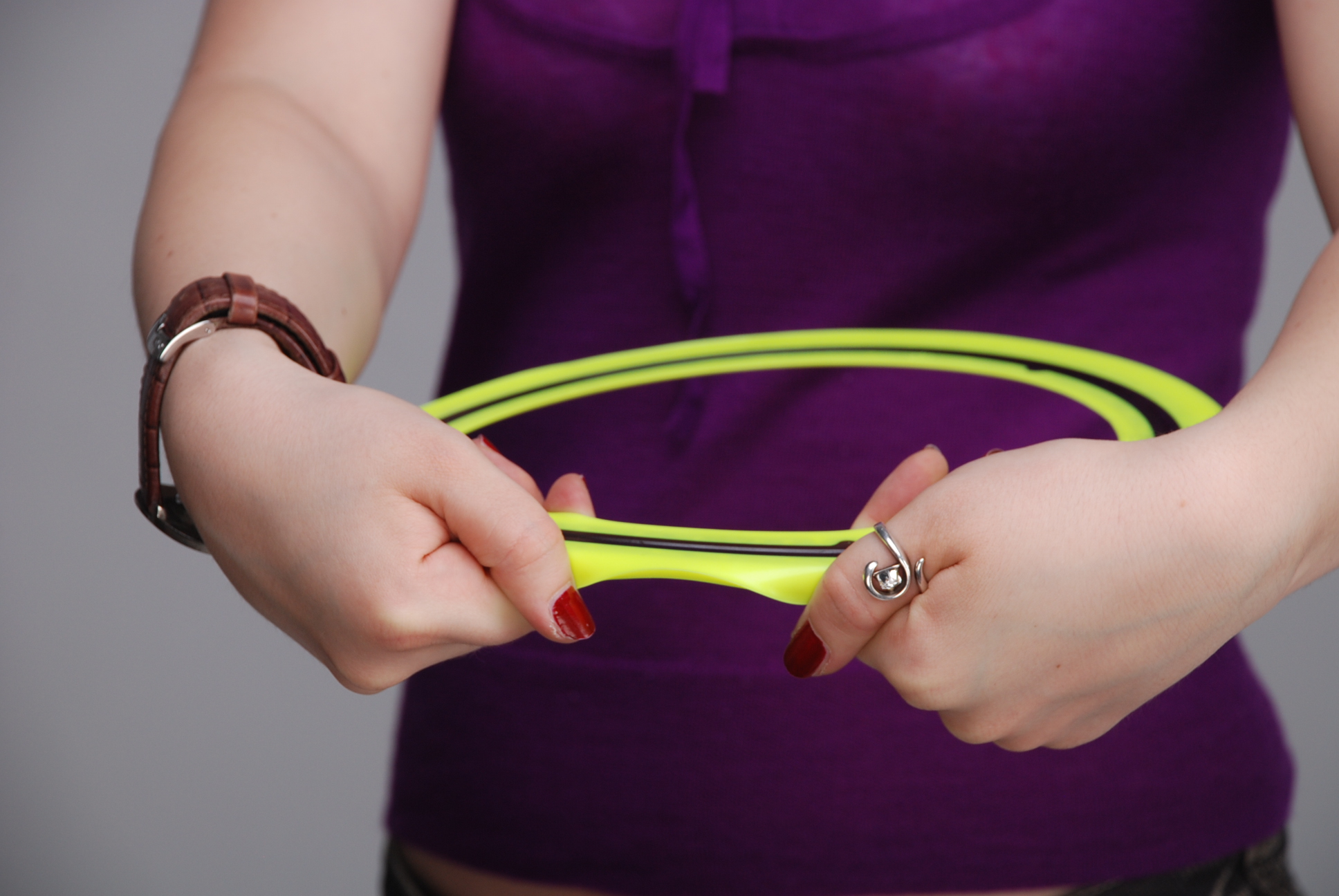
Flying ring for throwing and catching
the flying ring
An Aerobie is a flying ring used in a manner similar to a flying disc (Frisbee), for recreational catches between two or more individuals. Its ring shape of only about 3 mm thickness makes the Aerobie lighter and more stable in flight than a disc.Schuurmans, Mace "Flight of the Frisbee", New Scientist, accessed June 26, 2008 It can be bent to tune it for straighter flight. Since it has very low drag and good stability, it can be thrown much further than a flying disc. The Aerobie was used to set two former world records for thrown objects.
Designed in 1984 by Stanford engineering lecturer Alan Adler, the Aerobie has a polycarbonate core with soft rubber bumpers molded onto the inner and outer rims. The outer rim has a spoiler designed for stability.
In the 1970s, Alan Adler began attempting to improve the flying disc, considering its design characteristics. He tried streamlining the shape to reduce drag, but this resulted in a disc that was more unstable in flight. This led to the development of the predecessor of the Aerobie, which was called the "Skyro". About a million of this model were sold. In 1980, it was used to set a Guinness World Record throw of 261 m. It lacked the spoiler rim of the Aerobie. It had low drag, but was stable at only a certain speed. The later introduction of the spoiler, which balanced the lift, made the ring stable "over a wide range of speeds". After testing several models, the ideal shape was found, and the Aerobie was produced. Adler founded Superflight, Inc. (later known as Aerobie, Inc.) in 1984.
In 2017, the rights to the Aerobie flying ring and other Aerobie assets were sold to Swimways, a subsidiary of Spin Master, and the company was renamed to AeroPress, Inc.
Characteristics
The Aerobie allows for throws over unusually long distances. It flies faster and further than a common flying disc. When well tuned, it can fly in a straight line, It does not have the tendency to roll when thrown level, as a flying disc does. Similarly to a disc, an Aerobie can be thrown in a curved path by throwing it in a slant. Its lift depends on its speed relative to the air. Therefore, throwing into the wind makes it fly higher and throwing with the wind makes it fly lower.
Advantages
The Aerobie's ring shape allows it to be caught in a variety of different ways. For example, it can be caught by thrusting a forearm, the head (when the ring is thrown high), or even a foot and Aerogoal are designed specifically for the Aerobie.
Disadvantages, special care
An Aerobie ring does not float in water. It can be easier to lose than a flying disc, especially over long distances and its low profile can make it hard to spot on the ground. It also gets caught on tree branches more easily. The Aerobie is best thrown in a wide open area such as a football or soccer field, away from bodies of water, roofs, trees, roads, etc. Adequate light is also important.
When lost near the coast, the rings constitute a hazard for marine life, especially young seals, who may poke their heads through them, where they become stuck and cause wounds. Several councils in England and Wales have banned their use on beaches, and some British retailers have voluntarily stopped selling them.
World records
The 13 in Aerobie Pro was used to set the Guinness World Record twice for the "longest throw of an object without any velocity-aiding feature". "Aerobie Pro and Sprint ring FAQs", #8 , accessed June 26, 2008 The Aerobie's first Guinness World Record was set by Scott Zimmerman at 1,257 ft in 1986 at Fort Funston, San Francisco. New World Record, accessed June 26, 2008
Previous to the 1986 record, the Aerobie held the world record at 1,046 ft. It does not appear that this was recorded by Guinness.
Since the introduction of the Aerobie, Superflight has offered reward money for various landmark throws. While details of the earlier rewards are unclear, the current reward is $1,000 to anyone who sets the Guinness World Distance Record.
References
References
- [http://aerobie.com/about/science.htm#one "The Science of Aerobie Sport Toys", #1] {{webarchive. link. (October 11, 2011 , accessed June 26, 2008)
- [http://aerobie.com/products/pro/faqs.htm#tuning "Aerobie Pro and Sprint ring FAQs", #2] {{webarchive. link. (September 6, 2011 , accessed June 26, 2008)
- [http://www.aerobie.com/ProductInfo/WebImages/Details/RingsDiagForWeb300.jpg aerobie.com image] {{webarchive. link. (November 9, 2007 , accessed June 26, 2008)
- Cassidy, John. (1989). "The Aerobie Book: An investigation into the Ultimate flying mini-machine". Klutz Press.
- Adler, Alan [http://www.aerobie.com./Products/Details/RingScientificPaper.htm "The Evolution & Aerodynamics of the Aerobie Flying Ring"] {{webarchive. link. (May 23, 2008 , accessed June 26, 2008)
- (2018-01-04). "About AeroPress, Inc. And Alan Adler".
- "like a puck on an invisible sheet of ice".Cassidy (1989) p. v.
- [http://www.aerobie.com/Products/Details/ProSprintFAQs.htm#throw "Aerobie Pro and Sprint ring FAQs", #1] {{webarchive. link. (June 30, 2008 , accessed June 26, 2008)
- Cassidy (1989) pp. 12–13.
- [https://translate.google.com/translate?hl=en&sl=ko&u=http://www.flyingdisc.co.kr/index.phtml%3Fmenu%3Daerobie%26content%3D/aerobie/aerobie_catch.html&sa=X&oi=translate&resnum=3&ct=result&prev=/search%3Fq%3DAerobie%2B%2522head%2Bcatch%2522%26hl%3Den%26safe%3Dactive%26rls%3Dcom.microsoft:* Translated Korean Aerobie site], accessed June 27, 2008
- through the middle. Games such as "Aerosticks"[https://web.archive.org/web/20140426235144/http://laughingflea.com/aerosticks/index.htm "Aerosticks: The Art of Catching Aerobies with Sticks"], copy at the Internet Archive
- Cassidy (1989) p. 21.
- [http://www.aerobie.com/Products/Details/ProSprintFAQs.htm#float "Aerobie Pro and Sprint ring FAQs", #3] {{webarchive. link. (June 30, 2008 , accessed June 26, 2008)
- Smith, Lewis. (September 21, 2025). "Council bans flying rings from beaches to save seals". BBC News.

This article was imported from Wikipedia and is available under the Creative Commons Attribution-ShareAlike 4.0 License. Content has been adapted to SurfDoc format. Original contributors can be found on the article history page.
Ask Mako anything about Aerobie — get instant answers, deeper analysis, and related topics.
Research with MakoFree with your Surf account
Create a free account to save articles, ask Mako questions, and organize your research.
Sign up freeThis content may have been generated or modified by AI. CloudSurf Software LLC is not responsible for the accuracy, completeness, or reliability of AI-generated content. Always verify important information from primary sources.
Report