From Surf Wiki (app.surf) — the open knowledge base
Advanced glycation end-product
Proteins or lipids chemically altered by sugar exposure

Proteins or lipids chemically altered by sugar exposure
Advanced glycation end-products (AGEs) are proteins or lipids that become glycated after exposure to sugars. They are formed through a series of non-enzymatic reactions explained in further detail below, and their accumulation is associated with a variety of metabolic diseases such as diabetes, atherosclerosis, chronic kidney disease, age-related macular degeneration (even in non-diabetic animals), and Alzheimer's disease.
Formation of AGEs
AGEs formation is initiated with the Maillard reaction which forms a reversible Schiff base between the carbonyl group of a reducing sugar — or its metabolites such as methylglyoxal — and a free amino group on a protein. This Schiff base undergoes oxidation and rearrangements to form Amadori products, which eventually lead to the formation of AGEs. AGEs affect nearly every type of cell and molecule in the body, are thought to be key contributors to the aging process, and are implicated in the development of some age-related chronic diseases. Notably, AGEs are believed to play a causative role in the vascular complications of diabetes mellitus and age related macular degeneration (AMD).
Dietary sources of AGEs
Animal-derived foods that are high in fat and protein are generally rich in AGEs, and are especially prone to further AGE formation during cooking. However, only low molecular weight AGEs are efficiently absorbed through diet. Interestingly, vegetarians have been found to have higher overall concentrations of AGEs compared to non-vegetarians. It is estimated that 10-30% of plasma AGEs come from the diet. This raises uncertainty about the role of dietary AGEs in disease and aging, whether they significantly contribute, or if only endogenously produced AGEs (those formed within the body) are relevant. Most endogenous AGEs are produced intracellularly, and their rates of production and accumulation increase in response to high glycemic index diets, extended exposure to glycating moieties in vitro, and aging in laboratory animals and humans- even in non-diabetics. AGEs also accumulate upon aging, which is explained in more detail below.
Pathology
Shown to the right is a proposed mechanistic link between dietary sources of glycating moieties and AMD. It is probable that other diseases share similar mechanistic relations to dietary carbohydrate intake.
AGEs also play a role as pro-inflammatory mediators in gestational diabetes and have been implicated in Alzheimer's Disease, cardiovascular disease, and stroke. Additionally, AGE accumulation has been observed in the eye lens and retina of animals fed high glycemic index diets, as well as in HEK-293 and HELA cells exposed to methyglyoxal.
In the context of cardiovascular disease, AGEs can induce crosslinking of collagen, which can cause vascular stiffening and entrapment of low-density lipoprotein particles (LDL) in the artery walls. AGEs can also cause glycation of LDL which can promote its oxidation. Oxidized LDL is one of the major factors in the development of atherosclerosis. AGEs can bind to RAGE receptors and cause oxidative stress as well as activation of inflammatory pathways in vascular endothelial cells.
A receptor nicknamed RAGE, from receptor for advanced glycation end products, is found on many cells, including endothelial cells, smooth muscle, cells of the immune system from tissue such as lung, liver, and kidney. This receptor, when binding AGEs, is under preliminary research to determine if it contributes to age- and diabetes-related chronic inflammatory diseases.
The pathogenesis of this process is hypothesized to activation of the nuclear factor kappa B (NF-κB) following AGE binding. AGEs can be detected and quantified using bioanalytical and immunological methods.
Effects

AGEs can be produced in the body and in manufactured foods. and some age-related chronic diseases. They are also believed to play a causative role in the vascular complications of diabetes mellitus.
AGEs may arise under certain pathological conditions, such as oxidative stress due to hyperglycemia in patients with diabetes. AGEs may have a role as proinflammatory mediators in gestational diabetes.
In other diseases
AGEs have been implicated in Alzheimer's disease and cardiovascular diseases.
According to in vitro research, the mechanism by which AGEs may induce damage is through a process called cross-linking that causes intracellular damage and apoptosis.
Pathology
In laboratory studies, AGEs have a range of pathological effects, such as:
- Increased vascular permeability
- Increased arterial stiffness
- Inhibition of vascular dilation by interfering with nitric oxide
- Oxidizing LDL
- Binding cells—including macrophage, endothelial, and mesangial—to induce the secretion of a variety of cytokines
- Enhanced oxidative stress
- Hemoglobin-AGE levels are elevated in diabetic individuals. Therefore, substances that inhibit AGE formation may limit the progression of disease and may offer new tools for therapeutic interventions in the therapy of AGE-mediated disease
- AGEs have specific cellular receptors; the best-characterized are those called RAGE. Such increases in oxidative stress lead to the activation of the transcription factor NF-κB and promote the expression of NF-κB regulated genes that have been associated with atherosclerosis.
As of 2024, there is no conclusive clinical evidence for AGEs having a pathological role in aging diseases, and no causality has been demonstrated between processed foods, AGEs, and onset of aging or age-related diseases.
Clearance
In clearance, or the rate at which a substance is removed or cleared from the body, it has been found that the cellular proteolysis of AGEs—the breakdown of proteins—produces AGE peptides and "AGE free adducts" (AGE adducts bound to single amino acids). These latter, after being released into the plasma, can be excreted in the urine.
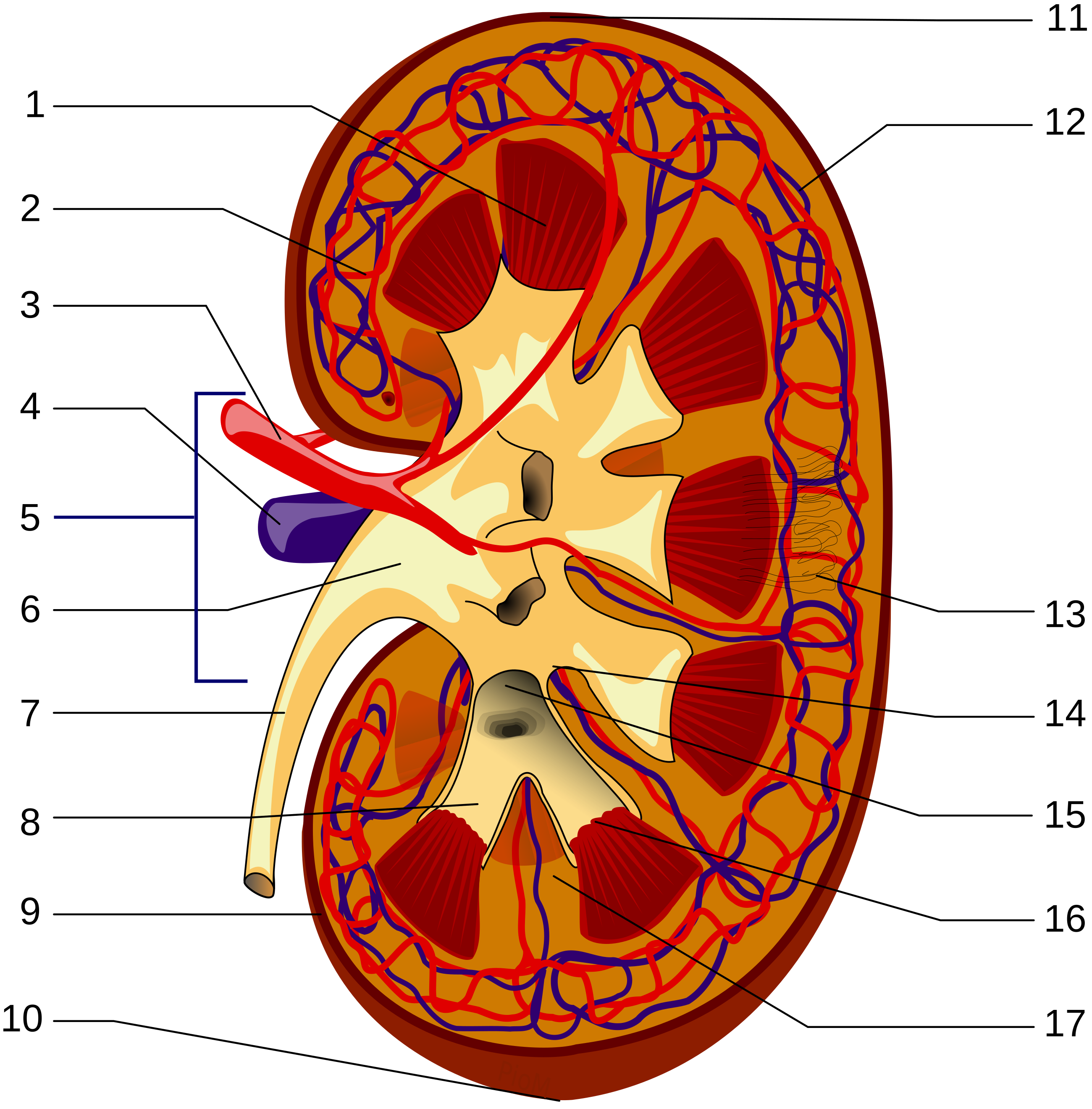
- Renal pyramid •
- Interlobular artery •
- Renal artery •
- Renal vein
- Renal hilum •
- Renal pelvis •
- Ureter •
- Minor calyx •
- Renal capsule •
- Inferior renal capsule •
- Superior renal capsule •
- Interlobular vein •
- Nephron •
- Minor calyx •
- Major calyx •
- Renal papilla •
- Renal column Nevertheless, the resistance of extracellular matrix proteins to proteolysis renders their advanced glycation end products less conducive to being eliminated. While the AGE free adducts are released directly into the urine, AGE peptides are endocytosed by the epithelial cells of the proximal tubule and then degraded by the endolysosomal system to produce AGE amino acids. It is thought that these acids are then returned to the kidney's inside space, or lumen, for excretion. AGE free adducts are the major form through which AGEs are excreted in urine, with AGE-peptides occurring to a lesser extent but accumulating in the plasma of patients with chronic kidney failure.
Larger, extracellularly derived AGE proteins cannot pass through the basement membrane of the renal corpuscle and must first be degraded into AGE peptides and AGE free adducts. Peripheral macrophage as well as liver sinusoidal endothelial cells and Kupffer cells have been implicated in this process, although the real-life involvement of the liver has been disputed.

Large AGE proteins unable to enter the Bowman's capsule are capable of binding to receptors on endothelial and mesangial cells and to the mesangial matrix. and decreasing kidney function in patients with unusually high AGE levels.
Peptides and free adducts, the only breakdown products of AGE that are suitable for urinary excretion, are more aggressive than the AGE proteins from which they are derived, and they can perpetuate related pathology in people with diabetes, even after hyperglycemia has been brought under control.
Research
Ongoing studies are performed to specify mechanisms that selectively inhibit the glycation process, and to understand how glycated molecules could be protected from further deterioration, possibly by manipulating the glyoxalase enzyme system to detoxify AGEs.
Development of candidate drugs by the pharmaceutical industry includes compounds whose mechanism of action is to inhibit or revert the glycation process.
References
References
- (September 2024). "Dietary glycation compounds - implications for human health". Critical Reviews in Toxicology.
- (April 2024). "An overview on glycation: molecular mechanisms, impact on proteins, pathogenesis, and inhibition". Biophysical Reviews.
- (2017-05-30). "Involvement of a gut-retina axis in protection against dietary glycemia-induced age-related macular degeneration". Proceedings of the National Academy of Sciences of the United States of America.
- (July 2024). "Glycative stress as a cause of macular degeneration". Progress in Retinal and Eye Research.
- (June 2010). "Advanced Glycation End Products in Foods and a Practical Guide to Their Reduction in the Diet". Journal of the American Dietetic Association.
- (October 2013). "Advanced glycation endproducts in food and their effects on health". Food and Chemical Toxicology.
- (1997-06-10). "Orally absorbed reactive glycation products (glycotoxins): an environmental risk factor in diabetic nephropathy". Proceedings of the National Academy of Sciences of the United States of America.
- (December 2010). "Dietary advanced glycation end products and aging". Nutrients.
- (February 1991). "The Maillard reaction in vivo". Zeitschrift für Ernährungswissenschaft.
- (May 2011). "Advanced glycation endproducts and their receptor RAGE in Alzheimer's disease". Neurobiology of Aging.
- (July 2007). "Advanced glycation endproducts: A biomarker for age as an outcome predictor after cardiac surgery?". Experimental Gerontology.
- (1995-04-25). "Neurotoxicity of advanced glycation endproducts during focal stroke and neuroprotective effects of aminoguanidine.". Proceedings of the National Academy of Sciences.
- (2012-02-02). "Natural history of age-related retinal lesions that precede AMD in mice fed high or low glycemic index diets". Investigative Ophthalmology & Visual Science.
- (2012). "Advanced Glycation End Products and Diabetic Cardiovascular Disease". Cardiology in Review.
- (2013). "Diabetes Alters Activation and Repression of Pro- and Anti-Inflammatory Signaling Pathways in the Vasculature". Frontiers in Endocrinology.
- (February 2021). "Advanced glycation end products (AGEs) and other adducts in aging-related diseases and alcohol-mediated tissue injury". Experimental and Molecular Medicine.
- (December 2017). "NF-κB signaling in inflammation". Signal Transduction and Targeted Therapy.
- (November 2015). "Recent advances in detection of AGEs: Immunochemical, bioanalytical and biochemical approaches: Technological Progress in Age Detection". IUBMB Life.
- (2007). "Receptor for Advanced Glycation Endproducts (RAGE): a formidable force in the pathogenesis of the cardiovascular complications of diabetes & aging". Current Molecular Medicine.
- (11 January 2009). "Glycation Endproducts, Soluble Receptor for Advanced Glycation Endproducts and Cytokines in Diabetic and Non-diabetic Pregnancies". American Journal of Reproductive Immunology.
- (July 2008). "Advanced glycation end products induce in vitro cross-linking of α-synuclein and accelerate the process of intracellular inclusion body formation". Journal of Neuroscience Research.
- (2009). "Short-Term Low Calorie Diet Intervention Reduces Serum Advanced Glycation End Products in Healthy Overweight or Obese Adults". Annals of Nutrition and Metabolism.
- (May 2009). "HbA1c and serum levels of advanced glycation and oxidation protein products in poorly and well controlled children and adolescents with type 1 diabetes mellitus". Journal of Pediatric Endocrinology & Metabolism.
- (March 1998). "AGEs and their interaction with AGE-receptors in vascular disease and diabetes mellitus. I. The AGE concept". Cardiovascular Research.
- Thornalley, P.J.. (1996). "Advanced glycation and the development of diabetic complications. Unifying the involvement of glucose, methylglyoxal and oxidative stress". Endocrinol. Metab.
- (2007). "Paraoxonase-1 concentrations in end-stage renal disease patients increase after hemodialysis: correlation with low molecular AGE adduct clearance". Clin. Chim. Acta.
- (1996). "Renal fate of circulating advanced glycated end products (AGE): evidence for reabsorption and catabolism of AGE peptides by renal proximal tubular cells". Diabetologia.
- (1997). "Advanced glycation end products are eliminated by scavenger-receptor-mediated endocytosis in hepatic sinusoidal Kupffer and endothelial cells". Biochem. J..
- (2004). "Hepatic clearance of advanced glycation end products (AGEs)—myth or truth?". J. Hepatol..
- (May 2007). "Effects of advanced glycation end products on renal fibrosis and oxidative stress in cultured NRK-49F cells". Chinese Medical Journal.
This article was imported from Wikipedia and is available under the Creative Commons Attribution-ShareAlike 4.0 License. Content has been adapted to SurfDoc format. Original contributors can be found on the article history page.
Ask Mako anything about Advanced glycation end-product — get instant answers, deeper analysis, and related topics.
Research with MakoFree with your Surf account
Create a free account to save articles, ask Mako questions, and organize your research.
Sign up freeThis content may have been generated or modified by AI. CloudSurf Software LLC is not responsible for the accuracy, completeness, or reliability of AI-generated content. Always verify important information from primary sources.
Report