From Surf Wiki (app.surf) — the open knowledge base
Adhesive bandage
Small self-adhesive medical dressing
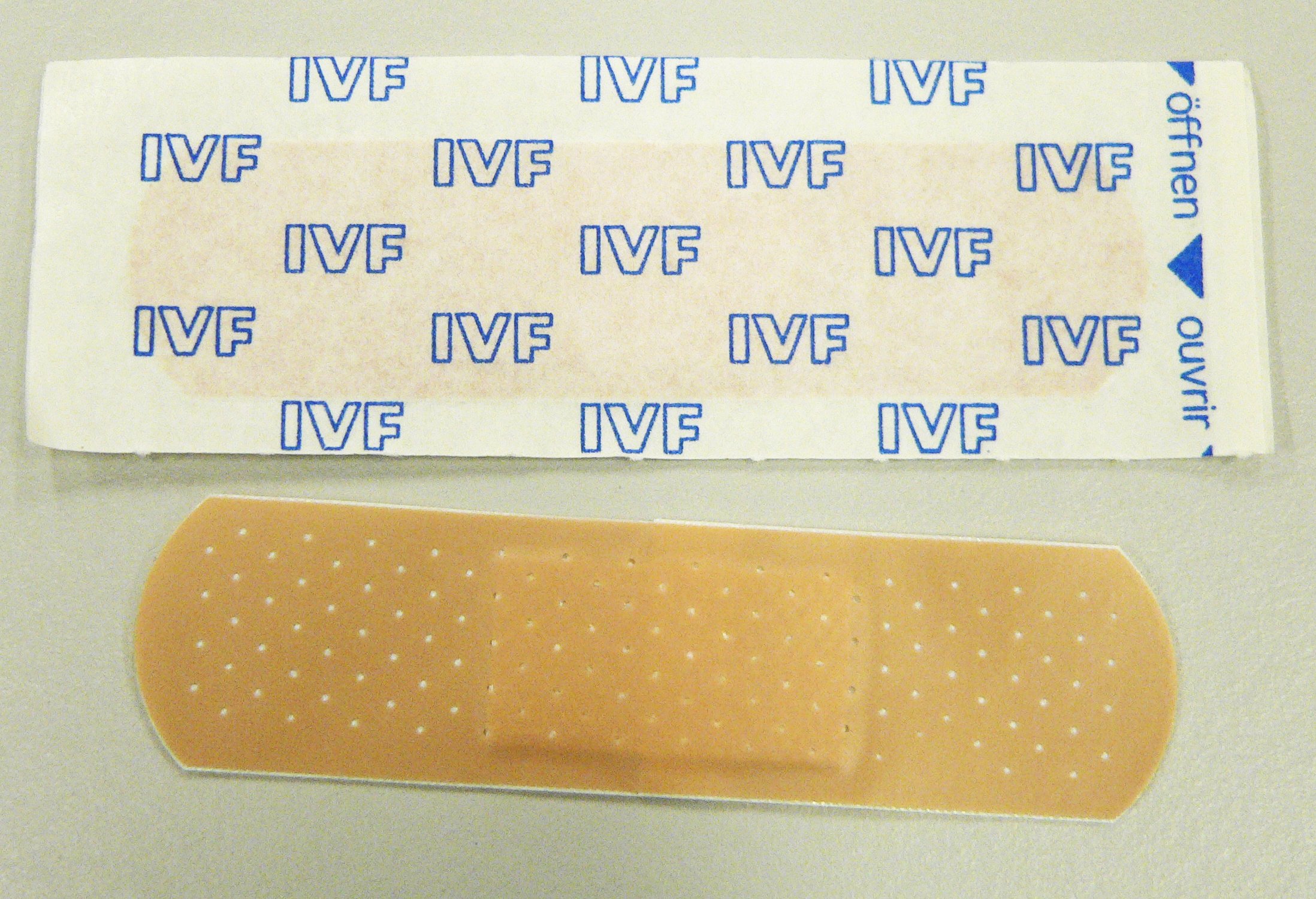
Small self-adhesive medical dressing
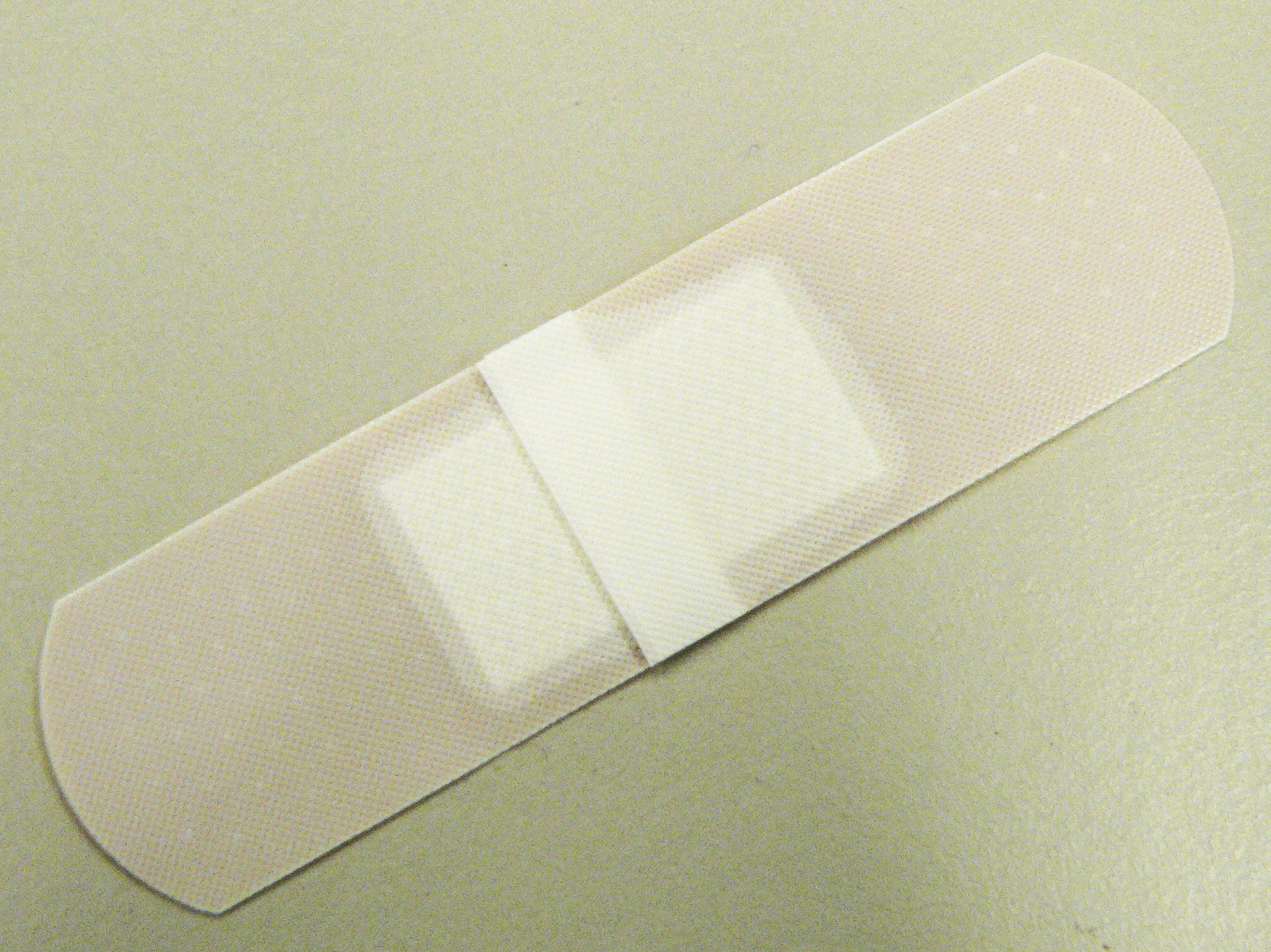

An adhesive bandage, also called a sticking plaster, sticky plaster, medical plaster, or simply plaster in British English, is a small medical dressing used for injuries not serious enough to require a full-size bandage. They are also known by the genericized trademarks of Band-Aid (as "band-aid" or "band aid" in Australia, Canada, India and the US) or Elastoplast (in the UK).
Function
The adhesive bandage protects the wound and scab from friction, bacteria, damage, and dirt. Thus, the healing process of the body is less disturbed. Some of the dressings have antiseptic properties. An additional function is to hold the two cut edges of the skin together to make the healing process faster.
Design
An adhesive bandage is a small, flexible sheet of material which is sticky on one side, with a smaller, non-sticky, absorbent pad stuck to the sticky side. The pad is placed against the wound, and overlapping edges of the sticky material are smoothed down so they stick to the surrounding skin. Adhesive bandages are generally packaged in a sealed, sterile bag, with a backing covering the sticky side; the backing is removed as the bandage is applied. They come in a variety of sizes and shapes.
Materials
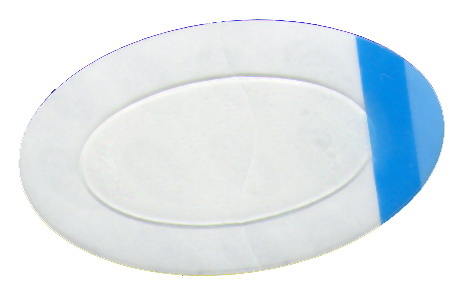
The backing and bag are often made of coated paper, but may be made of plastic.
The adhesive sheet is usually a woven fabric, plastic (PVC, polyethylene or polyurethane), or latex strip. It may or may not be waterproof; if it is airtight, the bandage is an occlusive dressing. The adhesive is commonly an acrylate, including methacrylates and epoxy diacrylates (which are also known as vinyl resins).
Some people have allergies to some of these materials, particularly latex and some adhesives.
Colors
Due to being widely available only in a standard color, some people with skin tones darker than the standard bandage color have expressed frustration at having to use bandages that looked less conspicuous on the skin of lighter-skinned people. This has led to greater support for pharmaceutical companies that manufacture these bandages in a variety of skin tones.
Some bandages, especially those designed for children, may come in a wide variety of colors or may feature cartoon characters.
Special bandages are used by food preparation workers. These are waterproof, have strong adhesive so they are less likely to fall off, and are usually blue so that they are more clearly visible in food. Some include a metal strip detectable by machines used in food manufacturing to ensure that food is free from foreign objects.
Variants
Transdermal patches are adhesive bandages with the function to distribute medication through the skin, rather than protecting a wound.
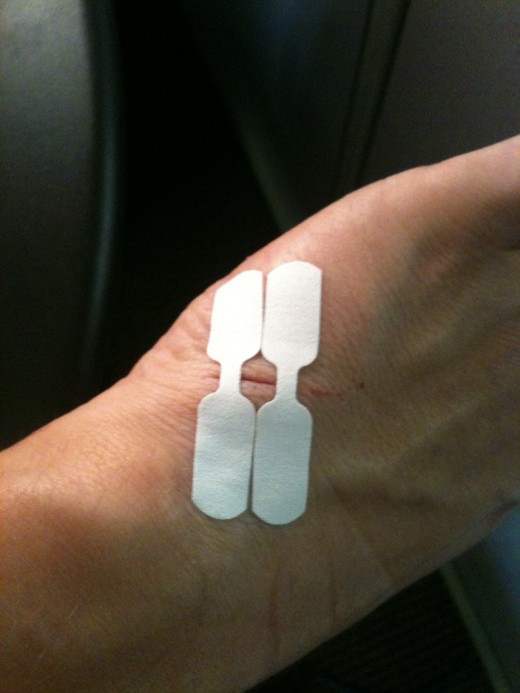
Butterfly closures, also known as butterfly stitches, are generally thin adhesive strips which can be used to close small wounds. They are applied perpendicular to the laceration in a manner which pulls the skin on either side of the wound together. They are not true sutures, but can often be used in addition to, or in place of actual sutures for small wounds. Butterfly stitches can be advantageous in that they do not need a medical professional to be placed or removed, and are thus a common item in first aid kits.
Notable brands
- Band-Aid
- Curad
- Elastoplast
- Nexcare
References
References
- (April 1, 2015). "Code of Federal Regulations Title 21".
- Daniel More, MD. "Allergy to Bandages and Adhesives". About.com Health.
- Daniel More, MD. "Allergic Reactions to Adhesive Bandages". About.com Health.
- Alcorn, Chauncey. (12 June 2020). "Band-Aid will make black and brown flesh-toned bandages".
- "Blue Detectable Plasters". safetyfirstaid.co.uk.
- Segal, Marian. "Patches, Pumps and Timed Release: New Ways to Deliver Drugs". [[Food and Drug Administration]].
- (26 June 2018). "How do I apply butterfly stitches?". www.nhs.uk.
This article was imported from Wikipedia and is available under the Creative Commons Attribution-ShareAlike 4.0 License. Content has been adapted to SurfDoc format. Original contributors can be found on the article history page.
Ask Mako anything about Adhesive bandage — get instant answers, deeper analysis, and related topics.
Research with MakoFree with your Surf account
Create a free account to save articles, ask Mako questions, and organize your research.
Sign up freeThis content may have been generated or modified by AI. CloudSurf Software LLC is not responsible for the accuracy, completeness, or reliability of AI-generated content. Always verify important information from primary sources.
Report