From Surf Wiki (app.surf) — the open knowledge base
Abingdon Abbey
Benedictine monastery also known as St Mary's Abbey located in Abingdon

Benedictine monastery also known as St Mary's Abbey located in Abingdon
Abingdon Abbey (formally Abbey of Saint Mary) was a Benedictine monastery in Abingdon-on-Thames in the modern county of Oxfordshire in the United Kingdom.{{cite web|title= MAGiC MaP: Abingdon Abbey (extant buildings)
History
Early history
The name ‘Abingdon’ until the post Norman era related to an area of nearby Boars Hill, and it is thought the institution originated in that location, before relocating south to the valley location near the minster at what was originally known as Helenstowe.
The abbey is thought to have been founded in 675 either by Cissa, viceroy of Centwine, king of the West Saxons, or by his nephew Hean, in honour of the Virgin Mary, for twelve Benedictine monks.Cissa was buried at the abbey.
Endowed by successive West Saxon kings, it grew in importance and wealth until its destruction by the Danes in the reign of King Alfred, and the sequestration of its estates by Alfred because the monks had not made him a sufficient requital for vanquishing their enemies. By the 950s the abbey was in a decayed state, but in about 954 King Eadred appointed Æthelwold, later Bishop of Winchester, abbot. He was one of the leaders of the English Benedictine Reform, and Abingdon then became the second centre of the Reform (after Glastonbury). There is a collection of 136 charters granted to this abbey by various Saxon kings. The Domesday Book of 1086 states that the abbey was a wealthy and powerful landowner.{{efn|"At the time Æthelwold (afterwards Bishop of Winchester) took charge, the abbey was in a ruinous and impoverished condition". In the course of Æthelwold's nine year rule, and as re-established and largely rebuilt by him, the abbey became the first of the Benedictine houses in England to undergo reform". "From Æthelwold's time onwards its prosperous days may be reckoned, and during the next century or so great wealth was accumulated. In Domesday its possessions in Berks were given as second only in extent to the King's" – PDF page 5, actual page 27. }}
The Chronicle of the Monastery of Abingdon (Historia Ecclesie Abbendonensis) was written at the abbey in the twelfth century.
Sutton Courtenay
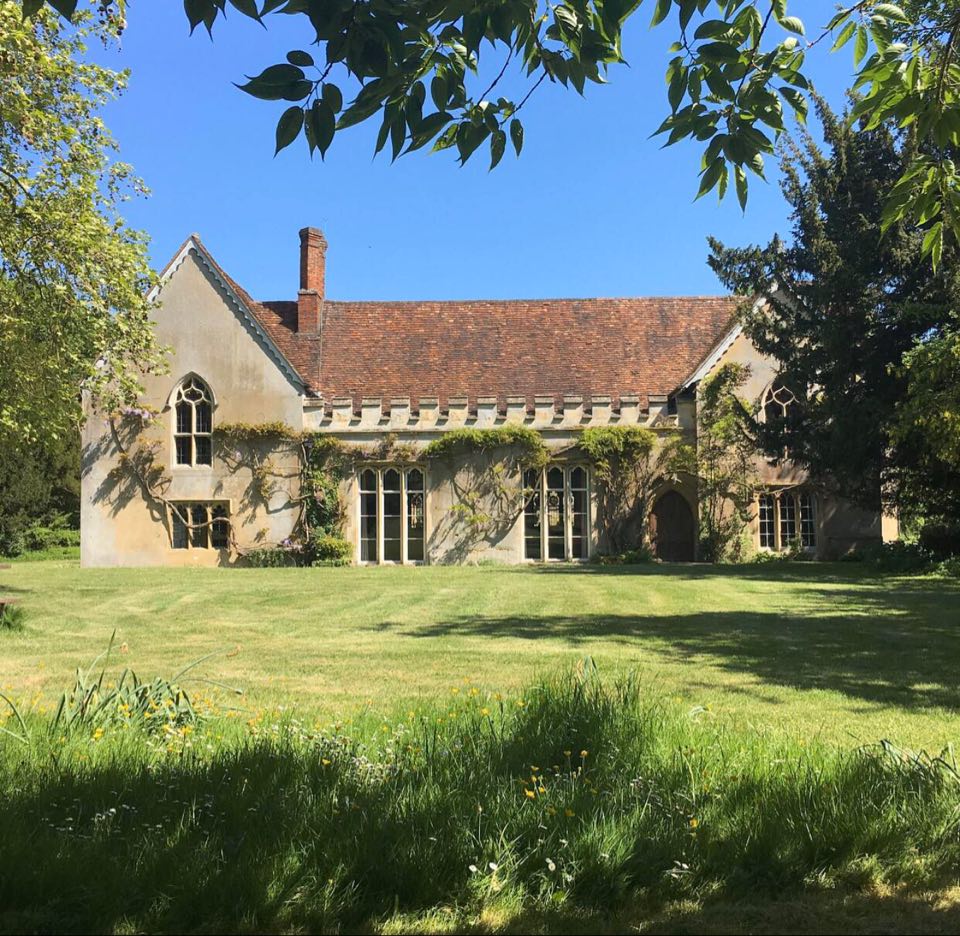
In Sutton Courtenay, Abingdon Abbey constructed The Abbey as a monastic grange, used as an administrative centre for the abbey's land and tithe holdings. However, the owner of the hide of land, *Alwin the priest *{{cite web|title= Alwin the priest |publisher= Open Domesday
In 1278 Hugh de Courtenay, Lord of the Manor of Sutton, sued the abbey for advowson. In 1284 an allegedly biased jury was empanelled, presided over by Solomon of Rochester, the chief justice of the eyre. It found unexpectedly for Courtenay; Rochester himself was the first to be presented by the Courtenays.
Subsequently the abbot of Abingdon Abbey alleged that in 1290 Rochester had seized the goods at the rectory belonging to the abbey. He also claimed that Solomon had extorted 40 marks from the abbey for alleged dilapidations to the rectory house. He was not convicted of any offence.
Abbots
Main article: Abbot of Abingdon

Abbots after the Norman Conquest included Faritius, physician to Henry I of England (1100–17), and Richard of Hendred, for whose appointment the King's consent was obtained in 1262. He was present at the Council of Lyon in 1272. The last abbot was Thomas Pentecost alias Rowland, who was among the first to acknowledge the Royal Supremacy. With the rest of his community he signed the surrender of his monastery in 1538, receiving the manor of Cumnor for life or until he had preferment to the extent of £223 per annum. The revenues of the abbey (26 Hen. VIII) were valued at £1876, 10s, 9d.
Burials
Ælfric of Abingdon was originally buried here, before being translated to Canterbury Cathedral. Sideman, Bishop of Crediton, was buried here, too, as were Margaret, Countess of Pembroke, and Fulk FitzRoy.
;Other burials
- Robert D'Oyly and his wife Ealdgyth
- Siward (Abbot of Abingdon)
- Ralph Basset and his father Thurston Ralph Bassett
- John Grey, 2nd Viscount Lisle
- Margaret, Countess of Pembroke
- Mary of Waltham
Extant buildings
There is nothing to see today of the abbey church. Apparent ruins in the Abbey Gardens are Trendell's Folly, built in the nineteenth century. Some of the stones may come from St Helen's Church.
Associated monastic buildings do, however, survive, including the Abbey Exchequer, the timber-framed Long Gallery, the abbey bakehouse, (all in the care of the Friends of Abingdon Civic Society) the abbey gateway, St John's hospitium (a pilgrims' hostel) and the Church of St Nicolas. One of the original fireplaces was removed and is now still intact in Lacies Court, Abingdon School.
The existing buildings include:
- Checker Hall (Unicorn Theatre)
- The Checker.
- The Long Gallery.
- The Lower Hall.
- Thames Street, the Mill and the Mill stream. File:Abingdon Abbey - geograph.org.uk - 3103252.jpg|Long Gallery, Abingdon Abbey File:Abingdon Abbey Ruins 102018.jpg|Trendell's Folly in the Abbey Gardens, dating to the 19th century. The Abbey Church was originally situated on this site. File:AbingAbbeycut01.JPG|View from Abingdon Lock of the watercourse to the abbey cut by the monks between 955 and 963.
References
Notes
Citations
Sources
-
{{cite journal|last= Preston|first= A.E. |author-link= Arthur Edwin Preston|date= 1919 |title= Sutton Courtenay and Abingdon Abbey |journal= Berkshire, Buckinghamshire, and Oxfordshire Archaeological Journal |volume=XXV
References
- "Abingdon Abbey". Royal Berkshire History, UK.
- Blair, John. (2005). "The Church in Anglo-Saxon Society". Oxford University Press.
- "Abingdon (St Mary), abbey of". Open Domesday.
- (25 October 2012). "The Oxford History of Historical Writing: Volume 2: 400-1400". OUP Oxford.
- "Alwin the priest's father". Open Domesday.
- "Sutton [Courtenay]". Open Domesday.
- David Nash Ford. (2004). "The Abbey at Sutton Courtenay". Royal Berkshire History.
- [[Rolls of Parliament]], i. 58-9.
- "Visit Abbey Gardens & Abbey Meadow". Abingdon-on-Thames Town Council.
- "Lacies Court, Abingdon School". Abingdon-on-Thames Town Council.
- "Unicorn Theatre". The Friends of Abingdon Abbey Buildings Trust.
- "History of the Buildings". The Friends of Abingdon Abbey Buildings Trust.
This article was imported from Wikipedia and is available under the Creative Commons Attribution-ShareAlike 4.0 License. Content has been adapted to SurfDoc format. Original contributors can be found on the article history page.
Ask Mako anything about Abingdon Abbey — get instant answers, deeper analysis, and related topics.
Research with MakoFree with your Surf account
Create a free account to save articles, ask Mako questions, and organize your research.
Sign up freeThis content may have been generated or modified by AI. CloudSurf Software LLC is not responsible for the accuracy, completeness, or reliability of AI-generated content. Always verify important information from primary sources.
Report