From Surf Wiki (app.surf) — the open knowledge base
Abies alba
Species of conifer tree
,_Italy.jpg)
Species of conifer tree
: ✖ Native range and isolated population. : ▲ Introduced and naturalized (synanthropic) area and isolated population. |Abies argentea |Abies baldensis |Abies candicans |Abies chlorocarpa |Abies duplex |Abies metensis |Abies miniata |Abies minor |Abies nobilis |Abies pardei |Abies rinzii |Abies taxifolia |Abies taxifolia |Abies taxifolia |Abies tenuirifolia |Abies vulgaris |Peuce abies |Picea kukunaria |Picea metensis |Picea pectinata |Picea pyramidalis |Picea rinzi |Picea tenuifolia |Pinus baldensis |Pinus heterophylla |Pinus lucida |Pinus pectinata |Pinus picea }}
Abies alba, the European silver fir or silver fir, is a fir native to the mountains of Europe, from the Pyrenees north to Normandy, east to the Alps and the Carpathians, Slovakia, Slovenia, Croatia, Bosnia and Herzegovina, Montenegro, Serbia, and south to Italy, Bulgaria, Kosovo, Albania and northern Greece.
Description
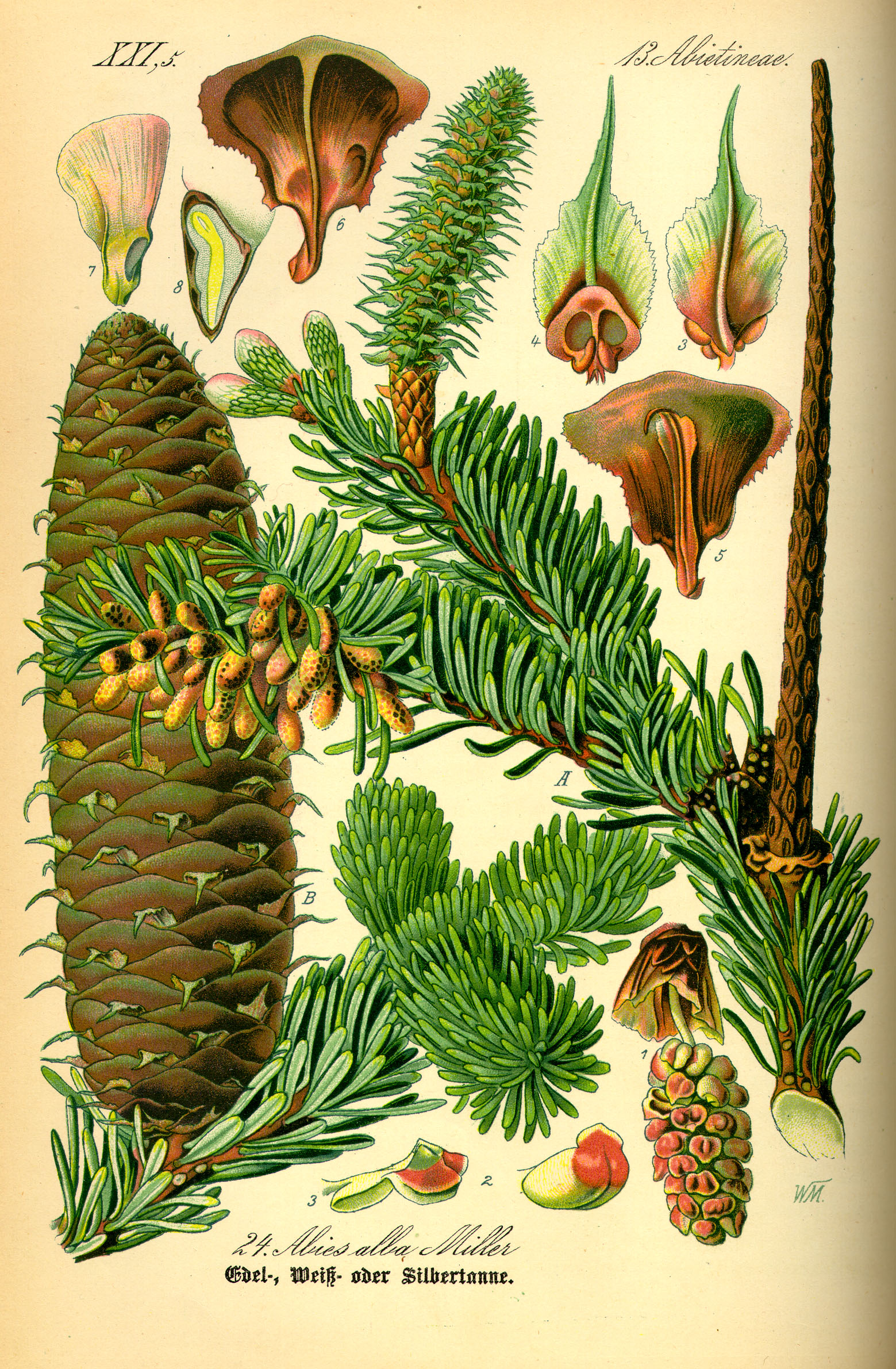
Abies alba is a large evergreen coniferous tree growing to 40 – tall and with a trunk diameter up to 1.5 m. The largest measured tree was 60 m tall and had a trunk diameter of 3.8 m. It occurs at altitudes of 300 - (mainly over 500 m), on mountains with rainfall over 1000 mm per year.
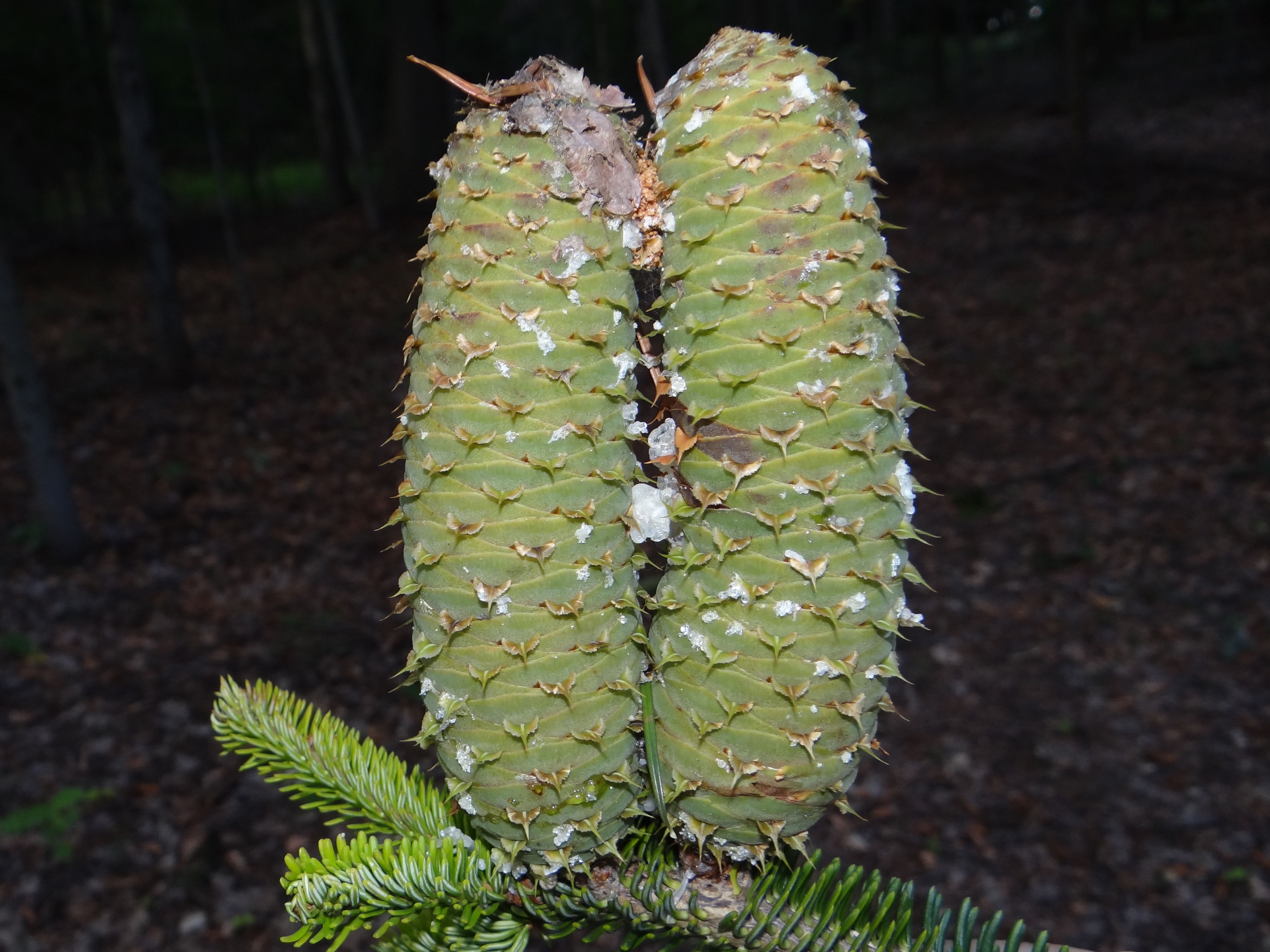
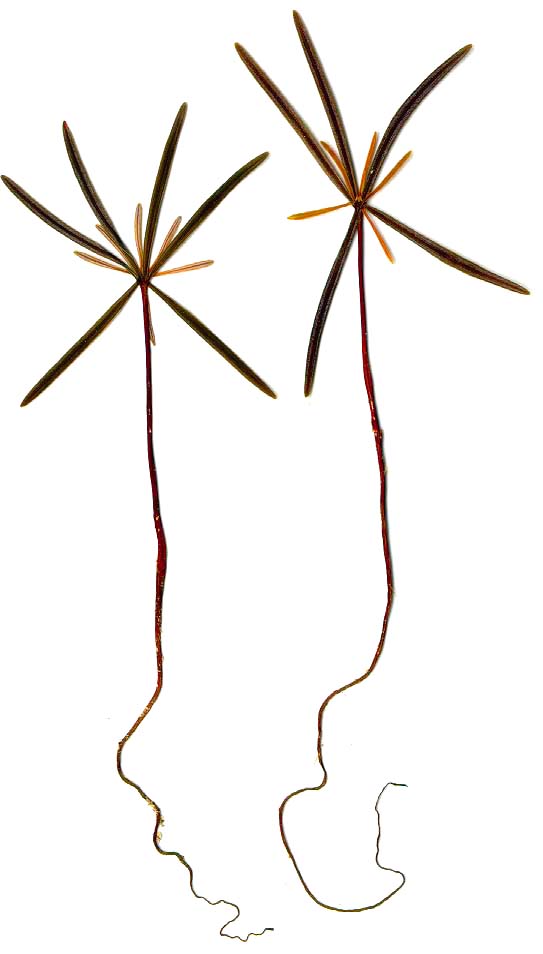
The leaves are needle-like, flattened, 1.8 – long and 2.0 mm wide by 0.5 mm thick, glossy dark green above, and with two greenish-white bands of stomata below. The leaf is usually slightly notched at the tip. The cones are 9 – long and 3 – broad, with about 150-200 scales, each scale with an exserted bract and two winged seeds; they disintegrate when mature to release the seeds. The wood is white, leading to the species name alba.
In the forest the evergreen tends to form stands with Norway spruce, Scots pine, and European beech. It is closely related to Bulgarian fir (Abies borisii-regis) further to the southeast in the Balkan Peninsula, Spanish fir (Abies pinsapo) of Spain and Morocco and Sicilian fir (Abies nebrodensis) in Sicily, differing from these and other related Euro-Mediterranean firs in the sparser foliage, with the leaves spread either side of the shoot, leaving the shoot readily visible from above. Some botanists treat Bulgarian fir and Sicilian fir as varieties of silver fir, as A. alba var. acutifolia and A. alba var. nebrodensis, respectively.
Ecology
Silver fir is an important component species in the dinaric calcareous block fir forest in the western Balkan Peninsula.
In Italy, the silver fir is an important component of the mixed broadleaved-coniferous forest of the Apennine Mountains, especially in northern Apennine. The fir prefer a cold and humid climate, in northern exposition, with a high rainfall (over 1500 mm per year). In the oriental Alps of Italy, silver firs grow in mixed forests with Norway spruce, beech, and other trees.
Its cone scales are eaten by the caterpillars of the tortrix moth Cydia illutana, while C. duplicana feeds on the bark around injuries or canker.
Chemistry and pharmacology
The bark and wood of silver fir are rich in antioxidative polyphenols. Six phenolic acids were identified (gallic, homovanillic, protocatechuic, p-hydroxybenzoic, vanillic and p-coumaric), three flavonoids (catechin, epicatechin and catechin tetramethyl ether) and eight lignans (taxiresinol, 7-(2-methyl-3,4-dihydroxytetrahydropyran-5-yloxy)-taxiresinol, secoisolariciresinol, lariciresinol, hydroxymatairesinol, isolariciresinol, matairesinol and pinoresinol). The extract from the trunk was shown to prevent atherosclerosis in guinea pigs and to have cardioprotective effect in isolated rat hearts. Silver fir wood extract was found to reduce the post-prandial glycemic response (concentration of sugar in the blood after the meal) in healthy volunteers.
Uses
In Roman times the wood was used to make wooden casks to store and transport wine and other substances.
A resinous essential oil can be extracted. This pine-scented oil is used in perfumes, bath products, and aerosol inhalants. Its branches (including the leaves, bark and wood) were used for production of spruce beer.
Silver fir is the species first used as a Christmas tree, but has been largely replaced by Nordmann fir (which has denser, more attractive foliage), Norway spruce (which is much cheaper to grow), and other species. When cultivated on Christmas Tree plantations, the tree naturally forms a symmetrical conical shape. The trees are full and dense with a resinous fragrance, and are known to be one of the longest lasting after being cut. As well as in its native area, it is also grown on Christmas tree plantations in the northeast region of North America spanning New England in the USA to the Maritime Provinces of Canada.
The wood is strong, lightweight, light-coloured, fine grained, even-textured and long fibred. The timber is mainly used as construction wood, furniture, plywood, pulpwood and paper manufacture.
The honeydew which is produced by aphids sitting on the silver fir is collected by honey bees. The resulting honey is marketed as "fir honey".
Etymology
Abies is derived from Latin, meaning 'rising one'. The name was used to refer to tall trees or ships.
Alba means 'bright' or 'dead white'.
References
References
- Farjon, A.. (2017). "''Abies alba''".
- {{ThePlantList
- Gualtiero Simonetti. (1990). "Simon & Schuster's Guide to Herbs and Spices". [[Simon & Schuster]], Inc..
- Rushforth, K.. (1987). "Conifers". Helm.
- A, Farjon. (1990). "Pinaceae. Drawings and Descriptions of the Genera". Koeltz Scientific Books.
- (2017). "Identification, in vitro and in vivo Antioxidant Activity, and Gastrointestinal Stability of Lignans from Silver Fir (Abies alba) Wood Extract". Journal of Wood Chemistry and Technology.
- Vasincu A, Creţu E, Geangalău I, Amalinei RL, Miron A. Polyphenolic content and antioxidant activity of an extractive fraction from ''Abies alba'' bark. Rev Med Chir Soc Med Nat Iasi. 2013 Apr-Jun;117(2):545-50.
- (2014). "Chemical composition of the silver fir (''Abies alba'') bark extract Abigenol and its antioxidant activity". Industrial Crops and Products.
- (2015). "Silver fir (''Abies alba'') trunk extract protects guinea pig arteries from impaired functional responses and morphology due to an atherogenic diet". Phytomedicine.
- (2016). "Cardioprotective effects of silver fir (Abies alba) extract in ischemic-reperfused isolated rat hearts". Food & Nutrition Research.
- Debeljak, J.; Ferk, P.; Čokolič, M.; Zavratnik, A.; Tavč Benković, E.; Kreft, S.; Štrukelj, B.: Randomised, double blind, cross-over, placebo and active controlled human pharmacodynamic study on the influence of silver fir wood extract (Belinal) on post-prandial glycemic response. Die Pharmazie - An International Journal of Pharmaceutical Sciences, Volume 71, Number 10, October 2016, pp. 566-569(4)
- Kilby, Kenneth (1977), ''The cooper and his trade'', Fresno, California, Linden Publishing, p.99. {{ISBN. 0941936163
- (1837). "The London Medical Gazette". Longman.
- "Silver fir - ''Abies alba''". EUFORGEN Technical Guidelines for Genetic Conservation and Use.
- "Fir Honey".
- Gledhill, David (2008). "The Names of Plants". Cambridge University Press. {{ISBN. 9780521866453 (hardback), {{ISBN. 9780521685535 (paperback). pp 32, 41
This article was imported from Wikipedia and is available under the Creative Commons Attribution-ShareAlike 4.0 License. Content has been adapted to SurfDoc format. Original contributors can be found on the article history page.
Ask Mako anything about Abies alba — get instant answers, deeper analysis, and related topics.
Research with MakoFree with your Surf account
Create a free account to save articles, ask Mako questions, and organize your research.
Sign up freeThis content may have been generated or modified by AI. CloudSurf Software LLC is not responsible for the accuracy, completeness, or reliability of AI-generated content. Always verify important information from primary sources.
Report