From Surf Wiki (app.surf) — the open knowledge base
Aberdeenshire
Council area of Scotland

Council area of Scotland
| Field | Value | |
|---|---|---|
| name | Aberdeenshire | |
| native_name | {{Unbulleted list | |
| settlement_type | Council area | |
| image_map | Aberdeenshire UK location map.svg | |
| map_caption | Aberdeenshire shown within Scotland | |
| coordinates | ||
| subdivision_type | Sovereign state | |
| subdivision_name | United Kingdom | |
| subdivision_type1 | Country | |
| subdivision_name1 | Scotland | |
| subdivision_type3 | Lieutenancy area | |
| subdivision_name3 | Aberdeenshire, Banffshire(part), Kincardineshire | |
| established_title | Incorporated | |
| established_date | 1 April 1996 | |
| named_for | Aberdeenshire | |
| seat_type | AdministrativeHQ | |
| seat | Aberdeen | |
| government_footnotes | ||
| government_type | Council | |
| governing_body | Aberdeenshire Council | |
| leader_title | Control | |
| leader_name | ||
| leader_title3 | MPs | |
| leader_name3 | {{Collapsible list | title=3 MPs |
| leader_title4 | MSPs | |
| leader_name4 | {{Collapsible list | title=7 MSPs |
| area_footnotes | ||
| area_total_km2 | ||
| area_rank | [](subdivisions-of-scotland-council-areas) | |
| population_footnotes | ||
| population_as_of | ||
| population_total | ||
| population_rank | [](subdivisions-of-scotland-council-areas) | |
| population_density_km2 | ||
| timezone1 | GMT | |
| utc_offset1 | +0 | |
| timezone1_DST | BST | |
| utc_offset1_DST | +1 | |
| postal_code_type | Postcode areas | |
| area_code_type | Dialling codes | |
| iso_code | GB-ABD | |
| blank1_name | GSS code | |
| blank1_info | S12000034 | |
| website |
|gd |sco |Andrew Bowie (C) |Harriet Cross (C) |Seamus Logan (SNP) |Alexander Burnett (C) |Mairi Gougeon (SNP) |Gillian Martin (SNP) |Karen Adam (SNP) |Audrey Nicoll (SNP) |Maurice Golden (C) |Liam Kerr (C) Aberdeenshire (; ) is one of the 32 council areas of Scotland.
It takes its name from the historic county of Aberdeenshire, which had substantially different boundaries. The Aberdeenshire Council area includes all of the areas of the historic counties of Aberdeenshire and Kincardineshire except the area making up Aberdeen City Council area, as well as part of Banffshire. The historic county boundaries are still officially used for a few purposes, namely land registration and lieutenancy.
Aberdeenshire Council is headquartered at Woodhill House in Aberdeen, making it the only Scottish council whose headquarters are located outside its jurisdiction. Aberdeen itself forms a different council area (Aberdeen City). Aberdeenshire borders onto Angus and Perth and Kinross to the south, Highland and Moray to the west and Aberdeen City to the east.
Traditionally, it has depended economically on the primary sector (agriculture, fishing, and forestry) and related processing industries. Over the last 40 years, the development of the oil and gas industry and associated service sector has broadened Aberdeenshire's economic base, and contributed to a rapid population growth of some 50% since 1975. Its land represents 8% of Scotland's overall territory. It covers an area of 6313 sqkm.
History


Aberdeenshire has a rich prehistoric and historical heritage. It is the locus of a large number of Neolithic and Bronze Age archaeological sites, including Longman Hill, Kempstone Hill, Catto Long Barrow and Cairn Lee. The area was settled in the Bronze Age by the Beaker culture, who arrived from the south around 2000–1800 BC. Stone circles and cairns were constructed predominantly in this era. In the Iron Age, hill forts were built.
Around the 1st century AD, the Taexali people, who left little history, were believed to have resided along the coast. The Picts were the next documented inhabitants of the area and were no later than 800–900 AD. The Romans also were in the area during this period, as they left signs at Kintore. Christianity influenced the inhabitants early on, and there were Celtic monasteries at Old Deer and Monymusk.
Since medieval times, there have been many traditional paths that crossed the Mounth (a spur of mountainous land that extends from the higher inland range to the North Sea slightly north of Stonehaven) through present-day Aberdeenshire from the Scottish Lowlands to the Highlands. Some of the most well known and historically important trackways are the Causey Mounth and Elsick Mounth.
Aberdeenshire played an important role in the fighting between the Scottish dynasties. Macbeth fell at Lumphanan in 1057. During the Anglo-Norman penetration, other families arrive, such as House of Balliol, Clan Bruce, and Clan Cumming (Comyn). During the Scottish Wars of Independence, the King of England Edward I travelled across the area twice with his invading army, in 1296 and 1303. In 1307, Robert the Bruce was victorious near Inverurie.
These new families set the stage for the upcoming rivalries during the 14th and 15th centuries. Three universities were founded in the area prior to the 17th century, King's College in Old Aberdeen (1494), Marischal College in Aberdeen (1593), and the University of Fraserburgh (1592).
During the 17th century, Aberdeenshire was the location of more fighting, centred on the Marquess of Montrose and the Wars of the Three Kingdoms. This period also saw increased wealth due to the increase in trade with Germany, Poland, and the Low Countries.
After the end of the Revolution of 1688, an extended peaceful period was interrupted only by fleeting events such as the Rising of 1715 and the Rising of 1745. The latter resulted in the end of the ascendancy of Episcopalianism and the feudal power of landowners. An era began of increased agricultural and industrial progress.
The present council area is named after the historic county of Aberdeenshire, which has different boundaries and ceased to be used for local government purposes in 1975 under the Local Government (Scotland) Act 1973. The pre-1975 territory of Aberdeenshire was then split between four of the five new districts in the Grampian region: Banff and Buchan (which also included eastern parts of Banffshire, including its county town of Banff), Gordon, Kincardine and Deeside (which also included most of Kincardineshire), and Aberdeen City. Local government functions were shared between the two levels.
The modern council area was created in 1996 under the Local Government etc. (Scotland) Act 1994. It covers the combined area of the Banff and Buchan, Gordon, and Kincardine and Deeside districts that had been created in 1975. The present Aberdeenshire Council area therefore consists of all of the historic counties of Aberdeenshire and Kincardineshire (except the area of those two counties making up Aberdeen City), as well as the north-east portions of Banffshire.
Demographics
The population of the council area has risen over 50% since 1971 to approximately in , representing 4.7% of Scotland's total. Aberdeenshire's population has increased by 9.1% since 2001, while Scotland's total population grew by 3.8%. The census lists a relatively high proportion of under 16s and slightly fewer working-age people compared with the Scottish average.
Aberdeenshire is one of the most homogeneous/indigenous regions of the UK. In 2011, 82.2% of residents identified as 'White Scottish', followed by 12.3% who are 'White British', whilst ethnic minorities constitute only 0.9% of the population. The largest ethnic minority group is Asian Scottish/British at 0.8%. In addition to the English language, 48.8% of residents reported being able to speak and understand the Scots language.
| Ethnic Group | 2001 | 2011 | 2022 | Number | % | Number | % | Number | % | White: Total | 225,243 | 99.28% | 249,112 | 98.47% | 256,017 | 97.08% | Asian, Asian Scottish or Asian British: Total | 645 | 0.28% | 2,037 | 0.81% | 2,939 | 1.11% | Black, Black Scottish or Black British | 14 | – | – | – | – | – | African: Total | 85 | – | 490 | 0.19% | 1,313 | 0.50% | Caribbean or Black: Total | – | – | 269 | 0.11% | 255 | 0.10% | Mixed or multiple ethnic groups: Total | 463 | 0.20% | 294 | 0.12% | 2,074 | 0.79% | Other: Total | 339 | 0.15% | 294 | 0.12% | 1,122 | 0.43% | Total: | 226,871 | 100.00% | 252,973 | 100.00% | 263,723 | 100.00% |
|---|---|---|---|---|---|---|---|---|---|---|---|---|---|---|---|---|---|---|---|---|---|---|---|---|---|---|---|---|---|---|---|---|---|---|---|---|---|---|---|---|---|---|---|---|---|---|---|---|---|---|---|---|---|---|---|---|---|---|---|---|---|---|---|---|---|
| White: Scottish | 194,169 | 85.59% | 207,936 | 82.20% | 210,537 | 79.83% | |||||||||||||||||||||||||||||||||||||||||||||||||||||||||||
| White: Other British | 26,945 | 11.88% | 31,158 | 12.32% | 32,508 | 12.33% | |||||||||||||||||||||||||||||||||||||||||||||||||||||||||||
| White: Irish | 976 | 0.43% | 1,162 | 0.46% | 1,493 | 0.57% | |||||||||||||||||||||||||||||||||||||||||||||||||||||||||||
| White: Gypsy/Traveller | – | – | 175 | 0.07% | 169 | 0.06% | |||||||||||||||||||||||||||||||||||||||||||||||||||||||||||
| White: Polish | – | – | 3,020 | 1.19% | 3,998 | 1.52% | |||||||||||||||||||||||||||||||||||||||||||||||||||||||||||
| White: Other | 3,153 | 1.39% | 5,661 | 2.24% | 7,312 | 2.77% | |||||||||||||||||||||||||||||||||||||||||||||||||||||||||||
| Asian, Asian Scottish or Asian British: Indian | 166 | 0.07% | 473 | 0.19% | 783 | 0.30% | |||||||||||||||||||||||||||||||||||||||||||||||||||||||||||
| Asian, Asian Scottish or Asian British: Pakistani | 69 | – | 253 | 0.10% | 343 | 0.13% | |||||||||||||||||||||||||||||||||||||||||||||||||||||||||||
| Asian, Asian Scottish or Asian British: Bangladeshi | 29 | – | 138 | 0.05% | 106 | – | |||||||||||||||||||||||||||||||||||||||||||||||||||||||||||
| Asian, Asian Scottish or Asian British: Chinese | 277 | 0.12% | 424 | 0.17% | 575 | 0.22% | |||||||||||||||||||||||||||||||||||||||||||||||||||||||||||
| Asian, Asian Scottish or Asian British: Asian Other | 104 | 0.05% | 749 | 0.30% | 1,135 | 0.43% | |||||||||||||||||||||||||||||||||||||||||||||||||||||||||||
| African: African, African Scottish or African British | – | – | 487 | 0.19% | 88 | – | |||||||||||||||||||||||||||||||||||||||||||||||||||||||||||
| African: Other African | – | – | 3 | – | 1,224 | 0.46% | |||||||||||||||||||||||||||||||||||||||||||||||||||||||||||
| Caribbean | 82 | – | 159 | 0.06% | 100 | 0.04% | |||||||||||||||||||||||||||||||||||||||||||||||||||||||||||
| Black | – | – | 76 | – | 16 | – | |||||||||||||||||||||||||||||||||||||||||||||||||||||||||||
| Caribbean or Black: Other | – | – | 34 | – | 137 | 0.05% | |||||||||||||||||||||||||||||||||||||||||||||||||||||||||||
| Other: Arab | – | – | 131 | 0.05% | 436 | 0.17% | |||||||||||||||||||||||||||||||||||||||||||||||||||||||||||
| Other: Any other ethnic group | – | – | 163 | 0.06% | 682 | 0.26% |
Languages
The 2022 Scottish Census reported that out of 256,382 residents aged three and over, 121,797 (47.5%) considered themselves able to speak or read the Scots language. This is the greatest proportion of Scots speakers of any Scottish council area.
The 2022 Scottish Census reported that out of 256,377 residents aged three and over, 3,579 (1.4%) considered themselves able to speak or read Gaelic.
Settlements
The largest settlements in Aberdeenshire are:
| Settlement | Population | Mid-2010 | () |
|---|---|---|---|
| Peterhead | 17,790 | ||
| Inverurie | 11,590 | ||
| Fraserburgh | 12,540 | ||
| Westhill | 11,220 | ||
| Stonehaven | 10,820 | ||
| Ellon | 9,910 | ||
| Portlethen | 7,130 | ||
| Banchory | 7,030 | ||
| Kintore | 4,180 | ||
| Turriff | 5,020 | ||
| Huntly | 4,570 | ||
| Banff | 3,720 | ||
| Kemnay | 3,710 | ||
| Macduff | 3,910 | ||
| Laurencekirk | 2,650 | ||
| Oldmeldrum | 2,990 | ||
| Blackburn | 2,720 | ||
| Newtonhill | 3,080 | ||
| Aboyne | 2,440 | ||
| Mintlaw | 2,610 |
Economy
Aberdeenshire's Gross Domestic Product (GDP) is estimated at £3,496M (2011), representing 5.2% of the Scottish total. Aberdeenshire's economy is closely linked to Aberdeen City's (GDP £7,906M), and in 2011, the region as a whole was calculated to contribute 16.8% of Scotland's GDP. Between 2012 and 2014, the combined Aberdeenshire and Aberdeen City economic forecast GDP growth rate is 8.6%, the highest growth rate of any local council area in the UK and above the Scottish rate of 4.8%.
A significant proportion of Aberdeenshire's working residents commute to Aberdeen City for work, varying from 11.5% from Fraserburgh to 65% from Westhill.
Average Gross Weekly Earnings (for full-time employees employed in workplaces in Aberdeenshire in 2011) are £572.60. This is lower than the Scottish average by £2.10 and a fall of 2.6% on the 2010 figure. The average gross weekly pay of people resident in Aberdeenshire is much higher, at £741.90, as many people commute out of Aberdeenshire, principally into Aberdeen City.
Total employment (excluding farm data) in Aberdeenshire is estimated at 93,700 employees (Business Register and Employment Survey 2009). The majority of employees work within the service sector, predominantly in public administration, education and health. Almost 19% of employment is within the public sector. Aberdeenshire's economy remains closely linked to Aberdeen City's and the North Sea oil industry, with many employees in oil-related jobs.
The average monthly unemployment (claimant count) rate for Aberdeenshire in 2011 was 1.5%. This is lower than the average rate of Aberdeen City (2.3%), Scotland (4.2%) and the UK (3.8%).
Major industries

- Energy – There are significant energy-related infrastructure, presence, and expertise in Aberdeenshire. Peterhead is an important centre for the energy industry. Peterhead Port includes an extensive new quay with an adjacent laydown area at Smith Quay, is a major support location for North Sea oil and gas exploration and production and the fast-growing global sub-sea sector. The Gas Terminal at St Fergus handles around 15% of the UK's natural gas requirements, and the Peterhead power station is looking to host Britain's first carbon capture and storage power generation project. There are numerous offshore wind turbines near the coast.
- Fishing – Aberdeenshire is Scotland's foremost fishing area. In 2010, catches landed at Aberdeenshire's ports accounted for over half the total fish landings in Scotland and almost 45% in the UK. Along with Aberdeen City, Peterhead and Fraserburgh ports provide much employment in these sectors. The River Dee is also rich in salmon.
- Agriculture – Aberdeenshire is rich in arable land, with an estimated 9,000 people employed in the sector, and is best known for rearing livestock, mainly cattle. Sheep are important in the higher ground.
- Tourism – this sector continues to grow, with a range of sights to be seen in the area. From the lively Cairngorm Mountain range to the bustling fishing ports on the northeast coast, Aberdeenshire samples a bit of everything. Aberdeenshire also has a rugged coastline and many sandy beaches and is a hot spot for tourist activity throughout the year. Almost 1.3 million tourists visited the region in 2011 – up 3% on the previous year.
- Whisky distilling is still a practised art in the area.
Governance
Main article: Aberdeenshire Council
Notable features


The following significant structures or places are within Aberdeenshire:
Main article: Scheduled monuments in Aberdeenshire, List of Category A listed buildings in Aberdeenshire
- Balmoral Castle, Scottish Highland residence of the British royal family.
- Bennachie
- Burn O'Vat
- Cairness House
- Cairngorms National Park
- Corgarff Castle
- Crathes Castle
- Causey Mounth, an ancient road
- Drum Castle
- Dunnottar Castle
- Fetteresso Castle
- Fowlsheugh Nature Reserve
- Haddo House
- Herscha Hill
- Huntly Castle
- Kildrummy Castle
- Loch of Strathbeg
- Lochnagar
- Monboddo House
- Muchalls Castle
- Pitfour estate
- Portlethen Moss
- Raedykes Roman Camp
- River Dee
- River Don
- Sands of Forvie Nature Reserve
- Slains Castles, Old and New
- Stonehaven Tolbooth
- Ythan Estuary Nature Reserve[[File:River Dee near Braemar, Aberdeenshire.jpg|thumb|The Dee, Aberdeenshire's longest river]]
Hydrology and climate
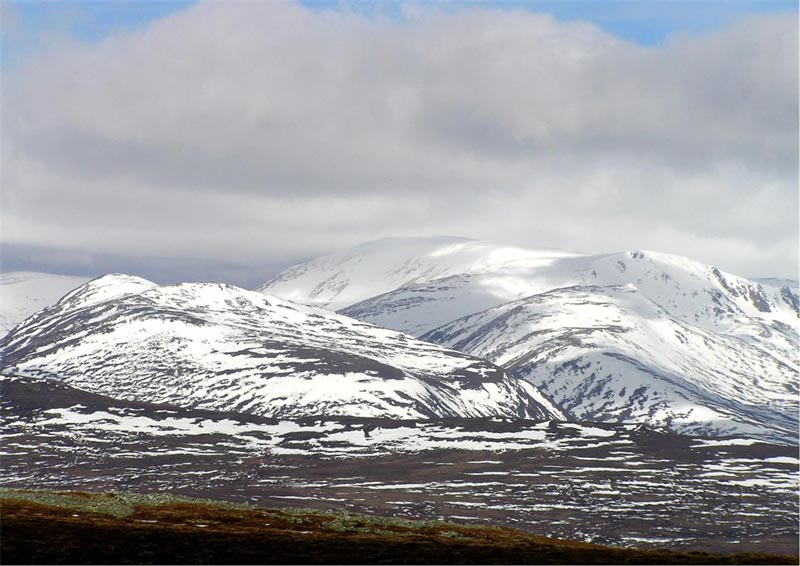
There are numerous rivers and burns in Aberdeenshire, including Cowie Water, Carron Water, Burn of Muchalls, River Dee, River Don, River Ury, River Ythan, Water of Feugh, Burn of Myrehouse, Laeca Burn and Luther Water. Numerous bays and estuaries are found along the seacoast of Aberdeenshire, including Banff Bay, Ythan Estuary, Stonehaven Bay and Thornyhive Bay. Aberdeenshire has a marine west coast climate on the Köppen climate classification.
Aberdeenshire is in the rain shadow of the Grampians, therefore it has a generally dry climate for a maritime region, with portions of the coast receiving 25 in of moisture annually. Summers are mild, and winters are typically cold in Aberdeenshire; Coastal temperatures are moderated by the North Sea such that coastal areas are typically cooler in the summer and warmer in the winter than inland locations. Coastal areas are also subject to haar, or coastal fog.
Notable residents
- John Skinner, (1721–1807) author, poet and ecclesiastic.
- Hugh Mercer, (1726–1777), born in the manse of Pitsligo Kirk, near Rosehearty, brigadier general of the Continental Army.
- Alexander Garden, (1730–1791), born in Birse, was a naturalist and physician who moved to North America in 1754. The gardenia flower is named in his honour.
- John Kemp, (1763–1812), born in Auchlossan, was a noted educator at Columbia University who is said to have influenced DeWitt Clinton's opinions and policies.
- George MacDonald (1824–1905), author, poet, and theologian born and raised in Huntly.
- Dame Evelyn Glennie, born and raised in Ellon on 19 July 1965, musician.
- Evan Duthie, (born 2000), DJ and producer.
- Peter Nicol, born in Inverurie on 5 April 1973, is a former professional squash player who represented first Scotland and then England in international squash.
- Peter Shepherd, (1841–1879), Surgeon Major, Royal Army Medical Corps
- Johanna Basford (born 1983), illustrator and textile designer
- Iona Fyfe (born 1998), singer and musician.
Notes
References
References
- "Council and democracy".
- {{UK subdivision statistics citation
- [http://www.ros.gov.uk/pdfs/map.pdf Land Register Counties & Operational Dates] {{webarchive. link. (28 September 2013)
- "Aberdeenshire Council – Profile 2012".
- "Aberdeenshire profile". Aberdeenshire Council.
- (2013). "Scotland". Macmillan Publishers Ltd..
- [[W. Douglas Simpson]], ''"The Early Castles of Mar",'' Proceedings of the Society, 102, 10 December 1928
- The Megalithic Portal and Megalith Map. "C.Michael Hogan, ''Elsick Mounth'', Megalithic Portal, ed. Andy Burnham". Megalithic.co.uk.
- This rivalry grew worse during and after the Protestant Reformation when religion was another reason for conflict between the clans. The Gordon family adhered to [[Catholicism]] and the [[Clan Forbes. Forbeses]] to [[Protestantism]]. Aberdeenshire was the historic seat of the [[Thomas Dempster#The fall of the clan. clan Dempster]].[https://www.electricscotland.com/history/statistical/turriff.htm The New Statistical Account of Scotland]
- {{cite legislation UK. (1973)
- (2010). "Aberdeenshire". Encyclopædia Britannica Inc..
- "Aberdeenshire Council Identity in 2011 Census".
- (August 2019). "What's happening in... Aberdeenshire's Towns Inverurie & Port Elphinstone".
- Census Dissemination Unit, Mimas. (5 May 2011). "InFuse".
- "Scotland's Census 2011 – Table KS201SC". scotlandscensus.gov.uk.
- . (21 May 2024). ["Scotland's Census 2022 - Ethnic group, national identity, language and religion - Chart data"](https://www.scotlandscensus.gov.uk/media/trbdxzme/scotland-s-census-2022-ethnic-group-national-identity-language-and-religion-chart-data.xlsx). *[[National Records of Scotland]]*.
- [https://www.scotlandscensus.gov.uk/webapi/opentable?id=019a1a62-eab8-76fc-98d0-f7e8423a5077]
- [https://www.scotlandscensus.gov.uk/webapi/opentable?id=019a2022-ecdd-77ea-96ad-569f0c5b3786]
- "National Records of Scotland, Statistics and Data, Statistics, Statistics by Theme, Population, Population Estimates, Settlements and Localities, Archive, Mid-2010, List of Tables".
- {{Scottish settlement population citation
- Shepherd, Mike. (2015). "Oil Strike North Sea: A first-hand history of North Sea oil.". Luath Press.
- "Aberdeenshire Council – Profile 2012".
- (1963). "Who Was Who in America, Historical Volume, 1607–1896". Marquis Who's Who.
- (July 2006). "Follow The Paper Trail". Herald & Times Group.
- "Rough Cut Nation (Exhibition Notes)".
This article was imported from Wikipedia and is available under the Creative Commons Attribution-ShareAlike 4.0 License. Content has been adapted to SurfDoc format. Original contributors can be found on the article history page.
Ask Mako anything about Aberdeenshire — get instant answers, deeper analysis, and related topics.
Research with MakoFree with your Surf account
Create a free account to save articles, ask Mako questions, and organize your research.
Sign up freeThis content may have been generated or modified by AI. CloudSurf Software LLC is not responsible for the accuracy, completeness, or reliability of AI-generated content. Always verify important information from primary sources.
Report