From Surf Wiki (app.surf) — the open knowledge base
Aaron Swartz
American computer programmer and activist (1986–2013)

American computer programmer and activist (1986–2013)
| Field | Value | |
|---|---|---|
| name | Aaron Swartz | |
| image | Aaron Swartz in 2011.jpg | |
| alt | Swartz with glasses, smiling with Jason Scott (cut off from the picture from the left) | |
| caption | Swartz in 2011 | |
| birth_name | Aaron Hillel Swartz | |
| birth_date | ||
| birth_place | Highland Park, Illinois, U.S. | |
| death_date | ||
| death_place | New York City, U.S. | |
| resting_place | Shalom Memorial Park, Arlington Heights, Illinois, U.S. | |
| resting_place_coordinates | ||
| death_cause | Suicide by hanging | |
| occupation | ||
| organization | ||
| years_active | 1999–2013 | |
| title | Fellow, Harvard University Edmond J. Safra Center for Ethics | |
| partners | {{plainlist | |
| awards | {{plainlist | |
| website | ||
| education | Stanford University | |
| (no degree) |
- Quinn Norton (2007–2011)
- Taren Stinebrickner-Kauffman (2011–2013)
- ArsDigita Prize 2000
- American Library Association James Madison Award 2013 (posthumously)
- EFF Pioneer Award 2013 (posthumously)
- Internet Hall of Fame 2013 (posthumously) (no degree)
Aaron Hillel Swartz (November 8, 1986January 11, 2013), also known as AaronSw, was an American computer programmer, entrepreneur, writer, political organizer, and Internet hacktivist. As a programmer, Swartz helped develop the web feed format RSS; the technical architecture for Creative Commons, an organization dedicated to creating copyright licenses; and the Python website framework web.py. Swartz helped define the syntax of the lightweight markup language format Markdown, and was a co-owner of the social news aggregation website Reddit and contributed to its development until he left the company in 2007. He is often credited as a martyr and a prodigy, and much of his work focused on civic awareness and progressive activism.
After Reddit was sold to Condé Nast Publications in 2006, Swartz became more involved in activism, helping launch the Progressive Change Campaign Committee in 2009. In 2010, he became a research fellow at Harvard University's Safra Research Lab on Institutional Corruption, directed by Lawrence Lessig. He founded the online group Demand Progress, known for its campaign against the Stop Online Piracy Act.
On January 6, 2011, Swartz was arrested by Massachusetts Institute of Technology (MIT) police on state breaking-and-entering charges, after connecting a computer to the MIT network in an unmarked and unlocked closet and setting it to download academic journal articles from JSTOR using a guest user account issued to him by MIT. Federal prosecutors, led by Carmen Ortiz, charged him with two counts of wire fraud and eleven violations of the Computer Fraud and Abuse Act, carrying a cumulative maximum penalty of $1 million in fines, 35years in prison, asset forfeiture, restitution, and supervised release. Swartz declined a plea bargain under which he would have served six months in federal prison. Two days after the prosecution rejected a counter-offer by Swartz, he was found dead in his Brooklyn apartment. In 2013, Swartz was inducted posthumously into the Internet Hall of Fame.
Early life
Aaron Hillel Swartz was born in Highland Park, 25 mi north of Chicago, to a Jewish family. He was the eldest child of Susan and Robert Swartz and brother to Noah and Ben Swartz. His father founded the software firm Mark Williams Company. At an early age, Swartz immersed himself in the study of computers, programming, the Internet, and Internet culture. He attended North Shore Country Day School, a small private school near Chicago, until ninth grade, when he left high school and enrolled in courses at Lake Forest College.
In 1999, at age 12, he created the website The Info Network, a user-generated encyclopedia. The site won the ArsDigita Prize, given to young people who create "useful, educational, and collaborative" noncommercial websites. and led to early recognition of Swartz's nascent talent in coding. At age 14, he became a member of the working group that authored the RSS 1.0 web syndication specification. A year later, he became involved in the Creative Commons organization. In 2004, he enrolled at Stanford University but left the school after his first year.
Entrepreneurship
During Swartz's first year at Stanford, he applied to Y Combinator's first Summer Founders Program, proposing to work on a startup called Infogami, a flexible content management system designed to create rich and visually interesting websites or a form of wiki for structured data. After working on it with co-founder Simon Carstensen over the summer of 2005, Swartz opted not to return to Stanford, choosing instead to continue to develop and seek funding for Infogami.
As part of his work on Infogami, Swartz created the web.py web application framework because he was unhappy with other available systems in the Python programming language. In the early fall of 2005, he worked with his fellow co-founders of another nascent Y-Combinator firm, Reddit, to rewrite its Lisp codebase using Python and web.py. Although Infogami's platform was abandoned after Not a Bug was acquired, Infogami's software was used to support the Internet Archive's Open Library project and the web.py web framework was used as the basis for many other projects by Swartz and many others.
When Infogami failed to find further funding, Y-Combinator organizers suggested Infogami merge with Reddit, which it did in November 2005, creating a new firm, Not a Bug, devoted to promoting both products. As a result, Swartz was given the title of co-founder of Reddit. Although both projects initially struggled, Reddit made large gains in popularity in 20052006.
In October 2006, based largely on Reddit's success, Not a Bug was acquired by Condé Nast Publications, owner of Wired magazine. Swartz moved with his company to San Francisco to continue to work on Reddit for Wired. He found corporate office life uncongenial and in January 2007 was asked to resign from the company. In September 2007, he joined Infogami co-founder Simon Carstensen to launch a new firm, Jottit, in another attempt to create a Markdown-driven content management system in Python.
Activism
In 2008, Swartz founded Watchdog.net, "the good government site with teeth", to aggregate and visualize data about politicians. That year, he wrote a widely circulated Guerilla Open Access Manifesto. On December 27, 2010, he filed a Freedom of Information Act (FOIA) request to learn about the treatment of Chelsea Manning, alleged source for WikiLeaks. His activism has been praised by digital rights groups such as the Electronic Frontier Foundation (EFF).
PACER
In 2008, Swartz downloaded about 2.7 million federal court documents stored in the PACER (Public Access to Court Electronic Records) database managed by the Administrative Office of the United States Courts. The Huffington Post characterized his actions this way: "Swartz downloaded public court documents from the PACER system in an effort to make them available outside of the expensive service. The move drew the attention of the FBI, which ultimately decided not to press charges as the documents were, in fact, public."
PACER was charging eight cents per page for information that Carl Malamud, who founded the nonprofit group Public.Resource.Org, contended should be free, because federal documents are not covered by copyright. The fees were "plowed back to the courts to finance technology, but the system [ran] a budget surplus of some $150 million, according to court reports," reported The New York Times. PACER used technology that was "designed in the bygone days of screechy telephone modems ... putting the nation's legal system behind a wall of cash and kludge." Malamud appealed to fellow activists, urging them to visit one of 17 libraries conducting a free trial of the PACER system, download court documents, and send them to him for public distribution.
After reading Malamud's call for action, Swartz used a Perl computer script running on Amazon cloud servers to download the documents, using credentials belonging to a Sacramento library. From September 4 to 20, 2008, it accessed documents and uploaded them to a cloud computing service. He released the documents to Malamud's organization.
On September 29, 2008, the GPO suspended the free trial, "pending an evaluation" of the program. Swartz's actions were subsequently investigated by the FBI. The case was closed after two months with no charges filed. Swartz learned the details of the investigation after filing a FOIA request with the FBI, and described their response as the "usual mess of confusions that shows the FBI's lack of sense of humor."
At a 2013 memorial for Swartz, Malamud recalled their work with PACER. They brought millions of U.S. District Court records out from behind PACER's "pay wall", he said, and found them full of privacy violations, including medical records and the names of minor children and confidential informants.
So they called the FBI ... [The FBI] found nothing wrong ...}}
A more detailed account of his collaboration with Swartz on the PACER project appears in an essay on Malamud's website.
Writing in Ars Technica, Timothy Lee, who later made use of the documents obtained by Swartz as a co-creator of RECAP, offered some insight into discrepancies in reports on how much data Swartz downloaded: "In a back-of-the-envelope calculation a few days before the offsite crawl was shut down, Swartz guessed he got around 25 percent of the documents in PACER. The New York Times similarly reported Swartz had downloaded "an estimated 20 percent of the entire database". Based on the facts that Swartz downloaded 2.7million documents while PACER, at the time, contained 500 million, Lee concluded that Swartz downloaded less than one percent of the database.
Progressive Change Campaign Committee
In 2009, wanting to learn about effective activism, Swartz helped launch the Progressive Change Campaign Committee. He wrote in his blog: "I spend my days experimenting with new ways to get progressive policies enacted and progressive politicians elected." He led the first activism event of his career with the Progressive Change Campaign Committee, delivering thousands of "Honor Kennedy" petition signatures to Massachusetts legislators, asking them to fulfill former Senator Ted Kennedy's last wish by appointing a senator to vote for healthcare reform.
Demand Progress
In 2010, Swartz co-founded Demand Progress, a political advocacy group that organizes people online to "take action by contacting Congress and other leaders, funding pressure tactics, and spreading the word" about civil liberties, government reform, and other issues.
During academic year 2010–11, Swartz conducted research studies on political corruption as a Lab Fellow in Harvard University's Edmond J. Safra Research Lab on Institutional Corruption.
Author Cory Doctorow, in his novel Homeland, "drew on advice from Swartz in setting out how his protagonist could use the information now available about voters to create a grass-roots anti-establishment political campaign." In an afterword to the novel, Swartz wrote: "These political hacktivist tools can be used by anyone motivated and talented enough.... Now it's up to you to change the system. ... Let me know if I can help."
Opposition to the Stop Online Piracy Act (SOPA)

Swartz was involved in the campaign to prevent passage of the Stop Online Piracy Act (SOPA), which sought to combat Internet copyright violations but was criticized on the basis that it would make it easier for the U.S. government to shut down web sites accused of violating copyright and would place intolerable burdens on Internet providers. After the bill's defeat, Swartz was the keynote speaker at the F2C:Freedom to Connect 2012 event in Washington, D.C., on May 21, 2012. In his speech, "How We Stopped SOPA", he said:
I called all my friends, and we stayed up all night setting up a website for this new group, Demand Progress, with an online petition opposing this noxious bill.... We [got] ... 300,000 signers.... We met with the staff of members of Congress and pleaded with them.... And then it passed unanimously.... And then, suddenly, the process stopped. Senator Ron Wyden ... put a hold on the bill.}}
He added, "We won this fight because everyone made themselves the hero of their own story. Everyone took it as their job to save this crucial freedom." He was referring to a series of protests against the bill by numerous websites, described by the Electronic Frontier Foundation as the biggest protest in Internet history, with over 115,000 sites participating according to the nonprofit organization Fight for the Future. Swartz also spoke on the topic at an event organized by ThoughtWorks.
Wikipedia

Swartz participated in Wikipedia beginning in August 2003 under the username AaronSw. In 2006, he ran unsuccessfully for the Wikimedia Foundation's Board of Trustees.
In 2006, Swartz wrote an analysis of how Wikipedia articles are written, and concluded that the bulk of its content came from tens of thousands of occasional contributors, or "outsiders", each of whom made few other contributions to the site, while a core group of 500 to 1,000 regular editors tended to correct spelling and other formatting errors. He said: "The formatters aid the contributors, not the other way around." His conclusions, based on the analysis of edit histories of several randomly selected articles, contradicted the opinion of Wikipedia co-founder Jimmy Wales, who believed the core group of regular editors provided most of the content while thousands of others contributed to formatting issues. Swartz came to his conclusions by counting the number of characters editors added to particular articles, while Wales counted the total number of edits.
WikiLeaks
In January 2013, shortly after he died, WikiLeaks said that Aaron Swartz had helped WikiLeaks and talked to Julian Assange in 2010 and 2011. WikiLeaks also said they had "strong reasons to believe, but cannot prove" he may have been a source, possibly breaking WikiLeaks' rules about source anonymity. WikiLeaks may have made the statements to imply that Swartz was targeted by the US Attorney's Office and Secret Service in order to get at WikiLeaks.
''United States v. Aaron Swartz''
Main article: United States v. Swartz
According to state and federal authorities, Swartz used JSTOR, a digital repository, to download a large number of academic journal articles through MIT's computer network over the course of a few weeks in late 2010 and early 2011. Visitors to MIT's "open campus" were authorized to access JSTOR through its network; Swartz, as a research fellow at Harvard University, also had a JSTOR account.
Article download
On September 25, 2010, the IP address 18.55.6.215, part of the MIT network, began sending hundreds of PDF download requests per minute to the JSTOR website, enough to slow the site's performance. This prompted a block of the IP address. In the morning, another IP address, also from within the MIT network, began sending more PDF download requests, resulting in a temporary block on the firewall level of all MIT computers in the entire 18.0.0.0/8 range. A JSTOR employee emailed MIT on September 29, 2010:
The pattern used was to create a new session for each PDF download or every few, which was terribly efficient, but not terribly subtle. In the end, we saw over 200K sessions in one hour's time during the peak. }}
According to authorities, Swartz downloaded the documents through a laptop connected to a networking switch in a controlled-access wiring closet at MIT. The closet's door was kept unlocked, according to press reports. When it was discovered, a video camera was placed in the room to record Swartz; his computer was left untouched. The recording was stopped once Swartz was identified, but rather than pursue a civil lawsuit against him, JSTOR settled with him in June 2011; under the terms of the settlement, he surrendered the downloaded data.
On July 30, 2013, JSTOR released 300 partially redacted documents used as incriminating evidence against Swartz, originally sent to the United States Attorney's Office in response to subpoenas in the case United States v. Aaron Swartz.
File:Swartz-jstor-evidence-pdf-page-3142.png|"Root Cause Analysis" Report (side 1), showing a descriptive timeline of events from September 25, 2010, until December 26, 2010 File:Swartz-jstor-evidence-pdf-page-3143.png|"Root Cause Analysis" Report (side 2), showing JSTOR response and incident resolution procedures File:Swartz-jstor-evidence-pdf-page-3127.png|Email sent from JSTOR to Stephen Heymann (USAMA), estimating 3.5 million PDF files had been downloaded File:Swartz-jstor-evidence-pdf-page-3128.png|Email describing PDF download activity snapshots File:Swartz-jstor-evidence-pdf-page-3129.png|PDF download activity, from JSTOR's databases to MIT computers, between November 1 and December 27 File:Swartz-jstor-evidence-pdf-page-3136.png|PDF activity, from JSTOR to MIT, between January 1 to 15
Arrest and prosecution
On the night of January 6, 2011, Swartz was arrested near the Harvard campus by MIT Police and a Secret Service agent, and arraigned in Cambridge District Court on two state charges of breaking and entering with intent to commit a felony.
On July 11, 2011, he was indicted by a federal grand jury on charges of wire fraud, computer fraud, unlawfully obtaining information from a protected computer, and recklessly damaging a protected computer.
On November 17, 2011, Swartz was indicted by a Middlesex County Superior Court grand jury on state charges of breaking and entering with intent, grand larceny, and unauthorized access to a computer network. On December 16, 2011, state prosecutors filed a notice that they were dropping the two original charges, and the charges listed in the November 17, 2011, indictment were dropped on March 8, 2012. According to a spokesperson for the Middlesex County prosecutor, this was done to avoid impeding a federal prosecution headed by Stephen P. Heymann, supported by evidence provided by Secret Service agent Michael S. Pickett.
On September 12, 2012, federal prosecutors filed a superseding indictment adding nine more felony counts, increasing Swartz's maximum criminal exposure to 50years of imprisonment and $1 million in fines. During plea negotiations with Swartz's attorneys, the prosecutors offered to recommend a sentence of six months in a low-security prison if Swartz pled guilty to 13 federal crimes. Swartz and his lead attorney rejected the deal, opting instead for a trial where prosecutors would be forced to justify their pursuit of him.
The federal prosecution involved what was characterized by numerous critics (such as former Nixon White House counsel John Dean) as an "overcharging" 13-count indictment and "overzealous", "Nixonian" prosecution for alleged computer crimes, brought by then U.S. Attorney for Massachusetts Carmen Ortiz.
Swartz died by suicide on January 11, 2013. After his death, federal prosecutors dropped the charges. On December 4, 2013, due to a Freedom of Information Act suit by the investigations editor of Wired magazine, several documents related to the case were released by the Secret Service, including a video of Swartz entering the MIT network closet.
Personal life
Swartz was in an open relationship with Quinn Norton between 2007 and 2011, and then dated Taren Stinebrickner-Kauffman from 2011 until his death in 2013, and also contemplated marriage with her. He also reportedly had same-sex relationships, and was against the idea of sexual identity in relationships, saying that relationships are more of an act rather than being about identity. Aside from his work, he posted frequently on Twitter, Reddit and his personal website. He was an atheist.
Death
On the evening of January 11, 2013, Swartz's girlfriend, Taren Stinebrickner-Kauffman, found him dead in his Brooklyn apartment. A spokeswoman for New York's Medical Examiner reported that he had hanged himself. No suicide note was found. Swartz's family and his partner created a memorial website on which they issued a statement, saying: "He used his prodigious skills as a programmer and technologist not to enrich himself but to make the Internet and the world a fairer, better place."
Days before Swartz's funeral, Lawrence Lessig eulogized his friend and sometime-client in an essay, "Prosecutor as Bully." He decried the disproportionality of Swartz's prosecution and said, "The question this government needs to answer is why it was so necessary that Aaron Swartz be labeled a 'felon'. For in the 18 months of negotiations, that was what he was not willing to accept." Cory Doctorow wrote, "Aaron had an unbeatable combination of political insight, technical skill, and intelligence about people and issues. I think he could have revolutionized American (and worldwide) politics. His legacy may still yet do so."
Funeral and memorial gatherings

Swartz's funeral services were held on January 15, 2013, at Central Avenue Synagogue in Highland Park, Illinois. Tim Berners-Lee, creator of the World Wide Web, delivered a eulogy. He is buried at Shalom Memorial Park in Arlington Heights. The same day, The Wall Street Journal published a story based in part on an interview with Taren Stinebrickner-Kauffman. She told the Journal that Swartz lacked the money to pay for a trial and "it was too hard for him to ... make that part of his life go public" by asking for help. He was also distressed, she said, because two of his friends had just been subpoenaed and because he no longer believed that MIT would try to stop the prosecution.
Several memorials followed soon afterward. On January 19, hundreds attended a memorial at the Cooper Union, speakers at which included Taren Stinebrickner-Kauffman, open source advocate Doc Searls, Creative Commons' Glenn Otis Brown, journalist Quinn Norton, Roy Singham of ThoughtWorks, and David Segal of Demand Progress. On January 24, there was a memorial at the Internet Archive headquarters in San Francisco (video) with speakers including Stinebrickner-Kauffman, Alex Stamos, Brewster Kahle, Peter Eckersley, and Carl Malamud. On February 4, a memorial was held in the Cannon House Office Building on Capitol Hill; speakers at this memorial included Senator Ron Wyden and Representatives Darrell Issa, Alan Grayson, and Jared Polis, and other lawmakers in attendance included Senator Elizabeth Warren and Representatives Zoe Lofgren and Jan Schakowsky. Harvey Silverglate was a featured speaker at a rally by Demand Progress in Swartz's memory. A memorial also took place on March 12 at the MIT Media Lab.
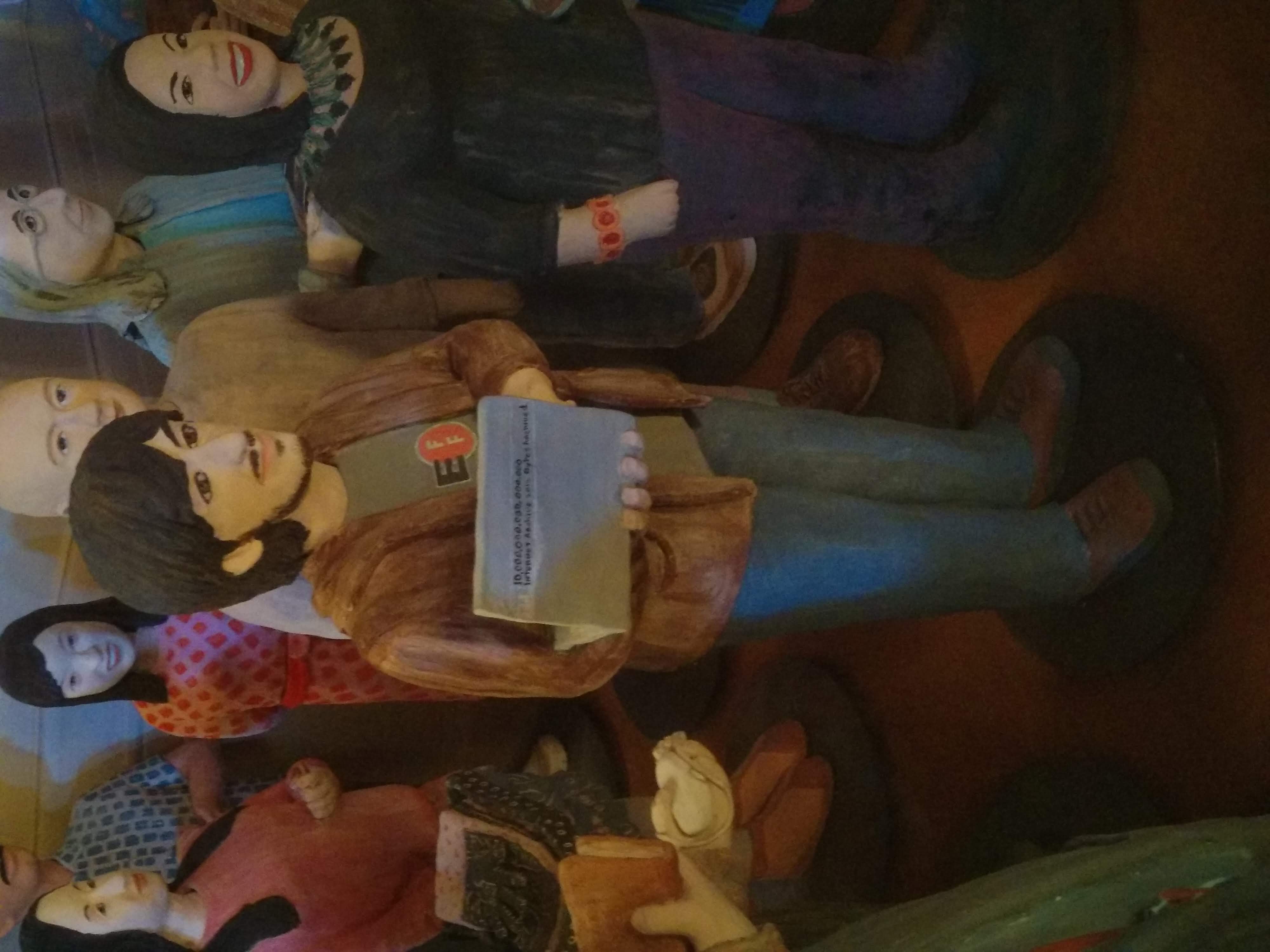
On February 2, 2025, a statue of Aaron was unveiled at the Internet Archive. This was organized by Pablo Peniche and Lisa Rein. The statue now stands in the lobby of the Internet Archive in San Francisco, California.
Swartz's family recommended GiveWell for donations in his memory, an organization that Swartz admired, had collaborated with and was the sole beneficiary of his will.
Response
U.S. Department of Justice
Carmen M. Ortiz, then U.S. Attorney for the District of Massachusetts, said in a statement: "As a parent and a sister, I can only imagine the pain felt by the family and friends of Aaron Swartz, [...] I must, however, make clear that this office's conduct was appropriate in bringing and handling this case."
Family response
On January 12, 2013, Swartz's family and partner issued a statement criticizing the prosecutors and MIT. Speaking at his son's funeral on January 15, Robert Swartz said, "Aaron was killed by the government, and MIT betrayed all of its basic principles."
Tom Dolan, husband of U.S. Attorney for Massachusetts Carmen Ortiz, whose office prosecuted Swartz's case, replied with criticism of the Swartz family: "Truly incredible that in their own son's obit they blame others for his death and make no mention of the 6-month offer." This comment triggered some criticism; Esquire writer Charlie Pierce replied, "the glibness with which her husband and her defenders toss off a 'mere' six months in federal prison, low-security or not, is a further indication that something is seriously out of whack with the way our prosecutors think these days."
MIT
At the time, MIT maintained an open-campus policy along with an "open network". Two days after Swartz's death, MIT President L. Rafael Reif commissioned professor Hal Abelson to lead an analysis of MIT's options and decisions relating to Swartz's "legal struggles". To help guide the fact-finding stage of the review, MIT created a website where community members could suggest questions and issues for the review to address.
Swartz's attorneys requested that all pretrial discovery documents be made public, a move which MIT opposed. Swartz allies have criticized MIT for its opposition to releasing the evidence without redactions. On July 26, 2013, the Abelson panel submitted a 182-page report to MIT president, L. Rafael Reif, who authorized its public release on July 30. The panel reported that MIT had not supported charges against Swartz and cleared the institution of wrongdoing. However, its report also noted that despite MIT's advocacy for open access culture at the institutional level and beyond, the university never extended that support to Swartz. The report revealed, for example, that while MIT considered the possibility of issuing a public statement about its position on the case, such a statement never materialized.
Press
The Huffington Post reported that "Ortiz has faced significant backlash for pursuing the case against Swartz, including a petition to the White House to have her fired." Other news outlets reported similarly.
Reuters news agency called Swartz "an online icon" who "help[ed] to make a virtual mountain of information freely available to the public, including an estimated 19 million pages of federal court documents." The Associated Press (AP) reported that Swartz's case "highlights society's uncertain, evolving view of how to treat people who break into computer systems and share data not to enrich themselves, but to make it available to others," and that JSTOR's lawyer, former U.S. Attorney for the Southern District of New York Mary Jo White, had asked the lead prosecutor to drop the charges.
As discussed by the editor Hrag Vartanian in Hyperallergic, Brooklyn, New York muralist BAMN ("By Any Means Necessary") created a mural of Swartz. "Swartz was an amazing human being who fought tirelessly for our right to a free and open Internet," the artist explained. "He was much more than just the 'Reddit guy'."
Speaking on April 17, 2013, Yuval Noah Harari described Swartz as "the first martyr of the Freedom of Information movement". However, according to Harari, Swartz's stance did not illustrate the belief in the freedom of persons or speech but stemmed from the increasing belief among the young generation that above anything else, information should be free.
Swartz's legacy has been reported as strengthening the open access to scholarship movement. In Illinois, his home state, Swartz's influence led state university faculties to adopt policies in favor of open access.
Internet
Hacks
On January 13, 2013, members of Anonymous hacked two websites on the MIT domain, replacing them with tributes to Swartz that called on members of the Internet community to use his death as a rallying point for the open access movement. The banner included a list of demands for improvements in the U.S. copyright system, along with Swartz's Guerilla Open Access Manifesto. On the night of January 18, 2013, MIT's e-mail system was taken offline for ten hours. On January 22, e-mail sent to MIT was redirected by hackers Aush0k and TibitXimer to the Korea Advanced Institute of Science & Technology. All other traffic to MIT was redirected to a computer at Harvard University that was publishing a statement headed "R.I.P Aaron Swartz," with text from a 2009 posting by Swartz, accompanied by a chiptune version of "The Star-Spangled Banner". MIT regained full control after about seven hours. In the early hours of January 26, 2013, the U.S. Sentencing Commission website, USSC.gov, was hacked by Anonymous. The home page was replaced with an embedded YouTube video, Anonymous Operation Last Resort. The video statement said Swartz "faced an impossible choice". A hacker downloaded "hundreds of thousands" of scientific-journal articles from a Swiss publisher's website and republished them on the open Web in Swartz's honor a week before the first anniversary of his death.
Petition to the White House
After Swartz's death, more than 50,000 people signed an online petition to the White House calling for the removal of Ortiz, "for overreach in the case of Aaron Swartz." A similar petition was submitted calling for prosecutor Stephen Heymann's firing. In January 2015, two years after Swartz's death, the White House declined both petitions.
Commemorations
On August 3, 2013, Swartz was posthumously inducted into the Internet Hall of Fame. There was a hackathon held in Swartz's memory around the date of his birthday in 2013. Over the weekend of November 8–10, 2013, inspired by Swartz's work and life, a second annual hackathon was held in at least 16 cities around the world. Preliminary topics worked on at the 2013 Aaron Swartz Hackathon were privacy and software tools, transparency, activism, access, legal fixes and a low-cost book scanner. In January 2014, Lawrence Lessig led a walk across New Hampshire in honor of Swartz, rallying for campaign finance reform.
In 2017, the Turkish-Dutch artist Ahmet Öğüt commemorated Swartz through a work entitled "Information Power to The People" which depicted his bust.
Legacy
Open Access
A long-time supporter of open access, Swartz wrote in his Guerilla Open Access Manifesto:
The world's entire scientific ... heritage ... is increasingly being digitized and locked up by a handful of private corporations....
The Open Access Movement has fought valiantly to ensure that scientists do not sign their copyrights away but instead ensure their work is published on the Internet, under terms that allow anyone to access it.}}
Supporters of Swartz responded to news of his death with an effort called #PDFTribute to promote Open Access. On January 12, Eva Vivalt, a development economist at the World Bank, began posting her academic articles online using the hashtag #pdftribute as a tribute to Swartz. Scholars posted links to their works. Swartz's story has exposed the topic of open access to scientific publications to wider audiences. In Swartz's wake, many institutions and personalities have campaigned for open access to scientific knowledge. Swartz's death prompted calls for more open access to scholarly data (e.g., open science data). The Think Computer Foundation and the Center for Information Technology Policy (CITP) at Princeton University announced scholarships awarded in memory of Swartz. In 2013, Swartz was posthumously awarded the American Library Association's James Madison Award for being an "outspoken advocate for public participation in government and unrestricted access to peer-reviewed scholarly articles". In March, the editor and editorial board of the Journal of Library Administration resigned en masse, citing a dispute with the journal's publisher, Routledge. One board member wrote of a "crisis of conscience about publishing in a journal that was not open access" after the death of Swartz. In 2002, Swartz had stated that when he died, he wanted all the contents of his hard drives made publicly available.
Congress
Several members of the U.S. House of Representatives – Republican Darrell Issa and Democrats Zoe Lofgren and subsequent Colorado Governor Jared Polis – all on the House Judiciary Committee, raised questions regarding the government's handling of the case.
Calling the charges against him "ridiculous and trumped up", Polis said Swartz was a "martyr", whose death illustrated the need for Congress to limit the discretion of federal prosecutors. Speaking at a memorial for Swartz on Capitol Hill, Issa said
Massachusetts Democratic Senator Elizabeth Warren issued a statement saying "[Aaron's] advocacy for Internet freedom, social justice, and Wall Street reform demonstrated ... the power of his ideas ..."
In a letter to Attorney General Eric Holder, Texas Republican Senator John Cornyn asked, "On what basis did the U.S. Attorney for the District of Massachusetts conclude that her office's conduct was 'appropriate'?" and "Was the prosecution of Mr. Swartz in any way retaliation for his exercise of his rights as a citizen under the Freedom of Information Act?"
Congressional investigations
Issa, who chaired the House Committee on Oversight and Government Reform, announced that he would investigate the Justice Department's actions in prosecuting Swartz. In a statement to The Huffington Post, he praised Swartz's work toward "open government and free access to the people". Issa's investigation has garnered some bipartisan support.
On January 28, 2013, Issa and ranking committee member Elijah Cummings published a letter to U.S. Attorney General Holder, questioning why federal prosecutors had filed the superseding indictment. On February 20, WBUR reported that Ortiz was expected to testify at an upcoming Oversight Committee hearing about her office's handling of the Swartz case. On February 22, Associate Deputy Attorney General Steven Reich conducted a briefing for congressional staffers involved in the investigation. They were told that Swartz's Guerilla Open Access Manifesto played a role in prosecutorial decision-making. Congressional staffers left this briefing believing that prosecutors thought Swartz had to be convicted of a felony carrying at least a short prison sentence in order to justify having filed the case against him in the first place.
Excoriating the Department of Justice as the "Department of Vengeance", Stinebrickner-Kauffman told the Guardian that the DOJ had erred in relying on Swartz's Guerilla Open Access Manifesto as an accurate indication of his beliefs by 2010. "He was no longer a single issue activist," she said. "He was into lots of things, from healthcare, to climate change to money in politics."
On March 6, Holder testified before the Senate Judiciary Committee that the case was "a good use of prosecutorial discretion". Stinebrickner-Kauffman issued a statement in reply, repeating and amplifying her claims of prosecutorial misconduct. Public documents, she wrote, reveal that prosecutor Stephen Heymann "instructed the Secret Service to seize and hold evidence without a warrant... lied to the judge about that fact in written briefs... [and] withheld exculpatory evidence... for over a year," violating his legal and ethical obligations to turn such evidence over to the defense. On March 22, Senator Al Franken wrote Holder a letter expressing concerns, writing that "charging a young man like Mr. Swartz with federal offenses punishable by over 35 years of federal imprisonment seems remarkably aggressive – particularly when it appears that one of the principal aggrieved parties ... did not support a criminal prosecution."
Amendment to Computer Fraud and Abuse Act
Main article: Aaron's Law
In 2013, Rep. Zoe Lofgren (D-Calif.) introduced a bill, Aaron's Law (, ) to exclude terms of service violations from the 1986 Computer Fraud and Abuse Act and from the wire fraud statute.
Lawrence Lessig wrote of the bill, "this is a critically important change.... The CFAA was the hook for the government's bullying.... This law would remove that hook. In a single line: no longer would it be a felony to breach a contract." Professor Orin Kerr, a specialist in the nexus between computer law and criminal law, wrote that he had been arguing for precisely this sort of reform of the Act for years. The ACLU, too, has called for reform of the CFAA to "remove the dangerously broad criminalization of online activity". The EFF has mounted a campaign for these reforms. Lessig's inaugural Chair lecture as Furman Professor of Law and Leadership was entitled Aaron's Laws: Law and Justice in a Digital Age; he dedicated the lecture to Swartz.
The Aaron's Law bill stalled in committee. Brian Knappenberger alleges this was due to Oracle Corporation's financial interest in maintaining the status quo.
Fair Access to Science and Technology Research Act
The Fair Access to Science and Technology Research Act (FASTR) is a bill that would mandate earlier public release of taxpayer-funded research. FASTR has been described as "The Other Aaron's Law".
Senators Ron Wyden (D-Ore.) and John Cornyn (R-Tex.) introduced the Senate version in 2013, 2015 and 2017, while the bill was introduced to the House of Representatives by representatives Zoe Lofgren (D-Calif.), Mike Doyle (D-Pa.) and Kevin Yoder (R-Kans.). Senator Wyden wrote of the bill, "the FASTR act provides that access to taxpayer funded research should never be hidden behind a paywall."
While the legislation did not pass, it prompted more open access on the part of the US government. Shortly after the bill's original introduction in 2013, the Office of Science and Technology Policy directed "each Federal agency with over $100 million in annual conduct of research and development expenditures to develop a plan to support increased public access to the results of research funded by the Federal Government".
Aaron Swartz Day
Since 2013, Aaron Swartz Day has been celebrated on his birthday, November 8, with hackathons and livestreamed talks related to the many issues that Aaron was passionate about, such as open access and progressive politics & economics. Past speakers include Chelsea Manning, Barrett Brown, Trevor Timm from Freedom of the Press Foundation, Cory Doctorow, Cindy Cohn, Jason Leopold, and Brewster Kahle.
Media
Swartz has been featured in various works of art and has posthumously received dedications from numerous artists. He himself starred in few documentaries, Aardvark'd: 12 Weeks with Geeks with his Reddit colleagues and Paul Graham in 2005, and after leaving Reddit he appeared in Steal This Film II in 2007. Swartz's first posthumous work was in 2013, when Kenneth Goldsmith dedicated his "Printing out the Internet" exhibition to Swartz. There are also dedicated biographical films for Aaron:
''The Internet's Own Boy: The Story of Aaron Swartz''
Main article: The Internet's Own Boy: The Story of Aaron Swartz
On January 11, 2014, marking the first anniversary of his death, a preview was released of The Internet's Own Boy: The Story of Aaron Swartz, a documentary about Swartz, the NSA and SOPA. The film was officially released at the January 2014 Sundance Film Festival. Democracy Now! covered the release of the documentary, as well as Swartz's life and legal case, in a sprawling interview with director Brian Knappenberger, Swartz's father, brother, and his attorney. The documentary is released under a Creative Commons License; it debuted in theaters and on-demand in June 2014.
Mashable called the documentary "a powerful homage to Aaron Swartz". Its debut at Sundance received a standing ovation. Mashable printed, "With the help of experts, The Internet's Own Boy makes a clear argument: Swartz unjustly became a victim of the rights and freedoms for which he stood." The Hollywood Reporter described it as a "heartbreaking" story of a "tech wunderkind persecuted by the U.S. government", and a must-see "for anyone who knows enough to care about the way laws govern information transfer in the digital age".
''Killswitch''
Main article: Killswitch (film)
In October 2014, Killswitch, a documentary film featuring Swartz, as well as Lawrence Lessig, Tim Wu, and Edward Snowden, received its world premiere at the Woodstock Film Festival, where it won the award for Best Editing. The film focuses on Swartz's role in advocating for internet freedoms.
In February 2015, Killswitch was invited to screen at the Capitol Visitor Center in Washington, D.C., by Congressman Alan Grayson. The event was held on the eve of the Federal Communications Commission's historic decision on net neutrality. Congressman Grayson, Lawrence Lessig, and Free Press CEO Craig Aaron spoke about Swartz and his fight on behalf of a free and open Internet at the event.
Congressman Grayson states that Killswitch is "one of the most honest accounts of the battle to control the Internetand access to information itself." Richard von Busack of the Metro Silicon Valley writes of Killswitch, "Some of the most lapidary use of found footage this side of The Atomic Café". Fred Swegles of the Orange County Register remarks, "Anyone who values unfettered access to online information is apt to be captivated by Killswitch, a gripping and fast-paced documentary." Kathy Gill of GeekWire asserts that "Killswitch is much more than a dry recitation of technical history. Director Ali Akbarzadeh, producer Jeff Horn, and writer Chris Dollar created a human-centered story. A large part of that connection comes from Lessig and his relationship with Swartz."
Other films
He appeared in the unreleased film War for the Web where he had been interviewed a year prior to his death.{{cite web|url=https://www.youtube.com/watch?v=-OhyBJxg9RA|title=Aaron's excerpt in War for the Web
Works
Specifications
- Markdown: In collaboration with John Gruber, Swartz co-created Markdown – a lightweight markup language for generating HTML – and was the author of its html2text translator. The syntax for Markdown was influenced by Swartz's earlier atx language (2002), which today is primarily remembered for its syntax for specifying headers, known as atx-style headers: Markdown itself remains in widespread use, with websites including Reddit, GitHub and Discord using it.
- RDF/XML at W3C: In 2001, Swartz joined the RDFCore working group at the World Wide Web Consortium (W3C), where he authored RFC 3870, Application/RDF+XML Media Type Registration. The document described a new media type, "RDF/XML", designed to support the Semantic Web.
Software
- DeadDrop: In 2011–2012, Swartz, Kevin Poulsen, and James Dolan designed and implemented DeadDrop, a system that allows anonymous informants to send electronic documents without fear of disclosure. In May 2013, the first instance of the software was launched by The New Yorker under the name Strongbox. The Freedom of the Press Foundation has since taken over development of the software, which has been renamed SecureDrop.
- Tor2web: In 2008, Swartz worked with Virgil Griffith to design and implement Tor2web, an HTTP proxy for Tor-hidden services. The proxy was designed to provide easy access to Tor from a basic web browser. The software is now maintained by Giovanni Pellerano within the GlobaLeaks project.
Publications
Notes
References
References
- Glaser, April. (2014-11-07). "Join Us This Weekend in Honoring Aaron Swartz's Legacy by Hacking for a Better World".
- Lagorio-Chafkin, Christine. (2018). "We Are the Nerds: The Birth and Tumultuous Life of Reddit, the Internet's Culture Laboratory". Hachette Books.
- (October 31, 2006). "Not A Bug, Inc.: Private company information".
- (October 18, 2010). "Today I Learned". Reddit.
- Swartz, Aaron. "Sociology or Anthropology". Raw Thought.
- Swartz, Aaron. (May 13, 2008). "Simplistic Sociological Functionalism". Raw Thought.
- Anon. (2022). "What's the most important problem in the world? Are you working on it?". [[Hacker News]].
- (January 14, 2013). "Aaron Swartz's Politics".
- Seidman, Bianca. (July 22, 2011). "Internet activist charged with hacking into MIT network". Public Broadcasting Service.
- (2010). "Lab Fellows 2010–2011: Aaron Swartz". Harvard University.
- Gerstein, Josh. (July 22, 2011). "MIT also pressing charges against hacking suspect". Politico.
- {{cite court. Mass. Dist. Ct.]]. (nolle prosequi December 16, 2011). link
- "Aaron Swartz and the Corrupt Practice of Plea Bargaining".
- (January 13, 2013). "Aaron Swartz, Tech Prodigy and Internet Activist, Is Dead at 26".
- (January 13, 2013). "Aaron Swartz, internet freedom activist, dies aged 26". BBC News.
- (June 26, 2013). "Internet Hall of Fame Announces 2013 Inductees". [[Internet Hall of Fame]].
- (January 16, 2013). "Aaron Swartz Remembered as Internet Activist who Changed the World". Patch.
- (February 15, 2013). "The Brilliant Life and Tragic Death of Aaron Swartz".
- (January 13, 2013). "By Eternity Solomon, January 13, 2013, Israeli Life USA".
- Yearwood, Pauline. (February 22, 2013). "Brilliant life, tragic death". Chicago Jewish News.
- Nelson, Valerie J.. (January 12, 2013). "Aaron Swartz dies at 26; Internet folk hero founded Reddit". Los Angeles Times.
- Swartz, Aaron. (September 27, 2007). "How to get a job like mine". Aaron Swartz.
- (January 13, 2013). "Reddit co-creator Aaron Swartz dies from suicide". Chicago Tribune.
- Skaggs, Paula. (January 15, 2013). "Internet activist Aaron Swartz's teachers remember 'brilliant' student". Patch.
- Swartz, Aaron. (January 14, 2002). "It's always cool to run...". Aaron Swartz.
- (February 15, 2013). "The Brilliant Life and Tragic Death of Aaron Swarz". Penske Media Corporation.
- (December 1, 2001). "Second ArsDigita Prize 2000 Finalists and Winners".
- Schofield, Jack. (January 13, 2013). "Aaron Swartz obituary". The Guardian.
- (January 14, 2013). "RSS creator Aaron Swartz dead at 26". Harvard Magazine.
- Lessig, Lawrence. (January 12, 2013). "Remembering Aaron Swartz".
- Sekhri, Aaron. (January 14, 2013). "Aaron Swartz, prodigy and drop-out, takes own life".
- Ryan, Singel. (September 13, 2005). "Stars Rise at Startup Summer Camp".
- Grehan, Rick. (August 10, 2011). "Pillars of Python: Web.py Web framework".
- Swartz, Aaron. (2007). "Introducing Infogami". CondeNet.
- (November 11, 2006). "A passion for your users brings good karma: (Interview with) Alexis Ohanian, co-founder of reddit.com". StartupStories.
- (October 31, 2006). "Breaking News: Condé Nast/Wired Acquires Reddit". Techcrunch.
- (2007). "Aaron Swartz's Jottit has been officially released".
- Klein, Sam. (July 24, 2011). "Aaron Swartz vs. United States". Weblogs at Harvard Law School.
- "The team".
- Norton, Quinn. (March 3, 2013). "Life inside the Aaron Swartz investigation". The Atlantic.
- Murphy, Samantha. (July 22, 2011). "'Guerilla activist' releases 18,000 scientific papers". MIT Technology Review.
- Leopold, Jason. (January 18, 2013). "Aaron Swartz's FOIA Requests Shed Light on His Struggle". [[The Public Record (newspaper).
- (February 9, 2011). "FOI Request: Records related to Bradley Manning". Muckrock.
- Lee, Timothy B.,[https://arstechnica.com/tech-policy/2013/02/the-inside-story-of-aaron-swartzs-campaign-to-liberate-court-filings/ ''The inside story of Aaron Swartz's campaign to liberate court filings''] {{Webarchive. link. (June 16, 2018, [[Ars Technica]], February 8, 2013. Retrieved March 8, 2013.)
- Will Wrigley. (February 7, 2013). "Darrell Issa Praises Aaron Swartz, Internet Freedom at Memorial". HuffPost.
- Johnson, Bobbie. (November 11, 2009). "Recap: Cracking open US courtrooms". [[The Guardian]].
- "RECAP Project — Turning PACER Around Since 2009".
- Malamud, Carl. (January 24, 2013). "Aaron's Army".
- Malamud, Carl. (March 30, 2013). "On Crime and Access to Knowledge: An Unpublished Essay".
- "Timothy Lee (Bio)".
- "Progressive Change Campaign Committee Statement on the Passing of Aaron Swartz".
- Swartz, Aaron. (2007). "How to Get a Job Like Mine (Aaron Swartz's Raw Thought)".
- BoldProgressives. (September 23, 2009). "Victory! HonorKennedy.com".
- Eckersley, Peter. (January 12, 2013). "Farewell to Aaron Swartz, an Extraordinary Hacker and activist". Electronic Frontier Foundation.
- "Our Mission". Demand Progress.
- Sleight, Graham. (February 1, 2013). "'Homeland,' by Cory Doctorow". The Washington Post.
- Swartz, Aaron. (May 21, 2012). "How we stopped SOPA". [[Democracy Now!]].
- (May 21, 2012). "Freedom to Connect: Aaron Swartz (1986–2013) on victory to save open Internet, fight online censors". Democracy Now.
- Wortham, Jenna. (2012-01-20). "Public Outcry Over Antipiracy Bills Began as Grass-Roots Grumbling". The New York Times.
- Swartz, Aaron. (August 16, 2012). "How we stopped SOPA". [[Yahoo!]].
- (January 15, 2013). "Remembering Aaron Swartz". The Wikipedian.
- (September 24, 2006). "Wikimedia Foundation elections/Board elections/2006/Results/en". Wikimedia Foundation Board of Trustees Election.
- Swartz, Aaron. (September 4, 2006). "Who Writes Wikipedia?". Raw Thought.
- Blodget, Henry. (January 3, 2009). "Who The Hell Writes Wikipedia, Anyway?". [[Business Insider]].
- Carmody, Tim. (2013-01-19). "WikiLeaks claims Aaron Swartz was an ally and possible source, breaking anonymity".
- "WikiLeaks says Aaron Swartz may have been a 'source'".
- (January 15, 2013). "Terms and Conditions of Use". ITHAKA.
- JSTOR. (July 30, 2013). "JSTOR Evidence in United States vs. Aaron Swartz. Page 136.".
- JSTOR. (30 July 2013). "JSTOR Evidence in United States vs. Aaron Swartz. Page 134.".
- Lindsay, Jay. (July 19, 2011). "Feds: Harvard fellow hacked millions of papers".
- "JSTOR Statement: Misuse Incident and Criminal Case". JSTOR.
- Cohen, Noam. (January 20, 2013). "How M.I.T. ensnared a hacker, bucking a freewheeling culture". The New York Times.
- Larissa MacFarquhar. (March 11, 2013). "Requiem for a dream: The tragedy of Aaron Swartz". The New Yorker.
- Peters, Justin. (February 7, 2013). "The Idealist: Aaron Swartz wanted to save the world. Why couldn't he save himself?". Slate.
- Merritt, Jeralyn. (January 14, 2013). "MIT to conduct internal probe on its role in Aaron Swartz case". Att'y Jeralyn Merritt.
- (July 19, 2011). "JSTOR Statement: Misuse Incident and Criminal Case". JSTOR.
- (January 12, 2013). "Aaron Swartz, Internet Pioneer, Found Dead Amid Prosecutor 'Bullying' In Unconventional Case". HuffPost.
- JSTOR. (July 30, 2013). "JSTOR Evidence in United States vs. Aaron Swartz.".
- JSTOR. (July 30, 2013). "JSTOR Evidence in United States vs. Aaron Swartz. Page 3142.".
- JSTOR. (July 30, 2013). "JSTOR Evidence in United States vs. Aaron Swartz. Page 3143.".
- JSTOR. (July 30, 2013). "JSTOR Evidence in United States vs. Aaron Swartz. Page 3127.".
- JSTOR. (July 30, 2013). "JSTOR Evidence in United States vs. Aaron Swartz. Page 3128.".
- JSTOR. (July 30, 2013). "JSTOR Evidence in United States vs. Aaron Swartz. Page 3129.".
- JSTOR. (July 30, 2013). "JSTOR Evidence in United States vs. Aaron Swartz. Page 3136.".
- Hak, Susana. (January 26, 2011). "Compilation of December 15, 2010 – January 20, 2011". MIT Crime Club.
- Singel, Ryan. (February 27, 2011). "Rogue academic downloader busted by MIT webcam stakeout, arrest report says".
- Bilton, Nick. (July 19, 2011). "Internet Activist Charged in Data Theft". Bits Blog, The New York Times Company.
- Hawkinson, John. (November 18, 2011). "Swartz indicted for breaking and entering". The Tech.
- (November 17, 2011). "Cambridge man indicted on breaking & entering charges, larceny charges in connection with data theft". Middlesex District Attorney.
- Hawkinson, John [http://tech.mit.edu/V132/N12/swartz.html ''State drops charges against Swartz; federal charges remain''] {{Webarchive. link. (November 19, 2015 [[The Tech (newspaper)). The Tech]], March 16, 2012. Retrieved May 14, 2013.
- (March 30, 2014). "The inside story of MIT and Aaron Swartz". [[Boston Globe]].
- (September 17, 2012). "US Government Ups Felony Count in JSTOR/Aaron Swartz Case From Four To Thirteen". Tech dirt.
- "Prosecutor defends case against Aaron Swartz". CNN.
- "MIT hacking case lawyer says Aaron Swartz was offered plea deal of six months behind bars". Boston Globe Media Partners, LLC.
- [http://verdict.justia.com/2013/01/25/dealing-with-aaron-swartz-in-the-nixonian-tradition "Dealing With Aaron Swartz in the Nixonian Tradition: Overzealous Overcharging Leads to a Tragic Result"] {{Webarchive. link. (January 26, 2013, [[Justia]], [[John Dean]], January 25, 2013. Retrieved September 18, 2020.)
- Boeri, David. (February 20, 2013). "Ortiz Under Fire: Critics Say Swartz Tragedy Is Evidence Of Troublesome Pattern". WBUR.
- Landergan, Katherine. (January 14, 2013). "US District Court drops charges against Aaron Swartz – MIT – Your Campus". [[The Boston Globe]].
- {{cite court. link. D. Mass.]]. (filed January 14, 2013)
- Poulsen, Kevin. (December 4, 2013). "This Is the MIT Surveillance Video That Undid Aaron Swartz".
- (12 January 2013). "My Aaron Swartz, whom I loved". Quinn Said.
- Peltz, Jennifer (19 January 2013), [https://www.usatoday.com/story/tech/2013/01/19/hundreds-honor-information-activist-swartz-in-nyc/1848493/ "Hundreds honor information activist Swartz"] {{Webarchive. link. (16 March 2016 , [[Associated Press]], ''[[USA Today]]''. Retrieved 24 January 2013.)
- "'Repairing the World' Was Aaron Swartz's Calling". Haaretz.
- (January 13, 2013). "Co-founder of Reddit Aaron Swartz found dead". CBS.
- (January 12, 2013). "Aaron Swartz, co-founder of Reddit and online activist, hangs himself in Brooklyn apartment, authorities say". [[Daily News (New York).
- Schwartz, John. (January 12, 2013). "Internet Activist, a Creator of RSS, Is Dead at 26, Apparently a Suicide". [[The New York Times]].
- Gustin, Sam. (January 14, 2013). "MIT orders review of Aaron Swartz suicide as soul searching begins".
- Lessig, Lawrence. (January 12, 2013). "Prosecutor as bully". Lessig Blog, v2.
- Doctorow, Cory. (January 12, 2013). "RIP, Aaron Swartz". Boing Boing.
- Gallardo, Michelle. (January 15, 2013). "Aaron Swartz, Reddit co-founder, remembered at funeral". ABC News.
- "Aaron Swartz Memorial Ice Cream Social Hour – Free Software Foundation – working together for free software". Fsf.org.
- (January 19, 2013). "Aaron Swartz Tribute: Hundreds Honor Information Activist". HuffPost.
- Ante, Spencer. (January 14, 2013). "Legal case strained troubled activist". The Wall Street Journal.
- [https://www.rollingstone.com/politics/news/why-did-the-justice-system-target-aaron-swartz-20130123 Hsieh, Steven, ''Why Did the Justice System Target Aaron Swartz?''] {{Webarchive. link. (August 20, 2017, ''[[Rolling Stone]]'', January 23, 2013. Retrieved January 26, 2013.)
- Peltz, Jennifer. (January 19, 2013). "Aaron Swartz Tribute: Hundreds Honor Information Activist".
- Fishman, Rob. (January 19, 2013). "Grief And Anger at Aaron Swartz's Memorial". [[BuzzFeed]].
- (2013-01-24). "Aaron Swartz Memorial at the Internet Archive, Part 1".
- Kahle, Brewster. (2013-01-12). "Aaron Swartz, hero of the open world, dies".
- (January 15, 2013). "Memorial for Aaron Swartz {{pipe}} Internet Archive Blogs".
- "Aaron Swartz DC Memorial". Aaronswartzdcmemorial.eventbrite.com.
- Farrell. (January 29, 2013). "Aaron Swartz Memorial in Washington DC".
- [http://www.infoworld.com/t/federal-regulations/lawmakers-pledge-change-hacking-law-during-swartz-memorial-212254 Gross, Grant, ''Lawmakers pledge to change hacking law during Swartz memorial''] {{Webarchive. link. (November 11, 2013, [[InfoWorld]], February 5, 2013. Retrieved February 5, 2013.)
- Carter, Zach. (February 5, 2013). "Aaron Swartz Memorial on Capitol Hill Draws Darrell Issa, Elizabeth Warren". [[HuffPost]].
- Sacchetti, Maria. (April 13, 2013). "Ralliers at Dewey Square remember Internet activist Aaron Swartz". Boston Globe.
- Taren Stinebrickner-Kauffman. (March 13, 2013). "TarenSK: MIT Memorial Service".
- "Aaron Swartz Statue".
- Rob Fishman. (January 19, 2013). "Grief And Anger at Aaron Swartz's Memorial".
- Holden Karnofsky. (January 16, 2013). "In memory of Aaron Swartz".
- Ortiz, Carmen M.. (2013-01-16). "Statement Of United States Attorney Carmen M. Ortiz Regarding The Death Of Aaron Swartz".
- "Remember Aaron Swartz". Tumblr.
- Guy, Sandra. (January 15, 2013). "Aaron Swartz was 'killed by government,' father says at funeral". Chicago Sun-Times.
- [http://bostonglobe.com/metro/2013/01/16/attorney-husband-causes-backlash-twitter-with-posts-hacker-suicide/3Vm20xBaXXtYk6KgolSUxO/story.html Murphey, Shelly, ''US attorney's husband stirs Twitter storm on Swartz case''] {{Webarchive. link. (October 9, 2020, ''[[Boston Globe]]'', January 16, 2013.. Retrieved January 17, 2013.)
- Pierce, Charles P.. (2013-01-17). "Pierce: More About the Aaron Swartz Suicide".
- (January 14, 2013). "Swartz' death fuels debate over computer crime". USA Today.
- Smith, Gerry. (January 15, 2013). "Aaron Swartz case 'snowballed out of MIT's hands,' source says". HuffPost.
- (January 13, 2013). "President Reif writes to MIT community regarding Aaron Swartz". MIT.
- (January 23, 2013). "homepage". MIT.
- Nanos, Janelle. (January 24, 2013). "MIT prof announces plans for Swartz review: A website is launched allowing for discussion of how his case was handled". Boston Magazine.
- (March 20, 2013). "MIT and Aaron Swartz's lawyers argue over releasing evidence". Techdirt.
- Rebecca Greenfield. (March 19, 2013). "MIT's peace offering of Aaron Swartz documents still won't be enough". The Atlantic Wire.
- (August 2013). "Report Details MIT's Involvement in the Aaron Swartz Case". alum.mit.edu.
- Schwartz, John. (July 30, 2013). "M.I.T. Releases Report on Its Role in the Case of Aaron Swartz". The New York Times.
- (July 30, 2013). "MIT releases report on its actions in the Aaron Swartz case". MIT news.
- (2013). "Report to the President: MIT and the Prosecution of Aaron Swartz". Massachusetts Institute of Technology.
- Grandoni, Dino. (January 15, 2013). "Tom Dolan, Husband of Aaron Swartz's Prosecutor". HuffPost.
- [http://news.cnet.com/8301-13578_3-57564212-38/prosecutor-in-aaron-swartz-hacking-case-comes-under-fire/ McCullagh, Declan, "Prosecutor in Aaron Swartz 'hacking' case comes under fire"] {{Webarchive. link. (February 21, 2014, [[CNET]], January 15, 2013. Retrieved January 17, 2013.)
- Stout, Matt. [http://bostonherald.com/news_opinion/local_coverage/2013/01/ortiz_we_never_intended_full_penalty_swartz "Ortiz: We never intended full penalty for Swartz"] {{Webarchive. link. (January 18, 2013, ''[[Boston Herald]]'', January 17, 2013. Retrieved January 17, 2013.)
- Barnes, James. [http://www.globallegalpost.com/big-stories/hackers-suicide-linked-to-overzealous-prosecutors-37383540/ "Hacker's suicide linked to 'overzealous' prosecutors"] {{Webarchive. link. (August 19, 2018, ''[[The Global Legal Post]]'', January 15, 2013. Retrieved January 17, 2013.)
- Dobuzinskis, Alex. (January 13, 2013). "Internet activist, programmer Aaron Swartz dead at 26". Reuters.
- Wagner, Daniel. (January 13, 2013). "Swartz' death fuels debate over computer crime".
- Vartanian, Hrag. (February 7, 2013). "A roller tribute to two digital anarchist heroes". Hyperallergic.
- (April 18, 2013). "Data Processing – Part 1".
- Keilman, John. (January 18, 2016). "Legacy of open access activist still growing". [[Chicago Tribune]].
- "Anonymous hacks MIT Web sites to post Aaron Swartz tribute, call to arms". The Washington Post.
- Kao, Joanna. (January 19, 2013). "MIT email was down for 10 hours last night, Mystery Hunt temporarily affected". Tech Blogs.
- (January 22, 2013). "R.I.P Aaron Swartz". [harvard.edu].
- Swartz, Aaron. (August 2, 2009). "Life in a world of pervasive immorality: The ethics of being alive". Raw Thought: Aaron Swartz's Weblog.
- Kao, Joanna. (January 23, 2013). "MIT DNS hacked; traffic redirected". The Tech.
- Reported by Sabari Selvan. "United States Sentencing Commission(ussc.gov) hacked and defaced by Anonymous {{pipe}} Security updates". Ehackingnews.com.
- (January 26, 2013). "Hackers take over sentencing commission website".
- Aarons ArkAngel. (January 26, 2013). "Anonymous Operation Last Resort: Anonymous hacked USSC.GOV".
- (January 26, 2013). "Anonymous hackers target US agency site". BBC News.
- Stanza, Arrow. (January 6, 2014). "Springer Link hacked in honor of Aaron Swartz". Slashdot.
- (January 12, 2013). "Petition: "Remove United States District Attorney Carmen Ortiz from office for overreach in the case of Aaron Swartz."". Wh.gov.
- Smith, Gerry. (January 13, 2013). "Were The Charges Against Internet Activist Aaron Swartz Too Severe?". HuffPost.
- (January 12, 2013). "Fire Assistant U.S. Attorney Steve Heymann". White House.
- Glenn Greenwald. (January 16, 2013). "Carmen Ortiz and Stephen Heymann: accountability for prosecutorial abuse {{pipe}} guardian.co.uk". The Guardian.
- (January 25, 2013). "Convicted hacker Stephen Watt on Aaron Swartz: 'It's just not justice'". VentureBeat.
- Fung, Brian. (January 8, 2015). "After long delay, Obama declines to rule on petition calling for firing of DOJ officials over Aaron Swartz's suicide". [[The Washington Post]].
- Rosenblatt, Seth. (November 9, 2013). "Call to action kicks off second Aaron Swartz hackathon". CNET News.
- Guthrie Weissman, Cale. (November 8, 2013). "Tonight begins the second annual Aaron Swartz hackathon". Pando Daily.
- "Aaron Swartz Hackathon".
- Higgins, Parker. (November 6, 2001). "Aaron Swartz Hackathons This Weekend to Continue his Work". Electronic Frontier Foundation (EFF).
- Rocheleau, Matt. (October 21, 2013). "In Aaron Swartz' memory, hackathons to be held across globe, including at MIT, next month". Boston.
- "Worldwide Aaron Swartz Memorial Hackathon Series". Noisebridge.
- "Aaron projects". Noisebridge.
- Lessig, Lawrence. (January 10, 2014). "Aaron's Walk: The New Hampshire Rebellion". [[HuffPost]].
- Boyko, Brian. (January 11, 2014). "It Begins. Thank you.".
- "Information Power to The People". Ahmet Öğüt's website.
- Swartz, Aaron. (July 2008). "Guerilla Open Access Manifesto". Internet Archive.
- "Links scraped from Twitter hashtag #pdftribute".
- Cutler, Kim-Mai. (January 13, 2013). "PDF tribute to Aaron Swartz attracts roughly 1,500 links to copyright-protected research". [[TechCrunch]].
- Musil, Steven. (January 13, 2013). "Researchers honor Swartz's memory with PDF protest". [[CNet News]].
- Vivalt, Eva. (January 12, 2013). "In memoriam". Eva Vivalt.
- (2012). "Who we are". aidgrade.org.
- Ohlheiser, Abby. (January 14, 2013). "Aaron Swartz death: #pdftribute hashtag aggregates copyrighted articles released online in tribute to internet activist". Slate.
- (January 21, 2013). "Economie de la publication scientifique et libre accès: un débat relancé par la mort d'Aaron Swartz". Slate.
- (March 22, 2017). "Celui qui pourrait changer le monde: Aaron Swartz, écrits 1986–2013". Éditions B42 – DL 2017.
- "La controverse en matière de publication des articles scientifiques".
- Manjoo, Farhad [http://www.slate.com/articles/technology/technology/2013/01/aaron_swartz_jstor_mit_can_honor_the_internet_activist_by_fighting_to_make.html ''How MIT Can Honor Aaron Swartz''] {{Webarchive. link. (August 19, 2018 ''Slate'', January 31, 2013. Retrieved May 9, 2013.)
- [https://www.usnews.com/opinion/articles/2013/02/01/will-aaron-swartzs-death-open-up-the-academy- Chan, Jennifer, ''To honor Aaron Swartz, let knowledge go free'', U.S. News & World Report, 1 February 2013.] {{Webarchive. link. (August 19, 2018. Retrieved February 2, 2013.)
- Project, Free Law. "RECAP Project – Turning PACER Around".
- Kopfstein, Janus. (March 13, 2013). "Aaron Swartz to receive posthumous 'Freedom of Information' award for open access advocacy".
- (January 17, 2013). "James Madison Award". Ala.org.
- (March 26, 2013). "Entire library journal editorial board resigns, citing 'crisis of conscience' after death of Aaron Swartz".
- (March 26, 2013). "Journal's Editorial Board Resigns in Protest of Publisher's Policy Toward Authors".
- (March 23, 2013). "It was just days after Aaron Swartz' death, and I was having a crisis of conscience about publishing in a journal that was not open access.". Feral Librarian.
- Swartz, Aaron. "If I get hit by a truck...".
- (January 19, 2013). "Aaron Swartz". The Economist.
- "United States Senator John Cornyn, Texas".
- Pearce, Matt. (January 18, 2013). "Aaron Swartz suicide has U.S. lawmakers scrutinizing prosecutors". Los Angeles Times.
- Carter, Zach. (January 18, 2013). "John Cornyn Criticizes Eric Holder Over Aaron Swartz's Death". HuffPost.
- (January 18, 2013). "Top senator scolds Holder over Reddit founder's suicide". The Washington Times.
- Sasso, Brendan. (January 15, 2013). "Lawmakers slam DOJ prosecution of Swartz as 'ridiculous, absurd'". [[Thehill.com.
- (January 15, 2013). "Darrell Issa Probing Prosecution of Aaron Swartz, Internet Pioneer Who Killed Himself". HuffPost.
- Zetter, Kim. (January 29, 2013). "Congress Demands Justice Department Explain Aaron Swartz Prosecution {{pipe}} Threat Level".
- "Issa letter to Holder on Aaron Swartz case".
- Boeri, David and David Frank, [http://www.wbur.org/2013/02/20/carmen-ortiz-investigation ''Ortiz Under Fire: Critics Say Swartz Tragedy Is Evidence Of Troublesome Pattern''] {{Webarchive. link. (November 2, 2013, [[WBUR]], February 20, 2013. Retrieved February 24, 2013.)
- McVeigh, Karen, [https://www.theguardian.com/technology/2013/mar/01/aaron-swartz-partner-us-delaying-investigation ''Aaron Swartz's partner accuses US of delaying investigation into prosecution''] {{Webarchive. link. (March 11, 2017, ''[[The Guardian]]'', March 1, 2013. Retrieved May 20, 2015.)
- Reilly, Ryan J., [https://www.huffingtonpost.com/2013/02/22/aaron-swartz-prosecutors_n_2735675.html ''Aaron Swartz Prosecutors Weighed 'Guerilla' Manifesto, Justice Official Tells Congressional Committee''] {{Webarchive. link. (June 25, 2018, ''[[HuffPost]]'', February 22, 2013. Retrieved March 2, 2013.)
- Masnick, Mike, [https://www.techdirt.com/articles/20130223/02284022080/doj-admits-it-had-to-put-aaron-swartz-jail-to-save-face-over-arrest.shtml ''DOJ Admits It Had To Put Aaron Swartz In Jail To Save Face Over The Arrest''] {{Webarchive. link. (June 25, 2018, [[techdirt]], February 25, 2013. Retrieved March 2, 2013.)
- Masnick, Mike. (March 7, 2013). "Holder: DOJ used discretion in bullying Swartz, press lacked discretion in quoting facts". Techdirt.
- Masnick, Mike. (March 8, 2013). "Aaron Swartz's partner accuses DOJ of lying, seizing evidence without a warrant & withholding exculpatory evidence". Techdirt.
- Carter, Zach. (March 22, 2013). "Al Franken Sends Eric Holder Letter Over 'Remarkably Aggressive' Aaron Swartz Prosecution". HuffPost.
- {{USBill. 113. hr. 2454. link. (July 15, 2018 at [[GovTrack]]; [http://www.opencongress.org/bill/113-h2454/ H.R. 2454] {{webarchive). link. (November 12, 2013 at [[OpenCongress]]. {{USBill). 113. s. 1196. link. (July 15, 2018 at [[GovTrack]]; [http://www.opencongress.org/bill/113-s1196/ S. 1196] {{webarchive). link. (November 12, 2013 at [[OpenCongress]].)
- Musil, Steven. (November 30, 2011). "New 'Aaron's Law' aims to alter controversial computer fraud law". CNET.
- Greenberg, Andrew 'Andy'. (January 16, 2013). "'Aaron's Law' Suggests Reforms To Computer Fraud Act (But Not Enough To Have Protected Aaron Swartz)". [[Forbes]].
- Kerr, Oren, [http://www.volokh.com/2013/01/27/aarons-law-drafting-the-best-limits-of-the-cfaa-and-a-reader-poll-on-a-few-examples-part-i/ ''Aaron's Law, Drafting the Best Limits of the CFAA, And A Reader Poll on A Few Examples''] {{Webarchive. link. (August 19, 2018 [[The Volokh Conspiracy). Volokh Conspiracy]], January 27, 2013. Retrieved April 23, 2013.
- (January 11, 2013). "Help Protect The Next Aaron Swartz". Aclu.org.
- "Reform Draconian Computer Crime Law". Action.eff.org.
- (February 20, 2013). "Video of Lawrence Lessig's lecture, ''Aaron's Laws: Law and Justice in a Digital Age''".
- Lawrence Lessig. "the next words: A Lecture on Aaron's Law". Lessig.
- "Transcript: Lawrence Lessig on 'Aaron's Laws: Law and Justice in a Digital Age'".
- (January 14, 2013). "Harvard Civil Rights-Civil Liberties Law Review – A summary of Lawrence Lessig's Chair Lecture at Harvard Law School". Harvardcrcl.org.
- Dekel, Jonathan. (May 1, 2014). "Swartz doc director: Oracle and Larry Ellison killed Aaron's Law". Postmedia.
- Peterson, Andrea. (February 16, 2013). "How FASTR Will Help Americans". Thinkprogress.org.
- (February 14, 2013). "Wyden Bill Makes Taxpayer Funded Research Available to the Public {{pipe}} U.S. Senator Ron Wyden". Wyden.senate.gov.
- (February 22, 2013). "White House Issues Public Access Directive". Publishers Weekly.
- (February 22, 2013). "White House Issues Public Access Directive". Publishers Weekly.
- [https://www.aaronswartzday.org Aaron Swartz Day]
- Zak, Dan. (July 26, 2013). "'Printing Out the Internet' exhibit is crowdsourced work of art". The Washington Post.
- (July 30, 2013). "Crowdsourced art project aims to print out entire internet". [[CBC News]].
- "Aaron Swartz documentary". TakePart.
- Zelman, Joanna. "WATCH: Aaron Swartz Found NSA Scope 'Scary'". HuffPost.
- [http://pando.com/2014/01/11/sneak-preview-of-the-internets-own-boy-the-story-of-aaron-swartz/ "Sneak preview of ''The Internet's Own Boy: The Story of Aaron Swartz''"] {{Webarchive. link. (June 17, 2018 – ''[[PandoDaily]]'')
- "The Internet's Own Boy: The Story Of Aaron Swartz – Festival Program". [[Sundance Institute]].
- (January 21, 2014). "The Internet's Own Boy: Film on Aaron Swartz Captures Late Activist's Struggle for Online Freedom". [[Democracy Now!]].
- (June 27, 2014). "The Internet's Own Boy: The Story of Aaron Swartz".
- Newton, Casey. (January 23, 2014). "'The Internet's Own Boy' fights for reform after Aaron Swartz's death".
- Matheson, Whitney. (June 28, 2014). "''Internet's Own Boy'': Tech activist's legacy". USA Today.
- (January 23, 2014). "'The Internet's Own Boy' Is a Powerful Homage to Aaron Swartz". [[Mashable]].
- DeFore, John. (January 21, 2014). "The Internet's Own Boy: The Story of Aaron Swartz: Sundance Review". [[The Hollywood Reporter]].
- "Breaking the Internet: Killswitch Screens at Cinequest". Metro Silicon Valley.
- "Battle for Internet Control Fuels O.C. -produced Movie". Orange County Register.
- "Grayson Screen Award Winning "Killswitch" Documentary". Congressman Grayson's House of Rep Official Web Page.
- (March 27, 2015). "The Price That You Pay for Rocking The Boat". HuffPost.
- "Lawrence Lessig at 'Killswitch' Seattle Premiere: Money, Politics, and the Battle for the Internet".
- Andreeva, Nellie. (December 4, 2017). "'Think Aaron' Movie Based on Life Of "Hacktivist' Aaron Swartz in Works at HBO Films".
- (10 November 2022). "Aaron Swartz's A Programmable Web: An Unfinished Work". [[Springer Nature Switzerland]].
- (8 May 2017). "Formatting Open Science: agilely creating multiple document formats for academic manuscripts with Pandoc Scholar". [[PeerJ Computer Science]].
- "atx, the true structured text format".
- Gruber, John. "Daring Fireball – Markdown – Syntax". [[Daring Fireball]].
- (December 1, 2002). "RDFCore Working Group Membership". W3.
- Swartz, A.. (September 2004). "Request for Comments No. 3870, 'application/rdf+xml' Media Type Registration". The Internet Society.
- Poulsen, Kevin. (March 14, 2013). "Strongbox and Aaron Swartz".
- (May 15, 2013). "Introducing Strongbox".
- (May 20, 2013). "Aaron Swartz legacy lives on with ''New Yorker''{{'}}s Strongbox: How it works".
- Charlton, Alistair. (October 16, 2013). "Aaron Swartz-Designed Whistleblower Tool SecureDrop Launched by Press Freedom Foundation". [[International Business Times]].
- Aaron, Swartz. (October 24, 2008). "In Defense of Anonymity".
- Zetter, Kim. (December 12, 2008). "New Service Makes Tor Anonymized Content Available to All".
- Cheng, Jacqui. (December 15, 2008). "tor2web brings anonymous Tor sites to the "regular" web".
- (July 14, 2011). "Indictment, USA v. Swartz, 1:11-cr-10260, No. 2 (D.Mass. July 14, 2011)". MIT.
- Lenssen, Philipp. (2007). "A Chat with Aaron Swartz". Google Blogoscoped.
- Matthews, Laura. (July 19, 2011). "Who is Aaron Swartz, the JSTOR MIT Hacker?". [[International Business Times]].
- Lessig, Lawrence. (January 12, 2013). "Prosecutor as bully".
- US Attorney's Office District of Massachusetts. (July 19, 2011). "Alleged Hacker Charged With Stealing Over Four Million Documents from MIT Network".
- Schwartz, John. (February 12, 2009). "An Effort to Upgrade a Court Archive System to Free and Easy". The New York Times.
- Singeln, Ryan. (October 5, 2009). "FBI Investigated Coder for Liberating Paywalled Court Records".
- Singel, Ryan. (July 19, 2011). "Feds Charge Activist as Hacker for Downloading Millions of Academic Articles". [[Wired magazine.
- Thomas, Owen. (January 12, 2013). "Family of Aaron Swartz Blames MIT, Prosecutors For His Death". [[Business Insider]].
This article was imported from Wikipedia and is available under the Creative Commons Attribution-ShareAlike 4.0 License. Content has been adapted to SurfDoc format. Original contributors can be found on the article history page.
Ask Mako anything about Aaron Swartz — get instant answers, deeper analysis, and related topics.
Research with MakoFree with your Surf account
Create a free account to save articles, ask Mako questions, and organize your research.
Sign up freeThis content may have been generated or modified by AI. CloudSurf Software LLC is not responsible for the accuracy, completeness, or reliability of AI-generated content. Always verify important information from primary sources.
Report