From Surf Wiki (app.surf) — the open knowledge base
A. V. Dicey
British jurist and constitutional theorist (1835–1922)
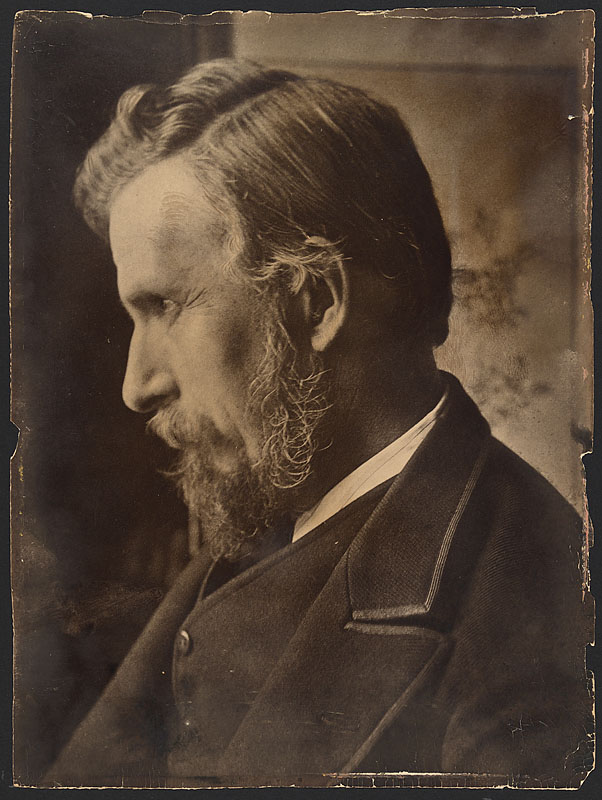
British jurist and constitutional theorist (1835–1922)
| Field | Value |
|---|---|
| name | A. V. Dicey |
| honorific_suffix | |
| image | Albert_Venn_Dicey_in_academic_robes.jpg |
| birth_name | Albert Venn Dicey |
| birth_date | |
| birth_place | Lutterworth, Leicestershire, England |
| death_date | |
| death_place | Oxford, England |
| resting_place | St Sepulchre's Cemetery in Walton Street, Oxford |
| title | Vinerian Professor of English Law |
| predecessor | John Robert Kenyon |
| successor | William Martin Geldart |
| spouse | Elinor Mary Bonham-Carter |
| parents | Thomas Edward Dicey (father) |
| Annie Marie Stephen (mother) | |
| relatives | Edward Dicey (brother) |
| Leslie Stephen (cousin) | |
| James Stephen (grandfather) | |
| known_for | Authority on the Constitution of the United Kingdom |
| education | Balliol College, Oxford |
| occupation | Jurist, professor |
Annie Marie Stephen (mother) Leslie Stephen (cousin) James Stephen (grandfather) Albert Venn Dicey, (4 February 1835 – 7 April 1922) was a British Whig jurist and constitutional theorist. He is most widely known as the author of Introduction to the Study of the Law of the Constitution (1885).; The 8th edition, 1915, is the last by Dicey himself. The final revised edition was the 10th, 1959, edited by E. C. S. Wade: The principles it expounds are considered part of the uncodified British constitution. He became Vinerian Professor of English Law at Oxford, one of the first Professors of Law at the LSE Law School, and a leading constitutional scholar of his day. Dicey popularised the phrase "rule of law", although its use goes back to the 17th century.
Biography
Dicey was born on 4 February 1835. His father was Thomas Edward Dicey, senior wrangler in 1811 and proprietor of the Northampton Mercury and Chairman of the Midland Railway. His mother was Annie Marie Stephen, daughter of James Stephen, Master in Chancery. Per his own words, Dicey owed everything to the wisdom and firmness of his mother. His elder brother was Edward James Stephen Dicey.{{cite book
Dicey was educated at King's College School in London and Balliol College, Oxford, graduating with Firsts in classical moderations in 1856 and in literae humaniores in 1858. In 1860 he won a fellowship at Trinity College, Oxford, which he forfeited upon his marriage in 1872.
He was called to the bar by the Inner Temple in 1863, subscribed to the Jamaica Committee around 1865, and was appointed to the Vinerian Chair of English Law at Oxford in 1882, a post he held until 1909. In his first major work, the seminal Introduction to the Study of the Law of the Constitution, he outlined the principles of parliamentary sovereignty for which he is most known. He argued that the British Parliament was "an absolutely sovereign legislature" with the "right to make or unmake any law". In the book, he defined the term constitutional law as including "all rules which directly or indirectly affect the distribution or the exercise of the sovereign power in the state".{{cite book |last=Williams |first=George |year=2010
He later left Oxford and went on to become one of the first Professors of Law at the then-new London School of Economics. He published in 1896 his Conflict of Laws. Upon his death on 7 April 1922, Harold Laski memorialised him as "the most considerable figure in English jurisprudence since Maitland."
Political views
Dicey was receptive to Jeremy Bentham's brand of individualist liberalism and welcomed the extension of the franchise in 1867. He was affiliated with the group known as the "University Liberals", who composed the Essays on Reform and was not ashamed to be labelled a Radical. Dicey held that "personal liberty is the basis of national welfare." He treated Parliamentary sovereignty as the central premise of the British constitution.
A member of the Liberal Unionist Party, Dicey was a strong opponent of the Irish Home Rule movement, writing and speaking against it extensively from 1886 until shortly before his death, advocating that no concessions be made to Irish nationalism in relation to the government of any part of Ireland as an integral part of the United Kingdom. In March 1914 Dicey stated that if a Home Rule Bill was passed it "would be a political crime lacking all moral and constitutional authority...the voice of the present House of Commons was not the voice of the nation." He was thus bitterly disillusioned by the Anglo-Irish Treaty agreement in 1921 that Southern Ireland should become a self-governing dominion (the Irish Free State), separate from the United Kingdom.
Dicey was also vehemently opposed to women's suffrage, proportional representation (while acknowledging that the existing first-past-the-post system was not perfect), and to the notion that citizens have the right to ignore unjust laws. Dicey viewed the necessity of establishing a stable legal system as more important than the potential injustice that would occur from following unjust laws. In spite of this, he did concede that there were circumstances in which it would be appropriate to resort to an armed rebellion but stated that such occasions are extremely rare.
Bibliography
- {{cite journal |title= Conflict of Laws and Bills of Exchange |journal = The American Law Review
- ;
- 2nd ed. 1908;
- later expanded in various editions of Dicey Morris & Collins
- ; Letters to a friend on votes for women - via Wikisource.
- , vol. 1 includes the first edition of Introduction, with the main addenda in later editions; vol. 2, The Comparative Study of Constitutions, provides largely unpublished lectures on comparative constitutional law, intended for a further book; both volumes have extensive editorial commentary.
Biographies
- {{cite book
- {{cite book
References
References
- Cosgrove, Richard A.. (23 September 2004). "Dicey, Albert Venn (1835-1922)". Oxford Dictionary of National Biography.
- (2012). "Dicey on Writing the "Law of the Constitution"". Oxford Journal of Legal Studies.
- {{cite EB1911
- [[Lord Bingham. Bingham, Thomas]]. ''The Rule of Law'', p. 3 (Penguin 2010). See Dicey's ''An Introduction to the Study of the Law of the Constitution'', p. 173.
- (8 April 1922). "A Great Jurist: Professor's Dicey Career. Constitutional Law". The Times.
- {{London Gazette. (28 January 1890)
- Dicey, A.V.. (1896). "A Digest of the Law of England with Reference to the Conflict of Laws; with Notes on American Cases by John Bassett Moore". Stevens and Sons Limited.
- (1983). "Review: The Legal Boundaries of Liberty: Dicey, Liberalism and Legal Science". The Modern Law Review.
- (2000). "Evangelicalism, Penal Theory and the Politics of Criminal Law: Reform in England, 1808–30". Springer.
- (2016). "Democracy and the Vote in British Politics, 1848–1867: The Making of the Second Reform Act". Routledge.
- (2001). "Political Intellectuals and Public Identities in Britain Since 1850". Manchester University Press.
- (2003). "Dicey Was Not Diceyan". The Cambridge Law Journal.
- (1887). "Speech of Professor Dicey, at the Liberal Unionists' meeting, in the Music Hall, Birkenhead, December 10, 1887". "Daily Post" and "Echo" Offices.
- Phoenix, Eamon & Parkinson, Alan (2010), ''Conflicts in the North of Ireland, 1900–2000'', Four Courts Press, Dublin, p. 33. {{ISBN. 978-1846821899
- (1889). "A.V. Dicey: Law of the Constitution".
This article was imported from Wikipedia and is available under the Creative Commons Attribution-ShareAlike 4.0 License. Content has been adapted to SurfDoc format. Original contributors can be found on the article history page.
Ask Mako anything about A. V. Dicey — get instant answers, deeper analysis, and related topics.
Research with MakoFree with your Surf account
Create a free account to save articles, ask Mako questions, and organize your research.
Sign up freeThis content may have been generated or modified by AI. CloudSurf Software LLC is not responsible for the accuracy, completeness, or reliability of AI-generated content. Always verify important information from primary sources.
Report