From Surf Wiki (app.surf) — the open knowledge base
485th Air Expeditionary Wing
| Field | Value | |
|---|---|---|
| unit_name | 485th Air Expeditionary Wing | |
| image | 485aew-c130s.jpg | |
| image_size | 300 | |
| caption | A row of C-130 Hercules from the 485th Air Expeditionary Wing are parked at a forward-deployed location in Southwest Asia. Seven C-130 units combined to form the world's largest collection of the aircraft. | |
| dates | 1943–1946; 1956–1962; 1984–1989; 2003 | |
| country | United States | |
| branch | ||
| type | Provisional Wing | |
| mascot | battles=Mediterranean Theater of Operations Operation Iraqi Freedom | |
| decorations | Distinguished Unit Citation | |
| Air Force Outstanding Unit Award | ||
| identification_symbol | [[File:485th Air Expeditionary Wing.png | 165px]] |
| identification_symbol_label | 485th Air Expeditionary Wing emblemApproved 8 August 1984. | |
| identification_symbol_2 | [[File:585th Tactical Missile Group - Emblem.png | 150px]] |
| identification_symbol_2_label | Patch with 585th Tactical Missile Group emblemThe group used its parent 38th Tactical Missile Wing emblem with the group designation on the scroll. | |
| identification_symbol_3 | [[File:485th Bombardment Group - World War II - Emblem.png | 150px]] |
| identification_symbol_3_label | Patch with later unofficial 485th Bombardment Group emblemMaurer indicates that neither emblem used by the group during World War II was officially approved. Maurer, Combat Units, p. 357. | |
| identification_symbol_4 | [[Image:485th Bombardment Group - Emblem.jpg | 145px]] |
| identification_symbol_4_label | Early unofficial 485th Bombardment Group emblem | |
| identification_symbol_5 | Top: Yellow with Black Square. Bottom: Black with Yellow X | |
| identification_symbol_5_label | World War II Tail Markings |
Air Force Outstanding Unit Award
The 485th Air Expeditionary Wing is a provisional United States Air Force unit assigned to Air Combat Command. As a provisional unit, the 485 AEW may be inactivated or activated at any time by Air Combat Command. The wing was last known to be active during Operation Iraqi Freedom in 2003 at Tabuk Regional Airport, Saudi Arabia, in 2003.
The wing was first activated as the 485th Bombardment Group, a Consolidated B-24 Liberator heavy bombardment group that served with Fifteenth Air Force during World War II. The group was awarded the Distinguished Unit Citation for its action in a mission to Vienna, Austria in 1944. The 485th returned to the United States in May 1945, where it converted to Boeing B-29 Superfortresss, training with Second Air Force. When the war ended in August 1945, the group remained at its training base and became one of the original ten bombardment groups assigned to Strategic Air Command (SAC). The group was inactivated in 1946 and its aircraft, personnel and equipment were transferred to the 97th Bombardment Group.
The second forerunner of the wing was the 585th Tactical Missile Group, which was stationed at Bitburg Air Base, Germany from 1956 to 1962. The 585th operated forward deployed TM-61 Matador cruise missiles from its home station. Later these missiles were replaced by TM-76 Mace (later MGM-13) missiles. It was inactivated in 1962 and its operational squadron transferred to the 38th Tactical Missile Wing.
In 1983, the two groups were consolidated as the 485th Tactical Missile Wing, a Ground Launched Cruise Missile (GLCM) wing stationed at Florennes Air Base, Belgium. The wing was inactivated as a result of the Intermediate-Range Nuclear Forces Treaty in 1989. In 2003 the wing was converted to provisional status as the 485th Air Expeditionary Wing and allotted to Air Combat Command.
Overview
When activated in 2003, the 485 AEW was a composite wing of 24 McDonnell Douglas F-15C Eagle fighter aircraft and 46 Lockheed C-130H Hercules airlift aircraft and more than 3500 personnel from 82 different locations. The C-130s represented one of the largest combat groupings of this aircraft ever.
The wing was activated for Operation Iraqi Freedom and was composed of aircraft and regular Air Force personnel from Langley AFB, Virginia and Eglin AFB, Florida. It also included aircraft and guardsmen from the West Virginia, and reservists from Niagara Falls.
By 3 May 2003, the C-130 portion of the wing had flown 1199 missions, 3354 sorties, 7451 hours, hauled 9382 tons of cargo and 8800 passengers, and boasted a mission capable rate greater than 90 percent. When the F-15s completed flight operations 17 April they had compiled 581 sorties, flown more than 4000 hours and maintained a mission capable rate greater than 83 percent.
The wing was inactivated in early May 2003 with the last members returning to the United States in September of that year.
History
World War II

The wing was originally constituted as the 485th Bombardment Group (Heavy) and activated on 20 September 1943. Its original squadrons were the newly activated 828th, 829th, and 830th Bombardment Squadrons, which were joined a few days later by the 831st Bombardment Squadron at Gowen Field, Idaho. The 831st was an experienced Consolidated B-24 Liberator squadron that had been performing anti-submarine warfare missions as the 11th Antisubmarine Squadron. and was assigned to Second Air Force for training with B-24s at Gowen and at Fairmont Army Air Field, Nebraska. The group deployed to the Mediterranean Theater of Operations (MTO) in March and April 1944.
Although the ground echelon had deployed to Southern Italy by April 1944, the air echelon was detained in Tunisia for further training. The group entered combat with Fifteenth Air Force in May 1944. The 485th engaged in very long range strategic bombing missions to enemy military, industrial and transportation targets in Italy, France, Germany, Austria, Hungary, Romania, and Yugoslavia, bombing marshalling yards, oil refineries, airfields, heavy industry, and other strategic objectives.
The group received a Distinguished Unit Citation for combating intense fighter opposition and attacking an oil refinery at Vienna on 26 June 1944. The 485th also carried out some support and interdiction operations. It struck bridges, harbors, and troop concentrations in August 1944 to aid Operation Dragoon, the invasion of southern France, It hit lines of communications and other targets during March and April 1945 to support the advance of British Eighth Army in northern Italy.
The 485th returned to the United States in May 1945 and was programmed for deployment to the Pacific Theater of Operations (PTO) as a Boeing B-29 Superfortress very heavy bombardment group. Many combat veterans of MTO demobilized upon arrival in the United States, and a small cadre of personnel reformed at Sioux Falls Army Airfield, South Dakota at the end of May. The group was reassigned to Second Air Force for training in Iowa. Because B-29 groups had only three combat squadrons, the 831st Bombardment Squadron was inactivated in August. to Smoky Hill Army Air Field, Kansas in September.
The group remained on active duty after the Japanese surrender. In March 1946 Continental Air Forces became Strategic Air Command and Second Air Force was replaced by Fifteenth Air Force as the group's intermediate headquarters. Simultaneously, the 506th Bombardment Squadron was assigned to the group from the 44th Bombardment Group. In August 1946 the personnel and equipment of the 485th were reassigned to the 97th Bombardment Group and the 485th was inactivated.
Matador and Mace era
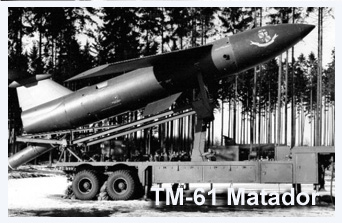
In 1954 USAF began deploying TM-61 Matador cruise missiles to Germany. By 1956, three squadrons were in place and USAFE organized the 701st Tactical Missile Wing with a subordinate group at each of the main bases where Matadors were stationed. The 585th Tactical Missile Group was activated at Bitburg Air Base, Germany in September 1956 to command the 1st Tactical Missile Squadron and two support squadrons.
Shortly after activation the group began upgrading its TM-61A missiles to TM-61Cs. The TM-61C was equipped with the Shannicle guidance system which generated a grid the missile could use to navigate, replacing the ground to air steering systems of the TM-61A. The group participated in periodic test launches of Matadors at Wheelus AB, Libya.
In 1958, USAFE replaced the 701st wing with the 38th Tactical Missile Wing in an administrative move to keep on active duty units whose roots could be traced to World War II. Simultaneously, the 1st squadron was replaced by the 71st Tactical Missile Squadron, one of the historical elements of the WW II 38th Bombardment Group. The Matador was growing obsolescent and the last Matador was taken off Victor (nuclear) Alert on 30 June 1962.
The group replaced its Matadors with TM-76 Mace (later MGM-13) missiles. These missiles did not rely on ground signals for guidance, but used an onboard radar to match the terrain with a map stored on board the missile. In 1962 the 585th and its companion groups in Germany were inactivated and the missile squadrons assigned directly to the 38th Wing. On the same day, the last Matador at Bitburg was decommissioned.
Ground Launched Cruise Missile era
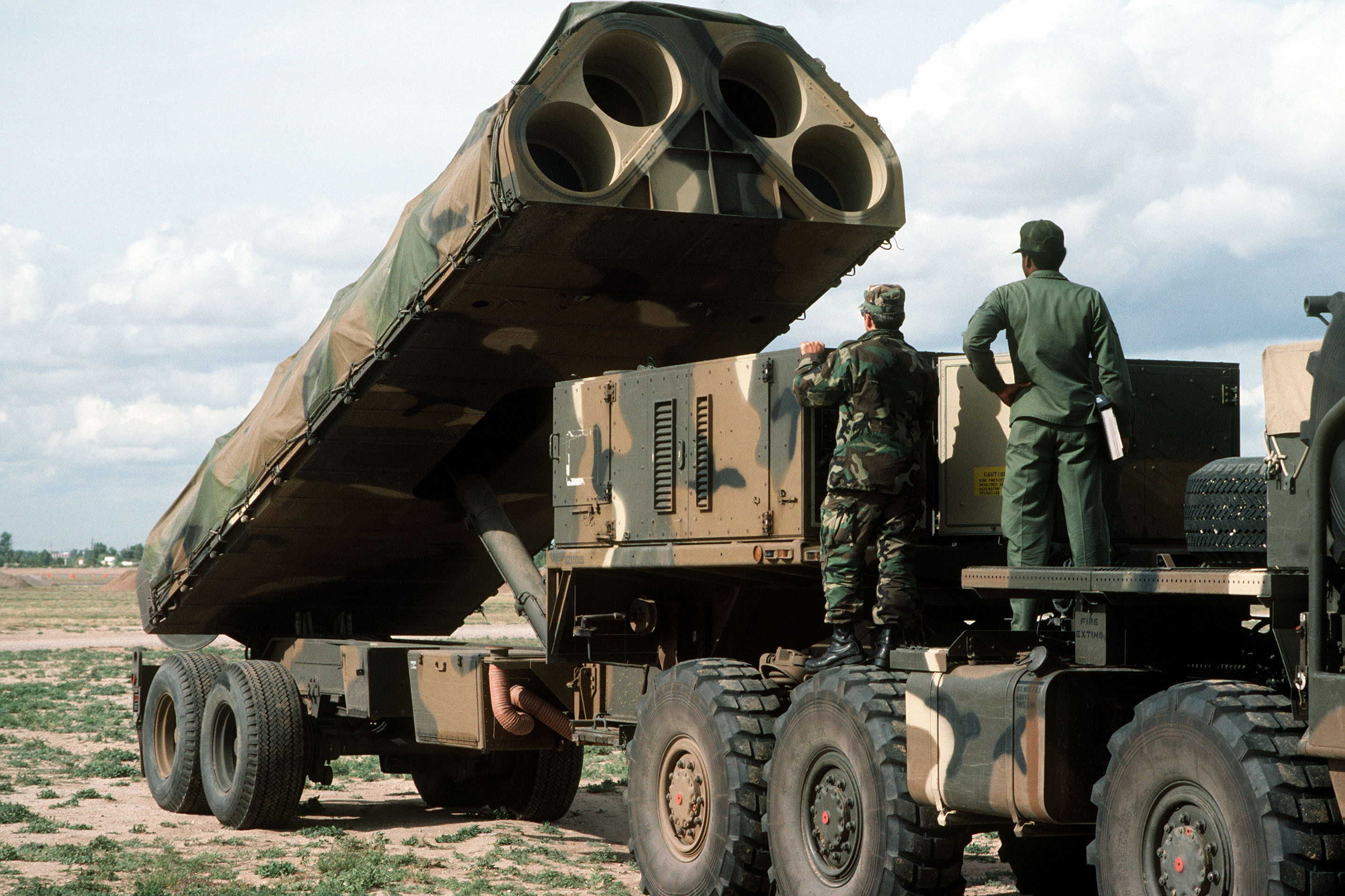
The 485th Tactical Missile Wing was activated at Florennes Air Base, Belgium in August 1984. The first Gryphon missile arrived on 28 August and the wing began operating the Gryphon from 1985 until the implementation of the Intermediate-Range Nuclear Forces Treaty in 1988.
The wing and its base were the target of periodic peace movement protests near the main gate. In August 1988 a ten-man Soviet Inspection Team visited Florennes to insure treaty compliance. The wing was inactivated in 1989 with the withdrawal of American forces from Florennes.
Lineage
485th Bombardment Group
- Constituted as 485th Bombardment Group (Heavy) on 14 September 1943 : Activated on 20 September 1943 : Redesignated 485th Bombardment Group, Heavy on 25 January 1944
- Redesignated 485th Bombardment Group, Very Heavy on 5 August 1945 : Inactivated on 4 August 1946
585th Tactical Missile Group
- Constituted as 585th Tactical Missile Group on 3 August 1956 : Activated on 15 September 1956 : Inactivated on 25 September 1962
485th Air Expeditionary Wing : 485th Bombardment Group and 585th Tactical Missile Group consolidated on 19 December 1983 as the 485th Tactical Missile Wing : Activated on 1 August 1984 : Inactivated on 30 September 1989
- Redesignated 485th Air Expeditionary Wing and converted to provisional status 30 January 2003 :: c. 4 March 2003 – c. May 2003
Assignments
- Second Air Force, 20 September 1943
- 55th Bombardment Wing, 14 March 1944 – 15 May 1945
- Army Service Forces, Port of Embarkation, 30 May 1945
- Second Air Force, 1 August 1945
- Fifteenth Air Force, 21 March 1946 – 4 August 1946
- 701st Tactical Missile Wing, 15 September 1956
- 38th Tactical Missile Wing, 18 June 1958 – 25 September 1962
- Seventeenth Air Force, 1 August 1984 – 30 September 1989
- Air Combat Command for activation or inactivation at any time after 30 January 2003 :: Attached to United States Central Command Air Forces, c. 4 March 2003 – c. May 2003
Components
Groups
- 485th Combat Support Group: 1 October 1984 – 30 April 1989
- 485th Security Police Group: 1 October 1984 – 30 April 1989
Squadrons
Tactical Squadrons
- 1st Tactical Missile Squadron: 15 September 1956 – 18 June 1958
- 71st Tactical Missile Squadron: 18 June 1958 – 25 September 1962; 1 August 1984 – 30 April 1989
- 506th Bombardment Squadron: 7 March 1946 – 4 August 1946
- 828th Bombardment Squadron: 20 September 1943 – 4 August 1946
- 829th Bombardment Squadron: 20 September 1943 – 4 August 1946
- 830th Bombardment Squadron: 20 September 1943 – 6 May 1946
- 831st Bombardment Squadron: 1 October 1943 – 20 August 1945
Support Squadrons
- 585th Command and Guidance Squadron (Tactical Missile) (later 585th Missile Maintenance Squadron, 485th Tactical Missile Maintenance Squadron): 15 September 1956 – 25 September 1962; 1 August 1984 – 30 April 1989
- 585th Support Squadron (Tactical Missile): 15 September 1956 – 25 September 1962
- USAF Clinic, Florennes (later 485th USAF Clinic): 1 October 1984 – 30 April 1989
Stations
- Fairmont Army Air Field, Nebraska, 20 September 1943 – 11 March 1944 (operated from Gowen Field, Idaho 27 September 1943 – 15 November 1943)
- Venosa Airfield, Italy, April 1944 – 15 May 1945
- Sioux Falls Army Air Field, South Dakota, 30 May 1945
- Sioux City Army Air Base, Iowa, 24 July 1945
- Smoky Hill Army Air Field, Kansas, 8 September 1945 – 4 August 1946
- Bitburg Air Base, West Germany, 15 September 1956 – 25 September 1962
- Florennes Air Base, Belgium 4 August 1984 – 30 September 1989
- Tabuk Regional Airport, Saudi Arabia, c. 4 March 2003 – c. May 2003
Missile Sites
-
Matador/Mace : Site VII "B" Pad – 3.5 mi NW of Bitburg AB (1st/71st TMS) An underground concrete launch facility that was closed in 1962. Presently it is abandoned and largely overgrown. : Site VIII "C" Pad – 4.5 mi SSW of Bitburg AB (1st/71st TMS) An underground concrete launch facility. After closure the site was transferred to the Bundeswehr and converted into an MIM-104 Patriot missile site. The site closed in 2001 and is now abandoned and overgrown. : Missile Support Area – 2.6 mi SSW of Bitburg AB
-
GLCM :
Aircraft and Missiles
- B-24 Liberator, 1943–1945
- Boeing B-29 Superfortress, 1945–1946
- Martin Matador TM-61A, 1956–1957
- Martin Matador TM-61C, 1957–1962
- Martin Mace TM-76B, ? – ?
- General Dynamics BGM-109G Gryphon, 1985–1988
- McDonnell Douglas F-15 Eagle, 2003
- Lockheed C-130 Hercules, 2003
- Lockheed C-5 Galaxy (2003)
Awards and campaigns
| Campaign Streamer | Campaign | Dates | Notes | |
|---|---|---|---|---|
| [[File:European-African-Middle Eastern Campaign Medal streamer.png | 200px]] | Air Offensive, Europe | ||
| [[File:European-African-Middle Eastern Campaign Medal streamer.png | 200px]] | Rome-Arno | ||
| [[File:European-African-Middle Eastern Campaign Medal streamer.png | 200px]] | Normandy | ||
| [[File:European-African-Middle Eastern Campaign Medal streamer.png | 200px]] | Northern France | ||
| [[File:European-African-Middle Eastern Campaign Medal streamer.png | 200px]] | Southern France | ||
| [[File:European-African-Middle Eastern Campaign Medal streamer.png | 200px]] | North Apennines | ||
| [[File:European-African-Middle Eastern Campaign Medal streamer.png | 200px]] | Rhineland | ||
| [[File:European-African-Middle Eastern Campaign Medal streamer.png | 200px]] | Central Europe | ||
| [[File:European-African-Middle Eastern Campaign Medal streamer.png | 200px]] | Po Valley | ||
| [[File:European-African-Middle Eastern Campaign Medal streamer.png | 200px]] | Air Combat, EAME Theater |
References
; Explanatory notes
; Citations
Bibliography
References
- (3 March 2003). "Lineage and Honors History of the 485th Air Expeditionary Wing (ACC)". Air Force Historical Research Agency.
- Watkins, pp. 120–121
- (May 2009). "Library: Biographies: Colonel George L. Bondar". Air Reserve Personnel Center.
- (2010). "130th AW mobilizations at highest level since Desert Storm". Mountaineer Defender-Magazine of the West Virginia National Guard.
- (June 2003). "166th AW part of Herculean gathering of C-130s in Operation Iraqi Freedom". DNG News.
- Maurer, ''Combat Units'', pp. 356–357
- Maurer, ''Combat Squadrons'', pp. 772–774
- The group deployed to Gowen, where it derived its initial [[en cadre. cadre]] from the [[29th Bombardment Group]][http://www.airforcehistoryindex.org/data/000/094/744.xml Abstract, History 485th Bomb Gp 20 Sep–Dec 1943] (retrieved 7 July 2013)
- It flew its 187th and last combat mission against [[Linz]], Austria before preparing to return to the United States and re-equip.[http://www.airforcehistoryindex.org/data/000/094/760.xml Abstract, History 485th Bomb Gp Apr–May 1945] (retrieved 7 July 2013)
- "485th History".
- Maurer, ''Combat Squadrons'', p. 608
- Ravenstein, p 291
- Fletcher, pp. 15–17
- [http://www.airforcehistoryindex.org/data/000/459/711.xml Abstract, History of 701st Tactical Missile Wing Sep–Dec 1956] (retrieved 6 July 2013)
- [http://www.airforcehistoryindex.org/data/000/459/712.xml Abstract, History 701st Tactical Missile Wing, Jan–Jun 1957] (retrieved 6 July 2013)
- Ravenstein, pp. 66–67
- Mindling, Preface, p.x
- [http://www.airforcehistoryindex.org/data/001/062/736.xml Abstract, History of 485th Tac Missile Wg March–Sep 1984] (retrieved 7 July 2013)
- [http://www.airforcehistoryindex.org/data/001/065/340.xml Abstract, 485th Tactical Missile Wg History Apr–Sep 1985] (retrieved 7 July 2013)
- [http://www.airforcehistoryindex.org/data/001/116/852.xml Abstract, 485th Tactical Missile Wing IMF Compliance Report] (retrieved 7 July 2013)
- Lineage, tactical squadrons and aircraft of 485th Bombardment Group in Maurer, ''Combat Units'', pp. 356–357
- Lineage, assignments, tactical squadrons and aircraft of 585th Tactical Missile Group and 485th Tactical Missile Wing and assignments of 485th Bombardment Group in Lineage and Honors History of 485th AEW
- Maurer, ''Combat Squadrons'', p. 261
- Fletcher, p. 17
- AF Pamphlet 900-2, p. 430
This article was imported from Wikipedia and is available under the Creative Commons Attribution-ShareAlike 4.0 License. Content has been adapted to SurfDoc format. Original contributors can be found on the article history page.
Ask Mako anything about 485th Air Expeditionary Wing — get instant answers, deeper analysis, and related topics.
Research with MakoFree with your Surf account
Create a free account to save articles, ask Mako questions, and organize your research.
Sign up freeThis content may have been generated or modified by AI. CloudSurf Software LLC is not responsible for the accuracy, completeness, or reliability of AI-generated content. Always verify important information from primary sources.
Report