From Surf Wiki (app.surf) — the open knowledge base
4029 Bridges
Stony asteroid and binary system from the middle regions of the asteroid belt
Stony asteroid and binary system from the middle regions of the asteroid belt
| Field | Value |
|---|---|
| minorplanet | yes |
| name | 4029 Bridges |
| background | #D6D6D6 |
| discovery_ref | |
| discovered | 24 May 1982 |
| discoverer | C. Shoemaker |
| S. J. Bus | |
| discovery_site | Palomar Obs. |
| mpc_name | (4029) Bridges |
| alt_names | |
| 1975 TQ1978 AF | |
| 1982 OX | |
| 1986 JF | |
| named_after | Patricia M. Bridges |
| (planetary cartographer) | |
| mp_category | main-belt(middle) |
| orbit_ref | |
| epoch | 4 September 2017 (JD 2458000.5) |
| uncertainty | 0 |
| observation_arc | 42.93 yr (15,680 days) |
| aphelion | 2.8575 AU |
| perihelion | 2.1925 AU |
| semimajor | 2.5250 AU |
| eccentricity | 0.1317 |
| period | 4.01 yr (1,466 days) |
| mean_anomaly | 287.79° |
| mean_motion | / day |
| inclination | 5.4383° |
| asc_node | 214.78° |
| arg_peri | 16.729° |
| satellites | 1 |
| (D: 1.87 km; P: 16.317 h) | |
| dimensions | km |
| km | |
| km | |
| rotation | h |
| h | |
| h | |
| h | |
| h | |
| albedo | |
| spectral_type | S |
| abs_magnitude | (R) (R)12.812.85 |
S. J. Bus 1975 TQ1978 AF 1982 OX 1986 JF (planetary cartographer) (D: 1.87 km; P: 16.317 h) km km h h h h
4029 Bridges, provisional designation , is a stony asteroid and binary system from the middle regions of the asteroid belt, approximately 8 kilometers in diameter.
It was discovered on 24 May 1982, by American astronomers Carolyn Shoemaker and Schelte Bus at Palomar Observatory, California, and named after American USGS planetary cartographer Patricia M. Bridges.
Orbit and classification
Bridges is a stony S-type asteroid that orbits the Sun in the middle main-belt at a distance of 2.2–2.9 AU once every 4.01 years (1,466 days). Its orbit has an eccentricity of 0.13 and an inclination of 5° with respect to the ecliptic. With a semi-major axis of 2.525 AU, Bridges is near the main-belt's Kirkwood gap at 2.5 AU, which corresponds to the 3:1 orbital resonance with the gas giant Jupiter. It is, however, not a member of the Alinda family due to its much lower eccentricity.
It was first identified as at the Chilean Cerro El Roble Observatory in 1974, extending the body's observation arc by 8 years prior to its official discovery observation at Palomar.
Physical characteristics
Primary
Rotation period
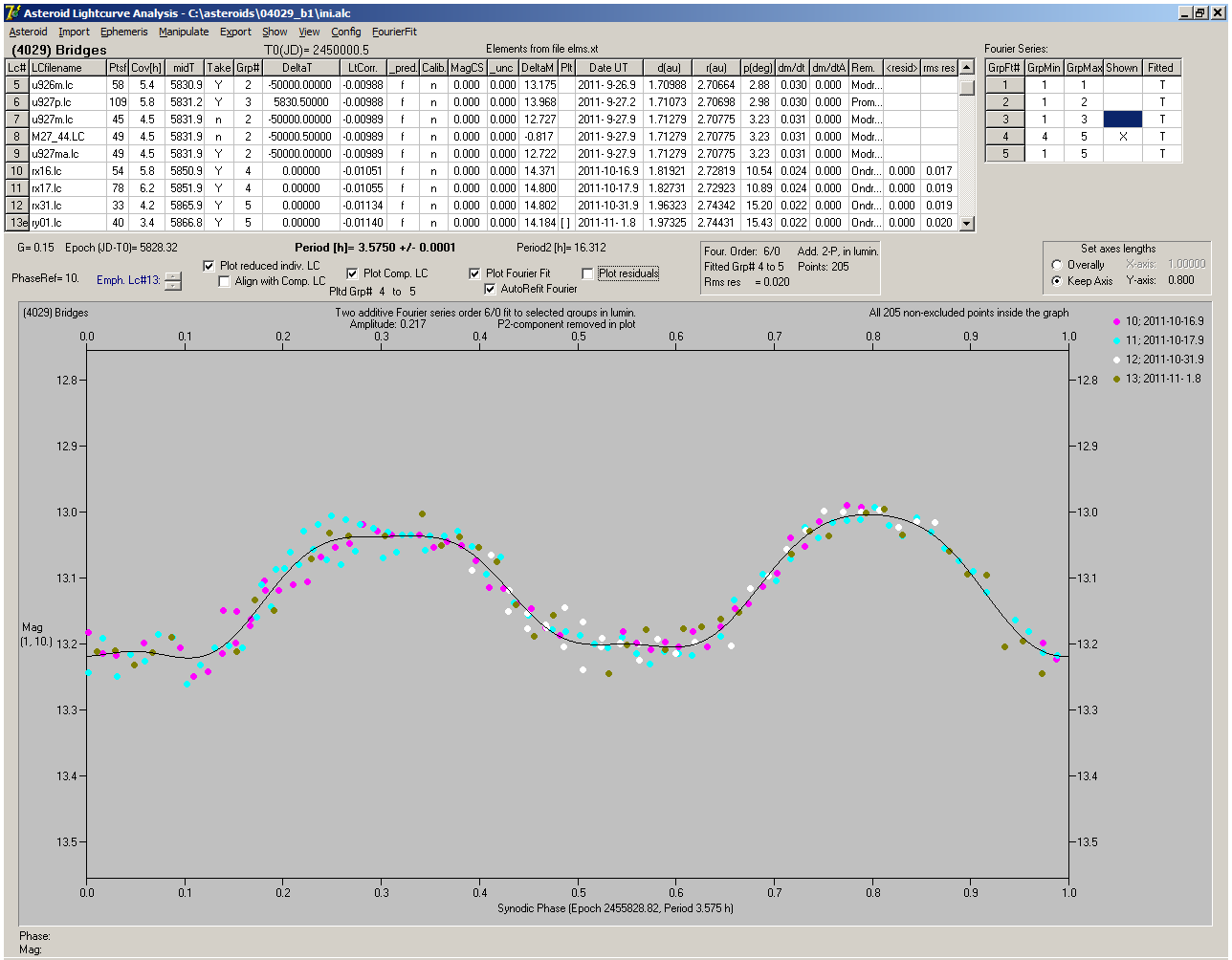
In May 2002, a first rotational lightcurve of Bridges was obtained from photometric observations by French amateur astronomers René Roy and Laurent Bernasconi. Lightcurve analysis gave a well-defined rotation period of 3.6941 hours with a brightness variation of 0.24 magnitude ().
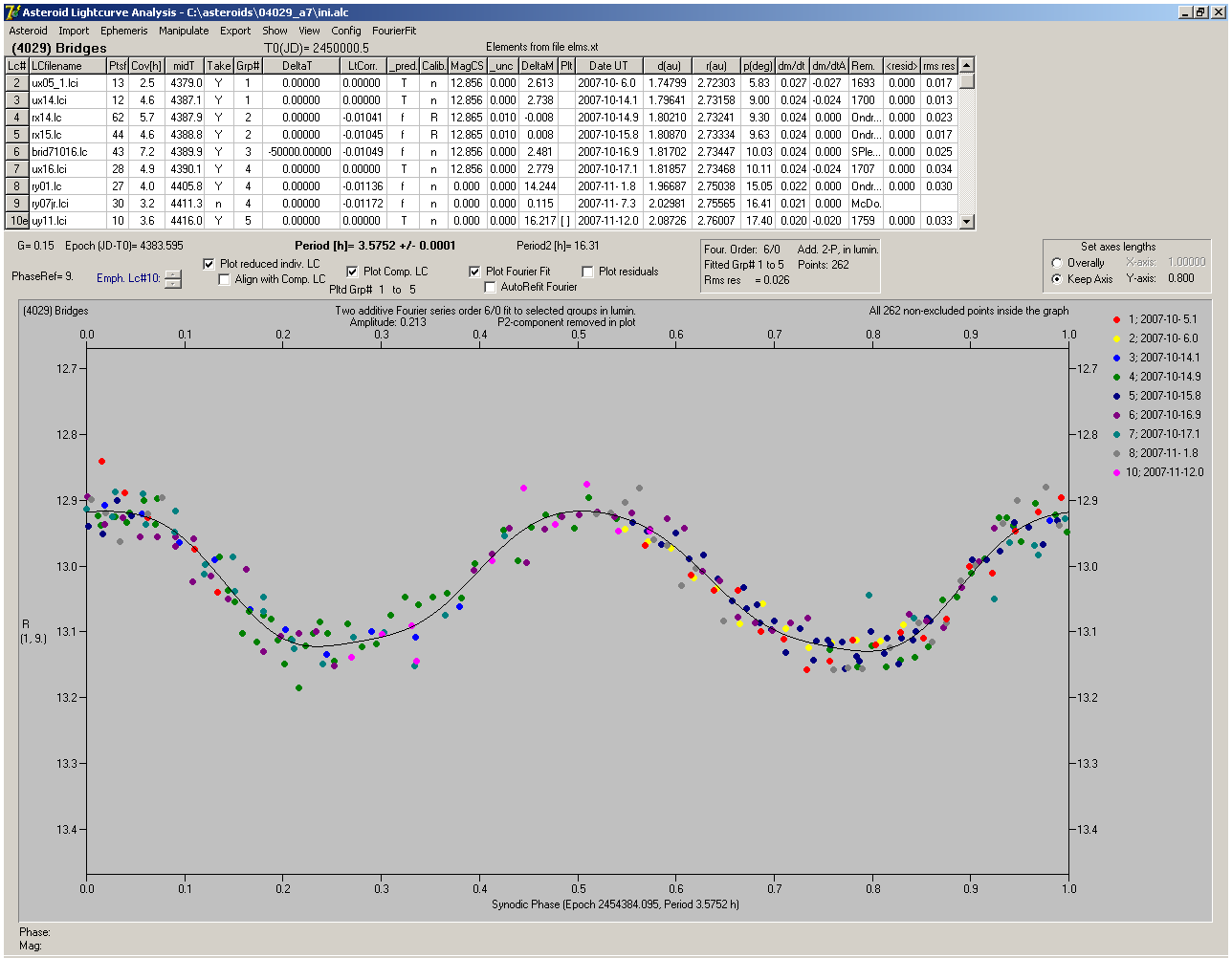
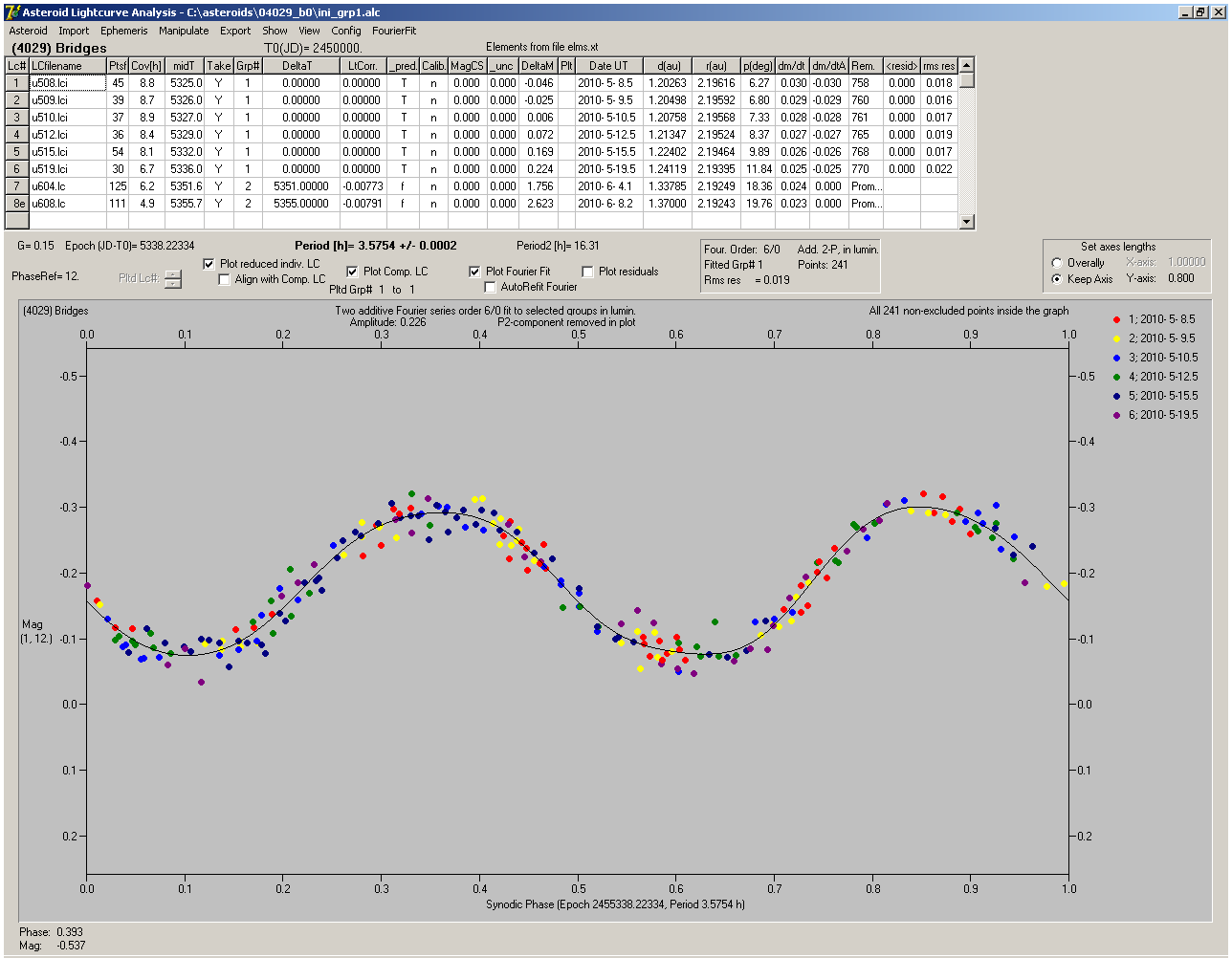
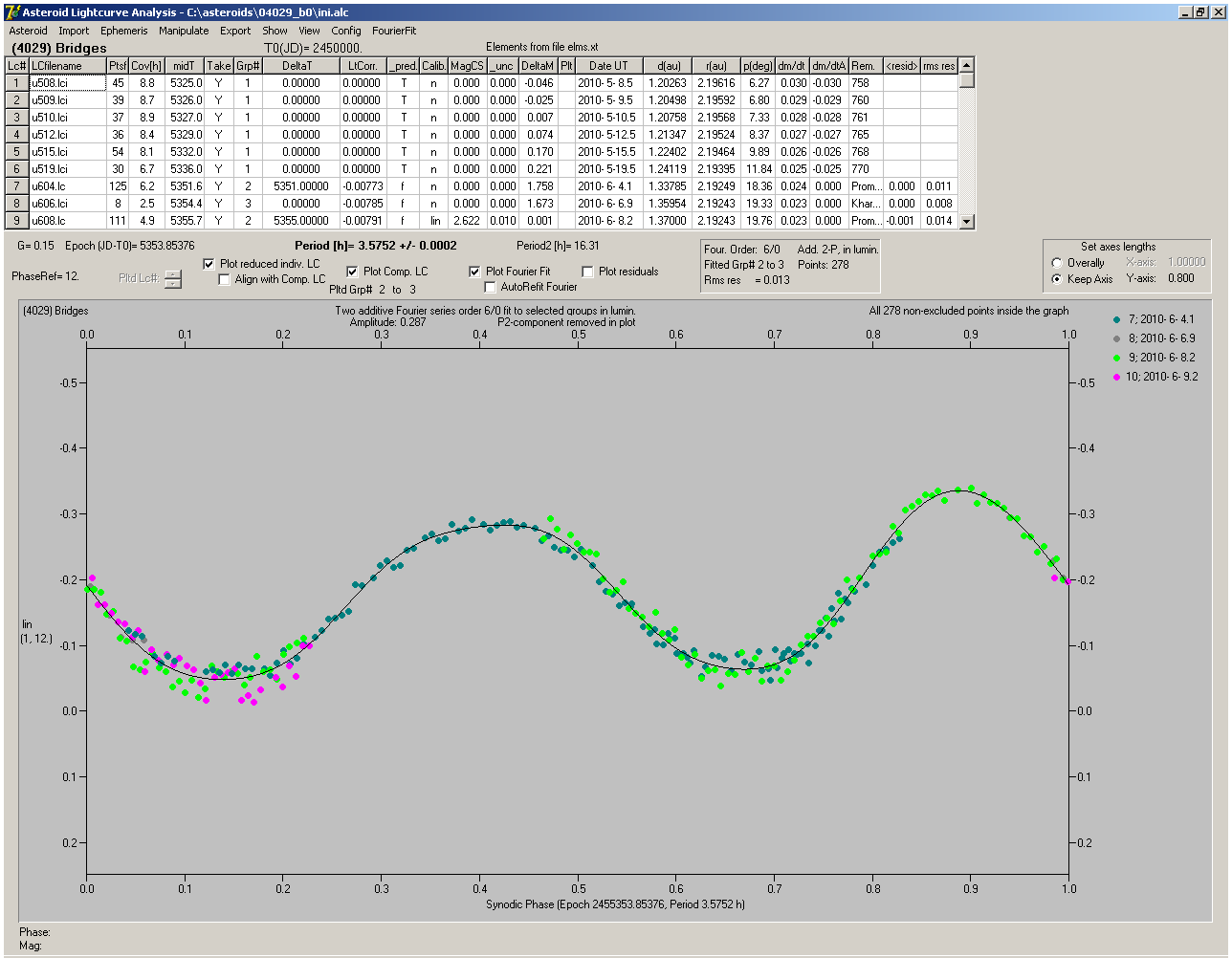
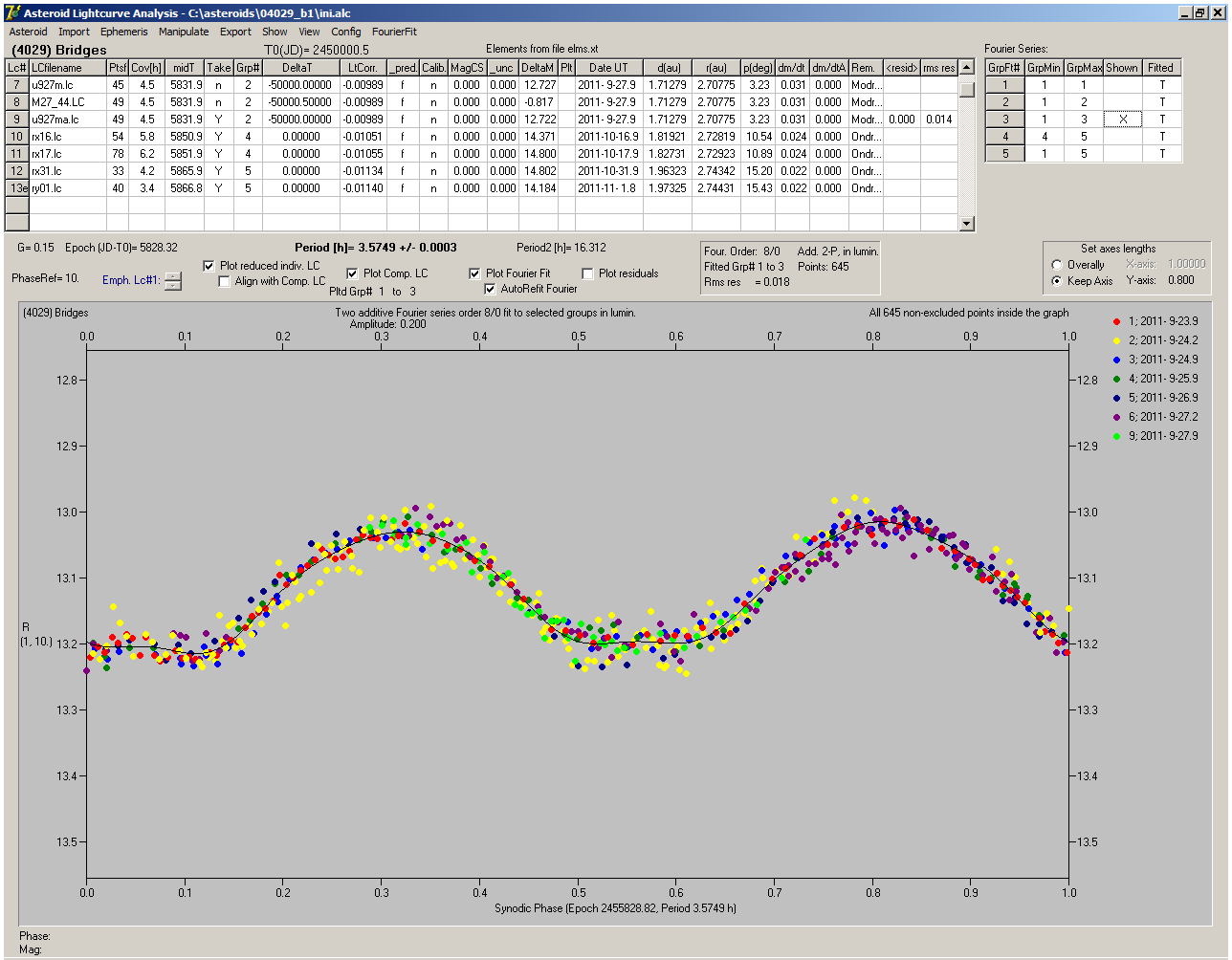
A large number of observations have followed since 2006, when a satellite in orbit of Bridges was discovered (see below). Between 2007 and 2012, several observation by astronomers Petr Pravec and gave a period between 3.57459 and 3.5754 hours with an amplitude between 0.18 and 0.29 magnitude ().
Diameter and albedo
According to the survey carried out by NASA's Wide-field Infrared Survey Explorer (WISE) with its subsequent NEOWISE mission, Bridges measures 7.433 and 8.015 kilometers in diameter and its surface has an albedo of 0.265 and 0.2007, respectively. The Collaborative Asteroid Lightcurve Link adopts Petr Pravec's revised WISE-data, that is, an albedo of 0.1848 and a diameter of 7.91 kilometers with an absolute magnitude of 12.96.
Satellite
In April and May 2006, Bridges was observed by astronomers David Higgins at Hunters Hill Observatory (E14), Australia, Petr Pravec and Peter Kušnirák at Ondřejov Observatory Czech Republic, Walter R. Cooney Jr., John Gross and Dirk Terrell at Sonoita Research Observatory (G94), United States, and Robert Stephens at Santana Observatory (646), United States.
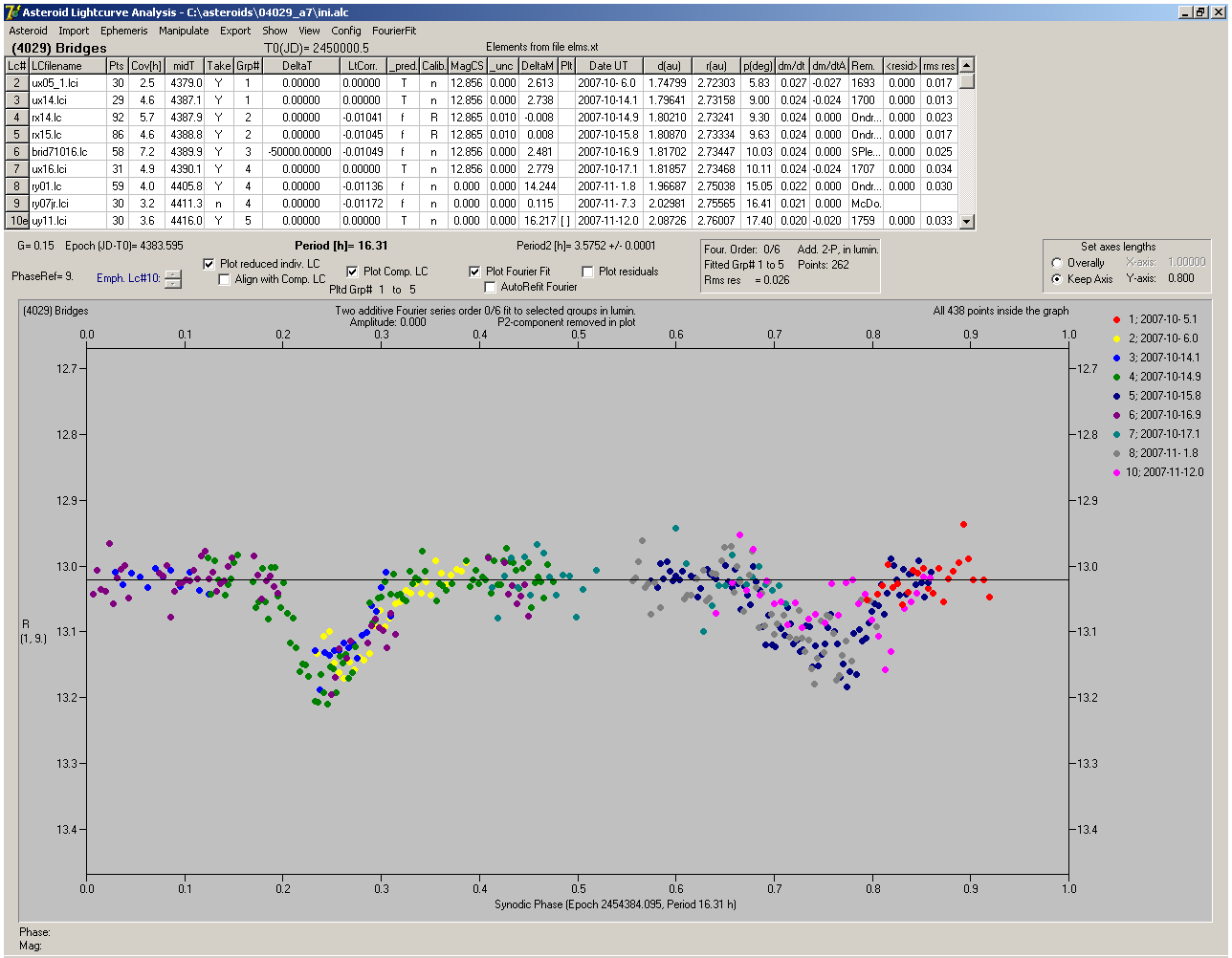
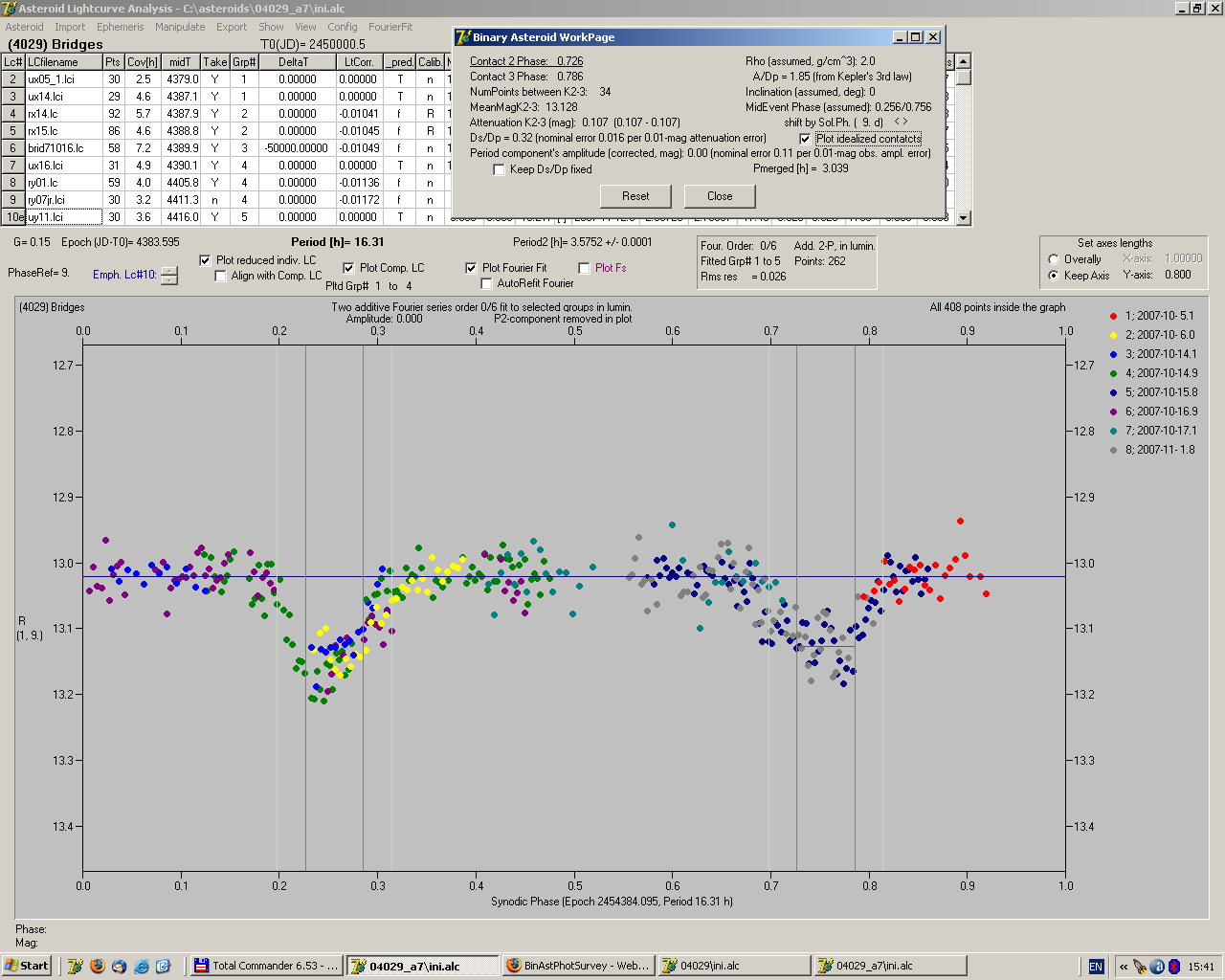
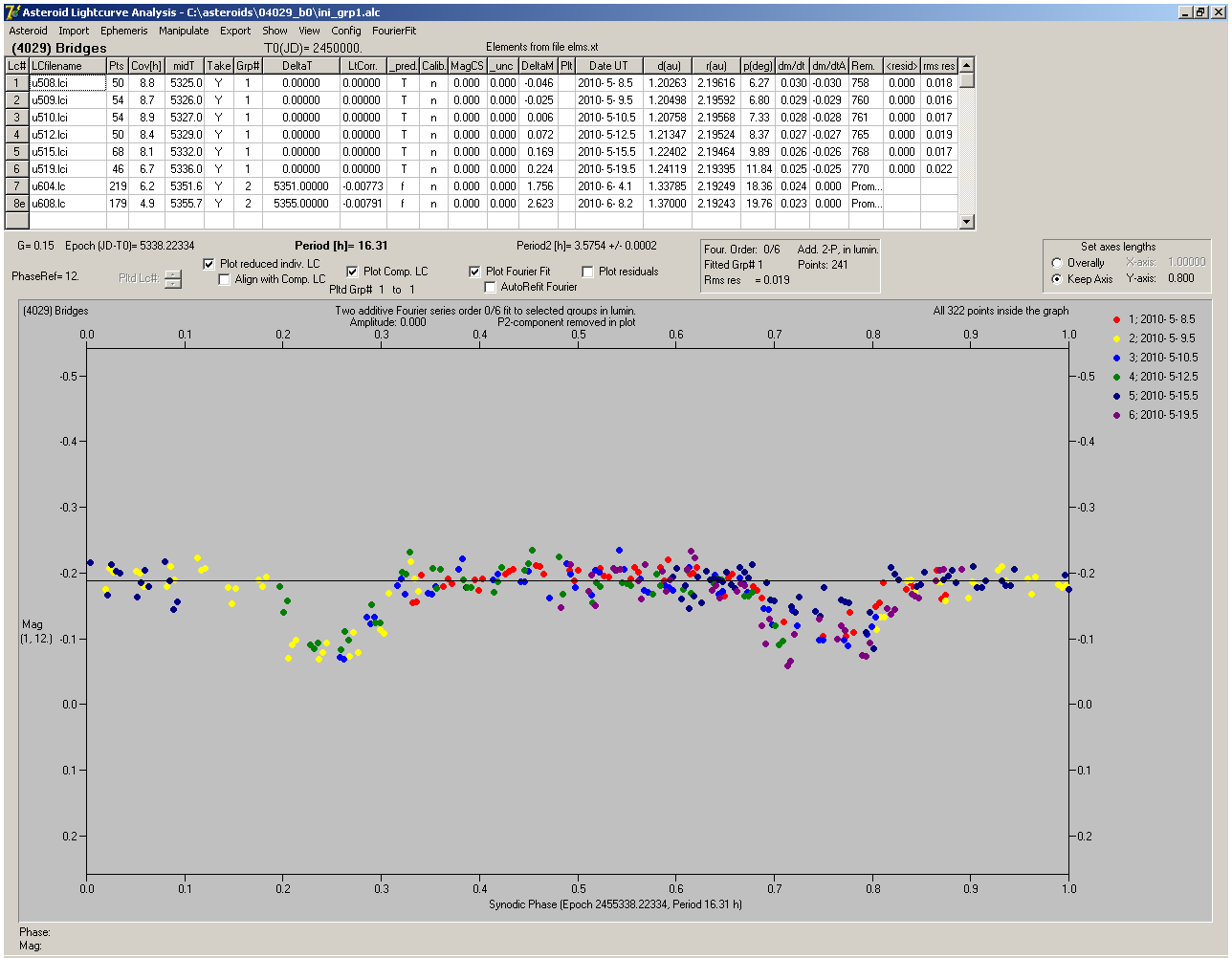
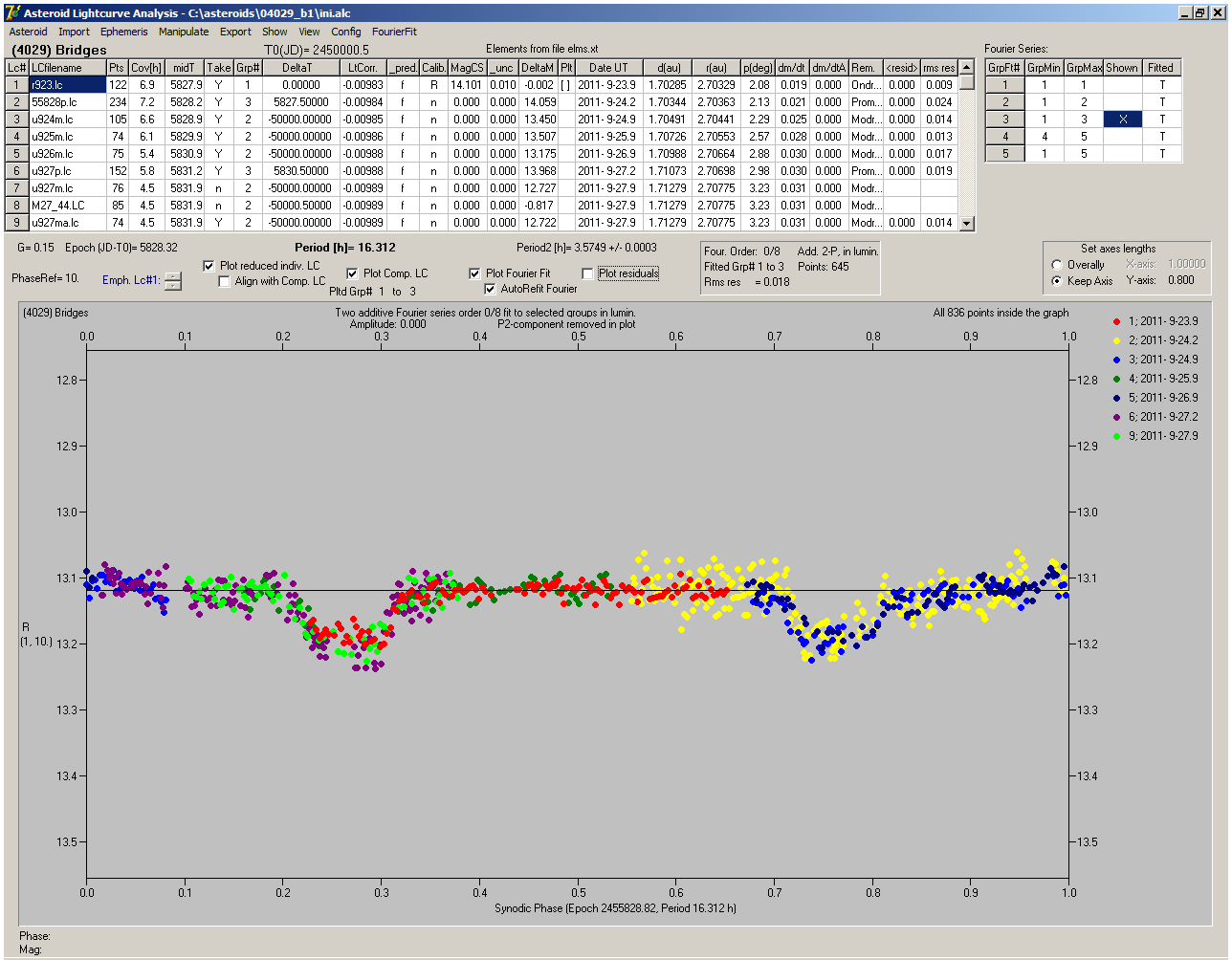
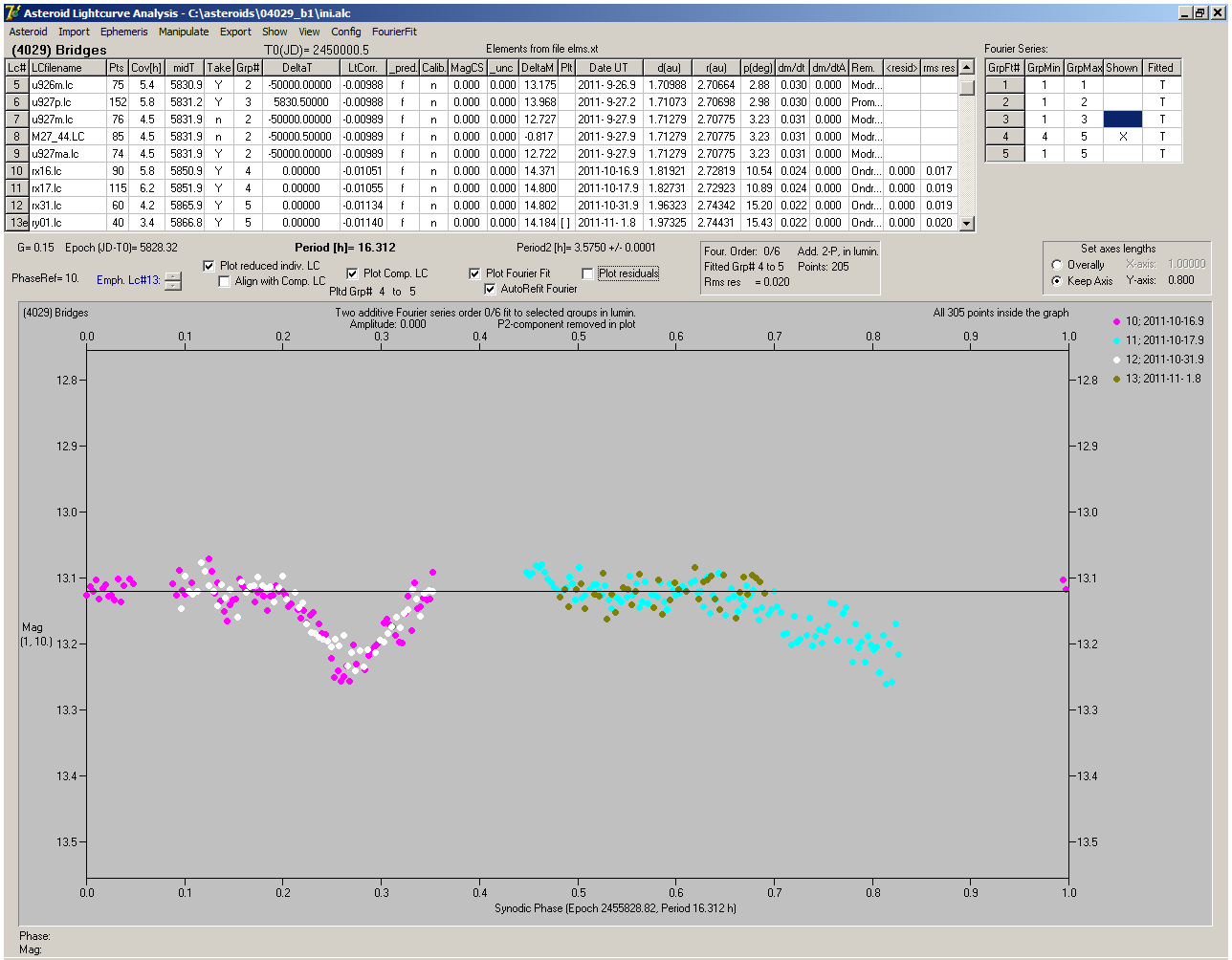
The observed mutual occultation/eclipsing events revealed, that Bridges is a binary asteroid, that is orbited every hours by a minor-planet moon. A refined orbital period of 16.317 hours was later published. Based on the system's secondary-to-primary mean-diameter ratio of , the satellite measures approximately kilometers in diameter. Johnston's Archive also estimates a semi-major axis of 13 kilometers for the moon's orbit.
Naming
This minor planet was named after Patricia M. Bridges, planetary cartographer with the United States Geological Survey. Bridges has created detailed maps of several planetary body's surface features, and has been an airbrushing expert for shaded lunar relief maps based on spacecraft images. The approved naming citation was published by the Minor Planet Center on 12 December 1989 (M.P.C. 15576).
Notes
-
lightcurve plot p1 Remarks: P_orb = 16.31 +/- 0.02 h, a lower limit on D_2/D_1 = 0.32 +/- 0.02. H_R estimated assuming G = 0.24 +/- 0.11

References
This article was imported from Wikipedia and is available under the Creative Commons Attribution-ShareAlike 4.0 License. Content has been adapted to SurfDoc format. Original contributors can be found on the article history page.
Ask Mako anything about 4029 Bridges — get instant answers, deeper analysis, and related topics.
Research with MakoFree with your Surf account
Create a free account to save articles, ask Mako questions, and organize your research.
Sign up freeThis content may have been generated or modified by AI. CloudSurf Software LLC is not responsible for the accuracy, completeness, or reliability of AI-generated content. Always verify important information from primary sources.
Report