From Surf Wiki (app.surf) — the open knowledge base
360th Bombardment Squadron
| Field | Value | |
|---|---|---|
| unit_name | 360th Bombardment Squadron | |
| image | Lockheed B-47E-50-LM Stratojet 52-3363.jpg | |
| image_size | 300 | |
| caption | Lockheed B-47E Stratojet 52-3363 | |
| dates | 1942-1945; 1947-1948; 1951-1964 | |
| country | United States | |
| branch | ||
| role | Bombardment | |
| command_structure | Strategic Air Command | |
| battles | European Theater of Operations | |
| decorations | Distinguished Unit Citation | |
| Air Force Outstanding Unit Award | ||
| identification_symbol | [[File:360th Bombardment Squadron - SAC - Emblem.png | 140px]] |
| identification_symbol_label | Emblem of the 360th Bombardment Squadron (Approved 31 May 1956) | |
| identification_symbol_2 | [[File:360th Bombardment Squadron - Emblem.png | 150px]] |
| identification_symbol_2_label | 360th Bombardment Squadron emblem (World War II) | |
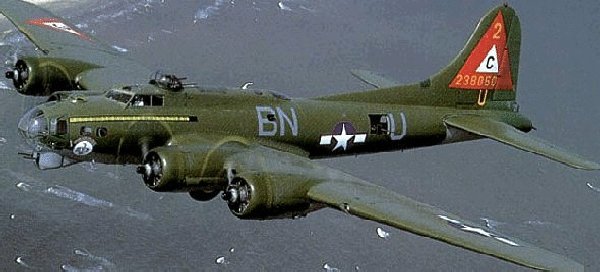
| identification_symbol_3 | Triangle C, PU | |
| identification_symbol_3_label | World War II tail and fuselage codes |
Air Force Outstanding Unit Award
The 360th Bombardment Squadron is an inactive United States Air Force unit. It last was assigned to the 303d Bombardment Wing, stationed at Davis-Monthan Air Force Base, Arizona. It was inactivated on 15 June 1964.
History
World War II
The 360th Bombardment Squadron was established in February 1942 as a Boeing B-17 Flying Fortress heavy bomber squadron at Pendleton Field, Oregon and assigned to the 303d Bombardment Group. It moved to Gowen Field, Idaho, where it trained under Second Air Force. The squadron deployed to Southern California to fly antisubmarine patrols over the Pacific. The 360th completed training in southwest by August 1942. The ground echelon departed Biggs Field, Texas in August 1942, arriving at Fort Dix on 24 August. It sailed aboard the and arrived in Great Britain on 10 September. The air echelon flew through Kellogg Field, Michigan and Dow Field, Maine before ferrying its planes across the Atlantic.
Combat in the European Theater
Due to the haste to move heavy bombers to Europe, the squadron was insufficiently trained for combat and it continued to train in England until it entered combat on 17 November 1942 in a strike against Saint-Nazaire, but returned without striking, having been unable to locate its target. It attacked Saint-Nazaire the following day, although its intended target was La Pallice. Its initial raids were on airfields, railroads and submarine pens in France. As a unit of one of only four Flying Fortress groups in VIII Bomber Command during late 1942 and early 1943, the squadron participated in the development of the tactics that would be used throughout the air campaign against Germany.
In 1943, the squadron began flying missions to Germany, participating in the first attack by American heavy bombers on a target in Germany, a raid on the submarine yards at Wilhelmshaven on 27 January 1943. From that time, it concentrated primarily on strategic bombardment of German industry, marshalling yards, and other strategic targets, including the ball bearing plants at Schweinfurt, shipyards at Bremen and an aircraft engine factory at Hamburg.
The 360th received a Distinguished Unit Citation when adverse weather on 11 January 1944 prevented its fighter cover from joining the group, exposing it to continuous attacks by Luftwaffe fighters. Despite this opposition, the unit successfully struck an aircraft assembly plant at Oschersleben.
Although a strategic bombing unit, the squadron was diverted on occasion to close air support and interdiction for ground forces. It attacked gun emplacements and bridges in the Pas-de-Calais during Operation Overlord, the invasion of Normandy, in June 1944; bombed enemy troops during Operation Cobra, the breakout at Saint Lo, and during the Battle of the Bulge. It bombed military installations near Wesel during Operation Lumberjack, the Allied assault across the Rhine. Its last combat mission was an attack on 25 April 1945 against an armament factory at Pilsen (now Plzeň).
Following VE Day in May 1945 the 303d Group was reassigned to the North African Division, Air Transport Command and moved to Casablanca Airfield, French Morocco to use its B-17 bombers as transports, ferrying personnel from France to Morocco. However, the two B-17 groups moved to Casablanca proved surplus to Air Transport Command's needs and the squadron was inactivated in late July 1945 and its planes ferried back to the United States.
Strategic Air Command
The squadron was again activated in the postwar Strategic Air Command in 1947 at Andrews Field, Maryland, but not Manned or equipped and inactivated in September 1948.
It was reactivated in 1951 as a Boeing B-47 Stratojet medium bomber squadron. Its aircraft were not received until April 1953 when squadron received first production block of Boeing B-47E Stratojets. It conducted routine deployments and training during the 1950s and early 1960s. The 360th was inactivated in 1964 with the phaseout of the B-47.
Lineage
- Constituted as the 360th Bombardment Squadron (Heavy) on 28 January 1942 : Activated on 3 February 1942
- Redesignated 360th Bombardment Squadron, Heavy on 20 August 1943 : Inactivated on 25 July 1945
- Redesignated 360th Bombardment Squadron, Very Heavy on 11 June 1947 : Activated on 1 July 1947 : Inactivated on 6 September 1948
- Redesignated 360th Bombardment Squadron, Medium on 27 August 1951 : Activated on 4 September 1951 : Inactivated on 15 June 1964
Assignments
- 303d Bombardment Group, 3 February 1942 – 25 July 1945
- 303d Bombardment Group, 1 July 1947 – 6 September 1948
- 303d Bombardment Group, 4 September 1951
- 303d Bombardment Wing, 16 June 1952 – 15 June 1964
Stations
- Pendleton Field, Oregon, 3 February 1942
- Gowen Field, Idaho, 13 March 1942 : Operated from Muroc Army Air Field, California, 28 May – c. 14 June 1942)
- Alamogordo Army Air Field, New Mexico, 18 June 1942
- Biggs Field, Texas, 7–22 August 1942
- RAF Molesworth (AAF-107), England, 12 September 1942
- Casablanca Airfield, French Morocco, c. 31 May – 25 July 1945
- Andrews Field (later Andrews Air Force Base), Maryland, 1 July 1947 – 6 September 1948
- Davis-Monthan Air Force Base, Arizona, 4 September 1951 – 15 June 1964
Aircraft
- Boeing B-17 Flying Fortress, 1942–1945
- Boeing B-29 Superfortress, 1951–1953
- Boeing B-47 Stratojet, 1953–1964
Awards and campaigns
| Campaign Streamer | Campaign | Dates | Notes | |
|---|---|---|---|---|
| [[File:American Campaign Streamer.png | 200px]] | Antisubmarine | 3 February 1942 – June 142 | |
| [[File:European-African-Middle Eastern Campaign Medal streamer.png | 200px]] | Air Offensive, Europe | 12 September 1942 – 5 June 1944 | |
| [[File:European-African-Middle Eastern Campaign Medal streamer.png | 200px]] | Normandy | 6 June 1944 – 24 July 1944 | |
| [[File:European-African-Middle Eastern Campaign Medal streamer.png | 200px]] | Northern France | 25 July 1944 – 14 September 1944 | |
| [[File:European-African-Middle Eastern Campaign Medal streamer.png | 200px]] | Rhineland | 15 September 1944 – 21 March 1945 | |
| [[File:European-African-Middle Eastern Campaign Medal streamer.png | 200px]] | Ardennes-Alsace | 16 December 1944 – 25 January 1945 | |
| [[File:European-African-Middle Eastern Campaign Medal streamer.png | 200px]] | Central Europe | 22 March 1944 – 21 May 1945 | |
| [[File:European-African-Middle Eastern Campaign Medal streamer.png | 200px]] | Air Combat, EAME Theater | 12 September 1942 – 11 May 1945 |
References
Notes
Bibliography
References
- Maurer, ''Combat Squadrons'', pp. 448-449
- Watkins, pp. 52–53
- Maurer, ''Combat Units'', pp. 175–176
- Freeman, p. 247
- Freeman, p. 19
- Freeman, p. 20
- ''See generally'' Freeman, Chapter 3, "The Pioneers", pp. 21–32 (describing development of formations, bombing techniques, etc. during this period).
- (2 May 2011). "Factsheet 303 Air Expeditionary Group (USAFE)". Air Force Historical Research Agency.
- Station number in Anderson
This article was imported from Wikipedia and is available under the Creative Commons Attribution-ShareAlike 4.0 License. Content has been adapted to SurfDoc format. Original contributors can be found on the article history page.
Ask Mako anything about 360th Bombardment Squadron — get instant answers, deeper analysis, and related topics.
Research with MakoFree with your Surf account
Create a free account to save articles, ask Mako questions, and organize your research.
Sign up freeThis content may have been generated or modified by AI. CloudSurf Software LLC is not responsible for the accuracy, completeness, or reliability of AI-generated content. Always verify important information from primary sources.
Report