From Surf Wiki (app.surf) — the open knowledge base
2008 Zimbabwean cholera outbreak
Disease outbreak in Zimbabwe

Disease outbreak in Zimbabwe
| Field | Value |
|---|---|
| title | |
| image | File:2008 Zimbabwe Cholera Outbreak Combined.svg |
| image_size | 250px |
| caption | The spread of cholera in Zimbabwe as of 5 February 2009, using data from several sources. |
| date | August 2008 – July 2009 |
| location | Zimbabwe |
| coordinates | |
| cause | Vibrio cholerae |
| reported deaths | 4,369 |
| reported injuries | 98,569 |
| website |
The 2008 Zimbabwean cholera outbreak was an epidemic of cholera affecting much of Zimbabwe from August 2008 until June 2009. The outbreak began in Chitungwiza in Harare Metropolitan Province in August 2008, then spread throughout the country so that by December 2008, cases were being reported in all 10 provinces. In December 2008, The Zimbabwean government declared the outbreak a national emergency and requested international aid. The outbreak peaked in January 2009 with 8,500 cases reported per week. The large scale and severity of the outbreak has been attributed to poor sanitation, limited access to healthcare, and insufficient healthcare infrastructure throughout Zimbabwe.
Cause
The 2008 cholera outbreak was caused by widespread infection with the bacterium Vibrio cholerae which is spread through water contaminated with the feces of infected individuals. Cholera had been seen in Zimbabwe in the decade leading up to the 2008 outbreak.
One of the major contributing factors to the outbreak was the breakdown of the municipal water supply, sanitation, and waste collection programs throughout the country, but especially in urban areas. Due to a shortage of purification chemicals, such as chlorine, the capital city of Harare stopped receiving piped water on 1 December 2008. By that date, many suburbs had not had any water supply for much longer. The collapse of these systems was blamed on the then-current economic crisis; many households cannot afford fuel to boil water.
The 2008 cholera epidemic in Zimbabwe had an unusually high fatality rate; Oxfam attributed the high mortality to a population "seriously weakened by hunger, HIV and AIDS". By the end of November 2008, three of Zimbabwe's four major hospitals had shut down, along with the Zimbabwe Medical School, and the fourth major hospital had two wards and no operating theatres working. Zimbabwean hospitals still open by December 2008 lacked medicines and staff. Due to hyperinflation, hospitals were not able to buy basic drugs and medicines, and the resources of even internationally funded emergency clinics were stretched. Some victims were travelling to Botswana and other neighbouring countries for treatment.
Impact

The 2008 outbreak began in Chitungwiza on 20 August 2008. In September, cases spread to the urban areas of Makonde and Chinhoyi. The attack rate was highest in Beitbridge, Chegutu, Mudzi and Zvimba Districts (above 1,000 cases per 100,000 people or 1.0%).
The number of cases reported by the United Nations Office for the Coordination of Humanitarian Affairs escalated from 30 on 1 September 2008 to 15,572 by 10 December. According to the Red Cross, around 46% of reported deaths occur en route to clinics and hospitals. The head of the British Department for International Development in Harare said that "there are probably twice as many people with cholera as turn up for treatment".
The case fatality rate for the outbreak was higher than expected for such outbreaks, although it began declining by January 2009. with an upper estimate of 3,000 from an anonymous senior official in the Ministry of Health and Child Welfare. Fatality rates varied from 2.5% in Harare to 18% in Chitungwiza. By 7 December, Oxfam estimated 60,000 cases by the end of January 2009 and a 10% fatality rate, with UNICEF giving a similar estimate. On 4 December 2008, the Zimbabwe government declared the outbreak to be a national emergency.
Response
Assistance after the 2008 outbreak was made available by numerous international agencies, and funding for water, sanitation and hygiene programmes, epidemic response and the provision of essential drugs came from several governments and trans-governmental organisations:
| Government or Agency | Amount | Date | ||||||||
|---|---|---|---|---|---|---|---|---|---|---|
| Government of Australia | A$8,000,000 for food and emergency aid | url=http://au.christiantoday.com/article/cholera-outbreak-hits-zimbabwe-as-australia-increases-aid/4847.htm | title=Cholera Outbreak Hits Zimbabwe as Australia Increases Aid | date=2 December 2008 | publisher=Christian Today | access-date=2 December 2008}} | ||||
| Government of Botswana | US$300,000 | url=https://www.google.com/hostednews/afp/article/ALeqM5hJadjlc1Q5y9gtMTY8eClSFfdPoQ | archive-url=https://web.archive.org/web/20081206083511/http://www.google.com/hostednews/afp/article/ALeqM5hJadjlc1Q5y9gtMTY8eClSFfdPoQ | url-status=dead | archive-date=6 December 2008 | title=Botswana aid to Zimbabwe not intended for Mugabe | date=3 December 2008 | publisher=AFP | access-date=3 December 2008}} | |
| Government of France | €200,000 for water purification tablets and distribution points | |||||||||
| Water treatment equipment | 4 December 2008 | |||||||||
| 11 December 2008 | ||||||||||
| Government of Germany | €1,000,000 to the Red Cross | 8 December 2008 | ||||||||
| Government of Namibia | US$165,000 of medical supplies | 7 December 2008. | ||||||||
| Government of the Netherlands | €5,000,000 for medication, drinking water and water purification tablets | December 2008. | ||||||||
| Government of South Africa | Emergency food and medicine | url=http://www.thetimes.co.za/News/Article.aspx?id=898728 | title=Cabinet approves Zimbabwe food aid | date=4 December 2008 | publisher=The Times (SA) | access-date=7 December 2008}} | ||||
| Government of Switzerland | US$820,000 to an emergency aid programme and logistical support for UN agencies | 9 December 2008 | ||||||||
| Government of the United Kingdom | £3,000,000 | url=https://www.telegraph.co.uk/news/worldnews/africaandindianocean/zimbabwe/3536824/Zimbabwes-cholera-epidemic-hits-10000.html | title=Zimbabwe's cholera epidemic hits 10,000 | date=1 December 2008 | agency=Reuters | access-date=2 December 2008 | location=London | first=Peta | last=Thornycroft}} | |
| USAID | US$6,200,000 for health, water and sanitation programmes | 11 December 2008 | ||||||||
| Government of Venezuela | Over 74 tons of medical supplies and drinking water | 3 January 2009 | ||||||||
| African Union | US$100,000 | url=http://www.reliefweb.int/rw/rwb.nsf/db900SID/ASAZ-7M8FY6?OpenDocument&RSS20=02 | title=African Union contributes USD $100,000 to help fight cholera epidemic in Zimbabwe | date=11 December 2008 | publisher=ReliefWeb | access-date=11 December 2008}} | ||||
| European Commission | €9,000,000 | url=http://www.zwnews.net/issuefull.cfm?ArticleID=19804 | title=EU gives Zim E9m for cholera | date=3 December 2008 | publisher=News24 (SA) | access-date=3 December 2008 | url-status=dead | archive-url=https://web.archive.org/web/20081208024528/http://www.zwnews.net/issuefull.cfm?ArticleID=19804 | archive-date=8 December 2008 }} | |
| [[File:Flag of WHO.svg | 22px]] World Health Organization | US$340,000 of medication and supplies | url=http://www.africasia.com/services/news/newsitem.php?area=africa&item=081204123923.s9870k7x.php | title=UN, aid groups step up fight against cholera in Zimbabwe | publisher=AFP via Africasia | date=4 December 2008 | access-date=4 December 2008 | archive-url=https://web.archive.org/web/20081206173327/http://www.africasia.com/services/news/newsitem.php?area=africa&item=081204123923.s9870k7x.php | archive-date=6 December 2008 | url-status=dead}} |
| Giving Children Hope and | ||||||||||
| World Vision | US$500,000 of medication | 2 December 2008 | ||||||||
| [[File:Emblem of the ICRC.svg | 22px]] International Committee of the Red Cross | over 13 tons of medical supplies | 4 December 2008 | |||||||
| World Vision and | ||||||||||
| Health Partners International of Canada | US$4,000,000 of medication | 13 January 2009 |
By 7 December 2008, UNICEF had secured international donor funding to provide sufficient water treatment chemicals for three weeks water supply for Harare and had arranged a shipment of chemical sufficient for four months supply. As of 15 December, following agreement with the Zimbabwe government, the World Health Organization was procuring medical supplies to roll out a response plan to run health centres.
Spread
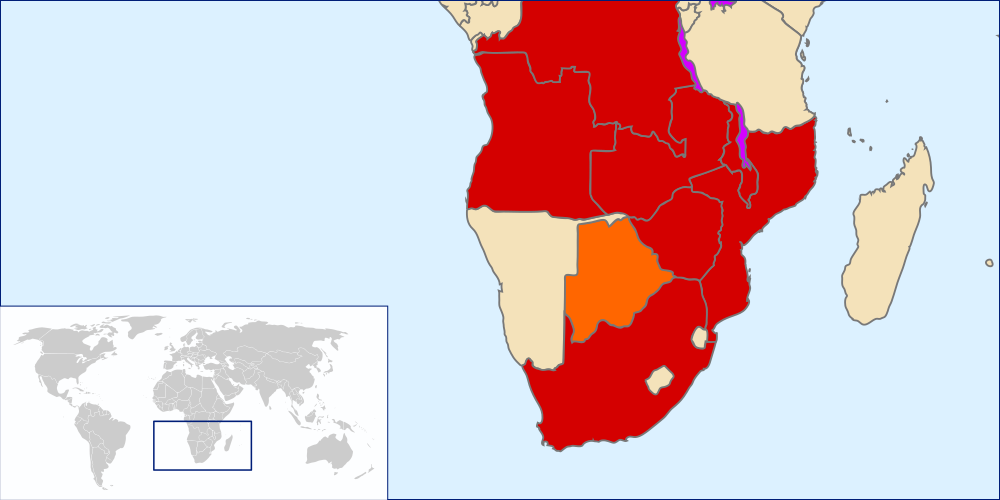
█ Infections recorded]] The 2008 cholera outbreak spread to districts in Botswana, Mozambique, South Africa and Zambia bordering Zimbabwe.
South Africa
Cholera spread to the Zimbabwean migrant worker community in Limpopo and Mpumalanga provinces of South Africa and cholera bacteria were detected in the Limpopo River on 3 December 2008. rising to 2,100 cases and 15 deaths by 14 January 2009, and to 12,000 cases and 59 deaths by 10 March.
The South African government set up medical facilities and drinking water supplies at the Beitbridge border post and deployed the National Outbreak Response Team and additional medical personnel to Musina. Anthony Turton, a political scientist and Unit Fellow with the Council for Scientific and Industrial Research (CSIR) in South Africa, who had earlier warned of the risk of cholera in South Africa and wrote a report that recommended that the South African government increase its spending on water treatments lest a cholera outbreak occur in the country, was suspended for having made "inappropriate statements to the media". On 10 December 2008, the Limpopo Provincial Government declared Vhembe District Municipality, which borders Zimbabwe at Beitbridge, Matabeleland South province, a disaster area. On a 28 January 2009 visit to Musina with high-ranking government and ruling party officials, Health Minister Barbara Hogan said
Other countries
The spread of cholera to Zimbabwe's other neighbouring countries was initially slower than in South Africa, with one death recorded in Kafue District in Zambia and none in Botswana or Namibia by 9 December 2008. In Mozambique, cholera spread to 10 out of 11 provinces, Four health workers also died in a mob attack, blamed on "misinformation and misunderstanding in efforts to combat cholera", and 12 of the prisoners from the incident died in jail. In Malawi 104 deaths were recorded since January, making it the worst outbreak since 2001–02 where 960 people died. Kenya, Somalia, Tanzania, DRC, and Ghana have had unrelated cholera outbreaks with between 10 and 100 deaths in 2009 as of February.
Prevention
After the 2008 epidemic was declared a national emergency, the Ministry of Health and Child Welfare (MOHCW) collaborated with several other departments, governments, and non-governmental organizations to create a Cholera Command and Control Centre. This centre works to prevent cholera outbreaks in Zimbabwe by addressing broader societal factors that could contribute to cholera outbreaks, such as water sanitation and poor hygiene habits.
Politicisation
Because of its well-organised health care system and effective water sanitation facilities, Rita R. Colwell of the James Baker Institute says Zimbabwe was historically one of the African countries least affected by cholera. A news commentary in The Lancet said that, under President Robert Mugabe, the country's health programs were negatively impacted, resulting in diminished health care for those infected with cholera.
A news commentator writing for The Lancet, Andrew Meldrum, said that President Mugabe's Youth Militia threatened health professionals that provided medical treatment to political opponents. He said that, combined with decreasing education standards, low pay, and a shortage of medical supplies like latex gloves, this led doctors to leave Zimbabwe at an alarming rate. According to Douglas Gwatidzo, the chairman of the Zimbabwe Doctors for Human Rights group, Zimbabwe had only one doctor assigned to a group of 12,000 citizens. Doctors in Zimbabwe fill only 25% of the medical posts available, and even fewer specialist positions are taken. According to Meldrum, this poses serious challenges to health care for diseases like HIV/AIDS and cholera. Similarly, the effects of cholera are exacerbated without proper nutrition, and Zimbabwe has faced food shortages for the last several years.
Cholera and malnutrition keep children out of school – a serious social consequence of the outbreak. Rachel Pound, the director of Save the Children in Zimbabwe, said that attending school may be dangerous in Zimbabwe, instead of providing a ladder for self-improvement. She noted that "Sanitation is now so bad in schools that they may become a breeding ground for infection", rather than a place of valuable education.
According to Meldrum, Zimbabwe's high inflation left the country with a lack of financial resources, resulting in a shortage of ambulances and pharmaceutical drugs. According to Eric Pruyt of the Delft University of Technology in The Netherlands, this was exacerbated by a shortage of international aid, as Zimbabwe's government didn't acknowledge the epidemic and accept aid until the disease was widespread. It was not contained or prevented from spreading. Until 2008, the government insisted that there was no cholera in Zimbabwe, and Pruyt says the U.N. did not provide the country with safe drinking water until after the crisis started. Meldrum says that, during Zimbabwe's continuing HIV/AIDS dilemma, some major international donors did not give much money because they believed it would help President Mugabe stay in power, which they did not want.
As the outbreak and health crisis grew worse, American and British leaders cited the crisis as further proof that it was, in their view, "well past time for (President) Robert Mugabe to leave" and that Zimbabwe had become a failed state. Marian Tupy of the Cato Institute said that the crisis began in 2005 when the government took over water treatment facilities but without sufficient funding to maintain purification processes. The transfer of water treatment from local government to the Zimbabwe National Water Authority was criticized by Innocent Nhapi of the National University of Rwanda on the basis of capacity and funding of the authority. The lack of funding for water treatment chemicals, maintenance and staff salaries was cited by Colwell of the Baker Institute as a major cause of the epidemic.{{cite AV media | access-date =2013-10-23 | archive-date =26 October 2013 | archive-url =https://web.archive.org/web/20131026030733/http://bakerinstitute.org/videos/civic-scientist-lecture-series-rita-colwell-oceans-climate-and-health-cholera-model-infectious-diseases-changing-environment/ | url-status =dead
According to an editorial by Daniel J Ncayiyana in the South African Medical Journal, President Mugabe blamed the U.S. and the U.K. for the cholera outbreak, saying that they sent the disease so that they have a reason to credibly remove him from the presidency. One Zimbabwean citizen was shown with a sign that blamed UK Prime Minister Gordan Brown for the disease; the sign expressed the horrors of "Brown's cholera".
According to a news report in Al Jazeera, the Zimbabwe government and state media blamed the outbreak on European and American sanctions and a Reuters report said it accused Britain of plotting an invasion under the cover of the outbreak. Information minister Sikhanyiso Ndlovu blamed the cholera deaths on Western sanctions, saying "the cholera issue has been used to drive a wedge among us". On 12 December, Ndlovu repeated his accusation, and claimed that the cholera outbreak was actually a "serious biological-chemical weapon" attack by the United Kingdom, which Ndlovu asserted was trying to commit genocide. Said Ndlovu:
In the meantime, a senior ZANU-PF official argued that the government and party leadership was more focussed on the forthcoming ZANU-PF conference than on the current crisis. On 11 December 2008, President Robert Mugabe made a speech screened on national television in which he said:
Reports from the WHO contradicted Mugabe's view and indicated a growing death toll. According to the WHO, as of 8 December nearly 800 people had died of cholera and more than 16,000 cases were being treated. Later that same day, Zimbabwean visas were denied to six French aid workers, including three crisis management specialists, two epidemiologists and a water treatment expert. Britain's Africa minister, Mark Malloch-Brown, dismissed Mugabe's claim that the Zimbabwe cholera crisis is over, commenting as follows:
The French foreign ministry and USAID also contradicted Mugabe's statements and called on him to allow aid to reach the people in need.
References
References
- International Federation of the Red Cross and Red Crescent. (3 December 2008). "Zimbabwe: Cholera, 3 December 2008". ReliefWeb.
- World Health Organization. (12 December 2008). "Zimbabwe: Areas affected by cholera and anthrax outbreaks (September–November 2008)". World Health Organization.
- World Health Organization. (3 December 2008). "Zimbabwe: Areas affected by cholera outbreaks (September–November 2008), showing showing locations of cholera treatment units, 3 December 2008".
- (October 2011). "The 2008 Cholera Epidemic in Zimbabwe: Experience of the icddr,b Team in the Field". Journal of Health, Population, and Nutrition.
- (9 December 2008). "Zimbabwe declares cholera national emergency". [[CNN]].
- (31 October 2009). "Cholera Country Profile: Zimbabwe". World Health Organization - Global Task Force on Cholera Control.
- (26 November 2008). "Zimbabwe: coping with the cholera outbreak".
- (3 December 2008). "United Nations, Red Cross mobilize cholera relief for Zimbabwe". VOA news.
- (4 December 2008). "Zimbabwe appeals for donor help on cholera". Reuters.
- (3 December 2008). "Cholera death rate multiplies in Zimbabwe's economic crisis". Financial Times (UK).
- (22 January 2009). "Cholera moves to rural Zimbabwe". BBC.
- (7 November 2008). "The death throes of Harare's hospitals". BBC.
- (19 November 2008). "Zimbabwe's Medical School Closes". Radio VOP.
- (2 December 2008). "Zimbabwe cholera deaths near 500". BBC.
- (1 December 2008). "Capital lacks clean water, cholera kills hundreds in Zimbabwe". CNN.
- United Nations Office for the Coordination of Humanitarian Affairs. (24 November 2008). "Daily Cholera Update".
- World Health Organization. (3 January 2009). "WHO Zimbabwe Cholera Epidemiological Bulletin No. 4, 3 January 2009".
- ''[http://www.reliefweb.int/rw/rwb.nsf/retrieveattachments?openagent&shortid=CJAL-7LAP6F&file=Full_Report.pdf Zimbabwe: Cholera Outbreak]''. [[International Federation of Red Cross and Red Crescent Societies]], 11 November 2008
- (3 December 2008). "Zimbabwe in collapse". Radio Netherlands Worldwide.
- (3 December 2008). "United Nations, Red Cross mobilize cholera relief for Zimbabwe". VOA news.
- (29 November 2008). "Doctors Say Cholera Toll Now 800". The Standard (Zimbabwe).
- ''[http://ochaonline.un.org/OchaLinkClick.aspx?link=ocha&docId=1095879 Zimbabwe Humanitarian Situation Report On Cholera Outbreak]'', United Nations Office for the Coordination of Humanitarian Affairs, 12 September 2008.
- (9 December 2009). "Red alert as cholera crisis spreads to Zimbabwe's neighbours". Evening Standard (UK).
- (15 December 2008). "Cholera in Zimbabwe:Epidemiological Bulletin number 1". World Health Organization.
- (27 November 2008). "ZIMBABWE: Cholera feeds off a perfect storm". IRIN.
- (8 September 2008). "Zimbabwe, Harare: Residents Slam ZINWA After Fatal Cholera Outbreak". Sanitation Updates.
- (10 December 2008). "Cholera death toll tops 746". New Zimbabwe.com.
- (14 January 2009). "Zimbabwe rainy season increasing cholera risk says British Red Cross". Zimbabwe Journalists.
- Fletcher, Martin. (10 December 2008). "Health clinics overwhelmed by cholera cases in Zimbabwe". The Times (UK).
- (2 December 2008). "Cholera outbreak kills 484 in Zimbabwe". Financial Times (UL).
- Peta, Basildon. (26 November 2008). "3,000 dead from cholera in Zimbabwe". The Independent (UK).
- (30 November 2008). "Zimbabwe says cholera epidemic may spread with rain". Reuters.
- (7 December 2008). "Zimbabwe's cholera victims 'ten times more likely to die'". Telegraph (UK).
- (6 December 2008). "Zimbabwe 'set for cholera jump'". BBC.
- (2 December 2008). "Cholera Outbreak Hits Zimbabwe as Australia Increases Aid". Christian Today.
- (3 December 2008). "Botswana aid to Zimbabwe not intended for Mugabe". AFP.
- (4 December 2008). "Humanitarian assistance to Zimbabwe". France-Diplomatie.
- (12 December 2008). "Zimbabwe : la France envoie du matériel à Harare". Government of France via ReliefWeb.
- (9 December 2008). "Germany Increases Aid to Zimbabwe as Cholera Death Toll Rises". Deutsche Welle.
- (7 December 2008). "Namibia sends drugs worth 165,000 USD to Zimbabwe: media". IC Publications / AFP.
- (14 December 2008). "More aid for Zimbabwe epidemic : media". The Zimbabwean.
- (4 December 2008). "Cabinet approves Zimbabwe food aid". The Times (SA).
- (9 December 2008). "Zimbabwe cholera crisis blamed on government".
- (3 January 2009). "Venezuela sends Zimbabwe aid". The Scotsman.
- (11 December 2008). "African Union contributes USD $100,000 to help fight cholera epidemic in Zimbabwe". ReliefWeb.
- (3 December 2008). "EU gives Zim E9m for cholera". News24 (SA).
- (4 December 2008). "UN, aid groups step up fight against cholera in Zimbabwe". AFP via Africasia.
- (2 December 2008). "Cholera Outbreak in Zimbabwe". Giving Children Hope.
- (13 January 2009). "World Vision, HIPC airlifts $4 million cholera medications to Zimbabwe". Newswire (Canada).
- (15 December 2008). "Zimbabwe cholera death toll nears 1,000, UN reports". United Nations News Service.
- (19 November 2008). "SOUTH AFRICA-ZIMBABWE: Cholera crosses the border too". IRIN via Reuters.
- (12 December 2008). "Zimbabwe health cluster weekly bulletin No. 2 – 12 Dec 2008". World Health Organization.
- (15 January 2009). "Zimbabwe cholera surges as neighbours report rising cases". AFP.
- [https://web.archive.org/web/20090310144907/http://www.google.com/hostednews/afp/article/ALeqM5gLRGT2fcbFvRKCiIagnxkaRGodHA AFP S.Africa cholera outbreak 'declining']
- (4 December 2008). "SA–Zim border under close watch". Independent Online (South Africa).
- (26 November 2008). "Statement by Minister of Health Barbara Hogan on the outbreak of cholera in Zimbabwe and South Africa". SA Government Information Service.
- (18 November 2008). "Three Strategic Water Quality Challenges that Decision-Makers Need to Know About and How the CSIR Should Respond".
- (27 November 2008). "South Africa at risk of cholera". BBC.
- (28 January 2009). "Cholera situation is 'scary', says Hogan". The Times (South Africa).
- World Health Organization. (23 February 2009). "Africa weekly emergency situation update Vol. 2, No. 8". ReliefWeb.
- with a total of 9,533 cases by 1 Jan to 1 Mar 2009 and 119 deaths by 17 March.[https://web.archive.org/web/20130520131425/http://www.google.com/hostednews/afp/article/ALeqM5iUhFqAALo1-pIJv3OKCajIZW0Jsw AFP:12 Mozambican prisoners die after cholera riot]
- (16 March 2009). "Mozambique: Health workers killed in tragic case of ignorance". reliefweb.
- (20 March 2009). "Malawi: Malawi says cholera outbreak kills 104". Reuters.
- (19–21 October 2011). "Intersectoral Actions in response to cholera in Zimbabwe: From emergency response to institution building". World Health Organization.
- Meldrum A. (March 2008). "Zimbabwe's health-care system struggles on". Lancet.
- Kapp C. (February 2009). "Zimbabwe's humanitarian crisis worsens". Lancet.
- Pruyt, Eric. (26 July 2009). "Cholera in Zimbabwe". Delft University of Technology.
- (7 December 2008). "Zimbabwe crashes". Independent Online (South Africa).
- (11 December 2008). "Zimbabwe neighbors should seal borders-US official".
- Tupy, Marian. (22 February 2010). "Mugabe's U.N. Helpers". Cato Institute.
- (2009). "The water situation in Harare, Zimbabwe: A policy and management problem". Water Policy.
- Ncayiyana DJ. (January 2009). "The Zimbabwe mayhem--how many people must die for the neighbours to act?". S. Afr. Med. J..
- (7 December 2008). "Calls mount for Mugabe to resign". Al Jazeera.
- (7 December 2008). "Britain plots Zimbabwe invasion – Mugabe spokesman". Reuters.
- (9 December 2008). "Zim Cholera 'Is Beyond Control'". Sky News (UK).
- (12 December 2008). "Zimbabwe blames cholera on Britain". Al Jazeera.
- (12 December 2008). "Zimbabwe: Cholera is genocide by UK". CNN.
- (12 December 2008). "UK caused cholera, says Zimbabwe". BBC.
- (4 December 2008). "Mugabe Allies Squash Succession Rumours". institute for war & peace reporting.
- Fletcher, Martin. (11 December 2008). "Mugabe: 'There is no cholera in Zimbabwe'". The Times (UK).
- (11 December 2008). "Zimbabwe cholera is over – Mugabe". BBC.
- (11 December 2008). "France says Zimbabwe denies visas to aid workers". Reuters via ReliefWeb.
- Tran, Mark. (11 December 2008). "UK dismisses Mugabe's claim that Zimbabwe cholera crisis is over". The Guardian (UK).
This article was imported from Wikipedia and is available under the Creative Commons Attribution-ShareAlike 4.0 License. Content has been adapted to SurfDoc format. Original contributors can be found on the article history page.
Ask Mako anything about 2008 Zimbabwean cholera outbreak — get instant answers, deeper analysis, and related topics.
Research with MakoFree with your Surf account
Create a free account to save articles, ask Mako questions, and organize your research.
Sign up freeThis content may have been generated or modified by AI. CloudSurf Software LLC is not responsible for the accuracy, completeness, or reliability of AI-generated content. Always verify important information from primary sources.
Report