From Surf Wiki (app.surf) — the open knowledge base
1st Naval Armaments Supplement Programme
First of four Imperial Japanese Naval Expansion plans
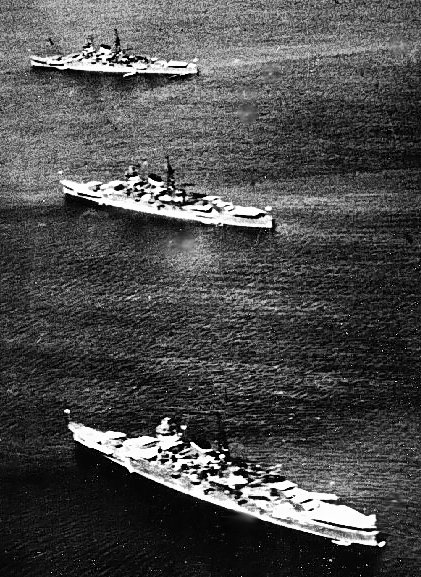
First of four Imperial Japanese Naval Expansion plans
The 1st Naval Armaments Supplement Programme, otherwise known as the "Circle One" plan was the first of four expansion plans of the Imperial Japanese Navy between 1930 and the start of World War II.
Background
The London Naval Treaty placed severe restrictions on Japan's naval capabilities vis-a-vis the United States Navy and the British Royal Navy in terms of tonnage and numbers of capital warships. The response of the Imperial Japanese Navy General Staff was to initiate a construction program to build new warships to the allotted tonnage limits in each of the restricted categories, and to invest in types of warships and weaponry not specifically covered by the provisions of the treaty.
The "Circle One" plan was submitted by the Naval Ministry and approved by the Cabinet in November 1930, and officially ratified by the Diet of Japan in 1931. It called for the construction of 39 new combat vessels, centering on four of the new s, and expansion of the Imperial Japanese Navy Air Service to 14 Naval Air Groups. Budget for the construction of the warships was on a six-year basis, and the budget for forming the air groups was on a three-year basis. Total funding allotted was 247,080,000 Yen for ship construction and 44,956,000 Yen for naval aviation expansion.
In terms of naval aviation development, the "Circle One" plan also concentrated on the development of new aircraft technologies, especially large seaplanes, land-based bombers, as well as carrier-based attack aircraft and floatplane attack aircraft that could be launched from battleships, cruisers or submarines. Attention was also given to training of pilots and air crews in dive bombing and torpedo tactics.
In a 1932 supplement to the Circle One plan, additional funding was added for the construction of three more vessels: the submarine tender Taigei, and two submarine chasers.
Table of vessels
| Category | Class | Planned | Completed | Converted | ||||
|---|---|---|---|---|---|---|---|---|
| Light cruiser | 4 | , {{ship | Japanese cruiser | Mikuma | 2}}, , {{ship | Japanese cruiser | Kumano | |
| Destroyer | 12 | , , , , , | 6 vessels were converted to Shiratsuyu class | |||||
| , , , , , | 6 vessels were converted from Hatsuharu class | |||||||
| Torpedo boat | 4 | , , {{ship | Japanese torpedo boat | Tomozuru | 2}}, {{ship | Japanese torpedo boat | Hatsukari | |
| Cruiser submarine | I-6 | 1 | {{Jsub | I-6 | 2}} | |||
| Large sized submarine | I-68 | 6 | I-68, I-69, I-70, I-71, I-72, I-73 | |||||
| Medium-sized submarine | Ro-33 | 2 | Ro-33, Ro-34 | |||||
| Submarine tender | Taigei | 1 | Taigei | later converted to the aircraft carrier {{ship | Japanese aircraft carrier | Ryūhō | ||
| Minelayer | {{ship | Japanese minelayer | Okinoshima | 2}} | 1 | Okinoshima | ||
| 3 | , {{ship | Japanese minelayer | Nasami | 2}}, {{ship | Japanese minelayer | Sarushima | 2}} | |
| Minesweeper | No.13 | 6 | No.13 to No.18 | |||||
| Subchaser | No.1 | 2 | No.1 and No.2 |
Notes
References
- {{cite book
References
- Evans, ''Kaigun''. page 238-239
- Evans, ''Kaigun'', page 249
This article was imported from Wikipedia and is available under the Creative Commons Attribution-ShareAlike 4.0 License. Content has been adapted to SurfDoc format. Original contributors can be found on the article history page.
Ask Mako anything about 1st Naval Armaments Supplement Programme — get instant answers, deeper analysis, and related topics.
Research with MakoFree with your Surf account
Create a free account to save articles, ask Mako questions, and organize your research.
Sign up freeThis content may have been generated or modified by AI. CloudSurf Software LLC is not responsible for the accuracy, completeness, or reliability of AI-generated content. Always verify important information from primary sources.
Report