From Surf Wiki (app.surf) — the open knowledge base
1932 Belgian general election
none
none
| Field | Value | |
|---|---|---|
| election_name | 1932 Belgian general election | |
| country | Belgium | |
| type | parliamentary | |
| ongoing | no | |
| previous_election | 1929 Belgian general election | |
| previous_year | 1929 | |
| next_election | 1936 Belgian general election | |
| next_year | 1936 | |
| seats_for_election | All 187 seats in the Chamber of Representatives | |
| All 93 seats in the Senate | ||
| election_date | 27 November 1932 | |
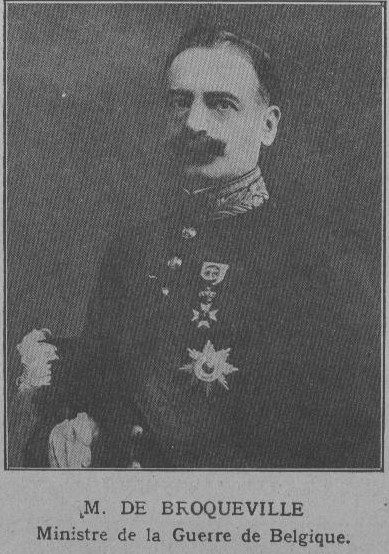
| image1 | [[File:Comte de Broqueville.jpg | 150x150px]] |
| leader1 | Charles de Broqueville | |
| leader_since1 | Candidate for PM | |
| party1 | Catholic Party (Belgium) | |
| last_election1 | 71 seats, 35.38% | |
| seats1 | 79 | |
| seat_change1 | 8 | |
| popular_vote1 | 856,027 | |
| percentage1 | 38.42% | |
| swing1 | 3.04% | |
| image2 | [[File:Joseph Van Roosbroeck (1926).jpg | 150x150px]] |
| leader2 | Joseph Van Roosbroeck | |
| leader_since2 | 1918 | |
| party2 | Belgian Labour Party | |
| last_election2 | 70 seats, 36.02% | |
| seats2 | 73 | |
| seat_change2 | 3 | |
| popular_vote2 | 824,946 | |
| percentage2 | 37.03% | |
| swing2 | 1.01% | |
| image3 | [[File:Albert Deveze - NAC (cropped).jpg | 150x150px]] |
| leader3 | Albert Devèze | |
| leader_since3 | 1927 | |
| party3 | Liberal Party (Belgium) | |
| last_election3 | 28 seats, 16.55% | |
| seats3 | 24 | |
| seat_change3 | 4 | |
| popular_vote3 | 313,722 | |
| percentage3 | 14.08% | |
| swing3 | 2.47% | |
| title | Government | |
| posttitle | Government after election | |
| before_election | de Broqueville II | |
| before_party | Catholic-Liberal | |
| after_election | de Broqueville II | |
| after_party | Catholic-Liberal |
All 93 seats in the Senate
General elections were held in Belgium on 27 November 1932.{{Cite book The Catholic Party won 79 of the 187 seats in the Chamber of Representatives and 42 of the 93 seats in the Senate. Voter turnout was 94.3%.
Background
The elections occurred during an economic crisis, the Great Depression. The Catholic-Liberal government led by Jules Renkin faced rising unemployment, derailing public finances and strikes benefiting the Communist Party. Parliamentary elections were due in May 1933 at the latest. On 18 October 1932, Prime Minister Renkin resigned under pressure from King Albert I, allowing the more experienced Charles de Broqueville to take charge. He immediately dissolved parliament and scheduled parliamentary elections for 27 November 1932.
Municipal elections had also occurred on 9 October 1932, where the Catholic Party lost ground to socialists and liberals. To avoid losses during the parliamentary elections, de Broqueville used the issue of education in the election campaign, which was a major issue under his previous 1911–1918 government.
His strategy worked; the Catholics won, but also the socialists and communists gained ground, whereas the liberals lost seats. The socialists refused to enter government, and the Catholic-Liberal coalition continued their government and proceeded to take drastic measures for economic recovery.
Results
Chamber of Representatives
Senate
References
References
- Nohlen & Stöver, p308
- Nohlen & Stöver, p290
- [https://verkiezingsresultaten.belgium.be/nl/election-results/kamer-van-volksvertegenwoordigers/1932/rijk/163953 Belgian Elections]
- [https://wahlergebnisse.belgium.be/de/election-results/senat/1932/k%C3%B6nigreich/165003 Belgian Elections]
This article was imported from Wikipedia and is available under the Creative Commons Attribution-ShareAlike 4.0 License. Content has been adapted to SurfDoc format. Original contributors can be found on the article history page.
Ask Mako anything about 1932 Belgian general election — get instant answers, deeper analysis, and related topics.
Research with MakoFree with your Surf account
Create a free account to save articles, ask Mako questions, and organize your research.
Sign up freeThis content may have been generated or modified by AI. CloudSurf Software LLC is not responsible for the accuracy, completeness, or reliability of AI-generated content. Always verify important information from primary sources.
Report