From Surf Wiki (app.surf) — the open knowledge base
1931 Valentine earthquake
Most powerful earthquake in Texas history
.jpg)
Most powerful earthquake in Texas history
| Field | Value | ||||||
|---|---|---|---|---|---|---|---|
| title | 1931 Valentine earthquake | ||||||
| image | 1931 Valentine, Texas earthquake ShakeMap.jpg | ||||||
| image alt | Shake map showing the epicenter of the earthquake in Virginia | ||||||
| imagecaption | USGS ShakeMap | ||||||
| map2 | {{Location map+ | Texas | |||||
| {{Location map~ | Texas | lat | 30.59 | long=-104.5 | label=Valentine | label_size=100 | mark=Green pog.svg}} |
| {{Location map~ | Texas | lat | 30.66 | long=-104.37 | mark=Bullseye1.png | marksize=40}} | |
| width | 250 | ||||||
| float | right | ||||||
| relief | yes | ||||||
| timestamp | 1931-08-16 11:40:25 | ||||||
| local-date | |||||||
| local-time | 05:40 CST (UTC−06:00) | ||||||
| anss-url | iscgem906944 | ||||||
| isc-event | 906944 | ||||||
| magnitude | |||||||
| intensity | |||||||
| depth | 10 km | ||||||
| location | (USGS) | ||||||
| {{Coord | 30.66 | -104.37 | display | inline}} (ISC–GEM) | |||
| type | Oblique-slip | ||||||
| countries affected | Southwestern U.S., Northern Mexico | ||||||
| casualties | No fatalities | ||||||
| damages | $50,000–$75,000 (1931 USD) |
|local-date = |local-time = 05:40 CST (UTC−06:00) |anss-url = iscgem906944 |isc-event = 906944
In the early morning hours of August 16, 1931, a powerful earthquake occurred in West Texas with a maximum Mercalli intensity of VIII (Severe). Estimates of its magnitude range between 5.8 and 6.4 mb, making it the most powerful earthquake ever recorded in Texas history. Its epicenter was near the town of Valentine, Texas; there, the earthquake caused damage to many homes and buildings. The earthquake may have been caused by movement along oblique-slip faulting in West Texas, the most seismically active region in the state. Shaking from the earthquake was perceptible within a 400 mi radius of the epicenter, affecting four U.S. states and northern Mexico. Several foreshocks and aftershocks accompanied the primary temblor, with the aftershocks continuing until at least November 3, 1931. The main earthquake caused no fatalities, though several people sustained minor injuries; the damage in Valentine amounted to $50,000–$75,000 ($962,195–$1,443,293 today).
Geology
The largest earthquakes in Texas history have occurred in West Texas, which is the state's most seismically active region. Earthquakes have been reported in El Pasonear the state's westernmost extentsince as early as 1887. There are several faults in the region, including the Mayfield Fault, Rim Rock Fault, and Valentine Fault, in addition to other major geologic features such as the Central Basin Platform, the Ouachita Tectonic Front, and the Rio Grande rift. The 1931 Valentine earthquake may have been generated by movement along either the Mayfield or Rim Rock Faults, though no investigation of fault displacement was performed in the area after the earthquake. One 1987 study published in the Bulletin of the Seismological Society of America suggested that the earthquake was caused by either normal or strike-slip faulting at a depth of 6 mi (10 km), with a dip of 54° to the east, a strike of 10–20° and a rake of –150°. The tremor may have resulted in broad subsidence of 4 in (11 mm) over a 10–20 mi (20–30 km) long stretch near Valentine. Though no surface rupture was reported in connection with the earthquake along a fault, cracks in the alluvium within the nearby Quitman Canyon developed during the earthquake, retaining depths of 7 ft and widths as wide as 3 ft at least 17 years after the earthquake.
Earthquake
The main Valentine earthquake occurred at 5:40 a.m. Central Standard Time (11:40 UTC) on August 16, 1931, with an epicenter near , roughly 7 mi (12 km) southwest of Valentine, Texas, and towards the southeastern end of the Rio Grande rift. The earthquake was felt across most of Texas and in portions of Kansas, New Mexico, Oklahoma, and northern Mexico, producing perceptible shaking as far as 400 mi away from the epicenter. Its hypocenter was beneath the Lobo Valley, a northwest-trending alluvial plain. Estimates for its magnitude range between mb 5.6–6.4, making it the strongest earthquake in Texas on record. The United States Geological Survey (USGS) lists the earthquake as having a magnitude of mbLg 5.8 based on the amplitude of short-period surface Lg waves. The ISC–GEM catalogue lists the earthquake as having a magnitude of Mw 6.3. Seismographs as far as St. Louis, Missouri, recorded both foreshocks and aftershocks beginning on August 16 and continuing well after the main earthquake. The foreshocks drove many people to sleep outdoors, possibly mitigating human casualties caused by the main shock. Numerous aftershocks occurred after the main tremor, particularly in the ensuing eight hours. The strongest aftershock occurred at 1:37 p.m. CST (19:37 UTC) on August 18, cracking walls in Valentine and stopping clocks in El Paso. The aftershock had a magnitude of approximately 4.2 and produced a maximum intensity of V (Moderate). A magnitude 3.0 or 3.2 aftershock occurred near Valentine at 9:50 a.m. CST (15:50 UTC) on November 3 and was detected by a seismometer in Tucson, Arizona.
Damage
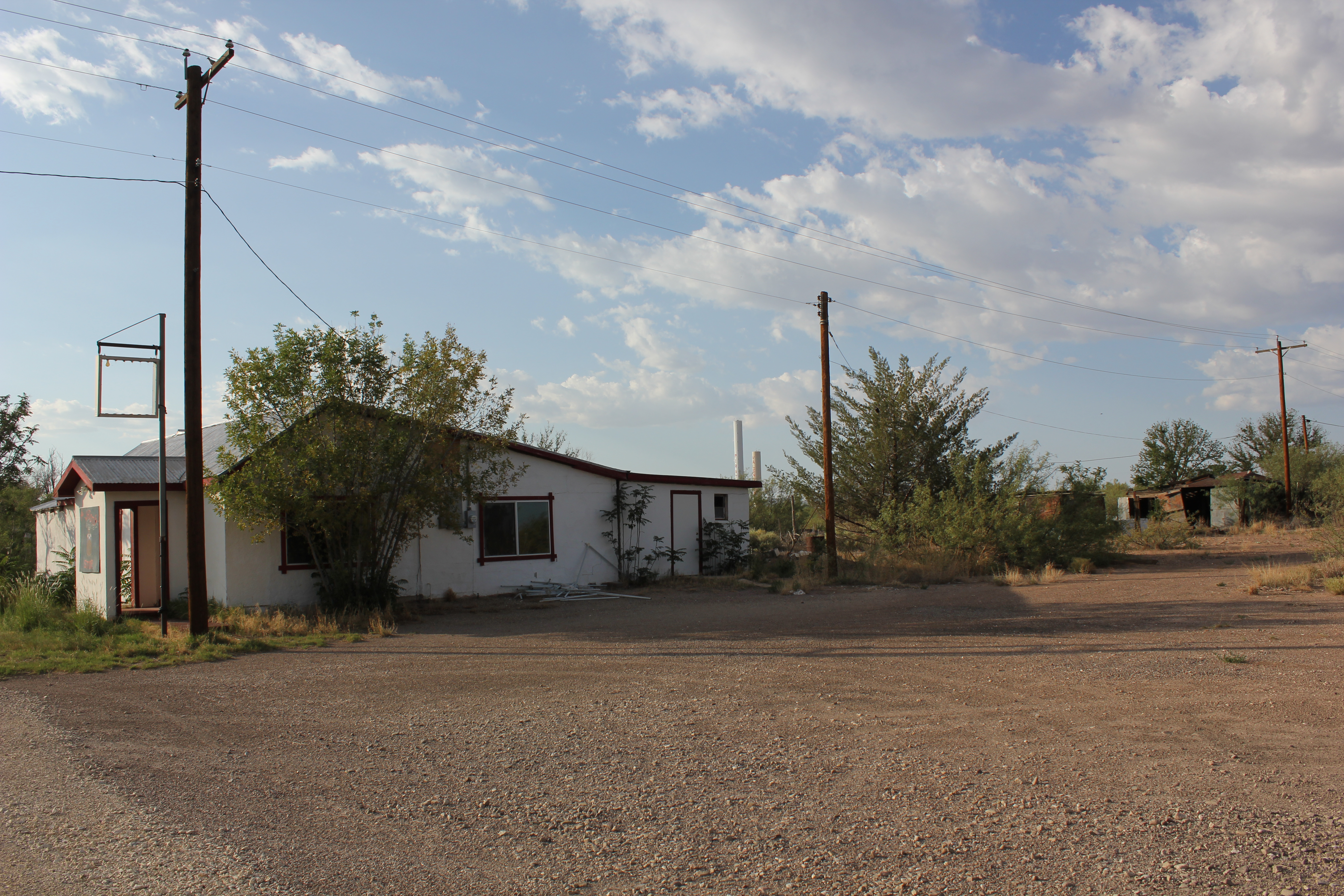
Shaking from the earthquake was most intense in the Valentine, Texas, area. At Valentine, the shaking intensity reached level VIII (Damaging tremor) on the Rossi–Forel scale and level VIII (Severe) on the Modified Mercalli scale. Every building in the town excluding those made from wood frames sustained damage. Many chimneys toppled or cracked following the quake. The local school facility was damaged beyond repair, and its yard sustained minor cracks. Buildings built with adobe had walls collapse, while wooden structures displayed cracked ceilings. Other walls consisting of concrete, brick, and similar materials had large cracks. Damage also occurred in the counties of Brewster, Culberson, Jeff Davis, and Presidio. While there were no fatalities, some minor injuries resulted from falling adobe. The cost of damage in Valentine amounted to $50,000–$75,000.
Shaking from the earthquake was noticed in the Texas Panhandle, rocking buildings and awakening many people. The Mercalli intensity in Houston was estimated to be as high as III (Weak). The intensity was mild in Ciudad Jiménez, 250 mi (410 km) to the south in Mexico. Although the Houston Post-Dispatch attributed the collapse of homes in Oaxaca City to the Valentine earthquake despite being over 1,080 mi (1,750 km) away from the epicenter, the considerable distance suggested that such effects were caused by a more local earthquake. Several landslides resulted from the tremor. Such incidents took place in the Van Horn Mountains, the Chisos Mountains, southwest of Lobo, near the Big Bend, and to the northwest near Pilares and Porvenir. In New Mexico, the Guadalupe Mountains also hosted landslides; in Picacho, rock- and mudslides were reported. Hydrologic issues occurred in several artificial water bodies, leading to muddied water.
References
References
- "Quake Stricken in Texas".
- "Inflation Calculator {{!}} Federal Reserve Bank of Minneapolis".
- (December 1987). "The 16 August 1931 Valentine, Texas, earthquake: Evidence for normal faulting in west Texas". [[Seismological Society of America]].
- (May 19–21, 1993). "Quaternary faults of west Texas".
- (1965). "Geology of the Sierra Blanca Area, Hudspeth County, Texas". United States Government Printing Office.
- (May 2015). "Determining Location and Magnitude of Historical (Pre-1963) Events in the Rio Grande Rift Region Using Intensity Information". Bulletin of the Seismological Society of America.
- (December 1931). "Preliminary report on the southwest Texas earthquake of August 16, 1931". [[Seismological Research Letters]].
- (1988). "Revised Instrumental Hypocenters and Correlation of Earthquake Locations and Tectonics in the Central United States". United States Government Printing Office.
- (August 1980). "A reevaluation of the August 16, 1931 Texas earthquake". Bulletin of the Seismological Society of America.
- "M 5.8 – 12 km SW of Valentine, Texas". United States Geological Survey.
- (1977). "Earthquake history of Texas". United States Geological Survey.
- (2022). "Earthquakes in Texas". Texas State Historical Association.
- (2002). "Texas earthquakes". [[University of Texas Press]].
- (April 1934). "The Texas earthquake of August 16, 1931". Bulletin of the Seismological Society of America.
- (1993). "Seismicity of the United States, 1568–1989 (Revised)". [[United States Government Printing Office]].
- (August 17, 1931). "Valentine Is Hard Hit". [[El Paso Times]].
- ISC. (2015). "ISC-GEM Global Instrumental Earthquake Catalogue (1900–2009)". [[International Seismological Centre]].
This article was imported from Wikipedia and is available under the Creative Commons Attribution-ShareAlike 4.0 License. Content has been adapted to SurfDoc format. Original contributors can be found on the article history page.
Ask Mako anything about 1931 Valentine earthquake — get instant answers, deeper analysis, and related topics.
Research with MakoFree with your Surf account
Create a free account to save articles, ask Mako questions, and organize your research.
Sign up freeThis content may have been generated or modified by AI. CloudSurf Software LLC is not responsible for the accuracy, completeness, or reliability of AI-generated content. Always verify important information from primary sources.
Report