From Surf Wiki (app.surf) — the open knowledge base
1919 St Albans by-election
UK parliamentary by-election
UK parliamentary by-election
| Field | Value | |
|---|---|---|
| election_name | 1919 St Albans by-election | |
| type | presidential | |
| country | United Kingdom | |
| previous_election | St Albans (UK Parliament constituency)#Elections in the 1910s | |
| previous_year | 1918 | |
| next_election | St Albans (UK Parliament constituency)#Elections in the 1920s | |
| next_year | 1922 | |
| election_date | 10 December 1919 | |
| candidate1 | Fremantle | |
| image1 | [[File:Francis_Fremantle.jpg | 60px]] |
| party1 | Unionist Party (UK) | |
| popular_vote1 | 9,621 | |
| percentage1 | 45.8% | |
| candidate2 | Brown | |
| party2 | Labour Party (UK) | |
| popular_vote2 | 8,908 | |
| percentage2 | 42.4% | |
| candidate3 | Gray | |
| image3 | [[File:Milner_Gray_crop.jpg | 60px]] |
| party3 | Liberal Party (UK) | |
| popular_vote3 | 2,474 | |
| percentage3 | 11.8 | |
| map_size | 250px | |
| title | MP | |
| posttitle | Subsequent MP | |
| before_election | Carlile | |
| before_party | Unionist Party (UK) | |
| after_election | Fremantle | |
| after_party | Unionist Party (UK) |
The 1919 St Albans by-election was a parliamentary by-election held in England in December 1919 for the UK House of Commons constituency of St Albans in Hertfordshire.
It was the first contested parliamentary election in St Albans since before World War I. Since the previous contest, in 1910, boundaries had been changed and the franchise extended.
The Coalition Unionists (i.e. Conservatives) held the seat, but by only a narrow margin over the Labour Party, even though Labour had existed in the area for less than 12 months, and St Albans had previously been a Conservative safe seat.
Vacancy
The by-election was held to fill the vacancy caused when the 67-year-old Conservative Party Member of Parliament (MP) Sir Hildred Carlile resigned from the House of Commons on 20 November 1919 by the procedural device of accepting appointment as Steward of the Manor of Northstead.{{cite web |access-date=13 August 2010 |author-link= F. W. S. Craig |orig-year=1969
Electoral history
The result at the last General Election in 1918 was; The previous election was contested and produced this result:
Candidates
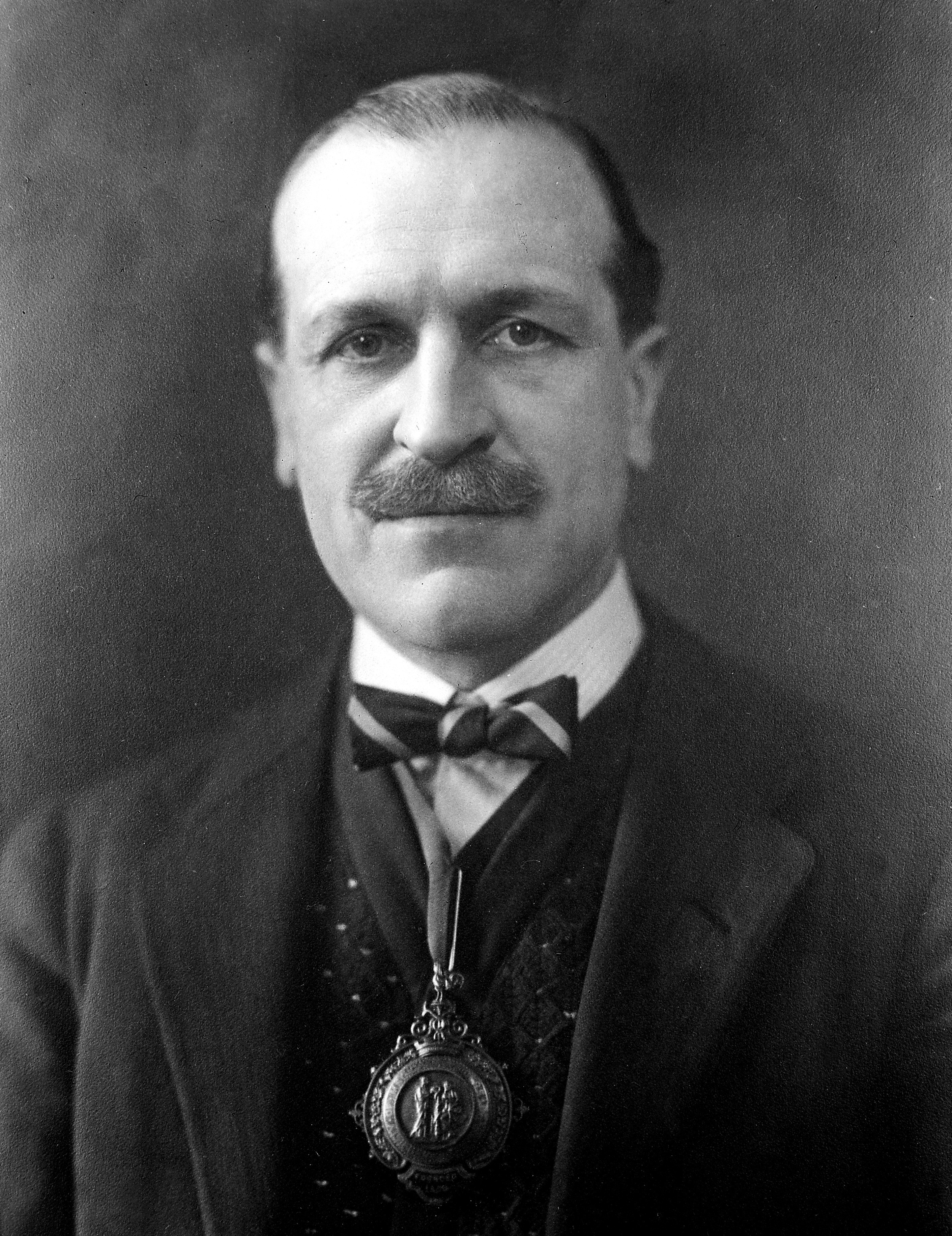
The Conservative Party selected as its candidate 47-year-old Lieutenant-Colonel Francis Fremantle, who had previously been adopted as the party's candidate for the next general election, when Hildred Carlile was expected to retire. Fremantle was an army doctor who had served in the Second Boer War and in World War I, and had been a member of the London County Council since March 1919. The son of a Dean of Ripon, he had been a medical officer for Hertfordshire for 14 years.
Early reports suggested that the Liberal Party candidate would be a Major Conacher from New Barnet, but in the event the Liberals nominated Milner Gray, a company director who had stood unsuccessfully in Wellingborough at the 1918 general election.
The Labour Party candidate was John W. Brown, the secretary of the Shipping Clerks' Guild.
The Times reported on 28 November that there was "possibility, but not a probability" of a fourth candidate, from the right-wing National Party, but this did not materialise.
Nominations closed on 2 December, with polling set for 10 December.
Electorate
The old parliamentary borough of St Albans, which returned two MPs, had been disenfranchised in 1852 after a Royal Commission had found proof of extensive bribery.{{cite book |author-link= F. W. S. Craig |orig-year=1977 |author-link= F. W. S. Craig |orig-year=1974
However, the last contested election in the constituency had been in December 1910, and the electorate had changed significantly in 1918. The Representation of the People Act 1918 had nearly tripled the electorate nationally{{cite book
There was a large agricultural sector in the constituency, and major residential areas in the towns of St Albans and at Barnet. Labour looked for its support to the railway-dominated town of Hatfield and amongst workers in Barnet and St Albans.
Campaign
For the Liberals, Gray campaigned for free trade to combat high prices and increase production. He wanted to see an end to government control, and opposed the Anti-Dumping Bill, which he described as a measure to foster higher prices.
Fremantle's main theme was "peace at home". He backed the Government of Ireland Bill, and hoped for cross-party backing for it, but noted that since the Coalition Government had left "no organised opposition worth speaking of" in the House of Commons, the government "must receive its criticism from the inside". He pledged an independent attitude.
Brown sought the support of manual workers and trade unionists, particularly amongst the employees of the Great Northern Railway and the Midland Railway. However, he also targeted non-manual workers such as teachers, clerks and city employees who had been hard-hit by profiteering during the war.
All three candidates were supported by high-profile speakers. The former Home Secretary Herbert Samuel spoke for Gray, while Nancy Astor came to back Fremantle, who also received a letter of support from the Conservative leader Bonar Law. Brown was joined by the dramatist and Fabian George Bernard Shaw, and by the former ministers Sir Leo Chiozza Money and Arthur Henderson.
However, The Times noted on 1 December that although all three candidates were extremely active, "it cannot be said that the electorate are showing the amount of interest that might be desired". In the early days of contest, Liberal meetings were disrupted by hecklers, but this died away as the campaign progressed. The Times reported on 5 December that indoor meetings were the most successful; open-air speakers received a tiny audience.
Result
After polling on 10 December, the result was not announced until 23 December, when the Unionist Fremantle was declared the winner with 45.8% of the votes, closely followed by Labour's Brown with 42.4%. Gray lost his deposit of £150, because his 11.8% Liberal share of votes fell below the threshold of one-eight of the votes.
In speeches after the count, Fremantle pronounced himself pleased with the result, and said that voters had sent a message of support to the Coalition for carrying on government "in accordance with the great traditions of the British Empire". Brown said that he was delighted with the result, which showed that the professional classes were coming round to supporting Labour; and Gray said that he could take defeat in a sportsmanlike manner.
Aftermath
After his by-election victory, Fremantle held the seat at the following General Election in 1922. He kept it for the next 24 years, until his death in August 1943. He spoke frequently on medical issues in Parliament, and was knighted in 1922. The slim Unionist majority at the by-election was not repeated: a 15.6% margin at the 1922 general election was followed by a 21.2% majority in 1923, and in 1931 Frematle's majority was a massive 56.2%. St Albans remained a safe seat for the Conservatives until it was narrowly won by Labour in 1945.
Gray contested Bedford unsuccessfully in 1923, but won the Mid Bedfordshire seat at the 1929 general election.{{London Gazette
References
References
- Large Labour Vote At St. Albans, Seat Held By Coalition, ''The Times'', Wednesday 24 December 1919, page 10
- {{Rayment-hc. s. 1. (March 2012)
- By-election at St Albans: Sir E.H. Carlile to retire through ill-health, ''The Times'', 21 November 1919, page 9
- British Parliamentary Election Results 1918-1949, FWS Craig
- St. Albans By-Election: Coalition Candidate's Prospects, ''The Times'', Tuesday 2 December 1919, page 16
- St. Albans Campaign Opened Four Candidates Possible, ''The Times'', Friday 28 November 1919, page 16
- St. Albans Nominations: Three-Cornered Contest, ''The Times'', Wednesday 3 December 1919, page 16
- Rallings and Thrasher, page 104
- The St. Albans Vacancy: Support for Labour Candidate, ''The Times'', Friday 5 December 1919, page 16
- ''Obituary: Sir Francis Fremantle, Medicine and Politics'', The Times, August 28, 1943, p. 7
- Craig, ''British parliamentary election results 1918–1949'', p. 289
- Obituary: Milner Gray, ''The Times'', Monday 12 April 1943, page 6
This article was imported from Wikipedia and is available under the Creative Commons Attribution-ShareAlike 4.0 License. Content has been adapted to SurfDoc format. Original contributors can be found on the article history page.
Ask Mako anything about 1919 St Albans by-election — get instant answers, deeper analysis, and related topics.
Research with MakoFree with your Surf account
Create a free account to save articles, ask Mako questions, and organize your research.
Sign up freeThis content may have been generated or modified by AI. CloudSurf Software LLC is not responsible for the accuracy, completeness, or reliability of AI-generated content. Always verify important information from primary sources.
Report