From Surf Wiki (app.surf) — the open knowledge base
1913 London County Council election
none
none
| Field | Value | ||
|---|---|---|---|
| election_name | 1913 London County Council election | ||
| country | England | ||
| type | parliamentary | ||
| ongoing | no | ||
| party_colour | yes | ||
| previous_election | 1910 London County Council election | ||
| previous_year | 1910 | ||
| next_election | 1919 London County Council election | ||
| next_year | 1919 | ||
| seats_for_election | 118 Council Seats | ||
| 60 seats needed for a majority | |||
| election_date | 5 March 1913 | ||
| 1blank | Councillors | ||
| 2blank | Aldermen | ||
| 3blank | Seats +/– | ||
| image1 | [[File:Sir Cyril Jackson.jpg | 110px]] | |
| leader1 | Cyril Jackson | ||
| leaders_seat1 | Limehouse | ||
| party1 | Municipal Reform Party | ||
| last_election1 | 60 seats | ||
| seats1 | 67 | ||
| seat_change1 | 7 | ||
| popular_vote1 | 229,583 | ||
| percentage1 | 53.5% | ||
| image2 | [[File:Sir John Benn.jpg | 110px]] | |
| leader2 | Sir John Benn | ||
| leaders_seat2 | Kennington | ||
| party2 | Progressive Party (London) | ||
| last_election2 | 55 seats | ||
| seats2 | 50 | ||
| seat_change2 | 6 | ||
| popular_vote2 | 173,186 | ||
| percentage2 | 40.3% | ||
| image3 | [[File:No image wide.svg | 95x50px | Blank]] |
| leader3 | None | ||
| leaders_seat3 | — | ||
| party3 | Labour Party (UK) | ||
| last_election3 | 3 seats | ||
| seats3 | 1 | ||
| seat_change3 | 2 | ||
| popular_vote3 | 24,307 | ||
| percentage3 | 5.7% | ||
| map_image | 1913 LCC election map.png | ||
| map_size | 300px | ||
| map_caption | Colours denote the winning party. |
60 seats needed for a majority
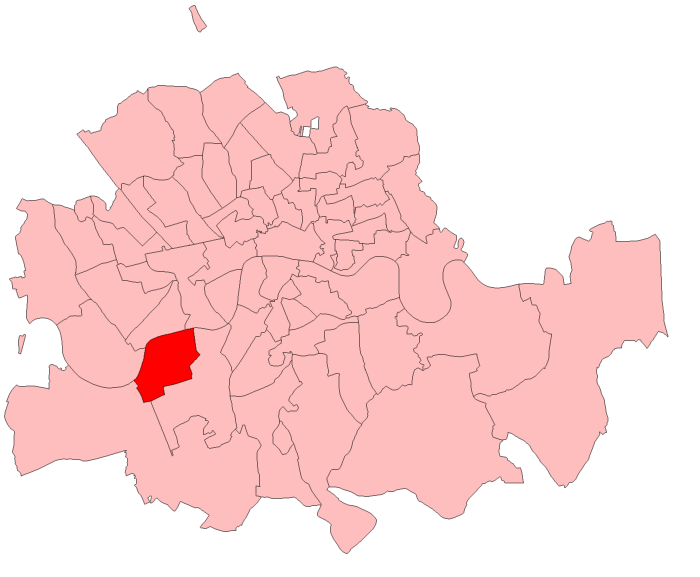
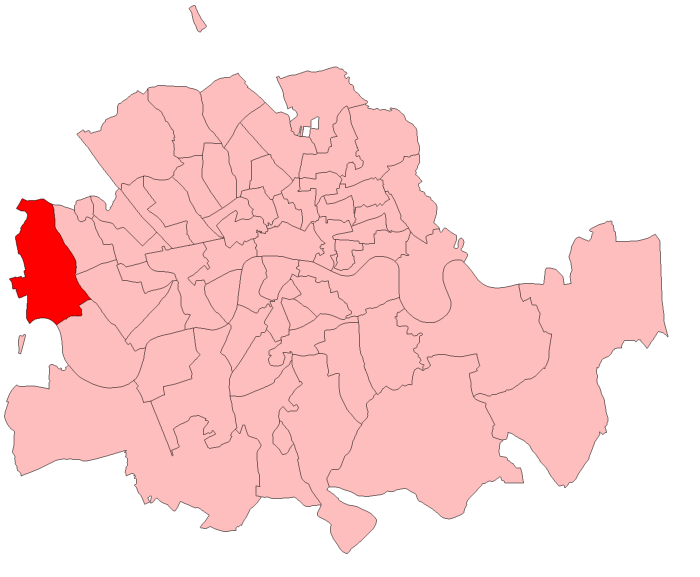
An election to the County Council of London took place on 5 March 1913. It was the ninth triennial election of the whole Council. The size of the council was 118 councillors and 19 aldermen. The councillors were elected for electoral divisions corresponding to the parliamentary constituencies that had been created by the Representation of the People Act 1884. There were 57 dual member constituencies and one four member constituency. The council was elected by First Past the Post with each elector having two votes in the dual member seats. Unlike for parliamentary elections, women qualified as electors for these elections on exactly the same basis as men. Women were also permitted to stand as candidates for election.
The election was to be the last held before the outbreak of the First World War: in 1915 legislation was enacted to postpone all local elections until the end of the conflict (see below). The term of office of the councillors was extended to 1919 when triennial elections resumed.
National government background
The Prime Minister of the day was the Liberal H. H. Asquith who led a minority Liberal Government that relied upon the Irish Parliamentary Party for a majority. The recently merged Unionist Party was the official opposition. The Labour Party was the fourth party and generally voted with the Liberals in parliament.
London Council background
The Municipal Reform party had been in power since winning a majority back in 1907. It was now seeking its third consecutive mandate.
Candidates
All constituencies were contested. The governing Municipal Reform Party ran a full slate of 118 candidates. The opposition Progressive Party ran 110 candidates. They ran candidates everywhere except the City of London where they ran three candidates, Hampstead, St George's Hanover Square and Strand where only one candidate stood, three constituencies where one candidate ran in tandem with Labour and Woolwich where they did not oppose a Labour pair. Four Independents also ran.
Labour Party
By 1913, all Labour Party members had withdrawn from the Progressive Party and at these elections stood under their own party label. The party fielded ten candidates, three of these candidates ran in tandem with Progressive candidates, a further two candidates were not opposed by Progressives. The other five all stood in opposition to Progressive candidates. The Labour Party in London had no elected or otherwise recognised Leader.
British Socialist Party
The British Socialist Party had been formed in 1911 from the merger of a few socialist groups with the Social Democratic Federation. As with the SDF, the BSP was opposed to socialists having electoral pacts with Liberals and they were critical of Labour Party branches for working with the Progressives in London. The BSP put forward dual candidates in three constituencies, all constituencies where both the Progressives and Municipal Reform parties were running dual candidates. Nowhere did they run against a Labour candidate.
Outcome
The Municipal Reform Party was returned with its third successive majority, slightly larger than the old one. However, its leader, Cyril Jackson was unseated by the Progressives at Limehouse. When the new council met, the ruling Municipal Reform majority was forced to use one of their Aldermanic nominations to put Jackson back on the council. Although the Progressives lost ground, they comfortably retained their position as main challengers to the Municipal Reformers in those seats where socialists stood. All socialist candidates (BSP and Labour) who stood against Progressive candidates finished bottom of the poll. Of the three Labour candidates running in tandem with a Progressive, all polled less than the Progressive and two of the three failed to join their Progressive running mate in victory. In Woolwich, where the Labour candidates were given a free run against the Municipal Reform pair, they also lost.
Constituency results
- Incumbent Councillors shown in bold.
Battersea and Clapham

Bethnal Green


Camberwell


Chelsea

City of London

Deptford

Finsbury


Fulham

Greenwich

- One Labour Party candidate withdrew
Hackney


Hammersmith
Hampstead

Islington


Kensington

- One Progressive and one Labour candidate intervene

Lambeth


Lewisham

Marylebone


Newington

Paddington
St George's Hanover Square

St Pancras
Shoreditch
Southwark
Strand

Tower Hamlets


Wandsworth
Westminster
Woolwich

Aldermen
In addition to the 124 councillors the council consisted of 20 county aldermen. Aldermen were elected by the council, and served a six-year term. Half of the aldermanic bench were elected every three years following the triennial council election. After the elections, there were ten aldermanic vacancies and the following alderman were appointed by the newly elected council on 13 March 1913;
To serve until 1919:
- Viscount Chelmsford, Municipal Reform. Had previously sat as a councillor in 1904–1905.
- Rt. Hon. Sir George Dashwood Taubman Goldie, Municipal Reform. Had previously sat as a councillor in 1907–1912.
- George Alexander Hardy, Progressive. Had previously sat as a councillor in 1901–1907.
- William Hunt, Municipal Reform, outgoing councillor for Wandsworth, had unsuccessfully contested Islington South.
- Cyril Jackson, Municipal Reform, outgoing councillor for Limehouse.
- Oswald Partington, Progressive
- Sir Herbert James Francis Parsons, Municipal Reform, reappointed.
- Mrs. Jessie Wilton Phipps, Municipal Reform
- Alfred Henry Scott, Progressive
To serve until 1916:
- Katherine Talbot Wallas, Progressive, in place of Henry Lawrence Cripps, resigned 4 February 1913
By-elections 1913–1915
There were eight by-elections to fill casual vacancies during the term of the ninth London County Council.
City of London, 9 May 1913
- Cause: resignation of Colonel Sir Stuart Sankey 29 April 1919
Tower Hamlets, Mile End, 13 August 1913
- Cause: death of Carl Stettauer, 24 July 1913
Islington West, 21 February 1914
- Cause: death of Henry Lorenzo Jephson 31 January 1914
Marylebone West, 6 July 1914
- Cause: death of Sir Edward White 14 June 1914
Finsbury, Holborn, 9 November 1914
- Cause: resignation of Robert Inigo Tasker 27 October 1914 on mobilisation of the 11th Battalion, London Regiment
Tower Hamlets, Limehouse, 14 January 1915
- Cause: resignation of Benjamin B Evans due to ill health 15 December 1914
City of London, 1 March 1915
- Cause: resignation of William Henry Pannell due to ill health 9 February 1915
Lewisham, 8 May 1915
- Cause: resignation of Carlyon Wilfroy Bellairs 27 April 1915
Appointments to vacant seats 1915–1919
Under the Elections and Registration Act 1915, a wartime piece of legislation that cancelled local elections until the end of the conflict (and thus the county council election due to be held in March 1916), the members of the county council were given the power to appoint or co-opt councillors to fill vacant seats. The legislation remained in force for the rest of the eleventh county council's existence.
| Date of appointment | Division | Outgoing member | New member appointed | Party | |
|---|---|---|---|---|---|
| 7 December 1915 | Battersea & Clapham, Clapham | Robert Montefiore Sebag-Montefiore | |||
| (died 19 November 1915) | William Henry Peruzzi Gibson | ||||
| 21 December 1915 | Tower Hamlets, Stepney | Arthur Claud Chichester | |||
| (resigned 7 December 1915 on entering active service with the army) | David Hazel | ||||
| 4 April 1916 | Lewisham | William Henry Le May | |||
| (resigned 21 March 1916) | title= No Scholarships For Enemy Children. L.C.C. Decision | date=5 April 1916 | page=5 | newspaper=The Times}} | |
| 30 May 1916 | Finsbury Central | Lawrence William Simpson Rostron | |||
| (died 14 May 1916) | title= Economy in Education. Reduction Of £356,867 in L.C.C. Expenditure | date=31 May 1916 | page=5 | newspaper=The Times}} | |
| Marylebone West | Lord Greville | ||||
| (resigned 16 May 1916) | Ernest Sanger | Municipal Reform | |||
| 31 October 1916 | Fulham | Edward George Easton | |||
| (died 2 August 1916) | title= New L.C.C. Members. Propagandist Literature in the Parks | date=1 November 1916 | page=5 | newspaper=The Times}} | |
| Hackney South | George K Naylor | ||||
| (resigned 4 September 1916) | Charles Winkley | Municipal Reform | |||
| 3 April 1917 | Tower Hamlets, Bow and Bromley | George Malcolm Hilbery | |||
| (resigned 9 March 1917) | Walter Charles Bersey | ||||
| 1 May 1917 | Tower Hamlets, Mile End | George A Dutfield | |||
| (resigned 18 July 1916) | George Bettesworth Piggott | ||||
| 16 October 1917 | City of London | Gilbert Johnstone | |||
| (resigned 31 July 1917) | John Robarts | ||||
| 18 December 1917 | Islington East | Edward Smallwood | |||
| (resigned 10 December 1917) | A C Denham | ||||
| 8 March 1918 | Strand | Clifford Probyn | |||
| (died 10 February 1918) | John Maria Gatti | ||||
| 23 April 1918 | City of London | James William Domoney | |||
| (died 23 March 1918) | George Rowland Blades | ||||
| 15 October 1918 | Camberwell, Dulwich | Cuthbert Wilkinson | |||
| (died 20 June 1918) | Henry Newton Knights | ||||
| Lewisham | Frederick Houston Carter | ||||
| (died 11 March 1918) | Richard Owen Roberts | Municipal Reform | |||
| Southwark West | Albert Wilson | ||||
| (died 16 July 1918) | Duchess of Marlborough | Progressive |
Aldermanic vacancies filled 1913–1919
There were four casual vacancies among the aldermen in the term of the eleventh London County Council, which were filled as follows:
- 27 January 1914: Henry Cubitt Gooch (Municipal Reform) to serve until 1916 (extended to 1919) in place of Maurice C Carr Glyn, resigned 20 January 1914. Gooch had previously sat as a councillor from 1907 to 1910.
- 9 November 1915: Howard Willmott Liversidge (Municipal Reform) to serve until 1916 (extended to 1919) in place of Lord Monk Bretton, resigned 26 October 1915.
- 7 March 1916: Sir Harry Lushington Stephen (Municipal Reform) to serve until 1919 (extended to 1922) in place of Lord Chelmsford, resigned 22 February 1916.
- 4 April 1916: Francis Capel Harrison (Municipal Reform) to serve until 1919 (extended to 1922) in place of Cyril Jackson, resigned 21 March 1916.
References
References
- London Municipal Notes, 1913
- The New Hazell Annual and Almanack, 1916
- (14 March 1913). "London County Council. First Meeting of the New Body". [[The Times]].
- (12 March 1913). "London County Council. The New Chairman And Aldermen". [[The Times]].
- (25 July 1913). "Obituary: Mr. Carl Stettauer". [[The Times]].
- (9 February 1915). "Former Member of L.C.C. Found Shot. The Death of Mr. B. B. Evans". [[The Times]].
- (8 February 1915). "London County Council Vacancy". [[The Times]].
- (8 December 1915). "Dearer All-Night Fares. A County Council Economy". [[The Times]].
- (22 December 1915). "Patriotic Teachers. Enlistments From London County Council". [[The Times]].
- (22 March 1916). "Parties in London County Council. Coalition Suggested". [[The Times]].
- (5 April 1916). "No Scholarships For Enemy Children. L.C.C. Decision". [[The Times]].
- (31 May 1916). "Economy in Education. Reduction Of £356,867 in L.C.C. Expenditure". [[The Times]].
- (17 May 1916). "Licences For Sunday Cinemas. Decision of the London County Council". [[The Times]].
- (1 November 1916). "New L.C.C. Members. Propagandist Literature in the Parks". [[The Times]].
- (4 April 1917). "Finance of Education. Recommendations of London County Council". [[The Times]].
- (19 July 1916). "London Tramways. County Council and the Deficit". [[The Times]].
- (2 May 1917). "L.C.C. Finance. Net Debt Decreased By £1,580,000". [[The Times]].
- (17 October 1917). "Air-Raid Shelters. L. C. C. Plans For Use of Schools., Tramway Servants To Take Cover". [[The Times]].
- (6 March 1918). "Teachers' Pay Scheme Rejected. Protest of 10,000 Women". [[The Times]].
- (26 March 1918). "Obituary. Mr. Alderman Domoney". [[The Times]].
- (24 April 1918). "London County Council. Teachers' Salaries Raised". [[The Times]].
- (12 March 1918). "Obituary. Mr. F. H. Carter". [[The Times]].
- Jackson, W Eric. (1965). "Achievement: A short History of the LCC". [[Longmans]].
- (28 January 1914). "London County Council And Tuberculosis". [[The Times]].
- (10 November 1915). "London Estimates. County Council's Trust in the Government". [[The Times]].
- (9 March 1916). "Savings on Rates". [[The Times]].
This article was imported from Wikipedia and is available under the Creative Commons Attribution-ShareAlike 4.0 License. Content has been adapted to SurfDoc format. Original contributors can be found on the article history page.
Ask Mako anything about 1913 London County Council election — get instant answers, deeper analysis, and related topics.
Research with MakoFree with your Surf account
Create a free account to save articles, ask Mako questions, and organize your research.
Sign up freeThis content may have been generated or modified by AI. CloudSurf Software LLC is not responsible for the accuracy, completeness, or reliability of AI-generated content. Always verify important information from primary sources.
Report