From Surf Wiki (app.surf) — the open knowledge base
1884 Belgian general election
none
none
| Field | Value | |
|---|---|---|
| election_name | 1884 Belgian general election | |
| country | Belgium | |
| type | parliamentary | |
| previous_election | 1882 Belgian general election | |
| previous_year | 1882 | |
| next_election | 1886 Belgian general election | |
| next_year | 1886 | |
| seats_for_election | 69 of the 138 seats in the Chamber of Representatives | |
| majority_seats | 70 | |
| election_date | 10 June 1884 (Chamber first round) | |
| 17 June 1884 (Chamber run-off) | ||
| 8 July 1884 (Senate first round) | ||
| 15 July 1884 (Senate run-off) | ||
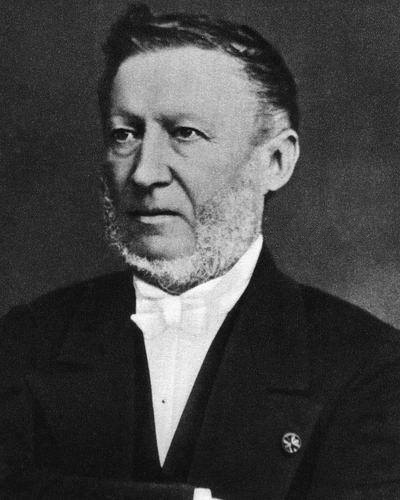
| image1 | [[File:Jules_Malou_ars-moriendi.jpg | 150x150px]] |
| leader1 | Jules Malou | |
| leader_since1 | Candidate for PM | |
| party1 | Catholic Party (Belgium) | |
| seats_before1 | 59 seats | |
| seats1 | 67 | |
| seats_after1 | 86 | |
| seat_change1 | 27 | |
| popular_vote1 | 33,428 | |
| percentage1 | 57.48% | |
| image2 | [[File:Fr%C3%A8reOrban.jpg | 150x150px]] |
| leader2 | Walthère Frère-Orban | |
| leader_since2 | Candidate for PM | |
| party2 | Liberal Party (Belgium) | |
| seats_before2 | 79 seats | |
| seats2 | 2 | |
| seats_after2 | 52 | |
| seat_change2 | 27 | |
| popular_vote2 | 21,294 | |
| percentage2 | 36.62% | |
| title | Government | |
| posttitle | Government after election | |
| before_election | Frère-Orban II | |
| before_party | Liberal Party (Belgium) | |
| after_election | Malou II | |
| after_party | Catholic Party (Belgium) |
17 June 1884 (Chamber run-off) 8 July 1884 (Senate first round) 15 July 1884 (Senate run-off)
Legislative elections were held in Belgium in June and July 1884, for partial Chamber and full Senate elections respectively. Voter turnout was 79.1% in the Chamber of Representatives elections, although only 69,276 people were eligible to vote.
Background
The election occurred during the First School War. The incumbent Liberal government under Walthère Frère-Orban aimed to secularize education, which sparked heavy protests from Catholics.
Regular partial elections for the Chamber of Representatives were held on Tuesday 10 June 1884, with a run-off on Tuesday 17 June. Under the alternating system, elections for the Chamber of Representatives were only held in five out of the nine provinces: Antwerp, Brabant, Luxembourg, Namur and West Flanders. Special elections were held in the arrondissements of Aalst and Sint-Niklaas, for one representative in each.
The result was a large victory for the Catholic Party. The Frère-Orban government resigned and was succeeded by a Catholic government led by Jules Malou, which immediately abolished the Ministry of Public Education.
The Liberals however retained a majority in the Senate, which was not up for election. It was subsequently dissolved, triggering its complete re-election. Senate elections were held on Tuesday 8 July 1884, with a run-off on Tuesday 15 July. The Catholic Party won 43 of the 69 seats in the Senate.
The election ended the First School War and marked the end of the last homogeneously liberal government. The Catholic Party under Jules Malou gained an absolute majority, which they would retain until the First World War.
Campaign
Among the 69 Chamber seats up for election:
- 17 seats had uncontested Catholic candidates: Mechelen (3), Turnhout (3), Kortrijk (4), Roeselare (2), Tielt (2), Veurne (1), Diksmuide (1) and Bastogne (1).
- 11 seats were likely Catholic wins: Leuven (5), Ypres (3), Dinant (2) and Marche (1).
- 1 seat was likely Liberal: Arlon (1).
- 40 seats were competitive:
- Antwerp (8), Nivelles (4) and Bruges (3) were historically competitive.
- Namur (4), Philippeville (2), Neufchâteau (1), Virton (1) were competitive since the 1870s.
- Brussels (16) was only since two years competitive.
- Ostend (1), until now solidly liberal, was now competitive.
The Catholics gained 27 Chamber seats from the Liberals: 16 in Brussels, four in Nivelles, two in Namur, one in Philippeville, one in Antwerp, one in Ostend, one in Neufchâteau and one in Bruges. The Liberals only retained the single seats in Arlon and Virton, both in Luxembourg.
Results
Chamber of Representatives
Senate
References
References
- ''Codebook'' Constituency-level Elections Archive, 2003
- Sternberger, D, Vogel, B & Nohlen, D (1969) ''Die Wahl der Parlamente: Band I: Europa - Erster Halbband'', p105
- (1986). "1884: un tournant politique en Belgique".
- Thomas T. Mackie & Richard Rose (1991) ''The International Almanac of Electoral History'', Macmillan, pp48–49
This article was imported from Wikipedia and is available under the Creative Commons Attribution-ShareAlike 4.0 License. Content has been adapted to SurfDoc format. Original contributors can be found on the article history page.
Ask Mako anything about 1884 Belgian general election — get instant answers, deeper analysis, and related topics.
Research with MakoFree with your Surf account
Create a free account to save articles, ask Mako questions, and organize your research.
Sign up freeThis content may have been generated or modified by AI. CloudSurf Software LLC is not responsible for the accuracy, completeness, or reliability of AI-generated content. Always verify important information from primary sources.
Report