From Surf Wiki (app.surf) — the open knowledge base
1816 United States presidential election in Pennsylvania
none

none
| Field | Value |
|---|---|
| election_name | 1816 United States presidential election in Pennsylvania |
| country | United States |
| flag_year | 1795 |
| type | presidential |
| ongoing | no |
| previous_election | 1812 United States presidential election in Pennsylvania |
| previous_year | 1812 |
| next_election | 1820 United States presidential election in Pennsylvania |
| next_year | 1820 |
| election_date | November 1, 1816 |
| outgoing_members | OH |
| elected_members | VT |
| image_size | 200x200px |
| image1 | File:John Vanderlyn - James Monroe - Google Art Project (3x4 cropped).jpg |
| nominee1 | James Monroe |
| party1 | Caucus |
| color1 | 008000 |
| alliance1 | Democratic-Republican Party |
| home_state1 | Virginia |
| running_mate1 | Daniel D. Tompkins |
| electoral_vote1 | 25 |
| popular_vote1 | 25,749 |
| percentage1 | 59.4% |
| image2 | Tricolour Cockade.svg |
| nominee2 | Unpledged electors |
| party2 | Independent |
| color2 | dcdcdc |
| alliance2 | Democratic-Republican Party |
| running_mate2 | N/A |
| electoral_vote2 | 0 |
| popular_vote2 | 17,597 |
| percentage2 | 40.6% |
| map_image | Pennsylvania Presidential Election Results 1816.svg |
| map_caption | County results |
| title | President |
| before_election | James Madison |
| before_party | Democratic-Republican Party |
| after_election | James Monroe |
| after_party | Democratic-Republican Party |
Main article: 1816 United States presidential election
Monroe Independent electors
A presidential election was held in Pennsylvania on November 1, 1816, as part of the 1816 United States presidential election. The Caucus ticket of the U.S. secretary of state James Monroe and the governor of New York Daniel D. Tompkins defeated the Independent ticket. The Federalist Party failed to nominate a candidate. In the national election, Monroe easily defeated the senior U.S. senator from New York Rufus King, who received 34 votes from unpledged electors despite not being a candidate.
Monroe secured the Democratic-Republican nomination at the party's quadrennial caucus in March 1816 after the withdrawal of his nearest rival, the U.S. secretary of war William H. Crawford. The caucus passed over the governor of Pennsylvania Simon Snyder in favor of Tompkins as the party's vice presidential candidate. In the aftermath of the caucus, some observers criticized Monroe's nomination by a gathering of party insiders as undemocratic and potentially unconstitutional. A convention of Independent Democrats met at Carlisle, Pennsylvania on September 19–20 and nominated a list of 21 electors in opposition to the Caucus ticket. (Four electors on the Caucus ticket were cross-endorsed by the Carlisle convention.) The Independents did not designate a presidential candidate, although many assumed the electors would vote for DeWitt Clinton. The demoralized Federalist Party did not nominate electors. Many Federalists supported the Independent ticket, while a scattering vote was cast for "truly Federal" electors in three counties.
Monroe's convincing victory in Pennsylvania rendered speculation as to the recipient of the votes of the Independent electors moot. All 25 electors on the Caucus ticket were elected, including the four cross-endorsed by the Carlisle convention. The cooperation of dissident Democrats and Federalists in support of the Independent ticket formed the basis for a coalition of Federalists and Old School Democrats in the 1817 Pennsylvania gubernatorial election.
Background
Following the War of 1812, Pennsylvania Democrats were divided between the modernizing New School, with its support for the nationalist economic policies of the American System, and the radical Old School. The most prominent leader of the New School was Governor Simon Snyder, whose allies controlled the regular party and maintained close ties to the Madison administration through their relationship with the U.S. secretary of the treasury Alexander J. Dallas. Snyder's followers advanced a state-centered vision of the Market Revolution, one which paired the development of banking and internal improvements with the extension of political democracy. They maintained an uneasy working relationship with the conservative Quids, who supported Snyder only reluctantly in preference to the Old School. In comparison to the Snyderites, Old School Democrats more strongly resisted the concentration of wealth and power in the hands of an economic elite. They insisted that economic development should be managed democratically and were highly critical of the doctrine of judicial independence, which they associated with the domination of the lower classes by the ascendant bourgeoisie. Led by the radical legislator Michael Leib and the fiery editor of the Philadelphia Aurora William Duane, they courted an alliance with the liberal wing of the Federalist Party in order to break the power of the New School.
Nationally, a political realignment was in the offing, as industrialization and westward expansion introduced new issues in politics. The emergence of a nationalist tendency within the Democratic-Republican Party favoring positive legislation to encourage economic development corresponded to the Federalist turn toward states' rights and strict constructionism following the party's national defeat in 1800. The unpopularity of the Embargo Act and the war with Britain prompted a Federalist resurgence after 1807 and sowed dissension in the Democratic-Republican ranks. In the 1812 United States presidential election, the Federalists exploited divisions within the governing party by endorsing the presidential candidacy of DeWitt Clinton, the candidate of the Democratic-Republicans in the New York General Assembly. The combined support of most Federalists and disaffected Democratic-Republicans for Clinton came close to unseating the incumbent president James Madison, but failure to carry Pennsylvania spelled defeat for the fusionists. National Federalism once again declined following the end of the war, but the party retained a measure of its strength in Pennsylvania, in part due to the split between the New School and the Old School.
Nominations
New School (Caucus) Democrats
Caucus
A caucus of Democratic members of the Pennsylvania General Assembly met at Harrisburg, Pennsylvania on March 11, 1816 to nominate electors for the forthcoming presidential election. The Snyderites hoped to use this event to promote Snyder's candidacy for vice president and worked diligently to secure the endorsement of the caucus. Their efforts contrasted with the public apathy of the candidate, who did little to suggest interest in the vice presidency. Despite the personal intervention of the influential editor of the Democratic Press John Binns and the U.S. postmaster for Philadelphia Richard Bache Jr. to lobby legislators to vote for Snyder, enthusiasm for Snyder's candidacy remained conspicuously lacking. The caucus nominated a list of 25 electors but declined to endorse a candidate for vice president.
Snyder suffered a decisive defeat days later when the national caucus of Democratic-Republican members of Congress met at Washington, D.C., garnering 30 votes to 85 for Tompkins on the vice presidential ballot; Monroe defeated Crawford on the presidential ballot by a far narrower margin, 65 to 54. The disappointed Snyderites still held out hope that Tompkins would decline the nomination; when he did not, the Democratic Press announced its support for the national ticket.
Nominees
| [[File:Tricolour Cockade.svg | 50px | center | link=Democratic-Republican Party]]1816 Caucus ticket | [](james-monroe) | [](daniel-d-tompkins) | |
|---|---|---|---|---|---|---|
| *for President* | *for Vice President* | |||||
| [[File:John Vanderlyn - James Monroe - Google Art Project.jpg | center | 160x160px]] | [[File:Daniel D Tompkins by John Wesley Jarvis.jpg | center | 160x160px]] | |
| 7th | ||||||
| U.S. secretary of state | ||||||
| (1811–17) | 4th | |||||
| governor of New York | ||||||
| (1807–17) | ||||||
| *Electors* |
Old School (Independent) Democrats

Convention
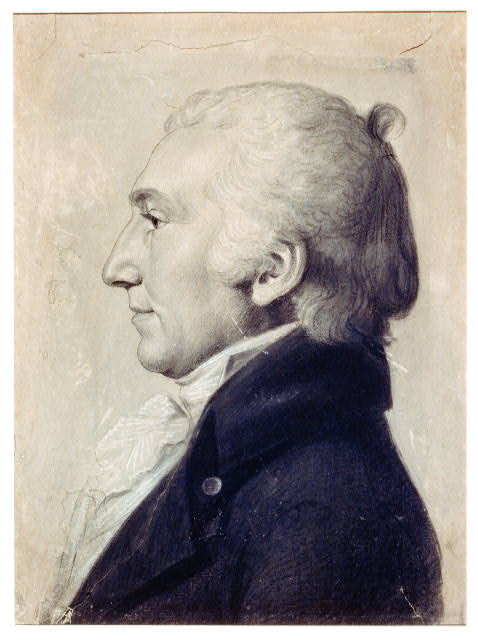
The Old School entertained more serious objections to the national ticket. Duane and Leib were on unfriendly terms with the outgoing administration and were not inclined to accept Madison's anointed successor. The Old School had been steadily marginalized over the preceding decade and saw the caucus system as a mechanism for suppressing democratic dissent. Whereas the New School embraced banking and internal improvements, and many Quids shared the nationalist leanings of the administration, the Old School continued to critique economic and political inequality resulting from unrestrained economic development. After the national caucus nomination of Monroe and Tompkins became known, disaffected Old School Democrats announced plans to hold their own convention at Carlisle on September 19, 1816.
The call for the Carlisle convention went out on August 12, 1816 from a Democratic meeting held at Lancaster, Pennsylvania. Many of the organizers had been prominent in support of DeWitt Clinton during the last election, and some suggested the Old School should adopt Clinton as the Independent candidate for president. Eleven delegates representing the counties of Berks, Cumberland, Dauphin, Lancaster, and Philadelphia ultimately met and nominated a list of 25 electors, including four named on the Caucus ticket, without designating a presidential candidate. Having adopted addresses stating the basis of their opposition to the caucus and the Snyderites, the convention adjourned on September 20.
The address of the convention denounced the caucus system as "dangerous," corrupt, undemocratic, and unconstitutional, "disrespectful" and "contemptuous" of the people, "a practice pregnant with mischief, and which, if continued, must be destructive of Liberty." Considering the tendency of the caucus system to "perpetuate an aristocracy of office in certain Men and States," thus "preventing the free and fair selection by the People themselves," the delegates pledged to "never confide in or vote for any person ... who shall hereafter countenance by his presence or vote any Caucus whatever."
Uncertainty surrounded the presidential vote of the Independent electors, who were formally unpledged. Historian Sanford W. Higginbotham infers that the Independents likely would have voted for Clinton and cites correspondence published in the Aurora, the involvement of prominent Clintonians in planning the Carlisle convention, and Leib's visit to Pittsburgh in December 1815 to drum up support for a Clinton candidacy as evidence of this supposition. Contemporary newspapers gave contradictory reports, variously asserting that the Independent ticket was pledged to Monroe, or a stalking horse for Clinton. The Aurora denied that the Independent electors were committed to any candidate. Phil Lampi assumes the Independents would have voted for Crawford or King, although neither man was a candidate when the Carlisle convention met. In fact, of the 25 electors nominated by the Carlisle convention, Thomas Patterson, Joseph Huston, John Harrison, and James Meloy ran jointly on the Caucus ticket, were elected, and voted for Monroe and Tompkins, while Charles Thomson had announced his intention to vote for Clinton as early as August 1816.
Nominees
| [[File:Tricolour Cockade.svg | 50px | center | link=Democratic-Republican Party]]1816 Independent ticket |
|---|---|---|---|
| *Electors* | |||
Candidates
The following electoral candidates not nominated by the Carlisle convention were voted for as Independents and are included in Lampi's A New Nation Votes database.
| John Piper | Frederick Keefer | Bernhart Gilbert |
|---|---|---|
| Pennsylvania senator from the 12th district | ||
| (1801–05) | ||
| LE | ||
| 259 votes | LE | |
| 46 votes | LE | |
| 44 votes |
Federalist Party
Support for the Independent ticket
The Federalist Party was considered desirous of an alliance with the Old School. The Snyderites alleged that Pennsylvania Federalists had sponsored Leib's visit to Pittsburg in 1815 to grow support for DeWitt Clinton's candidacy. The October 1816 state elections saw limited cooperation between Old School Democrats and Federalists, resulting in modest gains. Following the Carlisle convention, Philadelphia Federalists and the Gazette of the United States endorsed the Independent ticket. Observers took for granted that most Federalists would vote for the Independent candidates.
Truly Federal electors
Despite the Philadelphia Federalists' support for the Independents, "truly Federal" electors received a small number of votes in a few counties. Benjamin R. Morgan led the Federalist list in Adams County, which polled 13 votes; in Chester County, a Federalist ticket headed by James Ross received 7 votes; while Isaac Darlington received 7 votes as a Federalist elector in Delaware County.
Candidates
The following electoral candidates are included in Lampi's A New Nation Votes database.
| Benjamin R. Morgan | Isaac Darlington | James Ross | ||||
|---|---|---|---|---|---|---|
| [[File:IsaacDarlington.jpg | center | 120x120px]] | [[File:James Ross (politician) by Charles P. Filson (cropped).JPG | center | 120x120px]] | |
| Pennsylvania senator from the 1st district | ||||||
| (1796–97, 1815–1819) | Pennsylvania representative from Chester County | |||||
| (1807–09, 1816) | U.S. senator from Pennsylvania | |||||
| (1794–1803) | ||||||
| LE | ||||||
| 13 votes | LE | |||||
| 7 votes | LE | |||||
| 7 votes |
Campaign issues

Caucus system
The caucus system was a top issue in the campaign. A gathering of members of Congress selected the Democratic-Republican national ticket in every consecutive election since 1796. Electoral candidates and candidates for state office were commonly chosen by similar gatherings of state legislators. As a matter of convenience, caucuses were held at the seat of government; the March 1816 Democratic-Republican congressional caucus was held at Washington, while the corresponding state caucus of Democratic lawmakers took place at Harrisburg.
By design, the caucus system gave elected lawmakers substantial influence over the choice of party nominees for state and national office. Old School Democrats who by 1816 had been effectively marginalized within the Pennsylvania Democratic Party argued that this practice undermined democratic elections, gave undue influence to career officeholders, and potentially violated the constitutional separation of powers. Although the large body of Federalists and a substantial minority of Democratic-Republicans opposed Monroe's nomination, the caucus system allowed him to run unopposed after the Federalist Party failed to nominate a candidate. Monroe was nominated by less than half the members of Congress, and the Harrisburg Democratic caucus was attended by just 46 of the 126 members of the Pennsylvania General Assembly. For these gatherings to presume to dictate the votes of the electoral colleges was, under the circumstances, "impudent" and "outrageous." The Independents argued that future nominations should be made at conventions by delegates elected specially for that purpose in order to preserve the democratic rights of the electorate and provide a check on the powers of the legislature.
Passage of the infamous Compensation Act in March 1816, coming days after the nomination of Monroe, aided the perception that the caucus proceedings had been controlled by a cabal of career officeholders bent on extending their own power at the expense of the people. The act of the 14th United States Congress to nearly double the pay of its members from the existing rate of $6 per diem to a flat $1,500 annual salary provoked mass public outrage. Almost two-thirds of the incumbent members of Congress lost their seats in the ensuing 1816–17 United States House of Representatives elections, forcing Congress to repeal the law in the December lame-duck session. For Old School Democrats, the example of members of Congress voting to raise their own salaries while attempting to control the outcome of the presidential election via the caucus system demonstrated the danger inherent in vesting the power to nominate candidates for office in a meeting of the national legislature.
Defenders of the caucus system argued that elected lawmakers were accountable to their constituents, endowing the caucus nominations with significant democratic legitimacy. They observed that the Carlisle convention was attended by 11 delegates representing five Pennsylvania counties, whereas the congressional caucus was attended by 118 members of Congress representing districts with a combined population of more than 4 million. They asserted the caucus nomination was only a "recommendation" and did not control the votes of Pennsylvanians, as opponents of the caucus claimed. New School Democrats accused the Old School of undermining party unity at a moment when Blue Light Federalists were alleged to be plotting secession.
General election
Summary
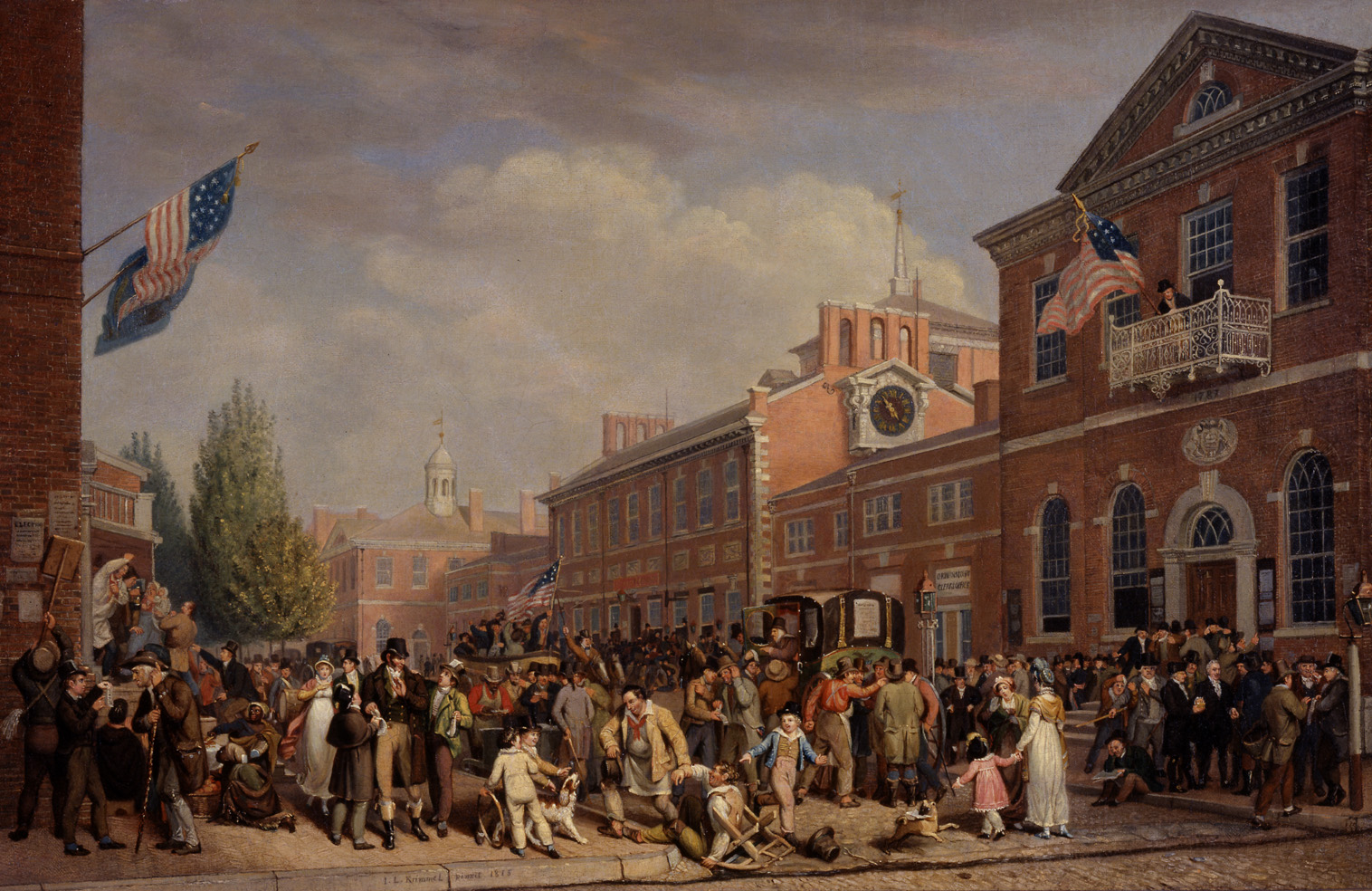
Pennsylvania chose 25 electors on a statewide general ticket. Nineteenth century election laws required voters to vote directly for members of the Electoral College rather than for president. This sometimes resulted in small differences in the number of votes cast for electors pledged to the same presidential candidate if some voters did not vote for all the electors nominated by a party, or if one or several electors ran on multiple tickets. In the case of Pennsylvania, four electors ran on both the Caucus and Independent tickets and were elected without opposition; this table compares the votes for the most popular elector on the Caucus ticket (William Gillilland) to the most popular elector on the Independent ticket (Andrew Gregg) to give an approximate sense of the statewide result.
Daniel D. Tompkins
Results
| Party | Candidate | Votes |
|---|---|---|
| Fusion | Thomas Patterson | |
| Fusion | Joseph Huston | |
| Fusion | John Harrison | |
| Fusion | James Meloy | |
| Caucus | William Gilliland | |
| Caucus | Daniel Bussier | |
| Caucus | John Mohlar | |
| Caucus | John Rea | |
| Caucus | Paul Cox | |
| Caucus | Abiel Fellows | |
| Caucus | Gabriel Hiester | |
| Caucus | Matthew Roberts | |
| Caucus | William Brooke | |
| Caucus | James Banks | |
| Caucus | Michael Fackenthal | |
| Caucus | Jacob Hostetter | |
| Caucus | John Geyer | |
| Caucus | James Wilson | |
| Caucus | James Alexander | |
| Caucus | David Marchand | |
| Caucus | John Conard | |
| Caucus | David Mitchell | |
| Caucus | Isaac Anderson | |
| Caucus | Samuel Scott | |
| Caucus | Robert Clarke | |
| Independent | Andrew Gregg | |
| Independent | Henry Alhouse | |
| Independent | Joseph Reed | |
| Independent | Hugh Hart | |
| Independent | Matthew Lawler | |
| Independent | Peter Nagle | |
| Independent | Abraham Horn | |
| Independent | Abraham Waggoner | |
| Independent | Christian Brobst | |
| Independent | Robert MacMullin | |
| Independent | Charles Thomson | |
| Independent | John Stroman | |
| Independent | William Hamilton | |
| Independent | Patrick Farrelly | |
| Independent | Michael Leib | |
| Independent | Alexander Dysart | |
| Independent | Daniel Montgomery Jr. | |
| Independent | Robert Bethell | |
| Independent | Thomas Baird | |
| Independent | John W. Cunningham | |
| Independent | James Poe | |
| Independent | John Piper | |
| Independent | Frederick Keefer | |
| Independent | Berhart Gilbert | |
| Federalist | Benjamin R. Morgan | |
| Federalist | Isaac Darlington | |
| Federalist | James Ross |
Results by county
This table compares the results for the most popular electors running exclusively on the Caucus, Independent, and Federalist tickets, respectively, in each county. The totals presented thus differ slightly from the statewide results summary, which compares the results for the most popular elector pledged to each ticket statewide.
| County | James Monroe | ||||||||||||||||||||||
|---|---|---|---|---|---|---|---|---|---|---|---|---|---|---|---|---|---|---|---|---|---|---|---|
| Caucus | Unpledged electors | ||||||||||||||||||||||
| Independent | Unpledged electors | ||||||||||||||||||||||
| Federalist | Margin | Total | Votes | Percent | Votes | Percent | Votes | Percent | Votes | Percent | TOTAL | 25,642 | 59.19 | 17,655 | 40.75 | 27 | 0.06 | 7,987 | 18.44 | 43,324 | |||
| Adams | 205 | 30.78 | 448 | 67.27 | 13 | 1.95 | -243 | -36.49 | 666 | ||||||||||||||
| Allegheny | 218 | 32.49 | 453 | 67.51 | — | -235 | -35.02 | 671 | |||||||||||||||
| Armstrong | 71 | 45.22 | 86 | 54.78 | — | -15 | -9.56 | 157 | |||||||||||||||
| Beaver | 180 | 70.04 | 77 | 29.96 | — | 103 | 40.08 | 257 | |||||||||||||||
| Bedford | 423 | 66.20 | 216 | 33.80 | — | -207 | 32.40 | 639 | |||||||||||||||
| Berks | 1,563 | 65.56 | 821 | 34.44 | — | 742 | 31.12 | 2,384 | |||||||||||||||
| Bradford | 395 | 82.81 | 82 | 17.19 | — | 313 | 65.62 | 477 | |||||||||||||||
| Bucks | 1,789 | 47.85 | 1,950 | 52.15 | — | -161 | -4.30 | 3,739 | |||||||||||||||
| Butler | 154 | 84.15 | 29 | 15.85 | — | 125 | 68.30 | 183 | |||||||||||||||
| Cambria | 75 | 76.53 | 23 | 23.47 | — | 52 | 53.06 | 98 | |||||||||||||||
| Centre | 479 | 66.44 | 242 | 33.56 | — | 237 | 32.88 | 721 | |||||||||||||||
| Clearfield | |||||||||||||||||||||||
| Chester | 1,999 | 54.92 | 1,634 | 44.89 | 7 | 0.19 | 365 | 10.03 | 3,640 | ||||||||||||||
| Columbia | 544 | 89.47 | 64 | 10.53 | — | 480 | 78.94 | 608 | |||||||||||||||
| Crawford | 98 | 44.14 | 124 | 55.86 | — | -26 | -11.72 | 222 | |||||||||||||||
| Cumberland | 1,262 | 70.62 | 525 | 29.38 | — | 737 | 41.24 | 1,787 | |||||||||||||||
| Dauphin | 510 | 66.84 | 253 | 33.16 | — | 257 | 33.68 | 763 | |||||||||||||||
| Delaware | 348 | 42.13 | 471 | 57.02 | 7 | 0.85 | -123 | -14.89 | 826 | ||||||||||||||
| Erie | 85 | 39.53 | 130 | 60.46 | — | -45 | -20.93 | 215 | |||||||||||||||
| Fayette | 271 | 63.17 | 158 | 36.83 | — | 113 | 26.34 | 429 | |||||||||||||||
| Franklin | 934 | 88.03 | 127 | 11.97 | — | 807 | 76.06 | 1,061 | |||||||||||||||
| Greene | 140 | 89.74 | 16 | 10.26 | — | 124 | 79.48 | 156 | |||||||||||||||
| Huntingdon | 474 | 87.13 | 70 | 12.87 | — | 404 | 74.26 | 544 | |||||||||||||||
| Indiana | 76 | 39.79 | 115 | 60.21 | — | -39 | -20.42 | 191 | |||||||||||||||
| Jefferson | |||||||||||||||||||||||
| Lancaster | 1,223 | 45.96 | 1,438 | 54.04 | — | -215 | -8.08 | 2,661 | |||||||||||||||
| Lebanon | 516 | 72.27 | 198 | 27.73 | — | 318 | 44.54 | 714 | |||||||||||||||
| Lehigh | 596 | 70.70 | 247 | 29.30 | — | 349 | 41.40 | 843 | |||||||||||||||
| Luzerne | 378 | 54.70 | 313 | 45.30 | — | 65 | 9.40 | 691 | |||||||||||||||
| Lycoming | 267 | 94.01 | 17 | 5.98 | — | 250 | 88.03 | 284 | |||||||||||||||
| McKean | |||||||||||||||||||||||
| Potter | |||||||||||||||||||||||
| Mercer | 131 | 68.23 | 61 | 31.77 | — | 70 | 36.46 | 192 | |||||||||||||||
| Mifflin | 525 | 82.57 | 111 | 17.45 | — | 414 | 65.12 | 636 | |||||||||||||||
| Montgomery | 1,885 | 60.73 | 1,219 | 39.27 | — | 666 | 21.46 | 3,104 | |||||||||||||||
| Northampton | 860 | 61.60 | 536 | 38.40 | — | 324 | 23.20 | 1,396 | |||||||||||||||
| Northumberland | 506 | 76.32 | 157 | 23.68 | — | 349 | 52.64 | 663 | |||||||||||||||
| Philadelphia | 2,834 | 40.85 | 4,104 | 59.15 | — | -1,270 | -18.30 | 6,938 | |||||||||||||||
| Pike | 124 | 77.99 | 35 | 22.01 | — | 89 | 55.98 | 159 | |||||||||||||||
| Schuylkill | 340 | 83.33 | 68 | 16.67 | — | 272 | 66.66 | 408 | |||||||||||||||
| Somerset | 251 | 82.03 | 55 | 17.97 | — | 196 | 64.06 | 306 | |||||||||||||||
| Susquehanna | 242 | 71.60 | 96 | 28.40 | — | 146 | 43.20 | 338 | |||||||||||||||
| Tioga | 86 | 78.90 | 23 | 21.10 | — | 63 | 57.80 | 109 | |||||||||||||||
| Union | 522 | 86.57 | 81 | 13.43 | — | 441 | 73.14 | 603 | |||||||||||||||
| Venango | 100 | 89.28 | 12 | 10.71 | — | 88 | 78.57 | 112 | |||||||||||||||
| Warren | |||||||||||||||||||||||
| Washington | 489 | 78.74 | 132 | 21.26 | — | 357 | 57.48 | 621 | |||||||||||||||
| Wayne | 82 | 87.23 | 12 | 12.76 | — | 70 | 74.47 | 94 | |||||||||||||||
| Westmoreland | 414 | 57.42 | 307 | 42.58 | — | 107 | 14.84 | 721 | |||||||||||||||
| York | 978 | 75.40 | 319 | 24.59 | — | 659 | 50.81 | 1,297 |
Electoral college
| For President | For Vice President | Candidate | Party | Home state | Electoral | ||||
|---|---|---|---|---|---|---|---|---|---|
| vote | Candidate | Party | Home state | Electoral | |||||
| vote | |||||||||
| James Monroe | Democratic-Republican | Virginia | 25 | Daniel D. Tompkins | Democratic-Republican | New York | 25 |
Notes
References
Bibliography
References
- (November 9, 1816). "Electors of President & Vice President of the United States". Richmond Enquirer.
- (October 26, 1816). "To the Democratic Electors of Pennsylvania". Intelligencer and Weekly Advertiser.
- (October 12, 1816). "Meeting of Delegates at Carlisle". Intelligencer and Weekly Advertiser.
- (October 25, 1816). "Binns says [...]". Intelligencer and Weekly Advertiser.
- (October 4, 1816). "The Carlisle Convention [...]". Susquehanna Democrat.
- (November 6, 1816). "Election of President". Richmond Enquirer.
This article was imported from Wikipedia and is available under the Creative Commons Attribution-ShareAlike 4.0 License. Content has been adapted to SurfDoc format. Original contributors can be found on the article history page.
Ask Mako anything about 1816 United States presidential election in Pennsylvania — get instant answers, deeper analysis, and related topics.
Research with MakoFree with your Surf account
Create a free account to save articles, ask Mako questions, and organize your research.
Sign up freeThis content may have been generated or modified by AI. CloudSurf Software LLC is not responsible for the accuracy, completeness, or reliability of AI-generated content. Always verify important information from primary sources.
Report