From Surf Wiki (app.surf) — the open knowledge base
Vlăhița
| Field | Value |
|---|---|
| type | town |
| county | Harghita |
| official_name | Vlăhița |
| other_name | Szentegyháza |
| image_flag | Flag of Vlahita.gif |
| image_shield | ROU HR Vlahita CoA.PNG |
| image_skyline | Szentegyházasfalvi templomtér.jpg |
| image_caption | Vlăhița church square |
| image_map | Vlahita jud Harghita.png |
| map_caption | Location in Harghita County |
| leader_name | Csaba Lőrincz |
| leader_term | 2024–2028 |
| leader_party | AMT |
| coordinates | |
| elevation | 860 |
| area_total | 75.25 |
| area_footnotes | |
| population_total | auto |
| postal_code | 535500 |
| area_code | (+40) 02 66 |
| website |
Vlăhița () (, , until 1899 Szentegyházas-Oláhfalu) is a town in Harghita County, Romania. It lies in the Székely Land, an ethno-cultural region in eastern Transylvania.
The town administers two villages: Băile Homorod (Homoródfürdő) and Minele Lueta (Lövétebánya). Its Romanian name is of Slavic origin, meaning "little Vlach", while its Hungarian name means "Church of the Saint".
Location
Vlăhița is situated on national road , midway between Odorheiu Secuiesc and the county seat, Miercurea Ciuc. Its 860 m altitude makes it the highest town in Harghita County.
History
In Roman times a Roman fort was functioning in nearby Băile Homorod. The town was part of the Székely Land area of the historical Transylvania province. It belonged to Udvarhelyszék until the administrative reform of Transylvania in 1876, when it fell within the Udvarhely County of Austria-Hungary. After the Hungarian–Romanian War of 1919 and the Treaty of Trianon of 1920, it became part of Romania and fell within plasa Odorhei of Odorhei County during the interwar period. In 1940, the Second Vienna Award granted Northern Transylvania to Hungary and the town was held by Hungary until the fall of 1944, when Romanian and Soviet troops regained control during World War II. After a brief Soviet occupation, the Romanian administration returned in March 1945. In 1950, after Communist Romania was established, Vlăhița became part of the Odorhei Raion of Stalin Region. Between 1952 and 1960, the town fell within the Magyar Autonomous Region, between 1960 and 1968 the Mureș-Magyar Autonomous Region. In 1968, the region was abolished, and since then, the town has been part of Harghita County.
Demographics
|1977 |6636 |1992 |7667 |2002 |7392 |2011 |6820 |2021 |6468
At the 2011 census, the town had a total population of 6,820 of which 6,749 (98.96%) were Székely Hungarians, making it the town with the highest proportion of Hungarians in Romania. At the 2021 census, Vlăhița had a population of 6,468; of those, 94.12% were Hungarians.
Culture
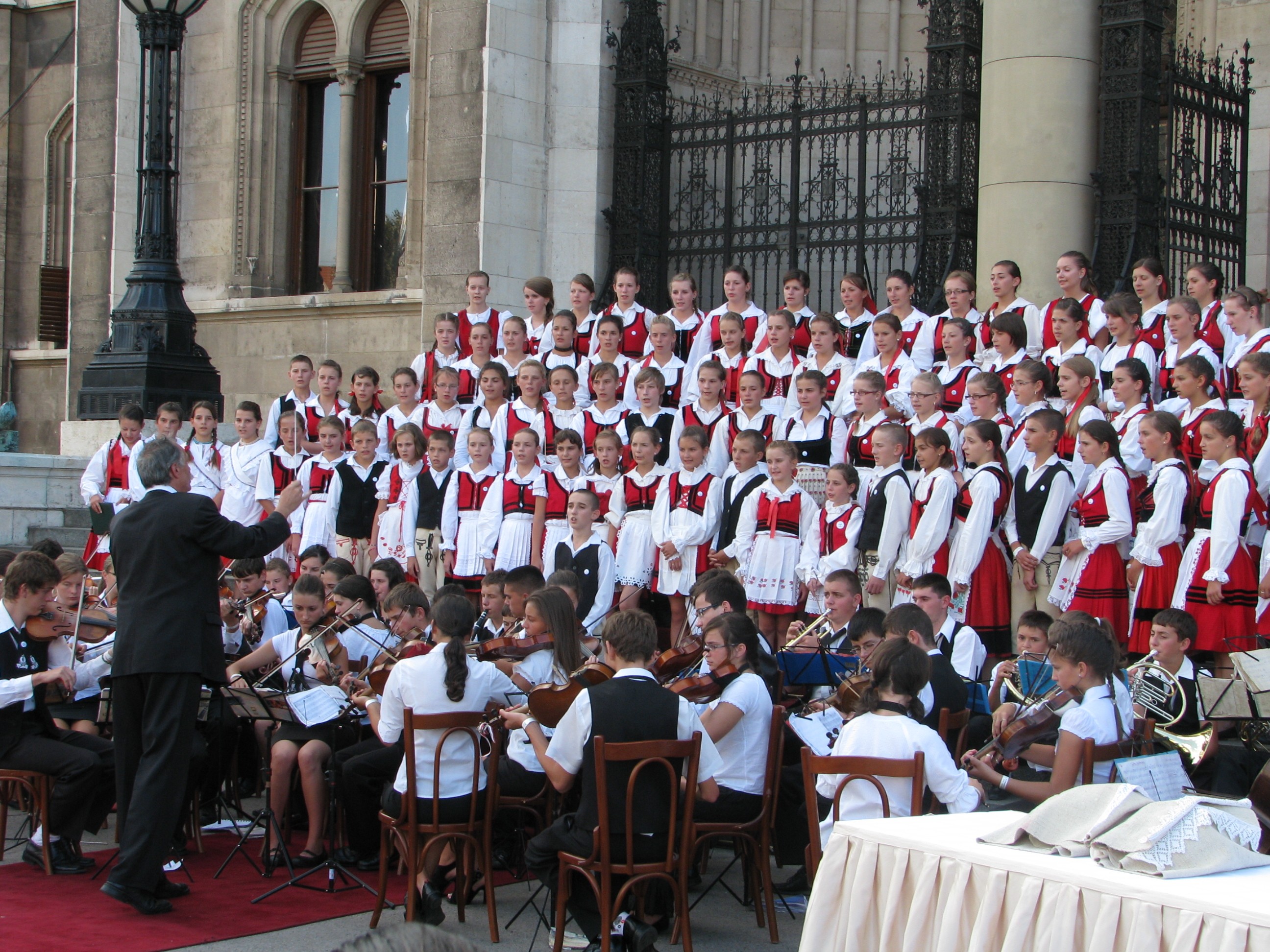
The town is famous for its Children's Orchestra (Filarmonica de copii/Gyermekfilharmónia), in which more than 140 youngsters sing and play instruments.
Twin town
- Hungary Szarvas, Hungary (1994)
References
|Szentegyháza Gyöngye - panoramio.jpg|The Pearl of Vlăhița |File:Lövétebánya.jpg|Minele Lueta |File:Romania, Transylvania, Báile Homorod Fortepan 16626.jpg|Băile Homorod, 1970 |File:Bányász tömbház.jpg|Wooden miner's house from 1950
References
- "Results of the 2024 local elections". Central Electoral Bureau.
- "Primăria Vlăhița".
- (31 May 2023). "Populația rezidentă după grupa de vârstă, pe județe și municipii, orașe, comune, la 1 decembrie 2021". [[National Institute of Statistics (Romania).
This article was imported from Wikipedia and is available under the Creative Commons Attribution-ShareAlike 4.0 License. Content has been adapted to SurfDoc format. Original contributors can be found on the article history page.
Ask Mako anything about Vlăhița — get instant answers, deeper analysis, and related topics.
Research with MakoFree with your Surf account
Create a free account to save articles, ask Mako questions, and organize your research.
Sign up freeThis content may have been generated or modified by AI. CloudSurf Software LLC is not responsible for the accuracy, completeness, or reliability of AI-generated content. Always verify important information from primary sources.
Report