From Surf Wiki (app.surf) — the open knowledge base
Vaišvilkas
Grand Duke of Lithuania from 1264 to 1267
Grand Duke of Lithuania from 1264 to 1267
| Field | Value |
|---|---|
| name | Vaišvilkas |
| image | Vojshalk.png |
| caption | 16th–17th century imaginative depiction of Vaišvilkas |
| succession | Grand Duke of Lithuania |
| reign | 1264–1267 |
| predecessor | Treniota |
| successor | Shvarn |
| succession1 | Duke of Novogrudok |
| reign1 | 1253–1254 |
| 1258–1259 | |
| successor1 | Roman Danylovych |
| birth_date | 1223 |
| death_date | 1267 |
| father | Mindaugas |
| house | House of Mindaugas |
1258–1259
Vaišvilkas or Vaišelga (died 18 April 1267) was Grand Duke of Lithuania from 1264 until his death in 1267. He was a son of Mindaugas, the first and only Christian King of Lithuania.
Name
The original Lithuanian name of this Grand Duke has puzzled many linguists and historians. Their reconstructions resulted in two credible variants Vaišvilkas, based on Woyszwiłk and Vaišelga, based on Vojšalk. The name Vaišvilkas was first reconstructed by Kazimieras Būga. This led to the hypothesis that the initial form of the name should have been Vaišvilas. The variant Vaišelga/Vaišalga has gained more popularity in historical writings even though the origins of the element -alg and -elg are not entirely clear.
Biography
Nothing is known about the youth of Vaišvilkas as he entered historical sources only in 1254 when he made a treaty, in the name of his father King Mindaugas, with Daniel of Halych-Volhynia. In the treaty, Halych-Volhynia transfers Black Ruthenia with center in Navahrudak to Lithuania. To solidify the treaty, Daniel's son Shvarn was married to Vaišvilkas' sister. He set off on a pilgrimage to Mount Athos in Greece. However, he did not reach the destination due to wars in the Balkans and returned to Navahrudak.
.jpg)
In 1264, he escaped an assassination plot by Treniota and Daumantas against his father and two of his brothers. Treniota was murdered by former servants of Mindaugas. Vaišvilkas allied himself with his brother-in-law Shvarn from Halych-Volhynia. They managed to take control over Black Ruthenia and the Duchy of Lithuania. Daumantas, Duke of Nalšia, was forced to flee to Pskov. Suksė (Suxe), another influential duke from Nalšia, fled to Livonia. Vaišvilkas became next the Grand Duke of Lithuania. As a Christian, he tried to maintain friendly relationships with the Teutonic Knights and the Livonian Order. He signed a peace treaty with Livonia regarding trade on the Daugava River.
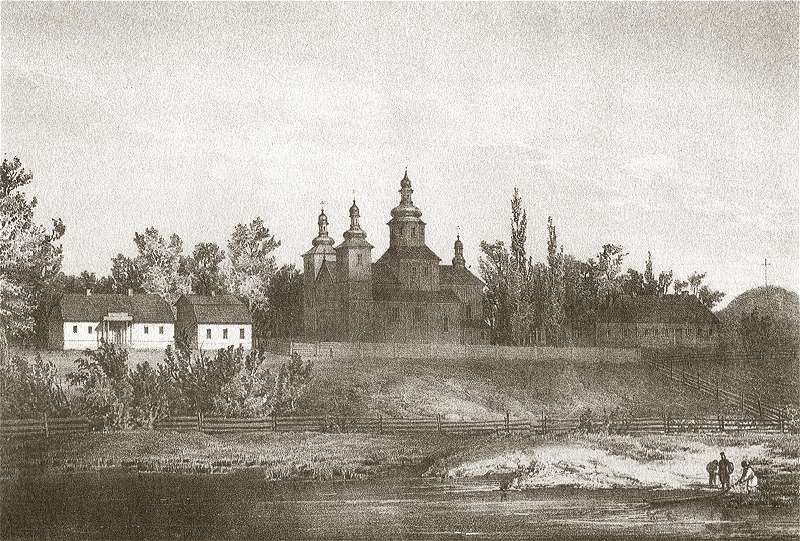
When in 1267 he decided to go back to monastic life, Vaišvilkas transferred the title of Grand Duke to Shvarn. A year later he was killed by Shvarn's brother, Leo I of Halych, who was angry that Vaišvilkas did not divide the powers between him and his brother. He was interred near the Assumption Church in Volodymyr.
Notes
References
References
- link. Tomas. Baranauskas. Medieval Lithuania
- "Vaišelga".
- (17 January 2023). "Teutonic Knight Vs Lithuanian Warrior: The Lithuanian Crusade 1283–1435". Bloomsbury USA.
- Valentas, Skirmantas. (2002). "ISTORINIS VEIKĖJAS EILĖRAŠTYJE: Воишелкъ, Воишевoлкъ". Literatūra.
- Zinkevičius, Zigmas. (2007). "Senosios Lietuvos valstybės vardynas". Mokslo ir enciklopedijų leidybos institutas.
- Kuzavinis, Kazimieras. (1987). "Lietuvių vardų kilmės žodynas". Mokslas.
- Rowell, S. C.. (1994). "Lithuania Ascending: A Pagan Empire Within East-Central Europe, 1295–1345". Cambridge University Press.
- (1970–1978). "Vaišvilkas". Juozas Kapočius.
- Ivinskis, Zenonas. (1978). "Lietuvos istorija iki Vytauto Didžiojo mirties". Lietuvių katalikų mokslo akademija.
This article was imported from Wikipedia and is available under the Creative Commons Attribution-ShareAlike 4.0 License. Content has been adapted to SurfDoc format. Original contributors can be found on the article history page.
Ask Mako anything about Vaišvilkas — get instant answers, deeper analysis, and related topics.
Research with MakoFree with your Surf account
Create a free account to save articles, ask Mako questions, and organize your research.
Sign up freeThis content may have been generated or modified by AI. CloudSurf Software LLC is not responsible for the accuracy, completeness, or reliability of AI-generated content. Always verify important information from primary sources.
Report