From Surf Wiki (app.surf) — the open knowledge base
Tucuruí
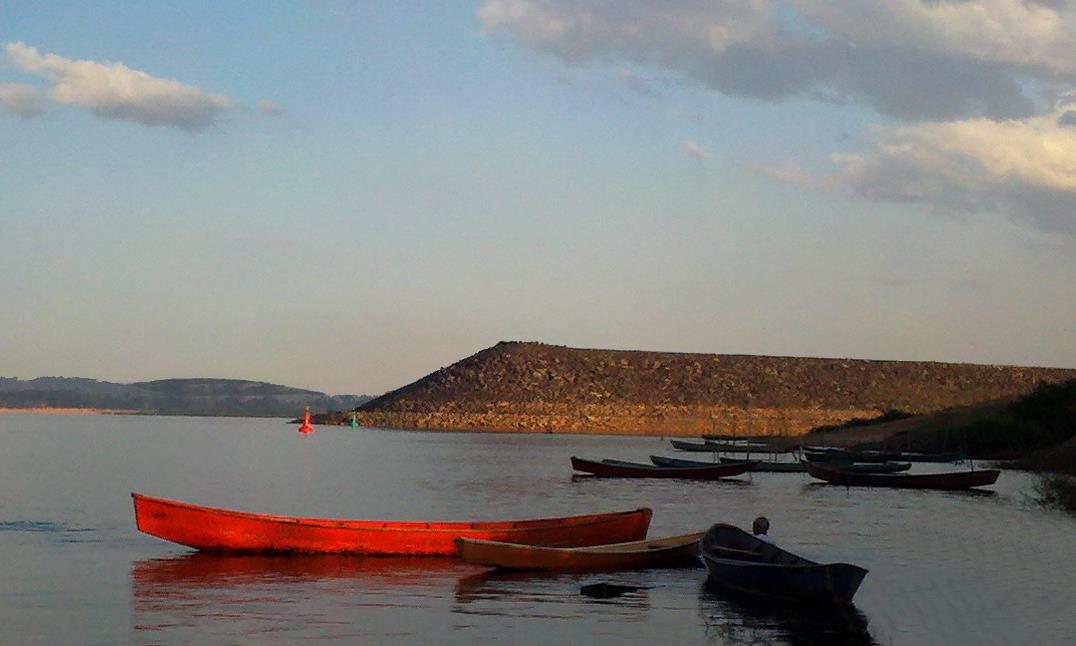
| Field | Value |
|---|---|
| official_name | Tucuruí |
| other_name | Alcobaça |
| native_name | |
| nickname | Capital of Energy |
| settlement_type | Municipality |
| image_skyline | The margin of Tucuruí city.jpg |
| image_flag | Bandeira_tucurui.jpg |
| image_map | Para_Municip_Tucurui.svg |
| map_caption | Location in the State Para |
| pushpin_map | Brazil |
| pushpin_label_position | bottom |
| pushpin_map_caption | Location in Brazil |
| subdivision_type | Country |
| subdivision_name | Brazil |
| subdivision_type1 | Region |
| subdivision_name1 | Northern |
| subdivision_type2 | State |
| subdivision_name2 | Pará |
| subdivision_type3 | Mesoregion |
| subdivision_name3 | Sudeste Paraense |
| subdivision_type4 | Emancipation |
| subdivision_name4 | December 31, 1947 |
| leader_title | Mayor |
| leader_name | Alexandre Siqueira (MDB, (2025-2028) (Brazil) |
| established_title | Founded |
| established_date | 1779 |
| area_total_km2 | 2086.17 |
| population_as_of | 2020 |
| population_total | 115,144 |
| population_density_km2 | auto |
| timezone | BRT |
| utc_offset | −3 |
| coordinates | |
| elevation_footnotes | tags-- |
| elevation_ft | |
| postal_code_type |
Tucuruí is a municipality in the state of Pará in the Northern region of Brazil.
The city is served by Tucuruí Airport.
The name Tucuruí is a Tupi word that means "river of ants" or "river of locusts". It is the concatenation of two Tupi words: tukura (ants, locusts) and 'y (water). The city is very famous because of its colossal Dam, the Tucuruí Dam which is administered by Eletrobrás Eletronorte – the constructor company of this large infrastructure project.
Economy
Currently, Tucuruí city's economy is based on agriculture and general commerce. During its 60 years the commerce activity varied a lot. In the beginning there was a railroad for draining out the production of the Brazil Nut (known in Brazil as "Pará's Nut"), a very abundant available product in the region. The Tucuruí Dam developed the municipality and brought large industries for the region.
Tourism


In Tucuruí, you can explore the dam lake, one of the largest artificial lakes ever made by man. It has 74.6 m of depth and more than 2.500 km of total extension. You can visit islands, fishing Cichla or Tambaqui and see natural beauties that you can only find in Amazon. The historical site of city has old buildings and the Museum of Extinct Railroad - the historical museum with many pictures and objects from the city's beginning. There is a train that was used in the period of Brazil Nut that was restored and placed in front of the Eletrobás Eletronorte Cultural Center. Inside the Cultural Center, visits to the inside the hydroelectric dam to see its workings are scheduled. In February there is the Tucuruí carnival party, one of the most known in region. In June, there is the Tucunaré's festival (Cichla Festival), when traditional preparations of fish are served.
Gastronomy
Tucuruí has a privileged lake with many species of fish. Naturally, the local gastronomy has much fish in it. The most known is the Peixe no Saco (Fish in the Bag). The Peixe no Saco is a preparation of Chichla or Tambaqui with a wide variety of spices and herbs placed within the fish's stomach. The fish is then placed on a special waterproof bag with soy sauce and roasted in oven or in firewood.
Other gastronomic options include indigenous food. There is the Tacacá (a broth made of tucupi, jambu [a native variety of paracress], starch and shrimp served in a gourd usually to drink without spoon or fork. There is just a toothpick for eating the shrimp and the herbs) and the Vatapá and maniçoba.
Airport
Tucuruí airport is located about 10 km far from the city. It is currently only served by Azul Brazilian Airlines.
Climate
References
References
- [https://cidades.ibge.gov.br/brasil/pa/tucurui/panorama IBGE 2020]
- (July 1, 2008). "Divisão Territorial do Brasil". Divisão Territorial do Brasil e Limites Territoriais, Instituto Brasileiro de Geografia e Estatística (IBGE).
- (August 14, 2009). "Estimativas da população para 1º de julho de 2009". Estimativas de População, Instituto Brasileiro de Geografia e Estatística (IBGE).
- (2000). "Ranking decrescente do IDH-M dos municípios do Brasil". Atlas do Desenvolvimento Humano, Programa das Nações Unidas para o Desenvolvimento (PNUD).
- (December 19, 2007). "Produto Interno Bruto dos Municípios 2002-2005". Instituto Brasileiro de Geografia e Estatística (IBGE).
This article was imported from Wikipedia and is available under the Creative Commons Attribution-ShareAlike 4.0 License. Content has been adapted to SurfDoc format. Original contributors can be found on the article history page.
Ask Mako anything about Tucuruí — get instant answers, deeper analysis, and related topics.
Research with MakoFree with your Surf account
Create a free account to save articles, ask Mako questions, and organize your research.
Sign up freeThis content may have been generated or modified by AI. CloudSurf Software LLC is not responsible for the accuracy, completeness, or reliability of AI-generated content. Always verify important information from primary sources.
Report