From Surf Wiki (app.surf) — the open knowledge base
Tomás Mapúa
Filipino architect (1888-1965)
.jpg)
Filipino architect (1888-1965)
| Field | Value |
|---|---|
| name | Tomás B. Mapúa |
| birth_name | Tomás Bautista Mapúa |
| birth_date | |
| birth_place | Binondo, Manila, Captaincy General of the Philippines |
| death_date | |
| death_place | Manila, Philippines |
| nationality | Filipino |
| alma_mater | Cornell University |
| spouse | |
| children | Carmen |
| Oscar Sr. | |
| Gloria | |
| parents | Juan Mapúa |
| Justina Bautista-Mapua | |
| significant_buildings | Mapúa Mansion, Librada Avelino Hall (Centro Escolar University) |
| significant_design | Manila Central Post Office, St. La Salle Hall |
Oscar Sr. Gloria Justina Bautista-Mapua
Don Tomás Bautista Mapúa (December 21, 1888 - December 22, 1965) was a Filipino architect, educator, politician and businessman from the Philippines. He was the founder and first president of the Mapua University. Gonzalo T. Vales as co-founder and founding dean of school and co-founder and founding president of Central Colleges of the Philippines, after he established the school on January 25, 1925. He was the first registered architect in the Philippines, Manila councilor and first worked at the Philippine Bureau of Public Works. He later established his own construction company, the MYT Construction Works, Inc.
Biography
Mapúa was born to Juan Mapúa and Justina Bautista-Mapúa on December 21, 1888, in Binondo, Manila. His education started at the Ateneo de Manila University and at the Liceo de Manila, both to finish his primary education. In 1903, he was sent to the United States to complete his high school education as one of the pensionado students of the United States. The 1903 Pensionado Law awarded university scholarships to the US for exemplary Filipino students. In exchange, they agreed to work on local government construction projects. He completed his secondary education at the Boone’s Preparatory School in Berkeley, California, and with the pensionado scholarship obtained a degree in architecture at Cornell University in Ithaca, New York.
Upon his return to the Philippines, he joined the Bureau of Public Works where he initially worked as a draftsman in the agency from 1912 to 1917. He was later appointed as the supervising architect for the Bureau from 1917 to 1928. He spearheaded many government projects including the Philippine General Hospital Nurses Home, Psychopathic Building (National Mental Hospital) and the School for the Deaf and Blind. He also designed the Manila Central Post Office Building in Ermita, Manila. Tomás became known for his great contributions in the field of architecture.
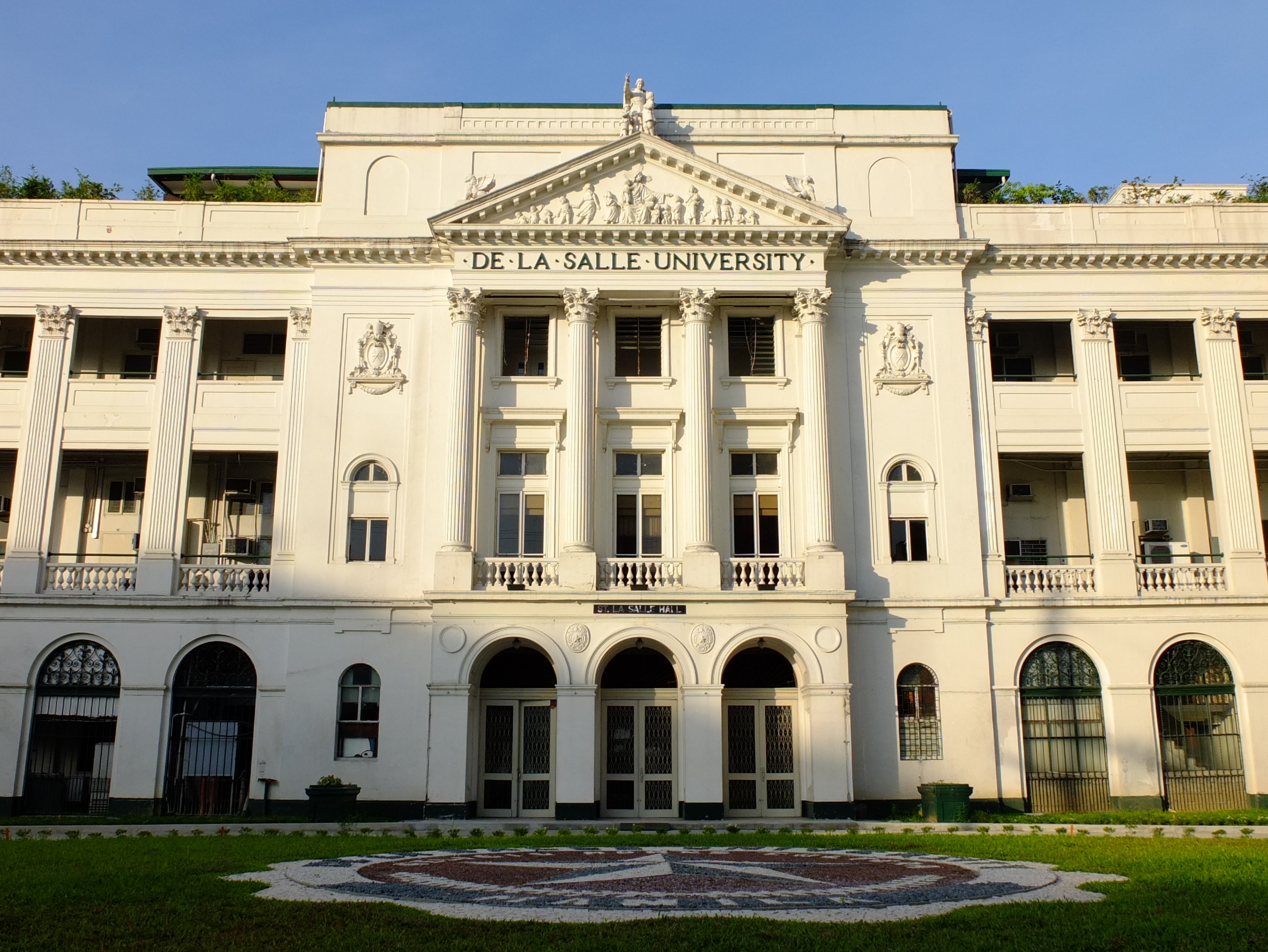
Around 1916, Mapúa joined the competition for the design of the new school building initiated by the La Sallian Brothers. He won the competition against nine other entries and was awarded with a prize of P5,000.00. (The building, St La Salle Hall, was the only structure from the Philippines to be included in the coffee table book, "1001 Buildings You Must See Before You Die: The World's Architectural Masterpieces," authored by Mark Irving and published by Quintessence Books in 2007.)
He was also one of the first councilors of the City of Manila. He co-founded and became one of the presidents of the Philippine Institute of Architects. After retiring from public life, he eventually went back to the private sector. Aside from MIT, he led his own construction firm called MYT Construction Works, Inc. His designs for private homes had also been adjudged as among Manila’s beautiful houses before World War II.
Personal life
Mapúa was married to Rita Moya on November 3, 1916. They have three children, Carmen, Oscar, and Gloria.
Death

Mapúa died on December 22, 1965, in Manila, just a day after his 77th birthday.
Legacy
His son Oscar continued his legacy in education by assuming the presidency of the Mapúa Institute of Technology after his death in 1965. Oscar served as the Institute’s president until his demise on March 17, 1998. His son and Tomás’ grandson, architect Oscar Mapúa Jr., succeeded him and was the institute’s executive vice president until December 1999, when the school was acquired by the Yuchengcos.

Misericordia Street in Santa Cruz, Manila was renamed to Tomas Mapua Street in his honor.
Awards
He was awarded a gold medal of honor and a certificate of recognition by the Philippine Institute of Architects. He also received a Cultural Award in Architecture by the city of Manila in 1964.
Works
.jpg)
- 1916: Aduana de Iloilo (Iloilo Customs House)
- 1924: St. La Salle Hall
- 1928: Manila Central Post Office (with Juan M. Arellano)
References
References
- Nellist, G. Men of the Philippines: a biographical record of men of substantial achievement in the Philippine islands, Manila 1931
- "History – PIA".
- (2023-09-02). "Tomas Mapua: Founder of the Mapua Institute of Technology".
- administration (2011). [https://www.mapua.edu.ph/About/History.aspx "History"]. Mapua Institute of Technology. Retrieved on 2014-12-21.
- [http://historyofarchitecture.weebly.com/tomas-bautista-mapua.html "Tomas B. Mapua"]. History of Architecture. Retrieved on 2014-12-21.
- Rubio, Paulo (2014-11-06). [https://arquitecturamanila.blogspot.com/2014/11/de-la-salle-university-st-la-salle-hall.html "De La Salle University St. La Salle Hall"]. Arquitectura Manila. Retrieved on 2014-12-21.
- Villalon, Augusto (2009-04-12). [http://showbizandstyle.inquirer.net/lifestyle/lifestyle/view/20090412-198937/DLSU-building-included-in-intl-best-of-list "DLSU building included in int’l best-of list"] {{Webarchive. link. (2012-07-26 . Philippine Daily Inquirer. Retrieved on 2014-12-21.)
- Irving, Mark (2007). "1001 Buildings You Must See Before You Die: The World's Architectural Masterpieces", pg. 390. Quintessence Books, London. {{ISBN. 978-0789315649.
- "P123M for restoration of two city heritage buildings".
This article was imported from Wikipedia and is available under the Creative Commons Attribution-ShareAlike 4.0 License. Content has been adapted to SurfDoc format. Original contributors can be found on the article history page.
Ask Mako anything about Tomás Mapúa — get instant answers, deeper analysis, and related topics.
Research with MakoFree with your Surf account
Create a free account to save articles, ask Mako questions, and organize your research.
Sign up freeThis content may have been generated or modified by AI. CloudSurf Software LLC is not responsible for the accuracy, completeness, or reliability of AI-generated content. Always verify important information from primary sources.
Report