From Surf Wiki (app.surf) — the open knowledge base
Tilmàtli
Outer garment worn by men in Aztec Mexico

Outer garment worn by men in Aztec Mexico
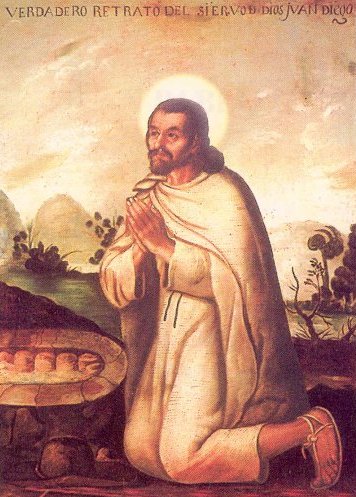


A tilmàtli (or tilma; , ) was a type of outer garment worn by men as a cloak/cape, documented from the late Postclassic and early Colonial eras among the Aztec and other peoples of central Mexico.
Styling
The garment was to be worn at the front like a long apron, or alternatively draped across the shoulders as a cloak. It was also frequently used as a carry-all.
Significance
Several different types of the garment were in use, designed for the various classes in society. Upper classes wore a tilmàtli of cotton cloth knotted over the right shoulder, while the middle class used a tilmàtli made of ayate fibre, a coarse fabric derived from the threads of the maguey agave. It was knotted over the left shoulder. The lower classes knotted the garment behind the neck, where it could serve for carrying.

a: a young person wearing only a maxtlatl
b: a common person (Macehualtin) dress
c: a noble (Pipiltin) or high ranking warrior dress
d: dress of the ruling classes and the clergy
e: a less common way to wear the tilmàtli
f: war dress.]]
Miraculous image

A very famous tilmàtli was that worn by Juan Diego in 1531; according to tradition, an image of the Virgin Mary as Our Lady of Guadalupe appeared on it in the presence of the bishop of Mexico City, Juan de Zumárraga. The image is preserved in the Basilica of Our Lady of Guadalupe which attracts millions of pilgrims annually.
Notes
References
References
- Handbook to Life in the Aztec World by Manuel Aguilar-Moreno, Facts on File, New York, 2006
- The Essential Codex Mendoza by Frances F. Berdan and [[Patricia Rieff Anawalt]], University of California Press, London, 1997
- See Johnston (1981).
This article was imported from Wikipedia and is available under the Creative Commons Attribution-ShareAlike 4.0 License. Content has been adapted to SurfDoc format. Original contributors can be found on the article history page.
Ask Mako anything about Tilmàtli — get instant answers, deeper analysis, and related topics.
Research with MakoFree with your Surf account
Create a free account to save articles, ask Mako questions, and organize your research.
Sign up freeThis content may have been generated or modified by AI. CloudSurf Software LLC is not responsible for the accuracy, completeness, or reliability of AI-generated content. Always verify important information from primary sources.
Report