From Surf Wiki (app.surf) — the open knowledge base
Stone Barns Center for Food & Agriculture
Agriculture and educational organization in New York
Agriculture and educational organization in New York
| Field | Value |
|---|---|
| name | Stone Barns Center for Food & Agriculture |
| image | File:Stone Barns and Blue Hill 2017 06.jpg |
| image_size | 280px |
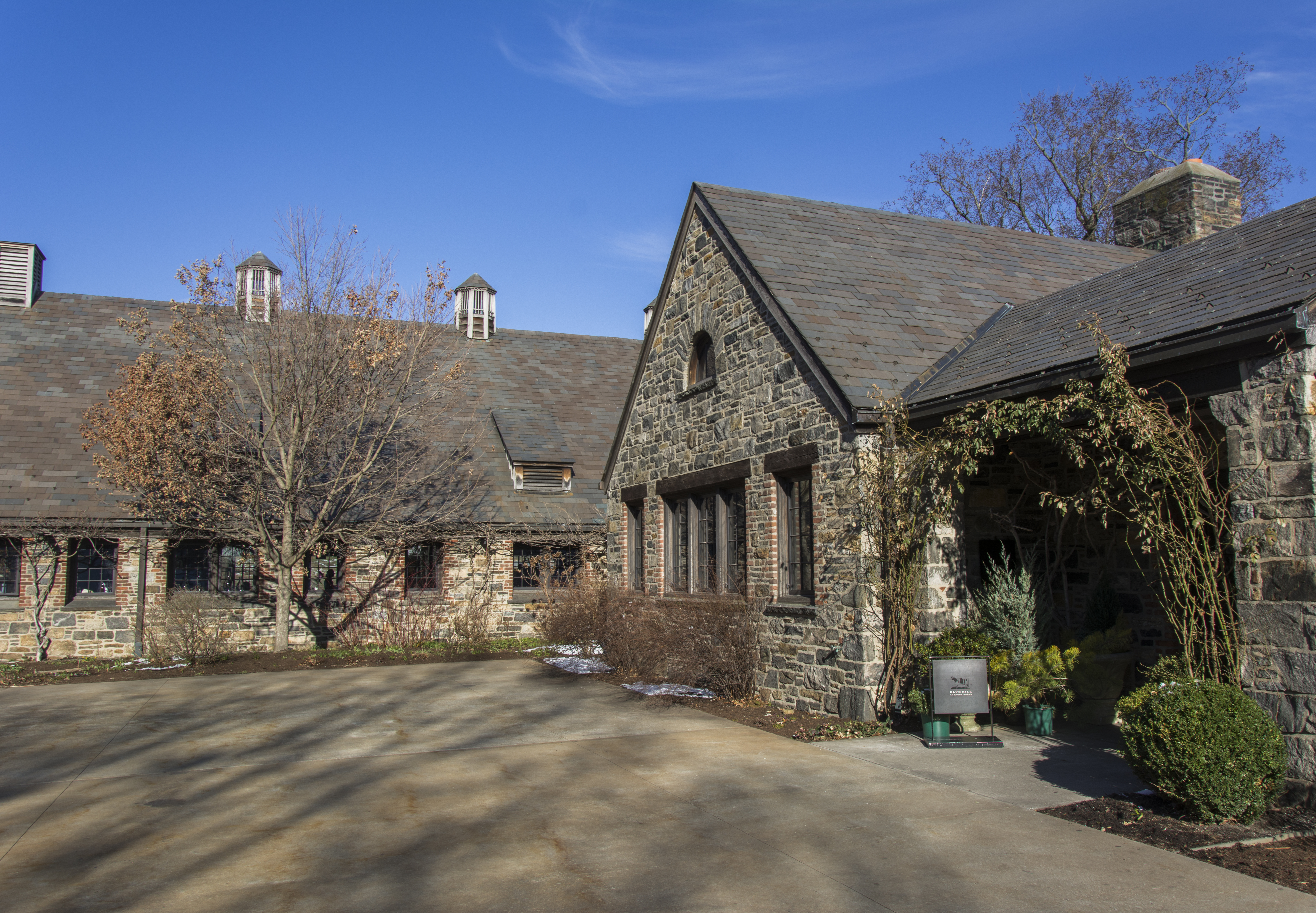
| caption | Main building |
| map_caption | Interactive map highlighting Stone Barns |
| location | Pocantico Hills, New York |
| coordinates | |
| established | 2004 |
| area | 80 acre |
| produce | Heirloom crops and heritage breeds of livestock |
| website |
Stone Barns Center for Food & Agriculture is a non-profit farm as well as an agricultural education and research center located in Pocantico Hills, New York. The center was created on 80 acre formerly belonging to Pocantico, the Rockefeller estate. It is surrounded on three sides by the Rockefeller State Park Preserve. Stone Barns promotes sustainable agriculture, local food, and community-supported agriculture. It is a four-season operation.
Stone Barns Center is also home to the Barber family's Blue Hill at Stone Barns, a restaurant that serves contemporary cuisine using local ingredients, with an emphasis on produce from the center's farm. Blue Hill staff also participate in the center's education programs.
History
Stone Barns' property was once part of Pocantico, the Rockefeller estate. The Norman-style stone barns were commissioned by John D. Rockefeller Jr. to be a dairy farm in the 1930s. The complex fell into disuse during the 1950s and was mainly used for storage. In the 1970s, agricultural activity resumed when David Rockefeller's wife Margaret "Peggy" McGrath Rockefeller began a successful cattle breeding operation.
Stone Barns Center for Food and Agriculture was created by David Rockefeller and his daughter Peggy Dulany as a memorial for Peggy Rockefeller, who died in 1996. David's move to carve off a segment of the already donated land for a personal, albeit charitable, project caused disagreement on the part of other Rockefeller family members, as it ran contrary to the family's conservation policy. Inclusion of a commercial entity, a restaurant, was an additional point of internal friction. David, the patriarch of the family, prevailed, and Stone Barns opened to the public in May 2004. Ultimately, the positive public image of the Stone Barns Center as an international beacon for sustainable agriculture and culinary innovation secured it as a successful part of the Rockefeller legacy.
In 2008, Stone Barns opened its slaughterhouse to slaughter its livestock for plating at Blue Hill. Using their own slaughterhouse also eliminated the long and expensive drives to the closest one.
In 2017, Stone Barns published Letters to a Young Farmer, a compilation of essays and letters about the highs and lows of farming life, including Barbara Kingsolver, Bill McKibben, Michael Pollan, Temple Grandin, Wendell Berry, Rick Bayless, and Marion Nestle.
Farm

The farm at Stone Barns is a four-season operation with approximately 6 acre used for vegetable production. It uses a seven-year rotation schedule in the field and greenhouse beds. The farm grows 300 varieties of produce year-round, both in the outdoor fields and gardens and in the 22000 sqft minimally heated greenhouse that capitalizes on each season's available sunlight. Among the crops suitable for the local soil and climate are rare varieties such as celtuce, Kai-lan, hakurei turnips, New England Eight-Row Flint seed corn, and finale fennel. The farm uses no pesticides, herbicides or chemical additives, although compost is added to the soil for enrichment. The farm has a six-month composting cycle using manure, hay, and food waste scraps.
Livestock
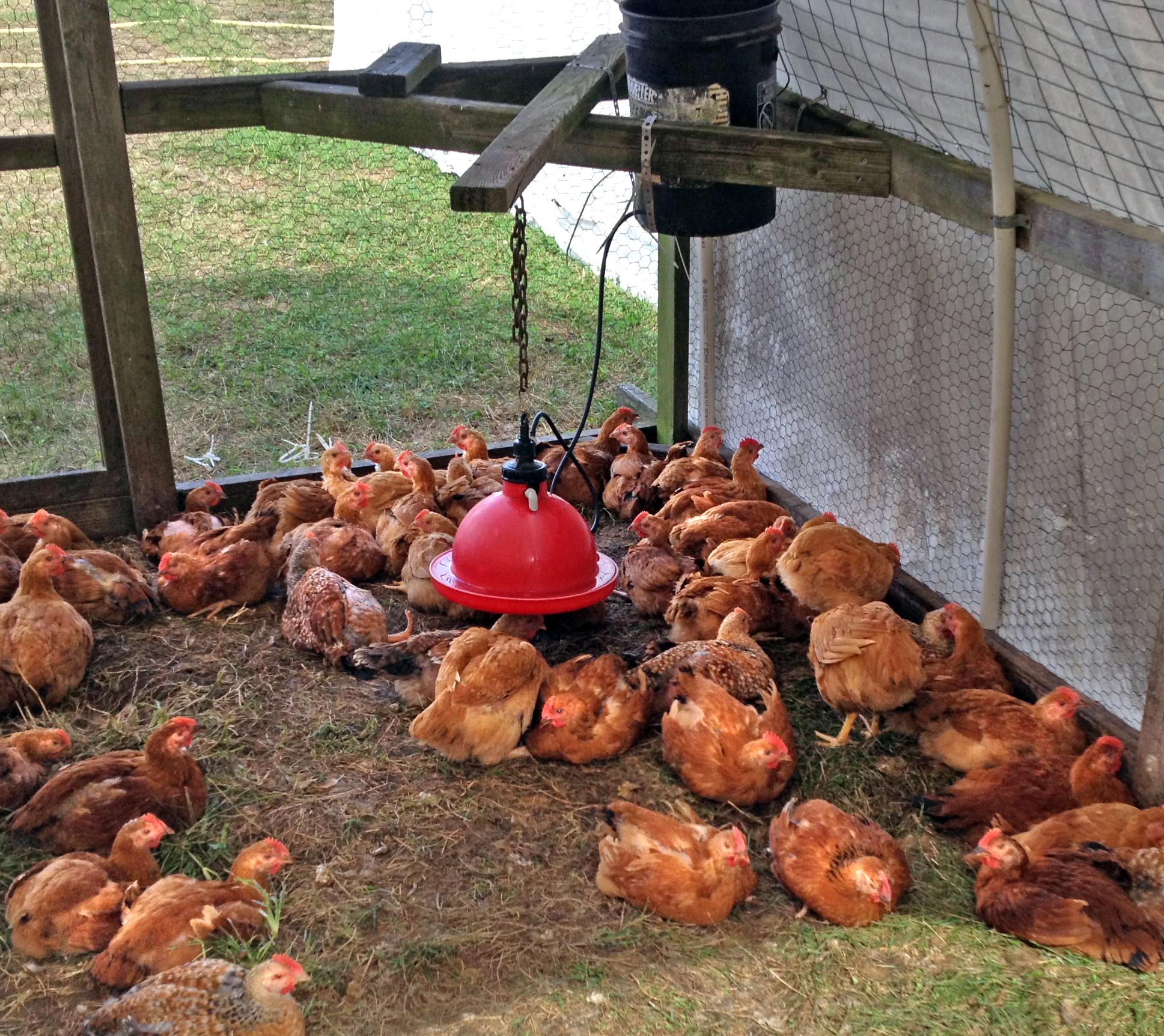
Stone Barns raises cattle, chickens, sheep, pigs, goats and bees suited to the local ecosystem. The livestock farmers try to raise animals in a manner consistent with the animals' evolutionary instincts. The cattle, chickens, sheep and goats are raised on pastures kept healthy and productive through carefully managed rotational grazing. The sheep and pigs' bedding packs are regularly turned and composted. Farmers who raise animals in this fashion are frequently called "grass farmers" because there is so much emphasis on the health of the pastures. Strategies for maintaining the pastures include intensive paddock management so the grazed area has ample time to recover and provide a natural refuge for birds and other wildlife, essential for the maintenance of ecological balance.
In 2018, Stone Barns began managing 300+ acres of the Rockefeller State Park Preserve. The first season saw a multi-species intensive grazing program where pigs forage and consume food waste including spent grain from the Captain Lawrence brewery in Elmsford, New York. Cattle, sheep, goats, hens and ducks also graze the preserve's land.
Programs
Stone Barns offers a variety of programs for farmers, teachers and the public. Annually, the farm engages eight livestock and crops apprentices. The hands on training also includes courses on business, pollination, water and soil.
Young Farmers Conference
In 2008, Stone Barns held the first Young Farms Conference to provide inspiration and education for beginning farmers. With at least 30 percent of American farmers over 65 and only 6 percent under 35 and usually unable to purchase land, the conference aims to address farming on a smaller scale and training workshops.
Farm and garden workshops
Hands-on classes for all experience levels — amateur gardeners, community garden leaders and members, regional farmers, industry professionals, and anyone interested in regenerative agriculture. Students receive firsthand training from the crops and livestock farmers.
Blue Hill at Stone Barns
Main article: Blue Hill at Stone Barns
In spring of 2004, Blue Hill at Stone Barns opened at Stone Barns, pioneering farm-to-table dining which sources many ingredients from Stone Barns fields and pastures. In 2020, the restaurant received two stars from the Michelin Guide. Its owners, Dan, David and Laureen Barber, also own Blue Hill in New York City.
Media
Episode eight of Top Chefs fifth season was filmed at Stone Barns, where competing chefs used the restaurant's kitchen to prepare a meal for the farm's workers and their families.
References
References
- "RockefellerTrailMap.pdf".
- Burros, Marian. (April 21, 2004). "Dine at the Rockefellers', Get in Touch With the Earth". The New York Times.
- "Our History".
- Laliberte, Nathan. (October 2012). "The History of the Rockefeller Family in Westchester".
- Dominus, Susan. (June 6, 2008). "How About Slaughterhouse Tour Before Supper, Food Lover?". The New York Times.
- (June 8, 2017). "Stone Barns Center releases two new videos promoting book".
- "Letters to a Young Farmer: On Food, Farming, and Our Future {{!}} IndieBound.org".
- (April 6, 2018). "New grazing and land conservation project".
- (October 3, 2018). "Expanding Our Impact".
- "Education".
- "The Rockefeller State Preserve and Stone Barns Carry On a Legacy of Giving Back".
- "About Stone Barns".
- "#YFC19".
- Shattuck, Kathryn. (January 3, 2013). "Satisfying the Need for Dirty Fingernails". The New York Times.
- (June 23, 2022). "Farm & Garden Workshops".
- Muchnick, Jeanne. "NY restaurant Blue Hill at Stone Barns earns two stars in 2020 Michelin Guide".
This article was imported from Wikipedia and is available under the Creative Commons Attribution-ShareAlike 4.0 License. Content has been adapted to SurfDoc format. Original contributors can be found on the article history page.
Ask Mako anything about Stone Barns Center for Food & Agriculture — get instant answers, deeper analysis, and related topics.
Research with MakoFree with your Surf account
Create a free account to save articles, ask Mako questions, and organize your research.
Sign up freeThis content may have been generated or modified by AI. CloudSurf Software LLC is not responsible for the accuracy, completeness, or reliability of AI-generated content. Always verify important information from primary sources.
Report