From Surf Wiki (app.surf) — the open knowledge base
Śramaṇa
Monastic orders

Monastic orders
In Indian religions and philosophies, a śramaṇa (from Sanskrit) or samaṇa (from Pali), sometimes anglicised as shramana, is a person "who labours, toils, or exerts themselves for some higher or religious purpose" or a "seeker, or ascetic, one who performs acts of austerity".
In the early Vedic texts, the term is an epithet for the great rishi sages in association with their ritualistic exertion. However, it has since come to refer to a broad class of spiritual movements originally comprising wandering ascetics from ancient India—collectively called the Śramaṇa tradition, Shramanic tradition, or occasionally Shramanism—historically parallel to but separate from movements that upheld the authority of Vedic scripture like the early Vedic religion and Brahmanism, as well as their Hindu successor movements. The Śramaṇa tradition includes Jainism, Buddhism, and others such as the Ājīvika, Ajñana, and Cārvāka, while definitively excluding Hinduism. The tradition's name comes from the semantic narrowing of the term śramaṇa to mean a religious individual who specifically rejects the authority of the Vedas; however, the word did not hold this connotation until certain post-Vedic texts considered canonical by Buddhists and Jains. In the Indian philosophical tradition, the terms āstika versus nāstika largely equate to this distinction between Vedic versus non-Vedic (Śramaṇa) belief systems.
The Śramaṇa tradition became popular in the circles of mendicants from greater Magadha who developed yogic practices, and they also developed concepts popular in all major Indian religions such as saṃsāra (the cycle of death and rebirth) and moksha (liberation from that cycle). Śramaṇa schools of thought have a diverse range of beliefs, ranging from accepting or denying the existence of the soul, believing or disbelieving in free will, following particular dress guidelines or going completely nude in daily social life, and strict vegetarianism and prohibitions on violence (ahimsa) or permissibility of meat-eating and violence.
Etymology and origin


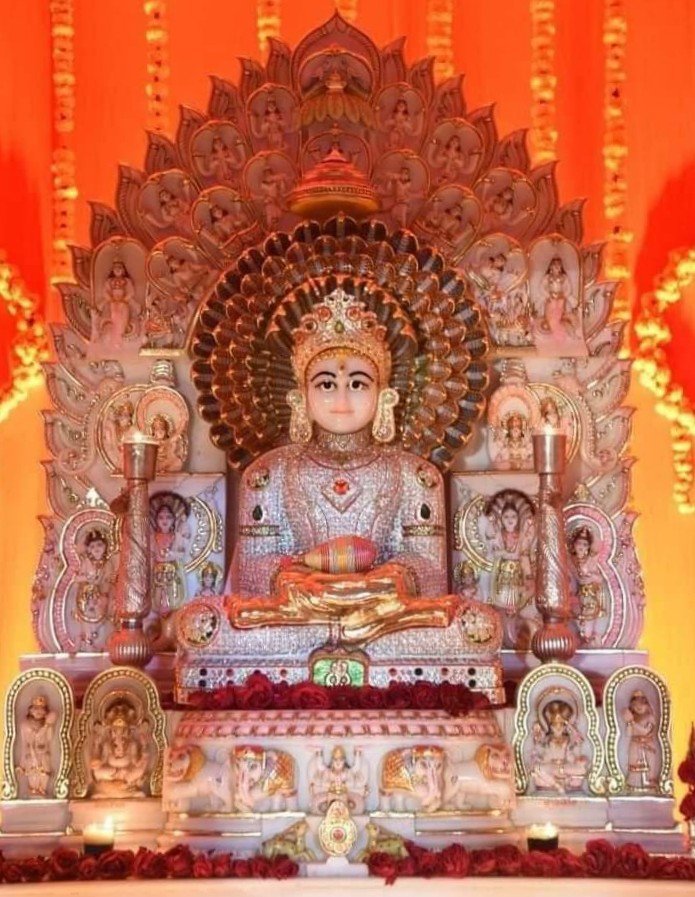
.jpg)
According to Olivelle and Crangle, the earliest known explicit use of the term "śramaṇa" is found in section 2.7 of the Taittiriya Aranyaka, a layer within the Yajurveda (Vedic scripture, c. 1000 BCE). It mentions śramaṇa Rishis and celibate Rishis.
According to Jaini, only two references to the word "śramaṇa" are found in the Vedic literature, one in verse 4.3.22 of the Brihadaranyaka Upanishad (7th-6th cent. BCE). It refers to a śramaṇa as belonging to a class of mendicant, but it is not clear if this was a member of a non-Vedic order as described in the much later Pali-canon.
The word "śramaṇa" is postulated to be derived from the verbal root **, meaning "to exert effort, labor or to perform austerity".
The Śramaṇa tradition refers collectively to a variety of renunciate ascetic traditions from the middle of the 1st millennium BCE.
Buddhist commentaries associate the word's etymology with the quieting (samita) of evil (pāpa) as in the following phrase from the 3rd century BCE Dhammapada, verse 265: samitattā pāpānaŋ ʻsamaṇoʼ ti pavuccati ("someone who has pacified evil is called samaṇa").
The first usage of the term śramaṇa in Jain literature is found in the earliest Jain texts, the Sutrakritanga, composed after the 2nd century BCE, and the Ācārāṅga Sūtra, which may have originated as an oral tradition after Mahavira's death but was principally compiled and heavily edited in its current form by Acharya Devardhigani Kshamashraman, c. 454 CE. According to Johannes Bronkhorst:Mainly on linguistic grounds, it has been argued that the Ācārāṅga Sūtra, the Sūtrakṛtāṅga Sūtra, and the Uttarādhyayana Sūtra are among the oldest texts in the canon. This does not guarantee that they actually date from the time of Mahāvīra, nor even from the centuries immediately following his death, nor does it guarantee that all parts of these texts were composed simultaneously.
The term śramaṇa is also found in the earliest Digambara Jain text, Mulachara, composed around 150 CE. Digambaras maintain that the original Ācārāṅga Sūtra is lost, and Mulachara is the closest to the original teachings of Mahavira.
Pali samaṇa has been suggested as the ultimate origin of the word Evenki сама̄н (samān) "shaman", possibly via Middle Chinese or Tocharian B; however, the etymology of this word, which is also found in other Tungusic languages, is controversial (see ).
History


Several śramaṇa movements are known to have existed in India before the 6th century BCE (pre-Buddha, pre-Mahavira), and these influenced both the āstika and nāstika traditions of Indian philosophy. Martin Wiltshire states that the Śramaṇa tradition evolved in India over two phases, namely Paccekabuddha and Savaka phases, the former being the tradition of individual ascetic and latter of disciples, and that Buddhism and Jainism ultimately emerged from these as sectarian manifestations. These traditions drew upon already established Brahmanical concepts, states Wiltshire, to communicate their own distinct doctrines. Reginald Ray concurs that śramaṇa movements already existed and were established traditions in pre-6th century BCE India, but disagrees with Wiltshire that they were nonsectarian before the arrival of Buddha.
According to the Jain Agamas and the Buddhist Pāli Canon, there were other śramaṇa leaders at the time of Buddha. In the Mahāparinibbāna Sutta (DN 16), a śramaṇa named Subhadda mentions:
...those ascetics, samaṇa and Brahmins who have orders and followings, who are teachers, well-known and famous as founders of schools, and popularly regarded as saints, like Pūraṇa Kassapa, Makkhali Gosāla, Ajita Kesakambalī, Pakudha Kaccāyana, Sanjaya Belatthiputta and Nigaṇṭha Nātaputta (Mahavira)... |Digha Nikaya|16}}
Relationship with Vedism
The traditional view of scholars in the field, represented for example by Govind Chandra Pande in his 1957 study on the origins of Buddhism, is that Śramaṇa began as a "distinct and separate cultural and religious" tradition from Vedic religion. However, this claim is disputed by several Indologists and Sanskrit scholars such as Patrick Olivelle.
Patrick Olivelle, a professor of Indology and known for his translations of major ancient Sanskrit works, states in his 1993 study that contrary to some representations, the original Śramaṇa tradition was part of the Vedic one. He writes,
According to Olivelle, and other scholars such as Edward Crangle, the concept of Śramaṇa exists in the early Brahmanical literature. The term is used in an adjectival sense for sages who lived a special way of life that the Vedic culture considered extraordinary. However, Vedic literature does not provide details of that life. The term did not imply any opposition to either Brahmins or householders. In all likelihood, states Olivelle, during the Vedic era, neither did the śramaṇa concept refer to an identifiable class nor to ascetic groups as it does in later Indian literature.
The concept of renunciation and monk-like lifestyle is found in Vedic literature, with terms such as yatis, rishis, and śramaṇas. The Vedic literature from pre-1000 BCE era, mentions Muni (मुनि, monks, mendicants, holy man). Rig Veda, for example, in Book 10 Chapter 136, mentions mendicants as those with kēśin (केशिन्, long-haired) and mala clothes (मल, dirty, soil-colored, yellow, orange, saffron) engaged in the affairs of mananat (mind, meditation).
He with the long loose locks (of hair) supports Agni, and moisture, heaven, and earth; He is all sky to look upon: he with long hair is called this light. The Munis, girdled with the wind, wear garments of soil hue; They, following the wind's swift course, go where the Gods have gone before. |Rig Veda|Hymn 10.136.1-2{{efn-la|केश्यग्निं केशी विषं केशी बिभर्ति रोदसी । केशी विश्वं स्वर्दृशे केशीदं ज्योतिरुच्यते ॥१॥ मुनयो वातरशनाः पिशङ्गा वसते मला । वातस्यानु ध्राजिं यन्ति यद्देवासो अविक्षत ॥२॥}}}}
The hymn uses the term vātaraśana (वातरशन) which means "girdled with wind". Some scholars have interpreted this to mean "sky-clad, naked monk" and therefore a synonym for Digambara (a Jainism sect). However, other scholars state that this could not be the correct interpretation because it is inconsistent with the words that immediately follow, "wearing soil-hued garments". The context likely means that the poet is describing the "munis" as moving like the wind, their garments pressed by the wind. According to Olivelle, it is unlikely that the vātaraśana implies a class within the Vedic context.
The Vedic society, states Olivelle, contained many people whose roots were non-Aryan who must have influenced the Aryan classes. However, it is difficult to identify and isolate these influences, in part because the vedic culture not only developed from influences but also from its inner dynamism and socio-economic developments.
According to Indian anthropologist Ramaprasad Chanda the origins of Sramanism back to pre-Vedic and pre-Aryan cultures, particularly those practicing magic. He posited that the practice of asceticism could be linked to the initiatory phases of seclusion and abstinence observed by shamans.
According to Bronkhorst, the śramaṇa culture arose in "Greater Magadha," which was Indo-Aryan, but not Vedic. In this culture, Kshatriyas were placed higher than Brahmins, and it rejected Vedic authority and rituals.
Pre-Buddhist śrāmana schools in Buddhist texts
Pande attributes the origin of Buddhism, not entirely to the Buddha, but to a "great religious ferment" towards the end of the Vedic period when the Brahmanic and Shramanic traditions intermingled.
The Buddhist text of the Samaññaphala Sutta identifies six pre-Buddhist śrāmana schools, identifying them by their leader. These six schools are represented in the text to have diverse philosophies, which according to Padmanabh Jaini, may be "a biased picture and does not give a true picture" of the shramanic schools rivaling with Buddhism,
-
The Purana Kassapa (Amoralism) śrāmana school: believed in antinomian ethics. This ancient school asserted that there are no moral laws, nothing is moral or immoral, there is neither virtue nor sin.
-
The Makkhali Gosala (Ajivika) śrāmana school: believed in fatalism and determinism that everything is the consequence of nature and its laws. This school denied that there is free will, but believed that soul exists. Everything has its own individual nature, based on how one is constituted from elements. Karma and consequences are not due to free will, cannot be altered, everything is pre-determined, because of and including one's composition.
-
The Ajita Kesakambali (Lokayata-Charvaka) śrāmana movement: believed in materialism. Denied that there is an after-life, any samsara, any karma, or any fruit of good or evil deeds. Everything including humans are composed of elemental matter, and when one dies one returns to those elements.
-
The Pakudha Kaccayana śrāmana movement: believed in atomism. Denied that there is a creator, knower. Believed that everything is made of seven basic building blocks which are eternal, neither created nor caused to be created. These seven blocks included earth, water, fire, air, happiness, pain and soul. All actions, including death is mere re-arrangement and interpenetration of one set of substances into another set of substances.
-
The Mahavira or (Jain) śrāmana school: believed in fourfold restraint, avoidance of all evil (see more below).
-
The Sanjaya Belatthiputta (Ajñana) śrāmana movement: believed in absolute agnosticism. Refused to have any opinion either way about existence of or non-existence of after-life, karma, good, evil, free will, creator, soul, or other topics.
These pre-Buddhist śrāmana movements were organized Sanghagani (orders of monks and ascetics), according to the Buddhist Samaññaphala Sutta. The six leaders above are described as a Sanghi (head of the order), Ganacariyo (teacher), Cirapabbajito (recluse), Yasassi and Neto (of repute and well known).
Jainism
Jain literature too mentions Pūraṇa Kassapa, Makkhali Gosāla and Sañjaya Belaṭṭhaputta. During the life of Buddha, Mahavira and the Buddha were leaders of their śramaṇa orders. Nigaṇṭha Nātaputta refers to Mahāvīra.
According to Pande, Jainas were the same as the Niganthas mentioned in the Buddhist texts, and they were a well established sect when Buddha began preaching. He states that "Jainas" appear to have belonged to the non-Vedic Munis and Sramanas who may have been ultimately connected with pre-Vedic civilization". The śramaṇa system is believed by a majority of Jaina scholars to have been of independent origin and not a protest movement of any kind, were led by Jaina thinkers, and were pre-Buddhist and pre-Vedic.
Some scholars posit that the Indus Valley civilisation symbols may be related to later Jain statues, and the bull icon may have a connection to Rishabhanatha. According to Dundas, outside of the Jain tradition, historians date the Mahavira as about contemporaneous with the Buddha in the 5th-century BCE, and accordingly the historical Parshvanatha, based on the c. 250-year gap, is placed in 8th or 7th century BCE.
Buddhism
It was as a śramaṇa that the Buddha left his father's palace and practised austerities. Gautama Buddha, after fasting nearly to death by starvation, regarded extreme austerities and self-mortification as useless or unnecessary in attaining enlightenment, recommending instead a "Middle Way" between the extremes of hedonism and self-mortification. Devadatta, a cousin of Gautama, caused a split in the Buddhist sangha by demanding more rigorous practices.
The Buddhist movement chose a moderate ascetic lifestyle. This was in contrast to Jains, who continued the tradition of stronger austerity, such as fasting and giving away all property including clothes and thus going naked, emphasizing that complete dedication to spirituality includes turning away from material possessions and any cause for evil karma. The moderate ascetic precepts, states Collins, likely appealed to more people and widened the base of people wanting to become Buddhists. Buddhism also developed a code for interaction of world-pursuing lay people and world-denying Buddhist monastic communities, which encouraged continued relationship between the two. Collins states, for example, that two rules of the vinaya (monastic code) were that a person could not join a monastic community without parent's permission, and that at least one son remained with each family to care for that family. Buddhism also combined the continuing interaction, such as giving alms to renunciants, in terms of merit gained for good rebirth and good karma by the lay people. This code played a historic role in its growth, and provided a means for reliable alms (food, clothing) and social support for Buddhism.
Randall Collins states that Buddhism was more a reform movement within the educated religious classes, composed mostly of Brahmins, rather than a rival movement from outside these classes. In early Buddhism, the largest number of monastics were originally brahmins, and virtually all were recruited from the two upper classes of society – brahmins and kshatriyas.
Ājīvika
Ājīvika was founded in the 5th century BCE by Makkhali Gosala, as a śramaṇa movement and a major rival of early Buddhism and Jainism. Ājīvikas were organised renunciates who formed discrete communities.
The Ājīvikas reached the height of their prominence in the late 1st millennium BCE, then declined, yet continued to exist in south India until the 14th century CE, as evidenced by inscriptions found in southern India. Ancient texts of Buddhism and Jainism mention a city in the first millennium BCE named Savatthi (Sanskrit Śravasti) as the hub of the Ājīvikas; it was located in what is now the North Indian state of Uttar Pradesh. In later part of the common era, inscriptions suggests that the Ājīvikas had a significant presence in the South Indian state of Karnataka and the Kolar district of Tamil Nadu.
Original scriptures of the Ājīvika school of philosophy once existed, but these are unavailable and probably lost. Their theories are extracted from mentions of Ājīvikas in the secondary sources of ancient Indian literature. Scholars question whether Ājīvika philosophy has been fairly and completely summarized in these secondary sources, written by ancient Buddhist and Jaina scholars, who represented competing and adversarial philosophies to Ājīvikas.
Conflict between śramaṇa movements
According to the 2nd century CE text Ashokavadana, the Mauryan emperor Bindusara was a patron of the Ajivikas, and it reached its peak of popularity during this time. Ashokavadana also mentions that Bindusara's son Ashoka converted to Buddhism, became enraged at a picture that depicted Buddha in negative light, and issued an order to kill all the Ajivikas in Pundravardhana. Around 18,000 followers of the Ajivika sect were executed as a result of this order.
Jaina texts mention separation and conflict between Mahavira and Gosala, accusation of contemptuous comments, and an occasion where the Jaina and Ajivika monastic orders "came to blows". However, given the texts alleging conflict and portraying Ajivikas and Gosala in negative light were written centuries after the incident by their śramaṇa opponents, and given the versions in Buddhist and Jaina texts are different, the reliability of these stories, states Basham, is questionable.
Philosophy
Jain philosophy
Main article: Jain philosophy
Jainism derives its philosophy from the teachings and lives of the twenty-four Tirthankaras, of whom Mahavira was the last. Acharyas Umaswati, Kundakunda, Haribhadra, and others further developed and reorganized Jain philosophy in its present form. The distinguishing features of Jain philosophy are its belief in the independent existence of soul and matter, predominance of karma, the denial of a creative and omnipotent God, belief in an eternal and uncreated universe, a strong emphasis on nonviolence, an accent on anekantavada and morality and ethics based on liberation of the soul. The Jain philosophy of anekantavada and syādvāda, which posits that the truth or reality is perceived differently from different points of view, and that no single point of view is the complete truth, have made very important contributions to ancient Indian philosophy, especially in the areas of skepticism and relativity.
Usage in Jain texts
Jain monastics are known as śramaṇas while lay practitioners are called śrāvakas. The religion or code of conduct of the monks is known as the śramaṇa dharma. Jain canons like Ācārāṅga Sūtra and other later texts contain many references to śramaṇas.
''Ācāranga Sūtra''
One verse of the Ācāranga sūtra defines a good śramaṇa:
Disregarding (all calamities) he lives together with clever monks, insensitive to pain and pleasure, not hurting the movable and immovable (beings), not killing, bearing all: so is described the great sage, a good Sramana.
The chapter on renunciation contains a śramaṇa vow of non-possession:
I shall become a śramaṇa who owns no house, no property, no sons, no cattle, who eats what others give him; I shall commit no sinful action; Master, I renounce to accept anything that has not been given.' Having taken such vows, (a mendicant) should not, on entering a village or free town, take himself, or induce others to take, or allow others to take, what has not been given.
The Ācāranga Sūtra gives three names of Mahavira, the twenty-fourth Tirthankara, one of which was Śramaṇa:
The Venerable ascetic Mahavira belonged to the Kasyapa gotra. His three names have thus been recorded by tradition: by his parents he was called Vardhamana, because he is devoid of love and hate; (he is called) Sramana (i.e. ascetic), because he sustains dreadful dangers and fears, the noble nakedness, and the miseries of the world; the name Venerable Ascetic Mahavira has been given to him by the gods.
Sūtrakrtanga
Another Jain canon, Sūtrakrtanga describes the śramaṇa as an ascetic who has taken Mahavrata, the five great vows:
He is a Śramaṇa for this reason that he is not hampered by any obstacles, that he is free from desires, (abstaining from) property, killing, telling lies, and sexual intercourse; (and from) wrath, pride, deceit, greed, love, and hate: thus giving up every passion that involves him in sin, (such as) killing of beings. (Such a man) deserves the name of a Śramaṇa, who subdues (moreover) his senses, is well qualified (for his task), and abandons his body.
The Sūtrakrtanga records that prince, Ardraka, who became disciple to Mahavira, arguing with other heretical teachers, told Makkhali Gosala the qualities of śramaṇas:
He who (teaches) the great vows (of monks) and the five small vows (of the laity 3), the five Âsravas and the stoppage of the Âsravas, and control, who avoids Karman in this blessed life of Śramaṇas, him I call a Śramaṇa.
Buddhist philosophy
Main article: Buddhist philosophy
Buddha initially practiced severe austerities, fasting himself nearly to death of starvation. However, he later considered extreme austerities and self-mortification as unnecessary and recommended a "Middle Way" between the extremes of hedonism and self-mortification.
The Brahmajāla Sutta mentions many śramaṇas with whom Buddha disagreed. For example, in contrast to shramanic Jains whose philosophical premise includes the existence of an Atman (self, soul) in every being, Buddhist philosophy denies that there is any self or soul. This concept called Anatta (or Anatman) is a part of Three Marks of existence in Buddhist philosophy, the other two being Dukkha (suffering) and Anicca (impermanence). According to Buddha, states Laumakis, everything lacks inherent existence. Buddhism is a transtheistic philosophy, which is especially concerned with pratītyasamutpāda (dependent origination) and śūnyatā (emptiness or nothingness).
From rock edicts, it is found that both Brahmans as well as śramaṇas enjoyed equal sanctity.
Ajivika philosophy
The Ājīvika school is known for its Niyati doctrine of absolute determinism, the premise that there is no free will, that everything that has happened, is happening and will happen is entirely preordained and a function of cosmic principles. and rejected the epistemic authority of the Vedas, but they believed that in every living being there is an ātman – a central premise of Hinduism and Jainism as well.
Comparison of philosophies
The śramaṇa traditions subscribed to diverse Indian philosophies, significantly disagreeing with each other as well as with the six schools of orthodox Hindu philosophy. The differences ranged from a belief that every individual has a soul (self, atman) to asserting that there is no soul,
A denial of the epistemic authority of the Vedas and Upanishads was one of the several differences between shramanic philosophies and orthodox Hinduism. Jaini states that while authority of vedas, belief in a creator, path of ritualism and social system of heredity ranks, made up the cornerstones of Brahminical schools, the path of ascetic self-mortification was the main characteristic of all the shramanic schools.{{refn|group=note|According to Rahul Sankrityayan, the 7th-century CE Buddhist scholar Dharmakirti wrote:
vedapramanyam kasyacit kartrvadah/ snane dharmeccha jativadavalepah// santaparambhah papahanaya ceti/ dhvastaprajnanam pancalirigani jadye
The unquestioned authority of the vedas; the belief in a world-creator; the quest for purification through ritual bathings; the arrogant division into castes; the practice of mortification to atone for sin; - these five are the marks of the crass stupidity of witless men. Translated by Rahul Sankrityayan
Belief in the authority of the Vedas, and in a creator, desiring merit from bathing, pride in caste, and practising self denial for the eradication of sins – these five are the marks of stupidity of one whose intelligence is damaged. Translated by Ramkrishna Bhattacharya}}
In some cases when the shramanic movements shared the same philosophical concepts, the details varied. In Jainism, for example, Karma is based on materialist element philosophy, where Karma is the fruit of one's action conceived as material particles which stick to a soul and keep it away from natural omniscience. The Buddha conceived Karma as a chain of causality leading to attachment to the material world and hence to rebirth. The Ajivikas were fatalists and elevated Karma as inescapable fate, where a person's life goes through a chain of consequences and rebirths until it reaches its end. Other śramaṇa movements such as those led by Pakkudha Kaccayana and Purana Kashyapa, denied the existence of Karma.
| Ajivika | Buddhism | Charvaka | Jainism | Orthodox schools of Indian philosophy |
|---|---|---|---|---|
| (Brahmanic) | ||||
| Karma | 978-8120826090}}, p. 106 | Affirms | Denies | Affirms |
| Samsara, Rebirth | Affirms | Affirms | Denies | Affirms |
| Ascetic life | Affirms | Affirms | Denies | Affirms |
| Rituals, Bhakti | Affirms | Affirms, optional | ||
| (Pali: Bhatti) | Denies | Affirms, optional | ||
| Ahimsa and Vegetarianism | Affirms | Affirms | ||
| Unclear on meat as food | Strongest proponent | |||
| of non-violence; | ||||
| vegetarianism to avoid | ||||
| violence against animals | ||||
| Free will | Denies | Affirms | Affirms | Affirms |
| Maya | Affirms | Affirms | ||
| (prapañca) | Denies | Affirms | ||
| Atman (Soul, Self) | Affirms | 978-0791422175}}, p. 64; "Central to Buddhist soteriology is the doctrine of not-self (Pali: anattā, Sanskrit: anātman, the opposed doctrine of ātman is central to Brahmanical thought). Put very briefly, this is the [Buddhist] doctrine that human beings have no soul, no self, no unchanging essence."; | ||
| [b] KN Jayatilleke (2010), Early Buddhist Theory of Knowledge, , pp. 246–249, from note 385 onwards; | ||||
| [c] John C. Plott et al (2000), Global History of Philosophy: The Axial Age, Volume 1, Motilal Banarsidass, , p. 63, Quote: "The Buddhist schools reject any Ātman concept. As we have already observed, this is the basic and ineradicable distinction between Hinduism and Buddhism"; | ||||
| [d] Katie Javanaud (2013), Is The Buddhist ‘No-Self’ Doctrine Compatible With Pursuing Nirvana? , Philosophy Now; | ||||
| [e] Anatta Encyclopedia Britannica, Quote:"In Buddhism, the doctrine that there is in humans no permanent, underlying substance that can be called the soul. (...) The concept of anatta, or anatman, is a departure from the Hindu belief in atman (self)." | Denies | Affirms | ||
| Creator God | Denies | Denies | Denies | Denies |
| Epistemology | ||||
| (Pramana) | Pratyakṣa, | |||
| Anumāṇa, | ||||
| Śabda | Pratyakṣa, | |||
| Anumāṇa | Pratyakṣa | Pratyakṣa, | ||
| Anumāṇa, | ||||
| Śabda | ||||
| Epistemic authority | Denies: Vedas | Affirms: Buddha text | ||
| Denies: Vedas | Denies: Vedas | Affirms: Jain Agamas | ||
| Denies: Vedas | ||||
| Salvation | ||||
| (Soteriology) | Samsdrasuddhi | Nirvana | ||
| (realize Śūnyatā) | Siddha | |||
| Metaphysics | ||||
| (Ultimate Reality) | Śūnyatā | Anekāntavāda |
Influences on Indian culture
The śramaṇa traditions influenced and were influenced by Hinduism and by each other. According to some scholars, the concept of the cycle of birth and death, the concept of samsara and the concept of liberation may quite possibly be from śramaṇa or other ascetic traditions. Obeyesekere suggests that tribal sages in the Ganges valley may instead have inspired the ideas of samsara and liberation, just like rebirth ideas that emerged in Africa and Greece. O'Flaherty states that there isn't enough objective evidence to support any of these theories.
It is in the Upanishadic period that shramanic theories influence the Brahmanical theories. While the concepts of Brahman and Atman (Soul, Self) can be consistently traced back to pre-Upanishadic layers of Vedic literature, the heterogeneous nature of the Upanishads show infusions of both social and philosophical ideas, pointing to evolution of new doctrines, likely from the shramanic movements.
Śramaṇa traditions brought concepts of Karma and Samsara as central themes of debate. Concepts, such as karma and reincarnation may have originated in the śramaṇa or the renunciant traditions, and then become mainstream. There are multiple theories of possible origins of concepts such as Ahimsa, or non-violence.
Theories on who influenced whom, in ancient India, remains a matter of scholarly debate, and it is likely that the different philosophies contributed to each other's development. Doniger summarizes the historic interaction between scholars of Vedic Hinduism and shramanic Buddhism:
There was such constant interaction between Vedism and Buddhism in the early period that it is fruitless to attempt to sort out the earlier source of many doctrines, they lived in one another's pockets, like Picasso and Braque (who, in later years, were unable to say which of them had painted certain paintings from their earlier, shared period). |Wendy Doniger|}}
Hinduism
Randall Collins states that "the basic cultural framework for lay society which eventually became Hinduism" was laid down by Buddhism.
Modern Hinduism can be regarded as a combination of Vedic and śramaṇa traditions as it is substantially influenced by both traditions. Among the Astika schools of Hinduism, Vedanta, Samkhya, and Yoga philosophies influenced and were influenced by the śramaṇa philosophy. As Geoffrey Samuel notes,
Some Brahmins joined the śramaṇa movement such as Cānakya and Sāriputta. Similarly, according to Jain tradition, a group of eleven Brahmins accepted Jainism and become Mahavira's chief disciples or ganadharas.
Patrick Olivelle suggests that the Hindu ashrama system of life, created probably around the 4th-century BCE, was an attempt to institutionalize renunciation within the Brahmanical social structure. This system gave complete freedom to adults to choose what they want to do, whether they want to be householders or sannyasins (ascetics), the monastic tradition was a voluntary institution. This voluntary principle, states Olivelle, was the same principle found in Buddhist and Jain monastic orders at that time.
In Western literature
Various possible references to "śramaṇas", with the name more or less distorted, have appeared in ancient Western literature.
Clement of Alexandria (150–211)
Clement of Alexandria makes several mentions of the śramaṇas, both in the context of the Bactrians and the Indians:
Thus philosophy, a thing of the highest utility, flourished in antiquity among the barbarians, shedding its light over the nations. And afterwards it came to Greece. First in its ranks were the prophets of the [Ancient Egypt
Egyptians]]; and the [[Magic_(supernatural)#Mesopotamia
Porphyry (233–305)
[Porphyry extensively describes the habits of the śramaṇas, whom he calls "Samanaeans", in his On Abstinence from Animal Food Book IV . He says his information was obtained from "the Babylonian Bardesanes, who lived in the times of our fathers, and was familiar with those Indians who, together with Damadamis, were sent to Caesar."
;On entering the order:
All the [Brahmins
;On food and living habits:
;On life and death:
In contemporary Western culture
German novelist [Hermann Hesse, long interested in Eastern, especially Indian, spirituality, wrote Siddhartha, in which the main character becomes a Samana upon leaving his home.
Notes
Sources
- A general on-line search engine for the PED is available at dsal.uchicago.edu .
- Thanissaro Bhikkhu (trans.) (1997). Samaññaphala Sutta: The Fruits of the Contemplative Life (DN 2). Available on-line at accesstoinsight.org .
References
- Dhirasekera, Jotiya. Buddhist monastic discipline. Buddhist Cultural Centre, 2007.
- Shults, Brett. "A Note on Śramaṇa in Vedic Texts." Journal of the Oxford Centre for Buddhist Studies 10 (2016).
- Monier Monier-Williams, श्रमण śramaṇa, Sanskrit-English Dictionary, Oxford University Press, p. 1096
- Ghurye, G. S.. (1952). "Ascetic Origins". Sociological Bulletin.
- Ghurye, G. S.. (1952). "Ascetic Origins". Sociological Bulletin.
- Svarghese, Alexander P. 2008. ''India : History, Religion, Vision And Contribution To The World.'' pp. 259–60.
- Flood, Gavin. Olivelle, Patrick. 2003. ''The Blackwell Companion to Hinduism.'' Malden: Blackwell. pp. 273–274.
- Max Muller, [https://archive.org/stream/upanishads02ml#page/168/mode/2up Brihadaranyaka Upanishad 4.3.22] Oxford University Press, p. 169
- (1991). "History of the Parivrājaka, Issue 24 of Heritage of ancient India". Ramanand Vidya Bhawan.
- Olivelle. 1993. epistemic]] authority of the [[Vedas]], while another part of the Śramaṇa tradition synthesized with Hinduism as one stage in the [[Ashrama (stage). Ashrama]] dharma, that is as renunciate [[sannyasa. 978-94-010-7810-8, pp. 1–30
- Bronkhorst, Johannes. ''The Formative Period of Jainism (c. 500 BCE-200 CE)'', in "Brill's Encyclopedia of Jainism, 2020".
- Jain, Jagdish Chandra. (2004). "History and Development of Prakrit Literature". Manohar Publishers & Distributors.
- Timm, Jeffrey R.. (1992-01-01). "Texts in Context: Traditional Hermeneutics in South Asia". SUNY Press.
- Jaina, Sāgaramala. (1988). "Rishibhashit, a Study: A Comparative Study of the Period and Views of Vedic, Buddhist, and Jain Thinkers Detailed in a 2400 Years Old Philosophical Work". Prakrit Bharti Academy.
- Bronkhorst, Johannes. "The Formative Period of Jainism (c. 500 BCE – 200 CE)".
- Bhakti in the Early Jain Tradition: Understanding Devotional Religion in South Asia, John E. Cort , History of Religions, Vol. 42, No. 1 (Aug., 2002), pp. 59-86
- Jaini, Padmanabh S.. (1991). "Gender and Salvation: Jaina Debates on the Spiritual Liberation of Women". [[University of California Press]].
- Reginald Ray (1999), Buddhist Saints in India, Oxford University Press, {{ISBN. 978-0195134834, pp. 237–240, 247–249
- Andrew J. Nicholson (2013), [[Unifying Hinduism. Unifying Hinduism: Philosophy and Identity in Indian Intellectual History]], Columbia University Press, {{ISBN. 978-0231149877, Chapter 9
- Martin Wiltshire (1990), Ascetic Figures Before and in Early Buddhism, De Gruyter, {{ISBN. 978-3110098969, p. 293
- Martin Wiltshire (1990), Ascetic Figures Before and in Early Buddhism, De Gruyter, {{ISBN. 978-3110098969, pp. 226–227
- Edward Fitzpatrick Crangle. (1994). "The Origin and Development of Early Indian Contemplative Practices". Otto Harrassowitz Verlag.
- (1981). "Contributions to Indian sociology, Volume 15". Mouton.
- Werner, Karel. (1977). "Yoga and the Ṛg Veda: An Interpretation of the Keśin Hymn (RV 10, 136)". Religious Studies.
- GS Ghurye (1952), Ascetic Origins, Sociological Bulletin, Vol. 1, No. 2, pp. 162–184;
For Sanskrit original: [http://sa.wikisource.org/wiki/ऋग्वेद:_सूक्तं_१०.१३६ Rigveda] {{Webarchive. link. (14 January 2015 Wikisource;
For English translation: [https://archive.org/stream/hymnsrigveda00unkngoog#page/n588/mode/2up Kesins] Rig Veda, Hymn CXXXVI, Ralph Griffith (Translator)) - link. (8 December 2015 Sanskrit-English Dictionary, Koeln University, Germany)
- Panja, Sheena. (2021). "The Dilemma of 'Science': 'Tradition' and Archaeology in Early Twentieth-century Bengal". Studies in History.
- (2006). "Colors Of Truth: Religion, Self And Emotions: Perspectives Of Hinduism, Buddhism. Jainism, Zoroastrianism, Islam, Sikhism, And Contemporary Psychology". Concept Publishing Company.
- (2007). "Indian Ethics: Classical traditions and contemporary challenges, Volume 1 of Indian Ethics". Ashgate Publishing Ltd.
- (1982). "Prāci-jyotī: digest of Indological studies, Volumes 14–15". Kurukshetra University.
- (1985). "Naming God God, the contemporary discussion series". Paragon House.
- (2000). "The Middle way, Volumes 75–76". The Society.
- Randall Collins (2000), The sociology of philosophies: a global theory of intellectual change, Harvard University Press, {{ISBN. 978-0674001879, p. 204
- Boucher, Daniel. (2008). "Bodhisattvas of the Forest and the Formation of the Mahayana". [[University of Hawaii Press]].
- Randall Collins (2000), The sociology of philosophies: a global theory of intellectual change, Harvard University Press, {{ISBN. 978-0674001879, p. 205
- Jeffrey D Long (2009), Jainism: An Introduction, Macmillan, {{ISBN. 978-1845116255, p. 199
- link. (17 July 2019 World Religions Project, [[University of Cumbria]], United Kingdom)
- Paul Dundas (2002), The Jains (The Library of Religious Beliefs and Practices), Routledge, {{ISBN. 978-0415266055, pp. 28–30
- John S. Strong. (1989). "The Legend of King Aśoka: A Study and Translation of the Aśokāvadāna". Motilal Banarsidass Publ..
- John McKay et al, A History of World Societies, Combined Volume, 9th Edition, Macmillan, {{ISBN. 978-0312666910, p. 76
- McEvilley, Thomas. (2002). "The Shape of Ancient Thought". Allworth Communications.
- Jacobi, Hermann. (1884). "Ācāranga Sūtra, Jain Sutras Part I, Sacred Books of the East, Vol. 22.".
- ''Ācāranga Sūtra''. 1097
- ''Ācāranga Sūtra'', 799
- ''Ācāranga Sūtra'' 954
- Jacobi, Hermann. (1895). "Jaina Sutras, Part II : Sūtrakrtanga". The Clarendon Press.
- ''Sūtrakrtanga'', Book 1: 16.3
- ''Sūtrakrtanga'', Book 2: 6.6
- Stephen J Laumakis (2008), An Introduction to Buddhist Philosophy, Cambridge University Press, {{ISBN. 978-0521689779, p. 4
- (1930). "An essay on the origin of the South Indian temple". Methodist Publishing House.
- Stephen J Laumakis (2008), An Introduction to Buddhist Philosophy, Cambridge University Press, {{ISBN. 978-0521689779, pp. 125–134, 271–272
- Royal Asiatic Society of Great Britain & Ireland. (1850). "Journal of the Royal Asiatic Society of Great Britain and Ireland". Lyon Public Library.
- Analayo (2004), Satipaṭṭhāna: The Direct Path to Realization, {{ISBN. 978-1899579549, pp. 207–208
- (2000). "The sociology of philosophies: a global theory of intellectual change". Harvard University Press.
- Ramkrishna Bhattacharya (June 2015), Cārvāka Miscellany II, Journal of Indian Council of Philosophical Research, Volume 32, Issue 2, pp. 199–210
- Friedrich Max Müller (1899), The Six Schools of Indian Philosophy, {{ISBN. 9780608373928, p. 111
- Gananath Obeyesekere (2005), Karma and Rebirth: A Cross Cultural Study, Motilal Banarsidass, {{ISBN. 978-8120826090, p. 106
- Damien Keown (2013), Buddhism: A Very Short Introduction, 2nd Edition, Oxford University Press, {{ISBN. 978-0199663835, pp. 32–46
- Haribhadrasūri (Translator: M Jain, 1989), Saddarsanasamuccaya, Asiatic Society, {{oclc. 255495691
- Some school affirm, some notHalbfass, Wilhelm (2000), Karma und Wiedergeburt im indischen Denken, Diederichs, München, {{ISBN. 978-3896313850
- Karel Werner (1995), Love Divine: Studies in Bhakti and Devotional Mysticism, Routledge, {{ISBN. 978-0700702350, pp. 45–46
- John Cort (2001) ''Jains in the World: Religious Values and Ideology in India'', Oxford University Press, {{ISBN. 9780195132342, pp. 64–68, 86–90, 100–112
- Christian Novetzke (2007), Bhakti and Its Public, International Journal of Hindu Studies, Vol. 11, No. 3, pp. 255–272
- '''[a]''' Knut Jacobsen (2008), Theory and Practice of Yoga : 'Essays in Honour of Gerald James Larson, Motilal Banarsidass, {{ISBN. 978-8120832329, pp. 15–16, 76–78;
'''[b]''' Lloyd Pflueger, Person Purity and Power in Yogasutra, in Theory and Practice of Yoga (Editor: Knut Jacobsen), Motilal Banarsidass, {{ISBN. 978-8120832329, pp. 38–39 - '''[a]''' Karl Potter (2008), Encyclopedia of Indian Philosophies Vol. III, Motilal Banarsidass, {{ISBN. 978-8120803107, pp. 16–18, 220;
'''[b]''' Basant Pradhan (2014), Yoga and Mindfulness Based Cognitive Therapy, Springer Academic, {{ISBN. 978-3319091044, p. 13 see A.4 - Christopher Chapple (1993), Nonviolence to Animals, Earth, and Self in Asian Traditions, State University of New York Press, {{ISBN. 0-7914-1498-1, pp. 16–17
- Karin Meyers (2013), Free Will, Agency, and Selfhood in Indian Philosophy (Editors: Matthew R. Dasti, Edwin F. Bryant), Oxford University Press, {{ISBN. 978-0199922758, pp. 41–61
- Howard Coward (2008), The Perfectibility of Human Nature in Eastern and Western Thought, State University of New York Press, {{ISBN. 978-0791473368, pp. 103–114;
Harold Coward (2003), Encyclopedia of Science and Religion, Macmillan Reference, see Karma, {{ISBN. 978-0028657042 - Damien Keown (2004), A Dictionary of Buddhism, Oxford University Press, {{ISBN. 978-0198605607, Entry for ''Prapañca'', Quote: "Term meaning ‘proliferation’, in the sense of the multiplication of erroneous concepts, ideas, and ideologies which obscure the true nature of reality".
- Lynn Foulston and Stuart Abbott (2009), Hindu Goddesses: Beliefs and Practices, Sussex Academic Press, {{ISBN. 978-1902210438, pp. 14–16
- Wendy Doniger O'Flaherty (1986), Dreams, Illusion, and Other Realities, University of Chicago Press, {{ISBN. 978-0226618555, p. 119
- '''[a]''' Steven Collins (1994), Religion and Practical Reason (Editors: Frank Reynolds, David Tracy), State Univ of New York Press, {{ISBN. 978-0791422175, p. 64; "Central to Buddhist soteriology is the doctrine of not-self (Pali: anattā, Sanskrit: anātman, the opposed doctrine of ātman is central to Brahmanical thought). Put very briefly, this is the [Buddhist] doctrine that human beings have no soul, no self, no unchanging essence.";
'''[b]''' KN Jayatilleke (2010), Early Buddhist Theory of Knowledge, {{ISBN. 978-8120806191, pp. 246–249, from note 385 onwards;
'''[c]''' John C. Plott et al (2000), Global History of Philosophy: The Axial Age, Volume 1, Motilal Banarsidass, {{ISBN. 978-8120801585, p. 63, Quote: "The Buddhist schools reject any Ātman concept. As we have already observed, this is the basic and ineradicable distinction between Hinduism and Buddhism";
'''[d]''' Katie Javanaud (2013), [https://philosophynow.org/issues/97/Is_The_Buddhist_No-Self_Doctrine_Compatible_With_Pursuing_Nirvana Is The Buddhist ‘No-Self’ Doctrine Compatible With Pursuing Nirvana?] {{Webarchive. link. (13 September 2017 , Philosophy Now;
'''[e]''' [http://www.britannica.com/topic/anatta Anatta] {{Webarchive). link. (10 December 2015 Encyclopedia Britannica, Quote:"In Buddhism, the doctrine that there is in humans no permanent, underlying substance that can be called the soul. (...) The concept of anatta, or anatman, is a departure from the Hindu belief in atman (self).") - Ramkrishna Bhattacharya (2011), Studies on the Carvaka/Lokayata, Anthem, {{ISBN. 978-0857284334, p. 216
- [http://www.britannica.com/topic/anatta Anatta] {{Webarchive. link. (10 December 2015 Encyclopedia Britannica, Quote:"In Buddhism, the doctrine that there is in humans no permanent, underlying substance that can be called the soul. (...) The concept of anatta, or anatman, is a departure from the Hindu belief in atman (self).")
- Oliver Leaman (2000), Eastern Philosophy: Key Readings, Routledge, {{ISBN. 978-0415173582, p. 251
- [[Mikel Burley]] (2012), Classical Samkhya and Yoga – An Indian Metaphysics of Experience, Routledge, {{ISBN. 978-0415648875, p. 39
- Paul Hacker (1978), Eigentumlichkeiten dr Lehre und Terminologie Sankara: Avidya, Namarupa, Maya, Isvara, in Kleine Schriften (Editor: L. Schmithausen), Franz Steiner Verlag, Weisbaden, pp. 101–109 (in German), also pp. 69–99
- D Sharma (1966), Epistemological negative dialectics of Indian logic – Abhāva versus Anupalabdhi, Indo-Iranian Journal, 9(4): 291–300
- MM Kamal (1998), The Epistemology of the Carvaka Philosophy, Journal of Indian and Buddhist Studies, 46(2), pp. 13–16
- Eliott Deutsche (2000), in Philosophy of Religion : Indian Philosophy Vol 4 (Editor: Roy Perrett), Routledge, {{ISBN. 978-0815336112, pp. 245–248
- Christopher Bartley (2011), An Introduction to Indian Philosophy, Bloomsbury Academic, {{ISBN. 978-1847064493, pp. 46, 120
- Elisa Freschi (2012), Duty, Language and Exegesis in Prabhakara Mimamsa, Brill, {{ISBN. 978-9004222601, p. 62
- Catherine Cornille (2009), Criteria of Discernment in Interreligious Dialogue, Wipf & Stock, {{ISBN. 978-1606087848, pp. 185–186
- Jerald Gort (1992), On Sharing Religious Experience: Possibilities of Interfaith Mutuality, Rodopi, {{ISBN. 978-0802805058, pp. 209–210
- John Cort (2010), Framing the Jina: Narratives of Icons and Idols in Jain History, Oxford University Press, {{ISBN. 978-0195385021, pp. 80, 188
- Andrew Fort (1998), Jivanmukti in Transformation, State University of New York Press, {{ISBN. 978-0791439043
- Masao Abe and Steven Heine (1995), Buddhism and Interfaith Dialogue, University of Hawaii Press, {{ISBN. 978-0824817527, pp. 105–106
- Chad Meister (2009), Introducing Philosophy of Religion, Routledge, {{ISBN. 978-0415403276, p. 60; Quote: "In this chapter, we looked at religious metaphysics and saw two different ways of understanding Ultimate Reality. On the one hand, it can be understood as an absolute state of being. Within Hindu absolutism, for example, it is Brahman, the undifferentiated Absolute. Within Buddhist metaphysics, fundamental reality is Sunyata, or the Void."
- Christopher Key Chapple (2004), Jainism and Ecology: Nonviolence in the Web of Life, Motilal Banarsidass, {{ISBN. 978-8120820456, p. 20
- PT Raju (2006), Idealistic Thought of India, Routledge, {{ISBN. 978-1406732627, p. 426 and Conclusion chapter part XII
- Roy W Perrett (Editor, 2000), Indian Philosophy: Metaphysics, Volume 3, Taylor & Francis, {{ISBN. 978-0815336082, p. xvii;
AC Das (1952), Brahman and Māyā in Advaita Metaphysics, Philosophy East and West, Vol. 2, No. 2, pp. 144–154 - Gavin D. Flood (1996), An Introduction to Hinduism, Cambridge University Press, {{ISBN. 0521438780, pp. 76–78
- Gavin D. Flood (1996), An Introduction to Hinduism, Cambridge University Press, {{ISBN. 0-521-43878-0, p. 86, Quote: "It is very possible that the karmas and reincarnation entered the mainstream brahaminical thought from the śramaṇa or the renouncer traditions."
- G Obeyesekere (2002), Imagining Karma – Ethical Transformation in Amerindian, Buddhist, and Greek Rebirth, University of California Press, {{ISBN. 978-0520232433
- Wendy D O'Flaherty (1980), Karma and Rebirth in Classical Indian Traditions, University of California Press, {{ISBN. 978-0520039230, pp. xi–xxvi
- Gavin D. Flood (1996), An Introduction to Hinduism, Cambridge University Press {{ISBN. 0-521-43878-0 p. 86
- Tähtinen. 1976. 81-206-0457-1 pp. 80–81
- Wendy D. O'Flaherty (1980), Karma and Rebirth in Classical Indian Traditions, University of California Press, {{ISBN. 978-0520039230, pp. xvii–xviii
- Patrick Olivelle (2005), ''The Blackwell Companion to Hinduism'' (Editor: Flood, Gavin), Wiley-Blackwell, {{ISBN. 978-1405132510, pp. 277–278
- (2016). "Chaldean and Neo-Platonic Theology". Philosophia e-Journal of Philosophy and Culture.
- Clement of Alexandria, "Strom." [Book 1, Ch 15]
- Porphyry, [http://www.tertullian.org/fathers/porphyry_abstinence_04_book4.htm ''On abstinence from animal food''] {{Webarchive. link. (28 November 2020 , Book IV.)
- James G. Lochtefeld. (2002). "The Illustrated Encyclopedia of Hinduism, Vol. 1: A–M". The Rosen Publishing Group.
- James G. Lochtefeld. (2002). "The Illustrated Encyclopedia of Hinduism, Vol. 2: N–Z". The Rosen Publishing Group.
This article was imported from Wikipedia and is available under the Creative Commons Attribution-ShareAlike 4.0 License. Content has been adapted to SurfDoc format. Original contributors can be found on the article history page.
Ask Mako anything about Śramaṇa — get instant answers, deeper analysis, and related topics.
Research with MakoFree with your Surf account
Create a free account to save articles, ask Mako questions, and organize your research.
Sign up freeThis content may have been generated or modified by AI. CloudSurf Software LLC is not responsible for the accuracy, completeness, or reliability of AI-generated content. Always verify important information from primary sources.
Report