From Surf Wiki (app.surf) — the open knowledge base
San José, Costa Rica
Capital and largest city of Costa Rica

Capital and largest city of Costa Rica
| Field | Value | |
|---|---|---|
| name | San José | |
| official_name | Ciudad de San José de Costa Rica | |
| settlement_type | Capital city | |
| image_skyline | {{multiple image | |
| border | infobox | |
| total_width | 290 | |
| perrow | 1/2/2/2/2 | |
| caption_align | center | |
| image1 | San Jose Costa Rica Skyline, December 2023.png | |
| alt1 | Skyline of San José in 2023 | |
| caption1 | Skyline of San José in 2023 | |
| image2 | La Sabana-Costa Rica 2.JPG | |
| alt2 | La Sabana Park | |
| caption2 | La Sabana Park | |
| image3 | Cuartel Bellavista este.jpg | |
| alt3 | National Museum of Costa Rica | |
| caption3 | Southeastern face of the National Museum | |
| image4 | Front of National Theater in San Jose Costa Rica night.jpg | |
| alt4 | National Theater of Costa Rica | |
| caption4 | National Theater | |
| image5 | Parque Morazán SJO.jpg | |
| alt5 | Morazán Park | |
| caption5 | Morazán Park | |
| image6 | Edificio Metálico SJO.jpg | |
| alt6 | The Edificio Metálico | |
| caption6 | The Edificio Metálico | |
| image7 | Museo Nacional.JPG | |
| alt7 | Entrance of the National Museum | |
| caption7 | Entrance of the National Museum | |
| image8 | Paseo Colón 01.jpg | |
| alt8 | Paseo Colón avenue | |
| caption8 | Paseo Colón avenue | |
| image9 | Metropolitan Cathedral in San Jose, Costa Rica.jpg | |
| alt9 | Metropolitan Cathedral of San José | |
| caption9 | Metropolitan Cathedral | |
| image_flag | Bandera de San José (Costa Rica).svg | |
| flag_size | 100x67px | |
| image_shield | Blason de San José (Costa Rica).svg | |
| shield_size | 100x80px | |
| image_blank_emblem | San José - City Brand Logo.png | |
| blank_emblem_type | Wordmark | |
| nickname | Chepe ("Joe") | |
| motto | Ad Meliora(Latin) | |
| "Towards better things" | ||
| image_map | Sjo map.svg | |
| mapsize | 275px | |
| map_caption | Borders of San José city within San José canton, where East sector of Uruca district is excluded. | |
| pushpin_map | Costa Rica#Central America#North America | |
| pushpin_relief | yes | |
| coordinates | ||
| subdivision_type | Country | |
| subdivision_name | Costa Rica | |
| subdivision_type1 | Province | |
| subdivision_name1 | Bandera_de_la_Provincia_de_San_José.svg San José | |
| parts_type | Districts | |
| parts_style | coll | |
| parts | 10 total, 1 partial. | |
| leader_title | Mayor | |
| leader_name | Diego Miranda Méndez (PJSJ) | |
| leader_title1 | Mayor | |
| established_title | Founded | |
| established_date | 1739 | |
| established_title2 | Capital as of | |
| established_date2 | 16 May 1823 | |
| unit_pref | Metric | |
| area_total_km2 | 44.62 | |
| area_metro_km2 | 2044 | |
| population_as_of | 2022 | |
| population_total | 352381 | |
| population_blank1_title | Demonym | |
| population_blank1 | Josefino/a | |
| population_density_km2 | auto | |
| population_density_sq_mi | auto | |
| population_metro | 2158898 | |
| population_density_metro_km2 | 1056.2 | |
| population_density_metro_sq_mi | auto | |
| population_urban | 1543000 (March 2013) | |
| <!-- GDP ---------------> | demographics_type1 | GDP (PPP, constant 2015 values) |
| demographics1_title1 | Year | |
| demographics1_info1 | 2023 | |
| demographics1_title2 | Metro | |
| demographics1_info2 | $30.2 billion | |
| demographics1_title3 | Per capita | |
| demographics1_info3 | $20,700 | |
| timezone | CST | |
| utc_offset | -06:00 | |
| elevation_m | 1172 | |
| area_code | + 506 | |
| blank_name | HDI (2019) | |
| blank_info | 0.828 | |
| Very High | ||
| blank1_name | Climate | |
| blank1_info | Aw | |
| website |
"Towards better things" Very High

San José (; meaning "Saint Joseph") is the capital and largest city of Costa Rica, and the capital of San José Province. It is in the center of the country, in the mid-west of the Central Valley. San José is Costa Rica's seat of national government, focal point of political and economic activity, and major transportation hub. San José is simultaneously one of Costa Rica's cantons, with its municipal land area covering 44.62 square kilometers (17.23 square miles) and having within it an estimated population of people in 2022. Together with several other cantons of the central valley, including Alajuela, Heredia and Cartago, it forms the country's Greater Metropolitan Area, with an estimated population of over 2 million in 2017. The city is named in honor of Joseph of Nazareth.
Founded in 1736 by order of Cabildo de León, the population of San José rose during the 18th century through the use of colonial planning. It has historically been a city of strategic importance, having been the capital of Costa Rica three times. More than a million people pass through it daily. It is home to the Museo Nacional de Costa Rica, the National Theater of Costa Rica, and La Sabana Metropolitan Park. Juan Santamaría International Airport serves the city.
San José is notable among Latin American cities for its high quality of life, security, level of globalization, environmental performance, public service, and recognized institutions. In 2012, San José was one of the safest and least violent cities in the region. It is considered a "Beta-" global city by GaWC. San José joined the UNESCO Global Network of Learning Cities in 2016 and is also recognized as a "Design City" by UNESCO.
History
The population of San José grew during the eighteenth-century colonization planning, which was different from the traditional foundation plans of Spanish cities in Central America.
Founded in 1736 by order of Cabildo de León, its objective was to concentrate the scattered inhabitants of the Aserrí Valley. De León thus ordered the construction of a chapel near the area known as La Boca del Monte which was completed a year later. That year St. Joseph was chosen as parish patron, hence its name. The chapel, which was very modest, was erected with help from the church of Cartago.
Unlike neighboring Cartago, San José was not founded by formal decree and thus lacked a city government. It was not until the enactment of the Constitution of Cádiz in 1812 that San José had its first city government. On 18 October 1813, the area was first defined as a city by presbyter Florencio del Castillo, on behalf of the Spanish government, a title which was then lost in 1814 when Ferdinand VII of Spain annulled the proceedings of the courts. The municipal government was restored in 1820 along with the title of city and in 1823 San José became the capital of Costa Rica. This makes San José one of the youngest capital cities in Latin America by year of conception.
Population and economic growth were spurred by improvements in access to water and the installment of the Tobacco Factory in 1782. The accumulation of capital brought by tobacco plantations allowed the city to economically surpass neighboring provinces.
The first modern urban neighborhood carries the name of its founder, the French coffee entrepreneur Monsieur Amon, and was created in the late 19th century, in line with Belle Époque contemporary architecture. Barrio Amon, as well as the National Theater, remain symbols of the so-called Costa Rican coffee golden age.
Today San José is a modern city with bustling commerce and brisk expressions of art and architecture. Spurred by the country's improved tourism industry, it is a significant destination and stopover for foreign visitors.
San José exerts a strong influence because of its proximity to other cities (Alajuela, Heredia and Cartago) and the country's demographic assemblage in the Central Valley.
Districts
The borders of San José city, as defined in the Administrative Territorial Division and stipulated in the Executive Decree 11562 of 27 May 1980, assign the borders of San José canton except an East sector of Uruca district. Therefore the city is composed of the totality of the districts of Carmen, Merced, Hospital, Catedral, Zapote, San Francisco de Dos Ríos, Mata Redonda, Pavas, Hatillo, San Sebastián and partially of Uruca district.
Demographics
For the 2022 population estimate, San José had a population of inhabitants, more than any other canton in the country and up from people, according the 2011 census. The canton has a population density of .
Most of the population is distributed in the peripheral districts around the downtown. The districts of El Carmen, Merced, Hospital, and Catedral are known as casco central, similar to a downtown or financial center, and only 18% of the canton population inhabits these districts.
In 2022, the canton had 0.92 men per woman, a small change from 0.90 men per woman in 2011. In 2000, the province had 100% of urban population. 17.33% of its inhabitants are under ten, and 7.67% are over 65.
Government
Mayor
Main article: Mayor of San José, Costa Rica
According to Costa Rica's Municipal Code, mayors are elected every four years by the population of the canton. As of the latest municipal elections in 2024, the Together San José candidate, Luis Diego Miranda Méndez, was elected mayor of the canton with 23.95% of the votes, with Yariela Franciny Quirós Álvarez and Fernando Antonio Vega Guillén as first and second vice mayors, respectively.
| Period | Name | Party | |||
|---|---|---|---|---|---|
| 2002–2006 | Johnny Francisco Araya Monge | [[File:Bandera de Partido Liberación Nacional.svg | frameless | border | upright=.1]] PLN |
| 2006–2010 | |||||
| 2010–2016 | |||||
| 2016–2020 | [[File:Bandera Partido Alianza por San José Costa Rica.svg | frameless | border | upright=.1]] PASJ | |
| 2020–2024 | [[File:Bandera de Partido Liberación Nacional.svg | frameless | border | upright=.1]] PLN | |
| 2024–2028 | Luis Diego Miranda Méndez | [[File:Bandera Partido Juntos SJO Costa Rica (2023-Presente).svg | frameless | border | upright=.1]] PJSJ |
Municipal Council
Like the mayor and vice mayors, members of the Municipal Council (called regidores) are elected every four years. San José's Municipal Council has 11 seats for regidores and their substitutes, who can participate in meetings but not vote unless the owning regidor (regidor propietario) is absent. The current president of the Municipal Council is Together San José Party member, Mariana de los Ángeles Zúñiga Pérez, with the regidor for More San José Party, Juan Diego Gómez González, as vice president. The Municipal Council's composition for the 2024-2028 period is as follows:
| Political parties in the Municipal Council of San José | Political party | Regidores | № | Owner | Substitute | |||
|---|---|---|---|---|---|---|---|---|
| [[File:Bandera Partido Juntos SJO Costa Rica (2023-Presente).svg | frameless | border | upright=.2]] | Together San José (PJSJ) | 3 | Mariana de los Ángeles Zúñiga Pérez(P) | María Andrea Rudín Montes de Oca | |
| Rafael Ángel González Ovares | Gregory Manuel Garro Jiménez | |||||||
| María Bernardita Fallas Vargas | Isabel Rosemary Mesen Salazar | |||||||
| [[File:Bandera de Partido Liberación Nacional.svg | frameless | border | upright=.2]] | National Liberation Party (PLN) | 3 | Ulises Alexander Cano Castro | Rafael Ángel Ramírez Badilla | |
| Iztaru Alfaro Guerrero | Olga Dinia Pérez Bonilla | |||||||
| Rolando Luis Murillo Cruz | Carlos Estefano Castillo Arias | |||||||
| [[File:Bandera del Partido Unidad Social Cristiana.svg | frameless | border | upright=.2]] | Social Christian Unity Party (PUSC) | 1 | Álvaro Salas Carvajal | Alexander Vega Garro | |
| [[File:Flag of Frente Amplio (Costa Rica) 2013.svg | frameless | border | upright=.2]] | Broad Front (FA) | 1 | Yorleny Karina Córdoba Moya | David Contreras Mora | |
| [[File:Bandera Partido Progreso Social Democrático Costa Rica.svg | frameless | border | upright=.2]] | Social Democratic Progress Party (PSD) | 1 | Ricardo Antonio Arce Díaz | Jazmín del Carmen Pineda León | |
| [[File:Bandera Partido Más San José Costa Rica.svg | frameless | border | upright=.2]] | More San José (PMAS) | 1 | Juan Diego Gómez González(VP) | Greivin Chaves Quesada | |
| [[File:Bandera Partido Liberal Progresista Costa Rica.svg | frameless | border | upright=.2]] | Progressive Liberal Party (PLP) | 1 | José Manuel Jiménez Gómez | Marco Tulio Ramírez Chan |
Climate
San José has a tropical wet and dry climate (Köppen climate classification Aw). Precipitation varies widely between the driest month (6.3 mm) and the wettest month (355.1 mm), while average temperatures vary little. The hottest month is April with an average temperature of 23.7 C, while the coolest month is October with an average temperature of 21.8 C. |Jan record high C = 31.5 |Feb record high C = 33.3 |Mar record high C = 33.4 |Apr record high C = 34.5 |May record high C = 33.3 |Jun record high C = 32.1 |Jul record high C = 31.7 |Aug record high C = 32.0 |Sep record high C = 32.0 |Oct record high C = 31.4 |Nov record high C = 30.9 |Dec record high C = 31.7 |Jan record low C = 11.7 |Feb record low C = 13.2 |Mar record low C = 14.5 |Apr record low C = 14.9 |May record low C = 14.4 |Jun record low C = 15.8 |Jul record low C = 15.2 |Aug record low C = 16.0 |Sep record low C = 15.8 |Oct record low C = 15.3 |Nov record low C = 14.5 |Dec record low C = 14.2 | access-date = September 17, 2016}} | archive-url = https://web.archive.org/web/20201031204957/ftp://ftp.atdd.noaa.gov/pub/GCOS/WMO-Normals/TABLES/REG_IV/CS/78762.TXT | archive-date = 2020-10-31 | url-status = dead | access-date = July 26, 2017}}{{cite web |access-date = 12 Dec 2024}}
Education
Costa Rica has developed high education levels. As of 2011 97.6% of the population over 10 was literate, 96% of children aged 6–11 attend primary school and 71% of students of high-school age attend high-school. The country as a whole has the highest education levels in Central America and one of the best in Latin America. This is especially true for San José, the nation's educational hub home to a large number of public and private universities.
University of Santo Tomas, the first university of Costa Rica, was established in San José in 1843. It maintained close ties with the Roman Catholic Church and was closed in 1888 by the progressive and anti-clerical government of President Bernardo Soto Alfaro as part of a campaign to modernize public education. The schools of law, agronomy, fine arts, and pharmacy continued to operate independently, but Costa Rica had no university proper until 1940, when those four schools were re-united to establish the modern University of Costa Rica (UCR), during the reformist administration of President Rafael Ángel Calderón Guardia. The University for Peace, an intergovernmental organization with university status, established by the United Nations General Assembly in 1980, is located in San José.
The city's public education system is composed of pre-schools, elementary and high schools (from grades 7 to 11), which are located in all of the city's districts and are under the supervision of the Ministry of Public Education. Nevertheless, private institutions do exist within the city. These educational institutions range from pre-schools to universities. Most tend to be bilingual, teaching subjects in either French or English and Spanish, among other languages, apart from just teaching a certain language.
Security
San José is one of Latin America's safest cities. As of 19 June 2012, both city and nation reduced their crime indices considerably. Nationwide, crime was reduced from 12.5 to 9.5 incidents per 100,000 inhabitants.
In 2012, new police equipment was issued by the government, and the security budget was increased. President Laura Chinchilla's government donated vehicles and other equipment to the police department on at least two occasions.
The city's greater metropolitan area (in Los Yoses, San Pedro) also serves as the headquarters of the Inter-American Court of Human Rights.
Major landmarks

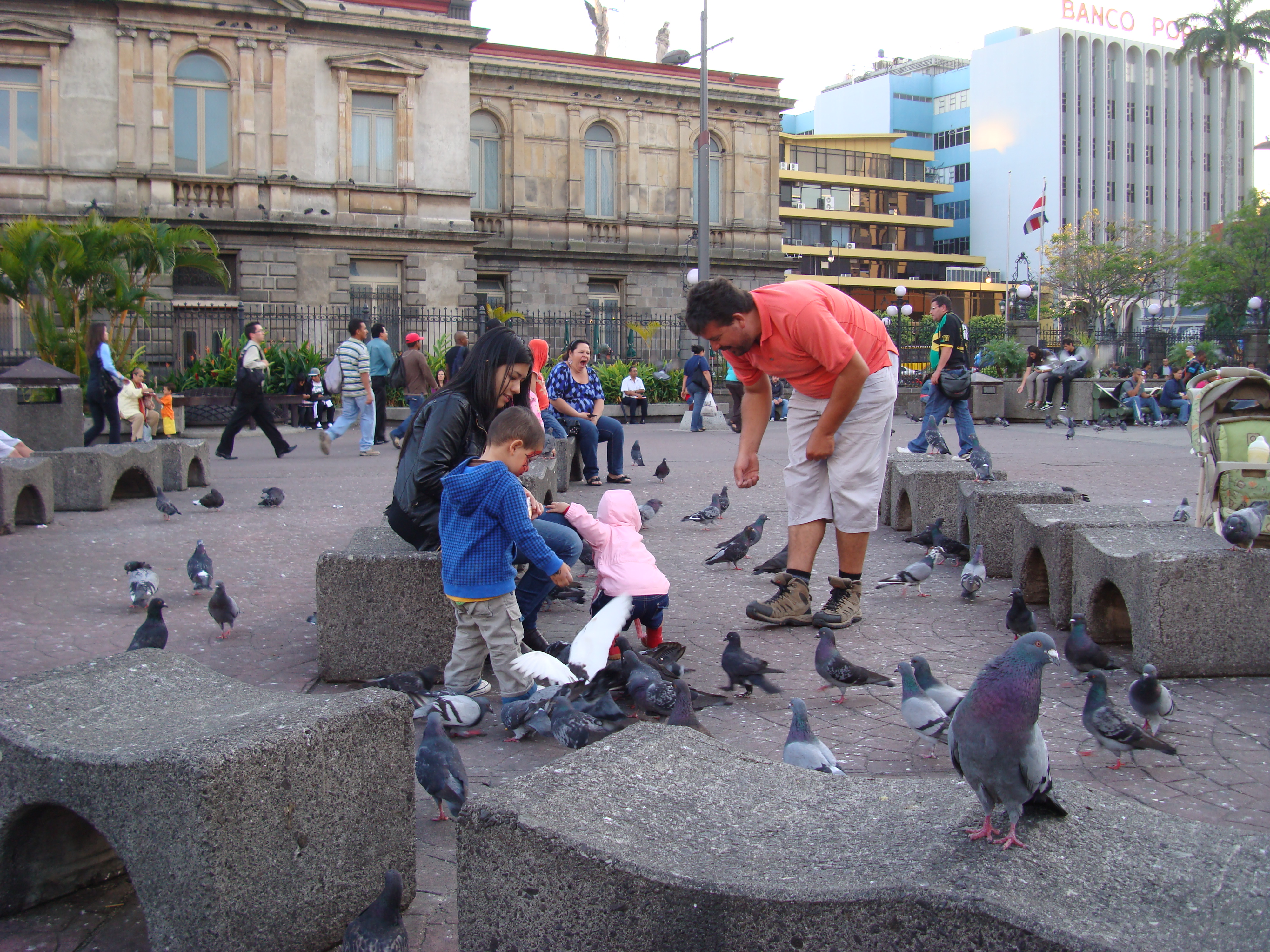

Theaters and auditoriums
San José has a number of theaters, many with European-inspired architecture. These buildings serve as the city's main tourist attractions, not only because of their architecture, but because of the cultural, musical, and artistic presentations and activities, which include traditional and modern Costa Rican and San Josefinan culture.
The most well-known are:
- The National Theater of Costa Rica (Teatro Nacional de Costa Rica)
- The Melico Salazar Theater (Teatro Popular Melico Salazar)
- The National Auditorium of The Children's Museum of Costa Rica (Museo de los Niños)
The National Theater of Costa Rica (considered the finest historic building in the capital and known for its exquisite interior which includes its lavish Italian furnishings) and the Melico Salazar Theater present drama, dance performances and concerts throughout the year. Other smaller theaters can be found throughout the city and provide a wide array of entertainment.
El Teatro Variedades (1892) is San José's oldest theater.
Museums
San José is also host to various museums. These museums allow visitors to view Costa Rican history, scientific discoveries, pre-Columbian era culture and art, as well as modern Costa Rican art. The city is also host to the nation's museum of gold and museum of jade.
Some of the city's main museums are:
- The Children's Museum (Museo de los Niños)
- The National Museum of Costa Rica (Museo Nacional de Costa Rica)
- The Museum of Pre-Columbian Gold (Museo de Oro Precolombino)
- The Costa Rican Museum of Art (Museo de Arte Costarricense)
- The Museum of Contemporary Art and Design (Museo de Arte y Diseño Contemporáneo)
- The Museum of Jade (Museo del Jade Marco Fidel Tristán Castro)
Parks, plazas, and zoos
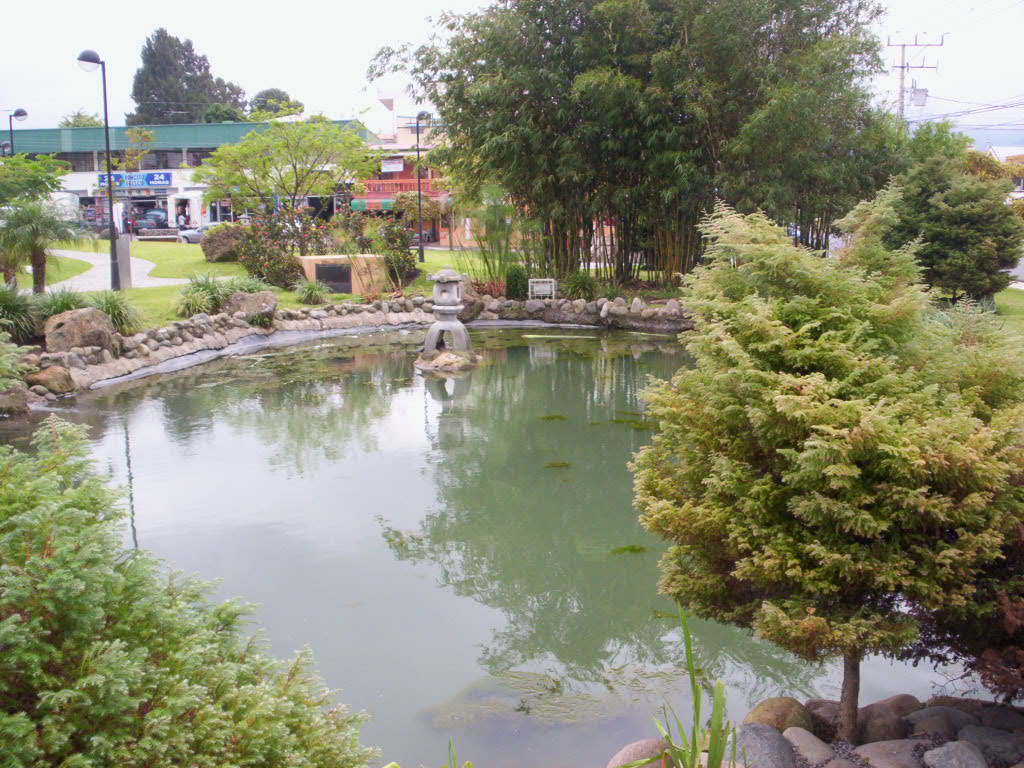
San José is home to many parks and squares (plazas in Spanish) where one can find gazebos, open green areas, recreational areas, lakes, fountains, statues and sculptures by Costa Rican artists and many different bird, tree and plant species.
Parks and zoos
The city's primary parks include:
- The National Park (Parque Nacional)
- Morazán Park (Parque Morazán) — with Neoclassical Temple of Music (Templo de la Música) pavilion
- La Sabana Metropolitan Park (Parque Metropolitano La Sabana) — largest park and "the lungs of San José," in Mata Redonda District (west city)
- Peace Park (Parque de la Paz)
- Okayama Park (Parque Okayama) — Japanese style garden and architectural elements, ornamental ponds, and garden sculptures
- Simón Bolívar Zoo — the city's only zoo, with a large variety of native Costa Rican and exotic animals and plant species
Plazas
Plazas, or town squares, are very prominent across San José's districts.
- Plaza de la Democracia
- Culture Square — La Plaza de La Cultura
Transportation
San José has several internal transportation networks that connect the city districts and metropolitan area, as well as national transportation networks that connect the city to other parts of Costa Rica.
San José is undergoing modernization in transportation. In February 2011, the former mayor, Johnny Araya, along with then Costa Rican President, Laura Chinchilla, announced the establishment of an urban tramway system that will, in its first phase, cover the central core of the city going from west to east.
On 27 September 2012, San José disclosed plans to install its first street signs, about 22,000 signs and plaques. It is estimated that the lack of proper street names for directions causes the loss of $720 million a year by the Inter-American Development Bank in 2008, due to undelivered, returned or re-sent mail.
Roads
The following national road routes cover the city:
- [[File:CR RNP 1.svg|25px]] National Route 1
- [[File:CR RNP 2.svg|25px]] National Route 2
- [[File:CR RNP 3.svg|25px]] National Route 3
- [[File:CR RNP 27.svg|25px]] National Route 27
- [[File:CR RNP 39.svg|25px]] National Route 39
- [[File:CR RNS 100.svg|25px]] National Route 100
- [[File:CR RNS 101.svg|25px]] National Route 101
- [[File:CR RNS 104.svg|25px]] National Route 104
- [[File:CR RNS 108.svg|25px]] National Route 108
- [[File:CR RNS 110.svg|25px]] National Route 110
- [[File:CR RNS 167.svg|25px]] National Route 167
- [[File:CR RNS 174.svg|25px]] National Route 174
- [[File:CR RNS 175.svg|25px]] National Route 175
- [[File:CR RNS 176.svg|25px]] National Route 176
- [[File:CR RNS 177.svg|25px]] National Route 177
- [[File:CR RNS 204.svg|25px]] National Route 204
- [[File:CR RNS 207.svg|25px]] National Route 207
- [[File:CR RNS 209.svg|25px]] National Route 209
- [[File:CR RNS 211.svg|25px]] National Route 211
- [[File:CR RNS 213.svg|25px]] National Route 213
- [[File:CR RNS 214.svg|25px]] National Route 214
- [[File:CR RNS 215.svg|25px]] National Route 215
- [[File:CR RNS 218.svg|25px]] National Route 218
Buses
Private bus companies connect different areas of the city with each other and the suburbs. Services to other parts of the country are provided by other private companies which have stations or stops spread all over the city center. There are also bus services between Juan Santamaría International Airport and downtown San José.
Train
The Instituto Costarricense de Ferrocarriles, or the state-owned railway institute, is in charge of all of Costa Rica's railways. In 2004, this institution began work on the establishment of an inter-urban railway network. This network would connect Tibás, Heredia, San Antonio de Belén, Pavas, San Pedro de Montes de Oca, Sabanilla, and Curridabat, among other locations.
There are three routes: Route A: San José - Heredia - Alajuela, which begins in Estación Atlantico and ends in Alajuela; Route B: Curridabat - Pavas - Belen, which begins in Estación Atlantico and ends in San Antonio de Belen; Route C: San José - Cartago*;* which begins in Estación Atlantico and ends in Cartago.
Taxis
San José public taxi services complement the urban transportation network. Taxis are characterized by their red color and belong to registered cooperatives. There are other taxi services which do not belong to the registered system, there are also taxis from the airport that are usually orange.
The ride-sharing company Uber is active in Costa Rica and, despite repeated clashes with and strikes by taxi drivers protesting unfair competition, continues to operate in the country. In September 2025, a labor court in San José ruled that Uber must treat their drivers as employees rather than independent contractors.
Airports
The city is serviced by Juan Santamaría International Airport , located 23 km east of downtown in the city of Alajuela, and is one of the busiest airports in Central America. In 2011, the airport was named the 3rd Best Airport in Latin America/Caribbean from the Airport Service Quality Awards by Airports Council International. In 2023, Juan Santamaría International Airport received 5.6 million passengers, most of them from international flights.
The airport is undergoing a modernization plan, which is expected to be brief. The previous remodeling done to the airport cost around $7 million.
Another important airport in San José is Tobías Bolaños International Airport . It is located 8 km north-west of the city proper and 11 km south-east of Juan Santamaría International Airport.
Cuisine
Main article: Costa Rican cuisine
Costa Rican cuisine, called comida típica ("traditional food"), is generally not spicy. Throughout San José, the most popular food is the national dish of gallo pinto ("painted chicken"), which is black beans served with white rice. Gallo pinto is usually served for breakfast with tortillas and natilla, a thin sour cream. Costa Rican restaurants serving traditional food at an affordable price are called sodas and usually offer substantial casados for lunch and dinner. A casado (meaning "married" or "married man" in Spanish) consists of rice, beans, and meat, with cabbage-and-tomato salad, fried plantains, and tortillas. San José Central Market, in downtown San José, has numerous food markets and sodas.
Sport
.jpg)
The city's major football club is Deportivo Saprissa, which has won a record 40 league titles. The team plays its home games at the Estadio Ricardo Saprissa Aymá, which is located in Tibas. Another top-level club, Universidad, plays at the Estadio Ecológico.
San José hosted the 2015 FIBA COCABA Championship at the Gimnasio Nacional, where the Costa Rica national basketball team finished 2nd.
Twin towns – sister cities
San José is twinned with:
Notable people
This is an alphabetical list of notable people who were born in or have lived in San José.
- Manuel Aguilar Chacón, former head of state of Costa Rica
- Randall Arauz, environmentalist
- Alicia Avilés, community leader
- Randall Azofeifa, football player for Herediano
- Rafael Ángel Calderón Guardia, former president of Costa Rica
- Nidia Barboza, poet and feminist activist
- Daniel Cambronero, goalkeeper
- Joel Campbell, football player who used to play for Arsenal F.C.
- Franklin Chang-Díaz, former astronaut
- Laura Chinchilla, former president of Costa Rica
- Danny Formal, racing driver
- Manuel de la Cruz González, artist
- Mirta González Suárez, psychologist and writer
- Maribel Guardia, actress and singer
- Jens Hoffmann, writer and art curator
- Eunice Odio, writer
- Virginia Pérez-Ratton, artist
- Floria Pinto, artist
- Raquel Rodríguez, football player for Portland Thorns FC and the Costa Rica women's national football team
- Fernando Sánchez Campos, politician
- Ariel Sexton, mixed martial artist for ONE Championship
- Harry Shum Jr., dancer and actor
- Daniel Zovatto, American actor
References
References
- "Demographia World Urban Areas PDF (March 2013)". Instituto Nacional de Censos de Costa Rica.
- "TelluBase—Costa Rica Fact Sheet". Tellusant.
- "Subnational Human Development Index".
- Instituto Geográfico Nacional de Costa Rica. (2024-06-20). "División Territorial Administrativa, 2024 – Totales de Provincias, Cantones y Distritos de Costa Rica".
- Instituto Nacional de Estadística y Censos. (2023). "Resultados Estimacion de Poblacion y Vivienda 2022".
- "Costa Rica - Country Profile - Nations Online Project".
- Rosales, Daniel. (2016-02-23). "Ciudad Panamá y San José tienen la mejor calidad de vida de la región".
- (9 August 2015). "San José's air among cleanest of Latin American cities".
- (17 June 2012). "Costa Rica still one of the safest places in Latin America". The Costa Rica News.
- "Historia de San José: Ciudad hace 200 años". La Nación, Grupo Nación.
- "viajes a Costa Rica".
- [http://www.spanishabroad.com/prog_teen/cityg_sanjose/history.htm History of San José, Costa Rica] {{webarchive. link. (3 March 2012, by [http://www.spanishabroad.com/index.htm Spanish Abroad, Inc.] {{webarchive). link. (17 August 2007)
- "Historia de San José: ciudad hace 200 años". La Nación, Grupo Nación.
- "San José, city, Costa Rica".
- [http://www.worldbank.org/urban/symposium2005/papers/pujol.pdf In San José, Costa Rica, effective metropolitan planning and selective infrastructure investment can improve the quality of life for the poor] {{Webarchive. link. (6 August 2007 , by Rosendo Pujol, researcher of [http://www.produs.ucr.ac.cr ProDUS] {{webarchive). link. (30 May 2002 on the World Bank Urban Research Symposium in Brasilia, Brasil, 4–6 April 2005)
- "División Territorial Administrativa de la República de Costa Rica Decreto Ejecutivo N° 40184-MGP, del 9 de enero de 2017, publicado en el Alcance N° 52, a La Gaceta N° 48 del 8 de marzo de 2017".
- "Decreto Ejecutivo 11562 del 27/05/1980".
- "Censo. 2011. Población total por zona y sexo, según provincia, cantón y distrito".
- Asamblea Legislativa de la República de Costa Rica. (13 May 2024). "Código Municipal".
- Tribunal Supremo de Elecciones. (21 February 2024). "N.° 1658-E11-2024 - Declaratoria de elección de alcaldías y vicealcaldías de las municipalidades de los cantones de la provincia de San José, para el período comprendido entre el primero de mayo de dos mil veinticuatro y el treinta de abril de dos mil veintiocho.".
- Tribunal Supremo de Elecciones. "Resoluciones declaratorias de elección".
- Municipalidad de San José. (19 June 2024). "Sesión Ordinaria 010 - 2024".
- Tribunal Supremo de Elecciones. (12 February 2024). "N.° 2218-E11-2024 - Declaratoria de elección de regidurías de las municipalidades de los cantones de la provincia de San José, para el período comprendido entre el primero de mayo de dos mil veinticuatro y el treinta de abril de dos mil veintiocho.".
- "CHAPTER 7: Introduction to the Atmosphere". PhysicalGeography.net.
- "The Climate of Tropical Regions". The British Geographer.
- Instituto Nacional de Estadística y Censos. "Censos 2011 {{!}} Instituto Nacional De Estadistica Y Censos".
- Costa Rica Ministry of Education, Unicef, MICS. (2011). "Costa Rica- Alfabetizacion y Educación (Costa Rica- Literacy and Education)".
- "Universidades de San José (Privadas y Públicas)". Altillo.com.
- "La Universidad de Santo Tomás (1843-1888)".
- "CHINA DONA 200 PATRULLAS CON GARANTÍA DE REPUESTOS". Prensalibre.cr.
- (2021-10-23). "San Jose Costa Rica: Complete Guide to the Capital City".
- Baker, C.P.. (2005). "Costa Rica". [[Dorling Kindersley]] [[Eye Witness Travel Guides]].
- "Teatro Variedades".
- Cota, Isabella. "San Jose, Costa Rica to install its first street signs". Yahoo News.
- "Inicio".
- Times, Tico. (2025-09-26). "Costa Rican Court Orders Uber to Pay Millions in Driver Benefits".
- [http://www.airportservicequalityawards.com/best-airport-region-latin-america-carribean "ASQ Award for Best Airport in Latin America - Caribbean"] {{Webarchive. link. (18 February 2012 ''Airports Council International''. 14 February 2012. Retrieved 13 April 2012)
- "Costa Rica: Cuisine". Globalgourmet.com.
- "Sister Cities, Public Relations". Guadalajara municipal government.
This article was imported from Wikipedia and is available under the Creative Commons Attribution-ShareAlike 4.0 License. Content has been adapted to SurfDoc format. Original contributors can be found on the article history page.
Ask Mako anything about San José, Costa Rica — get instant answers, deeper analysis, and related topics.
Research with MakoFree with your Surf account
Create a free account to save articles, ask Mako questions, and organize your research.
Sign up freeThis content may have been generated or modified by AI. CloudSurf Software LLC is not responsible for the accuracy, completeness, or reliability of AI-generated content. Always verify important information from primary sources.
Report