From Surf Wiki (app.surf) — the open knowledge base
Nemanjić dynasty
Serbian medieval dynasty

Serbian medieval dynasty
- Grand Principality
- Kingdom
- Empire
- Grand Prince (Veliki Župan / Велики Жупан)
- King of Serbia (Kralj / Краљ)
- King of Syrmia
- Emperor of the Serbs (Tsar, Car / Цар) 1423 (death of the last male descendant, Jovan Uroš)
- Dejanović noble family (maternally)
- Lazarević dynasty (maternally)
- Branković dynasty (maternally) The House of Nemanjić (Немањић, pl. Немањићи; Serbian Latin: Nemanjić, pl. Nemanjići, ) was the most prominent native Serbian dynasty of Serbia in the Middle Ages. This princely, royal and imperial house produced twelve Serbian monarchs, who ruled between 1166 and 1371.
Its progenitor was Stefan Nemanja, scion of a cadet branch of the Vukanović dynasty (1101–1166). After Nemanja, all monarchs used Stefan as a personal name, or a ruler's name, a tradition adopted for the royal pretensions. The monarchs began as Grand Princes, and with the crowning of Stefan Nemanjić in 1217, the realm was promoted to a Kingdom, and the Serbian Orthodox Church was established in 1219. In 1346, Stefan Dušan was crowned Emperor of the Serbs and Greeks, and the Archbishopric of Serbia was elevated to a Patriarchate.
The dynasty's rule in Serbia ended in 1371, with the death of childless Stefan Uroš V (r. 1355–1371). This led to the fall of the Serbian Empire. Provincial lords took control of their provinces. The last remaining members of the House of Nemanjić were John Uroš, ruler of Thessaly, titular emperor of the Serbians and Greeks, who died c. 1422-23, and his younger brother, Stefan Uroš, ruler of Pharsalos. Nemanjić descent survived only through maternal lines in several Serbian houses.
Background

In the 8th century, the Vlastimirović Dynasty established the Serbian Principality. The state disintegrated after the death of the last known Vlastimirid ruler Časlav of Serbia around 940/960s and the Byzantines annexed the region and held it for a century, until 1040 when the Serbs under the Vojislavljević Dynasty revolted in Duklja (Pomorje). In the 1090s, the Vukanović Dynasty established the Serbian Grand Principality, and since the mid-12th century Stari Ras became undisputably under Serbian control, becoming centre of defence and residency for the Serbian Principality. In 1166, Stefan Nemanja took the throne, marking the beginning of Serbia, henceforth under the rule of the Nemanjići (Vukanović branch).
Serbia under the Nemanjić dynasty
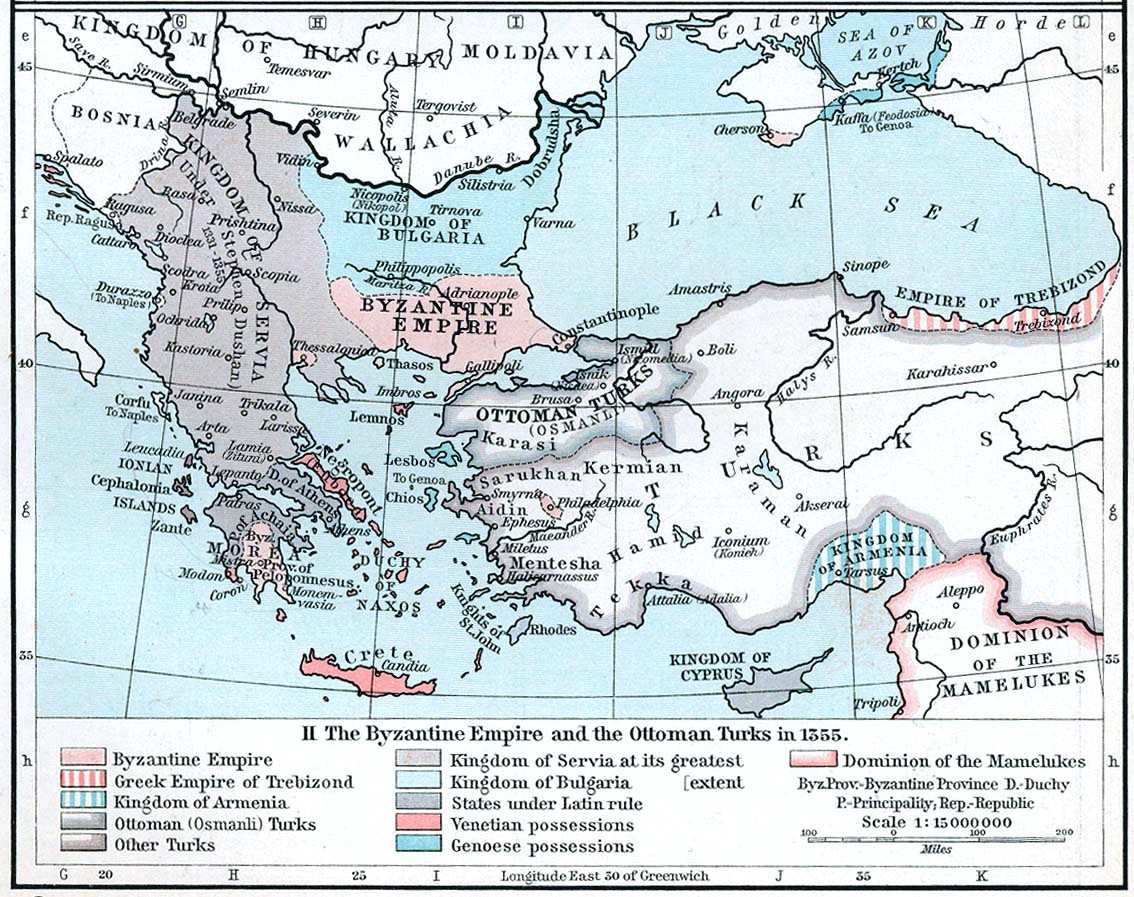
Serbia reached its height of power during the Nemanjić dynasty. The Serbian Kingdom was proclaimed in 1217, leading to the establishment of the Serbian Orthodox Church in 1219. In the same year Saint Sava published the first constitution in Serbia: St. Sava's Nomocanon.Tsar Stefan Dušan proclaimed the Serbian Empire in 1346. During Dušan's rule, Serbia reached its territorial, political, and economical peak, proclaiming itself as the successor of the Byzantine Empire, and was the most powerful Balkan state of that time. Dušan enacted an extensive constitution, known as Dušan's Code, opened new trade routes, strengthened the state's economy, but its society's integration was unfinished and not unified enough until Ottoman invasion. Serbian medieval political identity has been profoundly shaped by the rule of this dynasty and its accomplishments, that were supported and cultivated by the Serbian Orthodox Church.
Stefan Dušan attempted to organize a Crusade with the Pope against the threatening Turks, but he died suddenly in December 1355. He was succeeded by his son Uroš, called the Weak, a term that might also apply to the state of the empire, which slowly slid into a feudal fragmentation. This was a period marked by the rise of a new threat: the Ottoman Turk sultanate, which spread from Asia to Europe conquering Byzantium and then the other states in the Balkans.
Members

Monarchs
Main article: List of Serbian monarchs
The Nemanjić dynasty ruled the Serb lands between ca. 1166 up to 1371.
| [[File:Loza Nemanjica Decani d 3 2.jpg | 30px]] | King of Srem (King of the Serbs) |
|---|---|---|
| Stefan Vladislav II | 1316–1325 | son of Dragutin. |
|-- |[[File:Konstantin Gracanica loza lik.jpg|80px]] || King Stefan Konstantin || 1321–1322 || Younger son of Stefan Milutin, defeated in 1322 by his older brother, Stefan Dečanski. |-- |[[File:Stefan Decanski ktitor.jpg|80px]] || King Stefan Dečanski of Dečani || 1322–1331 || Older brother of Stefan Konstantin. |-- |[[File:Serbian Emperor Stefan Dušan, cropped.jpg|80px]] || Emperor ↑King Stefan Dušan the Mighty || 1331–1355 || Son of Stefan Dečanski. He was a very skilled military leader, and defeated Bosnia and Bulgaria at the age of 20. As his father was not an able conqueror, Dušan removed him from the throne. Dušan doubled the size of the realm, taking Byzantine lands as far as the Peloponnese. He was crowned Emperor in 1346. The Serbian Empire flourished, and he enacted the constitution - Dušan's Code in 1349. |-- |[[File:UrosV.jpg|80px]] || Emperor Stefan Uroš V the Weak || 1355–1371 || Son of Stefan Dušan, crowned King of Rascia (1346–1355), succeeds as Emperor after the death of Dušan in 1355. His epithet was given due to his "weak rule". {|class="wikitable" align=center |-- |[[File:Loza Nemanjica Decani c 5 2.jpg|30px]] || Despot of Epirus and Thessaly Simeon Uroš || Uncle of Uroš V. He was appointed governor in the southwestern conquered regions in 1348, and ruled until 1355, when his brother-in-law Nikephoros II Orsini returned and rallied support. Nikephoros was killed in 1359, and Simeon continued his rule until his death in 1371. He proclaimed himself "Emperor of Serbs and Greeks" in 1356, however against the wishes of nobility of Serbia proper and Macedonia. After an unsuccessful invasion of Zeta, he gave up the idea of ruling Serbia. |-- |[[File:Megala4.png|30px]] || Ruler of Epirus and Thessaly Jovan Uroš || Son of Simeon Uroš. Succeeded his father as titular "Emperor of Serbs and Greeks" and ruled an area of Epirus and Thessaly 1370–1373 before taking monastic vows. In 1384–1385 he helped his sister Empress Maria Angelina Doukaina Palaiologina govern Epirus (she was the widow of Thomas II Preljubović, the Despot of Epirus 1367–1384). |-- |} |}
Monasteries built
The Nemanjić dynasty played a pivotal role in the spread of Eastern Orthodoxy throughout the Balkans. As key patrons of the Serbian Orthodox Church, the Nemanjić rulers were instrumental in the construction and endowment of numerous monastic complexes, thereby reinforcing both religious and cultural identity in medieval Serbia. Their commitment to Orthodoxy significantly contributed to their status as one of the most influential dynasties in Serbian history.
The architectural and cultural legacy of the Nemanjić period is evident in the extensive network of monasteries that continue to serve as vital historical and religious landmarks. Notable examples include UNESCO World heritage sites like Studenica Monastery, Gračanica Monastery, Hilandar Monastery, Đurđevi Stupovi, Sopoćani Monastery, Visoki Dečani Monastery, Patriarchate of Peć and Our Lady of Ljeviš.
Other notable monasteries include Žiča Monastery, Banjska Monastery, Mileševa Monastery, Gradac Monastery, Morača Monastery, Monastery of the Holy Archangels, Matejče Monastery, Church of St. Achillius and many others.
Other members
- Đorđe Nemanjić (1208–1243), King (titular) of Zeta
- Stefan Vladislav II, King of Syrmia, (r. 1321–1325)
Family tree
In popular culture
- 1875 historical three-tome novel "Car Dušan" by Dr Vladan Đorđević tells the story of Emperor Dušan.
- 1987 historical novel "Stefan Dušan" by Slavomir Nastasijević is another story of Emperor Dušan.
- 2002 historical novel "Dušan Silni" ("Dušan the Great") by Mile Kordić.
- 2012 novel "Izvori - Roman o Nemanji i Svetom Savi" ("The Wellsprings - The story of Nemanja and Saint Sava") by Milan Miletić depicts Stefan Nemanja and his son, Saint Sava.
- 2015 novel "Gora Preobraženja" by Ljiljana Habjanović Đurović tells the story of Saint Sava.
- 2017 TV series "Nemanjići - rađanje kraljevine" (Nemanjić Dynasty: The Birth Of The Kingdom) portrays the rule of King Stefan the First-Crowned, the first King of Serbia.
- https://www.zaduzbine-nemanjica.rs/zaduzbine-nemanjica.htm
Notes
References
Sources
References
- [http://www.talijaizdavastvo.rs/korpa/knjige/34-dr-vladan-dordevic-trilogija-car-dusan.html Talija Izdavaštvo], accessed on 15-Apr-17.
- Delfi.rs, accessed on 15-Apr-17, http://www.delfi.rs/knjige/49995_stefan_dusan_knjiga_delfi_knjizare.html
- Knjižare Vulkan, accessed on 16-Apr-17, https://www.knjizare-vulkan.rs/knjige/dusan-silni-mile-kordic-isbn-9788683583270{{Dead link. (April 2020)
- Svetosavlj.org, accessed on 16-Apr-17, https://svetosavlje.org/izvori-roman-o-nemanji-i-svetom-savi/9/
- Story.rs, accessed on 15-Apr-17, http://www.story.rs/zabava/desavanja/57888/roman-o-svetom-savi-gora-preobrazenja-ljiljane-habjanovic-djurovic-na-beogradskom-sajmu-knjiga {{Webarchive. link. (2017-04-16)
- Nedeljnik.rs, accessed on 15-Apr-17, http://www.nedeljnik.rs/magazin/portalnews/vojin-cetkovic-o-seriji-nemanjici-pitace-se-neki-zasto-su-nasi-kraljevi-jeli-zlatnim-viljuskama-i-kasikama/ {{Webarchive. link. (2017-11-12)
- Blic Online, accessed on 15-Apr-17, http://www.blic.rs/zabava/vesti/blic-na-snimanju-nemanjica-vojin-cetkovic-za-ovu-ulogu-sam-se-spremao-ceo-zivot-video/hgzs8rb
This article was imported from Wikipedia and is available under the Creative Commons Attribution-ShareAlike 4.0 License. Content has been adapted to SurfDoc format. Original contributors can be found on the article history page.
Ask Mako anything about Nemanjić dynasty — get instant answers, deeper analysis, and related topics.
Research with MakoFree with your Surf account
Create a free account to save articles, ask Mako questions, and organize your research.
Sign up freeThis content may have been generated or modified by AI. CloudSurf Software LLC is not responsible for the accuracy, completeness, or reliability of AI-generated content. Always verify important information from primary sources.
Report