From Surf Wiki (app.surf) — the open knowledge base
Last Days of Issa's Father
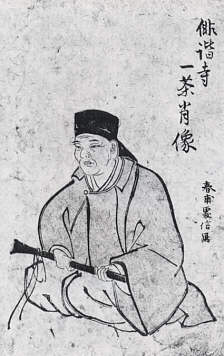
The Chichi no Shuen Nikki is an account by Kobayashi Issa of his father's final days and death. It has been acclaimed as one of the sources for the Japanese tradition of the "I novel".
Synopsis
Kobayashi Issa (1763–1828), one of the four great haiku masters of Japan (along with Matsuo Bashō, Yosa Buson and Masaoka Shiki), describes the last days of his father in this account, which begins when his father suddenly developed fever and became seriously ill, and continues until a week after his death. Issa vividly describes both the gradual weakening of his father, who was then 68, and his own conflicts with his stepmother and his halfbrother. Since he wrote the text for publication, it has some literary embellishments and omissions.
Kobayashi Issa
Main article: Kobayashi Issa

Kobayashi Issa was the first-born son of a farmer in Kashiwabara, Province of Shinano (now part of Shinano-machi, Nagano Prefecture). Issa's mother died when he was three and he was cared for by his doting grandmother, but his life changed dramatically when his father remarried five years later. Issa's relations with his stepmother were not good, and they worsened when a halfbrother was born two years later. He was 14 when his grandmother died, and a year later his father sent him off to Edo (now Tokyo) to eke out a living for himself. He wandered throughout Japan, but visited his hometown in 1791 and again in 1801. Shortly after his arrival in 1801, his father suddenly fell ill.
About the text
The text was written on the back of sheets of Saitancho, New Year's memorandum paper. It was passed down by generations of the descendants of Kubota Shunko, one of Issa's disciples. It was well bound with a title page by Ogihara Seisensui and preserved at Issa-kan, a museum related to Issa in Takayama-mura, Nagano Prefecture.
Evaluation
Ogihara Seisensui wrote that the text expresses strong emotions in every word and phrase. Everyday happenings — what Issa felt, what his father said - become very interesting and reveal Issa's personality.
Notes
References
- Ogihara Seisenrui, ed., Issa's Chichi no Shūen Nikki, Iwanami Shoten 1934, 1992
- Maeda Toshiharu, ed., Issa's Chichi no Shūen Nikki Asakiku Haikaiji Shoroku, Benseisha 1979
- Maruyama Kazuhiko, ed., Chichi no Shūen Nikki Kansei 3-nen kikō, with Modern Translation, Kadokawa Bunko 1962
- Oshoku Zuika, ed., Modern Japanese, Oraga Haru and Chichi no Shuen Nikki, Kōbundō 1987
References
- Iwanamishoten[1934:75-82]
This article was imported from Wikipedia and is available under the Creative Commons Attribution-ShareAlike 4.0 License. Content has been adapted to SurfDoc format. Original contributors can be found on the article history page.
Ask Mako anything about Last Days of Issa's Father — get instant answers, deeper analysis, and related topics.
Research with MakoFree with your Surf account
Create a free account to save articles, ask Mako questions, and organize your research.
Sign up freeThis content may have been generated or modified by AI. CloudSurf Software LLC is not responsible for the accuracy, completeness, or reliability of AI-generated content. Always verify important information from primary sources.
Report