From Surf Wiki (app.surf) — the open knowledge base
India–Russia relations


The Republic of India and the Russian Federation established bilateral relations in 1991 and remain close allies. Previously, during the Cold War, Indian–Soviet relations were considered a "strong strategic relationship". This diplomatic unity was further strengthened with both nations' shared military ideals, as well as their overall economic policies. After the dissolution of the Soviet Union, Russia kept the same close ties to India; in international terms, both nations Russia and India consider their mutual affinity to be a "strategic partnership". Their governments support the creation of a multipolar world order in which both nations are "poles".
Traditionally, the Indian–Russian strategic partnership has been built on five major components: politics, defence, civil nuclear energy, anti-terrorism co-operation, as well as the advancement of and exploration of outer space travel. These five major components were highlighted in a speech given by former Indian Foreign Secretary Ranjan Mathai in Russia. The IRIGC (India-Russia Intergovernmental Commission) is the main body that conducts affairs at the governmental level between both countries. Both countries are members of international bodies including the UN, BRICS, G20 and SCO. Russia has stated that it supports India receiving a permanent seat on the United Nations Security Council. In addition, Russia has expressed interest in joining SAARC with observer status in which India is a founding member.
India is the second largest market for the Russian defence industry. In 2017, approximately 68% of the Indian military's hardware import came from Russia, making Russia the chief supplier of defence equipment. India has an embassy in Moscow and two consulate-generals (in Saint Petersburg and Vladivostok). Russia has an embassy in New Delhi and six consulate-generals (in Chennai, Goa, Hyderabad, Kolkata, Mumbai and Trivandrum).
According to a 2014 BBC World Service Poll, 85% of Russians view India positively, with only 9% expressing a negative view. Similarly, a 2017 opinion poll by the Moscow-based non-governmental think tank Levada-Center states that Russians identified India as one of their top five "friends", with the others being Belarus, China, Kazakhstan, and Syria. A 2022 poll showed that 60% of Indians support the Indian government's handling of the Russo-Ukrainian war. A poll conducted in summer 2022 shows that Indians most frequently named Russia their most trusted partner, with 43% naming Russia as such compared to 27% who named the US.
Historical relations

Goods uncovered from archaeological site such as Pazyryk indicates that nomads inhabiting the area conducted trading activities with India during 4th-3rd century BCE. In 1468, Russian traveller Afanasy Nikitin began his journey to India for trade. Between 1468 and 1472, he travelled through Persia, India and the Ottoman Empire but returned soon within three years from Indian subcontinent as he could not afford much to himself.
In the 18th century the Russian cities Astrakhan, Moscow and St. Petersburg were frequently visited by Indian merchants when it was under Mughal rule. Russia and Iran were used as a transit trade between Western Europe and India, especially after Peter the Great requested from Mughal Emperor Aurangzeb the commencement of trade relations in 1696. Decades later, the Russian czar personally granted Anbu-Ram Mulin's Indian trading company the right to resolve property rights issues in Astrakhan, thus allowing Indians to bring in caravans with their linen fabrics, cottons, silks, and Indian, Persian and Uzbek cloth. The Astrakhan governor was ordered to show "kindness and goodwill" to the Indian merchants in Russia, who cherished their religious freedom and special trade privileges that they never had in other Eastern countries; until the middle of the 18th century, members of the community only paid 12 rubles a year as rent for a shop in the Indian Trading Compound, and were exempted from taxes and duties by the Russian authorities. The value of goods exported by them from Astrakhan into the interior cities of Russia in 1724 exceeded 104,000 rubles, amounting to nearly a quarter of all Astrakhan trade, until British occupation stopped independent Indian trade with Russia altogether.
In 1801, Tsar Paul ordered plans made for the invasion of British India by 22,000 Cossacks, which never actually occurred due to poor handling of preparations. The intention was that Russia would form an alliance with France, and attack the British Empire and its weak point using a French corps of 35,000 men and a Russian corps of 25,000 infantry and 10,000 mounted Cossacks. Some Cossacks had approached Orenburg when the tsar was assassinated. His successor Alexander I immediately cancelled the plans. The Embassy of India in Moscow (; ) was built in 1900, and transferred to the Indian government in 1952 to become an embassy building. The embassy consists of several buildings, including an aristocratic style "Chancery Building", a rational-modern style ambassador's residence, and a French style building known as "Napoleon's Dacha". The Chancery building was previously owned by an arts patron, a textile magnate, and the Soviet government, before being transferred to the Indian government in 1952 to become the embassy it is today.
Embassy of Russia in New Delhi( ; )is the official diplomatic mission of the Russian Federation in the Republic of India. The Russian consulate in India was opened in Mumbai in 1900 and moved to Kolkata in 1910. Initially it was housed in the Travancore House located at Curzon Street, now Kasturba Gandhi Marg. In several years India allocated previously undeveloped land to create a district of Chanakyapuri for diplomatic missions. The Soviet Union was assigned two lots of total acres of 22 acres, and in February 1956 a lease agreement was concluded between the two countries. A declassified 1985 CIA report states that the Press Section of the Soviet Embassy "is a KGB operation that specializes in fast-breaking disinformation campaigns, principally targeted against the United States." In particular, the efforts of this operation were directed at the implication of the United States in the assassination of Indira Gandhi and at linking Jeane Kirkpatrick with a plan to Balkanize India.
India and the Soviet Union
Main article: India–Soviet Union relations
India's official diplomatic relations with the Soviet Union were established in April 1947, shortly before it declared its independence from Britain. As Izvestia reported on 15 April 1947, “as a result of an exchange of letters between the Indian ambassador to China, Mr. K. P. S. Menon and the Soviet ambassador to China Apollon Petrov, it was established that the Government of the USSR and the Government of India will publish simultaneously in Moscow and New Delhi the following official statement: “In an effort to preserve and further strengthen the friendly relations existing between the USSR and India, the Government of the USSR and the Government of India have decided to exchange diplomatic representations at the rank of Embassies”.
In 1951, the USSR exercised its veto power on the Kashmir dispute in support of India. In 1953, Joseph Stalin told Sarvepalli Radhakrishnan that, "Both you and Mr. Nehru are persons whom we do not consider our enemies. This will continue to be our policy and you can count on our help." The relationship strengthened by 1955 and represented the successful Soviet attempts to foster closer relations with countries belonging to the non-aligned movement. In 1955, Prime Minister Jawaharlal Nehru made his first visit to the Soviet Union in June 1955, and First Secretary of the Communist Party Nikita Khrushchev's return trip to India happened in the fall of 1955. In India, Khrushchev announced that the Soviet Union supported Indian sovereignty over the disputed territory of the Kashmir region and also over Portuguese coastal enclaves such as Goa.
The Soviet Union's strong relations with India had a negative impact upon both Soviet relations with the People's Republic of China and Indian relations with the PRC during the Khrushchev period. The Soviet Union declared its neutrality during the 1959 border dispute and the Sino-Indian War of October 1962, although the Chinese strongly objected. The Soviet Union gave India substantial economic and military assistance during the Khrushchev period, and by 1960, India had received more Soviet assistance than China had. This disparity became another point of contention in Sino-Soviet relations. In 1962 the Soviet Union agreed to transfer technology to co-produce the Mikoyan-Gurevich MiG-21 jet fighter in India, which the Soviet Union had earlier denied to China. In 1965, the Soviet Union successfully served as a peace broker between India and Pakistan after the Indo-Pakistani War of 1965. The Soviet chairman of the Council of Ministers, literally Premier of the Soviet Union, Alexei Kosygin, met with representatives of India and Pakistan and helped them negotiate an end to the military conflict over Kashmir.

Relations between the Soviet Union and India did not suffer much during the right-wing Janata Party's coalition government in the late 1970s, although India did move to establish better economic and military relations with Western countries. To counter these efforts by India to diversify its relations, the Soviet Union proffered additional weaponry and economic assistance. During the 1980s, despite the 1984 assassination by Sikh separatists of Prime Minister Indira Gandhi, the mainstay of cordial Indian-Soviet relations, India maintained a close relationship with the Soviet Union. Indicating the high priority of relations with the Soviet Union in Indian foreign policy, the new Indian prime minister, Rajiv Gandhi, visited the Soviet Union on his first state visit abroad in May 1985 and signed two long-term economic agreements with the Soviet Union. According to Rejaul Karim Laskar, a scholar of Indian foreign policy, during this visit, Rajiv Gandhi developed a personal rapport with Soviet General Secretary Mikhail Gorbachev. In turn, Gorbachev's first visit to a Third World state was his meeting with Rajiv Gandhi in New Delhi in late 1986. General Secretary Gorbachev unsuccessfully urged Rajiv Gandhi to help the Soviet Union set up an Asian collective security system. Gorbachev's advocacy of this proposal, which had also been made by Leonid Brezhnev, was an indication of continuing Soviet interest in using close relations with India as a means of containing China. With the improvement of Sino-Soviet relations in the late 1980s, containing China had less of a priority, but close relations with India remained important as an example of Gorbachev's new Third World policy.
Modern political relations


The first major political initiative, since the collapse of the Soviet Union, between India and Russia began with the Strategic Partnership signed between the two countries in 2000. President Vladimir Putin stated in an article written by him in The Hindu, "The Declaration on Strategic Partnership between India and Russia signed in October 2000 became a truly historic step". Former prime minister Manmohan Singh also agreed with his counterpart by stating in a speech given during President Putin's 2012 visit to India, "President Putin is a valued friend of India and the original architect of the India-Russia strategic partnership". Both countries closely collaborate on matters of shared national interest these include at the UN, BRICS, G20 and SCO. Russia also supports India receiving a permanent seat on the United Nations Security Council. In addition, Russia has vocally backed India joining the NSG and APEC. Moreover, it has also expressed interest in joining SAARC with observer status in which India is a founding member.
Russia currently is one of only two countries in the world (the other being Japan) that has a mechanism for annual ministerial-level defence reviews with India. The Indian–Russian Inter-Governmental Commission (IRIGC) is one of the largest and most comprehensive governmental mechanisms that India has had with any country internationally. Almost every department from the Government of India attends it.
.jpg)
In May 2022, Russian political scientist Sergey Karaganov, who is considered close to Vladimir Putin and Sergey Lavrov, stated that India figured extremely high on the agenda of the Russian foreign policy and strong India-Russia ties will help to stabilise New Delhi's ties with Beijing besides bringing balance in Moscow's partnership with China. In November 2022, India's External Affairs Minister S. Jaishankar praised Russia as "exceptionally steady" and "time-tested" partner. In January 2023, Russian Foreign Ministry spokeswoman Maria Zakharova backed India in its dispute with British national broadcaster BBC over a documentary critical of Prime Minister Narendra Modi, stating this was part of an “information war” against “global centers of power pursuing an independent policy”.
After the start of the Russian invasion of Ukraine and because of international sanctions against Russia, it started to provide oil and chemical fertilisers at discounted rate to India, increasing India-Russia bilateral trade volume from $13 billion [2021-2022] to $27 billion within 2022 making it the largest oil and fertiliser supplier to India. By 2023, their trade was expected to cross $30 billion. India has also refused to accept the price cap on Russian crude imposed by the Western world. However, former CIA director William J. Burns has said that Indian PM Narendra Modi's words with Russian president Vladimir Putin has helped averting the nuclear war threat from Russia.
Russia's new foreign policy concept after the start of its invasion of Ukraine proposes to deepen its relations with India and China as a counterweight to the West, but Beijing and New Delhi have their own unique policies. In the first two decades of the 21st century, the balance of power in the China-Russia alliance has reversed, relations between China and India gradually deteriorated. China is now the senior partner, whereas Russia is further diminished by the quagmire in Ukraine, and Moscow even rejects the validity of the term Indo-Pacific. Some views believe that Putin's acceleration closer to China makes “[India-Russia] relationship is going down from being a very high-value strategic partnership to a transactional one”. India has also stepped up "Multi-Alignment Strategy" to mitigate the negative impact of the deepening of China-Russia relations.
.jpg)
In June 2023, an event at India's embassy in Moscow called "Namaste Moscow" was held to facilitate cultural exchange between India and Russia. In August 2023, the embassy held celebrations commemorating 76 years since Indian independence.
In December 2023, India's External Affairs Minister S. Jaishankar met Putin and Foreign Minister Sergey Lavrov over a five-day visit, praising the two countries' "all-time high" trading volume, praising the trade as "balanced", "sustainable" and providing "fair market access".
In July 2024, Prime Minister Modi visited Moscow to meet Putin, his first visit to Russia in five years. The two embraced as Modi climbed out of his car; this act was criticized by Ukrainian president Volodymyr Zelenskyy as it happened on the same day that Russian missiles struck a children's hospital in Kyiv. During the visit, the two countries discussed nine strategic areas for closer economic cooperation, including nuclear energy and medicine, with a goal to significantly improve bilateral trade by 2030.
In 2025, several top U.S. officials and political figures have accused India of effectively financing Russia’s war in Ukraine by serving as a major buyer of Russian energy. In late 2025, the United States, European Union, and United Kingdom significantly escalated sanctions against Russia's two largest oil producers, Rosneft and Lukoil, to curtail the financing of the war in Ukraine. These measures have significantly disrupted India's oil trade, leading to a sharp decline in imports from these specific entities. Putin visited New Delhi on 4–5 December 2025 for the 23rd India-Russia Annual Summit, hosted by Modi.
IRIGC
.jpg)
The Indo-Russian Inter-Governmental Commission (IRIGC) is the main body that conducts affairs at the governmental level between both countries. Some have described it as the steering committee of India–Russia relations. It is divided into two parts, the first covering Trade, Economic, Scientific, Technological and Cultural Cooperation. This is normally co-chaired by the Russian Deputy Prime Minister and the Indian External Affairs Minister. The second part of the commission covers Military Technical Cooperation; this is co-chaired by the two countries respective Defence Ministers. Both parts of IRIGC meet annually.
In addition, to the IRIGC there are other bodies that conduct economic relations between the two countries. These include, the India-Russia Forum on Trade and Investment, the India-Russia Business Council, the India-Russia Trade, Investment and Technology Promotion Council and the India-Russia Chamber of Commerce. An article penned by Vladimir Putin was published in The Times of India on 30 May 2017, a day before Prime Minister Narendra Modi's visit to Russia, to mark the 70th anniversary of the establishment of relations between India and the Russia on 13 April 1947.
Diplomatic missions
India has an embassy at Moscow and 4 consulates (listed west to east) at Saint Petersburg, Kazan (opened in November 2025),रूस में 2 नए भारतीय वाणिज्य दूतावास, जानें विदेश मंत्री जयशंकर ने क्या कहा?, MSN News, accessed 20 November 2025. Yekaterinburg (opened in November 2025), and Vladivostok.
Russia has an embassy at New Delhi; 3 consulates at Kolkata, Mumbai, and Chennai; and 2 honorary consulates at Hyderabad and Goa,
Military relations
.jpg)
The Soviet Union was an important supplier of defence equipment for several decades, and this role has been inherited by the Russian Federation. Between 2012 and 2016, Russia accounts for 68% of India's defense imports, and India and Russia have deepened their Make in India defence manufacturing cooperation by signing agreements for the construction of naval frigates, KA-226T twin-engine utility helicopters (joint venture (JV) to make 60 in Russia and 140 in India), Brahmos cruise missile (JV with 50.5% India and 49.5% Russia). Between 2013 and 2018, Russia accounted for 62% of arms sales to India. According to the SIPRI, Russia was the largest supplier of arms to India in both 2013–17 and 2018–22, but its share of total Indian arms imports fell from 64% to 45% while France emerged as the second largest supplier between 2018 and 2022.
In 1997, Russia and India signed a ten-year agreement for further military-technical cooperation encompassing a wide range of activities, including the purchase of completed weaponry, joint development and production, and joint marketing of armaments and military technologies. The cooperation is not limited to a buyer-seller relationship, but includes joint research and development, training, service to service contacts, including joint exercises. The last joint naval exercises took place in April 2007 in the Sea of Japan and joint airborne exercises were held in September 2007 in Russia. An Inter-Governmental commission on military-technical cooperation is co-chaired by the defence ministers of the two countries. The seventh session of this Inter-Governmental Commission was held in October 2007 in Moscow. During the visit, an agreement on joint development and production of prospective multi-role fighters was signed between the two countries. In 2009, India and Russia renewed a defence cooperation pact started in the Soviet era, which resulted in the sale of a multitude of defence equipment to India and also the emergence of the countries as development partners as opposed to purely a buyer-seller relationship, including the joint ventures projects to develop and produce the Fifth Generation Fighter Aircraft (FGFA) and the Multirole Transport Aircraft (MTA). In 2012, both countries signed a defence deal worth $2.9 billion during President Putin's visit to India for the 42 new Sukhois to be produced under license by defence PSU Hindustan Aeronautics, which will add to the 230 Sukhois earlier contracted from Russia. However, India finally withdrew from the joint stealth fighter project with Russia's Sukhoi in 2018.
In October 2018, India signed a historic agreement worth US$5.43 billion with Russia to procure five units of the S-400 Triumf surface-to-air missile defence systems, one of the best missile defence system in the world ignoring America's CAATSA act. The United States threatened India with sanctions over India's decision to buy the S-400 missile defence system from Russia.
India and Russia have several major joint military programmes including:
- BrahMos cruise missile programme
- Sukhoi Su-30MKI programme (230+ to be built by Hindustan Aeronautics)
- KA-226T twin-engine utility helicopters
- Numerous frigates
Additionally, India has purchased/leased various military hardware from Russia:
- S-400 Triumf
- Kamov Ka-226 200 to be made in India under the Make in India initiative.
- T-90S Bhishma with over 1000 to be built in India
- Akula-II nuclear submarine (2 to be leased with an option to buy when the lease expires)
- INS Vikramaditya aircraft carrier programme
- Tu-160 bombers (planned, not delivered)
- US$900 million upgrade of MiG-29
- Mil Mi-17 (80 ordered) more in Service.
- Ilyushin Il-76 Candid (6 ordered to fit Israeli Phalcon radar)
- The Farkhor Air Base in Tajikistan is currently jointly operated by Indian Air Force and Tajikistan Air Force.
.jpg)
Russia-Ukraine War
Russia said that despite the ongoing conflict with Ukraine, which caused international sanctions, it fulfilled its contractual obligations and delivered all weapon systems, including the S-400 air defense system, according to schedule. Also, Moscow said that they expect that serial production of AK-203 assault rifles in India will begin in late 2022-early 2023. Dmitry Shugaev, head of the Federal Service for Military Technical Cooperation (FSMTC), said that the Russian side was ready for cooperation and had already submitted proposals on the joint development and production of modern types of military equipment and actively uses the principle of "Make In India". At the Army-2022 forum, the Russian side declared its readiness for cooperation and presented proposals for the joint development and production of modern types of military equipment, namely, "the main battle tank of the future, infantry fighting vehicle, fifth-generation aircraft, diesel-electric submarines and other types of modern weapons." Russian president Vladimir Putin attended the military exercise in the Russian Far East. Beyond Russian troops, the exercises also included military forces from India, among others. In 2023, Russia and India planned to hold several joint military exercises. Exercises were held in the Southern Military District as part of the Indra military project, which was first implemented back in 2003. For the coming year, the countries have also planned to hold an event "AviaIndra".
On 18 October 2022, the Director-General of the Indian-Russian organisation BrahMos informed Russian journalists about the timing of the test of the BrahMos NG missile being developed as part of a joint project. According to him, "missile tests are scheduled for 2024." At the moment, design engineers are working on a scheme of weapons. The defence of the project, as the chief director expects, should take place in Moscow at the site of the NPO Mashinostroeniya.
In 2023, Russia planned to supply India with the frigate "Tushil" and the frigate "Tamala" of project 11356, created at the Baltic shipyard "Yantar". Initially, they were built for the Russian Navy, but due to Ukraine's refusal to provide engines, the ships are being prepared for the Indian side. The frigate "Tushil" was launched in October 2021, "Tamala", according to the plan will be launched at the end of 2022. In a deal signed on 7 March 2025, India acquired advanced 1,000 HP engines for its Soviet-era T-72 tanks, enhancing its battlefield capabilities. The deal also included technology transfer to India for domestic production. Despite the ongoing Ukraine war, Russia remained a key defence supplier to India.
Economic relations
.jpg)
Bilateral bodies that conduct economic relations between the two countries include IRIGC, the Indo-Russian Forum on Trade and Investment, the India-Russia Business Council, the India-Russia Trade, Investment and Technology Promotion Council, the India-Russia CEOs' Council and the India-Russia Chamber of Commerce.
Both governments have jointly developed an economic strategy that involves using a number of economic components to increase future bilateral trade. These include development of an FTA between India and the EEU, a bilateral treaty on the promotion and protection of investments, a new economic planning mechanism built into IRIGC, simplification of customs procedures, new long-term agreements in the expansion of energy trade including nuclear, oil and gas. Finally, long-term supplier contracts in key sectors such as oil, gas and rough diamonds. Companies such as Rosneft, Gazprom, Essar and Alrosa will act as long term suppliers respectively.
Russia and India are successfully cooperating in the banking sector. In 2010, the Russian Federation opened an office of Sberbank in New Delhi. Last year, the branch was capitalized and by now the equity of the branch has reached $100 million. In 2022, Russia received permission from the banking regulator in India to open a second office in Mumbai. On 2 August 2022, the Russian ambassador to India announced the Indian side's interest in presence in the Russian market, in particular, Indian pharmaceutical products, leather goods, textiles and agricultural goods. The countries plan to implement the project in 2023.
Both the countries set the investment target of $30 billion by 2025. Since they met the target by 2018, India and Russia expect to enhance the figure to $50 billion. India also proposed to set up a special economic zone for Russian companies.[[File:Vladimir Putin (2023-08-24) 01.jpg|thumb|200px|Putin addresses participants of the [[15th BRICS summit]] held in South Africa via a video link in Moscow, 24 August 2023]]In March 2022, when Western nations imposed economic sanctions on Russia in the aftermath of its invasion of Ukraine, India and Russia explored alternative payment systems due to exclusion of most Russian banks from SWIFT and Visa/Mastercard. Officials from both countries were discussing accepting RuPay and MIR cards. The Reserve Bank of India and the Bank of Russia seek to facilitate financial transactions through an independent rupee-ruble exchange system, particularly for the purchase of sunflower oil by India, and the export of petroleum products and fertilizers by the Russian Federation. India also depends crucially on Russia for its defence equipment and parts. Additionally, Indian Oil Corp. had reportedly reached a deal to buy 3 million barrels of oil from Russia's Rosneft at a 20% discount to global prices.
Due to India simplifying recent visa rule changes for Russians travelling to India, the number of tourists increased by over 22%. In 2011 the Indian consulates in Moscow, Vladivostok and St. Petersburg issued 160,000 visas, an increase of over 50% compared to 2010. Officials from both countries have discussed how to increase cooperation between their countries respective IT industries. Russian Minister of Communication Nikolai Nikiforov stated in an interview, "The development of IT products and software has traditionally been a strong point of India. We welcome possible joint projects in the field and closer contacts between Russian and Indian companies."
In 2024 as Russia needed more human resources, Russia's First Deputy PM Denis Manturov announced at the 25th India-Russia Intergovernmental Commission session, that India and Russia are in discussion to prepare Indian workers with skills through Russian vocational training programs to facilitate their future employment in Russian companies. “India is now the second country among all the foreign economic partners of Russia. The positive tendency is maintained this year as well,” he said.
Russian cooperation and Make In India Initiative

Russia has stated it will cooperate with India on its "Make in India" initiative by engagement in the development of "Smart Cites", the DMIC, the aerospace sector, the commercial nuclear sector and enhancement in manufacturing of Russian military products through co-development and co-production. Russia agreed to participate in the vast, over $100 billion, DMIC infrastructure project which will eventually connect Delhi and Mumbai with railways, highways, ports, interconnecting smart cities and industrial parks. Russian President Vladimir Putin stated in an interview that one of his government's priorities was of building a smart city in India, "a smart city on the basis of Russian technologies." AFK Sistema will likely be the primary Russian company involved in the project due to its previous experience in smart city projects in Ufa, Kazan and Rostov.
Both countries have also agreed to work together in the aerospace sector to co-develop and co-produce aircraft, examples include the Sukhoi Superjet 100, MS-21, FGFA, MTA and Kamov Ka-226. Some of the co-developed aircraft will be jointly commercially exported to third countries and foreign markets e.g. FGFA and Kamov Ka-226. President of Russia's UAC Mikhail Pogosyan stated in an interview, "We are planning to sell in India about 100 passenger aircraft by 2030, which will account for 10 percent of the Indian market of airliners in the segment" and further stated, "The unprecedented scope of Russian-Indian cooperation in military aviation has created a scientific and engineering basis for undertaking joint projects in civil aviation."
Cooperation in the energy sector

The energy sector is an important area in Indian–Russian bilateral relations. In 2001, ONGC-Videsh acquired 20% stake in the Sakhalin-I oil and gas project in the Russian Federation, and invested about US$1.7 billion in the project. Gazprom, the Russian company, and Gas Authority of India have collaborated in joint development of a block in the Bay of Bengal. Kudankulam Nuclear Power Project with two units of 1000 MW each is a good example of Indian–Russian nuclear energy cooperation. Both sides have expressed interest in expanding cooperation in the energy sector. In December 2008, Russia and India signed an agreement to build civilian nuclear reactors in India during a visit by the Russian president to New Delhi.
In 2012 Gazprom Group and India's GAIL agreed to LNG shipments to India of 2.5 million tons a year for the period of 20 years. LNG shipments for this contract are expected to begin anytime between 2017 and 2021. Indian oil companies have invested in Russia's oil sector, a notable example is ONGC-Videsh which has invested over $8 billion with major stakes in oil fields such as Sakhalin-1. In a joint statement released by both governments they stated, "It is expected that Indian companies will strongly participate in projects related to new oil and gas fields in the territory of the Russian Federation. The sides will study the possibilities of building a hydrocarbon pipeline system, connecting the Russian Federation with India."
During the Russian invasion of Ukraine, India imported a lot of discounted Russian oil, Russia rose to become India's second biggest supplier of oil in May, pushing Saudi Arabia into third place but still behind Iraq which remains No. 1, data from trade sources showed, accounts for 18% of India's crude imports. Indian energy reliance on Russia increased, as imports of Russian liquid gas, crude oil and coal tripled to almost US$5 billion in the first half of 2022. After January 2023, Russia has become India's top oil supplier, replacing Iraq. India's oil imports from Russia rose for the 5th straight month in November, accounting for 23% of India's overall import of 4 million bpd oil. This was 4% higher than imports from Russia in October.
Russia has agreed to build more than 20 nuclear reactors over the next 20 years. The Russian president stated in an interview, "It contains plans to build over 20 nuclear power units in India, as well as cooperation in building Russia-designed nuclear power stations in third countries, in the joint extraction of natural uranium, production of nuclear fuel and waste elimination." In June 2025, a majority of U.S. senators supported secondary sanctions against Russia that would impose 500% tariffs on countries that buy Russian oil, natural gas, uranium and other exports. India is one of the main consumers of Russian energy.
Bilateral trade
.jpg)
Bilateral trade between both countries is concentrated in key value chain sectors. These sectors include highly diversified segments such as machinery, electronics, aerospace, automobile, commercial shipping, chemicals, pharmaceuticals, fertilisers, apparels, precious stones, industrial metals, petroleum products, coal, high-end tea and coffee products.
Bilateral trade in 2002 stood at $1.5 billion and increased by over 7 times to $11 billion in 2012, in just five months after 2022 impact, bilateral trade between Russia and India reached a record growth of $18.229 billion. For comparison, last year this figure amounted to $13.124 billion, and the year before that – $8.141 billion during pandemic. Now Russia has become India's seventh largest trading partner, having risen to this place from the 25th position it occupied last year. Russia's share in India's total trade volume increased to 3.54% compared to 1.27% in 2021–2022, and with this strong trend, both governments setting a bilateral money target of over $30 billion by 2025.
Chennai–Vladivostok Maritime Corridor
Main article: Chennai–Vladivostok Maritime Corridor
India is looking in the Arctic and discussed wide-ranging cooperation in the Northern and Eastern parts between the two countries. "The Eastern Maritime Corridor between Vladivostok and Chennai is operational now. Container ships carrying crude oil, metal and textile have started coming to Indian ports," Sonowal told reporters in 2024. The time taken will come down to 16–24 days compared to more than 40 to transport goods.
North–South Transport Corridor
Main article: North–South Transport Corridor
The North–South Transport Corridor is the ship, rail, and road route for moving freight between India, Russia, Iran, Europe and Central Asia. The route primarily involves moving freight from India, Iran, Azerbaijan and Russia via ship, rail and road. The objective of the corridor is to increase trade connectivity between major cities such as Mumbai, Moscow, Tehran, Baku, Bandar Abbas, Astrakhan, Bandar Anzali etc. Dry runs of two routes were conducted in 2014, the first was Mumbai to Baku via Bandar Abbas and the second was Mumbai to Astrakhan via Bandar Abbas, Tehran and Bandar Anzali. The objective of the study was to identify and address key bottlenecks. The results showed transport costs were reduced by "$2,500 per 15 tons of cargo". Other routes under consideration include via Armenia, Kazakhstan and Turkmenistan. On 5 September 2019, India pledged a USD 1 billion line of credit (concessional loans) for the development of Russia's far east.
Russian imports from India amounted to $3.1 billion or 1% of its overall imports, and 0.7% of India's overall exports in 2014. The 10 major commodities exported from India to Russia were:
| Indian commodities exports to Russia (2014) | Product category | Quantity ($ million) |
|---|---|---|
| Pharmaceuticals | $819.1 | |
| Electronic equipment | $382.3 | |
| Machines, engines, pumps | $159.4 | |
| Iron and steel | $149.1 | |
| Clothing (not knit or crochet) | $135.7 | |
| Coffee, tea and spices | $131.7 | |
| Tobacco | $113.9 | |
| Vehicles | $111.1 | |
| Knit or crochet clothing | $97.9 | |
| Other food preparations | $77.7 |
Russian exports to India amounted to $6.2 billion or 1.3% of its overall exports, and 0.9% of India's overall imports in 2014. The 10 major commodities exported from Russia to India were:
| Russian commodities exports to India (2014) | Product category | Quantity ($ million) |
|---|---|---|
| Gems, precious metals, coins | $1100.0 | |
| Machines, engines, pumps | $707.4 | |
| Electronic equipment | $472.7 | |
| Fertilizers | $366.8 | |
| Medical, technical equipment | $302.7 | |
| Oil | $223.8 | |
| Iron and steel | $167.4 | |
| Paper | $136.8 | |
| Inorganic chemicals | $127.4 | |
| Salt, sulphur, stone, cement | $105.1 |
Free trade agreement

The table below shows the recent Indian–Russian bilateral trade performance:
| Indian–Russian trade (2009–12) | Year | Trade Volume (Billion $) | Annual Change |
|---|---|---|---|
| 2009 | $7.46 | ||
| 2010 | $8.53 | +14.34% | |
| 2011 | $8.87 | +3.98% | |
| 2012 | $11.04 | +24.50% |
Scientific relations

The ongoing collaboration in the field of science & technology, under the Integrated Long-Term Programme of Co-operation (ILTP) is the largest cooperation programme in this sphere for both India and Russia. ILTP is coordinated by the Department of Science and Technology from the Indian side and by the Academy of Sciences, Ministry of Science and Education, and Ministry of Industry and Trade from the Russian side. Development of SARAS Duet aircraft, semiconductor products, super computers, poly-vaccines, laser science and technology, seismology, high-purity materials, software & IT and Ayurveda have been some of the priority areas of co-operation under the ILTP. Under this programme, eight joint Indian–Russian centres have been established to focus on joint research and development work. Two other Joint Centres on Non-Ferrous Metals and Accelerators and Lasers are being set up in India. A Joint Technology Centre based in Moscow to bring cutting-edge technologies to the market is also under processing. An ILTP Joint Council met in Moscow on 11–12 October 2007 to review co-operation and give it further direction. In August 2007, an MoU was signed between Department of Science and Technology and Russian Foundation of Basic Research, Moscow to pursue scientific co-operation.
In June 2010, the Russian-Indian Science and Technology Center (RISTC) was established in Moscow as a structure of effective innovative interaction in order to find forms of commercialization of the results of joint scientific and technical research. In April 2012, the official opening of the Delhi branch of the RISTC took place.
Space cooperation
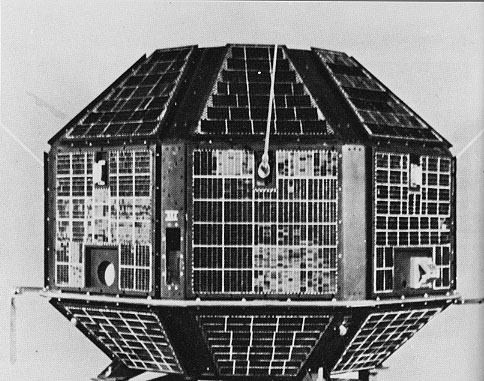
There has been a long history of cooperation between the Soviet Union and India in space. Examples include Aryabhata, India's first satellite, named after an Indian astronomer of the same name. It was launched by the Soviet Union on 19 April 1975 from Kapustin Yar using a Kosmos-3M launch vehicle. The only Indian to visit space, Rakesh Sharma, was also launched by the Soviet Union under Interkosmos space program. During President Vladimir Putin's visit to India in December 2004, two space-related bilateral agreements were signed viz. Intergovernmental umbrella Agreement on cooperation in the outer space for peaceful purposes and the Inter-Space Agency Agreement on cooperation in the Russian satellite navigation system GLONASS. Subsequently, a number of follow-up agreements on GLONASS have been signed. In November 2007, the two countries have signed an agreement on joint lunar exploration. These space cooperation programmes are under implementation. Chandrayaan-2 was a joint lunar exploration mission proposed by the Indian Space Research Organisation (ISRO) and the Russian Federal Space Agency (RKA) and had a projected cost of ₹4.25 billion (US$90 million). The mission, proposed to be launched in 2017 by a Geosynchronous Satellite Launch Vehicle (GSLV), included a lunar orbiter and a rover made in India as well as one lander built by Russia. But due to the repeated delays in the joint venture, the Indian side ultimately decided to develop its own lander and borne all costs of the mission by itself. Later ISRO developed its own lander named Vikram and launched Chandrayaan-2 mission successfully on 22 July 2019, from SDSC SHAR, Sriharikota, Andhra Pradesh.
In December 2021, Russia and India signed an agreement on measures to protect technologies in the field of space. The two countries agreed to expand and strengthen partnership relations between the Russian Roscosmos and the Indian Space Research Organization, as well as cooperation in the field of crewed space programs and satellite navigation. In addition, Russia and India planned to explore the prospects for developing cooperation in the field of launch vehicle development and planetary exploration.
On 10 February 2020, Glavkosmos JSC and the Manned Space Flight Center of the Indian Space Research Organisation, within the framework of an agreement to provide India with assistance in preparing for the launch of astronauts, began training Indian Air Force pilots. Indian astronaut candidates have undergone physical and medical training, studied the Russian language, designs, layouts and systems of the Soyuz crewed transport spacecraft. On 22 March 2021, the head of Roscosmos, Dmitry Rogozin, announced the completion of the Indian cosmonaut training program.
In October 2022, Glavkosmos JSC supplied the Indian side with systems and equipment for the Gaganyaan crewed transport spacecraft, as well as individual equipment (spacesuits, armchairs and lodgments produced by the Russian JSC Zvezda Scientific and Production Enterprise) for Indian cosmonauts.
Nuclear deals
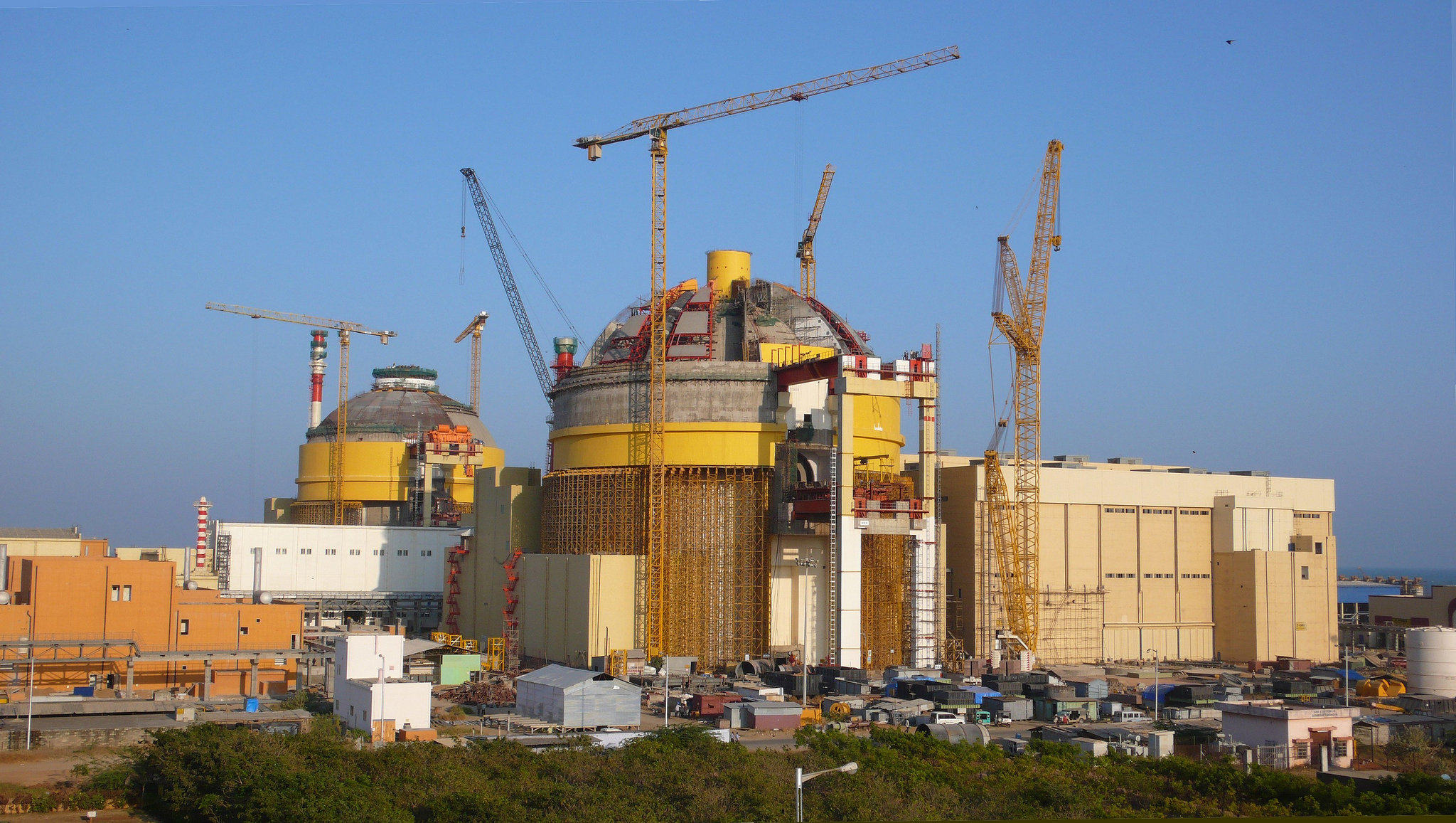
On 7 November 2009, India signed a new nuclear deal with Russia apart from the deals that were agreed upon by the two countries earlier. India and Russia are in discussion for construction of two more nuclear power units at Kudankulam. Two units of the Kudankulam Nuclear Power Plant are already operational. During Russian president Vladimir Putin's visit to India for the 13th annual summit, a cooperative civilian nuclear energy road map was agreed to. Running until 2030, sixteen to eighteen new reactors will be constructed, with installed capacity of 1,000 MW each. A 1,000 MW reactor costs around $2.5 billion so the deal may touch $45 billion in worth.
In November 2011, Russia and Bangladesh signed an inter-governmental agreement on cooperation in the construction of the first Bangladeshi NPP "Ruppur", consisting of two power units with Russian VVER type reactors with an electric capacity of 1200 MW each, the life cycle of which is 60 years, with the possibility of extension for another 20 years. On 23 December 2015, during the visit of Rosatom CEO Sergey Kiriyenko to Bangladesh, a general contract for the construction of the first Bangladeshi nuclear power plant was signed. At the beginning of 2017 Russia has provided India with a loan of $11.38 billion to finance the main stage of the NPP construction. The construction of the nuclear power plant began in 2021. Currently, work is underway on the first and second power units. Based on the latest schedule, the power units will be put into operation in February 2024 and at the end of the same year, respectively.
Cultural relations

Astrakhan in Russia has historically been a trading centre for Indian merchants since the 16th century. In 1722 Peter the Great met with Anbu Ram the leader of the Indians merchants in Astrakhan. In the meeting Peter the Great agreed to Anbu Ram's request for full free trade including transit rights. Russian pioneers who travelled to India and studied Indian culture include Gerasim Lebedev who studied ancient Indian languages in the 1780s and later Nicholas Roerich who studied Indian philosophy. Roerich was influenced by the philosophy of Ramakrishna and Vivekananda, the poetry of Rabindranath Tagore, and the Bhagavad Gita. The 130th birth anniversary of Nicholas Roerich and 100th birth anniversary of Svetoslav Roerich were celebrated in India in October 2004.
Leading Russian Indiologist such as Ivan Minayev, Sergey Oldenburg, Fyodor Shcherbatskoy, Yuri Knorozov, Alexandr Kondratov, Nikita Gurov and Eugene Chelyshev focused their research in understanding the Indus Script, Sanskrit and Indian literature.

Traditionally, there has been strong collaboration in the field of cinema between India and the USSR. Several generations of Russians grew up watching subtitled Indian films (mainly Bollywood) and vice versa for Indians watching Russian films. Popular Indian films in the USSR included Awara, Bobby, Barood, Mamta and Disco Dancer. Recent contemporary films entirely shot in Russia include Lucky: No Time for Love. However, after the collapse of the USSR Bollywood's market share decreased in Russia. Recently, however, there has been increase due to viewers having access through cable and satellite channels. The Russian Deputy Minister of Culture, Elena Milovzorova, stated in an interview that an Indian-Russian joint working group (JWG) would discuss procedures to allow for both countries film industries to collaborate in film production together. The Krasnodar Region has been discussed among officials as a possible area for shooting future Bollywood films. In 2010, former Russian president Dmitry Medvedev, known to be an admirer of Bollywood films, visited the film set of Yash Raj Studios and met prominent Indian film personalities such as Yash Chopra, Shah Rukh Khan and Kareena Kapoor during his state visit to India. He stated in an interview, "Our country is one of the places where Indian culture is most admired" in addition stated, "Russia and India are the only countries where satellite channels broadcast Indian movies 24/7."
Yoga in Russia has been growing and becoming increasingly popular since the 1980s, particularly in majors cities and urban centres, mainly due to its reputation for health benefits. However, it has its roots much earlier in Russia during the time of noted Russian actor and trainer Constantin Stanislavski who was significantly influenced by Yoga and Indian philosophy.[[File:Dmitry Medvedev in India 4-5 December 2008-11.jpg|thumb|[[Russian president]] [[Dmitry Medvedev]] making his speech at the closing ceremony of The "Year of Russia in India" in 2008.]]
Russia's Rossotrudnichestvo Representative Office (RRO) established in 1965 has five Russian Centres of Science and Culture (RCSC) in India they include New Delhi, Mumbai, Kolkata, Chennai and Trivandrum. The head of RRO and director of RCSC, Fyodor Rozovsky, expects cultural ties to grow between both countries. He and other officials also expects the number of Indian students studying in Russia to increase once both countries sign an agreement on joint recognition of higher education diplomas. There is a Hindi Department, in the University of Moscow along with five Chairs relating to Indology in Moscow, Saint Petersburg, Kazan and Vladivostok.
Days of Russian Culture were held in India in November 2003, in Delhi, Kolkata and Mumbai. "Days of Indian Culture" in Russia were organised from September to October 2005 in Russia. Chief Minister of National Capital Territory of Delhi led a delegation for participating in the event "Days of Delhi in Moscow" from 28 May to 1 June 2006. The "Year of Russia in India" was held in 2008. It was followed by the "Year of India in Russia" in 2009. In the period from 2018 to 2019, the Indian Council for Cultural Relations (ICCR) signed a Memorandum of Understanding with the Russian organization ROSSCONCERT. The document opened the possibility for troupes of artists from both countries to visit India and Russia alternately. In 2019, four groups from India – "Kathak", "Hindustani Kalari", "Bollywood" and "Shehnai" visited a number of regions of the Russian Federation. In addition, Indian-Russian working groups and a cultural exchange program have been established, which also meet the cultural and tourist needs of both countries.
Country comparison
| Common name | India | Russia | Official name | Republic of India | Russian Federation | ||||
|---|---|---|---|---|---|---|---|---|---|
| Coat of arms | [[File:Emblem of India.svg | center | 207x207px]] | [[File:Coat of Arms of the Russian Federation.svg | center | 154x154px]] | |||
| Flag | [[File:Flag of India.svg | center | 130x130px]] | [[File:Flag of Russia.svg | center | 130x130px]] | |||
| Capital | New Delhi | Moscow | |||||||
| Largest city | Delhi | Moscow | |||||||
| Government | Federal parliamentary republic | Federal semi-presidential republic | |||||||
| Population | 1,428,627,663 | 146,150,789 | |||||||
| Official language | Hindi , English, Kannada, Tamil, Telugu and other 14 Languages | Russian | |||||||
| Current leader | Prime Minister Narendra Modi | President Vladimir Putin | |||||||
| Religion | State secularism | State secularism |
References
References
- (12 December 2022). "India one of most important poles in multipolar world order, says Russia".
- Sharma, Rajeev. (28 November 2012). "Top Indian diplomat explains Russia's importance to India".
- Sharma, Rajeev. (26 September 2012). "Indo-Russian Inter-Governmental Commission to meet in mid-October". [[Russia Beyond]].
- Kashani. (9 June 2010). "India has right to join SCO, not Pakistan: Russian envoy".
- (11 February 2024). "Russian envoy advocates permanent seat for India at UNSC". The Economic Times.
- (2008). "SAARC: The Changing Dimensions". United Nations University - Comparative Regional Integration Studies.
- (22 November 2006). "Russia keen to join SAARC as observer". OneIndia.
- (14 March 2023). "Russia is still India's largest arms supplier, says report".
- "Russian Embassy and Consulates in India".
- [http://www.downloads.bbc.co.uk/mediacentre/country-rating-poll.pdf 2014 World Service Poll] {{Webarchive. link. (22 January 2015 ''[[BBC]]'')
- Bagchi, Indrani. (28 June 2018). "India in top 5 friends of Russia". The Times of India.
- (3 March 2022). "6 in 10 support Indian govt's handling of the Russia-Ukraine crisis, says survey". Business today.
- Mattoo, Aditya Gowdara Shivamurthy and Antara Ghosal Singh and Harsh V. Pant and Premesha Saha and Renita D’souza and Shashank Mattoo and Shashank. "The ORF Foreign Policy Survey 2022: India @75 and the World".
- Bahn, Paul G.. (2000). "The Atlas of World Geology". Checkmark Books.
- Rubchenko, Maxim. (9 September 2016). "Russia and India: A civilisational friendship". [[Russia Beyond]].
- Волков, Даниэль. (2013). "Хожение за три моря Афанасия Никитина".
- Rubchenko, Maxim. (16 September 2016). "18th century Russia welcomed & cherished Indian merchants".
- Kamalakaran, Ajay. (16 March 2020). "Astrakhan's India Connection".
- John W. Strong, "Russia's Plans for an Invasion of India in 1801." ''Canadian Slavonic Papers'' 7.1 (1965): 114-126.[https://www.questia.com/member-login?notify=SessionTimeout online]
- "Indian Diplomatic Estate in Moscow".
- [https://www.newindianexpress.com/cities/thiruvananthapuram/2010/nov/27/110-years-of-indo-russian-diplomatic-ties-206201.html 110 years of Indo-Russian diplomatic ties], 16 May 2012, ''[[The New Indian Express]]''
- [https://india.mid.ru/ru/embassy/embassy-and-its-history/ Посольство и его история], a Russian Ministry of Foreign relations page
- [https://www.cia.gov/readingroom/docs/CIA-RDP86T00586R000400490007-7.pdf The Soviets in India: Moscow's Major Penetration Program], 1985. CIA report declassified 9 December 2011
- (9 December 2010). "ИНДИЯ. ДЕЛА ПОСОЛЬСКИЕ".
- Ahmar, M.. (1989). "The Soviet Role in South Asia, 1969-1987". Area Study Centre for Europe, University of Karachi.
- Addy, P.. (2018). "TIBET : PAWN AND PIVOT OF THE GREAT GAME". Academic Publishers.
- Vojtech. Mastny, "The Soviet Union's Partnership with India." ''Journal of Cold War Studies'' 12.3 (2010): 50-90. [https://www.mitpressjournals.org/doi/pdfplus/10.1162/JCWS_a_00006 Online]
- Manchanda, Divyabh. (2020). "India–Russia relations–Then and Now".
- Donaldson, Robert H. (1972). "India: The Soviet Stake in Stability". Asian Survey.
- Singh, Zorawar Daulet. (18 December 2019). "Calling the U.S.'s bluff in 1971". The Hindu.
- (1 March 2022). "When Russia Stunned US & UK Naval Forces And Helped India Win The 1971 War".
- (September 2014). "Rajiv Gandhi's Diplomacy: Historic Significance and Contemporary Relevance". Extraordinary and Plenipotentiary Diplomatist.
- Vladimir Putin. (24 December 2012). "For Russia, deepening friendship with India is a top foreign policy priority". The Hindu.
- (24 December 2012). "India, Russia sign new defence deals". BBC News.
- Sharma, Rajeev. (24 December 2012). "13th Indo-Russian Summit reaffirms time-tested ties". [[Russia Beyond]].
- (20 October 2024). "India Should Be On UN Security Council Permanently: Russia's Top Diplomat".
- (29 September 2024). "Russian Foreign Minister Lavrov backs UNSC bid by India, Brazil at U.N. General Assembly". The Hindu.
- Dhasmana. (21 June 2012). "Russia supports India's membership in NSG". Business Standard India.
- Volodin, Andrei. (5 September 2012). "India and APEC: Center of Mutual Gravitation". International Affairs.
- (3 September 2009). "Торжественный вечер, посвящённый Году Индии в России". Президент России.
- (11 May 2015). "Russia a dependable partner of India: President Pranab Mukherjee". CNN-IBN.
- (28 May 2022). "India top priority in Russian foreign policy: Sergei A Karaganov". The Economic Times.
- (8 November 2022). "Ties with Russia are to India's advantage and we will keep it". The Times of India.
- (31 January 2023). "Russia describes BBC documentary on PM Modi info war against global power with independent policy". Economic Times.
- (23 December 2022). "India-Russia trade up by $27 bn but 'too one sided', says Indian envoy".
- (7 November 2022). "Russia largest oil supplier to India in October, surpasses Iraq".
- (24 December 2022). "With $30 bn bilateral trade turnover, India, Russia plan big for 2023".
- (11 December 2022). "Russia Welcomes India's Decision To Not Support G7's Price Cap On Oil".
- (22 December 2022). "PM Modi's words on war had impact on Russians: CIA Chief".
- (12 April 2023). "How China-Russia alliance affects India".
- Bala, Sumathi. (3 May 2023). "India's ties with Russia remain steady. But Moscow's tighter embrace of China makes it wary".
- (6 April 2023). "India-Russia ties are facing a long-term conundrum".
- Gupta, Shekhar. (11 March 2023). "Who are India's friends & foes? Modi govt is caught in a messy US-China-Russia-Pakistan jalebi".
- (28 June 2023). "The national festival 'Namaste Moscow' was held at the residence of the Indian Embassy in Moscow".
- ANI. (15 August 2023). "Indian embassy in Russia celebrates 77th Independence Day in Moscow".
- (27 December 2023). "In Moscow to meet Putin and Lavrov, India's foreign minister praises growing trade".
- (8 July 2024). "As Modi Meets Putin in Moscow, India Seeks to Chart Its Own Course".
- (9 July 2024). "Zelenskyy: Modi is a 'huge disappointment' for hugging Putin". Politico.
- "Leaders' Joint Statement on the development of strategic areas of Russia-India economic cooperation for the period up to 2030". Ministry of External Affairs, Government of India.
- (9 July 2024). "India's Modi tells Putin that 'heart bleeds' over deaths of children in war". Reuters.
- (4 August 2025). "Trump aide accuses India of financing Russia's war in Ukraine". Al Jazeera.
- (19 August 2025). "U.S. accuses India of profiteering from Russian oil during Ukraine war". CNBC.
- (9 December 2025). "How India plans to continue buying Russian oil despite sanctions". Al Jazeera.
- (23 October 2025). "China and India to face supply jolt as U.S. targets Russia's oil giants". CNBC.
- (23 October 2025). "India poised to sharply cut Russian oil imports after sanctions, sources say". Reuters.
- (4 December 2025). "'Modi's hypocrisy is off the charts': Ukrainian analyst fumes at New Delhi for 'publicly siding with evil'". The Week.
- Vladimir Putin. (30 May 2017). "Russia and India: 70 years together".
- (30 May 2017). "Vladimir's article, Russia and India: 70 years together, has been published".
- "Integrated Government Online Directory".
- [https://cgispburg.gov.in/consulate-officials.php Saint Petersburg Consulate], Gov.in, accessed 20 November 2025.
- [https://www.cgivladi.gov.in/ Vladivostok Consulate], Gov.in, accessed 20 November 2025.
- [https://www.visahouse.com/en/information/russianconsulate/india Russian consulates in India], VisaHouse, accessed 20 November 2025.
- (22 December 2017). "Deeper defence & security cooperation with Russia enhances India's strategic choices". The Economic Times.
- Abi-Habib, Maria. (5 April 2018). "India Is Close to Buying a Russian Missile System, Despite U.S. Sanctions". [[The New York Times]].
- Peri, Dinakar. (13 March 2023). "India remains biggest arms importer between 2018-22 despite drop in overall imports". The Hindu.
- Rahul Bedi, "India to Sign New 10-Year Defence Deal with Russia", Jane’s Defence Weekly, 1 July 1998, p. 16.
- "Global Defence News and Defence Headlines - IHS Jane's 360".
- Gady, Franz-Stefan. "India Pulls out of Joint Stealth Fighter Project With Russia".
- Trevithick, Joseph. (23 April 2018). "It's No Surprise India Finally Ditched Its Stealth Fighter Program With Russia".
- Macias, Amanda. (23 May 2019). "India, facing sanctions for Russian arms deals, says it wants to pivot spending to the US". CNBC.
- (22 February 2023). "What is TU 160? The bomber India wants, Russia owns and US is likely to have".
- Snehesh, Alex Philip. (18 August 2022). "Russia wants to build next generation tanks, submarines with India". [[The Print]].
- (2 September 2022). "Explainers Explained: What does India's participation in Russia's military drills Vostok-2022 mean?". [[Firstpost]].
- "India-Russia Defence Cooperation".
- "Trials of new generation of BrahMos cruise missile to begin in early 2024 — CEO".
- "Фрегат "Тушил" для ВМС Индии планируют сдать на заводе "Янтарь" в 2023 году".
- Patel, Shivam. (7 March 2025). "India signs $248 million deal with Russia for advanced battle tank engines".
- (December 2014). "Bilateral Relations: India-Russia Relations". Embassy of India Moscow.
- (26 September 2012). "Indo-Russian Inter-Governmental Commission to meet in mid-October". Russia & India Report.
- (11 December 2014). "Druzhba-Dosti: A Vision for strengthening the Indian-Russian Partnership over the next decade' - Joint Statement during the visit of President of the Russian Federation to India". Ministry of External Affairs, Government of India.
- (28 January 2015). "Sanctions have spurred Russia-India cooperation - Russian official". Russia & India Report.
- (2 August 2022). "Indian business interested in Russian market — Russia's ambassador".
- "SBERBANK HAS RECEIVED PERMISSION TO OPEN A SECOND BRANCH IN INDIA".
- (9 July 2024). "Joint Statement following the 22nd India-Russia Annual Summit".
- Haq, Zia. (10 March 2010). "Panel to scrutinise impact of Russia sanctions on India's economy".
- Sharma, Mihir. (18 March 2022). "Hurting from sanctions on Russia, India is losing faith in the West".
- Radyuhin, Vladimir. (26 January 2013). "Indo-Russian trade posts impressive growth". The Hindu.
- (22 October 2014). "India, Russia discuss IT cooperation". Russia & India Report.
- Nisha Anand. (12 November 2024). "India, Russia discuss training Indians for employment in Russian companies".
- (12 December 2014). "PM invites Russian diamond miners to trade, make in India". The Indian Express.
- Katz, Alexandra. (12 December 2014). "Diamond sparkle for India-Russia ties". [[Russia Beyond]].
- (10 December 2014). "Russia's Alrosa to sell more diamonds direct to India". Reuters.
- (12 December 2014). "Narendra Modi-Vladimir Putin meet: India, Russia to explore oil and gas; aim for US$ 30 bn trade". The Financial Express.
- (11 December 2014). "Putin: Russia ready to build 'more than' 20 reactors in India". World Nuclear News.
- (13 March 2012). "Russia to foray into India's civil aviation market". The Hindu.
- (10 December 2014). "India is a reliable and time-tested partner - Vladimir Putin". [[Russia Beyond]].
- Mahapatra, Debidatta Aurobinda. (19 November 2014). "A 'smart item' in India-Russia cooperation". [[Russia Beyond]].
- (6 May 2023). "India is acting as a hub for Russian oil". Le Monde.
- Pasricha, Anjana. (5 December 2008). "Russia, India Sign Agreement to Build Civil Nuclear Reactors". Voice of America.
- (9 December 2014). "Russia to secure its role of reliable energy supplier to Asian markets - Putin". TASS.
- Sanzhiev, Artem. (11 December 2014). "Indian companies eye sizable investments in Russian energy sector- Dharmendra Pradhan". [[Russia Beyond]].
- (13 June 2022). "Russia becomes India's second biggest oil exporter, trade sources' data show". Reuters.
- (3 June 2022). "Russia now accounts for 18% of India's crude imports; up from 1%".
- [https://www.aljazeera.com/economy/2022/7/6/russia-pockets-24b-from-selling-energy-to-china-india "Russia pockets $24bn from selling energy to China, India"] ''aljazeera.com''. Retrieved 7 July 2022.
- (6 December 2022). "Russia remain biggest oil supplier to India". The Economic Times.
- (26 January 2015). "Will the India-US nuclear deal work?". BBC News.
- (2 June 2025). "US Senate may work on Russia sanctions bill this month". Reuters.
- (7 February 2002). "India, Russia to develop aircraft". The Tribune India.
- Upadhyay, Dadan. (3 April 2013). "India, Russia to negotiate on CECA with Customs Union". [[Russia Beyond]].
- Sharma, Harikishan. (21 October 2022). "India-Russia trade soars to record high as imports of oil and fertiliser drive surge".
- Gupta, A.K. Sen. (5 January 2015). "India-Russia trade relations back in Spotlight". The Dollar Business.
- Peri, Dinakar. (18 November 2024). "Chennai-Vladivostok eastern maritime corridor operational: Sonowal". The Hindu.
- UtkarshClasses. "Russia Prepares Indian Sailors for Polar & Arctic Waters".
- Dikshit, Sandeep. (31 May 2012). "Despite U.S. opposition, Iran to be transport hub for North-South Corridor". The Hindu.
- Sharma, Rajeev. (29 November 2012). "Transport Corridor offers many opportunities for Indo-Russian trade". [[Russia Beyond]].
- (20 March 2015). "Dry Run Study of INSTC Trade Route". Business Standard.
- (10 April 2015). "Iran deal spells good tidings for India". The Hindu.
- (6 September 2019). "India goes from taking to giving loans to Russia".
- "Top Russia Imports".
- "Top India Exports".
- "Top Russia Exports".
- "Top India Imports".
- (18 November 2013). "The case for an FTA with India and the Customs Union". Russia & India Report.
- Lal, Neeta. (28 February 2014). "Rogozin sets ball rolling for bilateral trade and investment". [[Russia Beyond]].
- (18 June 2014). "India, Russia to set up study group to push FTA". The Hindu.
- (22 October 2013). "India agrees for FTA with Belarus, Kazakhstan, Russia". The Hindu.
- Belli, Alessandro. (8 November 2014). "Several new Indo-Russian projects to come under "strategic vision" agreement - Dmitry Rogozin". [[Russia Beyond]].
- "Indo-Russian S&T Cooperation".
- "Scientific and technical cooperation".
- "Aryabhata" in ''[[Encyclopædia Britannica. The New Encyclopædia Britannica]]''. Chicago: [[Encyclopædia Britannica Inc.]], 15th edn., 1992, Vol. 1, p. 611.
- "Aryabhata - The first indigenously built satellite".
- (22 July 2019). "GSLV MkIII-M1 Successfully Launches Chandrayaan-2 spacecraft". Press Information Bureau, Government of India.
- (6 December 2021). "Russia and India signed an agreement on the protection of technologies in the field of space".
- (23 March 2021). "Four Indian Cosmonauts Complete Training in Russia for Gaganyaan Mission".
- "Россия и Индия являются примером взаимовыгодного сотрудничества в космосе".
- (7 December 2009). "India, Russia sign nuclear deal". Times of India.
- Sharma, Rajeev. (25 December 2012). "Kudankulam and more: Why Putin's India visit was a hit".
- (19 October 2022). "Росатом планирует завезти ядерное топливо на строящуюся в Бангладеш АЭС Руппур в 2023 г.".
- Kamalakaran, Ajay. (5 August 2016). "From Tver to the Deccan: Retracing Afanasy Nikitin's life in India". [[Russia Beyond]].
- Rubchenko, Maxim. (9 September 2016). "Russia and India: A civilisational friendship". [[Russia Beyond]].
- Kamalakaran, Ajay. (12 April 2014). "St Petersburg's illustrious Sanskrit connections". [[Russia Beyond]].
- (5 November 2013). "The Russian travelling musician who created a "magic theatre" in India".
- (16 July 2014). "We are proud of the Roerich legacy - Himachal CM".
- Kamalakaran, Ajay. (15 March 2014). "Russian scholars and the Indus Valley script". [[Russia Beyond]].
- (7 November 2014). "Joint Russia-India filmmaking on the cards". Russia & India Report.
- (10 May 2013). "Russia's all-time favourite Bollywood films". Russia & India Report.
- Naralenkova, Oxana. (10 September 2009). "Bollywood returns to Russian screens". Russia Beyond.
- (5 May 2016). "Bollywood seen as part of Russian strategy to woo Indian tourists". Business Standard.
- Naraykin, Sergey. (23 December 2011). "Russians get a hang of Bollywood' starry dreams". [[Russia Beyond]].
- (22 September 2013). "Russia's love affair with Bollywood goes beyond Raj Kapoor". dna India.
- (20 May 2013). "Bollywood earmarks the South of Russia as a possible site for shooting of movies". Russia Radio.
- (22 December 2010). "Medvedev Rekindles Russia's Cold War Bollywood Affair". The Wall Street Journal.
- (23 December 2010). "SRK, Kareena find a Presidential admirer in Medvedev". The Indian Express.
- Kazak, Olga. (10 August 2013). "Russia's age-old passion for yoga". [[Russia Beyond]].
- (10 October 2012). "Yogafest held in Moscow". [[Russia Beyond]].
- Korablinov, Alexander. (20 August 2014). "B.K.S. Iyengar was the pioneer of yoga revival in Russia". [[Russia Beyond]].
- Fets, Konstantin. (4 August 2014). "Stanislavsky's tryst with yoga". [[Russia Beyond]].
- Fets, Konstantin. (7 August 2014). "Yoga as an essential part of Stanislavsky's studios". [[Russia Beyond]].
- (4 July 2014). "Cultural ties set to grow between Russia and India in 2014". Russia & India Report.
- (4 March 2014). "India, Russia to recognize each other's higher education diplomas". Russia & India Report.
- (24 October 2014). "Mutual degree recognition agreement with India to be signed by December". Russia & India Report.
- (10 November 2014). "New phase in Russia-India relations must be serious, long lasting". Russia & India Report.
- "India-Russia Cultural Relations".
This article was imported from Wikipedia and is available under the Creative Commons Attribution-ShareAlike 4.0 License. Content has been adapted to SurfDoc format. Original contributors can be found on the article history page.
Ask Mako anything about India–Russia relations — get instant answers, deeper analysis, and related topics.
Research with MakoFree with your Surf account
Create a free account to save articles, ask Mako questions, and organize your research.
Sign up freeThis content may have been generated or modified by AI. CloudSurf Software LLC is not responsible for the accuracy, completeness, or reliability of AI-generated content. Always verify important information from primary sources.
Report