From Surf Wiki (app.surf) — the open knowledge base
Hailey–Hailey disease
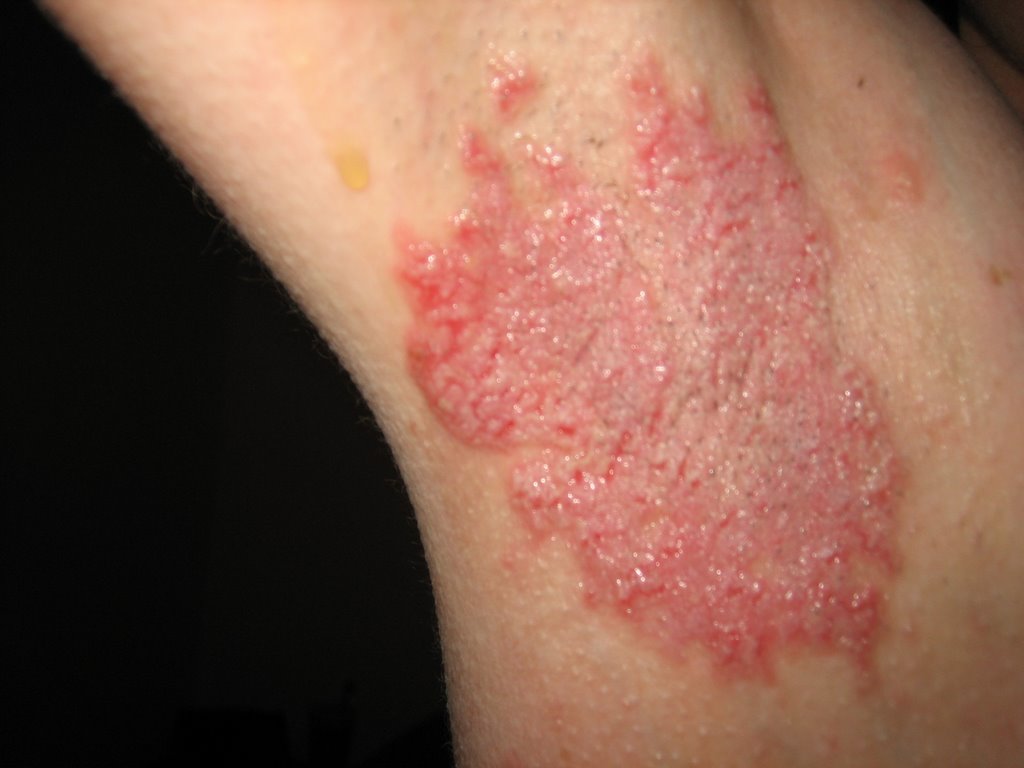
| Field | Value |
|---|---|
| name | Hailey–Hailey disease |
| synonyms | Familial benign chronic pemphigus |
| image | Before Magnesium Chloride.jpg |
| caption | Left axilla mild, uninfected Hailey–Hailey lesion |
| symptoms | Rashes and blisters on the skin, could be painful to the touch with a possibility of acantholysis, erythema and hyperkeratosis. |
| onset | Late teenage years or 30s-40s |
| duration | Chronic |
| causes | Mutations in the ATP2C1 gene |
| risks | Family history |
| named after | Hugh Edward Hailey and William Howard Hailey |
Hailey–Hailey disease (HHD), or familial benign chronic pemphigus or familial benign pemphigus, was originally described by the Hailey brothers (Hugh Edward and William Howard) in 1939. It is a genetic disorder that causes blisters to form on the skin.
Signs and symptoms
Causes
The cause of the disease is a haploinsufficiency of the enzyme ATP2C1; the ATP2C1 gene is located on chromosome 3, which encodes the protein hSPCA1. A mutation on one copy of the gene causes only half of this necessary protein to be made and the cells of the skin do not adhere together properly due to malformation of intercellular desmosomes, causing acantholysis, blisters and rashes. There is no known cure.
Diagnosis
Classification
While the term pemphigus typically refers to "a rare group of blistering autoimmune diseases" affecting "the skin and mucous membranes", Hailey–Hailey disease is not an autoimmune disorder and there are no autoantibodies. According to Pemphigus Pemphigoid Foundation (IPPF), "familial benign chronic pemphigus, or Hailey–Hailey disease, is a different condition from Pemphigus".
Differential diagnosis
The differential diagnosis includes intertrigo, candidiasis, frictional or contact dermatitis, and inverse psoriasis. A biopsy and/or family history can confirm. The lack of oral lesions and intercellular antibodies distinguishes familial benign pemphigus from other forms of pemphigus.
Treatment
Topical steroid preparations often help outbreaks; use of the weakest corticosteroid that is effective is recommended to help prevent thinning of the skin. Drugs such as antibiotics, antifungals, corticosteroids, dapsone, methotrexate, thalidomide, etretinate, cyclosporine and, most recently, intramuscular alefacept may control the disease but are ineffective for severe chronic or relapsing forms of the disease. Intracutaneous injections of botulinum toxin to inhibit perspiration may be of benefit. Maintaining a healthy weight, avoiding heat and friction of affected areas, and keeping the area clean and dry may help prevent flares.
Some have found relief in laser resurfacing that burns off the top layer of the epidermis, allowing healthy non-affected skin to regrow in its place. Secondary bacterial, fungal and/or viral infections are common and may exacerbate an outbreak. Some have found that outbreaks are triggered by certain foods, hormone cycles and stress.
In many cases naltrexone, taken daily in low doses, appears to help.
References
References
- (2006). "Andrews' Diseases of the Skin: Clinical Dermatology.". Saunders Elsevier.
- (2003). "Fitzpatrick's Dermatology in General Medicine". McGraw-Hill, Medical Pub. Division.
- {{WhoNamedIt. synd. 2081. Gougerot–Hailey–Hailey disease
- (April 1939). "Familial benign chronic pemphigus.". Archives of Dermatology and Syphilology.
- "Hailey–Hailey disease". National Institutes of Health, U.S. Department of Health and Human Services.
- Konstantinou, Maria P.. (2023). "Benign Familial Pemphigus (Hailey–Hailey Disease)". StatPearls Publishing.
- (January 2000). "Mutations in ATP2C1, encoding a calcium pump, cause Hailey–Hailey disease". Nature Genetics.
- (September 2003). "Blistering disorders: diagnosis and treatment". Dermatologic Therapy.
- "Hailey–Hailey Disease".
- (2014-03-19). "Pemphigus".
- Foundation, British Skin. "Hailey–Hailey disease – British Skin Foundation".
- Ni (1), Gilbert (2), Manalo (3), Wu (4), Jonathan (1), Kathleen (2), Ivie (3), Jashin (4). (November 29, 2017). "Psoriasiform Hailey–Hailey Disease Presenting as Erythematous Psoriasiform Plaques Throughout the Body: A Case Report". The Permanente Journal.
- Mauro, Theodora. (October 25, 2023). "Hailey-Hailey Disease".
- (November 2008). "Familial benign pemphigus". Consultant.
- (October 2017). "Low-Dose Naltrexone Treatment of Familial Benign Pemphigus (Hailey–Hailey Disease)". JAMA Dermatology.
- (October 2017). "Treatment of Hailey–Hailey Disease With Low-Dose Naltrexone". JAMA Dermatology.
This article was imported from Wikipedia and is available under the Creative Commons Attribution-ShareAlike 4.0 License. Content has been adapted to SurfDoc format. Original contributors can be found on the article history page.
Ask Mako anything about Hailey–Hailey disease — get instant answers, deeper analysis, and related topics.
Research with MakoFree with your Surf account
Create a free account to save articles, ask Mako questions, and organize your research.
Sign up freeThis content may have been generated or modified by AI. CloudSurf Software LLC is not responsible for the accuracy, completeness, or reliability of AI-generated content. Always verify important information from primary sources.
Report