From Surf Wiki (app.surf) — the open knowledge base
General Motors 60° V6 engine
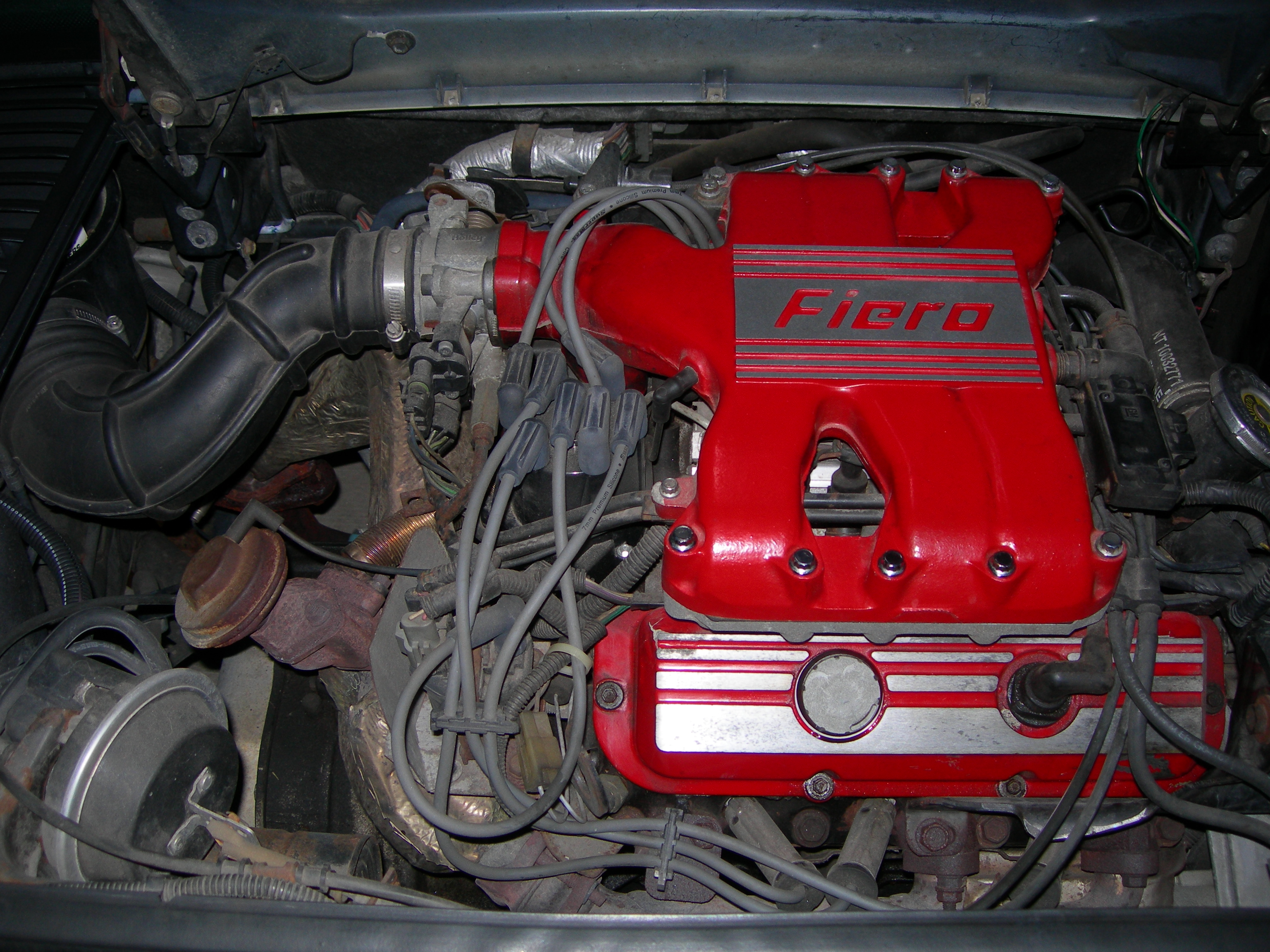
| Field | Value | |||||
|---|---|---|---|---|---|---|
| image | 1985 Pontiac Fiero, Blenheim Classics Auto Show, Blenheim, Ontario, 2025-06-21 02.jpg | |||||
| name | General Motors 60° V6 engine | |||||
| manufacturer | General Motors | |||||
| aka | X engine | |||||
| production | 1980–2005 (US) | |||||
| 1997–2010 (China) | ||||||
| successor | ||||||
| configuration | 60° V6 | |||||
| block | Cast iron | |||||
| head | ||||||
| valvetrain | ||||||
| bore | ||||||
| stroke | ||||||
| displacement | {{ubl | |||||
| {{cvt | 2490 | cc | L cc cuin | order | out | 1}} |
| {{cvt | 2837 | cc | L cc cuin | order | out | 1}} |
| {{cvt | 2986 | cc | L cc cuin | order | out | 1}} |
| {{cvt | 3135 | cc | L cc cuin | order | out | 1}} |
| {{cvt | 3350 | cc | L cc cuin | order | out | 1}} |
| fuelsystem | ||||||
| fueltype | Gasoline, M85, E85 | |||||
| oilsystem | Wet sump | |||||
| coolingsystem | Water-cooled | |||||
| turbocharger | Only on LG5 | |||||
| compression | 8.5:1, 9.6:1 | |||||
| power | 112-215 hp | |||||
| torque | 145-225 lbft |
1997–2010 (China) |2490 cc |2837 cc |2986 cc |3135 cc |3350 cc
The General Motors 60° V6 engine family is a series of 60° V6 engines produced for both longitudinal and transverse applications. All of these engines are 12-valve cam-in-block or overhead valve engines, except for the LQ1 which uses 24 valves driven by dual overhead cams. These engines vary in displacement between 2837 and and have a cast-iron block and either cast-iron or aluminum heads. Production of these engines began in 1980 and ended in 2005 in the U.S., with production continued in China until 2010. This engine family was the basis for the GM High Value engine family. These engines have also been referred to as the X engines as they were first used in the X-body cars.
This engine is not related to the GMC V6 engine that was designed for commercial vehicle usage.
This engine family was developed by Chevrolet, although it was used by many GM divisions, except for Saturn and Geo.
Generation I
The first generation of modern small GM 60° V6 engines featured an iron block and heads with inline valves. This "clean sheet" design was introduced in 1980 and versions were produced through 1995. Two different blocks with minor differences were developed:
- A transverse engine family for front-wheel drive
- A longitudinal engine family for rear-wheel drive
Transverse
The transverse engines began the 60° family in 1980. Like the rest of the Generation I engines, they were updated in 1985 with larger main journals for durability, along with multi-point fuel injection or E2SE carburetor and OBD I. Production of the Generation I transverse engines ended in 1988.
2.8 L
LE2
The 2837 cc LE2 was the first version of the 60° engine. It was a transverse version produced from 1980 through 1986 for the A-body and X-body cars. The standard ("X-code") engine for this line, it used a two-barrel carburetor. Output was 115 hp for 1980–81, 112 hp for 1982–86, and 135 lbft in high-output versions. Bore was 89 mm and stroke was 76 mm.
Applications:
- 1982-1986 Buick Century
- 1980–1985 Buick Skylark
- 1982–1986 Chevrolet Celebrity
- 1980–1985 Chevrolet Citation
- 1982-1986 Oldsmobile Cutlass Ciera & Cutlass Cruiser
- 1980–1984 Oldsmobile Omega
- 1982–1986 Pontiac 6000
- 1980–1984 Pontiac Phoenix
LH7
Introduced in 1981, the 2837 cc LH7 was a High Output ("Z-code") version of the LE2 for the higher-performance X-cars like the Chevrolet Citation X-11 and higher-performance A-cars like the Pontiac 6000 STE. It retained a two-barrel carburetor and produced 135 hp and 165 lbft for 1981 and 145 lbft for 1982–1984 versions. The LH7 was replaced after 1984 with the MFI L44.
Applications:
- 1982–1984 Buick Skylark T-Type
- 1984 Chevrolet Celebrity (optional on first year Eurosport)
- 1981–1984 Chevrolet Citation X-11
- 1989–1991 Isuzu Trooper/Trooper II
- 1982–1984 Oldsmobile Omega SX
- 1983–1984 Pontiac 6000 STE
- 1982–1984 Pontiac Phoenix SJ/SE
L44
The L44 was produced from 1985 to 1988, replacing the LH7. It was the first transverse 2837 cc to use multiport fuel injection, and was a High Output ("9-code") engine option for the higher performance A-cars, X-cars, and Pontiac Fiero. This engine produced 140 hp at 5200 rpm and 170 lbft of torque at 3600 rpm.
Applications:
- 1985–1986 Chevrolet Celebrity Eurosport
- 1985 Chevrolet Citation X-11
- 1985–1986 Pontiac 6000 STE
- 1985–1988 Pontiac Fiero
LB6
The LB6 ("W-code") 2.8 L (2,837 cc) engine was introduced in 1985 to replace the original LE2. It used multiport fuel injection and produced 130 hp at 4500 rpm and 160 lbft off torque at 3600 rpm.
Applications:
- 1985 Buick Skylark
- 1985–1986 Cadillac Cimarron
- 1985–1989 Chevrolet Cavalier
- 1985–1986 Chevrolet Celebrity
- 1985 Chevrolet Citation
- 1985–1987 Oldsmobile Firenza (GT)
- 1985–1986 Pontiac 6000
3.1 L
LG6
The LG6 ("D-code") 3.1 L was produced from 1990 to 1996 in both transverse and longitudinal applications. It used throttle-body fuel injection and iron heads. It produced 120 hp and 170 lbft.
Applications:
- 1990–1995 Chevrolet Lumina APV
- 1991–1994 Isuzu Pickup
- 1990–1992 Isuzu Rodeo
- 1990–1995 Oldsmobile Silhouette
- 1990–1995 Pontiac Trans Sport
Longitudinal
The longitudinal versions had minor differences from the transverse engines on which they were based. This group appeared in 1982 with the LC1 and LR2 and never added the aluminum heads of the Generation II engines.
Like the rest of the family, larger journals appeared in 1985, along with multiport fuel injection for the F-body LB8 version. TBI was added for the truck version in 1986. A 3135 cc version was added in 1990 with an 8 mm longer stroke (now 84mm), and a 3350 cc appeared for 1993 with a 92 mm bore and SFI. Production of the 2837 and (Isuzu) engines ended in 1994. Production ended for all longitudinal 60° V6s in 1996. GM's performance-parts division continued production of a related crate engine after 1999.
2.8 Applications:
- 1986–1993 Chevrolet S-10/GMC S-15 Sonoma
- 1986–1993 Chevrolet S-10 Blazer/GMC S-15 Jimmy
- 1988–1991 Isuzu Trooper II
3.1 Applications:
- 1991–1994 Isuzu Pickup
- 1991–1992 Isuzu Rodeo
2.8 L
LC1
The longitudinal LC1 was produced from 1982 to 1984. It was a 2-barrel standard output ("1-code") version for the F-body cars. Output was 102 hp and 145 lbft. It was replaced by the LB8 for 1985.
Applications:
- 1982–1984 Chevrolet Camaro
- 1982–1984 Pontiac Firebird
LR2
The longitudinal LR2 was a truck version ("B-code") produced from 1982 to 1986. It used a two-barrel carburetor and produced 115 hp and 150 lbft.
Applications:
- 1982–1986 Chevrolet S-10/GMC S-15 Sonoma
- 1982–1986 Chevrolet S-10 Blazer/GMC S-15 Jimmy
- 1984–1986 Jeep Cherokee
- 1986 Jeep Comanche
LL1/LL2
The longitudinal LL1 was a high-output version of the LC1 produced in 1983 and 1984. It was an optional ("L-code") engine on the Pontiac Firebird with 125 hp.
Applications:
- 1983–1984 Pontiac Firebird
The carbureted LL2 ("R-code") was produced from 1982 to 1988. Another LL2 ("R-code") with throttle-body fuel injection was produced from 1986 to 1993. Output of the TBI version was 125 hp.
Applications:
- 1986–1993 Chevrolet S-10/GMC S-15 Sonoma
- 1986–1993 Chevrolet S-10 Blazer/GMC S-15 Jimmy
- 1989–1991 Isuzu Trooper
LB8
The LB8 ("S-code") replaced the LC1 in 1985 and was produced until 1989. It used multiport fuel injection and was made for longitudinal mounting. Output was 135 hp and 165 lbft.
Applications:
- 1985–1989 Chevrolet Camaro
- 1985–1989 Pontiac Firebird
3.1 L
LH0
The 3.1L LH0 as used in the rear-wheel-drive applications differed significantly from that used in front-wheel-drive applications. The latter retained the Generation-I architecture block and heads. Output was 140 hp and 180 lbft.
Applications:
- 1990–1992 Chevrolet Camaro
- 1990–1992 Pontiac Firebird
3.4 L
L32
The power rating of the 3350 cc L32 ("S-code") used in the Camaro and Firebird was 160 hp at 4,600 rpm and 200 lbft torque at 3,600 rpm. It has a 92 × bore and stroke. The F-body cars used the Generation I architecture, with iron heads, and without splayed valves.
Applications:
- 1993–1994 Chevrolet Camaro (California models)
- 1993–1995 Chevrolet Camaro
- 1993–1994 Pontiac Firebird (California models)
- 1993–1995 Pontiac Firebird
Generation II
The second generation, still 2837 cc, was introduced in 1987. It used aluminum heads with splayed valves and an aluminum front cover. It was produced exclusively for transverse, front-wheel-drive use. The next year, Chevrolet introduced a full-production long-stroke 3135 cc version in the Pontiac 6000 STE AWD, with a 89 mm bore and 84 mm stroke compared to the 2.8 which shared the same bore, however with a 76 mm in stroke. It was produced simultaneously with the 2837 cc in various compact and midsized vehicles until 1990, when the 2837 cc was dropped. MPFI was used on both, and a full-production turbo version was available on the 3135 cc. An even higher displacement DOHC 3350 cc LQ1 was also developed, and eventually, the new GM High Value engine family followed. Production of OHV Generation II engines ended in 1994 after the introduction of the Generation III in 1993.
2.8 L
LB6
The 2837 cc 60° V6 was used in these vehicles:
- 1987–1989 Buick Century
- 1988–1989 Buick Regal
- 1987–1988 Cadillac Cimarron
- 1987–1989 Chevrolet Beretta
- 1987–1989 Chevrolet Cavalier
- 1990–1994 Mexican Chevrolet Cavalier
- 1987–1989 Chevrolet Celebrity
- 1987–1989 Chevrolet Corsica
- 1987–1989 Oldsmobile Cutlass Ciera
- 1990–1992 Oldsmobile Cutlass Ciera S
- 1988–1989 Oldsmobile Cutlass Supreme
- 1987–1989 Pontiac 6000
- 1988–1989 Pontiac Grand Prix


3.1 L
LH0
The 3135 cc LH0 ("T-code") was introduced in 1988 on the Pontiac 6000 STE AWD, featuring more advanced multi-port fuel injection. It was produced until 1994 (1996 for the Mexican market) and was exported in some models. This engine produced 135 hp and 180 lbft of torque from 1988–1989; it was then upgraded to 140 hp at 4800 rpm and 185 lbft of torque at 3600 rpm.
Applications:
- 1989–1993 Buick Regal
- 1990–1993 Chevrolet Beretta
- 1990–1994 Chevrolet Cavalier
- 1990 Chevrolet Celebrity
- 1990–1993 Chevrolet Corsica
- 1990–1994 Chevrolet Lumina
- 1989–1993 Oldsmobile Cutlass Supreme
- 1988–1991 Pontiac 6000 (STE AWD 1988–89, all models 1990–91)
- 1989–1993 Pontiac Grand Prix
- 1991–1994 Pontiac Sunbird
- 1990–1996 Chevrolet Cutlass (Mexico)
- 1990–1996 Chevrolet Century (Mexico)
L64
The L64 ("W-code") was introduced in 1991 as a flexible-fuel version of the 3135 cc. The two versions were one that could run M85 (85% methanol/15% gasoline) and one that could run E85 (85% ethanol/15% gasoline).
Uses:
- 1991–1993 Chevrolet Lumina VFV
- 1992–1993 Chevrolet Lumina E85 VFV
LG5
The LG5 ("V-code") was a special 3135 cc turbocharged engine produced with McLaren for the 1989 and 1990 model years. It featured the same multiport fuel injection intake manifolds and throttle body as the LH0, and produced 205 hp at 5200 rpm and 225 lbft of torque at 2100 rpm. Around 3,700 engines were produced each year. This engine had a block with more nickel content and hardened internals.
Applications:
- 1989–1990 Pontiac Grand Prix Turbo
- 1990 Pontiac Grand Prix Turbo STE
3.4 L
LQ1

The LQ1 (also called the Twin Dual Cam or TDC) was a 3350 cc DOHC V6 engine ("X-code") based on the aluminum-headed second generation of GM's 60° engine line, sharing a similar block with its pushrod cousins, the 3.1 L LH0 V6 and the then recently retired 2837 cc LB6 V6. The engine was built only for front-wheel-drive applications, and was featured exclusively in the first generation of GM's W-body platform.
It was built from 1991 to 1997. From 1991 to 1993, it used tuned multiport fuel injection, and made 200-210 hp at 5200 rpm and 215 lbft of torque at 4000 rpm. From 1994 to 1997, it used sequential port fuel injection, and made 210 hp at 5200 rpm and 215 lbft of torque at 4000 rpm. In 1996, the heads were redesigned for better flow, as well as now making the engine an interference design and adapting the engine for federally mandated OBD-II emissions. Output for the 1996–97 LQ1 is 215 hp and 220 lbft. It had four valves per cylinder. The 3350 cc engine substituted the standard camshaft for a chain-driven intermediate shaft, which drives four overhead cams via a cogged belt. Adapting the 60° pushrod block for the LQ1's overhead cams significantly increased packaged engine height.
Bore was increased to 92 mm, and the 3135 cc engine's 84 mm stroke was retained. Only a few interchangeable parts are use between this DOHC engine and other members of the 60° family, primarily the connecting rods and crankshaft.
The heads and intake manifolds were redesigned for the 1996 model year, incorporating a larger throttle body and plenum area, slightly longer intake runners, cloverleaf combustion chambers, and larger "pill"-shaped exhaust ports. Camshafts and cam timing were also revised for the new, higher-rpm powerband.
Optional from 1991 to 1993 was a Getrag 284 five-speed manual transaxle, which was also exclusive to the GM W platform and was available only with the LQ1. The electronically controlled Hydramatic 4T60-E four-speed automatic transaxle was the alternative, used during the entire production run with the exception of the 1997 Monte Carlo Z34 and 1997 Lumina LTZ, which received the 4T65-E.
Applications:
- 1991–1997 Chevrolet Lumina
- 1995–1997 Chevrolet Monte Carlo
- 1991–1996 Oldsmobile Cutlass Supreme
- 1991–1996 Pontiac Grand Prix
Generation III
The third generation of the 60° engine was introduced in the 1993 Oldsmobile Cutlass Supreme. Like its predecessors, it continued to use an overhead valve configuration with two valves per cylinder, a cast-iron cylinder block, aluminum cylinder heads, and an aluminum intake manifold. However, the heads and intake manifold were redesigned for better air flow, the cylinder block was stiffened, and the flat-tappets of the Generation I and II engines were replaced with roller tappets. This generation also came standard with sequential multiport fuel injection and structural oil pan.
3.1 L
L82
The L82 ("M-code") was an updated, SFI replacement for the MPFI LH0, produced from 1993 through 1999. It featured a structural oil pan, a stiffer redesigned engine block, sequential fuel injection, and revised aluminum heads. Output for the L82 was up 20 hp, over the previous Gen II LH0, to 160 hp at 5200 rpm and 185 lbft at 4000 rpm. Compression ratio for the L82 was 9.5:1 and the bore measured 89 mm, while the stroke was 84 mm giving it a displacement of 3135 cc.
Applications:
- 1994–1999 Buick Century
- 1994–1996 Buick Regal
- 1994–1998 Buick Skylark
- 1994–1996 Chevrolet Beretta
- 1994–1996 Chevrolet Corsica
- 1995–1999 Chevrolet Lumina
- 1997–1999 Chevrolet Malibu
- 1995–1999 Chevrolet Monte Carlo
- 1994–1998 Oldsmobile Achieva
- 1997–1999 Oldsmobile Cutlass GLS
- 1994–1996 Oldsmobile Cutlass Ciera
- 1993–1997 Oldsmobile Cutlass Supreme (1993 received both LH0 and L82 3135 cc motors)
- 1994–1998 Pontiac Grand Am
- 1994–1999 Pontiac Grand Prix
LG8

The LG8 ("J-code") was an updated version of the engine that displaced 3135 cc. It still had an iron block, two-valve pushrod aluminum heads, and full sequential port fuel injection. The LG8 also featured a new intake manifold and numerous changes to improve parts-sharing with the larger-displacement LA1 3400. Emissions were improved with secondary air injection and it earned LEV status. The engine featured a 89 mm bore and a 84 mm stroke and a 9.6:1 compression ratio. It produced 170 - and 190 -. The LG8 was built in Ramos Arizpe, Coahuila, Mexico, and Tonawanda, New York.
Applications:
- 2000–2005 Buick Century
- 1999–2003 Chevrolet Malibu
- 2000–2001 Chevrolet Lumina
- 2000–2003 Pontiac Grand Prix SE
3.4 L
LA1
The LA1 or 3400 ("E-code") was a larger-bore version of the L82. It was first used on the 1996 U-platform minivans. It displaces 3350 cc and has a 92x84 mm bore and stroke with a 9.5:1 compression ratio. Emissions are controlled via a catalytic converter and exhaust gas recirculation. Fuel shut-off is at 6000 rpm. Starting around 2000, most vehicles have been equipped with GM's Engine Oil Life Monitor. This engine was assembled at both Tonawanda engine and the Mexican Ramos Arizpe engine plant.
| Horsepower | Torque | Applications | Dyno chart |
|---|---|---|---|
| 170 hp at 4700 rpm | 200 lbft at 4000 rpm | link | |
| 175 hp at 4700 rpm | 205 lbft at 4000 rpm | link | |
| 180 hp at 5200 rpm | |||
| 185 hp at 5200 rpm | 210 lbft at 4000 rpm |
Applications:
- 2002–2005 Buick Rendezvous
- 2000–2005 Chevrolet Impala
- 2000–2005 Chevrolet Monte Carlo
- 1996 Chevrolet Lumina Minivan
- 1997–2005 Chevrolet Venture
- 1999–2004 Oldsmobile Alero
- 1996–2004 Oldsmobile Silhouette
- 2001–2005 Pontiac Aztek
- 1999–2005 Pontiac Grand Am
- 1999–2005 Pontiac Montana
- 1996–1998 Pontiac Trans Sport
Production in China by SAIC-GM
GM partnered with SAIC Motor to form SAIC-GM in 1997. This partnership manufactured variants of the 60° V6 engine in China, primarily for use in Chinese-market GM products. Chinese-built LNJ engines were used in the U.S. for the 2005–2009 Chevrolet Equinox and Pontiac Torrent.
LB8
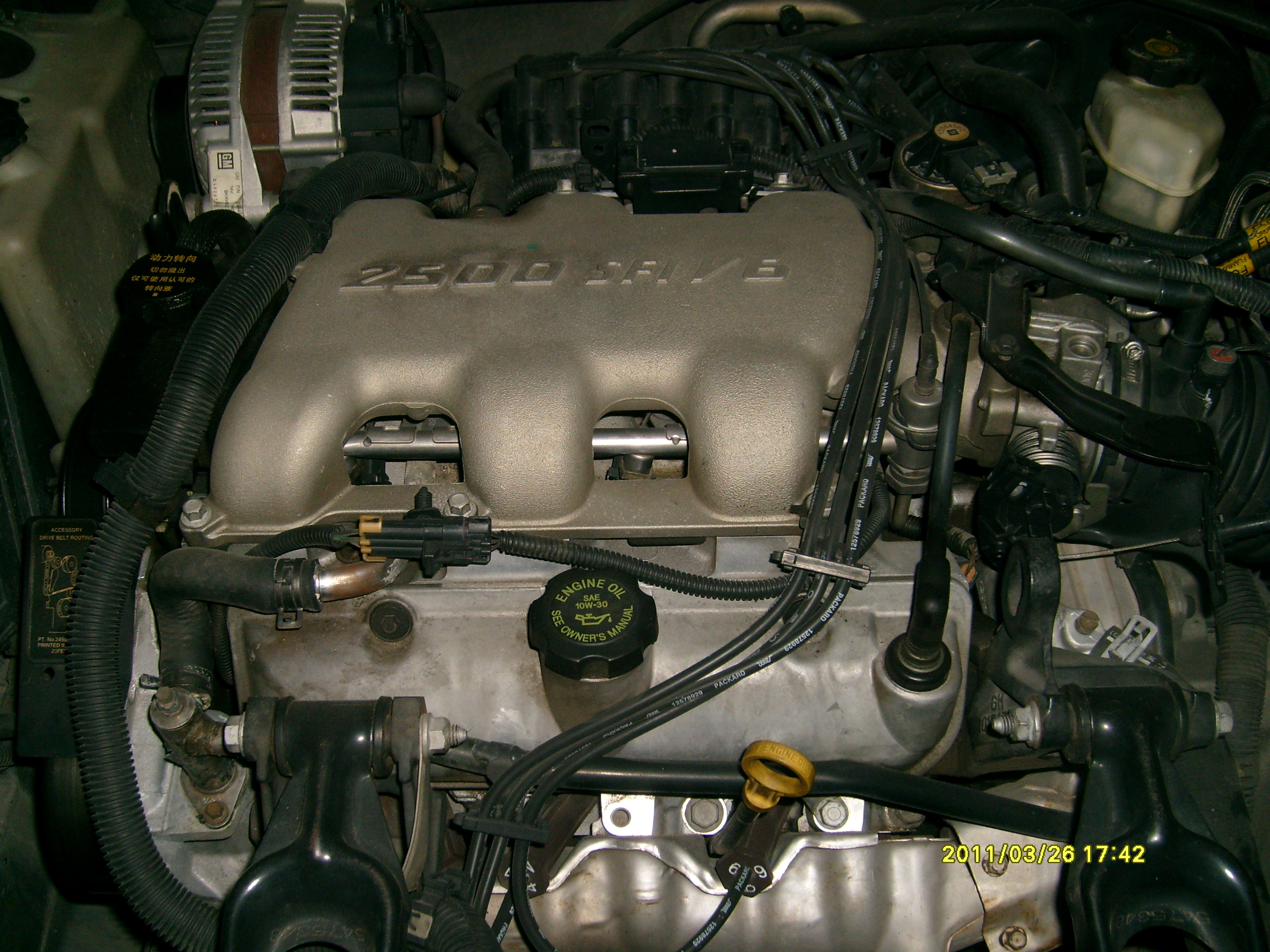
The LB8 is General Motors' base V6 in China. It is a derivative of the LG8 with the same 89 mm bore and a shorter 66.7 mm stroke for 2490 cc. It remains an iron block with pushrods and an aluminum two-valve head. Power is 145 hp and 155 lbft.
Applications:
- Buick GL/GLX (China)
- Buick GL8 (China)
- Buick Regal (China)
LW9
The LW9 is a larger version of the LB8 with an 80 mm stroke for 2986 cc. Power is 170 hp and torque is 185 lbft.
Applications:
- Buick GL/GLX (China)
- Buick GL8 (China)
- Buick Regal (China)
LNJ
An updated version of the Generation III 3400 engine. It includes a new block, intake manifold, oil pan, engine cover, and fuel system, as well as electronic throttle control. It was built in China and shipped to Canada for installation in the Chevrolet Equinox and Pontiac Torrent. The LNJ makes 185 hp and 210 lbft.
Applications:
- 2005–2009 Chevrolet Equinox
- 2006–2009 Pontiac Torrent
References
- Road and Track Magazine, April 1989. (1989-1990 Turbo Grand Prix performance figures)
- 1995 Corsica/Beretta Service Manual, 1994, General Motors Corporation (Gen III/L82 Engine's usage in Corsica/Beretta)
References
- 1984 General Motors, "Pontiac Fiero 1985 Do-It-Yourself" Manual, pg 3-2
- 1985 General Motors, "Pontiac Fiero 1986 Do-It-Yourself" Manual, pg 3-2
- 1986 General Motors, "1987 Pontiac Fiero Owner's Manual", pg 6-5
- 1987 General Motors, "1988 Pontiac Fiero Owner's Manual", pg 6-4
- [[Buick V6 engine#L36 SII Naturally Aspirated]]
- Hyden, David. (November 25, 1990). "'Flexible-fuel' Lumina Goes For Real-world Test". [[Chicago Tribune]].
- (). "Cars On Alcohol, Part 1: M85 Methanol Emerges". greencar.com.
- (2007-10-13). "Cars On Alcohol, Part 13: GM Supports FlexFuel". greencar.com.
- "Site Maintenance".
- "GM Powertrain Car Engines 2005". Media.gm.com.
- (18 March 2011). "Rebuilding the Chevy 3.4L/3.5L Engine".
- (2007-08-01). "GM Media Online: Pontiac". Media.gm.com.
This article was imported from Wikipedia and is available under the Creative Commons Attribution-ShareAlike 4.0 License. Content has been adapted to SurfDoc format. Original contributors can be found on the article history page.
Ask Mako anything about General Motors 60° V6 engine — get instant answers, deeper analysis, and related topics.
Research with MakoFree with your Surf account
Create a free account to save articles, ask Mako questions, and organize your research.
Sign up freeThis content may have been generated or modified by AI. CloudSurf Software LLC is not responsible for the accuracy, completeness, or reliability of AI-generated content. Always verify important information from primary sources.
Report