From Surf Wiki (app.surf) — the open knowledge base
Fenerbahçe S.K. (football)
Turkish association football club

Turkish association football club
| Field | Value |
|---|---|
| image | Fenerbahçe.svg |
| upright | 0.85 |
| clubname | Fenerbahçe |
| fullname | Fenerbahçe Spor Kulübü |
| short name | FB |
| Fener | |
| nickname | |
| founded | (as Phener-Bagtche Association Football Club) Although it is known that the club was founded in the spring of 1907, the day and month are unknown. The founding date is traditionally regarded as 3 May in honor of Republic of Turkey's founder Mustafa Kemal Atatürk's date of visit of the club in 1918. |
| ground | Şükrü Saracoğlu Stadium |
| capacity | 47,430 |
| chairman | Sadettin Saran |
| chrtitle | President |
| manager | Domenico Tedesco |
| mgrtitle | Head coach |
| league | |
| season | |
| position | |
| current | 2025–26 Fenerbahçe S.K. season |
| website | |
| pattern_la1 | _fenerbahce2526h |
| pattern_b1 | _fenerbahce2526h |
| pattern_ra1 | _fenerbahce2526h |
| pattern_sh1 | _fenerbahce2526h |
| pattern_so1 | _fsk-4 |
| shorts1 | FFFFFF |
| socks1 | FFFFFF |
| pattern_la2 | _fenerbahce2526a |
| pattern_b2 | _fenerbahce2526a |
| pattern_ra2 | _fenerbahce2526a |
| pattern_sh2 | _fenerbahce2526a |
| pattern_so2 | _adidasnavy |
| leftarm2 | FFFF00 |
| body2 | FFFF00 |
| rightarm2 | FFFF00 |
| shorts2 | FFFF00 |
| socks2 | FFFF00 |
| pattern_la3 | _fenerbahce2526t |
| pattern_b3 | _fenerbahce2526t |
| pattern_ra3 | _fenerbahce2526t |
| pattern_sh3 | _fenerbahce2526t |
| pattern_so3 | _fenerbahce2526tl |
| shorts3 | 000040 |
| socks3 | 000040 |
Fener Fenerbahçe Spor Kulübü (, Fenerbahçe Sports Club), commonly known simply as Fenerbahçe, or colloquially as Fener is the football branch of Fenerbahçe Sports Club association, based in Kadıköy district of Istanbul, Turkey. They compete in the Süper Lig, the top division of Turkish football. Founded in 1907, Fenerbahçe is one of Turkey’s most successful and widely supported clubs, boasting a record 28 Turkish national championship titles, including victories in theIn the pre-1959 season National Division, Turkish Football Championship and the Süper Lig era. The club has also won 10 Turkish Super Cups and 7 Turkish Cups, making them one of the most decorated teams in Turkish football history. Their home matches have been played at the Şükrü Saracoğlu Stadium in the Kadıköy district of Istanbul since 1908.
Fenerbahçe won their first major honor in domestic football in the early 20th century and continued to become champion in Turkish football before the establishment of the Süper Lig in 1959. Prior to this, the club won multiple Turkish Football Championship titles, asserting its place as one of Turkey’s footballing powerhouses. Since the creation of the Süper Lig, Fenerbahçe has remained one of the most successful teams, regularly contending for the title and winning numerous league championships. Counting since the official football federation of the country, the Turkish Football Federation, abbreviated TFF, Fenerbahçe have won 28 national championship titles respectively, making it the most successful so far in Turkey. The club holds the joint-record for the longest uninterrupted top-flight streak in Turkish football history. Internationally, Fenerbahçe won the Balkans Cup in 1966–67, becoming the first Turkish club to claim an international trophy. In modern European competitions, they reached the quarter-finals of the UEFA Champions League in the 2007–08 season and the semi-finals of the UEFA Europa League in 2012–13, further establishing their presence on the continental stage.
Fenerbahçe is also one of the most widely supported football clubs in Turkey, with millions of fans both domestically and internationally. Traditionally, the club plays in striped jerseys with yellow-navy blue color combinations in all branches, especially football. The club has a massive social media following and maintains a dedicated supporter base known for its passionate atmosphere, especially in home matches at Şükrü Saracoğlu Stadium. Alongside Galatasaray and Beşiktaş, Fenerbahçe is part of the “Big Three” clubs of Turkish football, with intense rivalries between these teams shaping the landscape of the Süper Lig. The club’s financial strength has played a key role in attracting world-class players throughout its history, with notable names such as Alex de Souza, Roberto Carlos, Toni Schumacher, Pierre van Hooijdonk, Dirk Kuyt, Robin van Persie, Mesut Özil, Nicolas Anelka, Luis Nani, Leonardo Bonucci, Kim Min-jae, Raul Meireles, Edin Džeko, Dušan Tadić having donned the Fenerbahçe’s include.
The club has also gained a reputation for developing and selling high-value young players, utilizing this strategy to generate significant revenue. Notable examples include homegrown Turkish wonderkid Arda Güler, who transferred to Real Madrid in 2023, Ferdi Kadıoğlu, who was signed young and developed into one of the club's most valuable assets before moving to Brighton, and Yusuf Akçiçek, whose move to Al-Hilal became the third most profitable transfer in club's history. This modern approach follows a historical tradition of producing significant Turkish figures, such as Lefter Küçükandonyadis and Can Bartu, two of the first Turkish players to make their mark in European football. The club has also proven to be a successful stepping stone for international players like Eljif Elmas, who moved to Napoli.
The club holds a Guinness World Record for having the highest number of medals and trophies across all its sports branches, with a total of 1134 cups and medals. Financially, Fenerbahçe remains one of the wealthiest clubs in Turkey, generating significant revenue from sponsorship deals, broadcasting rights, and commercial ventures. The club continues to invest in youth development and modern facilities, with aspirations to maintain domestic dominance and achieve further success in European competitions. As of 2025, they lead the UEFA coefficient among Turkish teams.
History
Established (1906)
The founder and first president of Fenerbahçe, Nurizade Ziya Songülen, was first introduced to football in England, where he went for higher education after graduating from Istanbul Saint-Joseph College in 1903, and was inspired by the football teams in this country, where the sport of football was born. When he returned to the country in 1906, the first thing he did was to establish a football team in his hometown, Istanbul in June 1906. He first contacted his friends in the Kadıköy district and then Enver Yetiker, the literature teacher at the school he graduated from, and conveyed his intention to establish a football team to them and made them an offer. Nurizade Ziya Bey, who received a positive response to his offer, initially only went to training with the first Fenerbahçe football team in history, the prototype of which was created in June 1906. Because the team could only be completed as an 11-person team in the spring of 1907, the official foundation date of the club. {{Cquote|“We were from Moda. However, since there was already a club named Moda FC, we naturally couldn’t name our team the same. While thinking about what the name of the club we were going to establish should be, we suddenly saw the Fenerbahçe Cape and its lighthouse through the window of our house. At that very moment, we jointly decided to name the club ‘Fenerbahçe Football Club’. Our emblem became the ‘light-emitting lighthouse’’
Pre-''Süper Lig'' (1907–1959)

Fenerbahçe were officially founded in 3 May 1907 in Kadıköy, Istanbul, by local men Ziya Songülen, Ayetullah Bey and Necip Okaner. This group founded the club secretly in order to keep a low profile and not get into any trouble with the strict Ottoman rule, so strict that the Sultan Abdul Hamid II forbade the Turkish youth to set up a club or engage in the game of football played by the English families that was watched in envy. The three men came together and concluded that Kadıköy was in desperate need of its own football club, where locals would get a chance to practise the game of football. Ziya Songülen was elected the first president of the club, Ayetullah Bey became the first general secretary and Necip Okaner was given the post of general captain. The lighthouse situated on the Fenerbahçe cape was a big influence on the design of the club's first crest, which sported the yellow and white colors of daffodils around the lighthouse. The kits were also designed with yellow and white stripes. Founded by Ottoman Greeks, Strugglers F.C. played against Fenerbahçe in the final match of the tournament it organized in its name on 5 June 1910, and Fenerbahçe won the match 3–1, winning the first cup in its history. The crest of the club was changed in 1914 when Hikmet Topuzer redesigned the badge after Ziya Songülen had changed the colors to yellow and navy in the fall of 1908, still seen today. Fenerbahçe's activities were kept in secrecy until a legislation reform in 1908, when, under a new law, all football clubs had to register to exist legally.
.jpg)

.jpg)
Fenerbahçe played against the staff of the Royal Navy that occupied Istanbul during the Turkish War of Independence. Some British soldiers formed football teams that were named after the players' speciality, for example Essex Engineers, Irish Guards, Grenadiers and Artillery. These teams played against each other and against local football teams in Istanbul. Fenerbahçe won many of these matches. The most known match played against the British was the match that would determine the winner of the General Harrington Cup. Fenerbahçe won the match held on 29 June 1923 at Taksim Stadium with two goals scored by Zeki Rıza Sporel, one of the important players of the period.
In addition, the founder of Modern Turkey, Mustafa Kemal Atatürk, was a sympathizer of Fenerbahçe. A few months before his appointment as the commander of the Yıldırım Army Group in the Sinai and Palestine campaign (WWI), he visited the Fenerbahçe club's headquarters in Kadıköy, Istanbul, on 3 May 1918.
Fenerbahçe won the championship 6 times in 1937, 1940, 1943, 1945, 1946 and 1950, and became the team that achieved the most victories in the Turkish National Division. Lefter Küçükandonyadis, one of the important names of Fenerbahçe, scored 423 goals in 615 matches between 1947–1951 and 1953–64. Fenerbahçe won the Istanbul Football League 16 times, the Turkish National Division 6 times, and the former Turkish Football Championship 3 times, all of them records, profiling themselves as forerunners and dominating side in Turkish football before the introduction of the professional nationwide league in 1959.
60s to 80s
.jpg)
The Turkish Football Federation founded a professional national league in 1959, which continues today under the name of the Süper Lig. Fenerbahçe won the first tournament, beating archrivals Galatasaray 4–1 on aggregate. The next year, Fenerbahçe participated in the European Cup for the first time. They qualified through a 4–3 win over Csepel SC, being the first Turkish club to advance to the next round by eliminating its opponent. They lost their first-round match to Nice 1–5 in a playoff game after drawing on aggregate. Fenerbahçe reached the quarter-final of the 1963–64 European Cup Winners' Cup where it was eliminated by MTK Budapest.
Fenerbahçe won four more league titles in the 1960s and were runners-up three times, making it the most successful club of that era. Fenerbahçe was coached by Ignác Molnár at the time, a famous Hungarian coach who had introduced a new style of football in Turkey. Under his guidance, Fenerbahçe managed to eliminate English champions Manchester City in the first round of the 1968–69 European Cup.
In the 1966–67 Balkans Cup (a competition set up for Eastern European clubs from Albania, Bulgaria, Greece, Romania, Turkey and Yugoslavia that existed between the 1960–61 and 1993–94 seasons), Fenerbahçe won the cup after three final matches against Greek club AEK Athens, making them the first Turkish club to win a non-domestic competition. This success would remain unparalleled by a Turkish club until Sarıyer and Samsunspor won the cup many years later in the 1990s, when the competition lost much of its popularity.
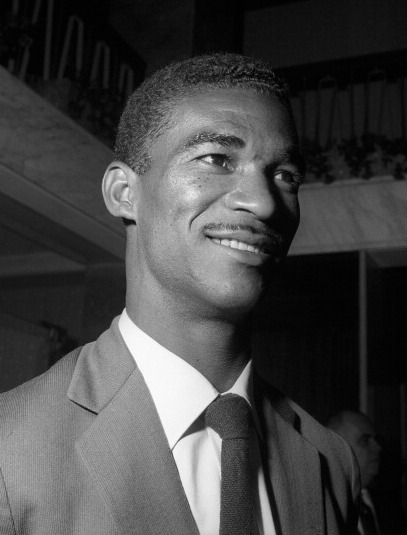
The 1970s saw Fenerbahçe bring in the famous Didi as their new coach. Fenerbahçe won four more league titles, including a double with Cemil Turan being the top goal scorer three times. The 1970s also established a rivalry with Trabzonspor, where for almost a decade Fenerbahçe and Trabzonspor were competing with each other for the title. The 1980s saw Fenerbahçe win three more league titles. Under the guidance of Kálmán Mészöly, Fenerbahçe managed to eliminate French champions Bordeaux in the first round of the 1985–86 European Cup. This victory marked a turning point as for almost a decade no Turkish club managed to get past the first round in European competitions.
90s to 2000s
Galatasaray and Beşiktaş dominated the Turkish League during the 1990s, combining to win nine out of ten titles. Fenerbahçe's only Turkish League success during the 1990s came in the 1995–96 season under the guidance of Carlos Alberto Parreira. In the 1996–97 UEFA Champions League season, Fenerbahçe completed the group stage with seven points and, among others, defeated Manchester United 1–0 at Old Trafford, undoing the record of the English giants being unbeaten for 40 years in their homeground.
Fenerbahçe won the league title in 2001, denying Galatasaray a fifth consecutive title. It followed up the next season with a second-place behind Galatasaray with new coach Werner Lorant. However, the next season did not go so well as Fenerbahçe finished in sixth place. Despite this, that season is memorable to many Fenerbahçe fans due to a 6–0 win against arch-rivals Galatasaray at the Şükrü Saracoğlu Stadium on 6 November 2002. After firing Werner Lorant, the club hired another German coach, Christoph Daum. Daum had previously coached in Turkey, winning the league with Beşiktaş in 1994–95. Fenerbahçe brought in players including Pierre van Hooijdonk, Mehmet Aurélio and Fábio Luciano as a rebuilding process. These new players lead Fenerbahçe to its 15th title and third star (one being awarded for every five league titles won by a club).
.jpg)
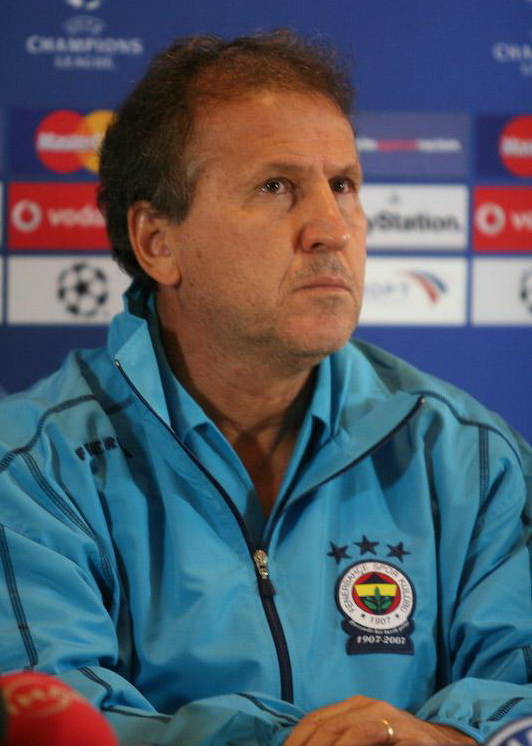
The next year was followed by a narrow championship over Trabzonspor, winning a then record 16 Turkish Football League championships. Fenerbahçe lost the title in the last week of the 2005–06 season to Galatasaray. Fenerbahçe needed a win, but instead drew 1–1 with Denizlispor while Galatasaray won 3–0 over Kayserispor. Soon after, Christoph Daum resigned as manager and was replaced by Zico on 4 July 2006. Zico began his reign by signing two new defenders: highly touted Uruguayan international Diego Lugano and Zico's fellow Brazilian Edu Dracena. Zico also signed two strikers in Serbian international Mateja Kežman and another Brazilian, Deivid. Fenerbahçe's 2006–07 domestic season started with a 6–0 win over relegation candidates Kayseri Erciyesspor. In the 32nd week of the Süper Lig, Fenerbahçe drew Trabzonspor 2–2, while Beşiktaş lost to Bursaspor 0–3, putting the former out of contention for the title. Fenerbahçe won its 17th Süper Lig title in 2006–07.
On 11 January 2007, Fenerbahçe were officially invited to G-14. G-14 was an association which consists of top European clubs.
Under Zico's command, Fenerbahçe qualified from the 2007–08 Champions League group stage for the first time and went on to beat Sevilla to become a quarter-finalist in the 2007–08 season. Zico is also the most successful manager of the team's history in the Champions League. After successful scores both in the Turkish league and international matches, Zico gained a new nickname from the Fenerbahçe fans: Kral Arthur (meaning "King Arthur" in Turkish). In February 2009, Fenerbahçe became the first Turkish club to enter the Deloitte Football Money League. Since 2000, Fenerbahçe improved the club's finances and facilities, bringing world stars to the club such as Ariel Ortega, Pierre van Hooijdonk, Alex, Stephen Appiah, Nicolas Anelka and, more recently, Mateja Kežman, Roberto Carlos, Dani Güiza, Dirk Kuyt, Diego, Nani, Robin van Persie, and Mesut Özil.
2010s to present
_V_fenerbahce_(0)_-_2401626016.jpg)
In the 2009–10 season Fenerbahçe lost the title on the last matchday; Fenerbahçe players were told that a draw would be enough towards the end of the match only to find out that the other critical game went against their favour, as Bursaspor beat Beşiktaş 2–1 to win the title. Despite the title loss, Fenerbahçe ended the season with the most clean sheets (10), as well as the joint longest winning streak (8). In July 2011, Fenerbahçe fans invaded the pitch during a friendly against the Ukrainian champions Shakhtar Donetsk. As punishment, Fenerbahçe were sentenced to two Süper Lig games in an empty stadium. The TFF later allowed those two games to be filled with spectators; men were barred, while women and children under 12 were admitted for free.
On 29 October 2012, Antalyaspor ended Fenerbahçe's 47-match unbeaten run in the Süper Lig at the Şükrü Saracoğlu Stadium. Fenerbahçe had not lost a match at home since they were beaten 2–3 by eventual champions Bursaspor in week 22, on 22 February 2010. Fenerbahçe won 38 and drew 9 in the 47 matches they played within 980 days since 22 February 2010. On 3 November 2012, Fenerbahçe pecked Akhisar Belediyespor to break a 181-day away jinx.
On 2 May 2013, Fenerbahçe were eliminated by Benfica 3–2 on aggregate in the semi-final of the 2012–13 Europa League, one of the biggest successes in Fenerbahçe's history in UEFA competitions. On 28 June 2013, Ersun Yanal agreed to take charge of Fenerbahçe to replace Aykut Kocaman, who resigned in late May.
Ersun Yanal's appointment coincided with tough times for Fenerbahçe, who had just been banned from European competitions for two seasons over their alleged involvement in a domestic sports corruption scandal. Fenerbahçe, which finished second in the Süper Lig in 2012–13, thus missed-out on the 2013–14 Champions League, which it had been due to enter in the third qualifying round. Fenerbahçe finished the 2014–15 season as runners-up, forcing the board of directors to undertake some major changes.

For the 2015–16 season, Fenerbahçe brought in Vítor Pereira as their new coach. Portuguese star Nani, Danish defender Simon Kjær and Robin van Persie were added to the squad to fulfill the club's ambitions to be successful in the Süper Lig and European competitions. On 10 December 2015, Fenerbahçe played their 200th European game against Celtic.
Between 2015 and 2018, Fenerbahçe remained a strong contender in the Süper Lig, consistently finishing in the upper ranks of the league. However, despite their competitive performances, the team faced challenges in securing domestic trophies, with arch-rivals Galatasaray and Beşiktaş often outperforming them. Their European campaigns during this period were marked by sporadic successes, but they struggled to make significant progress in continental competitions.
In 2018, a major turning point occurred in the club’s history when Ali Koç was elected president, ending Aziz Yıldırım’s 20-year tenure at Fenerbahçe. His landslide victory reflected fans’ desire for change, with promises of modernization, financial restructuring, transparency, and youth development. Despite early challenges like financial constraints and underperformance, Koç stayed committed to long-term planning and rebuilding the club’s structure.
From 2018 to 2023, the club underwent a period of transition, characterized by frequent managerial changes and inconsistent performances. Despite efforts to stabilize the team, Fenerbahçe often finished outside the top positions in the league. Financial constraints also limited their ability to attract top-tier talent, further complicating their efforts to reclaim domestic dominance. However, the club continued investing in youth development and long-term infrastructural projects to lay the foundation for future success. On 12 October 2022, Fenerbahçe played their 250th European game against AEK Larnaca.
A turning point occurred in the 2023–24 season with the appointment of İsmail Kartal as head coach. Under his leadership, Fenerbahçe displayed a renewed sense of competitiveness, finishing second in the Süper Lig with 99 points, narrowly missing out on the title to Galatasaray, who secured 102 points. The team exhibited strong performances across all competitions but was eliminated in the quarterfinals of both the Turkish Cup and the UEFA Conference League. The season was also marked by major controversies. During a heated Süper Lig match in March 2024, Fenerbahçe defeated Trabzonspor 3-2 away, after which Trabzonspor fans stormed the pitch, attacking Fenerbahçe players and causing chaotic scenes. The violence, widely shared on social media, led to public outrage and disciplinary investigations by the Turkish Football Federation.
Another major incident involved the 2023 Turkish Super Cup, originally scheduled for 29 December 2023 in Riyadh, Saudi Arabia, Fenerbahçe and Galatasaray withdrew due to disagreements over ceremonial elements, particularly the display of banners referencing Mustafa Kemal Atatürk, which Saudi authorities disallowed. The match was rescheduled for 7 April 2024 at Şanlıurfa 11 Nisan Stadium in Turkey. Fenerbahçe fielded their U19 squad and walked off the pitch after one minute in protest, leading to a forfeit and awarding the victory to their arch-rivals Galatasaray.

In mid-2024, Fenerbahçe appointed José Mourinho as head coach, signaling the club's ambition to reclaim domestic and European success. At the ceremony held on 2 June, Mourinho embraced the challenge ahead of the new season, declaring, "This jersey is my skin”.
Mourinho's tenure began with a series of strong performances, with the team securing 16 wins in 27 matches across all competitions by early 2025. However, his time at the club has also been marked by controversy, most notably his outspoken criticism of refereeing standards in Turkish football, alleging bias in favor of rivals Galatasaray. Tensions peaked following Fenerbahçe's Turkish Cup quarter-final loss, when Mourinho was caught pinching the nose of Galatasaray coach Okan Buruk during a post-match scuffle, leading to a three-match ban. On 29 August 2025, Mourinho was sacked from his role as head coach, replaced by Domenico Tedesco. A month later, Sadettin Saran replaced Ali Koç as the president of the club.
Notable players
Main article: List of Fenerbahçe S.K. players
.jpg)
When it was first founded in 1907, Fenerbahçe had a large squad. The first team captain of the Fenerbahçe football team was Turkish Naval School student Necip Okaner, the club's 3rd founding member. The first goalkeeper of the team was Asaf Beşpınar, a student of Kadıköy Lycée Saint-Joseph. Galip Kulaksızoğlu, was the longest serving player of the original squad, spending 17 years at the club, retiring in 1924 after 216 matches. Zeki Rıza Sporel and Bekir Refet, the first Turkish footballer ever to play abroad, were among the first products of the Fenerbahçe youth system. During his 18-year career with the club, Zeki Rıza scored 470 goals in 352 matches, or 1.3 goals every match, making him the all-time top scorer of Fenerbahçe. Zeki Rıza was also capped for the Turkish national team 16 times, scoring 15 goals.

Cihat Arman became the first in a long-line of long-serving goalkeepers, playing 12 seasons and in 308 matches with the club. Lefter Küçükandonyadis was one of the first Turkish football players to play in Europe. Lefter spent two seasons in Europe, playing for Fiorentina and Nice before returning to Fenerbahçe. All in all, Lefter scored 423 goals in 615 matches for the club, helping them to two Istanbul Football League titles and three Turkish League titles.

Another notable player, Can Bartu, became the next big Turkish export to Europe. He was also the first Turkish football player to play in a European competition final, doing so with Fiorentina against Atlético Madrid in 1962. Can also spent some seasons playing for Venezia and Lazio before returning to Fenerbahçe in 1967. He was a four-time league champion with Fenerbahçe and scored 162 goals in 330 matches. Some of the other most notable Turkish players who played for Fenerbahçe include Fikret Arıcan, Fikret Kırcan, Halit Deringör, Melih Kotanca, Burhan Sargun, Nedim Doğan, Cemil Turan, Selçuk Yula, Müjdat Yetkiner, Oğuz Çetin, Rıdvan Dilmen, Aykut Kocaman, Rüştü Reçber and Tuncay Şanlı.

In recent decades, Fenerbahçe have gained an influx of foreigners who have helped the club to 19 Süper Lig titles. Among these is Uche Okechukwu, who after 13 seasons with Fenerbahçe and İstanbulspor became the longest serving foreigner in Turkey. During Uche's career with Fenerbahçe, he won two league titles and became a fan favourite. More recently, Fenerbahçe have been the home to Brazilian-born Mehmet Aurélio who, in 2006, became the first naturalized Turkish citizen to play for the Turkish national team.

Alex is another Brazilian player who scored the most goals of all foreign players who have played for Fenerbahçe. He managed to become top scorer of the Turkish Süper Lig on two occasions (in 2006–07 and 2010–11), Turkish Footballer of the Year twice (in 2005 and 2010), as well as assist leader in the 2007–08 season of the UEFA Champions League. Based on all those achievements, as well as his exemplary character and sportsmanship on and off the field, acknowledged by fans of Fenerbahçe and their rivals alike, he became the most successful and renowned foreign player to have ever played for the club and one of a few whose statue has been erected by the supporters of the club in the Yoğurtçu Park, in the near of Şükrü Saracoğlu Stadium.
Some of the other foreign top players who played for Fenerbahçe over the years include: Toni Schumacher (1988–91), Jes Høgh (1995–99), Jay-Jay Okocha (1996–98), Elvir Bolić (1995–00), Viorel Moldovan (1998–00), Kennet Andersson (2000–02), Ariel Ortega (2002–03), Pierre van Hooijdonk (2003–05), Nicolas Anelka (2005–06), Stephen Appiah (2005–08), Mateja Kežman (2006–09), Diego Lugano (2006–11), Roberto Carlos (2007–09), Dirk Kuyt (2012–15), Raul Meireles (2012–16), Robin van Persie (2015–18), Nani (2015–16), Simon Kjær (2015-17), Mesut Özil (2021–22), Leonardo Bonucci (2022–23), Edin Džeko (2023–25).
Players with the most appearances
| a | #FFED00 | 1px}}" | Period | a | #FFED00 | 1px}}" | Players |
|---|---|---|---|---|---|---|---|
| 1934 - 1956 (22 years, 412 Match) | Fikret Kırcan | ||||||
| 1927 - 1947 (20 years, 406 Match) | Fikret Arıcan | ||||||
| 1915 - 1934 (19 years, 325 Match) | Zeki Rıza Sporel | ||||||
| 2002 - 2019 (17 years, 526 Match) | Volkan Demirel | ||||||
| 1907 - 1924 (17 years, 257 Match) | Galip Kulaksızoğlu | ||||||
| 1916 - 1932 (16 years, 324 Match) | Alaattin Baydar | ||||||
| 1979 - 1995 (16 years, 763 Match) | Müjdat Yetkiner | ||||||
| 1947 - 1964 (15 years, 615 Match) | Lefter Küçükandonyadis | ||||||
| 1939 - 1953 (14 years, 308 Match) | Cihat Arman | ||||||
| 1925 - 1939 (14 years, 252 Match) | Cevat Seyit | ||||||
| 1955 - 1969 (14 years, 605 Match) | Şeref Has | ||||||
| 1932 - 1945 (13 years, 368 Match) | Esat Kaner | ||||||
| 1934 - 1947 (13 years, 388 Match) | Naci Bastoncu |
Team captains

| a | #FFED00 | 1px}}" | Period | a | #FFED00 | 1px}}" | Team captain |
|---|---|---|---|---|---|---|---|
| 3 May 1907 – 1908 | Necip Okaner | ||||||
| 1908 – 7 March 1924 | Galip Kulaksızoğlu | ||||||
| 7 March 1924 – 1 June 1934 | Zeki Rıza Sporel | ||||||
| 1 June 1934 – 16 May 1943 | Fikret Arıcan | ||||||
| 16 May 1943 – 1951 | Cihat Arman | ||||||
| 1951 – 7 October 1956 | Fikret Kırcan | ||||||
| 7 October 1956 – 11 June 1963 | Naci Erdem | ||||||
| 11 June 1963 – 24 June 1968 | Şeref Has | ||||||
| 27 June 1968 – 6 September 1970 | Can Bartu | ||||||
| 7 September 1970 – 3 August 1975 | Ziya Şengül | ||||||
| 11 August 1975 – 15 August 1980 | Cemil Turan | ||||||
| 24 August 1980 – 29 July 1983 | Alpaslan Eratlı | ||||||
| 2 August 1983 – 17 May 1985 | Cem Pamiroğlu | ||||||
| 28 June 1985 – 6 April 1987 | |||||||
| 20 September 1992 – 19 June 1993 | Müjdat Yetkiner | ||||||
| 8 June 1987 – 23 May 1988 | |||||||
| 7 May 1990 – 11 July 1990 | Şenol Çorlu | ||||||
| 23 May 1988 – 7 May 1990 | |||||||
| 5 July 1990 – 21 May 1991 | Tony Schumacher | ||||||
| 28 May 1991 – 21 June 1992 | Rıdvan Dilmen | ||||||
| 21 June 1992 – 24 May 1996 | Oğuz Çetin | ||||||
| 24 May 1996 – 1 June 2000 | Rüştü Reçber | ||||||
| 1 June 2000 – 18 March 2003 | Ogün Temizkanoğlu | ||||||
| 18 March 2003 – 26 May 2007 | Ümit Özat | ||||||
| 26 June 2007 – 1 October 2012 | Alex de Souza | ||||||
| 2 October 2012 – 2 February 2013 | Volkan Demirel | ||||||
| 2 February 2013 – 7 June 2015 | |||||||
| 2 July 2019 – 25 July 2020 | Emre Belözoğlu | ||||||
| 10 August 2020 – 13 July 2021 | Gökhan Gönül | ||||||
| 13 August 2021 – 24 March 2022 | Mesut Özil | ||||||
| 24 March 2022 – 14 August 2022 | Altay Bayındır | ||||||
| 14 August 2022 – 12 July 2023 | Arda Güler | ||||||
| 12 July 2023 – 30 May 2025 | Edin Džeko | ||||||
| 5 August 2025 – Today | Milan Škriniar |
Milestone goals
As of 21 January 2026.
| a | #FFED00 | 1px}}" | Goal no. | a | #FFED00 | 1px}}" | Date | a | #FFED00 | 1px}}" | Scorer | a | #FFED00 | 1px}}" | Opponent | a | #FFED00 | 1px}}" | Result |
|---|---|---|---|---|---|---|---|---|---|---|---|---|---|---|---|---|---|---|---|
| 1st | 21 February 1959 | Ergun Öztuna | Ankaragücü | 3–1 | |||||||||||||||
| 1000th | 1 March 1980 | Erol Togay | Adana Demirspor | 1–1 | |||||||||||||||
| 2000th | 26 October 1996 | Uche Okechukwu | Trabzonspor | 1–0 | |||||||||||||||
| 3000th | 22 November 2010 | Alex de Souza | Bucaspor | 5–2 | |||||||||||||||
| 4000th | 9 February 2025 | Sebastian Szymański | Alanyaspor | 2–0 |
Support
Main article: Fenerbahçe S.K. supporters

Fenerbahçe has built a massive fanbase since its establishment in 1907, ranking among the most widely supported clubs in Turkey. Approximately 35% of Turkish football fans back Fenerbahçe, making it the most popular club in Istanbul and Ankara. Their influence extends beyond Turkey, with passionate supporters in Northern Cyprus, Azerbaijan, and various Turkish diaspora communities. Thanks to the redevelopment of Şükrü Saracoğlu Stadium, the club consistently boasts some of the highest attendance figures in Turkish football.
The club’s supporters are organized into various groups, including Genç Fenerbahçeliler (GFB), Kill For You (KFY), Antu/Fenerlist, EuroFeb (a group for fans in Europe), Group CK (Cefakâr Kanaryalar), 1907 ÜNİFEB, Vamos Bien, and SUADFEB. Beyond official fan organizations, numerous fanzines, blogs, podcasts, and forums are dedicated to covering Fenerbahçe.
Bonds with Other Clubs
Fenerbahçe’s fanbase has formed friendships with other clubs’ supporters over the years. In November 2011, Genç Fenerbahçeliler developed a close relationship with Torcida Sandžak, the organized supporters of Serbian club Novi Pazar. During a Süper Lig match against İstanbul Büyükşehir Belediyespor, Fenerbahçe fans unveiled a banner that read Kalbimiz Seninle Novi Pazar (“Novi Pazar, Our Hearts Are With You”). Later, in a SuperLiga match against Radnički Kragujevac, Torcida Sandžak reciprocated the gesture with a banner stating Sancak’ta atıyor, Fenerbahçe’nin kalbi (“The heart of Fenerbahçe beats in Sandžak”). This friendship continued on 2 March 2012, when Genç Fenerbahçeliler and 1907 Gençlik members were invited to Novi Pazar for a match against Partizan. The 17 traveling Fenerbahçe supporters received a warm welcome from thousands of Torcida Sandžak members, solidifying the bond between the two groups.
Rivalries

The Intercontinental Derby
Main article: The Intercontinental Derby (football)
The Intercontinental Derby is the fierce football rivalry between Galatasaray and Fenerbahçe, the two most successful and popular clubs in Turkey. The name comes from the fact that Galatasaray is based on the European side of Istanbul, while Fenerbahçe is based on the Asian side, making it a continental rivalry. This derby is one of the most intense in world football, with both clubs having passionate fan bases.
The rivalry dates back to 1909, and over the years, it has been marked by on-field clashes, controversial moments, and incredible atmospheres. Matches between the two are always high-stakes, often deciding league titles or cup victories. Fenerbahçe has traditionally been dominant in head-to-head records, especially in matches played at their home stadium, Şükrü Saracoğlu Stadium, while Galatasaray has enjoyed international success, winning the UEFA Cup and UEFA Super Cup in 2000. The rivalry is deeply rooted in Turkish football culture, with fans eagerly anticipating each encounter.
One of the most unforgettable matches in derby history was played on 6 November 2002, when Fenerbahçe defeated Galatasaray 6–0 in a historic Süper Lig encounter. The match, played at Şükrü Saracoğlu Stadium, remains Fenerbahçe’s biggest victory over their arch-rivals. This result became one of the most talked-about moments in Turkish football history, particularly among Fenerbahçe fans.
However, nearly two decades later, Galatasaray had their own historic victory. On 23 February 2020, during the 2019–20 Süper Lig season, Galatasaray defeated Fenerbahçe 3–1 at Şükrü Saracoğlu Stadium, marking their first away victory in the derby in 20 years. This match was a monumental moment for Galatasaray fans, as they had not won at Fenerbahçe’s home since 1999.
Beşiktaş–Fenerbahçe Rivalry
Main article: Beşiktaş–Fenerbahçe rivalry (football)
The Beşiktaş–Fenerbahçe rivalry is another major Istanbul derby, contested between Beşiktaş and Fenerbahçe. While not as internationally famous as the Intercontinental Derby, this rivalry is just as intense within Turkey. Both clubs have large and loyal followings, with Beşiktaş fans known for their organized chants and intense stadium atmosphere. The matches between these two teams have historically been highly competitive, often featuring dramatic goals, red cards, and heated moments.
One of the key aspects of this rivalry is the contrast in club identity—Beşiktaş is often associated with a more working-class, rebellious spirit, while Fenerbahçe is seen as a wealthier and more powerful institution. Both clubs have multiple league titles and have had periods of dominance in Turkish football. The matches between these two teams are always filled with passion, pride, and sometimes even controversy, making them one of the most eagerly anticipated fixtures in the Süper Lig.
Stadium
Main article: Şükrü Saracoğlu Stadium
.jpg)
Fenerbahçe play their home matches at the Şükrü Saracoğlu Stadium, their own traditional home ground in the Kadıköy district of Istanbul, since 1908. Most recently renovated between 1999 and 2006, its capacity is 47,430. The club's museum has been situated in the stadium since 2005, after having been housed at a variety of locations. Before Şükrü Saracoğlu Stadium was built, the field was known as Papazın Çayırı ("The field of the priest"). The field, however, became the first football pitch of Turkey, where the first league games of the Istanbul Football League were all held successively. In 1908, local teams of the league needed a regular football field, so this land was leased from the Ottoman Sultan Abdul Hamid II for 30 Ottoman gold pounds a year. The total construction cost was 3,000 Ottoman gold pounds. The name was changed to the Union Club Field after the club which made the highest donation for the construction.
The Union Club Field was used by many teams in İstanbul, including the owner, Union Club (which changed its name to İttihatspor after World War I), Fenerbahçe, Galatasaray, and Beşiktaş. However, it had lost its importance when a bigger venue, the Taksim Stadium, was built in 1922, inside the courtyard of the historic Taksim Topçu Kışlası (Taksim Artillery Barracks), which was located at the present-day Taksim Gezi Parkı (Taksim Park). İttihatspor (which had close relations with the political Committee of Union and Progress), was forced to sell it to the state, in which Şükrü Saracoğlu was a member of the CHP government. Thus, the ownership of the stadium passed to the state, but the field was immediately leased to Fenerbahçe.
Later, on 27 May 1933, Fenerbahçe purchased the stadium from the government when Şükrü Saracoğlu was the president of Fenerbahçe, for either the symbolic amount of 1 TL or the worth of the stadium which was 9,000 TL. The name of the field was changed to Fenerbahçe Stadium, and this made Fenerbahçe the first football club in Turkey to own their stadium, with the help of the government. In the following years, Fenerbahçe renovated the stadium and increased its seating capacity. By 1949, Fenerbahçe Stadium was the largest football venue in Turkey, with a seating capacity of 25,000. The name of the stadium was changed once more in 1998, becoming Fenerbahçe Şükrü Saracoğlu Stadium, named after Fenerbahçe's president and Turkey's fifth Prime Minister, Şükrü Saracoğlu. In 1999, the latest round of renovations and capacity increasing projects started. The tribunes on the four sides of the stadium were torn down one at a time, as the Turkish Super League seasons progressed, and the entire renewal and construction project was finalised in 2006, with the efforts of Fenerbahçe president Aziz Yıldırım and the team's board of directors.
Identity
Main article: Fenerbahçe_S.K.#Club_crest_and_colours
Crest, kits and colours
.svg)
Fenerbahçe's first coat of arms was the famous Fenerbahçe Lighthouse, which gave its name to the Fenerbahçe area in Istanbul's Kadıköy district and was built by Emperor Suleiman the Magnificent in 1562, but the club, which was restructured in 1911, revised its identity and updated its crest of club in 1914 year. It was designed by Hikmet Topuzer, nicknamed Topuz Hikmet, who played as a right winger, in 1914 and had made as lapel pins by Tevfik Haccar Taşçı in London. The crest consists of five colours. The white section which includes the writing Fenerbahçe Spor Kulübü ★ 1907 ★ represents purity and open-heartedness, the red section represents love and attachment to the club and symbolises the Turkish flag. The yellow section symbolises other ones' envy and jealousy about Fenerbahçe, while the navy symbolises nobility. The oak leaf which rises from the navy and yellow section shows the force and the power of being a member of Fenerbahçe. The green colour of the leaf shows that the success of Fenerbahçe is imperative.
Since Fenerbahçe was founded in spring, the club's colors were chosen as yellow and white, inspired by the yellow and white daisies blooming in the meadows of the Fenerbahçe district. The founding-president of the club, Nurizade Ziya Bey, designed Fenerbahçe's first jerseys; he purchased sports products from the store of the famous merchant of the time, Frank Sugg, located on Lord Street in Liverpool, England, where he spent his education between 1903 and 1906 and was introduced to the sport of football during these periods. Fenerbahçe's first jerseys that came from England were made of flannel fabric, long-sleeved and winter. The jerseys were causing problems for the players as the weather got hotter in the following days. For this reason, the club's president, Nurizade Ziya Bey, went to the shop of the British merchant Baker in the Tünel district of Beyoğlu in 1908 to order summer jerseys for the team. Baker said that the jerseys to be ordered will not be available in time for the summer. Thereupon, he offered to give the yellow-navy blue striped summer shirts he had on hand. Nurizade Ziya Bey, who accepted the offer due to the lack of places where other sports products were sold in Istanbul and the summer heat, bought all the jerseys and decided that the team's colors would be yellow-navy blue And with this decision taken in 1908, Fenerbahçe's future colors were determined.
The club badge for the 2023–24 season contains 5 stars to represent 28 championships as an act of protest against the TFF's lack of recognition of the club's pre-1959 titles. However, the Federation has not allowed Fenerbahçe to display the badge in league matches.
Shirt sponsors and manufacturers
| a | #FFED00 | 1px}}" | Period | a | #FFED00 | 1px}}" | Kit manufacturers | a | #FFED00 | 1px}}" | Shirt sponsors |
|---|---|---|---|---|---|---|---|---|---|---|---|
| 1977–1978 | Admiral | Pereja / Şekerbank | |||||||||
| 1978–1980 | — | — | |||||||||
| 1980–1982 | Banker Kastelli | ||||||||||
| 1982–1983 | Hisar Bank | ||||||||||
| 1983–1984 | İstanbul Bankası | ||||||||||
| 1984–1985 | Adidas | Türk Bank | |||||||||
| 1985–1987 | Güner | ||||||||||
| 1987–1988 | Tamek | ||||||||||
| 1988–1989 | Adidas | Emlak Bankası | |||||||||
| 1989–1996 | |||||||||||
| 1996–1997 | VakıfBank | ||||||||||
| 1997–1998 | Emlak Bankası | ||||||||||
| 1998–1999 | Rifle / Proton 5x5 | ||||||||||
| 1999–2000 | Proton 5x5 | ||||||||||
| 2000–2001 | Fenerium | Telsim | |||||||||
| 2001–2004 | Aria | ||||||||||
| 2004–2012 | Adidas | Avea | |||||||||
| 2012–2014 | Türk Telekom | ||||||||||
| 2014–2015 | — | ||||||||||
| 2015–2016 | Yandex / Turkish Airlines1 | ||||||||||
| 2016–2017 | Nesine.com / Borajet Airlines1 | ||||||||||
| 2017–2018 | Acıbadem / Borajet Airlines1 | ||||||||||
| 2018–2021 | Avis | ||||||||||
| 2021–2023 | Puma | ||||||||||
| 2023–2025 | Otokoç | ||||||||||
| 2025– | Adidas | Otokoç / Chobani1 |
1 European Shirt sponsor
Dispute
Pre–1959 Championship Dispute
![Turkish daily newspaper ''[[Cumhuriyet]]'' announcing the Turkish championship (Türkiye Şampiyonu) title of Fenerbahçe on 11 November 1933.](https://upload.wikimedia.org/wikipedia/commons/a/a0/19331111_Cumhuriyet.jpg)
Fenerbahçe is officially recognized by the Turkish Football Federation as having 19 Süper Lig titles. However, the club argues that its championships won before 1959 should also be counted as official league titles. Before the Süper Lig was established in 1959, Turkey had other national competitions, such as the Turkish Football Championship (1924–1951) and Millî Küme (1937–1950). These were the highest-level tournaments at the time, and Fenerbahçe believes that its titles from these competitions should be officially recognized. If accepted, this change would impact not only Fenerbahçe but also other clubs that won national titles before 1959. The club has submitted an official request to the Turkish Football Federation to acknowledge these past championships, arguing that they hold the same legitimacy as Süper Lig titles.
In April 2021, the headmaster of Galatasaray High School, Vahdettin Engin, as a historian, does not think it is right to ignore the championships before 1959 and only accept the championships from 1959 onwards.
According to historians' analysis of the 2002 Turkish Football Federation Arbitration Board (tahkim kurulu) decision, which stated that the Turkish League Championships began before 1959 and the championships before 1959 cannot be left uncounted.
Fenerbahçe filed a lawsuit against Turkey (Turkish Football Federation) at the European Court of Human Rights in October 2023. As a result, the European Court of Human Rights initiated preliminary proceedings against Turkey (Turkish Football Federation) in March 2025. According to the initial assessment of a Turkish lawyer, Fenerbahçe's rights have been violated.
On 30 January 2026, UEFA published a in-depth look at the 2025–26 UEFA Europa League knockout phase contenders, saying that "Sarı Kanaryalar (The Yellow Canaries) have won a record 28 domestic titles in Türkiye".
Five-Star Dispute
As part of this effort, Fenerbahçe has announced its decision to add five stars above its club emblem, symbolizing what it considers 28 national championships. According to the TFF’s official star system, clubs receive one star for every five Süper Lig titles, meaning Fenerbahçe currently has three stars for its 19 officially recognized league wins. However, if its pre–1959 championships were recognized, Fenerbahçe would qualify for five stars.
Despite TFF not approving this claim, Fenerbahçe has unilaterally decided to use the five-star emblem on its jerseys, branding, and club identity. The club made this announcement after a meeting of its High Council Board, stating that it will not wait for TFF’s approval and will proceed with its own recognition of historical achievements. This move has sparked intense debate within Turkish football, as it challenges the federation’s star system and could set a precedent for other clubs seeking recognition for their pre-1959 titles. This dispute continues to be a major topic in Turkish football, with potential legal and historical implications that could reshape the country’s championship records.
Fenerbahçe to Play Without Stars on Jersey
Fenerbahçe President Ali Koç announced during the Ordinary High Council Board Meeting that the club will temporarily remove the stars from its jerseys for upcoming matches. This decision comes after the Turkish Football Federation established a commission to investigate the recognition of pre–1959 championships.
Koç stated that Fenerbahçe respects the process and will wait for the commission’s findings. Until a final ruling is made, the club will play without any stars on its jerseys, emphasizing its stance on historical championship recognition. This move is seen as a strategic decision by Fenerbahçe to put pressure on the TFF, highlighting its demand for equal recognition of championships won before 1959. The club remains firm in its belief that its 28 total national championships should be acknowledged in Turkish football history.
Honours
Domestic competitions
Turkish football championships: 28 titles (all-time record)
- Süper Lig (since 1959) : Winners (19): 1959, 1960–61, 1963–64, 1964–65, 1967–68, 1969–70, 1973–74, 1974–75, 1977–78, 1982–83, 1984–85, 1988–89, 1995–96, 2000–01, 2003–04, 2004–05, 2006–07, 2010–11, 2013–14 : Runners-up (26): 1959–60, 1961–62, 1966–67, 1970–71, 1972–73, 1975–76, 1976–77, 1979–80, 1983–84, 1989–90, 1991–92, 1993–94, 1997–98, 2001–02, 2005–06, 2007–08, 2009–10, 2011–12, 2012–13, 2014–15, 2015–16, 2017–18, 2021–22, 2022–23, 2023–24, 2024–25
- Turkish National Division (1937–1950) : Winners (6) (record): 1937, 1940, 1943, 1945, 1946, 1950 : Runners-up (2): 1944, 1947
- Turkish Football Championship (1924–1951) : Winners (3) (shared-record): 1933, 1935, 1944 : Runners-up (2): 1940, 1947
National cups (27)
-
Turkish Cup : Winners (7): 1967–68, 1973–74, 1978–79, 1982–83, 2011–12, 2012–13, 2022–23 : Runners-up (11): 1962–63, 1964–65, 1988–89, 1995–96, 2000–01, 2004–05, 2005–06, 2008–09, 2009–10, 2015–16, 2017–18
-
Turkish Super Cup : Winners (10): 1968, 1973, 1975, 1984, 1985, 1990, 2007, 2009, 2014, 2025 : Runners-up (10): 1970, 1974, 1978, 1979, 1983, 1989, 1996, 2012, 2013, 2023
-
Prime Minister's Cup : Winners (8) (record): 1945, 1946, 1950, 1973, 1980, 1989, 1993, 1998 : Runners-up (7): 1944, 1971, 1976, 1977, 1992, 1994, 1995
-
Atatürk Cup : Winners (1) (shared-record): 1998
-
Spor Toto Cup : Winners (1): 1967
Regional competitions
- Istanbul Football League : Winners (16) (record): 1911–12, 1913–14, 1914–15, 1920–21, 1922–23, 1929–30, 1932–33, 1934–35, 1935–36, 1936–37, 1943–44, 1946–47, 1947–48, 1952–53, 1956–57, 1958–59 : Runners-up (18): 1915–16, 1917–18, 1921–22, 1925–26, 1926–27, 1928–29, 1930–31, 1933–34, 1937–38, 1938–39, 1939–40, 1940–41, 1942–43, 1944–45, 1945–46, 1949–50, 1955–56, 1957–58
- Istanbul Football Cup : Winners (1): 1944–45 : Runners-up (2): 1941–42, 1943–44
- Istanbul Shield : Winners (4) (record): 1929–30, 1933–34, 1937–38 , 1938–39 : Runners-up (1): 1932–33
International competitions
- Balkans Cup : Winners (1): 1966–67
Doubles and Trebles
- Doubles : League and Cup: 1967–68, 1973–74, 1982–83
- Domestic Trebles : League, Cup and Super Cup: 1967–68
- International Trebles : League, Cup and Balkan Cup: 1968
Records and statistics
Main article: List of Fenerbahçe S.K. records and statistics
Fenerbahçe set a world record in the 1922–23 season by winning the championship without conceding a single goal. In 1959, they became the first champion of the Turkish First Football League, which was organized for the first time that year. Fenerbahçe also holds an international milestone, winning the Balkans Cup in 1968. In the 1969–70 season, Fenerbahçe conceded only 6 goals, a record for the fewest goals conceded in a single season, which still stands today. In the 1988–89 season, Fenerbahçe scored 103 goals in 36 matches, achieving an average of 2.86 goals per game, the highest goal average in a single season.
Müjdat Yetkiner, who played for Fenerbahçe between 1975 and 1980, holds the record for the most appearances for the club, with 570 matches. Zeki Rıza Sporel, who played between 1915 and 1934, scored 470 goals in 353 matches, making him the all-time top scorer for Fenerbahçe. In the history of the Turkish First Football League, Aykut Kocaman holds the record for the most goals scored in the league while wearing a Fenerbahçe jersey, netting 140 goals in 212 matches. In the 1992–93 season, during Fenerbahçe’s 7–1 victory over Karşıyaka, Tanju Çolak set the record for the most goals scored in a single match in the Turkish First Football League by scoring six goals.

Fenerbahçe has a storied history in European football, achieving several significant milestones. In the 2007–08 UEFA Champions League, they reached the quarter-finals for the first time, becoming the second Turkish club after Galatasaray to do so. In the quarter-final stage, Fenerbahçe faced Chelsea. In the first leg at Şükrü Saracoğlu Stadium in Istanbul, Fenerbahçe secured a 2–1 victory. However, in the return leg at Stamford Bridge in London, Chelsea won 2–0, resulting in a 3–2 aggregate loss for Fenerbahçe, ending their historic run in the competition. In the 2012–13 UEFA Europa League, Fenerbahçe advanced to the semi-finals, marking their deepest run in European competitions to date. They faced Benfica in the semi-final. In the first leg in Istanbul, Fenerbahçe won 1–0. However, in the second leg at Estádio da Luz in Lisbon, Benfica triumphed 3–1, leading to a 3–2 aggregate defeat for Fenerbahçe, thus halting their progress to the final. In the 2022–23 UEFA Europa Conference League, Fenerbahçe reached the quarter-finals. They faced Olympiacos in the quarter-final stage. In the first leg in Piraeus, Olympiacos secured a 3–2 victory. In the return leg in Istanbul, Fenerbahçe won 1–0, leveling the aggregate score at 3–3. The match proceeded to a penalty shootout, where Fenerbahçe was eliminated after a 4–2 loss in penalties. These European campaigns have solidified Fenerbahçe’s reputation as a competitive force in international football, showcasing their ability to contend with some of Europe’s elite clubs.
Since their inception, Fenerbahçe has completed over a century of seasons, with the vast majority played in the highest division of Turkish football, known today as the Süper Lig. They are the longest-serving club in the league and have played continuously in the Turkish top flight since its establishment in 1959. Fenerbahçe has won twenty-eight national championships across different eras of Turkish football, finishing first more frequently than any other team. Having finished second in numerous league campaigns, Fenerbahçe has consistently ranked among the top clubs in Turkish football history. Their lowest-ever league finish remains a rare occurrence, with the club being a dominant force for over a century.
Players
Current squad
Out on loan
Academy players in senior squad
Main article: Fenerbahçe S.K. Academy
The following players have previously made appearances or have appeared on the substitutes bench for the first team.
Unregistered players
Retired number(s)
Main article: Retired numbers in association football#Dedication to fans
- Number 12 is reserved for the fans (often referred to as the 12th man)
Captains
Main article: List of Fenerbahçe S.K. football captains
Former players
Main article: List of Fenerbahçe S.K. footballers
Main article: List of Fenerbahçe S.K. foreign footballers
Recent seasons
Main article: List of Fenerbahçe S.K. seasons
| Results | Domestic | Continental | Top Scorer(s) | Ref. | Season | League | Pos. | M | W | D | L | GF | GA | Pts | TC | SC | UCL | UEL | UCL | Player | Goals |
|---|---|---|---|---|---|---|---|---|---|---|---|---|---|---|---|---|---|---|---|---|---|
| 2013–14 | Süper Lig | 1st | 34 | 23 | 5 | 6 | 74 | 33 | 74 | R4 | RU | Banned | Moussa Sow | 16 | |||||||
| 2014–15 | 2nd | 34 | 22 | 8 | 4 | 60 | 29 | 74 | SF | W | Banned | 16 | |||||||||
| 2015–16 | 34 | 22 | 8 | 4 | 60 | 27 | 74 | RU | – | 3QR | R16 | – | Fernandão | 25 | |||||||
| 2016–17 | 3rd | 34 | 18 | 10 | 6 | 60 | 32 | 64 | SF | – | 3QR | R32 | Moussa Sow | 15 | |||||||
| 2017–18 | 2nd | 34 | 21 | 9 | 4 | 78 | 36 | 72 | RU | – | POR | Giuliano | 15 | ||||||||
| 2018–19 | 6th | 34 | 11 | 13 | 10 | 44 | 44 | 46 | R16 | – | 3QR | R32 | Roberto Soldado | 7 | |||||||
| 2019–20 | 7th | 34 | 15 | 8 | 11 | 58 | 46 | 53 | SF | – | Vedat Muriqi | 17 | |||||||||
| 2020–21 | 3rd | 40 | 25 | 7 | 8 | 72 | 41 | 82 | SF | Valencia | 13 | ||||||||||
| 2021–22 | 2nd | 38 | 21 | 10 | 7 | 73 | 38 | 73 | R16 | – | GS | KRPO | Serdar Dursun | 15 | |||||||
| 2022–23 | 36 | 25 | 5 | 6 | 87 | 42 | 80 | W | – | 2QR | R16 | – | Valencia | 33 | |||||||
| 2023–24 | 38 | 31 | 6 | 1 | 99 | 31 | 99 | QF | F | – | **QF** | Edin Džeko | 25 | ||||||||
| 2024–25 | 36 | 26 | 6 | 4 | 90 | 39 | 84 | QF | – | 3QR | R16 | – | Youssef En-Nesyri | 30 |
Club officials
Board members
| Position | Name |
|---|---|
| President | TUR Sadettin Saran |
| Deputy Chairman | TUR Murat Salar |
| General Secretary | TUR Orhan Demirel |
| Vice President | TUR Adem Köz |
| Board Member | TUR Ertan Torunoğulları |
| TUR Taner Sönmezer | |
| TUR Cem Ciritçi | |
| TUR Ali Gürbüz | |
| TUR Burçin Gözlüklü | |
| TUR Ahmet Murat Emanetoğlu | |
| TUR Olcay Doğan | |
| TUR İlker Alkun | |
| TUR Ufuk Şansal | |
| TUR Erdem Sezer | |
| TUR Ozan Vural | |
| Substitute Member | TUR Ertuğrul Eren Ergen |
| TUR İlyas Yılmaz | |
| TUR Gürhan Taşkaya | |
| TUR İlker Arslan | |
| TUR Zeynep Yalım Uzun | |
| TUR Serhan Yılmaz | |
| TUR Orkan Orakçıoğlu |
Source:
Technical staff
| Position | Name |
|---|---|
| Head Coach | ITA Domenico Tedesco |
| Sporting Director | TUR Devin Özek |
| Administrative Manager | TUR Emir Yolaç |
| Assistant Coach | TUR Zeki Murat Göle |
| Performance Analyst | ITA Umberto Tedesco |
| Analyst Expert | ITA Roberto Merella |
| Analyst | TUR Mehmet Turhan Demir |
| Performance Coach | SER Vladimir Čepzanović |
| TUR Halil Filik | |
| TUR Cihan Mert Cengiz | |
| Tactical Analysis Expert | TUR Melikşah Sezgin |
| Goalkeeping Coach | GER Max Urwantschky |
| TUR Yasin Cirav | |
| Media Officer | TUR Alper Yemeniciler |
| Interpreter | TUR Sinan Levi |
| TUR Saruhan Karaman | |
| Doctor | TUR Dr. Ahmet Kulduk |
| TUR Dr. Osman İlhan | |
| Physiotherapist | TUR Umut Şahin |
| TUR Ata Özgür Ercan | |
| TUR Melih Bayır | |
| TUR Rıza Özdemir | |
| Dietician | TUR Cenk Özyılmaz |
| Masseur | TUR Özkan Alaca |
| TUR Veysel Çabşek | |
| TUR Eyüp Emre Yeşiller | |
| TUR Selçuk Açarol | |
| Material Manager | TUR Dursun Çetin |
| TUR Erdal Kurt | |
| TUR Rıfat Bayraklı |
Source:
Notable Managers
:Fenerbahçe managers to have won major honours. Trophies in italics are regional competitions that were held before the establishment of national leagues and cups.
| Name | Tenure | Honours |
|---|---|---|
| Ottoman Empire Galip Kulaksızoğlu | 1910–15 | Istanbul Football League (3) |
| Turkey Necmettin Çakar | 1929–32 | Istanbul Football League, Istanbul Shield |
| Hungary József Schweng | 1932–34 | Turkish Football Championship, Istanbul Football League, Istanbul Shield |
| United Kingdom Jimmy Elliott | 1934–37 | National Division, Turkish Football Championship (2), Istanbul Football League, Istanbul Shield |
| Hungary József Schweng | 1937–39 | Istanbul Shield (2) |
| Hungary Sándor Nemes | 1939–40 | National Division |
| England John Prayer | 1941–44 | National Division, Turkish Football Championship, Istanbul Football League |
| Greece Mitsos Dimitropoulos | 1944–45 | Istanbul Football League |
| Turkey Fikret Arıcan | 1945–47 | National Division, Prime Minister's Cup, Istanbul Football League |
| England Peter Molloy | 1949–51 | National Division, Prime Minister's Cup |
| Hungary László Székely | 1951–53 | Istanbul Football League (2), Süper Lig |
| 1960–62 | ||
| Hungary Ignáce Molnár | 1957–60 | Istanbul Football League, Süper Lig, Turkish Cup, Turkish Super Cup |
| 1967–69 | ||
| Yugoslavia Mirko Kokotović | 1962–64 | Süper Lig |
| England Oscar Hold | 1964–65 | |
| Yugoslavia Abdulah Gegić | 1966-67 | Balkan Cup, Spor Toto Cup |
| Romania Traian Ionescu | 1969–70 | Süper Lig |
| Brazil Didi | 1972–75 | Süper Lig (2), Turkish Cup, Turkish Super Cup (2), Prime Minister's Cup |
| Yugoslavia T. Kaloperović | 1976–78 | Süper Lig |
| Turkey Necdet Niş | 1978–79 | Turkish Cup |
| Turkey Ziya Şengül | 1979–80 | Prime Minister's Cup |
| Yugoslavia Branko Stanković | 1982–84 | Süper Lig, Turkish Cup |
| Yugoslavia Todor Veselinović | 1984–85 | Süper Lig (2), Prime Minister's Cup (3) |
| 1988–90 | ||
| Turkey Ömer Kaner | 1984–85 | Prime Minister's Cup |
| Germany Holger Osieck | 1993–94 | |
| Brazil Parreira | 1995–96 | Süper Lig |
| Croatia Otto Barić | 1997–98 | Prime Minister's Cup |
| Turkey Mustafa Denizli | 2000–01 | Süper Lig |
| Germany Christoph Daum | 2003–06 | Süper Lig (2), Turkish Super Cup |
| 2009–10 | ||
| Brazil Zico | 2006–08 | Süper Lig, Turkish Super Cup |
| Turkey Aykut Kocaman | 2010–13 | Süper Lig, Turkish Cup (2) |
| Turkey Ersun Yanal | 2013–14 | Süper Lig |
| Turkey İsmail Kartal | 2014–15 | Turkish Super Cup |
| Portugal Jorge Jesus | 2022–23 | Turkish Cup |
| Italy Domenico Tedesco | 2025–26 | Turkish Super Cup |
Footnotes
References
Sources
References
- "Fenerbahçe Tarihçesi".
- "Atatürk ve Fenerbahçe".
- "Chobani Stadyumu Fenerbahçe Şükrü Saracoğlu Spor Kompleksi - Fenerbahçe SK".
- "Fenerbahçe en son ne zaman şampiyon oldu? Kaç yıldır şampiyon olamıyor? Fenerbahçe (FB) toplam şampiyonluk sayısı".
- "Fenerbahçe'nin 28 Türkiye Şampiyonluğu".
- "Ülker Stadyumu Fenerbahçe Şükrü Saracoğlu Spor Kompleksi".
- "Fenerbahçe strikes gold in transfer market with young talent sales".
- "Guinness'e Başvurumuz Kabul Edildi".
- "Fenerbahçe en fazla kupa kazanan takım".
- https://www.uefa.com/nationalassociations/uefarankings/club/?year=2026
- (November 2020). "Fenerbahçe'nin Kuruluşunda Nurizade Ziya Bey".
- (13 March 1955). "How was Fenerbahce Founded and Rise? - Akşam Newspaper - 13 March 1955".
- (15 April 2007). "Tarihçe". fenerbahce.org.
- (15 April 2007). "Tarihçe - 4. Sayfa".
- "The Last Stronghold: The Fenerbahçe Sports Club and Turkish Politics".
- (14 June 2007). "Müttefik Kuvvetler ile Yapilan Maçlar".
- (30 June 2007). "84th Anniversary of the Harington Cup". Fenerbahçe S.K..
- "Turkey – List of Champions". [[Rec.Sport.Soccer Statistics Foundation.
- "Futbolda Türkiye Şampiyonluklarımız". Fenerbahçe SK Official Website.
- (17 June 2007). "1959 Milli Lig". [[Angelfire]].
- (17 June 2007). "European Competitions 1959-60".
- (5 May 2007). "Archives".
- (10 January 2013). "SÜPER LİG ŞAMPİYONLUKLARI". [[Turkish Football Federation]].
- (2 February 2017). "BALKAN KUPASI".
- "Bordeaux 2–3 Fenerbahçe". [[UEFA]].
- "Fenerbahçe 0–0 Bordeaux". [[UEFA]].
- (10 January 2013). "UEFA Champions League 1996–97 Season". [[UEFA]].
- "Manchester United's series of 56 home matches unbeaten in Europe".
- (17 June 2007). "2002-2003 1.Süper Lig".
- (10 January 2013). "Fenerbahçe 6–0 Galatasaray".
- (17 June 2007). "2003–2004 1.Süper Lig".
- (17 June 2007). "2004–2005 1.Süper Lig".
- (16 June 2006). "Teşekkürlerimizle...".
- (4 July 2006). "Zico signs two-year Fenerbahçe coaching deal". [[ESPN]].
- (4 July 2006). "Yeni Teknik Direktörümüz ZICO".
- (28 August 2006). "Dracena to Fenerbahçe". taipeitimes.com.
- (29 August 2006). "Fenerbahçe soccer club signs four-year contract with Mateja Kezman".
- (5 August 2006). "Maç Raporu".
- (13 May 2007). "Maç Raporu".
- (13 May 2007). "Maç Raporu".
- (13 May 2007). "Fenerbahçe handed Turkish crown".
- (31 May 2007). "G-14 invite Fenerbahçe to conference". fenerbahce.org.
- Julio Gomes Filho. (6 April 2008). "Zico still a man of style". The Guardian.
- "Fenerbahçe first Turkish club in Football Money League".
- (10 January 2013). "Superlig Tables".
- (21 September 2011). "Turkey wants more women and children at stadiums".
- (30 October 2012). "Antalya ends Fener's 47-match unbeaten run at Şükrü Saracoğlu". [[Today's Zaman]].
- (3 November 2012). "Canaries peck Akhisar to break 181-day away jinx". [[Today's Zaman]].
- (2 May 2013). "Oscar Cardozo scored twice as Benfica dramatically overcame Fenerbahce in Lisbon to set up a Europa League final against Chelsea". [[BBC]].
- (28 June 2013). "Troubled Fenerbahce appoint Ersun Yanal as coach".
- (28 June 2013). "Hocamız Ersun Yanal".
- (27 June 2013). "Turkish duo barred from Europe over match fixing". taipeitimes.com.
- Alasdair Lamont. (10 December 2015). "Fenerbahçe 1–1 Celtic". BBC Sport.
- (3 June 2018). "Turkish businessman Ali Koc named Fenerbahce's new head".
- (12 October 2022). "Fenerbahçe, Avrupa'da 250. sınavında".
- Burton, Chris. (18 March 2024). "VIDEO: Wild scenes in Turkey as Trabzonspor fans storm pitch and fight with Fenerbahce players after late defeat". Goal.com.
- (18 March 2024). "Trabzonspor fans invade pitch, attack Fenerbahce players in Turkey". BBC Sport.
- Mills, Richie. (7 April 2024). "Explained: How Fenerbahce executed extraordinary plan to get Turkish Super Cup abandoned with Under-19s playing just two minutes against Galatasaray in final". Goal.com.
- (7 April 2024). "Fenerbahce say youth team walk off in Turkish Super Cup final against Galatasaray to 'defend the truth'".
- (1 June 2024). "Jose Mourinho: Portuguese named new coach of Turkish side Fenerbahce".
- (2 June 2024). "'This shirt is my skin,' José Mourinho tells Fenerbahce fans at his unveiling". The Guardian.
- Wiseman, Ciaran. (7 January 2025). "‘It’s a scandal’ – Jose Mourinho delivers another stunning rant about Turkish football". talkSPORT.
- (5 April 2025). "José Mourinho fined and banned for pinching rival manager’s nose". The Guardian.
- Millar, Colin. (29 August 2025). "Jose Mourinho leaves Fenerbahce after one year as head coach". The New York Times.
- "FENERBAHÇE'NİN EN UZUN SÜRE FORMA GİYEN FUTBOLCULAR". fenerbahcecumhuriyeti.org.
- Çakar, Ercan. (7 August 2024). "Lig'in rekorları, ilkleri". [[Anadolu Agency.
- Nicolas Birch. (21 August 2006). "A naturalized citizen plays for Turkish national soccer team, and not everyone is happy". EurasiaNet.
- "Statistics – Tournament phase – Assists". Union of European Football Associations.
- (15 December 2014). "Mitgliedsverbände - Türkei". UEFA.
- (22 November 2010). "Fenerbahçemizin 3.000. golü Kaptan Alex’ten". Fenerbahçe S.K..
- (9 February 2025). "Fenerbahçemizin Süper Lig’deki 4000. golü Sebastian Szymanski’den". Fenerbahçe S.K..
- (14 August 2012). "Fenerbahçe taraftarı derneğini bağrına bastı". HaberKıbrıs.
- (17 April 2013). "İşte Türkiye'nin taraftar haritası! En çok taraftarı olan takım hangisi?". [[Akşam]].
- (28 February 2012). "Novi Pazar'a Gidiyoruz!". gencfb.org.
- (11 October 2011). "Volimo Te Torcida 1989 Sandžak!". gencfb.org.
- (3 March 2012). "Novi Pazar'da Muhteşem Karşılama!". gencfb.org.
- Jon Carter. (18 September 2012). "Welcome to Hell". ESPN FC.
- (11 October 2000). "Turkey to send anti-terror police to Leeds to protect Galatasaray". cbc.ca.
- "Unutulmaz Fenerbahçe - Beşiktaş Maçları".
- (13 May 2007). "Turkish Football Federation Information". tff.org.
- (15 April 2007). "FENERBAHÇE MÜZESİ TARİHİ". fenerbahce.org.
- (22 May 2017). "Emblem". fenerbahce.org.
- "Spor test. Fenerbahçe özel'in yanıtları". ntvmsnbc.com.
- "Fenerbahçe'nin Gizli Tarihi - 1". deu.edu.tr.
- "TUNA / FENERBAHÇE ÖN KAPAK POSTERİ. 3 MAYIS 1978 - HAYAT SPOR DERGİSİ {{!}} Nadir Kitap".
- (4 May 2021). "Galatasaray Lisesi müdüründen 1959 öncesi şampiyonluk açıklaması".
- Spor Arena. (April 2021). "Melih Şabanoğlu: "Öncelikle şu iki hususu net bir şekilde söylemek lazım ..."".
- (23 July 2023). "Tahkim Kurulu Kararı: Türkiye Ligi 1959'dan Önce Başladı. Prof.Dr. Vahdettin Engin...".
- (2025). "AİHM, FENERBAHÇE’NİN BAŞVURUSUNU HÜKÜMET’E TEBLİĞ ETTİ: 1959 ÖNCESİ ŞAMPİYONLUKLAR AVRUPA İNSAN HAKLARI MAHKEMESİ GÜNDEMİNDE".
- (30 January 2026). "2025/26 Europa League: Meet the knockout phase teams".
- "Armamıza 5 Yıldızı Koyacağız".
- "Fenerbahçe'den Yıldız Kararı".
- (2023). "FENERBAHÇE (FB) TOPLAM ŞAMPİYONLUK SAYISI".
- (3 April 2023). "Fenerbahçe Spor Kulübü 116 yaşında".
- (5 May 2025). "Fenerbahçe en son ne zaman şampiyon oldu? Fenerbahçe kaç kere şampiyon oldu?".
- "Turkey – List of Prime Minister's Cup and Atatürk Cup Finals". [[Rec.Sport.Soccer Statistics Foundation.
- (6 August 2012). "1907-1987 Fenerbahçe Spor Kulübü Tarihi".
- "Unutulmayanlar - Fenerbahçe".
- "Müjdat Yetkiner - Player Profile".
- "Fenerbahçe'nin En Golcü Futbolcuları".
- "Süper Lig'in Rekorları".
- "Fenerbahçe vs. Chelsea - UEFA Champions League Match Details".
- "Fenerbahçe vs. Chelsea - Match Details".
- "Benfica vs. Fenerbahçe - UEFA Europa League Match Details".
- "Fenerbahçe vs. Olympiacos - UEFA Europa Conference League Match Details".
- "FUTBOL A TAKIMI".
- (5 August 2025). "Fenerbahçe'de kaptan belli oldu".
- "Team Page - 2013/2014 Season".
- "Team Page - 2014/2015 Season".
- "Team Page - 2015/2016 Season".
- "Team Page - 2016/2017 Season".
- "Team Page - 2017/2018 Season".
- "Team Page - 2018/2019 Season".
- "Team Page - 2019/2020 Season".
- "Team Page - 2020/2021 Season".
- "Team Page - 2021/2022 Season".
- "Team Page - 2022/2023 Season".
- "Team Page - 2023/2024 Season".
- "Team Page - 2023/2024 Season".
- (1 February 2025). "Yönetim Kurulu Üyeleri".
- "Fenerbahçe SK Futbol A Takımı Teknik Kadro".
This article was imported from Wikipedia and is available under the Creative Commons Attribution-ShareAlike 4.0 License. Content has been adapted to SurfDoc format. Original contributors can be found on the article history page.
Ask Mako anything about Fenerbahçe S.K. (football) — get instant answers, deeper analysis, and related topics.
Research with MakoFree with your Surf account
Create a free account to save articles, ask Mako questions, and organize your research.
Sign up freeThis content may have been generated or modified by AI. CloudSurf Software LLC is not responsible for the accuracy, completeness, or reliability of AI-generated content. Always verify important information from primary sources.
Report